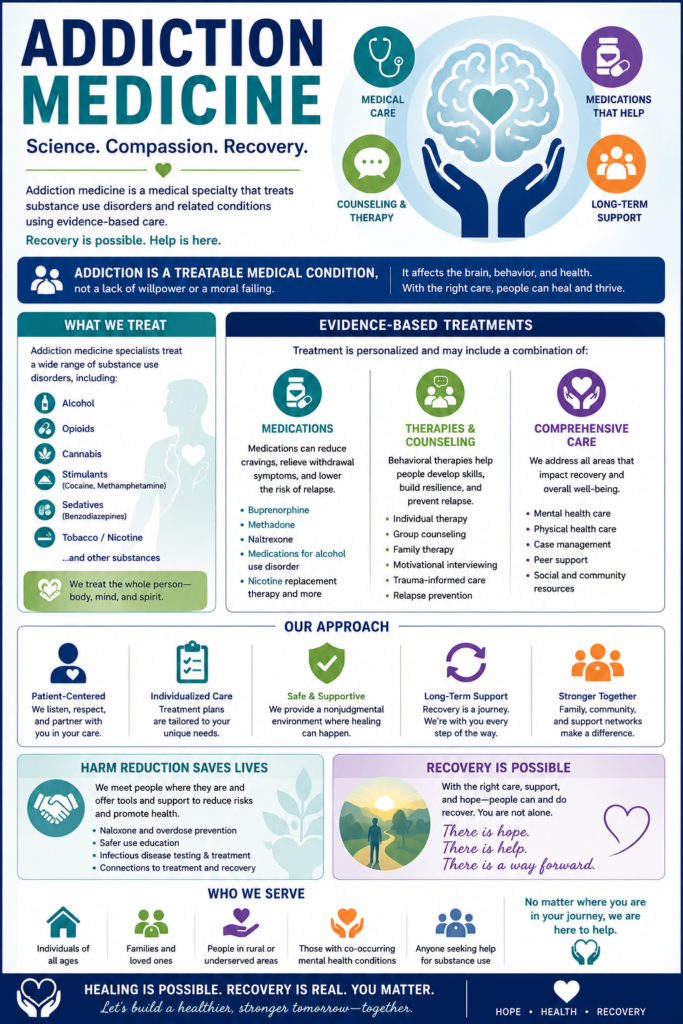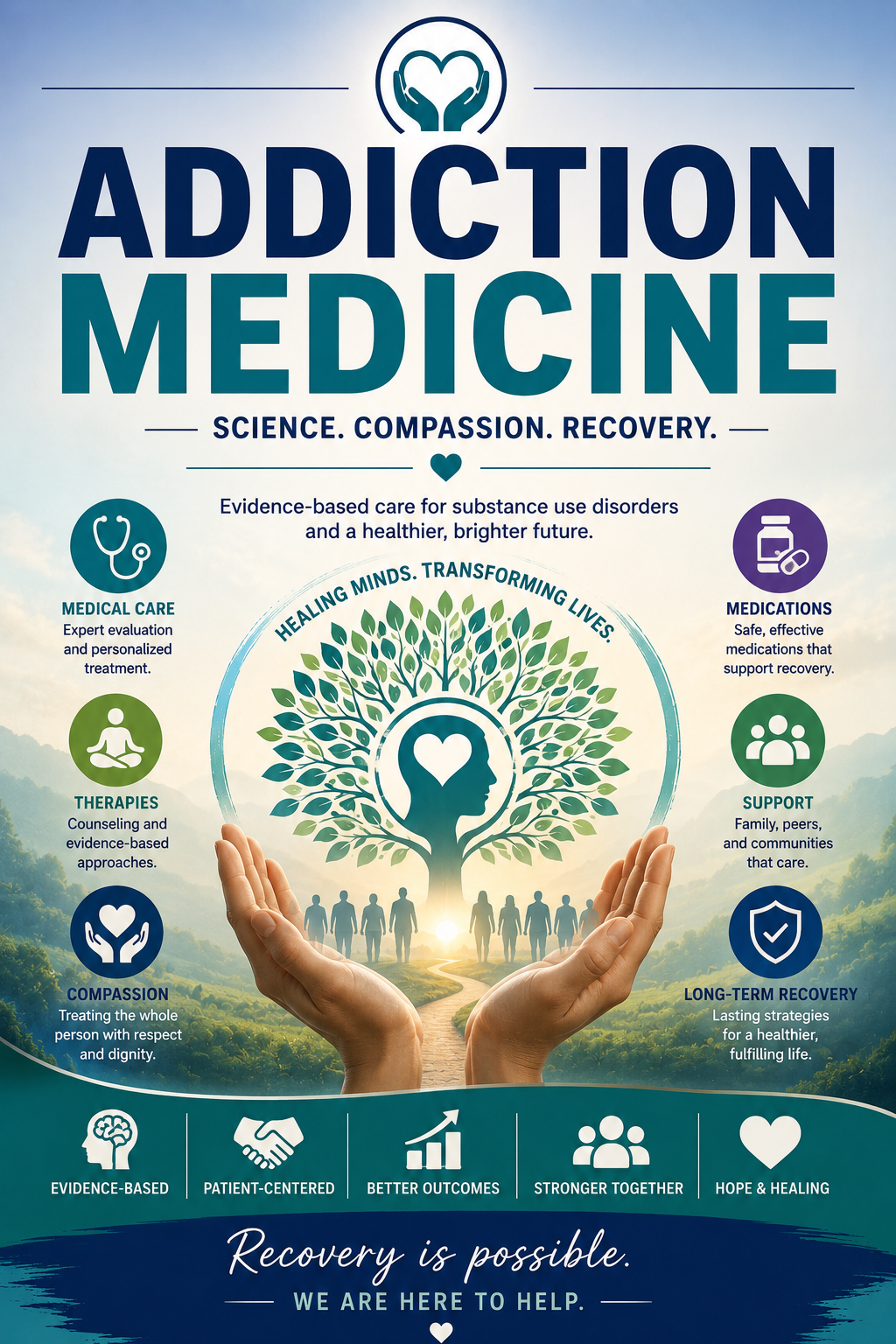
Addiction medicine is a specialized field of healthcare dedicated to preventing, diagnosing, and treating substance use disorders through evidence-based, patient-centered care. Recognizing addiction as a chronic but treatable medical condition, addiction medicine combines medications, behavioral therapies, mental health care, and long-term recovery support to address the physical, psychological, and social aspects of the disease. Rather than focusing solely on stopping substance use, this specialty aims to improve overall health, restore daily functioning, and help individuals build meaningful, fulfilling lives. As scientific understanding of addiction continues to advance, addiction medicine has become an essential part of modern healthcare and a cornerstone of effective recovery.
Addiction Medicine
Addiction medicine is a medical specialty focused on the prevention, evaluation, diagnosis, treatment, and long-term management of substance use disorders and related conditions. Addiction medicine specialists treat individuals affected by alcohol, opioids, nicotine, stimulants, cannabis, sedatives, and other substances using evidence-based medical care combined with behavioral therapies and recovery support. The goal is not only to help people stop using substances but also to improve their overall physical health, mental health, and quality of life.
Understanding Addiction as a Medical Condition
Addiction is recognized as a chronic, treatable medical disease that affects brain circuits involved in reward, motivation, memory, learning, and self-control. Repeated substance use changes these brain pathways, making it difficult to control use despite harmful consequences. Like diabetes, asthma, or hypertension, addiction often requires long-term treatment, ongoing monitoring, and adjustments to the treatment plan over time.
What Addiction Medicine Specialists Do
Addiction medicine physicians and advanced practice providers perform comprehensive evaluations that include:
- Medical history and physical examination.
- Substance use assessment.
- Mental health evaluation.
- Medication review.
- Laboratory testing when appropriate.
- Screening for infectious diseases such as HIV and hepatitis.
- Assessment of social, family, occupational, and legal concerns.
- Development of individualized treatment plans.
Care is tailored to each person’s unique medical, psychological, and social needs.
Evidence-Based Treatments
Treatment often combines several approaches, including:
Medications
Medication can reduce cravings, relieve withdrawal symptoms, lower the risk of relapse, and decrease overdose risk. Depending on the substance involved, medications may include:
- Buprenorphine, methadone, or naltrexone for opioid use disorder.
- Naltrexone, acamprosate, or disulfiram for alcohol use disorder.
- Nicotine replacement therapy, varenicline, or bupropion for tobacco dependence.
Medication decisions are individualized based on the patient’s health, goals, and treatment history.
Behavioral Therapies
Behavioral treatments help people develop healthier coping skills and sustain recovery. Common therapies include:
- Cognitive behavioral therapy (CBT).
- Motivational interviewing.
- Contingency management.
- Family therapy.
- Group counseling.
- Trauma-informed therapy.
- Relapse prevention training.
Treatment of Co-Occurring Conditions
Many people with substance use disorders also have depression, anxiety, PTSD, ADHD, bipolar disorder, or chronic pain. Treating these conditions alongside addiction improves outcomes and supports long-term recovery.
Recovery Is More Than Stopping Substance Use
Addiction medicine emphasizes whole-person care by addressing:
- Physical health.
- Mental health.
- Employment and education.
- Stable housing.
- Nutrition.
- Sleep.
- Family relationships.
- Social support.
- Legal and financial challenges.
Recovery involves rebuilding a healthy, meaningful life—not simply eliminating substance use.
Harm Reduction
Addiction medicine also includes harm reduction strategies that lower the risk of serious health consequences while encouraging engagement in treatment. These may include:
- Naloxone distribution.
- Overdose prevention education.
- Syringe service programs where legally available.
- Infectious disease screening and treatment.
- Safer medication practices.
- Connections to healthcare and recovery services.
Harm reduction aims to keep people alive and as healthy as possible while supporting recovery.
The Treatment Team
Addiction medicine is often delivered by a multidisciplinary team that may include:
- Addiction medicine physicians.
- Physician assistants and nurse practitioners.
- Nurses.
- Psychiatrists.
- Psychologists.
- Licensed counselors.
- Social workers.
- Peer recovery specialists.
- Pharmacists.
- Case managers.
Working together allows the team to address the many factors that influence recovery.
Long-Term Recovery
Recovery is an ongoing process that often includes:
- Regular medical follow-up.
- Medication management.
- Counseling.
- Support groups.
- Lifestyle changes.
- Relapse prevention planning.
- Family involvement.
- Monitoring and treatment adjustments when needed.
Experiencing a relapse does not mean treatment has failed. Instead, it signals that the treatment plan may need to be modified, much like adjusting therapy for other chronic medical conditions.
Looking Ahead
Advances in addiction medicine continue to improve patient care. Researchers are developing new medications, digital health tools, telemedicine services, mobile treatment programs, and personalized approaches based on genetics, brain imaging, and behavioral science. These innovations are expanding access to treatment and improving outcomes for individuals living with substance use disorders.
Key Takeaway
Addiction medicine is a specialized field dedicated to treating substance use disorders through comprehensive, evidence-based care. By combining medications, behavioral therapies, treatment of co-occurring mental and physical health conditions, harm reduction strategies, and long-term recovery support, addiction medicine helps individuals achieve lasting recovery and improve their overall health and quality of life. Recovery is possible, and with appropriate medical care and ongoing support, many people successfully rebuild healthy, fulfilling lives.
Self-Management Strategies to Understand Addiction Medicine
Addiction medicine is a medical specialty that focuses on preventing, diagnosing, and treating substance use disorders using evidence-based care. Recovery involves much more than simply stopping drug or alcohol use—it requires addressing physical health, mental health, lifestyle habits, and social support. The following self-management strategies can help you better understand addiction medicine and become an active participant in your recovery.
1. Learn About Addiction as a Chronic Medical Condition
Understand that addiction is a treatable medical disease that affects brain function, behavior, and decision-making. Like diabetes or high blood pressure, recovery often requires ongoing medical care, healthy lifestyle changes, and long-term follow-up rather than a one-time treatment.
2. Be an Active Partner in Your Treatment
Ask your healthcare provider questions about your diagnosis, treatment options, medications, therapy, and recovery goals. Understanding your treatment plan helps you make informed decisions and stay engaged in your care.
3. Take Medications as Prescribed
If you are prescribed medications for opioid, alcohol, or nicotine use disorder, take them exactly as directed. Do not stop or change your medication without discussing it with your healthcare provider, as these medications can reduce cravings, prevent relapse, and improve recovery outcomes.
4. Attend Follow-Up Appointments
Regular visits with your addiction medicine provider allow your treatment team to monitor progress, address concerns, adjust medications if needed, and provide ongoing support throughout recovery.
5. Monitor Your Recovery
Keep a journal of cravings, mood, stress levels, sleep, medication use, triggers, and substance-free milestones. Tracking your progress can help identify patterns and guide conversations with your healthcare team.
6. Develop Healthy Coping Skills
Practice evidence-based strategies to manage stress and reduce relapse risk, such as mindfulness, deep breathing, exercise, journaling, hobbies, and cognitive behavioral techniques. Healthy coping skills strengthen emotional resilience and improve long-term recovery.
7. Build Healthy Daily Habits
Support your recovery by maintaining consistent routines that include:
- Regular sleep.
- Balanced nutrition.
- Physical activity.
- Hydration.
- Stress management.
- Avoiding alcohol and non-prescribed substances.
Healthy lifestyle habits promote brain healing and overall well-being.
8. Identify and Manage Triggers
Learn to recognize situations, emotions, or environments that increase cravings or the urge to use substances. Work with your treatment team to develop practical strategies for avoiding or managing these triggers safely.
9. Build a Strong Support Network
Recovery is often more successful when supported by others. Stay connected with family members, trusted friends, counselors, peer recovery specialists, or recovery support groups that encourage healthy choices and accountability.
10. Prepare for Setbacks
Recovery is a lifelong process, and setbacks can occur. If a relapse happens, seek help promptly rather than viewing it as failure. Work with your healthcare provider to understand what contributed to the setback and adjust your treatment plan to strengthen your recovery.
Key Takeaway
Understanding addiction medicine empowers you to take an active role in your recovery. Successful treatment combines evidence-based medications, counseling, healthy lifestyle habits, regular medical follow-up, and ongoing support. By staying engaged with your healthcare team, developing effective coping strategies, and committing to long-term self-care, you can build a strong foundation for lasting recovery and improved overall health.
Family Support Strategies to Understand Addiction Medicine
Addiction medicine is a medical specialty dedicated to preventing, diagnosing, and treating substance use disorders using evidence-based care. Treatment often combines medications, counseling, behavioral therapies, and long-term recovery support to help individuals achieve lasting recovery. Families play a vital role by providing encouragement, understanding, and a stable environment that supports healing.
1. Learn About Addiction as a Medical Condition
Take time to understand that addiction is a chronic, treatable disease—not simply a lack of willpower or a moral failing. Learning how addiction affects the brain can help reduce stigma and foster compassion while encouraging realistic expectations for recovery.
2. Understand Evidence-Based Treatments
Educate yourself about the treatments your loved one may receive, including medications for opioid, alcohol, or nicotine use disorders, counseling, behavioral therapies, and recovery support services. Understanding the purpose of these treatments can help families provide informed encouragement and reduce misconceptions.
3. Encourage Treatment Participation
Support your loved one by encouraging them to attend medical appointments, counseling sessions, and recovery meetings. Offer practical help, such as transportation or appointment reminders, while respecting their independence and personal responsibility.
4. Communicate with Compassion
Create a safe, nonjudgmental environment where your loved one feels comfortable discussing challenges, setbacks, and successes. Practice active listening, avoid blaming language, and celebrate progress, even when improvements are gradual.
5. Learn About Medications for Addiction Treatment
If your loved one is prescribed medications such as buprenorphine, methadone, naltrexone, or medications for alcohol or nicotine use disorder, understand that these are evidence-based treatments that reduce cravings, lower relapse risk, and improve recovery outcomes. They are important medical therapies—not simply substitutes for addiction.
6. Promote Healthy Daily Habits
Encourage routines that support recovery, including:
- Regular sleep.
- Balanced nutrition.
- Physical activity.
- Stress management.
- Medication adherence.
- Participation in counseling and recovery activities.
Healthy habits help support both physical and emotional healing.
7. Recognize Warning Signs of Relapse
Be aware of changes in mood, behavior, sleep, social withdrawal, increased cravings, or returning to high-risk environments. Early recognition allows families to encourage prompt communication with the treatment team before problems become more serious.
8. Support Recovery Without Enabling
Offer encouragement and emotional support while maintaining healthy boundaries. Avoid behaviors that unintentionally support ongoing substance use, such as providing money without accountability or minimizing harmful consequences. Encourage responsibility while continuing to show care and respect.
9. Participate in Family Education or Therapy
Many addiction treatment programs offer family education sessions or family counseling. Participating together can improve communication, strengthen relationships, resolve conflicts, and help everyone develop healthier coping strategies.
10. Care for Yourself
Supporting someone with a substance use disorder can be emotionally demanding. Family members should also prioritize their own well-being by maintaining healthy boundaries, seeking counseling if needed, joining family support groups, practicing stress management, and continuing activities that support their own physical and emotional health.
Key Takeaway
Families are an important part of successful addiction treatment and long-term recovery. By learning about addiction medicine, supporting evidence-based care, encouraging healthy routines, maintaining open communication, and practicing healthy boundaries, loved ones can create an environment that promotes healing. Combined with professional medical care, counseling, and ongoing recovery support, family involvement can improve treatment engagement, reduce relapse risk, and help individuals build healthier, more fulfilling lives.
Community Resource Strategies to Understand Addiction Medicine
Addiction medicine is a medical specialty that provides evidence-based care for individuals with substance use disorders. Treatment often includes medications, counseling, behavioral therapies, mental health care, and long-term recovery support. Community resources play an essential role in helping individuals and families understand addiction medicine, access treatment, and build a strong foundation for lasting recovery.
1. Connect with Addiction Medicine Specialists
Primary care providers, addiction medicine physicians, physician assistants, nurse practitioners, psychiatrists, and behavioral health professionals can explain treatment options, answer questions about medications, and develop individualized recovery plans. Seeking care from trained professionals helps ensure treatment is based on the latest scientific evidence.
2. Utilize Community Health Centers
Federally qualified health centers (FQHCs), community clinics, and local health departments often provide addiction screening, medical care, mental health services, medication management, and referrals to specialized addiction treatment programs. These centers improve access to affordable, comprehensive care.
3. Participate in Recovery Support Groups
Community-based support groups such as Alcoholics Anonymous (AA), Narcotics Anonymous (NA), SMART Recovery, Celebrate Recovery, and other peer-led programs offer encouragement, accountability, and shared experiences. These groups complement medical treatment by providing ongoing emotional and social support.
4. Access Behavioral Health Services
Many individuals with substance use disorders also have depression, anxiety, PTSD, ADHD, or other mental health conditions. Community mental health centers offer counseling, psychiatric evaluations, trauma-informed care, crisis intervention, and therapy that address both addiction and co-occurring mental health disorders.
5. Learn Through Community Education Programs
Hospitals, universities, nonprofit organizations, and public health agencies frequently offer educational workshops, seminars, and webinars on addiction, recovery, overdose prevention, medications for addiction treatment, and relapse prevention. These programs help individuals and families make informed decisions about care.
6. Utilize Harm Reduction Services
Community harm reduction programs may provide:
- Naloxone distribution and training.
- Overdose prevention education.
- Referrals to addiction treatment.
- Infectious disease screening.
- Syringe service programs where legally available.
- Health education and community outreach.
These services help reduce the risk of overdose while encouraging engagement with healthcare.
7. Access Social Support Services
Recovery often requires more than medical treatment alone. Community organizations can assist with:
- Housing assistance.
- Employment and vocational training.
- Transportation services.
- Food assistance.
- Financial counseling.
- Legal aid.
- Insurance enrollment.
- Case management.
Meeting these basic needs can improve treatment participation and long-term recovery success.
8. Explore Telehealth and Mobile Treatment Programs
Telemedicine and mobile addiction treatment clinics increase access to evidence-based care for people living in rural or underserved communities. These services reduce transportation barriers and provide flexible treatment options for individuals who cannot easily visit a traditional clinic.
9. Utilize Crisis Services
Individuals experiencing a substance use crisis, severe withdrawal, or emotional distress should seek immediate help through 911, local emergency departments, or the 988 Suicide & Crisis Lifeline. Early intervention can prevent serious complications and connect people with appropriate treatment.
10. Advocate for Community Awareness
Communities can reduce stigma by promoting addiction education, supporting evidence-based treatment programs, expanding access to medications for substance use disorders, and encouraging compassionate conversations about recovery. Advocacy helps create environments where individuals feel safe seeking help.
Key Takeaway
Community resources are a vital part of addiction medicine and long-term recovery. Healthcare providers, behavioral health services, peer support groups, harm reduction programs, social service agencies, educational programs, telehealth, and mobile treatment clinics work together to provide comprehensive, patient-centered care. By using these resources and staying connected to evidence-based treatment, individuals and families can improve recovery outcomes, reduce relapse risk, and build healthier, more stable lives.
Frequently Asked Questions
Here are some common questions:
1. What is addiction medicine?
Addiction medicine is a medical specialty dedicated to the prevention, diagnosis, treatment, and long-term management of substance use disorders. It combines evidence-based medications, behavioral therapies, mental health care, and recovery support to help individuals achieve lasting recovery.
2. Is addiction considered a disease?
Yes. Addiction is recognized as a chronic, treatable medical disease that affects brain function, behavior, and decision-making. Like diabetes or hypertension, it often requires ongoing treatment, monitoring, and lifestyle changes to manage successfully.
3. Who provides addiction medicine services?
Addiction medicine care may be provided by addiction medicine physicians, physician assistants, nurse practitioners, psychiatrists, psychologists, nurses, licensed counselors, social workers, pharmacists, peer recovery specialists, and case managers working together as a healthcare team.
4. What substances does addiction medicine treat?
Addiction medicine specialists treat a wide range of substance use disorders, including:
- Alcohol
- Opioids
- Nicotine
- Stimulants (such as cocaine and methamphetamine)
- Cannabis
- Sedatives and benzodiazepines
- Other prescription and illicit drugs
5. What happens during an addiction medicine evaluation?
A comprehensive evaluation may include:
- Medical history.
- Physical examination.
- Substance use assessment.
- Mental health screening.
- Medication review.
- Laboratory testing when appropriate.
- Discussion of treatment goals.
- Development of an individualized treatment plan.
6. What medications are used in addiction medicine?
Depending on the substance involved, medications may include:
- Buprenorphine, methadone, and naltrexone for opioid use disorder.
- Acamprosate, naltrexone, and disulfiram for alcohol use disorder.
- Nicotine replacement therapy, varenicline, and bupropion for tobacco dependence.
These medications help reduce cravings, manage withdrawal symptoms, lower relapse risk, and improve recovery outcomes.
7. Is counseling still necessary if I take medication?
Yes. Research shows that combining medication with counseling, behavioral therapies, and recovery support often leads to the best long-term outcomes. Treatment plans are individualized based on each person’s needs.
8. Can addiction medicine treat mental health conditions too?
Many addiction medicine providers evaluate and treat co-occurring mental health conditions such as depression, anxiety, PTSD, ADHD, and bipolar disorder, or they coordinate care with mental health specialists when appropriate.
9. How long does treatment last?
Treatment length varies for each individual. Some people require months of care, while others benefit from ongoing treatment for years. Recovery is a lifelong process, and treatment plans may change over time based on progress and individual needs.
10. What is medication for opioid use disorder (MOUD)?
MOUD refers to FDA-approved medications used to treat opioid use disorder. These medications reduce cravings, relieve withdrawal symptoms, lower overdose risk, and improve treatment retention when combined with comprehensive care.
11. What if someone relapses?
Relapse does not mean treatment has failed. Like other chronic medical conditions, addiction may involve periods of improvement and setbacks. A relapse is an opportunity to reassess the treatment plan, identify new challenges, and strengthen recovery strategies.
12. Is addiction medicine only for severe addiction?
No. Individuals with mild, moderate, or severe substance use disorders can benefit from addiction medicine. Early treatment often prevents complications and improves long-term recovery outcomes.
13. Does insurance cover addiction medicine?
Many addiction medicine services are covered by Medicaid, Medicare, and private insurance plans. Coverage varies depending on the individual’s insurance policy, provider network, and treatment services. Healthcare providers can help explain available benefits.
14. What lifestyle changes support addiction recovery?
Recovery is strengthened by:
- Eating a balanced diet.
- Exercising regularly.
- Getting adequate sleep.
- Managing stress.
- Attending counseling and follow-up appointments.
- Building supportive relationships.
- Avoiding high-risk situations.
- Participating in recovery support groups.
These healthy habits complement medical treatment and promote long-term wellness.
15. What is the most important thing to know about addiction medicine?
Addiction medicine is based on science, compassion, and individualized care. It recognizes that substance use disorders are treatable medical conditions—not moral failings. By combining evidence-based medications, behavioral therapies, mental health treatment, healthy lifestyle changes, and ongoing support, addiction medicine helps individuals recover, reduce the risk of relapse and overdose, and build healthier, more fulfilling lives.
Conclusion
Addiction medicine has transformed the treatment of substance use disorders by replacing stigma with science and offering compassionate, evidence-based care that addresses the whole person. Successful recovery often involves a combination of medications, counseling, treatment of co-occurring mental and physical health conditions, healthy lifestyle changes, and ongoing support from healthcare professionals, family members, and the community. Although recovery is a lifelong journey that may include setbacks, it is achievable with the right treatment and support. By expanding access to addiction medicine and increasing public awareness, we can help reduce overdose deaths, improve quality of life, and give more individuals the opportunity to achieve lasting recovery and better overall health.
Video: Why addiction medicine changes everything #opioidaddiction #treatment #wellness