Alcohol consumption is often associated with social gatherings, celebrations, and relaxation. However, prolonged and excessive alcohol use can have serious consequences for the brain, affecting memory, learning, decision-making, emotional regulation, and overall cognitive functioning. While occasional alcohol consumption does not necessarily cause noticeable brain damage, long-term heavy drinking increases the risk of structural and functional changes in the brain, some of which may become permanent.
Alcohol-related brain damage, sometimes referred to as alcohol-related brain injury (ARBI), encompasses several neurological conditions associated with prolonged excessive drinking. These conditions can range from mild cognitive impairment to severe disorders such as Wernicke-Korsakoff syndrome and alcohol-related dementia-like syndromes.
Understanding how alcohol affects the brain is essential for prevention, early intervention, and recovery. Although some neurological changes may improve after alcohol cessation, others can cause lasting impairment.
The encouraging news is that reducing or stopping harmful alcohol use, receiving appropriate medical treatment, and maintaining supportive relationships can help protect brain health and improve quality of life.
How Long-Term Alcohol Use Affects the Brain
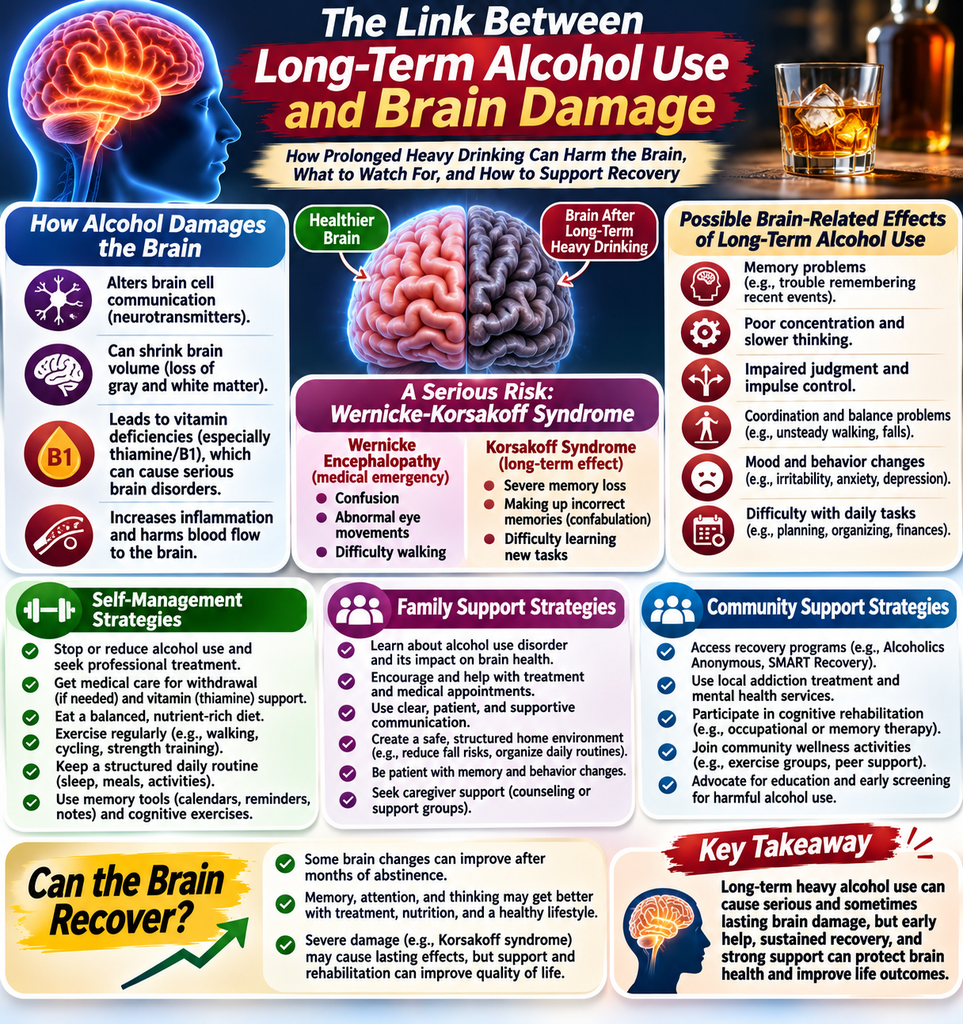
Alcohol is a central nervous system depressant that alters communication between neurons, the specialized cells responsible for transmitting information throughout the brain.
Alcohol affects several neurotransmitter systems, including gamma-aminobutyric acid (GABA), glutamate, dopamine, and serotonin. These changes influence mood, memory, coordination, judgment, and behavior.
With repeated heavy alcohol exposure, the brain adapts to alcohol’s effects. Over time, these adaptations can contribute to dependence, cognitive impairment, and changes in brain structure.
Brain regions commonly affected by prolonged heavy drinking
Perimenopause Brain Fog: Why It Happens – and How Exercise and Weight Loss Can Help
Prefrontal cortex — Decision-making and impulse control
Heavy drinking can impair planning, judgment, concentration, and the ability to regulate behavior.
Alcohol, Memory, and the Hippocampus – The Alcohol Pharmacology Education Partnership
Hippocampus — Learning and memory
Alcohol can interfere with forming new memories and may contribute to persistent memory difficulties.
Central Organ of the Human Nervous System: Brain Anatomy
Cerebellum — Balance and coordination
Prolonged alcohol exposure can damage pathways involved in movement, posture, and coordination.
The Internal Anatomy of the Cerebral Hemispheres and Diencephalon – Neuroscience – NCBI Bookshelf
White matter — Brain communication
Alcohol-related changes in white matter can interfere with communication between brain regions and slow cognitive processing.
Brain imaging studies have demonstrated associations between heavy alcohol consumption and reductions in gray matter volume, white matter integrity, and overall brain volume.
The extent of injury varies according to drinking patterns, nutritional status, age, genetics, co-occurring medical conditions, and other risk factors.
Understanding Alcohol-Related Brain Damage
Alcohol-related brain damage is an umbrella term describing cognitive and neurological impairments associated with prolonged harmful alcohol consumption.
Not everyone who drinks heavily develops severe brain injury. However, repeated excessive drinking increases the likelihood of neurological complications.
Common symptoms of alcohol-related brain damage
- Memory problems: Difficulty remembering recent conversations, appointments, or important information.
- Poor concentration: Trouble focusing on tasks or maintaining attention.
- Impaired judgment: Difficulty evaluating risks and making appropriate decisions.
- Slower thinking: Reduced information-processing speed and difficulty solving problems.
- Emotional changes: Increased irritability, anxiety, depression, or emotional instability.
- Coordination difficulties: Problems with balance, walking, or fine motor movements.
- Executive dysfunction: Difficulty organizing activities, managing finances, or completing daily responsibilities.
- Behavioral changes: Increased impulsivity, reduced motivation, or difficulties with social interactions.
These symptoms may also occur with other medical or neurological conditions. A comprehensive clinical evaluation is necessary to determine their cause.
Wernicke-Korsakoff Syndrome: A Serious Alcohol-Related Neurological Condition
One of the most severe neurological complications associated with chronic heavy drinking is Wernicke-Korsakoff syndrome.
This condition is primarily caused by a deficiency of thiamine, also known as vitamin B1, which is essential for normal brain metabolism.
People with alcohol use disorder may develop thiamine deficiency because of poor nutritional intake, impaired absorption, and altered vitamin utilization.
Wernicke encephalopathy
Wernicke encephalopathy is an acute neurological emergency.
Its classic symptoms include:
- Confusion or altered mental status.
- Abnormal eye movements or double vision.
- Difficulty walking or maintaining balance.
However, many patients do not display all three classic symptoms.
Suspected Wernicke encephalopathy requires immediate medical evaluation and prompt parenteral thiamine treatment. Treatment should not be delayed while waiting for laboratory confirmation.
Korsakoff syndrome
Korsakoff syndrome is a chronic memory disorder that can develop following untreated or inadequately treated thiamine deficiency.
Symptoms may include:
- Severe difficulty forming new memories.
- Loss of previously learned information.
- Disorientation.
- Confabulation, in which individuals unintentionally fill memory gaps with inaccurate information.
- Difficulty learning new tasks.
- Impaired ability to manage independent daily activities.
Some individuals experience improvement with treatment and rehabilitation, but significant memory impairment may persist.
Alcohol-Related Cognitive Impairment and Dementia
Long-term heavy alcohol consumption can contribute to persistent cognitive impairment.
Some individuals develop substantial difficulties with memory, attention, problem-solving, and executive functioning that interfere with independent living.
The term alcohol-related dementia is sometimes used, although the precise diagnosis and classification can be complicated by overlapping neurological and nutritional conditions.
How alcohol contributes to cognitive decline
Several mechanisms may contribute to alcohol-related cognitive impairment:
- Direct neurotoxic effects of prolonged alcohol exposure.
- Thiamine and other nutritional deficiencies.
- Repeated alcohol withdrawal episodes.
- Liver disease and hepatic encephalopathy.
- Traumatic brain injuries associated with falls or accidents.
- Cerebrovascular disease.
- Sleep disturbances and untreated mental health conditions.
Importantly, cognitive symptoms should not automatically be attributed to alcohol use. Other causes, including Alzheimer’s disease, medication effects, thyroid disorders, and vitamin deficiencies, may require evaluation.
Can the Brain Recover After Long-Term Alcohol Use?
One of the most important questions individuals ask is whether alcohol-related brain damage can be reversed.
The answer depends on the type, severity, and duration of neurological injury.
Research suggests that some alcohol-associated changes in brain structure and cognitive functioning can improve after sustained abstinence.
For example, improvements in attention, processing speed, memory, and certain brain volume measurements may occur over months of recovery.
However, severe conditions such as Korsakoff syndrome may cause lasting impairment.
Factors that influence brain recovery
- Duration and severity of alcohol consumption.
- Age and overall neurological health.
- Nutritional status.
- Presence of liver disease or other medical conditions.
- History of traumatic brain injury.
- Severity of existing cognitive impairment.
- Access to addiction treatment and rehabilitation.
- Consistency of alcohol abstinence and medical follow-up.
Illustrative timeline of potential improvement after stopping heavy drinking
- First days to weeks: Acute alcohol effects resolve, and sleep or attention may begin improving, although withdrawal can temporarily worsen cognition.
- First 1–3 months: Some individuals experience improvements in concentration, mood, and memory.
- 3–12 months: Further cognitive improvement and measurable changes in brain structure may occur.
- Beyond one year: Additional recovery is possible, but persistent deficits may require long-term rehabilitation and support.
These are broad patterns, not guaranteed recovery milestones. Individual outcomes vary substantially.
Self-Management Strategies: Protecting Brain Health During Recovery
Self-management involves developing healthy habits, maintaining treatment participation, and reducing factors that contribute to neurological injury.
For individuals with alcohol use disorder, protecting brain health begins with addressing harmful alcohol consumption.
Seeking professional alcohol treatment
Individuals with prolonged heavy drinking should receive a comprehensive medical assessment.
Abruptly stopping alcohol can be dangerous for people with significant physical dependence because withdrawal may cause seizures or delirium tremens.
Evidence-based treatment options include:
- Medically supervised withdrawal: Provides monitoring and medications when withdrawal risk is significant.
- Medication treatment: Naltrexone and acamprosate can support alcohol use disorder treatment; disulfiram may be appropriate for selected individuals.
- Behavioral therapy: Cognitive behavioral therapy and motivational interviewing can help individuals develop healthier coping strategies.
- Nutritional assessment: Identifies deficiencies involving thiamine, folate, vitamin B12, and other nutrients.
- Neurological evaluation: Assesses persistent memory, coordination, and cognitive problems.
- Mental health treatment: Addresses depression, anxiety, trauma, and other co-occurring conditions.
Improving nutrition and brain health
Long-term heavy drinking can interfere with nutrient absorption and contribute to malnutrition.
Adequate nutrition supports neurological functioning and general recovery.
Helpful strategies include:
- Eating balanced meals containing protein, vegetables, fruits, and whole grains.
- Maintaining adequate hydration.
- Receiving thiamine supplementation when medically indicated.
- Correcting documented vitamin and mineral deficiencies.
- Managing diabetes, hypertension, and other chronic medical conditions.
- Avoiding unnecessary sedating medications.
- Following individualized nutritional recommendations from healthcare professionals.
For suspected Wernicke encephalopathy, dietary changes or oral vitamins alone are not adequate emergency treatment.
Cognitive rehabilitation and healthy routines
Individuals experiencing memory or concentration difficulties may benefit from cognitive rehabilitation and structured daily activities.
Practical strategies include:
- Using calendars, reminders, and written schedules.
- Establishing consistent sleep and waking times.
- Practicing memory exercises and problem-solving activities.
- Participating in appropriate physical exercise.
- Limiting distractions when completing important tasks.
- Breaking complex activities into manageable steps.
- Attending occupational therapy or cognitive rehabilitation when indicated.
Family Support Strategies: Helping Loved Ones With Alcohol-Related Brain Damage
Families play an important role in recognizing cognitive changes and helping individuals access appropriate medical care.
Alcohol-related cognitive impairment can create frustration and misunderstanding, especially when a loved one repeatedly forgets information, struggles with decision-making, or has difficulty completing familiar tasks.
Understanding neurological changes
Family members may mistakenly interpret cognitive difficulties as laziness, dishonesty, or lack of motivation.
However, memory impairment and executive dysfunction can reflect neurological injury rather than intentional behavior.
Understanding these differences can improve communication and reduce conflict.
Practical family support strategies
- Encourage medical evaluation: Help loved ones obtain assessment for cognitive changes and possible nutritional deficiencies.
- Use clear communication: Provide simple instructions and repeat important information when necessary.
- Establish predictable routines: Consistent schedules can reduce confusion and improve daily functioning.
- Support treatment participation: Assist with transportation, appointments, and medication management when appropriate.
- Create a safe environment: Address fall hazards, medication errors, and other safety concerns.
- Avoid judgment: Recognize cognitive impairment as a health concern rather than a personal failure.
- Seek caregiver support: Participate in counseling, educational programs, or support groups.
Managing caregiver stress
Supporting someone with alcohol-related brain injury can be emotionally and physically demanding.
Family members may experience frustration, anxiety, grief, and exhaustion.
Caregivers should be encouraged to maintain their own healthcare, social relationships, and emotional support systems.
Professional assistance may be necessary when cognitive impairment interferes with medication management, finances, driving, or independent living.
Community Support Strategies: Improving Access to Treatment and Rehabilitation
Community resources can help individuals with alcohol-related cognitive impairment access medical treatment, rehabilitation, and long-term support.
Effective recovery services should address both alcohol use disorder and neurological functioning.
Community-based recovery programs
Supportive resources may include:
- Alcoholics Anonymous: Peer-led recovery meetings.
- SMART Recovery: Evidence-informed support emphasizing behavioral change and self-management.
- Outpatient addiction treatment: Medical and behavioral healthcare services.
- Neurological rehabilitation programs: Occupational therapy, physical therapy, and cognitive rehabilitation.
- Community mental health centers: Treatment for co-occurring psychiatric conditions.
- Caregiver support organizations: Education and assistance for family members.
How communities can reduce alcohol-related brain injury
Community prevention efforts should focus on early identification, accessible treatment, and public education.
Important strategies include:
- Increasing awareness of alcohol-related neurological complications.
- Expanding screening for unhealthy alcohol use in primary care.
- Improving access to affordable addiction treatment.
- Integrating neurological and mental health services.
- Offering nutritional education and assessment.
- Supporting recovery-friendly workplaces.
- Providing transportation and housing assistance.
- Reducing stigma surrounding alcohol use disorder and cognitive impairment.
Preventing Long-Term Alcohol-Related Brain Damage
Prevention begins with recognizing harmful drinking patterns and reducing exposure to alcohol-related risks.
Individuals who drink heavily should receive appropriate counseling and medical assessment before neurological complications develop.
Important prevention strategies
- Follow current public health recommendations for reducing alcohol-related harm.
- Avoid binge drinking and prolonged heavy alcohol consumption.
- Seek early treatment for alcohol use disorder.
- Address anxiety, depression, and other mental health conditions.
- Maintain adequate nutrition.
- Obtain medical evaluation for persistent memory or balance problems.
- Prevent head injuries and alcohol-related falls.
- Manage cardiovascular risk factors.
- Avoid combining alcohol with opioids, benzodiazepines, or other sedating substances.
No level of alcohol consumption is completely risk-free. The risk of many alcohol-related health conditions generally increases with greater exposure.
Resources for Alcohol Addiction and Brain Health
Individuals and families seeking assistance can access national resources.
- SAMHSA National Helpline: 1-800-662-HELP (4357), providing confidential treatment referrals.
- FindTreatment.gov: Find alcohol addiction treatment services.
- National Institute on Alcohol Abuse and Alcoholism: Learn about alcohol-related brain health and treatment.
- Alcoholics Anonymous: Find peer recovery meetings.
- SMART Recovery: Explore recovery support programs.
- 988 Suicide & Crisis Lifeline: Call or text 988 for mental health crisis support.
New confusion, severe difficulty walking, seizures, or abnormal eye movements in a person with heavy alcohol use or malnutrition require urgent medical attention.
Conclusion: Protecting Brain Health Through Recovery and Support
Long-term heavy alcohol use can significantly affect brain structure, cognitive functioning, emotional regulation, and overall neurological health.
Conditions such as alcohol-related cognitive impairment, Wernicke encephalopathy, and Korsakoff syndrome demonstrate the serious consequences that prolonged excessive drinking can have on the nervous system.
However, neurological damage is not always permanent. Some individuals experience meaningful improvements in memory, concentration, and cognitive functioning after sustained abstinence and appropriate treatment.
Self-management strategies, including professional addiction treatment, nutritional support, cognitive rehabilitation, and healthy daily routines, can help individuals protect their brain health.
Families provide valuable encouragement by recognizing cognitive changes, supporting medical care, and creating safe environments.
Communities contribute by expanding access to treatment, reducing stigma, and providing recovery and rehabilitation resources.
The brain has a remarkable capacity for adaptation and recovery, but prevention and early treatment remain essential. Protecting brain health today can help preserve memory, independence, and quality of life for the future.
Frequently Asked Questions and Answers
Understanding Alcohol and Brain Damage
1. Can long-term alcohol use cause brain damage?
Yes. Long-term heavy alcohol consumption can damage brain cells, disrupt communication between neurons, and contribute to changes in brain structure and function.
Chronic excessive drinking is associated with reduced brain volume, impaired white matter integrity, memory difficulties, and problems with executive functioning.
The severity of neurological impairment depends on several factors, including drinking patterns, nutritional status, age, genetics, and other medical conditions.
2. How does alcohol affect the brain?
Alcohol affects neurotransmitters, the chemical messengers responsible for communication between nerve cells.
It influences several brain systems, including:
- GABA: Enhances inhibitory signaling, contributing to sedation and impaired coordination.
- Glutamate: Suppresses excitatory signaling, affecting learning and memory.
- Dopamine: Influences reward, motivation, and reinforcement.
- Serotonin: Can affect mood and emotional regulation.
Repeated heavy alcohol exposure causes the brain to adapt to these changes, potentially contributing to dependence, withdrawal symptoms, and cognitive impairment.
3. Which parts of the brain are most affected by long-term alcohol use?
Several brain regions are particularly vulnerable.
- Prefrontal cortex: Responsible for judgment, planning, decision-making, and impulse control.
- Hippocampus: Important for learning and forming new memories.
- Cerebellum: Controls balance, coordination, and movement.
- Corpus callosum and white matter: Support communication between different brain regions.
- Limbic system: Involved in emotions, motivation, and stress responses.
Damage to these areas may cause difficulties with memory, concentration, emotional regulation, and everyday functioning.
4. What is alcohol-related brain damage (ARBD)?
Alcohol-related brain damage, also called alcohol-related brain injury, is an umbrella term describing cognitive and neurological problems associated with prolonged harmful alcohol use.
It may involve memory impairment, executive dysfunction, coordination problems, and nutritional neurological disorders.
ARBD is not a single disease. It includes several conditions with different mechanisms, symptoms, and recovery outcomes.
5. What are the early warning signs of alcohol-related brain damage?
Early symptoms may include:
- Forgetting recent conversations or appointments.
- Difficulty concentrating.
- Slower thinking and problem-solving.
- Poor judgment or impulsive decisions.
- Increased irritability or mood changes.
- Difficulty organizing daily responsibilities.
- Problems with balance or coordination.
- Reduced ability to learn new information.
These symptoms can also result from other medical conditions, so a professional evaluation is important.
6. Can alcohol cause memory loss?
Yes. Alcohol can interfere with both short-term and long-term memory.
During intoxication, alcohol can disrupt the hippocampus’s ability to form new memories, sometimes causing blackouts.
With prolonged heavy drinking, individuals may develop persistent memory impairment due to neurological injury, nutritional deficiencies, or other complications.
7. What is the difference between an alcohol blackout and permanent memory loss?
An alcohol blackout occurs when intoxication interferes with the formation of new memories. A person may remain awake and engage in activities but later be unable to remember them.
Permanent memory impairment involves persistent difficulties with learning, recalling information, or retaining new memories.
Repeated blackouts are warning signs of dangerous alcohol consumption, but a blackout does not automatically mean permanent brain damage has occurred.
8. Can alcohol cause the brain to shrink?
Yes. Brain imaging studies have associated prolonged heavy drinking with reductions in gray matter volume and changes in white matter.
These changes may affect memory, attention, and executive functioning.
Some brain volume changes can partially improve after sustained abstinence, although recovery varies considerably among individuals.
Wernicke-Korsakoff Syndrome and Neurological Complications
9. What is Wernicke-Korsakoff syndrome?
Wernicke-Korsakoff syndrome is a serious neurological condition associated with thiamine (vitamin B1) deficiency.
It is particularly associated with prolonged heavy alcohol use and malnutrition.
The condition includes two related disorders: Wernicke encephalopathy, an acute medical emergency, and Korsakoff syndrome, which involves severe and potentially persistent memory impairment. NIAAA
10. What are the symptoms of Wernicke encephalopathy?
Symptoms may include:
- Confusion or altered mental status.
- Difficulty walking or maintaining balance.
- Abnormal eye movements.
- Double vision.
- Severe weakness or lethargy.
Not everyone experiences all these symptoms.
Wernicke encephalopathy is a medical emergency requiring immediate treatment with parenteral thiamine. Delayed treatment can result in permanent neurological injury or death. NIAAA
11. What is Korsakoff syndrome?
Korsakoff syndrome is a chronic neurological disorder characterized primarily by severe memory impairment.
Individuals may experience difficulty forming new memories, remembering past events, learning new information, or functioning independently.
Some individuals also experience confabulation, unintentionally producing inaccurate explanations to fill memory gaps.
Treatment focuses on nutritional correction, alcohol abstinence, rehabilitation, and supportive care. Some deficits may remain permanent.
12. Can long-term alcohol use cause dementia?
Yes. Prolonged heavy alcohol use can contribute to persistent cognitive impairment, sometimes described as alcohol-related dementia.
Symptoms may include memory loss, poor judgment, difficulty planning, and reduced ability to perform everyday tasks.
However, cognitive impairment associated with alcohol can have several contributing causes, including nutritional deficiencies, liver disease, traumatic brain injury, and other neurological conditions.
A medical evaluation is essential before attributing dementia-like symptoms solely to alcohol.
13. Can alcohol-related brain damage cause personality changes?
Yes. Alcohol-related neurological changes may affect emotional regulation, impulse control, motivation, and social behavior.
Some individuals experience increased irritability, impulsivity, apathy, or difficulty managing emotions.
These changes may also reflect depression, anxiety, sleep disturbances, or other treatable conditions.
Brain Recovery and Self-Management Strategies
14. Can alcohol-related brain damage be reversed?
Some alcohol-related brain changes can improve after sustained abstinence and appropriate treatment.
Research suggests that improvements in attention, memory, executive functioning, and brain structure may occur over months of recovery.
However, severe neurological injury, particularly advanced Korsakoff syndrome, may cause lasting impairment.
The extent of recovery depends on the severity of damage, nutritional status, overall health, and access to treatment. NIAAA+1
15. How long does the brain take to recover after stopping alcohol?
Recovery varies significantly between individuals.
Some people notice improvements in sleep, concentration, and mood within weeks. Further improvements in cognitive functioning may occur over several months.
Research suggests that some structural and functional brain changes may improve after months of abstinence, although certain deficits can persist for years.
There is no universal timeline for neurological recovery.
16. What self-management strategies can help protect brain health?
Effective strategies include:
- Seeking professional treatment for alcohol use disorder.
- Following a medically appropriate plan to stop drinking.
- Maintaining adequate nutrition and hydration.
- Correcting vitamin deficiencies under medical supervision.
- Establishing consistent sleep routines.
- Participating in regular physical activity when appropriate.
- Using calendars, reminders, and organizational tools.
- Attending cognitive rehabilitation when indicated.
- Managing hypertension, diabetes, and other medical conditions.
- Avoiding further alcohol exposure when alcohol-related brain injury is present.
17. Can exercise improve brain function during alcohol recovery?
Regular physical activity can support cardiovascular health, mood, sleep, and cognitive functioning.
Walking, swimming, cycling, and strength training may help improve overall well-being.
Exercise can complement addiction treatment and neurological rehabilitation, but it cannot reliably reverse established structural brain damage.
Individuals with balance problems or significant neurological impairment should receive appropriate medical guidance before beginning exercise programs.
18. Can vitamins help repair alcohol-related brain damage?
Vitamin supplementation can be important when nutritional deficiencies contribute to neurological dysfunction.
Thiamine is particularly important for preventing and treating Wernicke encephalopathy.
Folate, vitamin B12, and other nutrients may also require assessment and replacement.
However, vitamins cannot reverse every form of alcohol-related neurological injury.
Suspected Wernicke encephalopathy requires urgent medical treatment, not routine oral supplementation alone.
19. Is it dangerous to suddenly stop drinking after years of heavy alcohol use?
Yes. Individuals with significant alcohol dependence may experience severe withdrawal when alcohol use is abruptly discontinued.
Potential complications include seizures, hallucinations, severe confusion, and delirium tremens.
People with a history of heavy daily drinking, previous withdrawal symptoms, or withdrawal seizures should obtain medical guidance before stopping alcohol. DOI
Family Support Strategies
20. How can families recognize alcohol-related cognitive impairment?
Family members may notice changes in memory, behavior, judgment, or daily functioning.
Warning signs include:
- Repeatedly forgetting conversations.
- Missing appointments or medications.
- Difficulty managing finances.
- Becoming confused in familiar environments.
- Poor balance or frequent falls.
- Difficulty following instructions.
- Increased impulsivity or emotional changes.
These symptoms should prompt medical evaluation rather than assumptions about intentional behavior.
21. How can families support someone with alcohol-related brain damage?
Families can provide emotional encouragement and practical assistance.
Helpful strategies include:
- Encouraging neurological and addiction treatment.
- Using clear, simple communication.
- Establishing predictable daily routines.
- Providing reminders for appointments and medications.
- Reducing fall hazards in the home.
- Supporting nutritional needs.
- Encouraging appropriate rehabilitation.
- Seeking caregiver counseling and support groups.
Families should recognize that cognitive impairment may interfere with a person’s ability to follow instructions or manage complex responsibilities.
22. Can people with alcohol-related brain damage live independently?
Some individuals with mild cognitive impairment can continue living independently with appropriate treatment and support.
Others may require assistance with medications, finances, transportation, meals, or personal care.
Severe memory impairment may necessitate supervised living arrangements.
A comprehensive medical and functional assessment can help determine the appropriate level of assistance.
Community Support and Prevention
23. What community resources help people with alcohol-related brain damage?
Community services can support both addiction recovery and neurological rehabilitation.
Helpful resources include:
- Alcohol addiction treatment centers.
- Neurology and neuropsychology services.
- Occupational therapy and cognitive rehabilitation.
- Alcoholics Anonymous and SMART Recovery.
- Community mental health programs.
- Caregiver support organizations.
- Social services providing transportation, housing, and disability assistance.
Coordinated care is especially important when individuals experience both alcohol use disorder and persistent cognitive impairment.
24. How can communities prevent alcohol-related brain damage?
Communities can reduce alcohol-related harm through education, screening, treatment access, and early intervention.
Important strategies include:
- Educating the public about neurological risks associated with heavy drinking.
- Screening for unhealthy alcohol use in healthcare settings.
- Improving access to evidence-based addiction treatment.
- Recognizing nutritional deficiencies and neurological warning signs.
- Providing integrated mental health services.
- Reducing stigma surrounding alcohol use disorder.
- Supporting families and caregivers.
- Promoting alcohol-free recreational activities.
25. Where can individuals and families find help for alcohol addiction and brain health?
Several national resources offer education, treatment information, and recovery support.
- SAMHSA National Helpline: 1-800-662-HELP (4357), offering confidential treatment referrals.
- FindTreatment.gov: Find alcohol addiction treatment providers.
- National Institute on Alcohol Abuse and Alcoholism: Learn about alcohol-related brain health.
- Alcoholics Anonymous: Find alcohol recovery meetings.
- SMART Recovery: Explore recovery support programs.
- 988 Suicide & Crisis Lifeline: Call or text 988 for mental health crisis assistance.
Video: