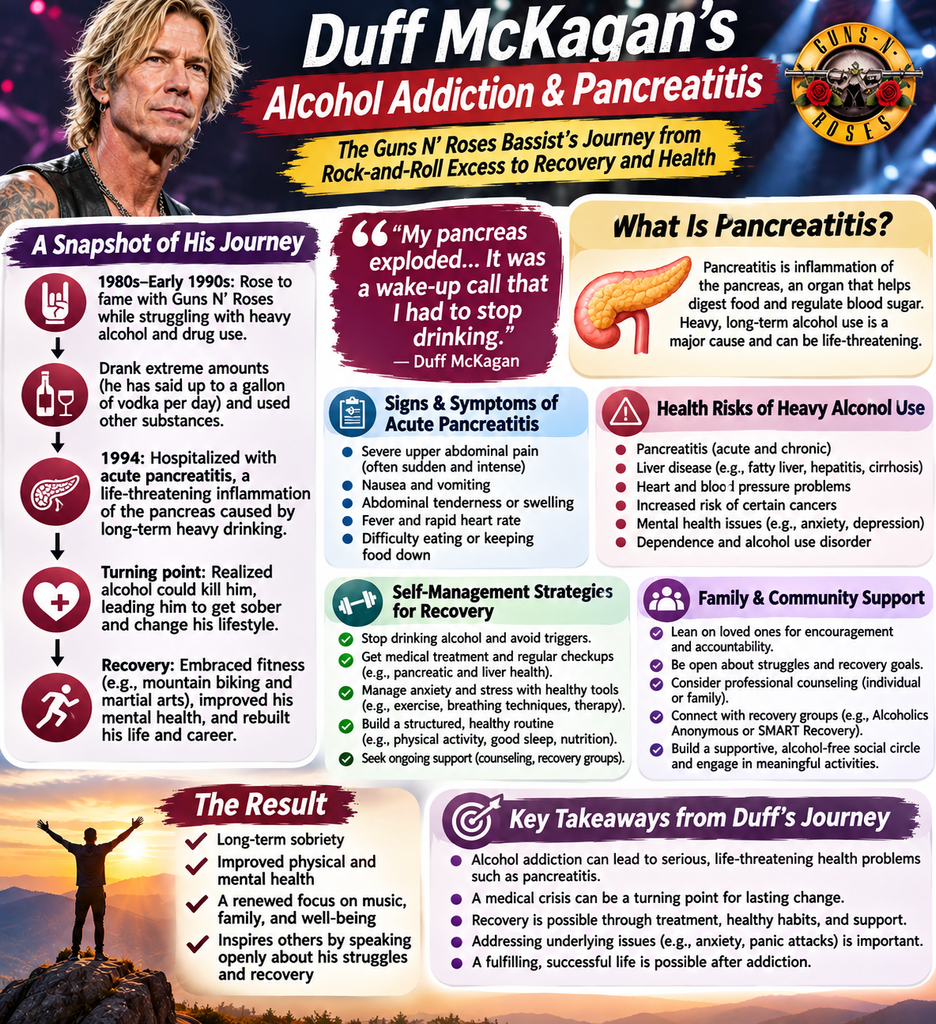
Alcohol addiction can have devastating consequences, affecting physical health, mental well-being, family relationships, and professional success. For Duff McKagan, the legendary bassist of Guns N’ Roses, years of heavy drinking and substance use nearly cost him his life.
During the height of his rock career, McKagan struggled with excessive alcohol consumption and drug use. His lifestyle eventually contributed to a life-threatening medical emergency in 1994, when he developed acute pancreatitis.
The experience became a turning point, motivating him to stop drinking, reassess his health, and establish a healthier lifestyle.
McKagan’s recovery journey demonstrates that addiction can affect anyone, regardless of fame or financial success, and that meaningful recovery requires personal commitment, supportive relationships, and access to appropriate healthcare.
His story also highlights the importance of recognizing alcohol-related health complications before they become life-threatening.
Duff McKagan’s Early Struggles With Alcohol and Substance Use
The pressures of fame and rock-and-roll culture
Duff McKagan rose to international fame during the 1980s as the bassist for Guns N’ Roses, one of the world’s most successful hard rock bands.
The band’s demanding touring schedule, widespread fame, and party-oriented environment exposed him to a lifestyle where heavy alcohol consumption and recreational drug use were common.
McKagan has openly discussed his struggles with alcohol, cocaine, heroin, and other substances during this period.
In interviews, he described drinking extraordinary amounts of alcohol, sometimes approximately a gallon of vodka per day.
His drinking eventually became so severe that he experienced withdrawal symptoms and needed alcohol during the night to relieve shaking. Hotpress+1
Alcohol as a coping mechanism for anxiety
An important aspect of McKagan’s addiction journey was his struggle with panic attacks.
He has described experiencing panic symptoms from adolescence and using alcohol and drugs to manage anxiety.
Although alcohol may temporarily reduce feelings of distress, repeated use can worsen anxiety, disrupt sleep, and increase the risk of dependence.
Several factors contributed to McKagan’s vulnerability:
- Untreated anxiety: Panic attacks contributed to his reliance on alcohol for temporary emotional relief.
- Environmental influences: The rock music industry normalized excessive drinking and substance use.
- High-stress lifestyle: Touring, performing, and public attention created additional pressures.
- Physical dependence: Repeated heavy drinking led to withdrawal symptoms and difficulty stopping.
- Limited healthy coping skills: Alcohol and drugs became methods of managing emotional distress.
In a 2023 interview with The Guardian, McKagan discussed how he had used alcohol to self-medicate panic attacks and how he eventually learned healthier ways to cope. The Guardian
The Medical Crisis: Alcohol-Induced Acute Pancreatitis
In May 1994, when McKagan was 30 years old, his years of excessive alcohol consumption culminated in a life-threatening medical emergency.
He developed severe abdominal pain and was hospitalized with acute pancreatitis.
McKagan has described the experience as his pancreas having exploded. This is his personal description of the medical crisis; clinically, severe acute pancreatitis involves inflammation that can cause tissue damage, necrosis, fluid collections, and systemic complications.
His hospitalization became a critical turning point in his recovery.
McKagan later explained that physicians warned him that continued alcohol consumption could be fatal. Interview with Duff+1
What is alcohol-induced pancreatitis?
Pancreatitis is inflammation of the pancreas, an organ located behind the stomach that produces digestive enzymes and hormones, including insulin.
Excessive alcohol consumption can damage pancreatic cells and interfere with normal digestive enzyme activity, contributing to inflammation.
Acute pancreatitis may range from a mild, self-limited illness to a severe condition involving organ failure.
Common symptoms of acute pancreatitis
- Severe upper abdominal pain that may radiate to the back.
- Nausea and vomiting.
- Abdominal tenderness or swelling.
- Fever and rapid heart rate.
- Dehydration.
- Difficulty tolerating food or fluids.
- Low blood pressure or organ dysfunction in severe cases.
Sudden, severe abdominal pain requires urgent medical evaluation, especially when accompanied by persistent vomiting, fever, fainting, or difficulty breathing.
Potential complications of alcohol-related pancreatitis
Severe or recurrent pancreatic inflammation can cause:
- Pancreatic tissue necrosis.
- Infected pancreatic collections.
- Organ failure.
- Chronic pancreatitis.
- Persistent abdominal pain.
- Malabsorption and nutritional deficiencies.
- Diabetes resulting from pancreatic damage.
- Increased risk of future pancreatic complications.
For individuals with alcohol-induced pancreatitis, stopping alcohol consumption is particularly important because continued drinking increases the risk of recurrence and further pancreatic injury.
The Turning Point: Choosing Sobriety After a Near-Death Experience
McKagan has described his hospitalization as the moment he realized that continuing to drink could cost him his life.
During his hospital stay, he received treatment for severe pancreatic inflammation and alcohol withdrawal symptoms.
Following discharge, he made major changes to his lifestyle.
Rather than returning to the same patterns of drinking and drug use, he began focusing on physical fitness, emotional well-being, and rebuilding his future.
In interviews, he has credited mountain biking and martial arts with helping him maintain sobriety.
He eventually began training with martial arts instructor Benny Urquidez, whose mentorship became an important part of his recovery. British GQ+1
McKagan’s experience illustrates how a serious medical event can motivate behavioral change. However, individuals should not have to experience a life-threatening complication before receiving addiction treatment.
Self-Management Strategies: Developing Healthy Recovery Habits
Self-management involves identifying triggers, developing coping skills, following medical recommendations, and establishing healthy routines that support recovery.
McKagan’s journey shows how physical activity, mentorship, and emotional awareness can support long-term behavioral change.
Seeking professional treatment and medical follow-up
Alcohol use disorder is a treatable medical condition.
Individuals who drink heavily or experience withdrawal symptoms should seek medical guidance before abruptly stopping alcohol.
Severe alcohol withdrawal can cause seizures, hallucinations, and delirium tremens, which may be life-threatening.
Evidence-based treatment strategies include:
- Medical evaluation: Assess alcohol consumption, withdrawal risk, pancreatic health, liver function, and co-occurring medical conditions.
- Medically supervised withdrawal: Provide appropriate monitoring and medications when withdrawal risk is significant.
- Medication treatment: Consider naltrexone, acamprosate, or disulfiram when clinically appropriate.
- Behavioral therapy: Use cognitive behavioral therapy, motivational interviewing, or other evidence-based interventions.
- Mental health treatment: Address panic disorder, anxiety, depression, and trauma.
- Nutritional support: Evaluate malnutrition and vitamin deficiencies, including the need for thiamine.
- Pancreatic follow-up: Monitor for recurrent pancreatitis, diabetes, digestive complications, and nutritional deficiencies.
Managing anxiety without alcohol
McKagan’s experiences emphasize the importance of treating underlying mental health symptoms.
Alcohol may temporarily reduce anxiety, but it can worsen anxiety symptoms over time.
Healthy coping strategies include:
- Practicing deep breathing and relaxation exercises.
- Participating in cognitive behavioral therapy.
- Developing regular sleep and exercise routines.
- Identifying anxiety triggers.
- Using grounding techniques during panic attacks.
- Maintaining supportive relationships.
- Seeking professional mental health treatment when symptoms interfere with daily life.
Physical fitness and recovery
Following his hospitalization, McKagan embraced physical fitness as a major part of his lifestyle.
He began mountain biking and later pursued kickboxing and martial arts.
These activities provided structure, opportunities for stress management, and a sense of accomplishment.
Regular physical activity can support recovery by improving mood, sleep, cardiovascular health, and overall well-being.
However, exercise should be individualized, particularly following severe pancreatitis or prolonged illness. Physical activity is a supportive recovery strategy, not a replacement for addiction treatment.
Family Support Strategies: Strengthening Relationships and Emotional Stability
Alcohol addiction affects not only the individual experiencing it but also family members and close friends.
Loved ones may experience fear, uncertainty, emotional exhaustion, and difficulties maintaining trust.
McKagan has spoken positively about the importance of his wife, Susan Holmes McKagan, and their daughters in his life.
In interviews, he has described family relationships as an important source of happiness, stability, and purpose after his earlier struggles with addiction. The Guardian
How families can support addiction recovery
Families can provide encouragement while helping loved ones access appropriate treatment.
Effective family support strategies include:
- Learn about alcohol use disorder: Understand addiction as a treatable medical condition.
- Encourage professional care: Support treatment for alcohol use disorder, anxiety, and alcohol-related medical complications.
- Practice compassionate communication: Discuss concerns without shame, blame, or humiliation.
- Establish healthy boundaries: Protect emotional, physical, and financial well-being.
- Support alcohol-free activities: Encourage family gatherings and celebrations that do not center on drinking.
- Participate in counseling: Address communication problems and relationship difficulties.
- Recognize progress: Celebrate meaningful recovery milestones without expecting perfection.
Rebuilding trust after addiction
Trust may be damaged when addiction contributes to dishonesty, missed responsibilities, or unpredictable behavior.
Rebuilding trust requires consistency, accountability, and time.
Individuals in recovery can demonstrate progress by following treatment recommendations, maintaining honest communication, and participating in healthy family activities.
Families can support these efforts while recognizing that they cannot control another person’s recovery.
Community Support Strategies: Building a Strong Recovery Network
Community support provides opportunities for connection, accountability, education, and access to treatment.
McKagan’s experiences demonstrate how mentorship and positive social relationships can support recovery.
His relationship with martial arts instructor Benny Urquidez helped him develop discipline, healthier coping strategies, and a new approach to managing stress.
McKagan has also discussed his experiences publicly, helping bring greater attention to addiction, sobriety, and mental health. BLABBERMOUTH.NET
Recovery support organizations
Peer recovery programs allow individuals to connect with others who have experienced alcohol addiction.
These programs can provide emotional encouragement, practical coping strategies, and opportunities to build supportive relationships.
Examples include:
- Alcoholics Anonymous: Peer-led meetings based on a 12-step recovery approach.
- SMART Recovery: Evidence-informed recovery support emphasizing self-management and behavioral change.
- Recovery community organizations: Local programs offering peer coaching, education, and recovery activities.
- Mental health support groups: Programs addressing anxiety, depression, and other co-occurring conditions.
- Community wellness programs: Opportunities for exercise, recreation, and social connection.
How communities can improve addiction recovery outcomes
Communities can strengthen recovery services by:
- Expanding access to affordable addiction treatment.
- Integrating mental health and substance use disorder services.
- Offering educational programs about alcohol-related health complications.
- Supporting recovery-friendly workplaces.
- Providing transportation assistance for treatment appointments.
- Promoting alcohol-free social activities.
- Reducing stigma through public education.
- Encouraging early intervention for problematic drinking.
Understanding the Connection Between Alcohol Addiction and Pancreatitis
McKagan’s experience highlights the serious relationship between prolonged heavy drinking and pancreatic disease.
Alcohol is a major cause of acute and chronic pancreatitis.
Repeated pancreatic inflammation can result in permanent damage, affecting digestion and blood glucose regulation.
How alcohol damages the pancreas
Alcohol and its metabolites can injure pancreatic cells and disrupt normal cellular processes.
This injury can contribute to inflammation, abnormal digestive enzyme activation, and pancreatic tissue damage.
Over time, recurrent inflammation may produce scarring and chronic pancreatitis.
Strategies for protecting pancreatic health
Individuals recovering from alcohol-related pancreatitis should work with healthcare professionals to reduce future complications.
Recommended strategies may include:
- Avoiding alcohol following alcohol-induced pancreatitis.
- Stopping smoking, which can increase pancreatic disease risk.
- Following individualized nutritional recommendations.
- Maintaining adequate hydration.
- Monitoring blood glucose when clinically indicated.
- Evaluating persistent abdominal pain or digestive symptoms.
- Taking prescribed pancreatic enzyme replacement therapy when pancreatic insufficiency is present.
- Attending regular medical follow-up appointments.
Individuals with a history of severe pancreatitis should discuss dietary needs with their healthcare team rather than automatically adopting highly restrictive diets.
Relapse Prevention: Maintaining Long-Term Sobriety
Recovery is an ongoing process that may involve periods of increased stress, cravings, or emotional challenges.
McKagan has discussed a later episode involving problematic use of prescribed benzodiazepines, illustrating that vulnerability to substance-related problems may persist even after years without alcohol.
His experience reinforces the importance of continued awareness and appropriate medical supervision when medications with dependence potential are prescribed. BLABBERMOUTH.NET
Common relapse risk factors
- Untreated anxiety or panic symptoms.
- Exposure to drinking environments.
- Emotional distress or relationship conflict.
- Social isolation.
- Poor sleep or chronic stress.
- Untreated physical pain.
- Disruptions in treatment or recovery routines.
Practical relapse prevention strategies
- Develop a written relapse prevention plan.
- Recognize early warning signs and triggers.
- Maintain regular medical and mental health appointments.
- Participate in peer recovery meetings if helpful.
- Build supportive alcohol-free relationships.
- Use healthy coping techniques during stressful situations.
- Seek professional assistance promptly if substance use resumes.
A return to drinking should prompt compassionate reassessment and treatment adjustment rather than punishment or shame.
For someone with previous alcohol-induced pancreatitis, renewed alcohol consumption can carry substantial medical risks.
Lessons From Duff McKagan’s Recovery Journey
McKagan’s transformation offers valuable lessons for individuals, families, and healthcare professionals.
First, addiction can affect anyone. Fame, financial success, and professional accomplishments do not protect individuals from alcohol use disorder.
Second, untreated mental health conditions can contribute to substance use. His experiences with panic attacks demonstrate the importance of addressing emotional distress rather than relying on alcohol for temporary relief.
Third, alcohol can cause life-threatening medical complications. His hospitalization with acute pancreatitis illustrates the potential consequences of prolonged heavy drinking.
Fourth, meaningful lifestyle changes can support recovery. Physical activity, mentorship, and healthy routines helped McKagan establish a different way of living.
Fifth, family and community relationships provide important emotional support. Supportive connections can reduce isolation and encourage long-term recovery.
Finally, recovery can create opportunities for renewed purpose. McKagan’s continued musical career, family life, and public discussions about mental health demonstrate that individuals can build meaningful lives after addiction.
Resources for Alcohol Addiction and Recovery
Individuals and families seeking help can access national treatment and recovery resources.
- SAMHSA National Helpline: 1-800-662-HELP (4357), offering confidential treatment information and referrals.
- FindTreatment.gov: Find addiction treatment services.
- Alcoholics Anonymous: Find alcohol recovery meetings.
- SMART Recovery: Explore evidence-informed recovery programs.
- National Institute on Alcohol Abuse and Alcoholism: Learn about alcohol-related health risks and treatment.
- 988 Suicide & Crisis Lifeline: Call or text 988 for mental health crisis assistance.
Conclusion: From Life-Threatening Pancreatitis to Recovery and Renewed Purpose
Duff McKagan’s journey from severe alcohol addiction and life-threatening pancreatitis to a healthier lifestyle demonstrates the importance of recognizing substance use disorders and seeking appropriate support.
His experiences highlight how untreated anxiety, excessive drinking, and environmental influences can contribute to addiction and serious medical complications.
The medical emergency he experienced in 1994 became a turning point, motivating him to stop drinking and establish healthier routines.
Through physical fitness, mentorship, meaningful relationships, and personal growth, McKagan developed a new approach to managing stress and maintaining recovery.
For individuals struggling with alcohol addiction, his story emphasizes the importance of professional treatment, emotional awareness, and practical self-management strategies.
For families, it highlights the value of compassion, education, healthy boundaries, and continued encouragement.
For communities, it shows the importance of reducing stigma, expanding access to treatment, and providing supportive recovery environments.
Alcohol addiction can threaten a person’s health and future, but recovery offers an opportunity to rebuild both. McKagan’s journey reminds us that meaningful change is possible, even after life-threatening consequences.
Frequently Asked Questions and Answers
Understanding Duff McKagan’s Alcohol Addiction
1. Who is Duff McKagan?
Duff McKagan is an American musician, songwriter, and author best known as the bassist for Guns N’ Roses.
He achieved international fame during the late 1980s and early 1990s with albums such as Appetite for Destruction and Use Your Illusion I.
Beyond his musical career, McKagan has become known for discussing his experiences with alcohol addiction, anxiety, pancreatitis, and recovery.
2. How did Duff McKagan develop an alcohol addiction?
McKagan has described drinking heavily during his early years in the music industry.
The demanding touring schedule, rock-and-roll lifestyle, and widespread availability of alcohol and drugs contributed to his substance use.
He has also discussed using alcohol to cope with anxiety and panic attacks.
Over time, his drinking escalated into severe physical dependence, making it increasingly difficult to stop.
3. How much alcohol did Duff McKagan drink?
In public interviews, McKagan has described consuming extremely large quantities of alcohol, sometimes reportedly reaching approximately a gallon of vodka per day.
He has also discussed experiencing withdrawal symptoms that required him to drink during the night to relieve shaking.
These experiences suggest severe alcohol dependence and demonstrate the potential dangers of prolonged heavy drinking.
4. Did Duff McKagan struggle with drugs as well as alcohol?
Yes. McKagan has publicly discussed using cocaine, heroin, and other substances during his earlier music career.
Combining alcohol with opioids or other sedating substances can significantly increase the risk of respiratory depression, overdose, and death.
His experiences illustrate how polysubstance use can complicate addiction and recovery.
5. Did anxiety contribute to Duff McKagan’s drinking?
McKagan has discussed experiencing panic attacks beginning in adolescence.
He has explained that alcohol initially provided temporary relief from anxiety, contributing to his drinking.
However, alcohol can worsen anxiety over time by disrupting sleep, affecting brain chemistry, and producing withdrawal-related symptoms.
His experience emphasizes the importance of treating anxiety and substance use disorders together.
Alcohol-Induced Pancreatitis and Health Complications
6. What happened to Duff McKagan’s pancreas in 1994?
In May 1994, when McKagan was 30 years old, he was hospitalized with severe acute pancreatitis associated with years of excessive alcohol consumption.
He has described the experience as his pancreas having exploded. This is his personal description of a severe medical event, rather than a precise clinical diagnosis of pancreatic rupture.
Doctors warned him that continuing to drink could be fatal. The hospitalization became a major turning point in his decision to stop drinking. The Guardian+1
7. What is alcohol-induced pancreatitis?
Alcohol-induced pancreatitis is inflammation of the pancreas associated with excessive alcohol consumption.
The pancreas produces digestive enzymes and hormones, including insulin.
Heavy alcohol use can damage pancreatic cells and contribute to inflammation. Severe pancreatitis can cause tissue injury, organ failure, and potentially death.
8. What are the warning signs of acute pancreatitis?
Common symptoms include:
- Severe upper abdominal pain, sometimes radiating to the back.
- Persistent nausea and vomiting.
- Abdominal tenderness or swelling.
- Fever and rapid heartbeat.
- Difficulty eating or drinking.
- Dehydration.
- Low blood pressure in severe cases.
Sudden, severe abdominal pain requires immediate medical evaluation.
9. Can alcohol-induced pancreatitis be life-threatening?
Yes. Severe acute pancreatitis can lead to pancreatic tissue necrosis, infection, kidney injury, respiratory failure, and other serious complications.
McKagan’s hospitalization illustrates how excessive drinking can result in a medical emergency even in relatively young adults.
10. Can the pancreas heal after someone stops drinking?
Yes, some individuals recover completely after an episode of acute pancreatitis.
However, severe or repeated inflammation may cause permanent pancreatic damage.
Stopping alcohol consumption can reduce the risk of recurrent alcohol-induced pancreatitis and progression to chronic pancreatitis.
Recovery depends on the severity of the illness, existing pancreatic damage, and other health conditions.
11. Can pancreatitis cause diabetes?
Yes. Severe or recurrent pancreatitis can damage the pancreatic cells that produce insulin.
This may lead to pancreatogenic diabetes, also called type 3c diabetes.
Individuals with significant pancreatic injury may require long-term monitoring of blood glucose and pancreatic function.
12. What is the difference between acute and chronic pancreatitis?
Acute pancreatitis is sudden inflammation of the pancreas that may resolve with appropriate treatment.
Chronic pancreatitis involves persistent inflammation and progressive damage, potentially resulting in permanent scarring, digestive problems, chronic pain, and diabetes.
Repeated alcohol-related pancreatic inflammation increases the risk of chronic pancreatitis.
Duff McKagan’s Recovery and Self-Management
13. How did Duff McKagan stop drinking?
McKagan has described his 1994 hospitalization as the event that motivated him to stop drinking.
After recovering from the medical emergency, he began changing his lifestyle, focusing on physical activity, healthier routines, and emotional well-being.
He has credited mountain biking and martial arts with helping him establish a healthier way of living.
His recovery was strongly influenced by his realization that continuing to drink could threaten his life. Yahoo
14. Did Duff McKagan attend alcohol rehabilitation?
McKagan has explained that rehabilitation was arranged for him following his hospitalization, but he declined to enter that program.
He instead focused on changing his lifestyle and maintaining sobriety through physical activity and personal discipline. Hotpress
His personal experience should not be interpreted as evidence that professional addiction treatment is unnecessary.
For many people, medically supervised withdrawal, medication, counseling, and continuing care are important components of recovery.
15. How did martial arts help Duff McKagan maintain sobriety?
Following his hospitalization, McKagan began training in martial arts under instructor Benny “The Jet” Urquidez.
He has described martial arts as an important source of discipline, emotional regulation, confidence, and stress management.
Physical activity can support recovery by improving sleep, mood, and overall health.
However, exercise should complement appropriate medical and psychological treatment rather than replace it. FIGHT! Magazine
16. What self-management strategies can individuals learn from McKagan’s recovery?
His experiences highlight the importance of developing healthy coping mechanisms and addressing the underlying reasons for substance use.
Helpful strategies include:
- Seeking professional assessment for alcohol use disorder.
- Identifying emotional and environmental drinking triggers.
- Developing a personalized relapse prevention plan.
- Treating anxiety, depression, and other mental health conditions.
- Participating in regular physical activity when medically appropriate.
- Maintaining healthy sleep and nutritional routines.
- Building supportive relationships.
- Attending medical follow-up appointments.
17. Can medications help someone recover from alcohol addiction?
Yes. Several FDA-approved medications can support alcohol use disorder treatment.
Naltrexone can reduce alcohol’s rewarding effects and help decrease heavy drinking. Acamprosate can help individuals maintain abstinence after stopping alcohol. Disulfiram creates an unpleasant physical reaction when alcohol is consumed and may be appropriate for selected individuals.
Medication selection depends on medical history, liver and kidney function, treatment goals, and other factors.
There is no verified public information establishing that McKagan personally used these medications.
18. Why is professional alcohol withdrawal treatment important?
Individuals with severe physical dependence may experience dangerous withdrawal symptoms when they suddenly stop drinking.
Complications can include seizures, hallucinations, severe confusion, and delirium tremens.
McKagan has described experiencing significant withdrawal symptoms during his drinking years.
People who drink heavily every day or have previously experienced withdrawal symptoms should obtain medical advice before abruptly stopping alcohol.
Family and Community Support
19. How did Duff McKagan’s family influence his recovery?
McKagan has spoken about the importance of family relationships in his life after addiction.
His wife, Susan Holmes McKagan, and their daughters have been important parts of the stable family life he built following his earlier struggles.
His experience demonstrates how meaningful relationships can provide motivation and emotional support during recovery. Yahoo
20. How can families support someone recovering from alcohol addiction?
Families can provide encouragement while maintaining appropriate boundaries.
Helpful strategies include:
- Learning about alcohol use disorder and its medical complications.
- Encouraging professional addiction treatment.
- Avoiding judgmental or stigmatizing language.
- Supporting alcohol-free family activities.
- Participating in family counseling when appropriate.
- Recognizing recovery progress.
- Helping loved ones attend medical appointments.
- Seeking caregiver support when needed.
Families should not be expected to control another person’s drinking or guarantee recovery.
21. What role does community support play in alcohol addiction recovery?
Community support can reduce isolation and provide opportunities for accountability, friendship, and personal growth.
Helpful resources include Alcoholics Anonymous, SMART Recovery, recovery community organizations, mental health support groups, and recreational programs.
McKagan’s relationship with his martial arts instructor illustrates how positive mentorship can support meaningful lifestyle changes.
22. How has Duff McKagan helped raise awareness about addiction?
McKagan has openly discussed his experiences with alcohol, drugs, panic attacks, and recovery through interviews, music, and public appearances.
In 2024, he participated in a mental health discussion about emotional regulation, martial arts, and how he previously used substances to cope with panic attacks.
His willingness to discuss these experiences can encourage others to seek help and reduce the stigma surrounding addiction and mental health conditions. antimusic.com
Long-Term Recovery and Prevention
23. Did Duff McKagan experience any setbacks after becoming sober?
Yes. McKagan has publicly discussed a later episode of problematic use involving prescribed benzodiazepines, including Xanax, in 2005.
His experience illustrates that vulnerability to substance-related problems can persist even after years of recovery.
Individuals with a history of addiction should discuss the risks of dependence-forming medications with their healthcare professionals and avoid abruptly discontinuing prescribed benzodiazepines without medical supervision. BLABBERMOUTH.NET
24. What is the most important lesson from Duff McKagan’s pancreatitis and recovery journey?
One of the most important lessons is that alcohol addiction can cause severe, potentially life-threatening health complications.
McKagan’s experiences demonstrate the importance of recognizing problematic drinking, addressing underlying mental health conditions, and making meaningful lifestyle changes.
His journey also illustrates that recovery can create opportunities for improved health, stronger relationships, and continued personal and professional success.
25. Where can individuals find help for alcohol addiction and pancreatitis?
Individuals and families can access several national resources.
- SAMHSA National Helpline: 1-800-662-HELP (4357), offering confidential treatment referrals.
- FindTreatment.gov: Locate addiction treatment providers.
- Alcoholics Anonymous: Find alcohol recovery meetings.
- SMART Recovery: Explore evidence-informed recovery programs.
- National Institute on Alcohol Abuse and Alcoholism: Learn about alcohol use disorder and treatment.
- National Institute of Diabetes and Digestive and Kidney Diseases: Learn about pancreatitis and digestive health.
For severe abdominal pain, persistent vomiting, or signs of a medical emergency, seek immediate medical attention.
Video: