Addiction can affect anyone, regardless of their upbringing, religious beliefs, education, or personal ambitions. Pastor Robby Gallaty is a powerful example of how alcohol and drug addiction can disrupt a person’s life and how recovery can open the door to healing, restored relationships, and renewed purpose.
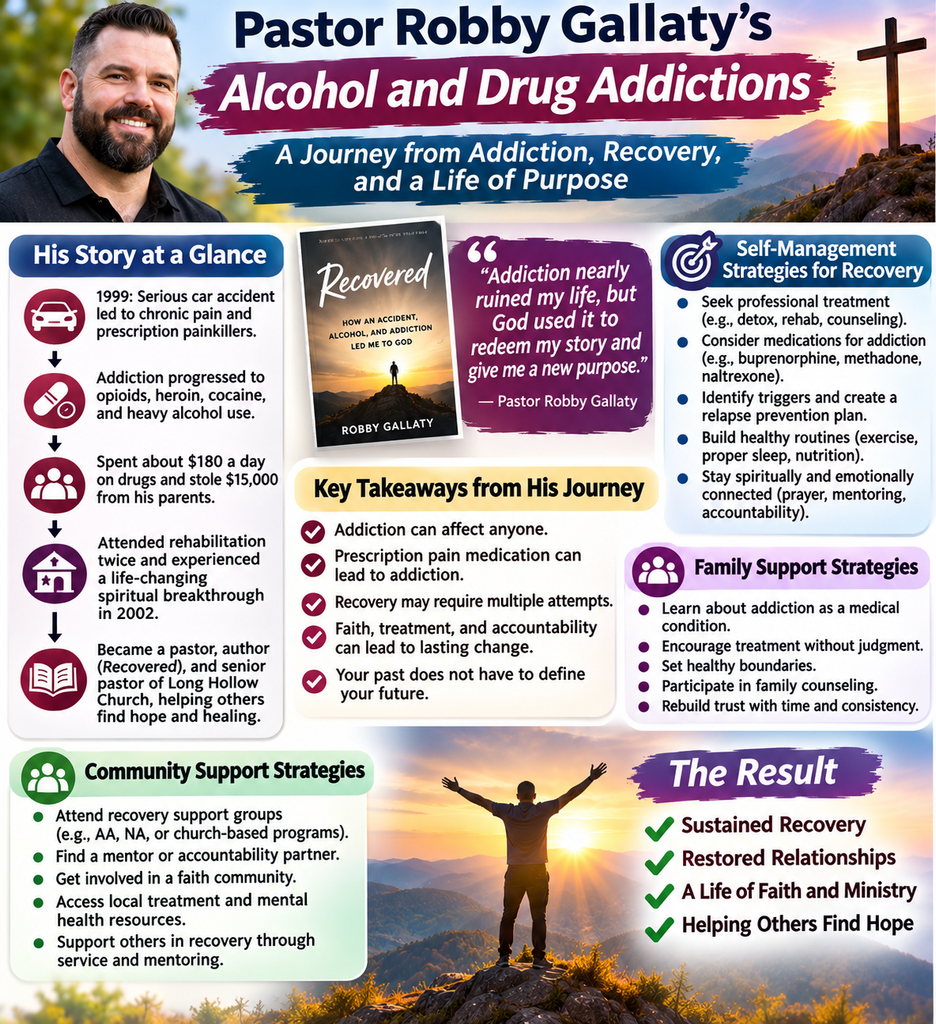
Before becoming a Christian pastor and author, Gallaty experienced a devastating struggle with alcohol and drugs, including prescription painkillers, heroin, and cocaine. His substance use escalated following a serious automobile accident that left him with significant injuries and chronic pain. What began as prescription pain management eventually developed into a dangerous pattern of addiction that affected his finances, relationships, and personal well-being.
After multiple rehabilitation attempts, serious personal losses, and a spiritual transformation in 2002, Gallaty began rebuilding his life. He later became the senior pastor of Long Hollow Church in Tennessee and shared his experiences in his book, Recovered: How an Accident, Alcohol, and Addiction Led Me to God. CBN+2
His journey illustrates an important message: Addiction does not have to define someone’s future. With appropriate treatment, personal commitment, supportive relationships, and community resources, recovery is possible.
Understanding Pastor Robby Gallaty’s Addiction Journey
Early life and the beginning of substance use
Robby Gallaty grew up in a Catholic household in Louisiana, where family relationships and religious traditions played important roles in his upbringing. As a young adult, he pursued professional opportunities and physical fitness, including competitive fighting.
However, his life changed dramatically in November 1999 when he was involved in a serious automobile accident.
The accident caused injuries to his neck and back, including herniated discs. Physicians prescribed pain medications to manage his symptoms.
According to Gallaty’s public testimony, his use of prescription medications escalated rapidly. Within several months, he developed problematic drug use and began seeking increasingly powerful substances, eventually transitioning to heroin and cocaine. B&H Publishing+1
The progression from prescription medications to addiction
Gallaty’s experience illustrates how opioid exposure can become especially dangerous when combined with other risk factors.
Prescription opioids can effectively treat certain types of pain, but repeated exposure may produce tolerance, physical dependence, and, in some individuals, opioid use disorder.
Alcohol and other drugs can further complicate addiction by impairing judgment and increasing health risks.
Important factors that can contribute to addiction include:
- Prescription opioid exposure: Pain medications may produce dependence and, in some individuals, addiction.
- Chronic pain: Persistent pain can create physical and emotional stress that complicates substance use.
- Tolerance: Repeated exposure may reduce the effects of a substance, encouraging escalating use.
- Emotional distress: Stress, trauma, and untreated mental health conditions can increase vulnerability.
- Polysubstance use: Combining alcohol, opioids, benzodiazepines, or other substances can increase overdose risk.
- Social influences: Substance availability and environments associated with drug use may reinforce harmful patterns.
Gallaty’s experience demonstrates that addiction is a complex medical condition rather than simply a lack of discipline or moral character.
The Consequences of Alcohol and Drug Addiction
As Gallaty’s addiction progressed, his life became increasingly unstable.
He has publicly described spending approximately $180 per day on heroin and cocaine and stealing $15,000 from his parents to support his substance use.
His addiction also contributed to financial difficulties and significant damage to family relationships.
During this period, he reported losing eight friends to drug-related deaths and seeing six others arrested.
Despite completing rehabilitation, Gallaty experienced a return to substance use before eventually establishing sustained recovery. Lifeway+1
Physical, emotional, and social consequences
His experiences highlight several consequences commonly associated with alcohol and drug addiction:
- Physical health complications: Overdose, respiratory depression, infectious diseases, liver damage, and cardiovascular problems.
- Mental health challenges: Anxiety, depression, emotional instability, and difficulty managing stress.
- Financial difficulties: Excessive spending on substances, unemployment, and accumulated debt.
- Relationship problems: Dishonesty, damaged trust, conflict, and emotional distance from loved ones.
- Legal consequences: Arrests, incarceration, and difficulties related to obtaining or distributing illegal substances.
- Social isolation: Withdrawal from healthy relationships and meaningful activities.
These consequences can reinforce substance use, making comprehensive treatment and continued support especially important.
The Turning Point: Rehabilitation, Faith, and Recovery
Gallaty has described undergoing two rehabilitation treatments during his struggle with addiction.
Following his second rehabilitation experience, he experienced a major spiritual turning point on November 12, 2002.
He credits his renewed Christian faith with helping him transform his life and establish a new sense of direction.
Approximately eight months later, David Platt began meeting with him regularly for Bible study, prayer, and personal accountability. This mentoring relationship continued for about two years and helped Gallaty develop the foundation for his future ministry.
Gallaty eventually pursued theological education and became a pastor, author, and founder of Replicate Ministries. Lifeway+1
His journey demonstrates how recovery may involve multiple dimensions of healing, including medical treatment, psychological growth, spiritual development, and supportive relationships.
However, spiritual transformation and rehabilitation should not be considered interchangeable. For individuals with opioid use disorder, evidence-based medical treatment remains essential, and alcohol withdrawal may require medically supervised care.
Self-Management Strategies: Building a Foundation for Lasting Recovery
Self-management involves developing practical skills to manage cravings, recognize triggers, stay engaged in treatment, and establish healthy daily routines.
Gallaty’s experiences emphasize personal accountability, meaningful relationships, and consistent daily practices.
Although his recovery centered heavily on Christian faith and discipleship, individuals can apply similar principles through religious or secular approaches.
Seeking professional treatment
One of the most important steps toward recovery is recognizing the need for professional assistance.
Alcohol and opioid use disorders may require different treatment approaches, depending on the individual’s substance use history, withdrawal risks, medical conditions, and personal goals.
Effective treatment strategies include:
- Comprehensive medical assessment: Evaluate substance use patterns, withdrawal risk, chronic pain, and co-occurring medical conditions.
- Medications for opioid use disorder: Buprenorphine and methadone reduce opioid cravings and overdose mortality. Extended-release naltrexone is another option for appropriately selected patients.
- Medications for alcohol use disorder: Naltrexone, acamprosate, and disulfiram may be considered based on clinical circumstances.
- Behavioral therapy: Cognitive behavioral therapy, motivational interviewing, and contingency management can help individuals develop recovery skills.
- Mental health treatment: Address depression, anxiety, PTSD, and other co-occurring conditions.
- Ongoing follow-up: Regular appointments help monitor progress and adjust treatment plans.
These are evidence-based treatment options, not claims that Gallaty personally used these medications or therapies.
Identifying triggers and managing cravings
Triggers are situations, emotions, or environments that increase the desire to use alcohol or drugs.
Common triggers include stress, chronic pain, loneliness, conflict, emotional distress, and contact with individuals associated with previous substance use.
Practical self-management strategies include:
- Recognizing personal triggers and early warning signs.
- Developing a written relapse prevention plan.
- Practicing mindfulness, prayer, or relaxation techniques.
- Maintaining a structured daily schedule.
- Engaging in regular physical activity and healthy hobbies.
- Attending recovery meetings or counseling sessions.
- Contacting supportive individuals when cravings become difficult to manage.
- Seeking medical assistance when symptoms or cravings worsen.
Developing purpose and personal accountability
A significant part of Gallaty’s recovery involved discovering a renewed sense of purpose through ministry.
His mentoring relationship with David Platt helped him develop spiritual discipline, accountability, and leadership skills.
Finding meaningful goals can strengthen recovery by encouraging healthier decisions and creating opportunities for personal growth.
Individuals may discover purpose through education, employment, parenting, volunteering, creative activities, or community involvement.
Recovery becomes more sustainable when individuals develop a life that supports their health, relationships, and personal values.
Family Support Strategies: Rebuilding Trust and Healing Relationships
Addiction affects more than the individual experiencing substance use. Family members often experience emotional exhaustion, uncertainty, fear, and financial difficulties.
Gallaty’s addiction significantly affected his parents, particularly when he stole money from them to finance his drug use.
His experiences demonstrate how addiction can damage trust even within close, supportive families.
Understanding addiction as a medical condition
Families may struggle to understand why a loved one continues using alcohol or drugs despite serious consequences.
Substance use disorders involve changes in brain systems associated with reward, motivation, stress, and behavioral control.
Understanding these mechanisms can help families respond with compassion while maintaining appropriate expectations.
Practical family support strategies
- Encourage professional treatment: Help loved ones locate qualified addiction specialists and rehabilitation programs.
- Practice nonjudgmental communication: Express concern without humiliation, blame, or threats.
- Establish healthy boundaries: Avoid financial or behavioral support that directly facilitates harmful substance use.
- Participate in family counseling: Address communication difficulties and unresolved emotional concerns.
- Recognize progress: Celebrate improvements while maintaining realistic expectations.
- Develop safety plans: Learn to recognize overdoses, administer naloxone, and follow emergency response procedures.
- Seek caregiver support: Encourage family members to participate in counseling or support groups.
Rebuilding trust after addiction
Rebuilding trust often requires patience, consistency, and accountability.
Individuals in recovery can demonstrate positive changes by following treatment recommendations, communicating honestly, and honoring commitments.
Families can support recovery while maintaining boundaries that protect their emotional and financial well-being.
Gallaty’s experience illustrates that family relationships can become an important source of motivation, even after significant conflict.
However, family members should not be held responsible for preventing relapse or guaranteeing recovery.
Community Support Strategies: The Role of Churches and Recovery Organizations
One of the most meaningful aspects of Gallaty’s journey is his transition from addiction to pastoral leadership.
After pursuing theological education, he became the senior pastor of Long Hollow Church in Hendersonville, Tennessee, in 2015.
Through his ministry, books, and speaking engagements, Gallaty has shared his experiences to encourage individuals struggling with addiction and other personal challenges.
His work highlights how community relationships and mentorship can provide meaning, accountability, and opportunities for personal development. B&H Publishing+1
How faith-based communities can support addiction recovery
Churches and other religious organizations can help reduce stigma and create supportive environments for individuals seeking recovery.
Effective community strategies include:
- Providing addiction education: Explain substance use disorders as treatable medical conditions.
- Offering recovery support groups: Create safe spaces for individuals to share experiences and receive encouragement.
- Partnering with healthcare providers: Connect individuals with licensed addiction specialists and mental health professionals.
- Supporting families: Offer educational workshops, counseling referrals, and caregiver resources.
- Promoting overdose prevention: Provide naloxone education and information about emergency services.
- Encouraging mentorship: Connect individuals with supportive community members and trained recovery coaches.
- Creating meaningful opportunities: Encourage volunteering, employment assistance, and community participation.
Faith-based support can complement professional treatment, but it should not replace evidence-based medical care.
Peer recovery programs
Peer support groups can reduce isolation and provide opportunities for individuals to learn from others who have experienced addiction.
Programs such as Alcoholics Anonymous, Narcotics Anonymous, and SMART Recovery offer different approaches to maintaining recovery.
Individuals may also benefit from certified peer recovery specialists, recovery community centers, and structured aftercare programs.
Understanding Relapse and the Importance of Continued Treatment
Gallaty’s experience included returning to substance use after rehabilitation.
His journey demonstrates that recovery is not always a straightforward process.
A recurrence of substance use may indicate that an individual needs additional support, medication adjustments, or a different treatment approach.
Common relapse risk factors
- Exposure to environments associated with previous substance use.
- Untreated anxiety, depression, or trauma.
- Chronic pain or unmanaged physical symptoms.
- Family conflict or relationship difficulties.
- Social isolation.
- Inconsistent treatment participation.
- Overconfidence about the ability to control substance use.
Strategies for preventing relapse
Effective relapse prevention involves recognizing early warning signs and responding before substance use escalates.
Helpful strategies include:
- Maintaining consistent medical and behavioral health treatment.
- Developing an individualized relapse prevention plan.
- Participating in peer recovery meetings.
- Maintaining supportive relationships.
- Avoiding high-risk situations when possible.
- Addressing mental health symptoms and chronic pain.
- Keeping naloxone accessible when opioid overdose is a risk.
- Seeking immediate professional assistance after returning to substance use.
For individuals with opioid use disorder, returning to opioids after a period of abstinence can be particularly dangerous because reduced tolerance increases overdose risk.
Lessons From Pastor Robby Gallaty’s Recovery Journey
Gallaty’s transformation from addiction to ministry offers several important lessons for individuals, families, and communities.
First, addiction can affect anyone. A supportive upbringing, religious background, or professional ambition does not eliminate the risk of developing a substance use disorder.
Second, prescription medications require careful monitoring. His experience demonstrates the importance of recognizing opioid-related risks, particularly when managing chronic pain.
Third, treatment may require multiple attempts. Returning to substance use does not mean recovery is impossible. Individuals may need different levels of care and continued support.
Fourth, family relationships matter. Compassion, accountability, and healthy boundaries can help individuals rebuild trust and strengthen their support systems.
Fifth, community involvement can support long-term recovery. Mentorship, peer support, and meaningful social connections can reduce isolation and encourage personal growth.
Finally, recovery can create opportunities for a renewed purpose. Gallaty’s transition into ministry illustrates how individuals can use their experiences to encourage and support others.
Resources for Individuals and Families Affected by Addiction
Individuals seeking assistance with alcohol or drug addiction can access several national resources.
- SAMHSA National Helpline: 1-800-662-HELP (4357), providing confidential treatment information and referrals.
- FindTreatment.gov: Find addiction treatment providers.
- Alcoholics Anonymous: Find alcohol recovery meetings.
- Narcotics Anonymous: Find drug recovery support meetings.
- SMART Recovery: Explore evidence-informed recovery support.
- 988 Suicide & Crisis Lifeline: Call or text 988 for mental health crisis support.
If an opioid overdose is suspected, call 911 immediately, administer naloxone if available, and follow emergency dispatcher instructions.
Individuals who drink heavily or regularly should seek medical guidance before abruptly stopping alcohol because withdrawal can cause seizures and other life-threatening complications.
Conclusion: From Addiction to Recovery and a Life of Purpose
Pastor Robby Gallaty’s journey from alcohol and drug addiction to pastoral leadership demonstrates the importance of hope, persistence, supportive relationships, and opportunities for personal transformation.
His experiences highlight how addiction can develop following prescription opioid exposure, progress into dangerous substance use, and create significant consequences for individuals and families.
Through rehabilitation, spiritual development, mentorship, and personal accountability, Gallaty rebuilt his life and discovered a renewed purpose in helping others.
For individuals struggling with addiction, his story reinforces the importance of seeking treatment, developing effective self-management skills, and maintaining supportive relationships.
For families, it emphasizes compassion, education, healthy boundaries, and patience throughout the recovery process.
For churches and communities, it demonstrates the opportunity to reduce stigma, promote evidence-based treatment, and provide meaningful recovery support.
Addiction may be part of someone’s past, but it does not have to determine their future. Recovery is possible, relationships can heal, and every step toward a healthier life matters.
Frequently Asked Questions and Answers
Understanding Pastor Robby Gallaty’s Addiction Journey
1. Who is Pastor Robby Gallaty?
Pastor Robby Gallaty is a Christian pastor, author, speaker, and founder of Replicate Ministries. He is widely known for sharing his personal experiences with substance addiction and recovery.
His testimony emphasizes the importance of faith, personal accountability, mentorship, and finding purpose after addiction.
2. How did Pastor Robby Gallaty develop an addiction?
According to his public testimony, Gallaty’s addiction developed following a serious automobile accident in November 1999.
The accident caused neck and back injuries, and he was prescribed opioid pain medications.
Over time, his substance use escalated, eventually involving heroin, cocaine, and other drugs.
His experience illustrates how prescription opioid exposure can contribute to addiction in some individuals, particularly when additional risk factors are present.
3. What substances did Pastor Robby Gallaty struggle with?
Gallaty has publicly discussed struggling with prescription painkillers, heroin, cocaine, and alcohol.
These substances affect the brain in different ways and carry significant health risks.
Opioids can cause respiratory depression and overdose, while cocaine increases cardiovascular risks. Alcohol can impair judgment and, when combined with opioids, substantially increase the risk of fatal overdose.
4. How did addiction affect Robby Gallaty’s personal life?
Gallaty has described experiencing serious financial difficulties, damaged family relationships, and emotional distress during his addiction.
He has publicly acknowledged spending substantial amounts of money on drugs and stealing from his parents to support his substance use.
His experiences demonstrate how addiction can disrupt relationships, finances, employment, and personal responsibilities.
5. Did Pastor Robby Gallaty attend rehabilitation?
Yes. Gallaty has described attending rehabilitation twice before establishing sustained recovery.
His experience demonstrates that recovery may require multiple treatment attempts and ongoing support.
Returning to substance use after treatment does not mean someone is incapable of recovering. It may indicate a need to reassess the treatment plan, address additional risk factors, or increase the level of care.
6. What was the turning point in Pastor Gallaty’s recovery?
Gallaty identifies November 12, 2002, as a significant turning point in his life. Following his second rehabilitation experience, he experienced a Christian spiritual conversion that changed his personal direction.
He later pursued theological education and ministry. His account emphasizes how faith, treatment experiences, and supportive relationships contributed to his transformation. Lifeway+1
7. How did faith influence Robby Gallaty’s recovery?
Gallaty credits his Christian faith with helping him rebuild his sense of identity, accountability, and purpose.
Prayer, Bible study, and spiritual mentorship became important parts of his life.
Although faith-based practices can provide valuable emotional and social support, they should complement rather than replace evidence-based addiction treatment when clinically indicated.
Self-Management Strategies for Addiction Recovery
8. What self-management strategies can individuals learn from Gallaty’s journey?
His experiences demonstrate the importance of recognizing addiction, accepting help, and developing healthy behaviors.
Effective strategies include:
- Seeking professional addiction treatment.
- Identifying triggers and developing a relapse prevention plan.
- Maintaining healthy sleep, nutrition, and exercise routines.
- Participating in counseling or recovery meetings.
- Developing meaningful personal goals.
- Building supportive relationships.
- Seeking medical assistance when cravings or withdrawal symptoms occur.
9. Can medications help treat alcohol and drug addiction?
Yes. Evidence-based medications can improve recovery outcomes.
For opioid use disorder, buprenorphine and methadone reduce cravings and overdose mortality. Extended-release naltrexone is another option for selected patients.
For alcohol use disorder, medications such as naltrexone and acamprosate can reduce drinking or support abstinence. Disulfiram is appropriate for some individuals under medical supervision.
There is no verified public evidence establishing that Gallaty personally used these medications.
10. Why is relapse prevention important?
Relapse prevention helps individuals recognize warning signs and respond before substance use escalates.
Strategies include identifying triggers, maintaining treatment participation, developing coping skills, and creating a plan for seeking immediate support.
Returning to opioid use after abstinence can be especially dangerous because reduced tolerance increases overdose risk.
11. What role did mentorship play in Gallaty’s recovery?
Approximately eight months after his spiritual conversion, Gallaty began meeting regularly with David Platt for prayer, Bible study, and personal accountability.
Their mentoring relationship continued for approximately two years and influenced Gallaty’s development as a Christian leader. Lifeway
Mentorship can also support addiction recovery by reducing isolation, providing encouragement, and helping individuals maintain meaningful goals.
Family Support and Relationship Healing
12. How did addiction affect Gallaty’s family?
Gallaty’s addiction caused significant distress within his family.
He has acknowledged stealing approximately $15,000 from his parents to support his substance use. His parents eventually required him to move out of their home.
Gallaty later described that difficult boundary as an important event in his life. Baptist Press
His experience shows that families can show compassion while setting boundaries that protect their safety and well-being.
13. How can families support someone struggling with addiction?
Families can provide emotional encouragement while helping loved ones access professional care.
Helpful strategies include:
- Learning about addiction as a treatable medical condition.
- Encouraging treatment without judgment.
- Establishing healthy boundaries.
- Participating in family counseling.
- Recognizing recovery progress.
- Learning overdose prevention and naloxone administration.
- Seeking emotional support for themselves.
14. How can families rebuild trust after addiction?
Rebuilding trust requires consistent behavior, honest communication, and patience.
Individuals in recovery can demonstrate accountability by following treatment recommendations and honoring commitments.
Families can recognize progress while maintaining reasonable expectations and boundaries.
Forgiveness and reconciliation may take time, particularly when addiction has caused financial or emotional harm.
15. What should families do if their loved one refuses treatment?
Families should communicate concerns calmly, provide information about available treatment, and avoid shame or humiliation.
They can also consult addiction professionals, establish appropriate boundaries, and develop safety plans.
Families should understand that they cannot force lasting recovery through pressure alone.
Community and Faith-Based Recovery Support
16. How did Robby Gallaty become a pastor?
After his recovery and spiritual conversion, Gallaty pursued theological education.
He earned a Master of Divinity in 2007 and a PhD in preaching in 2011 from New Orleans Baptist Theological Seminary.
He later became senior pastor of Long Hollow Baptist Church in Hendersonville, Tennessee, in 2015. Lifeway
17. What is Pastor Robby Gallaty’s book about addiction?
His book, Recovered: How an Accident, Alcohol, and Addiction Led Me to God, published in 2019, describes his automobile accident, addiction, rehabilitation experiences, family difficulties, and spiritual transformation.
The book emphasizes hope, faith, and the possibility of rebuilding life after addiction. B&H Publishing
18. How can churches support addiction recovery?
Churches can reduce stigma and connect individuals with supportive resources.
Effective strategies include:
- Offering addiction education.
- Hosting recovery support meetings.
- Connecting individuals with licensed treatment providers.
- Providing family support and counseling referrals.
- Encouraging mentorship and accountability.
- Promoting naloxone education and overdose prevention.
- Supporting recovery through volunteering and community involvement.
Faith-based support is most beneficial when it respects individual beliefs and complements professional treatment.
19. Can faith-based programs replace medical addiction treatment?
No. Faith-based programs can provide emotional support, spiritual guidance, and community connections, but they are not substitutes for indicated medical treatment.
Alcohol withdrawal can cause life-threatening complications, including seizures and delirium tremens.
Opioid use disorder treatment with buprenorphine or methadone can substantially reduce overdose mortality.
Medical treatment and spiritual support can work together.
20. Why are peer recovery groups important?
Peer recovery groups provide opportunities to connect with others who understand addiction.
Organizations such as Alcoholics Anonymous, Narcotics Anonymous, and SMART Recovery can help individuals develop coping strategies, accountability, and supportive relationships.
These programs can complement medical and behavioral health treatment.
Addiction Education and Prevention
21. Can prescription pain medications lead to heroin addiction?
Yes, in some individuals, prescription opioid misuse can progress to heroin use.
However, most people prescribed opioids do not transition to heroin, and opioid use disorder develops through multiple interacting risk factors.
Gallaty’s experience illustrates one possible pathway, not an inevitable outcome of prescription opioid treatment.
22. What are the warning signs of alcohol and drug addiction?
Common warning signs include:
- Difficulty controlling substance use.
- Strong cravings.
- Continuing use despite harmful consequences.
- Neglecting family, work, or school responsibilities.
- Repeated unsuccessful attempts to stop.
- Spending substantial time obtaining or using substances.
- Withdrawal symptoms when substance use decreases.
- Using substances in dangerous situations.
A qualified healthcare professional can assess these symptoms and determine whether a substance use disorder is present.
23. Can someone recover after multiple rehabilitation attempts?
Yes. Many individuals achieve sustained recovery after multiple treatment episodes.
Gallaty’s story demonstrates that previous setbacks do not eliminate the possibility of meaningful change.
Recovery may require adjustments to medication, behavioral treatment, mental health care, and social support.
24. What is the most important lesson from Robby Gallaty’s recovery journey?
His journey demonstrates that addiction can have serious consequences but does not have to determine someone’s future.
His experiences highlight the importance of seeking help, developing supportive relationships, establishing accountability, and discovering meaningful personal goals.
Recovery can create opportunities for improved health, restored relationships, and a renewed sense of purpose.
25. Where can individuals and families find addiction treatment resources?
National resources include:
- SAMHSA National Helpline: 1-800-662-HELP (4357).
- FindTreatment.gov: Find addiction treatment providers.
- Alcoholics Anonymous: Find alcohol recovery meetings.
- Narcotics Anonymous: Find drug recovery support meetings.
- SMART Recovery: Explore recovery support programs.
- 988 Suicide & Crisis Lifeline: Call or text 988 for immediate emotional crisis support.
For a suspected opioid overdose, call 911, administer naloxone if available, and follow emergency dispatcher instructions.
Video: