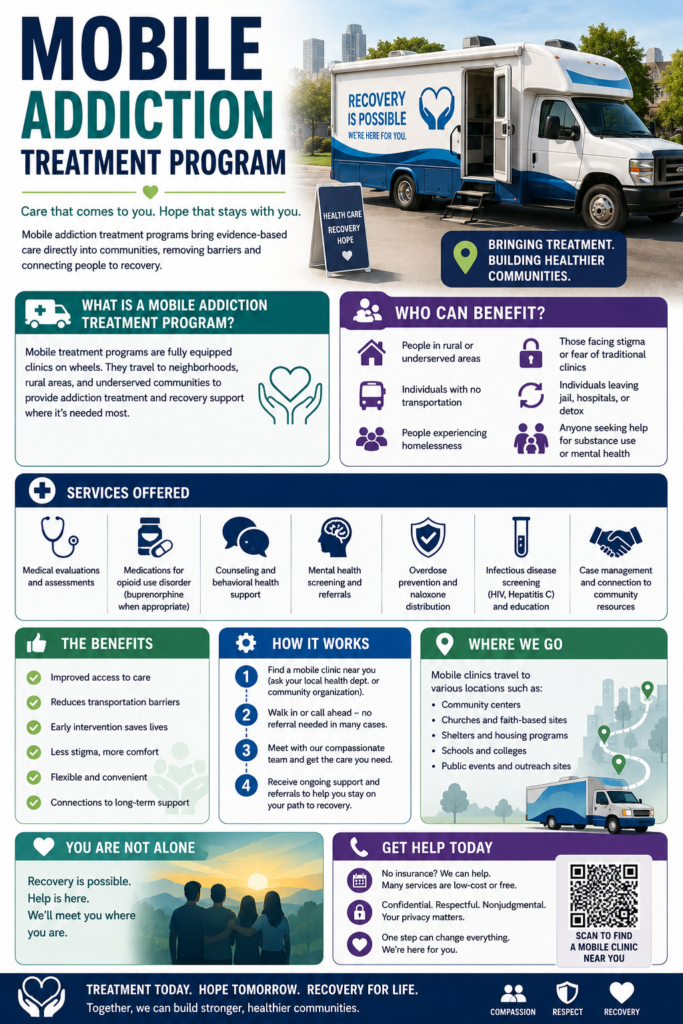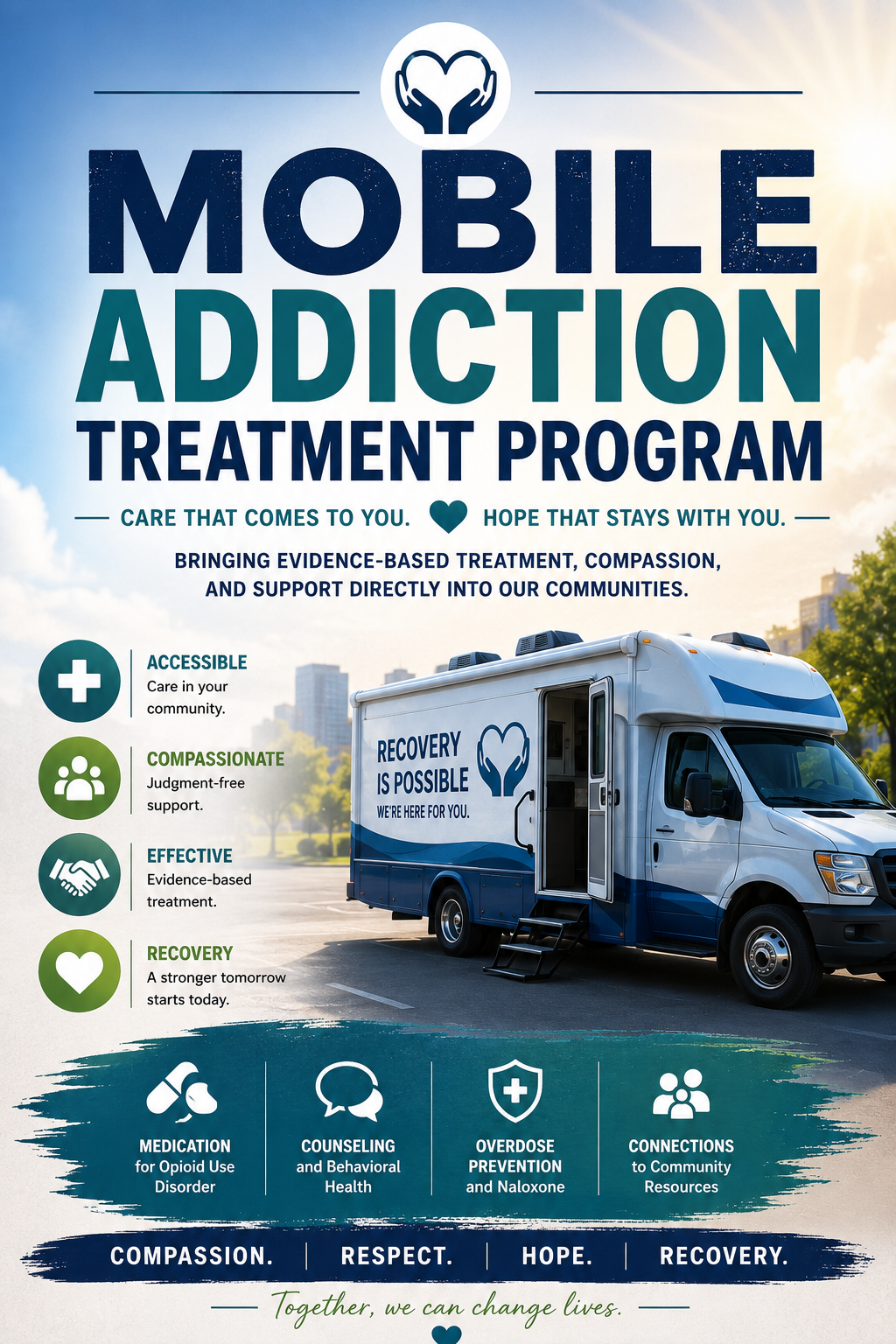
Mobile addiction treatment programs are expanding access to evidence-based care by delivering healthcare services directly to people in their communities. Operating from specially equipped vans or mobile clinics, these programs offer medical assessments, medications for opioid use disorder, counseling, mental health screenings, overdose prevention education, and referrals to additional health and social services. By overcoming common barriers such as transportation difficulties, limited access to treatment facilities, and stigma, mobile clinics make it easier for individuals to start and remain engaged in recovery. As the demand for accessible addiction treatment continues to increase, mobile programs are playing an increasingly important role in improving public health and expanding access to comprehensive care.
Mobile Addiction Treatment Programs
Mobile addiction treatment programs bring evidence-based care directly to people in their communities using specially equipped medical vans, buses, or mobile clinics. These programs are designed to reduce barriers to treatment by providing healthcare services in neighborhoods where access to addiction care may be limited. By meeting people where they are, mobile treatment programs can improve access to lifesaving medications, counseling, harm reduction services, and recovery support.
What Is a Mobile Addiction Treatment Program?
A mobile addiction treatment program functions much like a traditional outpatient clinic but operates from a vehicle that travels to different locations on a scheduled basis. These units are staffed by healthcare professionals, including physicians, nurse practitioners, physician assistants, nurses, counselors, peer recovery specialists, social workers, and case managers.
Mobile programs often serve:
- Rural communities.
- Underserved urban neighborhoods.
- Individuals experiencing homelessness.
- People with transportation barriers.
- Recently incarcerated individuals.
- People reluctant to visit traditional healthcare facilities because of stigma or fear.
Services Offered
While services vary by program, many mobile addiction treatment units provide:
- Screening and assessment for substance use disorders.
- Medical evaluations.
- Medications for opioid use disorder, such as buprenorphine when appropriate.
- Counseling and behavioral health referrals.
- Mental health screening.
- Overdose prevention education.
- Naloxone distribution.
- Harm reduction services.
- Infectious disease screening for HIV and hepatitis C.
- Pregnancy testing and referrals.
- Case management.
- Peer recovery coaching.
- Connections to housing, employment, and social services.
Some mobile programs also offer telehealth appointments with addiction specialists.
Benefits of Mobile Treatment
1. Improved Access to Care
Transportation is one of the biggest barriers to addiction treatment. Mobile clinics bring healthcare closer to patients, reducing travel time and missed appointments.
2. Earlier Intervention
People are often more willing to seek help when treatment is available in familiar community settings. Early intervention can prevent overdose and reduce progression of substance use disorders.
3. Reduced Stigma
Receiving care in a community-based mobile clinic may feel less intimidating than visiting a traditional addiction treatment center, encouraging more people to seek help.
4. Flexible Care
Many mobile clinics operate in the evenings or on weekends and travel to multiple locations, making treatment more convenient for individuals with work or family responsibilities.
5. Continuity of Care
Mobile teams often coordinate with hospitals, primary care providers, behavioral health specialists, pharmacies, and community organizations to ensure ongoing treatment and follow-up.
Challenges
Despite their advantages, mobile treatment programs also face challenges:
- Limited clinic space.
- Funding and sustainability.
- Staffing shortages.
- Weather and transportation issues.
- Regulatory requirements.
- Medication storage and security.
- High demand for services.
Even with these limitations, mobile programs continue to expand because of their ability to reach underserved populations.
Who Can Benefit?
Mobile addiction treatment may be especially helpful for individuals who:
- Have opioid, alcohol, or other substance use disorders.
- Lack reliable transportation.
- Live in rural or underserved communities.
- Are experiencing homelessness.
- Have difficulty attending office appointments.
- Need rapid access to medications and counseling.
- Require connections to community resources.
Role in the Opioid Crisis
Mobile treatment programs have become an important strategy in addressing the opioid overdose epidemic. By providing rapid access to treatment, medications for opioid use disorder, naloxone, and recovery support, these programs help reduce overdose deaths, improve treatment engagement, and increase opportunities for long-term recovery.
Looking Ahead
As healthcare systems continue to focus on improving access to addiction treatment, mobile programs are expected to play an increasingly important role. Advances in telehealth, electronic medical records, and partnerships with community organizations are making it easier for mobile clinics to deliver comprehensive, patient-centered care while reaching people who might otherwise go untreated.
Key Takeaway
Mobile addiction treatment programs are transforming addiction care by bringing evidence-based services directly into communities. They reduce barriers such as transportation, stigma, and limited healthcare access while providing medical evaluations, medications for opioid use disorder, counseling, overdose prevention, and connections to social services. Although challenges remain, mobile treatment programs represent an innovative and effective approach to expanding access to addiction care and supporting long-term recovery.
Self-Management Strategies to Understand Mobile Addiction Treatment Programs
Mobile addiction treatment programs bring evidence-based addiction care directly into communities through specially equipped medical vans or mobile clinics. These programs help reduce barriers such as transportation, stigma, and limited access to healthcare by providing medical treatment, counseling, medications for opioid use disorder, and recovery support closer to where people live. Understanding how these services work can help individuals make informed decisions and actively participate in their recovery.
1. Learn What Services Are Available
Become familiar with the services offered by your local mobile treatment program. Many provide medical evaluations, medications for opioid use disorder, counseling, mental health screenings, overdose prevention education, naloxone distribution, referrals to specialty care, and connections to housing, employment, and other community resources.
2. Be an Active Participant in Your Care
Ask questions about your diagnosis, treatment options, medications, and recovery goals. Understanding your treatment plan helps you make informed decisions and increases your confidence in managing your recovery.
3. Keep Scheduled Appointments
Mobile clinics often visit specific locations on designated days and times. Mark appointment dates on your calendar, set reminders, and arrive on time to maintain continuity of care and avoid treatment interruptions.
4. Take Medications as Prescribed
If you receive medications such as buprenorphine or other prescribed treatments, take them exactly as directed. Never adjust your dose or stop treatment without first speaking to your healthcare provider.
5. Monitor Your Recovery Progress
Keep a journal to track cravings, mood, stress levels, sleep, medication adherence, and any triggers for substance use. Sharing this information with your healthcare team can help them adjust your treatment plan when needed.
6. Build Healthy Daily Habits
Recovery is strengthened by healthy routines. Focus on:
- Getting adequate sleep.
- Eating a balanced diet.
- Exercising regularly.
- Staying hydrated.
- Practicing stress management techniques.
- Avoiding alcohol and non-prescribed substances.
These habits support both physical and emotional healing.
7. Develop Relapse Prevention Skills
Work with your treatment team to identify high-risk situations, recognize warning signs of relapse, and create strategies for managing cravings and stressful events before they become overwhelming.
8. Use Available Support Services
Take advantage of counseling, peer recovery coaches, support groups, case management, and social services offered through the mobile clinic. Recovery is often more successful when multiple supports are used together.
9. Carry Naloxone if Appropriate
If you have opioid use disorder or are at risk for opioid overdose, keep naloxone readily available and learn how to use it. Encourage trusted family members or friends to become familiar with overdose recognition and naloxone administration.
10. Stay Connected with Your Healthcare Team
Communicate openly with your providers about side effects, medication concerns, mental health symptoms, or life changes that may affect your recovery. Prompt communication allows your treatment team to address problems early.
Key Takeaway
Mobile addiction treatment programs make high-quality addiction care more accessible by bringing services directly into the community. Successful recovery depends not only on attending appointments but also on actively participating in treatment, following medication plans, developing healthy coping skills, and building a strong support network. By taking an active role in your care and using the resources available through mobile treatment programs, you can strengthen your recovery and improve your long-term health and well-being.
Family Support Strategies to Understand Mobile Addiction Treatment Programs
Mobile addiction treatment programs bring evidence-based addiction care directly into communities through specially equipped medical vans or mobile clinics. These programs reduce barriers such as transportation, stigma, and limited access to healthcare by offering medical evaluations, medications for opioid use disorder, counseling, and recovery support close to where people live. Family involvement can improve treatment engagement, strengthen recovery, and encourage long-term success.
1. Learn How Mobile Treatment Programs Work
Take time to understand the services offered by the mobile clinic, including medical care, counseling, medication management, overdose prevention, mental health referrals, and connections to community resources. Knowing what to expect can help families provide informed support.
2. Encourage Participation in Treatment
Support your loved one by encouraging them to attend scheduled appointments and remain engaged in their treatment plan. Offer reminders, help coordinate transportation if needed, or assist with scheduling when appropriate.
3. Communicate with Compassion
Recovery is often a gradual process with setbacks and successes. Practice active listening, avoid judgment or blame, and encourage honest conversations about recovery challenges. A supportive home environment can strengthen motivation and treatment adherence.
4. Learn About Medications for Opioid Use Disorder
If your loved one is receiving medications such as buprenorphine or methadone, educate yourself about how these medications work. Understanding that they are evidence-based treatments—not substitutes for one addiction with another—can reduce stigma and improve family support.
5. Encourage Healthy Daily Routines
Families can reinforce recovery by promoting:
- Regular sleep schedules.
- Nutritious meals.
- Physical activity.
- Stress management.
- Medication adherence.
- Participation in counseling and recovery meetings.
Healthy routines support both physical and emotional healing.
6. Recognize Warning Signs of Relapse
Learn to identify changes in mood, behavior, sleep patterns, social withdrawal, increased cravings, or returning to unhealthy environments. Early recognition allows families to encourage prompt contact with the treatment team before a crisis develops.
7. Keep Naloxone Available
If your loved one is at risk for opioid overdose, maintain naloxone in the home and ensure family members know how to recognize an overdose, administer naloxone, and call 911 immediately. Being prepared can save a life.
8. Support Privacy and Independence
While encouragement is valuable, recovery is ultimately the individual’s responsibility. Respect your loved one’s privacy, avoid excessive monitoring, and allow them to develop confidence in managing their own recovery while remaining available for support.
9. Utilize Family Support Services
Many mobile addiction treatment programs offer family education, counseling, peer support, or referrals to community resources. Participating in these services can improve communication, strengthen relationships, and help family members better understand addiction and recovery.
10. Care for Yourself
Supporting someone with a substance use disorder can be emotionally demanding. Family members should also prioritize their own well-being by seeking counseling if needed, joining family support groups, practicing healthy boundaries, and maintaining self-care routines to reduce stress and prevent caregiver burnout.
Key Takeaway
Mobile addiction treatment programs make recovery services more accessible by bringing comprehensive care directly into the community. Families play an important role by encouraging treatment participation, promoting healthy routines, learning about evidence-based medications, recognizing warning signs, and maintaining compassionate communication. When combined with professional care, family support can improve treatment engagement, reduce relapse risk, and help individuals build a strong foundation for lasting recovery.
Community Resource Strategies to Understand Mobile Addiction Treatment Programs
Mobile addiction treatment programs deliver evidence-based healthcare directly to neighborhoods via specially equipped medical vans or mobile clinics. By reducing barriers such as transportation, stigma, and limited access to care, these programs help individuals begin and maintain recovery from substance use disorders. Community resources are essential for increasing awareness, expanding access, and supporting long-term recovery.
1. Learn About Local Mobile Treatment Services
Contact your local health department, community health center, hospital, or behavioral health agency to learn whether a mobile addiction treatment program serves your area. Understanding where and when mobile clinics operate can help individuals access care more quickly.
2. Partner with Community Health Centers
Federally qualified health centers (FQHCs), primary care clinics, and behavioral health organizations often collaborate with mobile treatment programs to provide ongoing medical care, mental health services, chronic disease management, and preventive healthcare after individuals begin treatment.
3. Connect with Peer Recovery Organizations
Peer recovery specialists and recovery community organizations provide mentoring, encouragement, and practical guidance from individuals with lived experience. These services can improve treatment engagement, reduce isolation, and strengthen long-term recovery.
4. Utilize Mental Health Services
Many people with substance use disorders also experience depression, anxiety, PTSD, or other mental health conditions. Community mental health centers offer counseling, psychiatric evaluations, trauma-informed care, crisis intervention, and case management that complement addiction treatment.
5. Access Harm Reduction Programs
Community harm reduction services may provide:
- Naloxone distribution and training.
- Overdose prevention education.
- Referrals to addiction treatment.
- Infectious disease screening.
- Syringe service programs where legally available.
- Health education and community outreach.
These services reduce overdose risk while helping individuals connect with healthcare.
6. Participate in Recovery Support Groups
Community organizations offer support groups such as Alcoholics Anonymous (AA), Narcotics Anonymous (NA), SMART Recovery, and other peer-led recovery programs. These groups provide ongoing encouragement, accountability, and coping strategies that complement professional treatment.
7. Explore Social Support Services
Many mobile treatment programs work closely with community agencies that provide assistance with:
- Housing.
- Employment services.
- Food assistance.
- Transportation.
- Legal aid.
- Vocational rehabilitation.
- Insurance enrollment.
Addressing these social needs can improve treatment retention and recovery outcomes.
8. Attend Community Education Events
Hospitals, public health departments, schools, and nonprofit organizations frequently offer educational workshops on addiction, overdose prevention, recovery resources, and medications for opioid use disorder. These events help reduce stigma and improve public understanding of addiction as a treatable medical condition.
9. Use Crisis and Emergency Resources
Individuals experiencing a substance use crisis, severe withdrawal, or an overdose should seek immediate medical attention by calling 911. People experiencing emotional distress or suicidal thoughts can also access immediate support through the 988 Suicide & Crisis Lifeline and local crisis intervention services.
10. Advocate for Expanded Access
Community members can support efforts to expand mobile addiction treatment by encouraging partnerships among healthcare systems, public health agencies, law enforcement, faith-based organizations, and community leaders. Increased funding, public education, and policy support can help mobile clinics reach more individuals in need.
Key Takeaway
Mobile addiction treatment programs are transforming access to addiction care by bringing comprehensive, evidence-based services directly into communities. Their success is strengthened through partnerships with healthcare providers, mental health agencies, peer recovery organizations, harm reduction programs, social service agencies, and community education initiatives. By working together, communities can reduce barriers to treatment, decrease overdose deaths, improve recovery outcomes, and ensure that individuals have access to compassionate, high-quality care close to home.
Frequently Asked Questions
Here are some common questions:
1. What is a mobile addiction treatment program?
A mobile addiction treatment program is a healthcare clinic on wheels that brings evidence-based addiction treatment directly to communities. Mobile clinics provide medical care, counseling, medications for substance use disorders, and recovery support to people who may have difficulty accessing traditional treatment centers.
2. Who can use a mobile addiction treatment program?
Mobile programs are designed for anyone seeking help with substance use disorders. They often serve individuals in rural communities, underserved neighborhoods, people experiencing homelessness, those without reliable transportation, and anyone facing barriers to traditional healthcare.
3. What services are offered?
Services vary by program but may include:
- Substance use assessments.
- Medical evaluations.
- Medications for opioid use disorder (MOUD).
- Counseling and behavioral health services.
- Mental health screenings.
- Overdose prevention education.
- Naloxone distribution.
- Peer recovery support.
- Case management.
- Referrals to housing, employment, and social services.
4. Are mobile addiction treatment programs confidential?
Yes. Mobile treatment programs must comply with the same federal and state privacy laws as traditional healthcare facilities, including protecting patient confidentiality and safeguarding medical records.
5. What medications are available?
Many mobile clinics provide medications for opioid use disorder, such as buprenorphine, and some may coordinate treatment with methadone programs or offer naltrexone, depending on their services and local regulations.
6. Do I need health insurance?
Not always. Many mobile addiction treatment programs accept Medicaid, Medicare, and private insurance. Some also offer free or low-cost services through grants, public health funding, or community partnerships. Staff can help determine eligibility and explore financial assistance options.
7. Do I need an appointment?
It depends on the program. Some mobile clinics accept walk-in patients, while others recommend scheduling an appointment. Checking the clinic’s schedule ahead of time can help reduce wait times.
8. Can I receive mental health care through a mobile clinic?
Many mobile programs offer mental health screenings, counseling, and referrals to psychiatrists or therapists. Some also use telehealth services to connect patients with specialists when needed.
9. How do mobile clinics help prevent overdoses?
Many programs distribute naloxone, provide overdose prevention education, teach people how to recognize an overdose, and connect individuals with treatment before an overdose occurs.
10. Can family members receive information or support?
Yes. Many mobile treatment programs offer family education, counseling referrals, and information about community support groups to help loved ones better understand addiction and recovery.
11. Are mobile addiction treatment programs effective?
Research has shown that mobile treatment programs can improve access to care, increase treatment engagement, reduce barriers such as transportation and stigma, and help more individuals begin and remain in recovery.
12. What happens if I need services the mobile clinic doesn’t provide?
Mobile treatment teams can refer patients to hospitals, specialty addiction treatment programs, mental health providers, primary care practices, housing services, employment programs, and other community resources for ongoing care.
13. How can I find a mobile addiction treatment program near me?
You can contact your local health department, community health center, behavioral health agency, hospital, or state substance use services office. Many organizations also list mobile clinic schedules and locations on their websites or social media pages.
14. Can mobile programs treat addictions other than opioids?
Yes. While many programs focus on opioid use disorder, they may also provide screening, counseling, referrals, and support for alcohol, stimulant, cannabis, and other substance use disorders.
15. What is the biggest advantage of a mobile addiction treatment program?
The greatest benefit is accessibility. By bringing evidence-based addiction treatment directly into neighborhoods, mobile clinics reduce barriers such as transportation, stigma, and limited healthcare access. This allows more people to receive timely treatment, remain engaged in recovery, and connect with ongoing medical, mental health, and community support services.
Conclusion
Mobile addiction treatment programs demonstrate that effective addiction care does not have to be limited to traditional clinics or hospitals. By delivering comprehensive, patient-centered services directly to neighborhoods and underserved populations, these programs improve access to treatment, encourage earlier intervention, and support long-term recovery. While challenges such as funding, staffing, and expanding services remain, mobile clinics continue to play a vital role in addressing the addiction crisis. Through collaboration with healthcare providers, community organizations, and peer recovery services, mobile addiction treatment programs offer hope, reduce overdose risk, and help more individuals build healthier, substance-free lives.
Video: How This Mobile Unit Transforms Addiction Care #treatment #realstories #hope