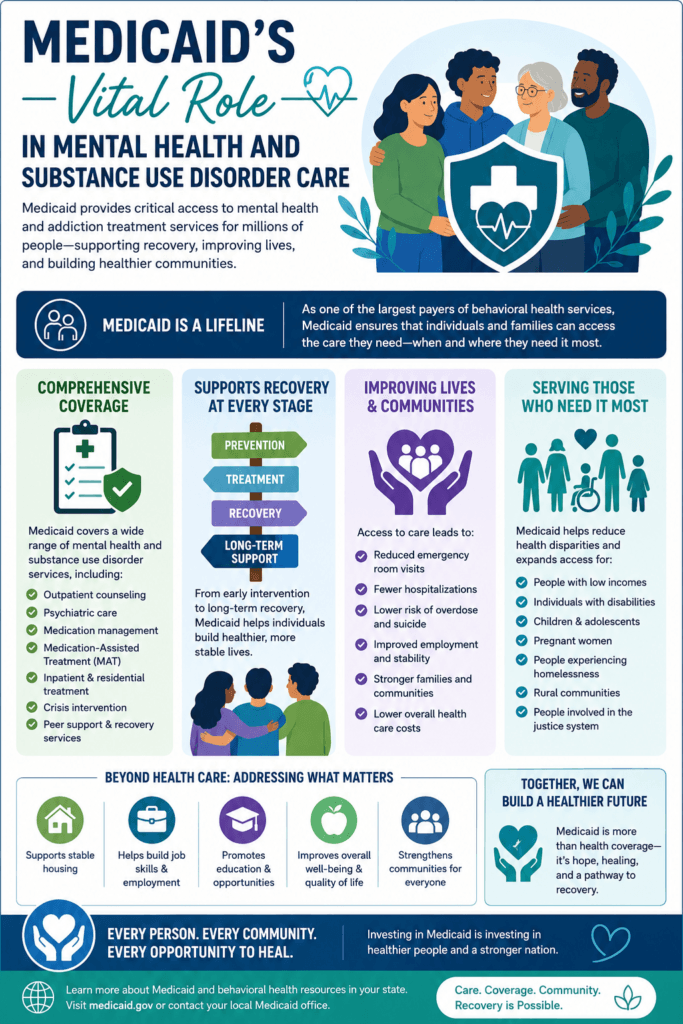
Medicaid plays a vital role in the United States healthcare system by providing access to essential mental health and substance use disorder (SUD) services for millions of individuals. Mental illness and addiction can significantly impact a person’s physical health, relationships, employment, and overall quality of life, making access to affordable treatment critically important. As one of the nation’s largest sources of behavioral health funding, Medicaid helps individuals receive services such as counseling, psychiatric care, medication management, crisis intervention, medication-assisted treatment (MAT), and recovery support. By reducing financial barriers and expanding access to evidence-based care, Medicaid serves as a lifeline for vulnerable populations and contributes to healthier individuals, stronger families, and more resilient communities.
Medicaid’s Vital Role in Mental Health and Substance Use Disorder Care
Mental health conditions and substance use disorders (SUDs) affect millions of Americans each year, creating significant challenges for individuals, families, and communities. Access to affordable, evidence-based treatment is essential for recovery, yet many people face financial barriers that prevent them from receiving the care they need. Medicaid plays a critical role in addressing these barriers by providing health coverage to low-income individuals, children, pregnant women, older adults, and people with disabilities. As one of the largest payers of behavioral health services in the United States, Medicaid helps ensure access to mental health treatment, addiction services, medications, counseling, crisis intervention, and recovery support programs. Its comprehensive coverage has become a cornerstone of efforts to reduce the burden of mental illness and substance use disorders while improving health outcomes and quality of life.
The Importance of Medicaid in Behavioral Health Care
Medicaid serves as a safety net for individuals who might otherwise go without treatment. Many people living with serious mental illnesses, such as Schizophrenia, Bipolar Disorder, depression, and anxiety, rely on Medicaid to access psychiatric evaluations, therapy, medication management, and hospitalization when needed.
For individuals with substance use disorders, Medicaid often covers services across the entire continuum of care, including:
- Screening and early intervention
- Outpatient counseling
- Intensive outpatient programs (IOPs)
- Medication-assisted treatment (MAT)
- Residential treatment services
- Peer recovery support
- Relapse prevention programs
- Recovery housing and supportive services in some states
These services help individuals begin and maintain recovery while reducing the risk of overdose, hospitalization, incarceration, and homelessness.
Supporting Medication-Assisted Treatment
One of Medicaid’s most significant contributions to addiction treatment is coverage for medications used to treat opioid use disorder. These medications include Buprenorphine, Methadone, and Naltrexone. Research consistently shows that medication-assisted treatment reduces opioid use, lowers overdose risk, improves treatment retention, and supports long-term recovery.
Without Medicaid coverage, many patients would struggle to afford these life-saving medications and the associated counseling and medical services necessary for successful treatment.
Improving Access for Vulnerable Populations
Medicaid is particularly important for vulnerable populations who experience disproportionately high rates of mental illness and substance use disorders, including:
- Individuals experiencing homelessness
- People involved in the criminal justice system
- Pregnant women with substance use disorders
- Children and adolescents with behavioral health needs
- Individuals with co-occurring mental health and substance use disorders
- Rural populations with limited healthcare access
By covering behavioral health services, Medicaid helps reduce health disparities and promotes equitable access to treatment.
Economic and Community Benefits
Investing in mental health and addiction treatment through Medicaid benefits not only individuals but also communities. Effective treatment can lead to:
- Reduced emergency department visits
- Lower hospitalization rates
- Decreased criminal justice involvement
- Improved employment outcomes
- Greater family stability
- Reduced healthcare costs over time
When individuals receive timely treatment, they are more likely to remain engaged in their communities, maintain employment, and support their families.
Challenges and Opportunities
Despite its importance, Medicaid faces ongoing challenges. Provider shortages, reimbursement limitations, administrative barriers, and differences in coverage among states can affect access to care. Continued efforts to expand behavioral health services, increase provider participation, strengthen telehealth programs, and improve integration between physical and behavioral healthcare can further enhance Medicaid’s impact.
Emerging initiatives also focus on expanding peer recovery services, crisis stabilization programs, and community-based treatment models that address social determinants of health alongside medical needs.
Conclusion
Medicaid remains one of the most important tools in the United States for addressing mental health conditions and substance use disorders. By providing access to counseling, psychiatric care, medications, recovery support, and comprehensive behavioral health services, Medicaid helps millions of individuals receive treatment that might otherwise be unavailable. Its role extends beyond healthcare coverage, contributing to healthier families, stronger communities, reduced healthcare costs, and improved recovery outcomes. As the nation continues to confront growing mental health and addiction challenges, Medicaid will remain a vital component of an effective and compassionate behavioral healthcare system.
Self-Management Strategies to Understand Medicaid’s Vital Role in Mental Health and Substance Use Disorder Care
Self-management involves taking an active role in understanding healthcare resources, accessing treatment, and maintaining recovery. For individuals living with mental health conditions or substance use disorders, learning how Medicaid works can help maximize available benefits and improve long-term health outcomes. The following self-management strategies can help individuals better understand and utilize Medicaid services.
1. Learn About Your Medicaid Benefits
Take time to review your Medicaid coverage and understand which behavioral health services are included. Benefits may cover counseling, psychiatric care, medication management, crisis services, medication-assisted treatment (MAT), inpatient treatment, and recovery support services. Knowing what services are available can help you seek appropriate care before problems worsen.
2. Maintain Personal Health Records
Keep a record of medical appointments, diagnoses, medications, treatment plans, and provider contact information. Organized records help individuals communicate effectively with healthcare providers and ensure continuity of care when changing providers or treatment programs.
3. Understand Medication Coverage
If you are receiving treatment for a mental health condition or substance use disorder, learn which medications are covered under your Medicaid plan. Understanding prior authorization requirements, refill policies, and pharmacy options can prevent treatment interruptions and support medication adherence.
4. Develop a Recovery-Oriented Treatment Plan
Work with healthcare providers to create realistic treatment goals. These goals may include attending counseling sessions, participating in support groups, maintaining medication adherence, reducing substance-use triggers, improving physical health, or strengthening social relationships. Medicaid-covered services can support each of these goals.
5. Use Preventive and Early Intervention Services
Do not wait for symptoms to become severe before seeking help. Utilize preventive screenings, behavioral health assessments, and early intervention services covered by Medicaid. Early treatment often leads to better outcomes and reduces the need for emergency care.
6. Learn to Navigate the Healthcare System
Become familiar with Medicaid provider networks, referral requirements, and available community resources. Knowing how to locate mental health specialists, addiction treatment programs, and crisis services can improve access to care when it is needed most.
7. Participate Actively in Treatment Decisions
Ask questions during appointments and seek clarification about diagnoses, medications, treatment options, and recovery plans. Active participation promotes self-advocacy and helps individuals make informed healthcare decisions.
8. Monitor Symptoms and Recovery Progress
Track changes in mood, anxiety levels, sleep patterns, cravings, substance use, and overall functioning. Journals, recovery apps, or symptom-tracking tools can help identify patterns and provide useful information for healthcare providers.
9. Utilize Telehealth Services
Many Medicaid programs cover telehealth visits for mental health and addiction treatment. Virtual appointments can improve access to care, especially for individuals living in rural areas, experiencing transportation barriers, or managing busy schedules.
10. Build Crisis and Relapse Prevention Plans
Work with providers to develop written plans that identify warning signs, coping strategies, emergency contacts, crisis hotlines, and treatment resources. Having a plan in place can reduce the impact of psychiatric crises or substance use relapses.
11. Stay Informed About Medicaid Changes
Medicaid policies and eligibility requirements can change over time. Regularly reviewing updates from your state’s Medicaid program can help ensure continuous coverage and prevent unexpected disruptions in care.
12. Practice Healthy Lifestyle Habits
Mental health and recovery are supported by healthy daily habits, including:
- Regular physical activity
- Balanced nutrition
- Adequate sleep
- Stress management techniques
- Mindfulness and relaxation practices
- Avoidance of substance use triggers
These habits complement professional treatment and improve overall well-being.
Conclusion
Understanding Medicaid and actively managing one’s healthcare can significantly improve mental health and substance use disorder recovery outcomes. By learning about available benefits, maintaining treatment engagement, monitoring progress, utilizing preventive services, and developing strong self-advocacy skills, individuals can maximize the support Medicaid provides. Effective self-management empowers people to take control of their recovery journey, improve quality of life, and build a stronger foundation for long-term wellness.
Family Support Strategies to Understand Medicaid’s Vital Role in Mental Health and Substance Use Disorder Care
Families often play a critical role in helping loved ones access and maintain treatment for mental health conditions and substance use disorders (SUDs). Understanding how Medicaid works can empower families to navigate healthcare systems, advocate for needed services, and support recovery. By becoming informed and involved, families can help reduce barriers to care and improve long-term outcomes for their loved ones.
1. Educate the Family About Medicaid Benefits
Family members should learn what behavioral health services are covered under Medicaid, including counseling, psychiatric care, crisis intervention, medication management, medication-assisted treatment (MAT), residential treatment, and recovery support services. Understanding available benefits helps families identify treatment options and avoid delays in care.
2. Assist With Enrollment and Renewal Processes
Many individuals with mental health conditions or substance use disorders may struggle with paperwork, deadlines, or understanding eligibility requirements. Family members can help gather documentation, complete applications, track renewal dates, and ensure continuous Medicaid coverage.
3. Encourage Early Treatment Seeking
Families can help recognize early warning signs of mental health challenges or substance misuse and encourage loved ones to seek professional help before symptoms worsen. Early intervention often leads to better treatment outcomes and may prevent crises that require emergency services.
4. Participate in Treatment Planning
When appropriate and with patient consent, family members can participate in treatment discussions, appointments, and recovery planning. Understanding treatment goals and available Medicaid-covered services helps families provide meaningful support while respecting individual autonomy.
5. Learn About Medication-Assisted Treatment (MAT)
Families should become familiar with evidence-based treatments such as Buprenorphine, Methadone, and Naltrexone. Understanding how these medications work can reduce stigma, improve treatment adherence, and support recovery efforts.
6. Help Coordinate Healthcare Services
Individuals with co-occurring mental health and substance use disorders often receive care from multiple providers. Family members can help organize appointments, maintain treatment records, coordinate transportation, and, when appropriate, ensure communication among healthcare professionals.
7. Promote Recovery-Friendly Home Environments
Families can create supportive environments that encourage wellness and recovery by:
- Reducing exposure to substance use triggers
- Encouraging healthy routines
- Supporting medication adherence
- Promoting positive social connections
- Reinforcing treatment participation
A stable and supportive home environment can strengthen recovery efforts and improve mental health outcomes.
8. Understand Crisis Resources
Families should know how to access Medicaid-covered crisis services, including mobile crisis teams, emergency psychiatric services, crisis stabilization units, and local behavioral health hotlines. Having a crisis plan prepared can improve response times during emergencies.
9. Advocate for Needed Services
Sometimes individuals encounter barriers such as provider shortages, long wait times, or denied services. Families can serve as advocates by contacting Medicaid representatives, appealing coverage decisions, seeking referrals, and connecting with community organizations that assist with behavioral health navigation.
10. Participate in Family Education and Support Programs
Many communities offer family education classes, caregiver support groups, and recovery-focused programs. These resources help families better understand mental illness, addiction, treatment options, and effective communication strategies while reducing caregiver stress.
11. Support Long-Term Recovery Goals
Recovery is often a long-term process. Families can encourage continued participation in counseling, support groups, peer recovery programs, employment services, housing assistance, and other Medicaid-supported resources that promote stability and independence.
12. Practice Self-Care as Caregivers
Supporting a loved one can be emotionally challenging. Family members should prioritize their own well-being through:
- Stress management
- Counseling when needed
- Peer support groups
- Healthy boundaries
- Adequate rest and exercise
Healthy caregivers are better equipped to provide effective and sustainable support.
Conclusion
Families are powerful partners in helping individuals access and benefit from Medicaid-funded mental health and substance use disorder services. By understanding Medicaid coverage, assisting with healthcare navigation, supporting treatment engagement, advocating for services, and maintaining a recovery-focused environment, families can help their loved ones achieve better health and recovery outcomes. At the same time, prioritizing caregiver education and self-care strengthens the entire family system and promotes long-term wellness for everyone involved.
Community Resource Strategies to Understand Medicaid’s Vital Role in Mental Health and Substance Use Disorder Care
Communities play an essential role in helping individuals access mental health and substance use disorder (SUD) treatment through Medicaid. While Medicaid provides critical healthcare coverage, community organizations, healthcare systems, advocacy groups, and recovery programs help individuals understand their benefits, navigate services, and maintain long-term recovery. Effective community resource strategies can increase access to treatment, reduce disparities, and improve overall health outcomes.
1. Utilize Community Mental Health Centers
Community mental health centers are often major providers of Medicaid-funded behavioral health services. These centers typically offer counseling, psychiatric care, crisis intervention, case management, and substance use treatment. They also help individuals understand eligibility requirements and connect with appropriate services.
2. Promote Medicaid Enrollment Assistance Programs
Many individuals are unaware that they qualify for Medicaid or that they need assistance completing enrollment applications. Community organizations can provide enrollment navigators who help individuals understand eligibility, complete paperwork, and maintain coverage through annual renewals.
3. Strengthen Recovery Community Organizations
Recovery community organizations provide peer support, education, recovery coaching, and resource navigation. These programs help individuals understand Medicaid-covered treatment options and connect them with local behavioral health services that support long-term recovery.
4. Expand Peer Recovery Support Services
Peer recovery specialists with lived experience can help individuals navigate complex healthcare systems, understand treatment options, access Medicaid-funded services, and maintain engagement in recovery programs. Peer support often improves trust, motivation, and treatment retention.
5. Develop Public Education Campaigns
Community education initiatives can increase awareness of Medicaid’s role in providing mental health and addiction treatment. Educational workshops, health fairs, social media campaigns, and community presentations can help reduce stigma and encourage treatment seeking.
6. Collaborate With Schools and Universities
Educational institutions can partner with behavioral health providers to educate students and families about available Medicaid services. School counselors, social workers, and student support programs can help identify behavioral health needs and facilitate referrals for care.
7. Support Community Health Centers
Community health centers frequently serve Medicaid populations and provide integrated healthcare services. These centers often combine primary care, mental health treatment, substance use services, and case management, improving care coordination and accessibility.
8. Utilize Faith-Based and Community Organizations
Faith-based organizations and local community groups can help educate members about mental health, addiction, and Medicaid-funded treatment options. These organizations often provide trusted support networks that encourage help-seeking behaviors and reduce stigma.
9. Improve Access Through Telehealth Resources
Community programs can promote Medicaid-covered telehealth services, particularly in rural or underserved areas. Telehealth expands access to counseling, psychiatric evaluations, medication management, and recovery support when transportation or provider shortages create barriers.
10. Establish Resource Navigation Programs
Community resource navigators help individuals identify available services, locate participating Medicaid providers, schedule appointments, and access transportation, housing assistance, employment programs, and social services that support recovery and wellness.
11. Partner With Crisis Response Services
Communities can strengthen awareness of Medicaid-covered crisis services, including mobile crisis teams, crisis stabilization units, emergency psychiatric services, and suicide prevention resources. Early access to crisis care can reduce hospitalizations and improve outcomes.
12. Support Integrated Care Models
Integrated care programs coordinate physical healthcare, mental healthcare, and substance use treatment within a single system. Communities can advocate for these models because they improve communication among providers and create more comprehensive, patient-centered care.
13. Advocate for Policy Improvements
Community organizations, advocacy groups, and healthcare providers can work together to support policies that expand Medicaid coverage, improve reimbursement rates, increase provider participation, and strengthen behavioral health services. Policy advocacy can help ensure continued access to care for vulnerable populations.
14. Address Social Determinants of Health
Recovery and mental wellness are influenced by factors beyond healthcare. Communities can provide resources that address:
- Stable housing
- Employment assistance
- Transportation services
- Food security
- Education opportunities
- Social support networks
Addressing these factors enhances the effectiveness of Medicaid-funded treatment services.
Conclusion
Community resources are critical in maximizing Medicaid’s impact on mental health and substance use disorder care. Through enrollment assistance, peer recovery programs, community health centers, educational outreach, telehealth services, crisis support, and integrated care models, communities help individuals understand and access the services Medicaid provides. By fostering collaboration among healthcare providers, advocacy organizations, recovery groups, schools, and community leaders, communities can strengthen behavioral health systems, reduce treatment barriers, and support healthier, more resilient populations.
Frequently Asked Questions
Here are some common questions:
1. What is Medicaid?
Answer: Medicaid is a government-funded health insurance program that provides healthcare coverage to eligible low-income individuals, families, children, older adults, pregnant women, and people with disabilities. It is one of the largest sources of funding for mental health and substance use disorder treatment in the United States.
2. Why is Medicaid important for mental health care?
Answer: Medicaid helps individuals access essential mental health services such as psychiatric evaluations, therapy, counseling, medication management, crisis intervention, and inpatient treatment. Without Medicaid, many people would be unable to afford these services.
3. How does Medicaid help individuals with substance use disorders?
Answer: Medicaid covers a wide range of addiction treatment services, including screening, counseling, outpatient treatment, residential treatment, detoxification services, recovery support, and medication-assisted treatment (MAT) programs.
4. What is Medication-Assisted Treatment (MAT)?
Answer: MAT combines FDA-approved medications with counseling and behavioral therapies to treat substance use disorders, particularly opioid use disorder. Medicaid often covers medications such as Buprenorphine, Methadone, and Naltrexone.
5. Does Medicaid cover counseling and therapy?
Answer: Yes. Most Medicaid programs cover individual counseling, group therapy, family therapy, behavioral health assessments, and other evidence-based mental health treatments.
6. Can Medicaid help during a mental health crisis?
Answer: Yes. Medicaid often covers crisis services such as emergency psychiatric evaluations, mobile crisis teams, crisis stabilization units, inpatient psychiatric care, and other emergency behavioral health interventions.
7. Who benefits most from Medicaid behavioral health services?
Answer: Many vulnerable populations benefit, including individuals with serious mental illness, people with substance use disorders, children and adolescents, pregnant women, people experiencing homelessness, rural residents, and individuals involved in the justice system.
8. Does Medicaid cover treatment for co-occurring disorders?
Answer: Yes. Many Medicaid programs cover treatment for co-occurring disorders, which occur when an individual has both a mental health condition and a substance use disorder simultaneously.
9. Can Medicaid improve recovery outcomes?
Answer: Yes. Access to consistent treatment, medications, counseling, and recovery support services helps improve treatment retention, reduce relapse risk, and support long-term recovery.
10. Does Medicaid reduce overdose deaths?
Answer: Medicaid can help reduce overdose deaths by increasing access to addiction treatment, medication-assisted treatment, recovery support services, and overdose prevention resources.
11. Are telehealth mental health services covered by Medicaid?
Answer: Many state Medicaid programs now cover telehealth services, allowing individuals to receive counseling, psychiatric care, medication management, and recovery support remotely.
12. How does Medicaid support families affected by mental illness or addiction?
Answer: Medicaid helps families by reducing treatment costs, improving access to care, supporting family therapy services, and helping loved ones receive ongoing treatment and recovery support.
13. Does Medicaid help reduce healthcare costs?
Answer: Yes. By providing preventive care and early treatment, Medicaid can reduce emergency department visits, hospitalizations, and other costly healthcare services associated with untreated mental illness and addiction.
14. How does Medicaid help communities?
Answer: Communities benefit through reduced homelessness, lower crime rates, fewer overdoses, improved workforce participation, healthier families, and decreased strain on emergency healthcare systems.
15. Can Medicaid help individuals experiencing homelessness?
Answer: Yes. Medicaid often covers healthcare services for individuals experiencing homelessness and may connect them with case management, behavioral health treatment, and supportive services that improve stability and recovery outcomes.
16. Does Medicaid cover children and adolescents with behavioral health needs?
Answer: Yes. Medicaid provides extensive coverage for children’s mental health services, including therapy, psychiatric care, developmental assessments, behavioral interventions, and substance use treatment when needed.
17. What challenges does Medicaid face in behavioral healthcare?
Answer: Common challenges include provider shortages, limited specialist availability in some areas, administrative barriers, varying state coverage policies, and difficulties accessing care in rural communities.
18. How can individuals learn about their Medicaid behavioral health benefits?
Answer: Individuals can contact their state’s Medicaid office, managed care organization, healthcare provider, case manager, or community health center to learn about covered mental health and substance use disorder services.
19. Does Medicaid support long-term recovery?
Answer: Yes. Many Medicaid programs cover ongoing counseling, peer recovery services, medication management, relapse prevention programs, and community-based supports that help individuals maintain recovery over time.
20. Why is Medicaid considered a cornerstone of behavioral healthcare?
Answer: Medicaid provides millions of Americans with access to essential mental health and substance use disorder treatment services. By removing financial barriers and supporting comprehensive care, Medicaid improves individual health, strengthens families, and promotes healthier communities.
Conclusion
Medicaid remains a cornerstone of mental health and substance use disorder care by ensuring that individuals have access to comprehensive, affordable, and life-saving treatment services. Its support extends beyond healthcare coverage, helping reduce health disparities, improve recovery outcomes, decrease hospitalizations, and strengthen community well-being. Through coverage of prevention, treatment, recovery support, and crisis services, Medicaid enables millions of Americans to receive the care they need to manage mental health conditions and overcome substance use disorders. As behavioral health needs continue to grow, Medicaid’s role will remain essential in promoting recovery, improving public health, and supporting long-term wellness for individuals and families across the nation.
Video: Without Medicaid, addiction treatment becomes impossible #AddictionRecovery #MentalHealth