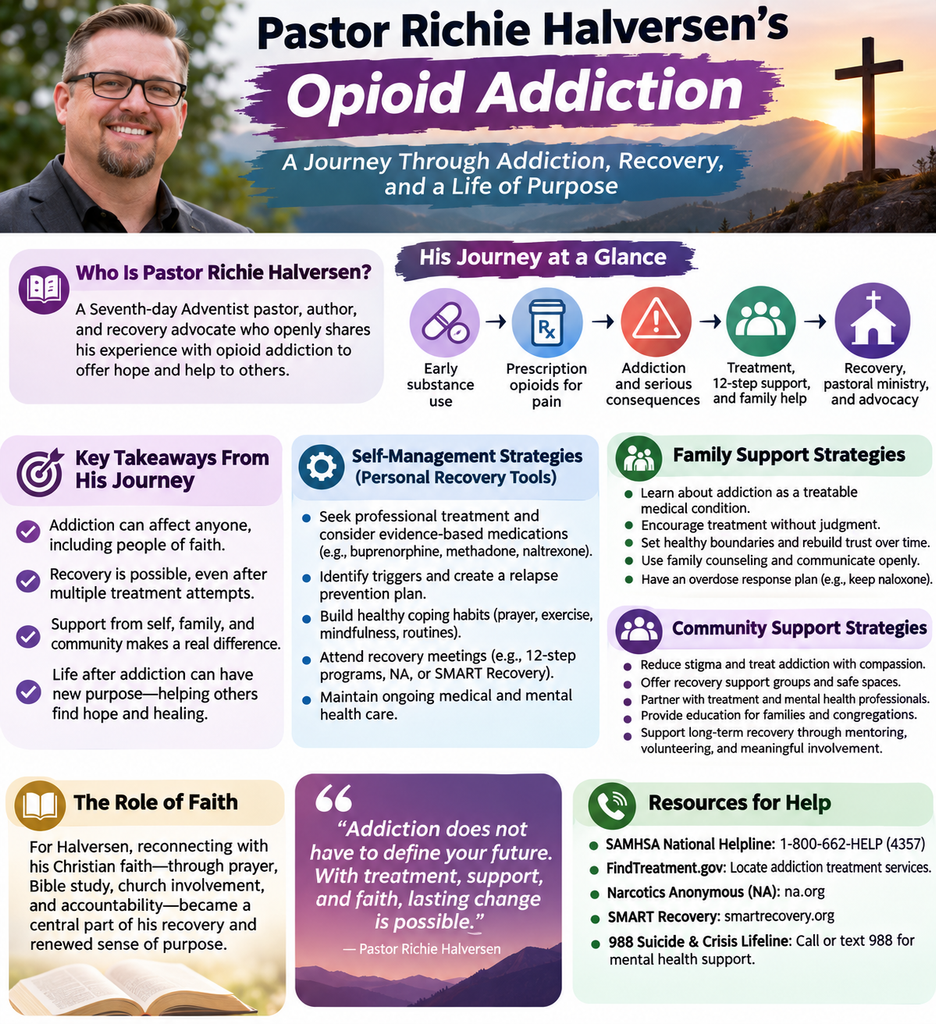
Addiction can affect anyone, regardless of faith, upbringing, education, or professional achievements. Pastor Richie Halversen’s journey illustrates how opioid addiction can profoundly disrupt a person’s life, but also how recovery can open the door to healing, renewed purpose, and personal transformation.
Raised in a Christian family with deep roots in ministry, Halversen began struggling with substance use during his teenage years. His challenges eventually progressed to prescription opioid addiction, multiple treatment attempts, and significant hardships that affected his personal life and family relationships.
Through addiction treatment, participation in a 12-step recovery program, encouragement from loved ones, and a renewed commitment to his Christian faith, Halversen found a path toward lasting recovery. He later became a pastor, author, and advocate for individuals facing addiction. In his book, The Darkness Will Not Overcome: One Person’s Struggle and Recovery from Opioids, he shares his experiences and offers encouragement to others seeking hope and healing.
His story serves as a powerful reminder that addiction does not determine a person’s destiny. With evidence-based treatment, compassionate support, faith, and perseverance, individuals can overcome significant challenges, rebuild their lives, and discover a renewed sense of purpose.
Understanding Pastor Richie Halversen’s Opioid Addiction Journey
Early exposure to substance use
Richie Halversen grew up surrounded by Christian teachings and family members involved in evangelism. However, during high school, he began experimenting with alcohol and recreational drugs.
In an interview with evangelist John Bradshaw, Halversen explained that his opioid addiction developed after he received prescription pain medication for back problems. Initially, he rationalized using the medication because it had been prescribed by a physician.
Over time, his substance use became increasingly difficult to control, affecting his judgment, relationships, and daily functioning. Conversation with Richie Halversen+1
His experience illustrates several important risk factors associated with opioid use disorder:
- Early substance exposure: Experimenting with alcohol or drugs during adolescence may increase the risk of later substance use disorders.
- Prescription opioid exposure: Even appropriately prescribed opioids carry risks, although not everyone who takes them develops addiction.
- Tolerance and dependence: Repeated opioid exposure can produce physiological adaptations. Physical dependence alone does not establish an opioid use disorder.
- Emotional distress: Stress, psychological symptoms, and ineffective coping strategies may contribute to problematic substance use.
- Stigma and denial: Fear of judgment can prevent individuals from recognizing addiction and seeking treatment.
The consequences of opioid addiction
As Halversen’s addiction progressed, he experienced serious personal and legal consequences. In his public account, he described dishonesty toward family members, obtaining opioids from multiple physicians, and undergoing rehabilitation several times.
He also discussed how addiction damaged trust within his marriage and contributed to instability in his life.
Despite these setbacks, Halversen continued seeking recovery. His experience reinforces that multiple treatment episodes do not mean someone is incapable of recovering. Instead, treatment plans may need to be reassessed and strengthened as circumstances change. Conversation with Richie Halversen
Self-Management Strategies: Building a Foundation for Recovery
Self-management involves developing the skills, behaviors, and support systems necessary to maintain recovery and reduce the likelihood of returning to substance use.
Halversen has publicly emphasized daily recovery practices, 12-step participation, spiritual development, and remaining connected to people who understand addiction. Coping With Stress
Recognizing addiction and seeking professional help
One of the most important steps toward recovery is acknowledging that substance use has become harmful and obtaining an appropriate clinical assessment.
For opioid use disorder, evidence-based care may include medication, behavioral interventions, and ongoing monitoring.
Effective self-management strategies include:
- Seek professional treatment: Consult a qualified healthcare professional or addiction specialist for assessment and individualized care.
- Consider medications for opioid use disorder: Buprenorphine and methadone reduce overdose and mortality risk. Extended-release naltrexone is another option for appropriately selected patients after opioid withdrawal.
- Identify personal triggers: Recognize stressful situations, environments, emotions, or relationships associated with substance use.
- Develop healthy coping mechanisms: Practice mindfulness, physical activity, relaxation techniques, and structured daily routines.
- Attend recovery meetings: Participate in Narcotics Anonymous, SMART Recovery, or other supportive programs.
- Create a relapse prevention plan: Identify early warning signs, emergency contacts, and steps to take if cravings or substance use recur.
- Maintain medical follow-up: Address chronic pain, sleep disturbances, depression, anxiety, and other conditions that may complicate recovery.
Medication treatment should not be withheld because someone participates in a faith-based or abstinence-oriented recovery program. Recovery supports and medical treatment can complement one another.
The role of spirituality in Halversen’s recovery
For Halversen, reconnecting with his Christian faith became central to his recovery.
He has described prayer, Bible study, church participation, and spiritual accountability as important elements of maintaining sobriety. His faith also helped him develop a renewed sense of purpose through pastoral ministry.
Spiritual practices may support recovery by strengthening hope, providing emotional comfort, encouraging accountability, and connecting individuals with supportive communities.
However, faith and prayer should complement—not replace—evidence-based addiction treatment when clinical care is needed.
Individuals who do not identify with a religion can find similar sources of meaning through personal values, relationships, volunteer work, and secular recovery communities.
Family Support Strategies: Rebuilding Trust and Strengthening Relationships
Opioid addiction rarely affects only the individual experiencing it. Families often experience emotional exhaustion, uncertainty, financial strain, fear, and difficulties maintaining trust.
Halversen has openly acknowledged the impact of his addiction on his wife, Brittney, and other family members. His public testimony describes how family support and healthy boundaries played meaningful roles in his recovery. Conversation with Richie Halversen
Understanding addiction as a medical condition
Family members may initially interpret substance use as irresponsibility, dishonesty, or a lack of commitment.
However, opioid use disorder is a chronic, treatable medical condition involving changes in brain systems associated with reward, motivation, stress, and behavioral control.
Understanding these mechanisms can help families respond with greater compassion while maintaining appropriate expectations and boundaries.
Practical ways families can support recovery
- Encourage treatment without judgment: Discuss concerns calmly and help the individual explore professional treatment options.
- Establish healthy boundaries: Avoid providing money or assistance that directly facilitates harmful substance use while continuing to offer appropriate support.
- Practice open communication: Encourage honest conversations about cravings, setbacks, and emotional struggles.
- Participate in family counseling: Address damaged trust, communication difficulties, and relationship conflicts.
- Recognize progress: Celebrate meaningful improvements without expecting immediate or perfect recovery.
- Develop an overdose response plan: Keep naloxone accessible and learn how to recognize and respond to opioid overdose.
- Seek support for caregivers: Encourage family members to participate in counseling, peer support, or educational programs.
Rebuilding trust after addiction
Trust is often one of the hardest parts of recovery.
Repeated dishonesty, broken promises, or financial difficulties may make family members hesitant to believe that lasting change is possible.
Rebuilding trust requires time, consistency, and accountability.
For individuals in recovery, this may mean following through on commitments, participating in treatment, and demonstrating behavioral changes.
For families, it involves acknowledging progress while maintaining realistic boundaries.
Halversen’s experience illustrates how family relationships can become a source of motivation and stability, even after significant difficulties.
Importantly, families should not be made responsible for preventing relapse. Recovery is influenced by multiple biological, psychological, and social factors.
Community Support Strategies: The Role of Churches and Recovery Organizations
One of the most meaningful aspects of Pastor Halversen’s journey is his transformation from someone struggling with opioid addiction into a public advocate for recovery.
Through his ministry, speaking engagements, and published work, he encourages individuals and families to recognize that addiction can be treated and that people deserve compassion and opportunities for healing.
His public presentations, including the Out of Darkness events, have focused on sharing his recovery testimony and offering hope to people affected by opioid addiction. Richie Halversen+1
How faith-based communities can help
Churches and other religious organizations can provide valuable emotional, social, and practical support.
However, religious communities are most effective when they recognize the medical nature of addiction and collaborate with qualified treatment professionals.
Community-based strategies include:
- Reduce addiction stigma: Educate congregations about substance use disorders as treatable health conditions rather than moral failures.
- Offer recovery support meetings: Provide safe spaces for peer-led and professionally facilitated recovery programs.
- Partner with treatment providers: Connect individuals with addiction specialists, mental health professionals, and medication treatment programs.
- Provide family education: Organize workshops about opioid addiction, overdose prevention, and healthy boundaries.
- Support recovery-friendly environments: Encourage acceptance, confidentiality, and nonjudgmental communication.
- Expand overdose prevention efforts: Promote naloxone training, distribution, and awareness.
- Encourage meaningful community involvement: Offer opportunities for volunteering, mentoring, and rebuilding social connections.
The importance of peer recovery support
Halversen has described how participation in 12-step meetings helped him maintain recovery and develop relationships with people who understood his experiences.
Peer recovery groups can reduce isolation and create opportunities for mutual encouragement.
Individuals who have experienced addiction may also serve as mentors, helping others navigate treatment challenges, cravings, and difficult life transitions.
Community support is particularly important after discharge from residential treatment, when individuals may face familiar triggers and responsibilities.
Challenges and Barriers to Long-Term Recovery
Although Halversen’s story demonstrates the possibility of meaningful recovery, many individuals continue to face significant barriers when seeking treatment.
Common barriers
- Stigma and discrimination: Fear of being labeled or judged may discourage individuals from seeking help.
- Limited treatment access: Rural communities and underserved populations may lack affordable addiction specialists or medication treatment.
- Financial difficulties: Treatment costs, transportation, housing instability, and employment challenges can interfere with recovery.
- Co-occurring mental health conditions: Depression, anxiety, PTSD, and other conditions may require integrated treatment.
- Relapse vulnerability: Stress, cravings, and exposure to familiar environments can increase the risk of returning to substance use.
- Misunderstanding of medication treatment: Some communities incorrectly believe that taking buprenorphine or methadone means an individual is not truly recovering.
Addressing these barriers
Effective addiction care should combine medical treatment with psychological support and practical assistance.
For example, someone with opioid use disorder and chronic pain may benefit from coordinated addiction treatment, non-opioid pain management, physical therapy, and behavioral healthcare.
Likewise, someone experiencing housing instability may need case management and community resources alongside addiction treatment.
Recovery should be measured not only by substance use outcomes but also by improvements in health, safety, functioning, relationships, and quality of life.
Lessons From Pastor Richie Halversen’s Recovery Journey
Pastor Halversen’s experiences offer several important lessons for individuals, families, healthcare professionals, and faith communities.
First, addiction does not discriminate. A religious upbringing, supportive family, or strong personal values cannot guarantee protection against substance use disorders.
Second, recovery often requires multiple forms of support. Halversen’s experience included rehabilitation, peer recovery participation, family support, and spiritual practices.
Third, setbacks do not eliminate the possibility of recovery. Repeated treatment attempts may be part of an individual’s journey, and care should remain available without judgment.
Fourth, families need support too. Addiction can create significant emotional and practical burdens for loved ones, making family education and counseling valuable.
Finally, recovery can create opportunities for meaningful personal growth. Halversen’s transition into pastoral ministry and recovery advocacy demonstrates how lived experience can become a source of encouragement for others.
Resources for Individuals and Families Affected by Opioid Addiction
People seeking help with opioid addiction can access several national resources.
- SAMHSA National Helpline: 1-800-662-HELP (4357), offering confidential treatment referrals and information.
- FindTreatment.gov: Find addiction treatment services in the United States.
- Narcotics Anonymous: Find peer recovery meetings.
- SMART Recovery: Explore evidence-informed recovery support.
- 988 Suicide & Crisis Lifeline: Call or text 988 for mental health or emotional crisis support.
If an opioid overdose is suspected, call 911 immediately, administer naloxone if available, and follow emergency dispatcher instructions.
Conclusion: From Opioid Addiction to a Life of Purpose
Pastor Richie Halversen’s journey from opioid addiction to recovery advocacy demonstrates the importance of hope, persistence, personal accountability, and supportive relationships.
His story is not simply about overcoming substance use. It is also about rebuilding family connections, discovering purpose, strengthening faith, and using personal experiences to help others.
His recovery highlights the value of combining self-management strategies, family involvement, professional treatment, and community support.
For individuals struggling with opioid addiction, his experience offers an encouraging reminder that seeking help is a sign of strength, not weakness.
For families, it emphasizes the importance of compassion, education, boundaries, and continued support.
For faith communities, it demonstrates the opportunity to reduce stigma and connect people with effective addiction treatment.
Recovery is not about having a perfect past. It is about building a healthier future, one step at a time.
Frequently Asked Questions and Answers
Understanding Pastor Richie Halversen’s Addiction Journey
1. Who is Pastor Richie Halversen?
Pastor Richie Halversen is a Seventh-day Adventist pastor, author, evangelist, and addiction recovery advocate. He has publicly shared his experiences with substance use and opioid addiction to encourage others facing similar challenges.
His recovery journey has become an important part of his ministry, emphasizing compassion, faith, and the possibility of rebuilding one’s life after addiction.
2. How did Pastor Richie Halversen develop an opioid addiction?
According to his public testimony, Halversen began experimenting with alcohol and recreational drugs during his teenage years. His opioid addiction later developed following exposure to prescription pain medication for back problems.
What initially appeared to be a legitimate way to manage pain eventually progressed into problematic opioid use.
His experience illustrates how prescription opioids can carry addiction risks, particularly for individuals with other substance use risk factors.
3. What challenges did Pastor Richie Halversen face during his addiction?
Halversen has described experiencing significant personal, emotional, and relationship difficulties during his addiction.
These challenges reportedly included:
- Loss of control over substance use.
- Dishonesty and damaged trust in family relationships.
- Legal and personal consequences.
- Multiple attempts at addiction treatment.
- Difficulty maintaining stability and fulfilling responsibilities.
His experiences highlight how opioid addiction can affect nearly every aspect of a person’s life.
4. Did Pastor Richie Halversen attend rehabilitation?
Yes. Halversen has publicly discussed undergoing addiction treatment more than once before establishing sustained recovery.
His experience demonstrates that repeated treatment attempts are not necessarily signs of failure. Opioid use disorder is a chronic, treatable condition, and individuals may require changes in treatment intensity, medication, or support services.
5. How did Pastor Richie Halversen overcome opioid addiction?
Halversen attributes important parts of his recovery to addiction treatment, participation in 12-step recovery programs, renewed Christian faith, and supportive relationships.
His journey emphasizes the importance of consistent recovery practices, accountability, and finding meaningful purpose.
However, recovery is highly individualized, and the approaches that helped Halversen may not be sufficient for everyone.
6. What role did faith play in his recovery?
Christian faith became a central part of Halversen’s recovery experience.
He has described how prayer, studying the Bible, reconnecting with his religious beliefs, and participating in a faith community helped him develop hope and a renewed sense of purpose.
Faith-based support can complement professional addiction treatment by providing emotional encouragement, community connections, and opportunities for personal growth.
Spirituality should not be viewed as a substitute for evidence-based medical treatment when treatment is indicated.
Self-Management and Long-Term Recovery
7. What self-management strategies can individuals learn from Halversen’s journey?
His recovery experience emphasizes developing healthy habits, maintaining accountability, and building a supportive lifestyle.
Effective self-management strategies include:
- Identifying triggers and recognizing early warning signs of relapse.
- Attending addiction treatment appointments and recovery meetings.
- Practicing healthy coping techniques such as exercise, meditation, and prayer.
- Developing a consistent daily routine.
- Building relationships with supportive, substance-free peers.
- Seeking professional help when experiencing cravings or emotional difficulties.
- Creating a personalized relapse prevention plan.
8. Why are 12-step recovery programs important in his story?
Halversen has discussed how attending 12-step meetings helped him develop accountability, honesty, and connections with people who understood addiction.
He has emphasized that maintaining recovery requires ongoing effort rather than simply stopping substance use.
Programs such as Narcotics Anonymous can provide peer encouragement, mentorship, and opportunities to practice recovery skills. Conversation with Richie Halversen
9. Can opioid addiction be treated with medication?
Yes. Medications for opioid use disorder are among the most effective treatments available.
Buprenorphine and methadone reduce opioid cravings, withdrawal symptoms, and the risk of fatal overdose. Extended-release naltrexone is another treatment option for appropriately selected individuals who have completed opioid withdrawal.
These medications can be combined with counseling, peer support, and faith-based activities.
There is no verified public information establishing that Halversen personally used these medications during his recovery.
10. Can someone recover from opioid addiction after multiple relapses?
Yes. Many people achieve sustained recovery despite previous episodes of returning to substance use.
Halversen has described attending rehabilitation approximately four times. He explained that each treatment experience taught him something, but lasting progress required consistently applying recovery skills after discharge. Conversation with Richie Halversen
A recurrence of substance use should prompt reassessment of treatment needs rather than shame or punishment. Returning to opioids after a period of abstinence can be especially dangerous because reduced tolerance increases overdose risk.
Family Support and Relationship Healing
11. How did Halversen’s family support his recovery?
Halversen has publicly acknowledged the importance of support from his wife, parents, and in-laws.
During his addiction, his family experienced emotional distress, uncertainty, and damaged trust. Nevertheless, family members helped him access treatment and encouraged his recovery.
He has also discussed how rebuilding relationships required patience and consistent behavioral changes. Message Magazine
12. What can families learn from Pastor Halversen’s experiences?
Families can learn that supporting someone with opioid addiction requires compassion, education, and healthy boundaries.
Helpful strategies include:
- Encouraging professional addiction treatment.
- Avoiding judgmental or stigmatizing language.
- Establishing clear boundaries regarding money, substance use, and personal safety.
- Participating in family counseling when appropriate.
- Learning to recognize opioid overdose and administer naloxone.
- Seeking emotional support for themselves.
- Recognizing recovery progress while allowing trust to rebuild gradually.
Family support can improve recovery outcomes, but family members are not responsible for controlling another person’s substance use.
13. How can families rebuild trust after opioid addiction?
Rebuilding trust requires consistent actions over time.
Individuals in recovery can demonstrate accountability by following treatment recommendations, communicating honestly, and honoring commitments.
Families can support this process by maintaining realistic expectations, acknowledging progress, and addressing unresolved emotional difficulties through counseling.
Forgiveness and reconciliation may take time, and family members should not feel pressured to remain in unsafe relationships.
14. What should families do if their loved one refuses addiction treatment?
Families should approach conversations calmly, express specific concerns, and avoid threats or humiliation.
They can also:
- Offer information about accessible treatment programs.
- Encourage a medical evaluation.
- Learn motivational communication techniques.
- Keep naloxone available.
- Establish boundaries that protect everyone’s safety.
- Consult an addiction counselor for guidance.
Even when an individual initially refuses treatment, maintaining respectful communication may preserve opportunities for future engagement.
Community and Faith-Based Recovery Support
15. How did Halversen become a pastor and addiction recovery advocate?
Following his recovery, Halversen pursued ministry and began sharing his personal experiences to encourage others affected by addiction.
His work as a pastor, author, and speaker has helped bring discussions about substance use disorders into religious communities.
He has emphasized that churches can play an important role in reducing stigma, supporting families, and helping people connect with recovery resources. Amazon Music
16. What is the title of Pastor Richie Halversen’s book?
His book is titled The Darkness Will Not Overcome: One Person’s Struggle and Recovery from Opioids.
Published in 2019 by Pacific Press, the book describes his experiences with opioid addiction, rehabilitation, family difficulties, faith, and recovery.
It also discusses the emotional impact of addiction on loved ones and the importance of hope during difficult circumstances. Message Magazine
17. How can churches support people struggling with opioid addiction?
Churches can become valuable recovery resources by providing compassionate support and collaborating with qualified healthcare professionals.
Effective community strategies include:
- Offering confidential addiction education and recovery meetings.
- Providing nonjudgmental emotional and spiritual support.
- Partnering with licensed addiction treatment providers.
- Educating congregations about opioid overdose prevention.
- Encouraging family counseling and caregiver support.
- Promoting acceptance of evidence-based medications for opioid use disorder.
- Providing transportation, mentoring, and other practical assistance.
Church leaders should recognize that addiction is a medical condition and avoid suggesting that substance use reflects insufficient faith.
18. Can faith-based recovery programs replace professional addiction treatment?
Not necessarily. Faith-based recovery programs may provide emotional encouragement, meaning, accountability, and social connection.
However, opioid use disorder often requires professional assessment and evidence-based medical treatment.
For many individuals, combining appropriate medication treatment with counseling, peer support, and spiritual practices offers a more comprehensive approach.
19. Why is community support important after rehabilitation?
Recovery continues long after an individual completes residential or outpatient treatment.
Community support helps people maintain healthy relationships, manage stress, and develop meaningful routines.
Peer recovery organizations, churches, recovery community centers, and mental health professionals can provide continued encouragement and assistance.
Halversen’s experiences illustrate how sustained involvement in supportive communities can contribute to long-term recovery.
Addiction Education and Prevention
20. Can prescription pain medications lead to opioid addiction?
Yes. Prescription opioids such as oxycodone, hydrocodone, and morphine can cause physical dependence and, in some individuals, opioid use disorder.
Risk depends on multiple factors, including dosage, duration of exposure, medical history, genetic vulnerability, and co-occurring substance use or mental health conditions.
However, physical dependence and addiction are not identical.
Patients taking prescribed opioids should follow medical guidance, avoid combining opioids with alcohol or sedatives unless specifically directed, and discuss concerns with their healthcare professional.
21. What are common warning signs of opioid addiction?
Possible warning signs include:
- Taking more medication than prescribed.
- Experiencing strong cravings or difficulty controlling use.
- Continuing opioid use despite harmful consequences.
- Spending substantial time obtaining, using, or recovering from opioids.
- Neglecting important responsibilities.
- Using opioids in physically dangerous situations.
- Experiencing repeated unsuccessful attempts to reduce use.
A qualified healthcare professional should assess these symptoms because no single behavior confirms an opioid use disorder.
22. What is the difference between opioid dependence and opioid addiction?
Physical dependence occurs when the body adapts to repeated opioid exposure, potentially causing withdrawal symptoms when the medication is stopped or reduced.
Opioid use disorder, often referred to as opioid addiction, involves a problematic pattern of opioid use associated with impaired control, continued use despite harm, and other diagnostic criteria.
A patient receiving appropriate opioid therapy may develop physical dependence without developing addiction.
23. What should someone do if they suspect an opioid overdose?
An opioid overdose is a medical emergency.
Common warning signs include very slow or absent breathing, inability to awaken the person, gurgling sounds, and blue or gray discoloration of the lips or skin.
Call 911 immediately, administer naloxone if available, and provide rescue breathing or CPR according to dispatcher instructions and your training. Additional naloxone doses may be needed.
Stay with the person until emergency responders arrive.
Hope, Recovery, and Moving Forward
24. What is the most important lesson from Pastor Richie Halversen’s addiction journey?
One of the most important lessons is that addiction does not have to determine a person’s future.
Halversen’s experience demonstrates how professional treatment, recovery programs, supportive relationships, spiritual practices, and personal commitment can contribute to meaningful change.
His story also highlights that addiction recovery is not always a straightforward process. Progress may require repeated attempts, patience, and ongoing support.
25. Where can individuals and families find help for opioid addiction?
Several national resources provide addiction treatment information and recovery support.
- SAMHSA National Helpline: 1-800-662-HELP (4357).
- FindTreatment.gov: Find addiction treatment providers.
- Narcotics Anonymous: Find peer support meetings.
- SMART Recovery: Explore recovery programs and meetings.
- 988 Suicide & Crisis Lifeline: Call or text 988 for mental health crisis assistance.
Video: