Therapeutic boundaries are the foundation of safe, ethical, and effective mental health care. They define the professional limits within the therapist-client relationship, ensuring that interactions remain focused on the client’s well-being. Because therapy often involves vulnerability, trust, and emotional openness, maintaining clear boundaries is essential to protect clients from harm and preserve the integrity of the therapeutic process. However, when these boundaries are blurred or violated, the relationship can shift from supportive to harmful. Understanding therapeutic boundaries and recognizing potential misconduct empowers individuals to engage in therapy with greater awareness and confidence.
Crossing the Line: Therapeutic Boundaries and Misconduct
Therapy is built on trust, safety, and professionalism. At the core of this relationship are therapeutic boundaries—clear guidelines that protect both the client and the therapist. These boundaries create a structured, ethical space where individuals can explore vulnerable thoughts and experiences without fear of harm or exploitation. However, when these boundaries are crossed, the therapeutic relationship can become unsafe, leading to confusion, emotional distress, and even long-term damage. Understanding therapeutic boundaries and recognizing misconduct is essential for protecting clients and maintaining the integrity of mental health care.
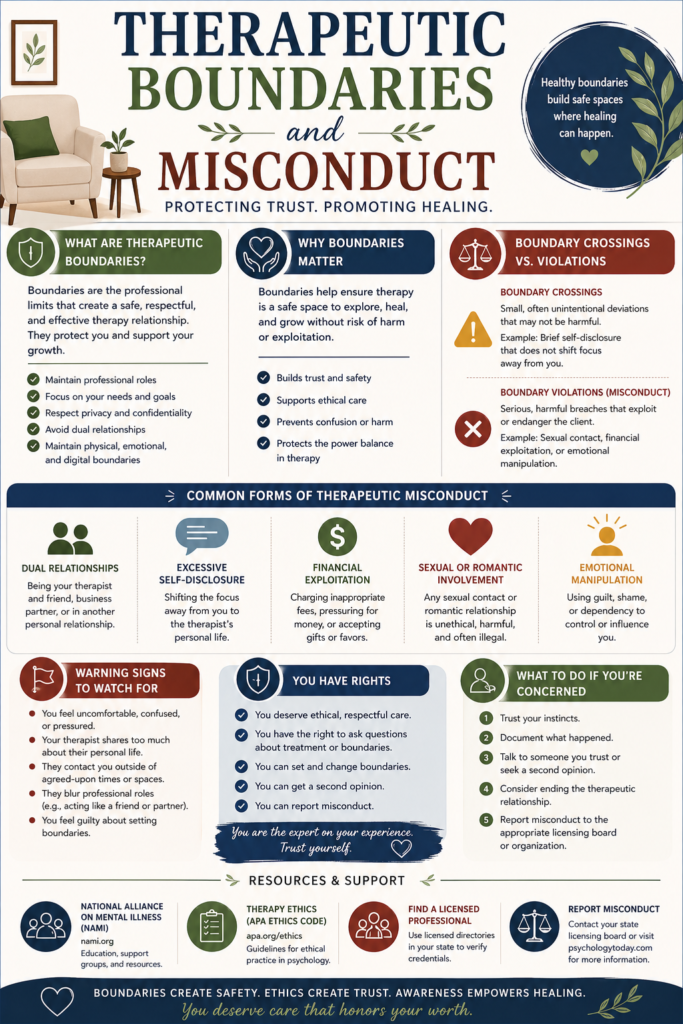
What Are Therapeutic Boundaries?
Therapeutic boundaries are the professional limits that define the relationship between a therapist and a client. These include:
- Maintaining a professional—not personal—relationship
- Keeping sessions confidential
- Avoiding dual relationships (e.g., being both a therapist and friend)
- Ensuring interactions remain focused on the client’s needs
These boundaries are not meant to create distance, but rather to foster a safe and predictable environment where healing can occur.
Why Boundaries Matter
Boundaries are especially important in therapy because of the inherent power imbalance. Clients often share deeply personal information and may be in vulnerable emotional states. Therapists, as trained professionals, have a responsibility to use that position ethically.
When boundaries are respected:
- Clients feel safe and supported
- Trust can develop gradually
- Therapy remains focused and effective
When boundaries are violated, that sense of safety can quickly erode.
Types of Boundary Crossings vs. Violations
Not all boundary issues are the same. It’s helpful to distinguish between:
- Boundary crossings: Minor, sometimes unintentional deviations (e.g., a therapist briefly sharing a personal example). These may not always be harmful, but should be handled carefully.
- Boundary violations: Serious and harmful breaches that exploit the client (e.g., forming a romantic relationship, financial exploitation, or inappropriate physical contact). These are unethical and often illegal.
Understanding this distinction helps clarify when a situation requires concern or action.
Common Forms of Therapeutic Misconduct
Therapeutic misconduct can take many forms, including:
- Emotional manipulation: Making the client feel dependent or guilty
- Excessive self-disclosure: Shifting focus away from the client
- Dual relationships: Engaging with clients outside therapy in personal or business ways
- Financial exploitation: Pressuring clients for money or services
- Sexual or romantic involvement: One of the most serious violations
These behaviors undermine the purpose of therapy and can cause significant harm.
Warning Signs to Watch For
Clients may notice warning signs such as:
- Feeling uncomfortable or pressured during sessions
- The therapist blurring professional roles (acting like a friend or partner)
- Lack of clear boundaries around communication or time
- The therapist prioritizes their own needs or emotions
If something feels “off,” it’s worth paying attention. Discomfort can be an important signal.
What to Do if Boundaries Are Crossed
If you suspect a boundary violation:
- Trust your instincts—your experience matters
- Document concerns if possible
- Seek a second opinion from another professional
- Report misconduct to licensing boards or professional organizations if necessary
In some cases, ending the therapeutic relationship may be the safest option.
Ethical Responsibility of Therapists
Therapists are guided by professional codes of ethics established by organizations such as the American Psychological Association and the National Association of Social Workers. These guidelines outline appropriate conduct and emphasize the importance of maintaining boundaries, protecting clients, and avoiding harm.
Ethical therapists actively monitor their behavior, seek supervision when needed, and prioritize their clients’ well-being above all else.
The Impact of Boundary Violations
When therapeutic boundaries are violated, the effects can be serious. Clients may experience:
- Loss of trust in therapy or professionals
- Emotional confusion or distress
- Setbacks in recovery or personal growth
Because therapy often involves vulnerability, these violations can feel deeply personal and difficult to process.
Rebuilding Trust and Moving Forward
If misconduct occurs, healing is still possible. Working with a new, ethical therapist can help rebuild trust and process the experience. It’s important to remember that one negative experience does not define all therapy.
Protecting the Therapeutic Space
Therapeutic boundaries exist to protect the integrity of the healing process. When they are respected, therapy can be a powerful space for growth, reflection, and change. When they are not, the consequences can be harmful—but awareness and education empower individuals to recognize and respond to these situations.
Understanding therapeutic boundaries is not just for professionals—it’s a tool for clients to advocate for themselves and ensure they receive the safe, ethical care they deserve.
Staying Grounded: Self-Management Strategies for Understanding Therapeutic Boundaries and Misconduct
Navigating therapy requires trust—but it also requires awareness. While therapists are ethically responsible for maintaining professional boundaries, clients benefit from developing self-management strategies to recognize when something feels off. Understanding therapeutic boundaries isn’t just about knowing the rules—it’s about being able to monitor your own reactions, assess the situation clearly, and respond in ways that protect your well-being.
What Self-Management Looks Like in Therapy
Self-management in this context means actively engaging in your therapeutic experience rather than passively accepting it. It involves:
- Being aware of your emotional responses
- Reflecting on interactions with your therapist
- Setting and maintaining personal boundaries
- Taking action when something doesn’t feel right
This approach empowers you to remain an active participant in your care.
Developing Emotional Awareness
Your emotional responses are one of your most important tools. If you consistently feel uncomfortable, confused, pressured, or overly dependent, it’s worth exploring why.
Ask yourself:
- Do I feel safe and respected in sessions?
- Am I able to express concerns openly?
- Do I leave sessions feeling supported or unsettled?
Discomfort doesn’t automatically mean misconduct—but it is a signal that deserves attention.
Recognizing Power Dynamics
Therapy naturally involves a power imbalance, where the therapist holds professional authority. Self-management includes recognizing this dynamic and understanding that it should never be used to control, manipulate, or pressure you.
If you feel intimidated, obligated, or unable to question your therapist, that may indicate a boundary concern.
Monitoring Boundaries in Practice
Pay attention to how boundaries are maintained in your sessions. Healthy therapeutic boundaries typically include:
- Clear session times and communication limits
- Focus on your needs rather than the therapist’s personal life
- Professional—not personal—interaction
Self-management means noticing when these lines begin to blur, such as excessive self-disclosure or contact outside agreed boundaries.
Practicing Reflection After Sessions
Taking a few minutes after each session to reflect can strengthen your awareness. You might journal or mentally review:
- What stood out during the session
- How you felt during key moments
- Whether anything felt inappropriate or unclear
Patterns over time are especially important. One unusual moment may not be significant, but repeated discomfort is worth addressing.
Strengthening Personal Boundaries
Even within therapy, you have the right to set limits. Self-management includes being able to say:
- “I’m not comfortable discussing that right now.”
- “I’d like to understand why this approach is being used.”
A professional therapist will respect and explore your boundaries—not dismiss or inappropriately challenge them.
Seeking Outside Perspective
If you’re unsure whether something crosses a boundary, talking to a trusted person—such as another mental health professional, mentor, or support figure—can provide clarity.
External perspectives help you:
- Validate your concerns
- Distinguish between discomfort and misconduct
- Decide on next steps
Taking Action When Needed
Self-management also means knowing when to act. If you identify potential misconduct:
- Address it directly if you feel safe doing so
- Document what occurred
- Consider ending the therapeutic relationship
- Report concerns to the appropriate licensing boards if necessary
Taking action is not overreacting—it is protecting your well-being.
Balancing Trust With Awareness
A key challenge in therapy is balancing openness with critical awareness. Self-management doesn’t mean distrusting your therapist—it means staying engaged and informed.
Healthy therapy allows room for:
- Questions and clarification
- Mutual respect
- Ongoing consent and collaboration
Building Confidence as a Client
The more you practice self-management, the more confident you become in navigating therapy. You learn to trust your instincts, articulate your needs, and recognize when something aligns—or doesn’t—with ethical care.
This confidence strengthens not only your therapeutic experience but also your overall sense of autonomy.
An Empowered Approach to Care
Understanding therapeutic boundaries and misconduct is not solely the responsibility of professionals. Clients who develop self-management strategies are better equipped to participate in safe, effective therapy.
By staying aware, reflective, and proactive, you create a stronger foundation for healing—one where trust is balanced with informed self-advocacy, and where your well-being remains the priority.
Supporting Safely: Family Strategies for Understanding Therapeutic Boundaries and Misconduct
Therapy is meant to be a safe, structured space for healing—but when boundaries are unclear or crossed, it can become confusing not only for the client, but also for their family. Loved ones often play a key role in noticing changes, offering perspective, and supporting decision-making. By understanding therapeutic boundaries and potential misconduct, families can better support their loved ones while respecting their independence and privacy.
Why Family Awareness Matters
Clients in therapy may not always recognize boundary issues right away—especially if they are in a vulnerable emotional state or have developed strong trust in their therapist. Family members, with a more external perspective, can sometimes notice patterns or behaviors that seem unusual or concerning.
Family awareness is not about interfering in therapy, but about being informed enough to provide support when needed.
Understanding Healthy Therapeutic Boundaries
Before identifying problems, families should understand what constitutes appropriate therapy. Healthy boundaries typically include:
- Professional, not personal, relationships
- Clear session times and structured communication
- Focus on the client’s needs rather than the therapist’s life
- Respect for confidentiality and client autonomy
When families know these standards, they are better equipped to recognize when something may be off.
Encouraging Open, Judgment-Free Communication
A key strategy is creating a safe space where your loved one feels comfortable talking about their therapy experience. This means:
- Listening without immediately criticizing the therapist
- Asking open-ended questions like, “How are you feeling about your sessions?”
- Avoiding pressure to share details they’re not comfortable disclosing
If individuals feel judged or dismissed, they may withdraw and become less likely to share concerns.
Noticing Subtle Warning Signs
Families should pay attention to changes that may suggest boundary concerns, such as:
- Increased emotional distress after sessions
- Confusion about the therapist’s role (e.g., describing them more like a friend or partner)
- Unusual levels of dependency on the therapist
- Sudden secrecy or discomfort when discussing therapy
While these signs don’t always indicate misconduct, they can signal that something deserves attention.
Supporting Critical Thinking Without Overstepping
It’s important for families to encourage reflection rather than impose conclusions. Instead of saying, “That’s inappropriate,” try:
- “How did that make you feel?”
- “Does that seem typical for therapy?”
- “Do you feel comfortable with that?”
This approach helps individuals develop their own awareness and confidence, rather than feeling controlled.
Respecting Autonomy and Confidentiality
Therapy is a personal process, and clients have the right to privacy. Families should avoid:
- Demanding details about sessions
- Contacting the therapist directly without consent
- Trying to control therapy decisions
Support works best when it balances involvement with respect for independence.
Encouraging Professional Guidance When Needed
If concerns arise, families can gently suggest that a second opinion be sought from another mental health professional. This provides:
- A neutral perspective
- Clarification about what is appropriate
- Guidance on next steps
In cases of suspected misconduct, professional advice can help determine whether reporting is necessary.
Responding to Confirmed Boundary Violations
If it becomes clear that misconduct has occurred, families can support their loved one by:
- Validating their experience without blame
- Encouraging them to prioritize safety and well-being
- Assisting in finding a new, ethical therapist
- Supporting the reporting process if they choose to pursue it
Emotional support during this time is critical, as boundary violations can be deeply distressing.
Avoiding Overprotection or Control
While it’s natural to want to protect a loved one, overly controlling responses can backfire. Trying to “fix” the situation or make decisions for them may lead to resistance or loss of trust.
Effective support means:
- Being present and available
- Offering guidance without pressure
- Trusting their ability to make informed choices
Building a Foundation of Trust and Awareness
When families are informed about therapeutic boundaries, they become a valuable part of a supportive network. Their role is not to monitor therapy, but to provide stability, perspective, and encouragement.
By staying engaged, communicating openly, and respecting boundaries, families can help ensure that therapy remains a safe and ethical space—while empowering their loved one to advocate for themselves and their care.
Community Matters: Resource Strategies for Understanding Therapeutic Boundaries and Misconduct
Understanding therapeutic boundaries and recognizing misconduct can be challenging, especially for individuals who are new to therapy or navigating vulnerable experiences. While personal awareness and family support are important, community resources provide a broader foundation of education, guidance, and protection. These resources help individuals better understand what ethical therapy looks like, recognize warning signs, and take informed action when concerns arise.
Why Community Resources Are Important
Therapy does not exist in isolation—it is part of a larger mental health system shaped by professional standards, organizations, and public awareness. Community resources offer objective information and shared knowledge, helping individuals move beyond uncertainty or self-doubt.
They also reduce the risk of misinformation. When people rely only on personal assumptions, they may normalize inappropriate behavior or fail to recognize misconduct. Community-based education creates clearer expectations for what is acceptable in therapy.
Accessing Professional Guidelines and Standards
One of the most reliable community resources is access to professional ethical guidelines. Organizations like the American Psychological Association and the National Association of Social Workers publish codes of ethics that define appropriate therapist behavior.
Reviewing these standards can help individuals:
- Understand professional boundaries
- Identify clear examples of misconduct
- Recognize their rights as clients
These guidelines serve as a benchmark for evaluating therapeutic relationships.
Utilizing Mental Health Advocacy Organizations
Community-based advocacy organizations provide education, support, and resources for individuals navigating therapy. Groups such as the National Alliance on Mental Illness offer:
- Educational materials on therapy and client rights
- Support groups and discussion forums
- Guidance on how to address concerns about care
These organizations help individuals feel less alone and more empowered when facing uncertainty.
Engaging in Community Education Programs
Workshops, seminars, and public health programs often address topics like ethical therapy practices, client rights, and recognizing misconduct. These programs may be offered through:
- Community health centers
- Universities
- Nonprofit organizations
Participating in these educational opportunities builds knowledge and confidence, making it easier to identify when boundaries are being crossed.
Leveraging Peer Support and Shared Experiences
Peer support groups—both in-person and online—can be valuable spaces for discussing therapy experiences. Hearing others’ stories can help individuals:
- Recognize patterns of inappropriate behavior
- Validate their own concerns
- Learn how others responded to similar situations
While peer input should not replace professional advice, it can provide important context and reassurance.
Accessing Reporting and Oversight Systems
Community resources also include licensing boards and regulatory agencies that oversee mental health professionals. These organizations are responsible for investigating complaints and enforcing ethical standards.
Knowing how to access these systems is a key strategy. Individuals can:
- File formal complaints if misconduct occurs
- Seek information about a therapist’s credentials
- Understand the process for ethical review
This adds a layer of accountability to the therapeutic system.
Using Digital Platforms for Education and Support
Digital health tools have expanded access to community resources. Online platforms can provide:
- Educational articles and videos
- Directories of licensed professionals
- Forums for discussing therapy experiences
These tools make it easier to access information quickly, especially for individuals who may not have local resources available.
Balancing Community Input With Personal Judgment
While community resources offer valuable guidance, it’s important to balance this input with personal experience. Not every situation fits neatly into guidelines, and individual context matters.
Effective use of community resources means:
- Comparing your experience with established standards
- Seeking multiple perspectives when unsure
- Making decisions that prioritize your safety and well-being
Overcoming Barriers to Access
Some individuals may face barriers such as stigma, lack of awareness, or limited access to resources. Addressing these challenges involves:
- Increasing public education about therapy ethics
- Promoting accessible and inclusive resources
- Encouraging open conversations about mental health care
Expanding access ensures more people can benefit from community-based support.
A More Informed and Protected Client Experience
Community resource strategies play a crucial role in helping individuals understand therapeutic boundaries and misconduct. By connecting people to reliable information, support networks, and accountability systems, these resources create a safer and more transparent mental health environment.
When individuals are informed and supported by their community, they are better equipped to recognize ethical care, advocate for themselves, and ensure that therapy remains a space for genuine healing and growth.
Frequently Asked Questions
Here are some common questions:
1. What are therapeutic boundaries?
Therapeutic boundaries are the professional limits that define the relationship between a therapist and a client. They ensure the relationship remains ethical, focused on the client’s needs, and free from exploitation or harm.
2. Why are boundaries important in therapy?
Boundaries create a safe, structured environment where clients can share openly. They protect against misuse of power, maintain professionalism, and support effective treatment outcomes.
3. What is therapeutic misconduct?
Therapeutic misconduct refers to unethical or inappropriate behavior by a therapist, such as exploiting the client emotionally, financially, or sexually, or violating professional standards.
4. What is the difference between a boundary crossing and a boundary violation?
- Boundary crossing: A minor or sometimes unintentional deviation (e.g., brief self-disclosure).
- Boundary violation: A serious and harmful breach (e.g., romantic involvement), often unethical and potentially illegal.
5. What are common examples of boundary violations?
- Romantic or sexual relationships with clients
- Becoming overly personal or acting like a friend
- Excessive self-disclosure
- Financial exploitation
- Contact outside therapy that is inappropriate
6. How can I tell if my therapist is crossing boundaries?
Warning signs include:
- Feeling uncomfortable or confused during sessions
- The therapist is sharing too much about their personal life
- Blurred roles (friend, partner, etc.)
- Pressure to act or feel a certain way
7. Is it normal to feel uncomfortable in therapy sometimes?
Yes—therapy can be emotionally challenging. However, discomfort related to the content (e.g., discussing difficult topics) is different from discomfort related to the therapist’s behavior. The latter may signal a boundary issue.
8. What should I do if I think my therapist crossed a boundary?
- Reflect on what happened
- Trust your instincts
- Discuss it with the therapist if you feel safe
- Seek a second opinion
- Consider reporting if the behavior is serious
9. Can a therapist be friends with a client?
No. Dual relationships (being both therapist and friend) are generally considered unethical because they blur boundaries and can harm the client.
10. Are therapists allowed to self-disclose personal information?
Limited self-disclosure may be appropriate if it benefits the client, but excessive or irrelevant sharing is a warning sign and can shift focus away from the client.
11. How are therapists held accountable for misconduct?
Therapists are regulated by licensing boards and guided by ethical codes from organizations like the American Psychological Association and the National Association of Social Workers. Complaints can be filed with these bodies for investigation.
12. What are my rights as a client in therapy?
You have the right to:
- Be treated with respect and professionalism
- Have your confidentiality protected
- Set boundaries and ask questions
- End therapy at any time
- Report unethical behavior
13. Can boundary violations affect recovery or mental health?
Yes. Violations can lead to confusion, loss of trust, emotional distress, and setbacks in treatment. In some cases, they may cause long-term harm.
14. How can I protect myself in therapy?
- Stay aware of how you feel in sessions
- Ask questions if something is unclear
- Maintain your own boundaries
- Seek support if concerns arise
15. Does one bad experience mean all therapy is unsafe?
No. Most therapists follow strict ethical standards. One negative experience does not reflect the entire field, and many clients go on to have positive, safe, and effective therapy relationships.
Conclusion
Ultimately, awareness of therapeutic boundaries and misconduct is a critical part of ensuring safe and effective care. While most therapists adhere to strict ethical standards, recognizing when those standards are not upheld allows individuals to protect their well-being and seek appropriate support. By staying informed, trusting personal instincts, and knowing when to question or take action, clients can play an active role in maintaining the integrity of their therapeutic experience. A strong understanding of boundaries not only safeguards against harm but also reinforces the trust and structure needed for meaningful healing and growth.
Video: The Moment Everything Falls Apart #therapeutic #misconduct