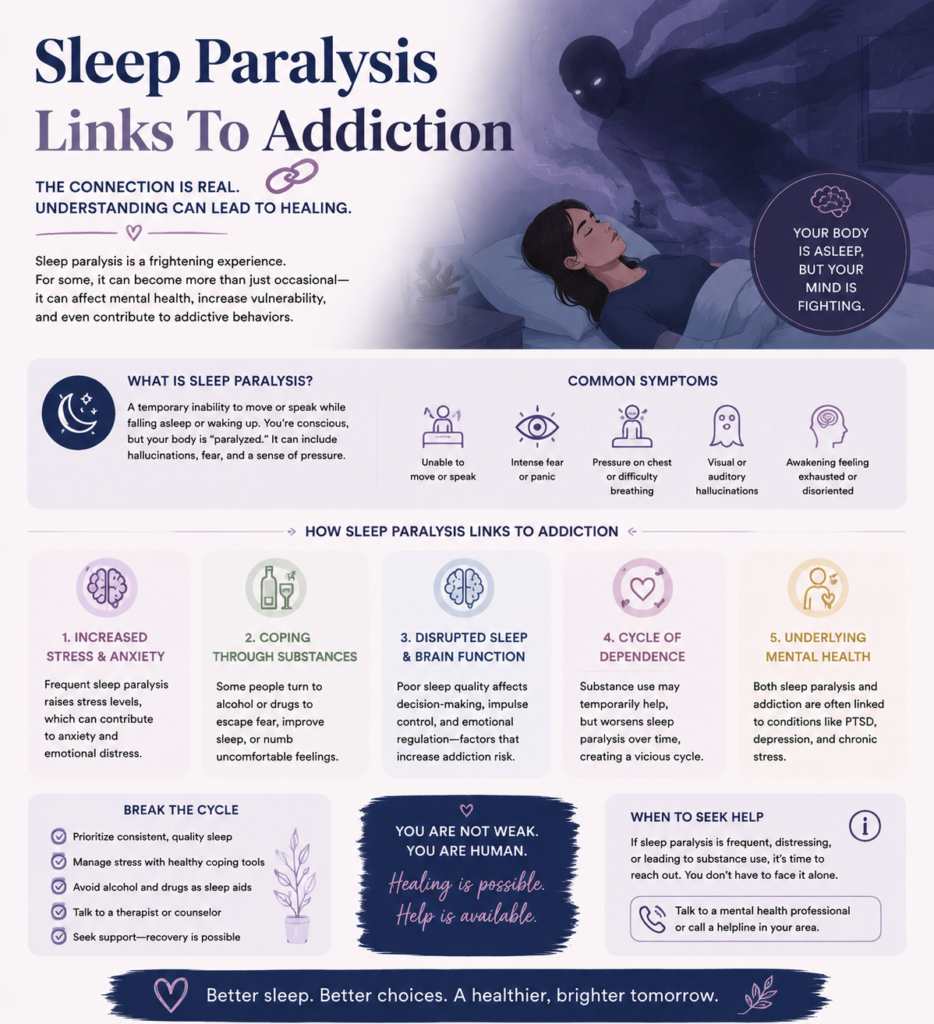
Sleep paralysis stops you from moving or speaking while waking up or falling asleep. Once you’ve experienced it, you know just how strange and sometimes scary it can feel. But there’s this topic that gets a lot of attention lately: how sleep paralysis connects to addiction and substance use. Let me break down what science says and walk you through why this link matters, especially if you or someone you know deals with both.
Understanding Sleep Paralysis and Its Experience
Sleep paralysis usually happens when the brain wakes up, but the body doesn’t quite catch up. During REM sleep (that’s the stage where we dream), your muscles are supposed to relax fully so you don’t act out your dreams. But sometimes you wake up while your body is still in this paralyzed state; your mind is active, but you can’t move or speak. This can last from a few seconds to a couple of minutes and can come with a sense of pressure, hallucinations, or an overwhelming feeling of fear.
A lot of people experience at least one episode of sleep paralysis in their lifetime. However, some have it more often, especially if they’re dealing with things like anxiety, stress, or irregular sleep schedules.
How Addiction Affects Sleep Quality
Addiction takes a toll on the body in ways that go far beyond cravings or withdrawal. Sleep disruptions are super common. Both drug and alcohol use can confuse your natural sleep cycles, often reducing the quality and amount of restorative REM sleep. Stimulants like cocaine or meth tend to make it much harder for people to fall asleep or stay asleep, which throws their whole sleep pattern out of whack. Even legal substances like nicotine and caffeine can have a noticeable effect on sleep quality.
On the flip side, depressants like alcohol may make it easier to fall asleep at first, but they reduce REM sleep and can wake you up several times during the night. When alcohol starts to wear off, withdrawal effects can kick in, messing up sleep even more. These interruptions set the stage for problems like insomnia, and more relevant here, sleep paralysis episodes.
Exploring the Link: Why People with Addictions Experience More Sleep Paralysis
There’s growing evidence that people dealing with addiction report more frequent sleep-related problems, including sleep paralysis. According to several studies, those in withdrawal from substances or those who use heavily tend to have more fragmented sleep with more vivid dreams. This can trigger more REM sleep interruptions, creating the perfect recipe for sleep paralysis.
Sleep deprivation is one of the biggest reasons, and many people with addiction or heavy substance use don’t get enough high-quality sleep. Their bodies are often cycling between intoxication, withdrawal, and recovery, which never lets their sleep stabilize in a healthy pattern. As a result, transitions between sleep stages become rough, increasing the odds that someone wakes up before their muscles catch up.
- REM Disruption: Stimulants and some withdrawal symptoms reduce REM sleep, leading to longer REM periods when the drug wears off, increasing sleep paralysis episodes.
- Stress and Anxiety: Addiction often comes with mood disorders or high stress, which are themselves connected to sleep paralysis.
- Irregular Sleep Schedules: Staying up late or sleeping during odd hours, common with addiction, can push the body’s clock off balance and make episodes more likely.
Common Substances Linked to Sleep Paralysis
While any substance that affects sleep can set the stage for sleep paralysis, a few come up more often in research and reports:
- Alcohol: Heavy drinkers have more broken sleep, fewer REM cycles at the start of the night, and REM rebound later, increasing sleep paralysis risk.
- Stimulants (cocaine, amphetamines, meth): These typically make it tough to sleep at all and then lead to intense REM rebound, causing vivid dreams and possible sleep paralysis as sleep patterns try to normalize.
- Opioids: These affect sleep architecture by shortening REM and even deep sleep, which can disrupt normal transitions between stages.
- Cannabis: Long-term or heavy use can reduce REM sleep, but withdrawal causes REM rebound; sometimes linked with an uptick in sleep paralysis episodes.
How Sleep Paralysis Feels Different for Those Dealing with Addiction
The relationship between addiction and sleep paralysis isn’t just about frequency. It can also change how intense or distressing sleep paralysis feels. People in recovery, or those using often, might face much more vivid or frightening hallucinations during these episodes, making the experience more disturbing and affecting daytime mood and functioning.
If someone has anxiety or depression along with addiction, their sleep paralysis episodes can be longer, occur more often, and pack an emotional punch. It’s helpful to realize that this is common and not a sign that things are getting worse, but it’s also a sign that your sleep needs more attention.
What You Can Do: Managing Sleep Paralysis When Dealing With Addiction
Improving sleep habits is the single biggest step for minimizing sleep paralysis; this goes double for people also navigating addiction recovery.
- Stick to a Sleep Schedule: Try to go to bed and wake up around the same time every day, even on weekends. Being consistent helps your body find a rhythm and makes transitions between sleep stages smoother.
- Wind Down Without Substances: Create a nighttime routine that avoids alcohol and drugs before bed. Activities like reading, meditation, or listening to calming music help signal to your body that it’s time for rest.
- Limit Caffeine and Nicotine: Both can stay in your system long after you’ve had them and interfere with sleep.
- Work on Stress Management: Activities such as gentle yoga, breathing exercises, or brisk walks can lessen stress and set you up for better sleep.
- Don’t Be Afraid to Get Help: If sleep issues or substance use feel out of hand, reaching out to a professional or support group can make a world of difference.
In addition to these strategies, keeping your sleep environment comfortable and electronics out of the bedroom can also support better rest. Try to avoid eating large meals right before sleep, and make your room as dark and quiet as possible.
Tricky Parts: Withdrawal and the “REM Rebound” Effect
One thing people in recovery run into is this thing called REM rebound. If you suddenly stop using a substance after heavy use, especially alcohol or drugs that suppress REM, your body can overcompensate by flooding your sleep with extra-long or intense REM cycles. This is when sleep paralysis is most likely to pop up, along with really vivid dreams or nightmares.
If you’ve just made a big change, like quitting drinking or drugs, noticing more sleep paralysis can be common. Sticking with healthy sleep habits and riding out this adjustment usually means things settle down in a few weeks. But if sleep paralysis starts interfering with daily life, a provider can help come up with a plan tailored to your needs.
Healthier Sleep and Recovery: Why It Matters
Making sleep a priority isn’t just about avoiding sleep paralysis; it’s a pretty solid move for boosting overall recovery and well-being. Healthy sleep helps with cravings, boosts mood and focus, and even supports the brain’s healing over time. Working with a counselor or recovery team to build better sleep habits pays off. It can make recovery feel smoother and more manageable.
- Avoid Over-the-Counter Sleep Aids: They might seem like a shortcut, but they can interact with other substances or even create new dependencies.
- Connect with Support: Recovery groups, peer support, and addiction professionals often talk about sleep challenges and offer practical tips.
- Track Your Sleep: Journaling or using an app can help you spot patterns or triggers for poor sleep or episodes of sleep paralysis.
Reliable information is key when you’re dealing with confusing symptoms. If you want more insight, check out resources from the Sleep Foundation or addiction centers, such as SAMHSA, for additional SAMHSA reading and tips.
Frequently Asked Questions
Does sleep paralysis mean I have a sleep disorder?
Not necessarily. Many people have occasional episodes, but if it keeps happening, it’s worth bringing up with a doctor, especially if there’s substance use involved.
Can I “grow out” of sleep paralysis after quitting substances?
Many people notice that episodes occur less often as their sleep stabilizes during recovery. It might spike at first due to withdrawal, but healthy habits usually help a lot.
Is sleep paralysis dangerous?
Sleep paralysis on its own isn’t harmful or life-threatening, but it can feel really unpleasant. It’s important for mental health and comfort to address both sleep and substance habits.
Bringing together recovery and better sleep is a real win, especially when dealing with sleep paralysis. It’s possible to move toward nights without unwanted surprises and start each day feeling more rested and ready for what comes next.
Conclusion
Sleep paralysis and addiction can become deeply connected through cycles of stress, fear, poor sleep, and emotional distress. For some people, repeated episodes of sleep paralysis may increase anxiety and lead them to seek relief through substances such as alcohol or drugs, while addiction itself can worsen sleep quality and trigger more episodes. Understanding this connection is important because it shows that sleep paralysis is not simply “all in your head,” but is often linked to mental, emotional, and physical health. With healthy coping strategies, professional support, and proper sleep care, it is possible to break the cycle, improve well-being, and move toward healing and recovery.
Video: Sleep Paralysis Turned Into a Nightmare #sleepparalysis #darktruth #realstory