Sober dating brings a level of clarity that can be both empowering and challenging. Without the influence of substances, emotions, behaviors, and relationship dynamics become more visible—making it easier to identify both healthy connections and potential risks. For individuals in recovery, recognizing warning signs early is especially important, as relationships can significantly impact emotional stability and sobriety. Understanding sober dating warning signs is not about fear or avoidance, but about developing awareness, setting boundaries, and making intentional choices that support long-term well-being.
Clear Minds, Healthy Connections: Sober Dating Warning Signs
Dating while sober can be both empowering and challenging. Without substances clouding judgment or masking emotions, relationships tend to feel more intense—and more revealing. This clarity is a strength, but it also means recognizing unhealthy patterns early is essential. Understanding the warning signs in sober dating isn’t about being overly cautious; it’s about protecting your recovery, emotional well-being, and long-term growth.
Why Sober Dating Feels Different
In sobriety, you’re navigating relationships without the buffer of alcohol or drugs. This often leads to deeper emotional awareness, but it can also heighten vulnerability. People in recovery may be more sensitive to stress, triggers, or relational instability, which makes choosing the right partner especially important.
Sober dating requires intentionality—being mindful of who you let into your life and how they influence your recovery journey.
Lack of Respect for Your Sobriety
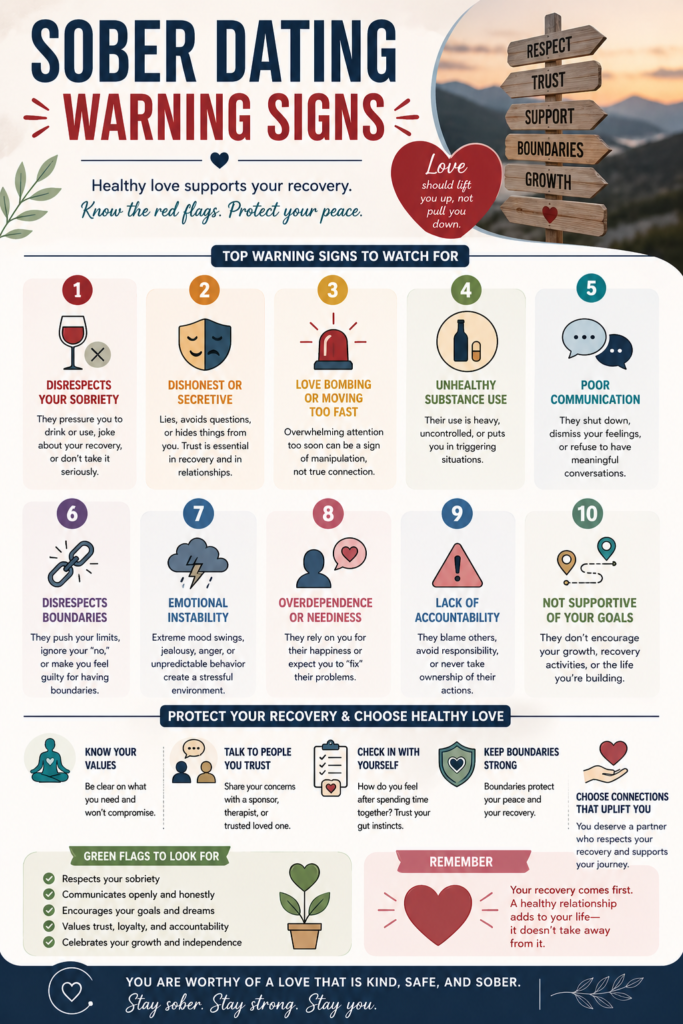
One of the most immediate red flags is when someone does not respect your decision to stay sober. This can show up in subtle ways, like joking about your recovery, or more directly, such as encouraging you to drink or use “just once.”
A supportive partner doesn’t question your boundaries—they honor them. If someone minimizes your sobriety, it’s a sign they may not understand or value what it takes to maintain it.
Dishonesty or Secrecy
Trust is foundational in any relationship, but especially in recovery. If someone is frequently dishonest, evasive, or secretive, it can create instability and emotional stress—both of which can be triggers.
Recovery thrives in environments of honesty and accountability. A partner who hides things or avoids open communication can undermine that foundation.
Unhealthy Relationship Patterns
Be cautious of dynamics that feel intense too quickly—often referred to as “love bombing”—or patterns of control, manipulation, or emotional volatility. These behaviors can mirror addictive cycles, replacing substance dependence with relationship dependence.
Healthy relationships develop gradually and are built on mutual respect, not urgency or pressure.
Active Substance Use Without Boundaries
Dating someone who uses substances isn’t always incompatible with sobriety, but it requires clear boundaries. A warning sign is when their use is excessive, unpredictable, or directly impacts your environment.
If being around them increases your cravings, stress, or exposure to triggers, it’s important to take that seriously. Your recovery should never feel secondary in your own life.
Lack of Emotional Availability
Recovery often involves learning how to process emotions in a healthy way. If a partner avoids emotional conversations, dismisses your feelings, or is unwilling to engage in meaningful communication, it can leave you feeling unsupported.
Emotional availability is key to building a relationship that aligns with growth and healing.
Disrespect for Boundaries
Boundaries are essential in sober dating—whether they involve time, communication, or environments. Someone who pushes, ignores, or challenges your boundaries is showing a lack of respect for your needs.
This can be especially risky in recovery, where boundaries are often directly tied to maintaining sobriety.
Overdependence or “Rescue” Dynamics
Another warning sign is when a partner becomes overly dependent on you or positions themselves as someone who needs to be “saved.” While support is healthy, relationships built on imbalance can become emotionally draining and destabilizing.
Recovery is about personal responsibility. A healthy partner supports your growth without relying on you to fix theirs.
Protecting Your Recovery First
It’s important to remember that not every red flag means a relationship must end immediately—but it does mean it deserves attention. Especially in early recovery, prioritizing your sobriety is critical. Relationships should add stability, not chaos.
Taking time to build connections slowly, checking in with your support system, and trusting your instincts are all part of healthy sober dating.
Building Healthier Connections
Sober dating isn’t just about avoiding red flags—it’s also about recognizing green ones. Look for partners who:
- Respect your sobriety without question
- Communicate openly and honestly
- Support your goals and routines
- Encourage growth rather than dependency
These qualities create a foundation where both individuals can thrive.
A More Intentional Approach to Love
Dating without substances can feel unfamiliar at first, but it offers something valuable: clarity. You’re able to see people—and yourself—more honestly. While that can make red flags more visible, it also makes genuine connections more meaningful.
By recognizing warning signs early and staying grounded in your recovery, you create space for relationships that are not only safe but also deeply fulfilling.
Dating With Awareness: Self-Management Strategies to Understand Sober Dating Warning Signs
Sober dating requires more than just avoiding substances—it involves developing awareness, emotional regulation, and intentional decision-making. Without the numbing effects of alcohol or drugs, relationship dynamics become clearer, but also more intense. This is where self-management strategies play a critical role. By actively monitoring your thoughts, emotions, and behaviors, you can better recognize warning signs in dating and protect both your sobriety and emotional well-being.
Understanding Self-Management in Sober Dating
Self-management is the ability to observe and regulate your internal experiences while making choices aligned with your long-term goals. In sober dating, this means paying attention to how a relationship affects your mood, stress levels, and recovery stability.
Instead of reacting impulsively or ignoring discomfort, self-management encourages you to pause, reflect, and respond intentionally. This shift can help you identify red flags early—before they escalate into harmful patterns.
Building Emotional Awareness
One of the first strategies is developing emotional awareness. Notice how you feel during and after interactions with someone you’re dating. Do you feel grounded and respected, or anxious and uncertain?
Warning signs often show up as subtle emotional cues:
- Feeling pressured or overwhelmed
- Experiencing confusion or mixed signals
- Noticing increased stress or self-doubt
Tracking these patterns—mentally or through journaling—helps you distinguish between healthy vulnerability and emotional instability.
Recognizing Triggers and Patterns
Dating can activate old triggers, especially those connected to past relationships or substance use. Self-management involves identifying these triggers and understanding how they influence your behavior.
For example, you might notice:
- A tendency to ignore red flags to avoid loneliness
- Attraction to emotionally unavailable partners
- Increased cravings when feeling rejected or insecure
Recognizing these patterns allows you to intervene early, rather than repeating cycles that could threaten your recovery.
Setting and Maintaining Boundaries
Healthy boundaries are a cornerstone of both recovery and relationships. Self-management means clearly defining what is acceptable and consistently reinforcing those limits.
Ask yourself:
- Does this person respect my sobriety?
- Am I compromising my values to maintain the relationship?
- Do I feel safe expressing my needs?
If boundaries are repeatedly challenged or dismissed, that’s a strong warning sign. The ability to uphold boundaries—even when it’s uncomfortable—is a key recovery skill.
Practicing Pause and Reflection
Strong emotions can make it difficult to think clearly. A simple but powerful strategy is the pause—taking a moment before reacting to a situation.
During this pause:
- Reflect on what you’re feeling
- Consider whether your response aligns with your recovery goals
- Seek input from a trusted support system if needed
This reduces impulsive decisions and helps you respond from a place of clarity rather than emotion.
Using Support Systems for Perspective
Self-management doesn’t mean doing everything alone. Talking through dating experiences with a sponsor, therapist, or trusted friend can provide a valuable perspective.
Others may notice warning signs you’re overlooking or help you process emotions more objectively. This external feedback strengthens your ability to make balanced decisions.
Monitoring Impact on Sobriety
A critical question in sober dating is: How is this relationship affecting my recovery? Self-management includes regularly checking in on your sobriety.
Pay attention to:
- Changes in routine (missing meetings, neglecting self-care)
- Increased cravings or emotional instability
- Shifts in priorities away from recovery
If a relationship consistently disrupts your recovery, it’s important to reassess its role in your life.
Choosing Intentional Relationships
Self-management ultimately leads to more intentional choices. Instead of being driven by loneliness, chemistry, or habit, you begin to evaluate relationships based on alignment with your values and goals.
Healthy relationships in sobriety are built on:
- Mutual respect
- Emotional stability
- Honest communication
- Support for growth
These qualities create a foundation that strengthens—not threatens—your recovery.
A Skill That Grows Over Time
Recognizing warning signs in sober dating is not about perfection—it’s about practice. The more you engage in self-management strategies, the more intuitive they become.
Over time, you develop a stronger sense of self, clearer boundaries, and greater confidence in your decisions. This doesn’t just protect your sobriety—it opens the door to healthier, more fulfilling relationships built on clarity and intention.
Stronger Together: Family Support Strategies for Understanding Sober Dating Warning Signs
Sober dating introduces a new level of clarity—and with that clarity comes the responsibility to recognize healthy and unhealthy relationship patterns. For individuals in recovery, relationships can significantly influence emotional stability and sobriety. This is where family support becomes especially valuable. When families understand sober dating dynamics and learn how to offer appropriate guidance, they can play a meaningful role in helping their loved one पहचान warning signs while still respecting independence.
Why Family Support Matters in Sober Dating
Recovery doesn’t just affect the individual—it impacts the entire family system. Loved ones often want to help but may not fully understand the complexities of dating in sobriety. Without substances masking behavior, emotional patterns, and relationship dynamics are more visible, which can be both positive and overwhelming.
Families who are informed and supportive can act as a source of stability, perspective, and accountability, helping individuals navigate relationships more safely.
Educating the Family About Sober Dating
One of the most important strategies is education. Families need to understand:
- How recovery changes emotional sensitivity
- Why boundaries are critical in relationships
- How certain relationship dynamics can trigger relapse
When families recognize that sober dating requires intentionality and caution, they are more likely to respond with empathy rather than judgment.
Encouraging Open and Honest Communication
Creating a safe space for conversation is essential. Individuals in recovery should feel comfortable discussing their dating experiences without fear of criticism or overreaction.
Families can support this by:
- Listening without immediately giving advice
- Asking open-ended questions (“How does this relationship make you feel?”)
- Avoiding judgmental language
This kind of communication allows warning signs to surface naturally, rather than being hidden or minimized.
Helping Identify Red Flags
Family members can sometimes notice patterns that the individual may overlook, especially in emotionally intense situations. While it’s important not to be intrusive, families can gently point out concerns such as:
- A partner disrespecting sobriety
- Rapid emotional intensity or pressure
- Signs of manipulation or control
- Increased stress or behavioral changes
Framing these observations with care—rather than accusation—helps maintain trust while still addressing potential risks.
Supporting Healthy Boundaries
Boundaries are essential in sober dating, and families can reinforce their importance. This includes encouraging their loved one to:
- Prioritize recovery routines
- Set limits on environments or situations that feel unsafe
- Maintain independence within the relationship
At the same time, families must respect boundaries themselves, avoiding over-involvement or attempts to control decisions.
Watching for Changes in Recovery Stability
Family members are often well-positioned to notice behavioral shifts that may signal a problem. These might include:
- Skipping meetings or therapy
- Increased irritability or emotional distress
- Withdrawal from support systems
- Changes in daily routines
Rather than reacting with alarm, families can use these observations as a starting point for supportive conversations.
Avoiding “Rescue” or Control Dynamics
It’s natural for families to want to protect their loved ones, but overstepping can be counterproductive. Trying to control dating choices or “rescue” someone from a relationship may lead to secrecy or resistance.
Effective support means:
- Offering guidance, not ultimatums
- Trusting the individual’s ability to make decisions
- Being available without being overbearing
This balance helps preserve both autonomy and connection.
Encouraging External Support Systems
Families should not be the sole source of support. Encouraging involvement with therapists, sponsors, or peer recovery groups provides additional perspectives and reduces pressure on family relationships.
These external supports can help individuals process dating experiences more objectively and reinforce healthy decision-making.
Building a Foundation of Trust and Growth
Ultimately, family support in sober dating is about creating an environment where individuals feel both supported and empowered. When families focus on understanding rather than controlling, they help their loved one develop the skills needed to recognize warning signs independently.
Healthy, sober relationships are built on mutual respect, emotional safety, and shared growth. With informed and balanced family support, individuals in recovery are better equipped to choose relationships that strengthen—not threaten—their sobriety.
A Collaborative Approach to Healthy Relationships
Sober dating is a learning process, and mistakes may happen along the way. What matters most is having a support system that encourages reflection, growth, and resilience.
By staying informed, communicating openly, and respecting boundaries, families can play a powerful role in helping their loved ones navigate dating with clarity and confidence—supporting not just recovery, but the possibility of truly healthy connections.
Connected Choices: Community Resource Strategies for Understanding Sober Dating Warning Signs
Sober dating is not just a personal journey—it is shaped by the environments, networks, and resources that surround an individual. While self-awareness and family support are important, community resources provide an additional layer of guidance, education, and accountability. In recovery, having access to supportive communities can make it easier to recognize unhealthy relationship patterns and respond to warning signs before they escalate.
Why Community Resources Matter in Sober Dating
Recovery thrives in connection. Community resources—such as support groups, counseling services, and recovery organizations—offer shared knowledge and lived experience that individuals may not have on their own. When it comes to dating, these spaces provide insight into what healthy relationships look like in sobriety and help normalize challenges that arise.
They also reduce isolation, which is a key risk factor for both relapse and staying in unhealthy relationships.
Learning From Peer Support Groups
Peer support groups (such as 12-step meetings or other recovery communities) are one of the most valuable resources for understanding sober dating warning signs. Within these groups, individuals often share real-life experiences about relationships—both positive and negative.
Through these discussions, you can learn to identify:
- Patterns of manipulation or emotional instability
- Signs of codependency
- Situations where sobriety was compromised by a partner
Hearing others’ experiences can sharpen your ability to recognize similar patterns in your own life.
Accessing Educational Workshops and Programs
Many community organizations offer workshops or classes focused on healthy relationships in recovery. These programs often cover:
- Boundary-setting skills
- Communication strategies
- Recognizing red flags and green flags
- Understanding emotional triggers
Structured education provides a clearer framework for evaluating relationships, helping you move beyond guesswork or intuition alone.
Utilizing Counseling and Recovery Services
Community-based counseling services—whether individual or group therapy—can provide professional guidance on dating in sobriety. Therapists and recovery specialists can help you:
- Process emotions related to dating
- Identify patterns from past relationships
- Develop strategies to respond to warning signs
These services create a space for reflection and skill-building, making it easier to approach dating with intention and awareness.
Engaging in Sober Social Communities
Sober social events and organizations offer opportunities to meet people in environments that align with your recovery goals. These settings reduce exposure to triggers and make it easier to observe behavior clearly.
Within these communities, you can practice:
- Setting boundaries in real time
- Observing how others respect sobriety
- Building connections based on shared values
This context can make warning signs more visible compared to environments where substance use is normalized.
Leveraging Online Recovery Communities
Digital platforms have expanded access to community support. Online forums, recovery apps, and virtual meetings allow individuals to seek advice and share concerns about dating experiences in real time.
These spaces can be especially helpful when:
- You need immediate feedback about a situation
- You’re unsure whether something is a red flag
- In-person resources are limited
However, it’s important to engage with credible and supportive communities that promote healthy recovery practices.
Recognizing Patterns Through Shared Experiences
A key benefit of community resources is pattern recognition. When multiple people describe similar unhealthy dynamics—such as controlling behavior, lack of respect for sobriety, or emotional manipulation—it becomes easier to identify those patterns in your own relationships.
This collective knowledge helps translate vague feelings into clearly understood risks.
Balancing Community Input With Personal Judgment
While community insight is valuable, it’s important to balance external input with your own intuition and values. Not every perspective will apply to your situation, and recovery is ultimately a personal journey.
Effective use of community resources means:
- Listening to feedback without feeling pressured to conform
- Reflecting on how advice aligns with your goals
- Making decisions that prioritize your sobriety and well-being
Overcoming Barriers to Access
Not everyone has equal access to community resources. Barriers such as location, transportation, stigma, or lack of awareness can limit participation. Digital health tools can help bridge this gap by connecting individuals to virtual meetings, directories, and support networks.
Expanding access to these resources is essential for ensuring that more people can benefit from community-based support in sober dating.
A Community-Informed Approach to Healthy Relationships
Understanding sober dating warning signs becomes much easier when you’re not navigating it alone. Community resources provide education, shared experience, and ongoing support that strengthen your ability to make informed decisions.
By actively engaging with these resources, you build a broader perspective on relationships—one that goes beyond personal experience and is grounded in collective wisdom. This not only helps you avoid unhealthy dynamics but also guides you toward relationships that support your growth, stability, and long-term recovery.
Frequently Asked Questions
Here are some common questions:
1. What are sober dating warning signs?
Sober dating warning signs are behaviors or patterns in a relationship that may threaten your emotional well-being or sobriety. These can include disrespect for your recovery, dishonesty, boundary violations, or emotional instability.
2. Why is it important to recognize warning signs in sober dating?
Recognizing warning signs early helps protect your recovery and prevents you from becoming involved in unhealthy or triggering relationships. In sobriety, relationships can have a stronger emotional impact, making awareness essential.
3. What is the biggest red flag in sober dating?
A major red flag is disrespect for your sobriety—such as pressuring you to drink or use, minimizing your recovery, or not taking your boundaries seriously.
4. Can dating someone who drinks or uses substances be risky?
It can be, depending on the situation. If their substance use is excessive, unpredictable, or puts you in triggering environments, it may increase your risk of relapse. Clear boundaries are critical.
5. What is “love bombing,” and why is it a warning sign?
Love bombing involves overwhelming attention, affection, or commitment early in a relationship. It can be a form of manipulation and may lead to unhealthy dependency or control.
6. How do I know if I’m ignoring red flags?
You might be ignoring red flags if you:
- Feel uneasy, but dismiss it
- Make excuses for someone’s behavior
- Prioritize the relationship over your recovery
- Notice patterns, but hope they will change
7. How can sober dating trigger relapse?
Unhealthy relationships can increase stress, emotional instability, and exposure to substances—all of which can trigger cravings or relapse, especially in early recovery.
8. What are the signs of a healthy relationship in sobriety?
Healthy signs (“green flags”) include:
- Respect for your sobriety
- Honest communication
- Emotional stability
- Support for your goals and growth
- Respect for boundaries
9. Should I avoid dating in early recovery?
Many professionals recommend focusing on recovery first, especially in the early stages. However, if you do date, it’s important to proceed slowly, set clear boundaries, and stay connected to your support system.
10. How can I set boundaries in sober dating?
Be clear and direct about your needs, such as avoiding certain environments or behaviors. Healthy partners will respect these boundaries without pressure or resistance.
11. What should I do if I notice red flags?
Pause and reflect. Talk to a trusted person (sponsor, therapist, or friend), reassess the relationship, and prioritize your sobriety. You may need to set stronger boundaries or step away.
12. How can I build confidence in sober dating?
Confidence comes from self-awareness, strong boundaries, and support. The more you understand your values and needs, the easier it becomes to recognize both red and green flags.
Conclusion
Ultimately, navigating sober dating successfully requires a balance of self-awareness, support, and thoughtful decision-making. Recognizing warning signs allows individuals to protect their recovery while creating space for healthier, more meaningful relationships. While challenges are a natural part of the process, each experience offers an opportunity for growth and deeper understanding. By staying grounded in personal values and prioritizing sobriety, individuals can approach dating with confidence—building connections that enhance, rather than compromise, their recovery journey.
Video: He Seems Perfect? That’s The Red Flag #SoberDating #RecoveryTips