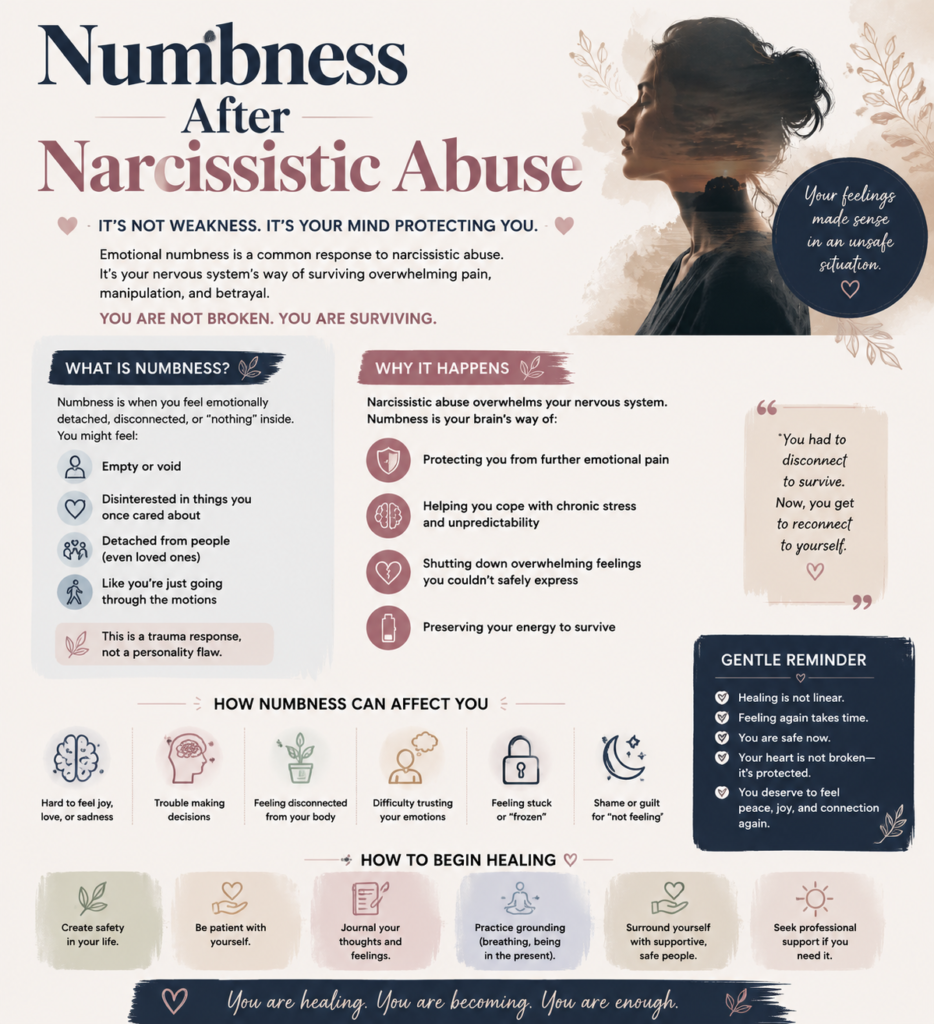
Emotional numbness after narcissistic abuse is something that can feel really confusing and even a little bit scary. If you’ve ever found yourself feeling “checked out,” struggling to connect with your feelings, or even feeling completely flat after dealing with a narcissist, you’re definitely not alone. This experience is more common than you might think, and understanding what’s actually happening inside helps make sense of it all. In this guide, I’m unpacking what emotional numbness is, why it happens after narcissistic abuse, and what can help you work through it.
Understanding Emotional Numbness After Narcissistic Abuse
Emotional numbness is when you feel disconnected from your own emotions. Instead of sadness, joy, or anger, you might just feel “blah,” like you’re on autopilot or like your emotions are locked away somewhere you can’t reach. After going through narcissistic abuse, this numbness can hit pretty hard and hang around longer than you expect.
Narcissistic abuse isn’t always loud, obvious, or dramatic. Sometimes it’s made up of subtle put-downs, being ignored, sudden mood changes, or mind games that leave you second-guessing yourself. Over time, living in this unpredictable environment can push your mind into survival mode. Emotional numbness is your brain’s way of protecting you from constant stress or pain, which is pretty smart, but it can also make life feel like you’re just going through the motions.
How Narcissistic Abuse Triggers Emotional Numbness
Narcissists often use tactics like gaslighting, blame shifting, and silent treatments to keep control. After a while, you start to question your own reality and shrink your feelings to avoid more harm. It’s common to stop reacting or even feeling much at all, just to get through each day.
Here’s why this happens:
- Emotional Overload: Constant criticism or manipulation from a narcissist creates overwhelming stress. Your brain basically says, “Enough,” and shuts down your emotional responses to help you cope.
- Self-Protection: By numbing out, you avoid the pain of constant disappointment or hurt. It’s a response to feeling unsafe for a long period of time.
- Disconnection from Self: If you’re always being told your feelings don’t matter or are too much, you might learn to silence them. Over time, this can make it tough to even recognize what you feel.
The numbness often lingers even after the relationship or contact is over. The brain has learned this response so well that it can stick around, even when the danger is gone.
Common Signs You’re Experiencing Emotional Numbness
Recognizing emotional numbness isn’t always straightforward, but there are some pretty clear signs to watch for:
- Feeling “empty” or flat inside
- Struggling to cry, laugh, or get excited—even when you want to
- Pushing people away or feeling disconnected from loved ones
- Being unable to identify what you feel in certain situations
- Difficulty feeling empathy for yourself or others
- Turning to distractions (screen time, food, work, etc.) to avoid uncomfortable feelings
I’ve talked to people who describe it as “being wrapped in bubble wrap” or “watching my own life from behind glass.” If this sounds familiar, it’s a sign that your brain is still working overtime to keep you safe.
Practical Tips for Starting to Feel Again
Breaking out of emotional numbness takes time, patience, and some gentle experimentation. There’s no quick fix, but small changes can help you reconnect with your feelings over time.
- Ground Yourself in the Present: Noticing what’s happening right now helps bring your mind and body back together. Try focusing on physical sensations, like the texture of your clothes, your breath, or background sounds.
- Name What You Feel, Even If It’s Nothing: Just saying, “I feel numb,” is a good starting point. Keep a journal and jot down any emotions or physical sensations you notice throughout the day, big or small. Over time, you might spot patterns or triggers that make things harder or easier.
- Try Creative Outlets: Art, music, journaling, or movement (like walking or dancing) can help express feelings that are hard to put into words. It’s less about the end result and more about exploring safely. Let go of expectations and try to play or create without any right-or-wrong outcome.
- Connect (Even Just a Little): Spend time with people who make you feel safe, even if you can’t share your whole story yet. Sometimes, just being around kind people starts to soften the numbness over time.
- Allow Yourself Tiny Enjoyments: Notice small pleasant things, like the taste of coffee or the feel of warm sunlight. This helps remind your brain what positive sensations feel like. Taking a moment to savor these can start to nudge your mind toward a sense of safety.
None of these steps has to be huge. Even taking five minutes a day for gentle self-check-ins can add up. It’s really about showing your mind and body that it’s safe to start feeling again. With regular practice, those small experiences can lead to bigger changes down the road.
Things Worth Knowing About Recovery
The path out of emotional numbness isn’t always smooth. There can be frustrating setbacks, and some days might even feel worse before they get better. These challenges are a normal part of healing:
- Guilt About Numbness: It’s easy to feel guilty for not feeling enough, especially if others tell you to “get over it.” Remember, numbness is a normal response to abnormal stress.
- Fear of Intense Feelings: Sometimes, what keeps numbness in place is the worry that, if it goes away, you’ll be “flooded” with emotion. Therapy or peer support can make this less overwhelming.
- Ups and Downs: Emotions may return in waves. Some days might bring a rush of sadness or anger, then go flat again. This is all part of your nervous system rebalancing itself after a long period of stress.
Guilt and Confusion
Feeling guilty for being numb is really common. I’ve heard people say, “I should care more,” or “Why can’t I just snap out of it?” It helps to remember that your brain learned this as a survival skill. Nothing is broken; your mind is doing exactly what it was trained to do. Give yourself space to accept where you are without judgment.
Fear of Emotions Returning
Many people actually worry that if the numbness fades, they’ll get hit with a tidal wave of feelings they can’t handle. This is a valid fear, but keep in mind that most people handle it much better with the right kind of support, like a trusted friend or professional who understands trauma recovery. Having a plan for support can make the process feel less intimidating and much more manageable.
Advanced Strategies For Deeper Healing
Once the initial numbness starts to fade, you can gently work on making even more space for your emotions and sense of self. Some approaches that help include:
Trauma Informed Therapy: Therapists familiar with narcissistic abuse and trauma (like those trained in EMDR, DBT, or somatic therapy) can offer individualized support and safe places to process hard feelings. This type of therapy often works at the pace that feels right for you, helping you feel more in control.
Body-Based Techniques: Yoga, meditation, breathwork, or other body-focused activities help reconnect you physically and emotionally.
Setting Small Boundaries: Practicing saying “no” or voicing your needs, even in tiny ways, gradually rebuilds your connection to yourself and your emotions. This can boost your confidence and sense of control with practice. If this feels tough, start with micro-boundaries, like choosing what to eat or how to spend a few minutes of your day.
In addition to these, learning about nervous system regulation through guided practices or resources can give you skills to handle tough emotions as they return. Books and podcasts about trauma recovery can also offer comfort and understanding during this phase.
Real Life Examples of Emotional Numbness
Emotional numbness after abuse shows up differently for everyone. Some people find they can’t laugh at funny shows or feel moved by music like they used to. Others just shut down in social situations or find themselves zoning out during conversations at work.
- Family Gatherings: You might be surrounded by people but feel out of place, like you’re just going through the motions.
- Big Life Moments: Even during happy events (birthdays, promotions), everything might feel flat. This can be really confusing, especially if you want to feel more excited than you do.
- Everyday Life: You zone out while running errands or can’t remember details from your day because your mind is somewhere far away.
These experiences are very common and don’t have to last forever. Many people find relief once they begin to understand and gently challenge the numbness. It’s possible, with time, to wake those old emotions back up and feel the zest for life creeping back in. Often, little signs of change, like enjoying a favorite song or laughing with someone, mark important steps forward.
Frequently Asked Questions about Emotional Numbness and Narcissistic Abuse
Here are a few questions that often come up for people dealing with emotional numbness after narcissistic abuse:
Question: Does emotional numbness go away by itself?
Answer: For some, numbness lifts over time, but most people recover faster with support, like therapy, supportive friends, or gentle self-care practices. Being patient with your recovery process and seeking out understanding people makes a huge difference.
Question: Is it normal to feel nothing after leaving a narcissistic relationship?
Answer: Absolutely. This is a common part of recovery. It’s a temporary state, not a permanent one. Your emotions often need time and safety to return.
Question: How long does it take to start feeling again?
Answer: There’s no set timeline. For some, it’s a few weeks or months; for others, it’s longer. Each person’s healing process is unique, so comparing your progress to someone else’s isn’t helpful. Trust your own pace and keep seeking support when needed.
Finding Hope and Support
Emotional numbness is your mind’s way of protecting itself after a tough situation. Reconnecting with your feelings takes patience and a lot of self-kindness, but feeling truly alive again is possible and happens gradually for most people. The adventure of healing can bring plenty of surprises, challenges, and gifts along the way, and every small bit of progress matters.
Support from others who get it can make a big difference. If you’re struggling, reaching out to a counselor familiar with narcissistic abuse or checking out trauma support resources (such as Psychology Today’s trauma therapist listings) is worth considering. You can also track down more information on understanding and healing from trauma through resources like the National Domestic Violence Hotline and SurvivorNet: Numb Emotions After Trauma.
If you find yourself feeling stuck or overwhelmed, remember that emotional numbness is just one chapter of your story, not the end. Even the smallest efforts toward self-care and support help move things forward toward healing and connection. Step by step, you can come out the other side feeling more connected to yourself and to life itself.
Video: Numb, Frozen, Disconnected: Your Body’s Response to Abuse #healing #recovery