Getting news of a big diagnosis, whether it’s cancer, a chronic illness, or even a mental health condition, is hard enough on its own. I’ve watched and experienced the unexpected ways friends sometimes react. Suddenly, someone who checked in all the time is nowhere to be found, or group chats go silent. When people vanish after a diagnosis, the emotional impact can catch you off guard.
Why Friends Disappear After a Diagnosis
This isn’t something people talk about much, but it’s more common than you might think. If you or someone you know has ever felt blindsided by the sudden quiet after sharing a diagnosis, you’re not alone. A lot of people experience this quick fading out from those they expected to stick around.
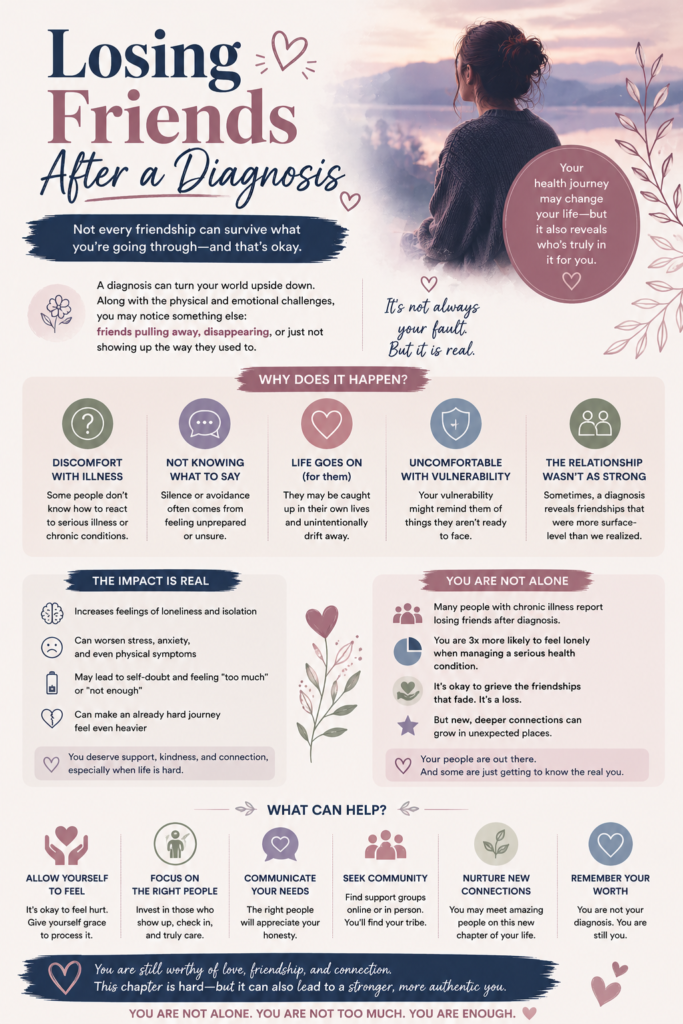
Sometimes, friends don’t know what to say or how to act. It can be awkward or scary for them, especially if the illness is serious or unpredictable. Some worry about saying the wrong thing and end up saying nothing at all. Others may feel overwhelmed by their own emotions or past experiences, so they pull away to protect themselves. There’s even research out there showing that people with certain health conditions, especially ones that are long-term or have no clear solution, lose friends after disclosure. It’s tough, and it can feel personal even though it often isn’t.
Another reason people fade is that illnesses can make social interactions very different from before. Social invitations can feel loaded, and some don’t know how to include you. They may hold back, waiting for a sign or guidance, but that pause can go on so long that real distance sets in. Illness can make friends reflect on their own health worries, which they might not want to face, so they step away for self-preservation. This complexity means that even the most loyal friends can find themselves caught between wanting to help and not knowing how to show up in a way that feels right.
The Emotional Fallout of Feeling Abandoned
When you’re going through something hard, having friends around becomes even more important. The sudden lack of support can leave you feeling lonely, rejected, or like you did something wrong. I’ve heard some folks say it feels like being sick is a double punishment: first the diagnosis, then being left out by people you thought you could count on.
This kind of loss can be really hard to shake. Many people replay conversations, wondering what they should have said differently or whether they shared too much. There’s a sense of grief that comes with losing friendships, and it can be just as heavy as grieving other parts of life that change after a diagnosis.
Feeling isolated or abandoned can also make the stress of a medical situation much worse. There’s some evidence that social isolation can have real effects on health. People with less support recover more slowly or feel pain more intensely. So it’s not just an emotional hit but also something that can impact physical wellbeing.
The loss of a friendship during illness can also create a new anxiety about trusting others. People begin questioning who will stick around and whether reaching out for help is worth the risk. This can make it even harder to ask for help, continuing the isolation. It’s not uncommon to experience anger or resentment toward friends who disappear, but these feelings can go hand in hand with a wish that things were easier or more predictable. Accepting complex feelings is part of the healing process.
Common Reasons Friends Pull Away
Trying to make sense of why friends bail is something I’ve definitely spent time on (too much, if I’m honest). Here’s what I’ve noticed:
- Fear and discomfort. Sometimes, illness reminds people of their own vulnerabilities. They don’t mean to be harsh; they just can’t handle the topic or feel helpless about it.
- Confusion about what to do or say. It’s scary to imagine saying the wrong thing and adding to someone else’s pain, so some just avoid reaching out altogether.
- Mismatched expectations. Some friends don’t realize how much support you need. Others might assume you have family or closer friends looking after you.
- Fatigue or overwhelm. If an illness drags on, people’s attention and energy sometimes fade. It’s not right, but it happens, especially when updates are slow and things feel stuck.
Another detail to consider is that friendship routines are sometimes interrupted by hospital visits and unpredictable schedules. People may wait for you to reach out, not wanting to interrupt or cause discomfort; unfortunately, this hesitancy creates even more space. Other times, friends worry that if they show up, they’ll be required to make bigger commitments than they’re ready for, so they step back instead. Uncertainty or lack of knowledge about your exact needs can leave friends feeling paralyzed, even if their intentions are good. That’s why losses often happen even in relationships that once felt solid.
What Stays and What Changes in Friendships
After a diagnosis, it’s easy to focus on the friends who have disappeared. But sometimes new people step up, and others surprise you by showing up in ways that matter. Some friendships switch up from joking and hanging out to deep listening or running errands. Some might grow more distant, but don’t fully cut off.
People who stick around might not always have the perfect words. Often, it’s about being present, sending a random meme, or offering to sit in silence. These small actions mean a lot; more than grand gestures, sometimes. Understanding that friendships can change after a diagnosis (instead of always ending) can help ease the sting a little.
Changes in friendship aren’t always about people bailing, either. Sometimes, friends drift away simply because they don’t know how to relate anymore, while others come closer because they’re better at handling tough times. New acquaintances, people from support groups, or even neighbors can take on newfound importance as your life shifts to face new realities.
Types of Support That Actually Help
- Listening: Just being there to listen to someone’s fears or frustrations—even if you can’t fix them—goes a long way.
- Consistency: Regular messages or just checking in beat an occasional dramatic gesture every time.
- Practical help: Offering to drive to appointments, cook a meal, or pick up groceries can make things feel less overwhelming.
- Respecting boundaries: Sometimes the best thing a friend can do is respect the space or quiet that comes with tough days.
In addition, sending a card, sharing encouraging words, or simply remembering important dates or doctor’s appointments can be incredibly supportive. Little ways to show up can matter enormously, especially as routines and connections change. Friends who adapt and show flexibility often find their relationships grow even stronger through hard times.
How to Cope With the Loss of Friendship
Losing friends during an already hard time can feel extra harsh. Here are some ways I’ve learned to manage:
- Grieve the loss. If a friendship fades, allow yourself to be sad about it. It’s normal and shows how much their presence mattered.
- Find new sources of connection. Support groups, online communities, or people with similar experiences often understand what you’re going through better than old friends might.
- Reflect, but don’t blame yourself. Friendships take two people. If someone pulls away, it usually says more about their situation than about you.
- Invest energy in the friends who stick around. Focus on those who show up, even in small ways. They’re worth your time and love.
It can also help to get into new hobbies or join casual meetup groups. These activities not only fill social gaps but can also lead to genuine connections rooted in shared interests. Therapy or counseling can offer a neutral space to process loss, and journaling your feelings can also allow you to track progress and spot new sources of comfort over time.
Tips for Navigating Friendships After a Diagnosis
- Communicate clearly. Tell friends what you need, whether that’s space, help, or just a quick text every few days. If you feel up to it, let them know what helps and what doesn’t.
- Set boundaries. Some people mean well but don’t know when to stop giving advice or asking questions. It’s completely okay to set limits on these conversations.
- Accept that some friendships may change for good. That hurts, but new connections may fill that space over time.
- Give others some grace. Sometimes friends return later, after they’ve sorted out their own feelings. Time can heal awkwardness, even if things aren’t ever quite the same.
If direct communication is difficult, consider writing a letter or sending a message laying out your needs. Also, try to keep expectations realistic. Not everyone has the emotional bandwidth to show up in the same way, and that’s more about their journey than your worth. Create space for mutual understanding by being honest about your own limits, too.
FAQs About Friends Disappearing After a Diagnosis
Question: Is it normal to feel angry or resentful toward people who disappear?
Answer: Feeling hurt or even mad is a really valid reaction. It doesn’t make you a bad person or mean you aren’t grateful for those who are there. These feelings can pass over time; acknowledge them, but don’t let them eat you up.
Question: What can I do to rebuild my support system?
Answer: Start small. Reconnect with old friends who might not know what you’re going through. Join in-person or online support groups for your diagnosis. Volunteering or participating in group hobbies can also lead to new friendships.
Question: How should I handle seeing former friends at social events?
Answer: A quick hello and a polite smile go a long way. You’re not required to be chatty if it feels uncomfortable. Keep your focus on friends who make you feel safe and happy.
Question: Is there a way to prevent friends from vanishing when I share my diagnosis?
Answer: There’s no foolproof way, but sharing honestly and giving people time to process can help. Some may need space before coming back around.
Learning to Move Forward
Watching friendships slip away during a tough chapter of life can feel sharp and unfair. I’ve learned that while it’s disappointing, it opens the chance for deeper, more compassionate connections; sometimes with unexpected people. Leaning into those connections, big or small, can help soften the loss of what used to be.
It’s okay to expect more from friends, especially during hard times, but it’s also okay to let go of those who can’t give what you need. Chasing after missing friends isn’t the only path. Sometimes the most healing thing is focusing on what (and who) remains.
Video: My Diagnosis Showed Me Who My Real Friends Weren’t #friendship