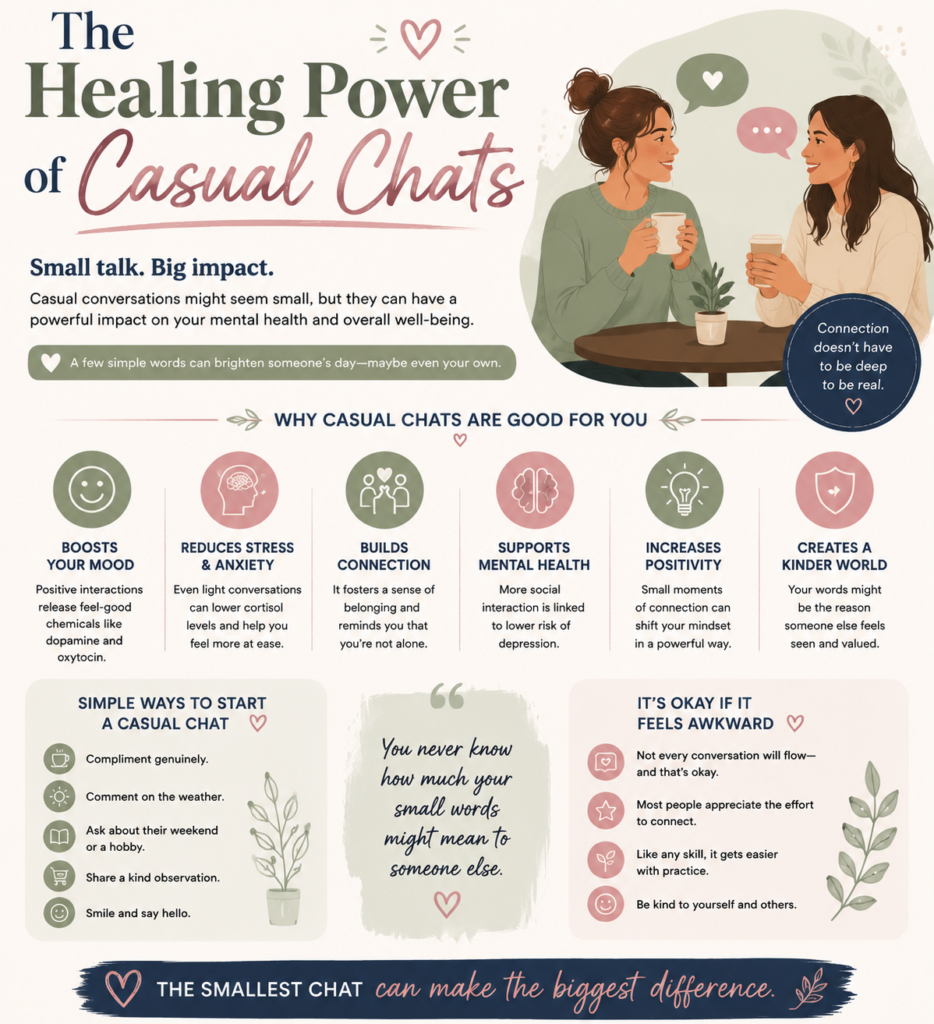
Small talk gets a bad reputation. Most people see it as fluff or an awkward social ritual filling time until the real conversation starts. I used to think that way too, but after digging into how small talk really works, I found it’s surprisingly good for mental health. There’s a lot more going on when you chat with a barista, greet a neighbor, or make a quick comment about the weather than meets the eye. Here’s why I think small talk is mental health medicine, and why it’s actually worth making time for these easy, everyday exchanges.
Understanding Small Talk and Its Real Role
Small talk isn’t just chatting about surface topics like the weather or the latest TV show. It’s a way to connect and signal goodwill, even if the chat is brief. We might brush it off as pointless, but psychologists and researchers say these light interactions can act as social glue. Whether it’s the quick “How’s your day going?” with a cashier or a nod with a neighbor, these little moments create a sense of community and belonging.
Studies show that these “weak ties,” our acquaintances and people we see in daily life, contribute to better moods and less loneliness. Even if you don’t know someone well, that simple encounter can break feelings of isolation. In cities and busy towns, these short connections can add a dose of friendly normalcy to each day.
How Small Talk Lifts Your Mood
It’s pretty clear that close relationships are important for well-being, but research also shows that simple, casual interactions matter. Small talk is basically a practical tool for boosting mood. Here’s why:
- It creates mini positive moments: Even short, friendly exchanges can bring a little spark of positivity once or twice throughout your day. These add up over time.
- It breaks social barriers: Short chats with strangers or acquaintances help reinforce the idea that most people are approachable, and that connection isn’t as hard as it sometimes feels.
- It keeps loneliness at bay: Loneliness doesn’t always mean being physically alone; it can mean lacking regular, positive social contact. Small talk acts like a gentle nudge against those lonely feelings.
On top of these benefits, small talk encourages us to be present, even just for a minute. It’s a way to anchor yourself in what’s happening now rather than drifting into anxieties or worries about things you can’t control. If you’re someone who often feels anxious in social settings, mastering small talk can make gatherings and daily interactions less intimidating and more rewarding.
What Makes Small Talk “Mental Health Medicine”?
There are real physiological changes that come from positive social interactions, even quick ones. When you get into friendly banter, your brain releases feel-good hormones like oxytocin and dopamine. These are the same chemicals that help balance your mood and lower stress. Small talk can help prevent your brain from spiraling into negative thoughts by focusing your attention on the present and giving you a moment of positive engagement.
On tough days, even a short chat can offer a break from rumination or anxiety. Having a brief, light conversation can switch up your mindset and create an opening for a different, more outward focus. That’s one reason mental health pros sometimes recommend attending group activities, classes, or other communal spaces, even if you don’t know anyone there yet.
Everyday Settings Where Small Talk Works Best
The beauty of small talk is that you don’t have to plan for it. Opportunities are everywhere. Some places I find it pops up naturally include:
- Waiting in line at a coffee shop or grocery store
- Strolling through a local park
- Visiting the dog park (pets are the ultimate conversation starters)
- Sitting in a lobby or waiting area
- Riding in an elevator or public transit
These low-pressure situations keep it casual. Plus, chatting in these spaces rarely turns into anything intense or deep unless both people are open to it. For those who get nervous around new people, these situations are pretty low stakes and manageable.
You might also stumble upon an ideal chance when you notice something memorable around you—a rainbow across the sky, a striking outfit, or someone carrying an unusual book. Mentioning what you both see invites a natural connection and sometimes sparks a memorable moment.
Common Hurdles and How to Handle Them
Small talk can feel awkward, especially if you’re shy or worried about saying the wrong thing. I’ve definitely stumbled over words or worried a conversation would die after one word. Here’s how I manage those feelings:
- Keep it simple: Questions like “Busy day?” or “Nice out, isn’t it?” are easy openers and don’t need a fancy follow-up.
- Focus on the moment: Mentioning something you both see or experience (like “That dog is adorable!” or “Lots of rain lately, huh?”) breaks the ice naturally.
- Accept a quick chat: Not every conversation goes anywhere, and that’s fine. Don’t feel pressured to turn it into something bigger every time.
Sometimes it helps to have some go-to topics in mind. Talking about community events, seasonal foods, or asking for recommendations for a nearby spot can provide a little direction if the chat gets stuck. It’s helpful to remind yourself that awkward silences are normal, and they pass quickly. You also build resilience and confidence as you practice more often.
Handling Rejection
Sometimes small talk doesn’t get much of a response. Maybe the other person’s distracted or just not interested. That doesn’t mean you did anything wrong. Everyone has off days. I chalk it up to experience and don’t let it hold me back from trying again next time. Over time, you’ll find these moments bother you less, and you get used to the idea that not every exchange leads anywhere—and that’s okay.
When Anxiety Gets in the Way
If you’re dealing with social anxiety, small talk might seem scary. I started by reminding myself that even a smile or a simple “hi” counts as small talk. Working up in baby steps, instead of expecting a full conversation, can help build confidence little by little. Each small win is a sign you’re getting used to human connection, and you can be proud of showing up, no matter how brief the chat.
Tips to Make Small Talk Feel Easier (and Maybe Even Enjoyable)
Making small talk isn’t about being clever or outgoing. It’s more about showing up as yourself and being open to connection. Here are a few things that helped me:
- Smile and use open body language: A smile signals you’re friendly without saying a word. Even if it feels a bit forced at first, it becomes easier after practice.
- Be curious: If someone brings up their plans or an event, ask a little follow-up—”What’s that like?” or “Is it a good spot?” Most people like to share.
- Practice with people you see often: Baristas, cashiers, or colleagues are great for practicing the basics. Try adding a simple “How’s your day going?” the next time you run into someone familiar.
Another tip is to really listen. People are much more likely to open up when they feel heard. Nodding, making eye contact, and following up with a brief comment on what they said keeps the chat rolling and signals that you’re engaged. Over time, you might find yourself looking forward to these little moments.
Why These Everyday Interactions Matter
There’s science behind why small talk makes you feel good. Regular, casual social contact helps keep your emotional reserves topped up. According to research from the University of British Columbia, people who get involved in more daily social interactions—including with close friends and total strangers—tend to be happier overall (source).
Connecting, even in small doses, deflates stress, helps balance emotions, and over time, creates a sense of familiarity in your daily spaces. It even lowers the chance of developing depression in the long run. Plus, in a world where more of our interactions happen online, these little face-to-face greetings become even more valuable. The act of showing up in your local community—even if it’s just a tiny hello—can set a positive tone for your day and sometimes has a ripple effect throughout your neighborhood or workplace.
Real-World Examples: How Small Talk Changes Everyday Life
- Building community: Simple greetings in your neighborhood or at work can turn strangers into acquaintances and, eventually, friends.
- Sparking kindness: Holding a door and sharing a quick word, or making a positive comment, encourages more kindness throughout the day.
- Creating opportunity: Many friendships, job opportunities, or even fun nights out often started from a bit of small talk.
I remember striking up a chat with the clerk at my local bookstore about new releases, which turned into a weekly exchange of book recommendations. That kind of friendly routine can lift your spirits for hours or even days after. In the same way, a nod to your mail carrier, jokes shared with your dry cleaner, or a short talk at the gym can make familiar routines feel warmer and create a support system you might not notice at first. These patterns add color and security to everyday life.
Common Questions About Small Talk and Mental Health
Is it normal to feel awkward starting small talk?
Yes, feeling awkward is common, especially if you haven’t practiced much. With time and repetition, it feels more natural. Everyone starts somewhere.
Do I need to force a conversation if I’m not in the mood?
No, there’s no rule that says you have to get involved in small talk every time. Listen to yourself—sometimes a quiet nod or a smile is plenty.
Can small talk really make a difference for anxiety or depression?
Small talk isn’t a cure-all, but it adds up over time. Regular social contact helps combat the big, heavy feelings of isolation that can come with anxiety or depression. It’s just one tool among many, but it can be surprisingly powerful.
How can I get better at it?
Practice is your friend. Start with short comments or questions in safe settings, such as stores, coffee shops, or with colleagues. Over time, as it gets less scary, you can branch out.
The Upside of Embracing Small Talk
Your brain and mood benefit from regular, small-scale social moments. Whether it’s exchanging a couple of words while picking up coffee or sharing a quick “good morning” at the gym, each instance helps chip away at loneliness and builds a sense of connection. Small talk doesn’t have to be deep or personal to have a real mental health benefit—it just needs to be genuine and open. So, if you’re tempted to avoid those little exchanges, consider trying them out anyway. You might notice it makes your days go by just a bit brighter, and over time, those easy chats could be what creates some of the most eye-catching and positive changes for your mental health.
Video: This Conversation Hack Actually Works for Anxiety #MentalWellness #StressRelief