Recovery from alcohol addiction can feel overwhelming, especially during the early stages of sobriety. Alcoholics Anonymous (AA) provides a peer-based recovery community built around shared experience and the Twelve Steps. Within this fellowship, one relationship can become particularly important: the relationship between a sponsor and a person seeking recovery.
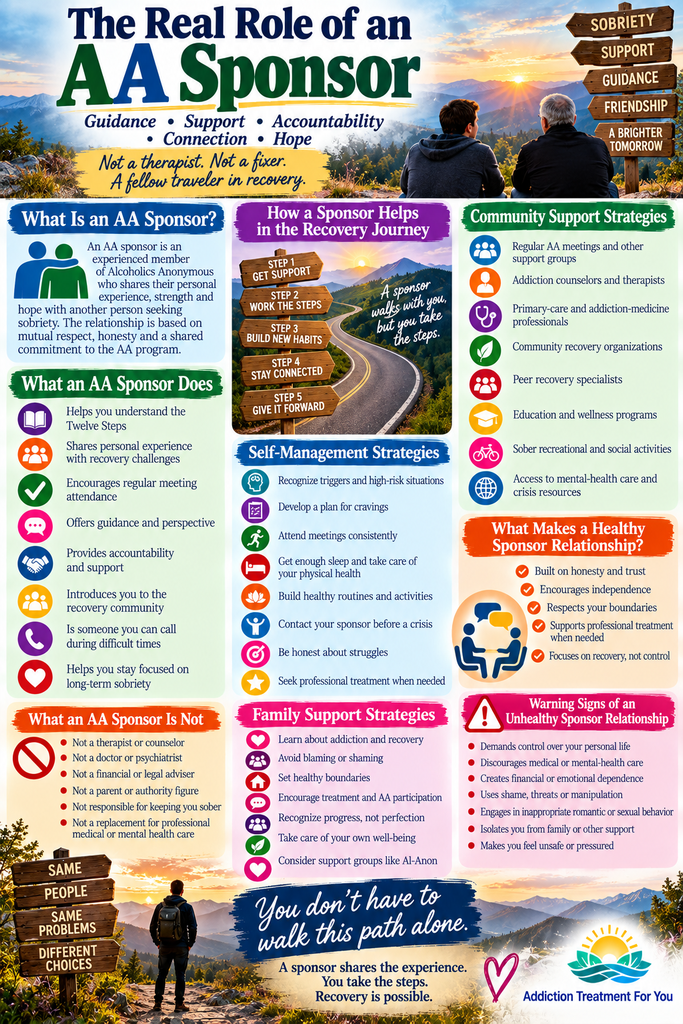
An AA sponsor is not a therapist, physician, parent, probation officer, or professional addiction counselor. A sponsor is typically another AA member with experience working the Twelve Steps who voluntarily helps another member understand and apply the AA program. Sponsorship is based on one person in recovery sharing experience, strength, and hope with another.
Understanding what sponsors can—and cannot—do helps people use this relationship effectively while also recognizing when professional treatment is necessary.
What Is an AA Sponsor?
According to AA’s description of sponsorship, a sponsor is essentially an AA member who has made progress in recovery and shares that experience continuously and individually with another person attempting to achieve or maintain sobriety.
The relationship is personal rather than professional.
A sponsor may help someone understand AA literature, discuss recovery challenges, work through the Twelve Steps, become more involved with meetings, and stay connected with other people in recovery.
A sponsor might say, “This is what helped me when I experienced something similar.”
That is different from a clinician saying, “Based on your symptoms and medical history, this is the treatment I recommend.”
Both kinds of support can be valuable, but they serve different purposes.
What Does an AA Sponsor Actually Do?
The exact relationship varies between individuals. Generally, sponsorship involves ongoing communication and guidance through AA’s recovery program.
A sponsor may:
- Explain how the Twelve Steps work.
- Help someone begin working through the Steps.
- Discuss AA literature and principles.
- Encourage regular meeting attendance.
- Share personal experiences with cravings and difficult situations.
- Help identify behaviors that may threaten sobriety.
- Encourage honesty and accountability.
- Introduce the person to other members of the recovery community.
- Encourage service and participation in AA.
- Provide someone to contact when recovery feels difficult.
The sponsor does not “keep” someone sober. Ultimately, the individual remains responsible for their own decisions and recovery.
What an AA Sponsor Is Not
Understanding boundaries is equally important.
A sponsor is generally not a:
- Physician
- Psychiatrist
- Psychologist
- Therapist
- Addiction counselor
- Financial adviser
- Legal adviser
- Emergency crisis service
- Substitute for family relationships
Sponsors should not be expected to diagnose mental-health conditions, prescribe medications, manage alcohol withdrawal, or provide professional psychotherapy.
This distinction becomes particularly important because suddenly stopping heavy alcohol consumption can sometimes produce dangerous withdrawal symptoms, including seizures and delirium tremens. Someone at risk for significant withdrawal needs medical evaluation rather than relying solely on meetings or a sponsor.
Sponsorship and Self-Management
A sponsor can support recovery, but lasting recovery also involves developing personal coping skills.
Self-management means learning to recognize what increases the risk of drinking and creating healthier responses before a crisis develops.
Helpful strategies include:
- Identify triggers. Recognize people, places, emotions, celebrations, conflicts, or situations associated with drinking.
- Develop a craving plan. Decide beforehand whom to call and what activities can help when cravings appear.
- Attend meetings consistently. Regular participation can strengthen recovery routines.
- Contact your sponsor before a crisis escalates. Communication is often easier before the urge to drink becomes overwhelming.
- Protect sleep and physical health. Exhaustion, stress, and poor nutrition can make coping more difficult.
- Build daily structure. Work, exercise, meetings, hobbies, and social connection can reduce unstructured periods associated with previous drinking.
- Recognize warning signs of relapse. Isolation, romanticizing previous drinking, skipping recovery activities, and reconnecting with high-risk environments may deserve attention.
- Seek professional treatment when appropriate. AA can complement medical and behavioral treatment rather than replace it.
A sponsor can provide guidance, but recovery is stronger when someone gradually develops the ability to recognize problems and make healthy decisions.
The Importance of Accountability
Accountability is often misunderstood as someone controlling another person’s behavior.
Healthy recovery accountability is different.
A sponsor may ask difficult questions, point out inconsistencies, or encourage someone to examine behaviors honestly. The purpose should be to encourage awareness and responsibility—not shame, humiliation, or control.
For example, someone might tell their sponsor:
“I keep thinking about stopping at the bar after work.”
Instead of simply saying, “Don’t drink,” a sponsor might help the person explore what is triggering the thought, discuss what has helped before, suggest attending a meeting, and encourage contact with supportive people.
Over time, this process can help individuals recognize their own relapse patterns earlier.
Family Support Strategies
Families sometimes expect the sponsor to become responsible for their loved one’s sobriety. That expectation can place inappropriate pressure on everyone involved.
A sponsor cannot monitor someone 24 hours a day or guarantee that relapse will not occur.
Families can provide their own layer of support by:
- Learning about alcohol use disorder and recovery.
- Avoiding blaming or shaming language.
- Establishing healthy boundaries.
- Encouraging treatment and recovery participation.
- Avoiding attempts to control every recovery decision.
- Recognizing progress without expecting perfection.
- Maintaining healthy activities that do not revolve around alcohol.
- Seeking support for their own emotional needs.
Family members also need to understand that the sponsor relationship may involve private conversations. Healthy privacy can allow the person in recovery to speak openly about cravings, mistakes, fears, and behaviors.
Families Need Support Too
Alcohol addiction rarely affects only the individual who drinks.
Partners, parents, siblings, and children may experience anxiety, anger, financial problems, broken trust, or years of unpredictable behavior.
Family members can become so focused on preventing another person’s drinking that their own well-being disappears from consideration.
Support groups, counseling, family therapy, and education can help relatives distinguish support from control.
Organizations such as Al-Anon provide peer support specifically for people affected by another person’s drinking.
Community Support Strategies
Recovery becomes stronger when it extends beyond a single relationship.
A sponsor should ideally be part of a broader recovery network, not someone’s only source of support.
Community resources can include:
- AA meetings and other mutual-help groups.
- Addiction counselors and therapists.
- Primary-care providers.
- Addiction-medicine professionals.
- Intensive outpatient and residential programs when appropriate.
- Recovery community organizations.
- Peer recovery specialists.
- Mental-health treatment.
- Family-support programs.
- Sober recreational and social activities.
Some people also benefit from medications for alcohol use disorder, such as naltrexone, acamprosate, or disulfiram when medically appropriate. Participation in AA does not mean someone must reject evidence-based medical treatment.
What Makes a Healthy Sponsor Relationship?
A productive sponsor relationship should generally promote independence, honesty, respect, and recovery.
The person being sponsored should feel able to ask questions and discuss concerns without fearing humiliation.
A healthy sponsor recognizes the limits of personal experience.
If someone develops severe depression, suicidal thoughts, psychosis, significant trauma symptoms, dangerous withdrawal, or another serious medical or psychiatric problem, the appropriate response is to connect that individual with qualified professional care.
Sponsors can support treatment without trying to become the treatment provider.
Warning Signs of an Unhealthy Sponsor Relationship
Sponsorship involves trust, which makes boundaries particularly important.
Potential warning signs include a sponsor who attempts to control someone’s finances, relationships, medications, healthcare decisions, housing, employment, or personal life beyond reasonable recovery guidance.
Other concerns include:
- Demanding unquestioning obedience.
- Threatening or humiliating the person.
- Discouraging necessary medical or mental-health treatment.
- Telling someone to stop prescribed medication without consulting the prescriber.
- Creating inappropriate financial dependence.
- Sexual or romantic exploitation.
- Attempting to isolate someone from family or other supportive relationships.
- Presenting personal opinions as official AA requirements.
People may choose another sponsor if a relationship feels inappropriate or is no longer helpful.
Sponsorship Is About Connection, Not Perfection
A sponsor does not need to have a perfect life.
One strength of peer support is that the person providing guidance understands recovery through lived experience. They may understand the rationalizations, cravings, embarrassment, loneliness, and uncertainty that accompany early sobriety because they have encountered similar challenges themselves.
That shared experience can reduce isolation.
Someone struggling at 10 p.m. may find tremendous value in talking with someone who understands exactly why one drink can become much more than one drink.
Sponsors Cannot Prevent Every Relapse
Relapse can occur even when someone has a sponsor, attends meetings, and genuinely wants sobriety.
A relapse should therefore prompt examination rather than simply blame.
Questions might include:
What happened before the drinking? What warning signs appeared? Which supports stopped being used? What could be changed in the recovery plan? Is additional professional treatment needed?
A sponsor can participate in that conversation, but medical professionals and addiction counselors may also need to become involved.
Building a Recovery Team
The strongest approach is often not choosing between AA and professional treatment.
It is creating multiple layers of support.
Someone’s recovery network might include an AA sponsor for Twelve-Step guidance, a physician for medical treatment, a therapist for trauma or mental-health concerns, family members for everyday emotional support, and peers who provide sober social connection.
Each person has a different role.
When those roles are understood, the individual receives support without expecting one person to solve every problem.
Conclusion
The real role of an AA sponsor is not to control another person’s recovery or act as an unpaid therapist. A sponsor is a peer who shares personal recovery experience, helps another member understand and work the Twelve Steps, encourages connection with AA, and provides accountability and support along the way.
Self-management helps individuals recognize triggers, cravings, and relapse warning signs. Family support provides encouragement while maintaining healthy boundaries. Community resources expand recovery beyond one sponsor or one meeting.
Perhaps the most valuable lesson of sponsorship is simple: recovery remains an individual’s responsibility, but it does not have to be attempted alone.
Frequently Asked Questions
Here are some common questions:
1. What is an AA sponsor?
An Alcoholics Anonymous (AA) sponsor is an AA member who shares their experience with another member seeking to achieve or maintain sobriety. Sponsors commonly help newcomers understand AA, work through the Twelve Steps, and become connected with the fellowship. Sponsorship is peer support, not professional treatment.
2. What does an AA sponsor actually do?
A sponsor can help someone understand the Twelve Steps, discuss recovery challenges, encourage meeting attendance, share personal experiences, identify potential relapse warning signs, and provide accountability and encouragement.
The basic idea is: a sponsor shares the path they have traveled, while the individual remains responsible for walking their own recovery path.
3. Does everyone in AA have to have a sponsor?
No. AA does not require membership paperwork, treatment contracts, or a sponsor. However, sponsorship is a longstanding AA practice, and many members find individual guidance helpful as they learn to apply the Twelve Steps to everyday life.
4. Is an AA sponsor the same as an addiction counselor?
No. A sponsor is a peer with lived recovery experience. An addiction counselor is a trained professional who can assess substance-use problems and provide clinical treatment.
A sponsor can share experience, strength, and hope, but should not substitute for appropriate medical, psychiatric, or psychological care.
5. Is an AA sponsor a therapist?
No. Sponsors are not automatically trained mental-health professionals. They should not be expected to diagnose depression, anxiety, PTSD, bipolar disorder, schizophrenia, or other mental-health conditions.
Someone experiencing significant psychological symptoms should be encouraged to work with qualified healthcare professionals.
6. Can a sponsor tell someone to stop taking medication?
A sponsor should not replace the prescribing clinician in medication decisions. Questions about antidepressants, anxiety medications, medications for alcohol use disorder, or other prescribed treatments should be discussed with the appropriate healthcare professional.
Stopping some medications suddenly can also create medical risks.
7. Can a sponsor help during an alcohol craving?
Yes. Calling a sponsor can provide connection and perspective during a difficult moment. A sponsor may discuss what helped them manage similar situations, suggest attending a meeting, or encourage the individual to use their recovery plan.
However, sponsors are not emergency medical or crisis services.
8. Can an AA sponsor prevent relapse?
No sponsor can guarantee another person’s sobriety.
A sponsor can help someone recognize warning signs, strengthen accountability, and reconnect with recovery activities. Ultimately, however, recovery depends on the individual’s decisions, supported by appropriate peer, family, community, and professional support.
9. How often should someone contact their sponsor?
There is no universal rule. Some people communicate with their sponsor daily during early recovery, while others communicate several times a week or when specific issues arise.
Discuss expectations openly so both people understand the relationship.
10. Should someone call their sponsor before drinking?
Ideally, people should reach out before a craving becomes a crisis. Early communication provides more opportunity to identify the trigger and use coping strategies.
A useful recovery plan may include several contacts rather than relying entirely on one sponsor.
11. What qualities should someone look for in a sponsor?
A helpful sponsor generally has experience with AA’s Twelve Steps, demonstrates stable recovery, respects boundaries, communicates honestly, encourages personal responsibility, and understands the limits of their role.
The relationship should support increasing independence—not dependence on the sponsor.
12. Does a sponsor have authority over someone’s personal life?
No. Sponsorship should not give another person unrestricted control over someone’s relationships, employment, finances, housing, medical treatment, or other personal decisions.
Advice may be offered based on recovery experience, but sponsorship should not become coercive or controlling.
13. What are warning signs of an unhealthy sponsor relationship?
Potential warning signs include:
- Demanding unquestioning obedience
- Using threats, humiliation, or manipulation
- Attempting to control finances or relationships
- Discouraging appropriate professional treatment
- Telling someone to discontinue prescribed medication
- Creating excessive emotional dependency
- Isolating someone from supportive friends or family
- Sexual or romantic exploitation
- Making the person feel unsafe or intimidated
A person can choose another sponsor when the relationship is inappropriate or simply no longer helpful.
14. Can someone change sponsors?
Yes. Sponsorship is voluntary. Sometimes personalities, communication styles, availability, recovery approaches, or boundaries simply do not fit.
Changing sponsors does not necessarily mean either person did something wrong.
15. What role does accountability play in sponsorship?
Accountability can help someone examine their behavior honestly. A sponsor may ask whether the person is attending meetings, working the Steps, isolating themselves, experiencing cravings, or returning to behaviors associated with previous drinking.
Healthy accountability should encourage responsibility rather than shame.
16. How can family members support the sponsor relationship?
Family members can respect appropriate privacy between the individual and sponsor while maintaining their own healthy relationship with their loved one.
Families can also:
- Learn about alcohol use disorder and recovery.
- Avoid blaming and shaming.
- Establish appropriate boundaries.
- Encourage treatment and recovery activities.
- Recognize progress rather than demanding perfection.
- Seek their own support when necessary.
Families should not expect the sponsor to monitor their loved one.
17. Should family members contact the sponsor?
Usually, the sponsor relationship belongs to the AA member. Families should avoid using the sponsor as a surveillance system unless everyone involved has clearly agreed to communication.
Family members concerned about their loved one can seek their own support through counseling, family therapy, or organizations such as Al-Anon.
18. Can someone use AA while receiving professional addiction treatment?
Yes. Peer recovery support and professional treatment can complement each other.
Someone’s broader recovery team might include a sponsor for Twelve-Step guidance, a physician for medical care, a therapist for mental-health concerns, an addiction counselor for treatment planning, and family or friends for everyday support.
19. Can someone take medication for alcohol use disorder and still participate in recovery?
Medications such as naltrexone, acamprosate, and disulfiram may be appropriate for some people with alcohol use disorder. Qualified healthcare professionals should make medication decisions based on the individual’s medical situation.
Peer-support participation does not need to replace evidence-based medical care.
20. Can an AA sponsor manage alcohol withdrawal?
No. Alcohol withdrawal can sometimes become medically dangerous, particularly after prolonged heavy drinking.
Seizures, hallucinations, severe confusion, or delirium can require urgent medical treatment. A sponsor or AA meeting should never substitute for medical evaluation of potentially serious withdrawal.
21. What community resources can complement an AA sponsor?
Recovery support may include AA and other mutual-help groups, addiction counselors, therapists, addiction-medicine clinicians, primary-care providers, recovery community organizations, peer recovery specialists, outpatient treatment, residential programs, and sober recreational activities.
The goal is to build a network of support rather than dependence on one person.
22. What is the most important thing to understand about an AA sponsor?
An AA sponsor is neither a savior nor someone responsible for keeping another person sober.
The sponsor’s real role is to provide peer guidance, shared experience, accountability, encouragement, and connection to the AA recovery program.
Self-management helps someone recognize triggers and strengthen coping skills. Family support provides encouragement and healthy boundaries. Community and professional resources provide additional treatment and connection.
A sponsor can walk beside someone in recovery—but the individual ultimately takes the steps.
Video: What to expect from your first AA sponsor #recoveryjourney #aa