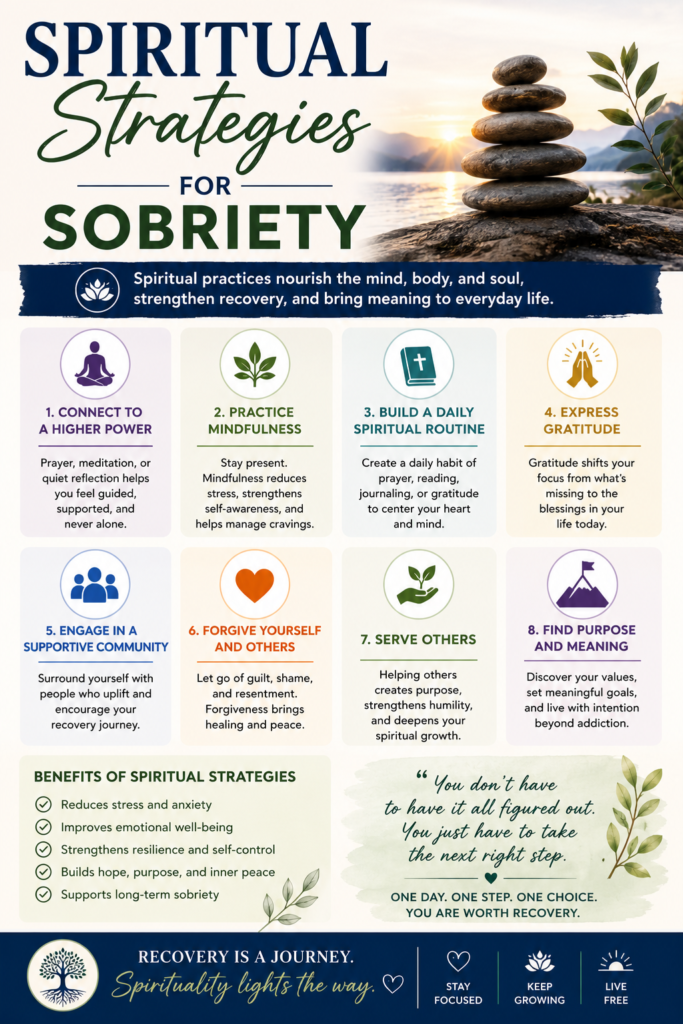
Spiritual strategies for sobriety have become an important part of recovery for many individuals struggling with substance use disorders. Addiction often affects not only physical health but also emotional wellbeing, relationships, and a person’s sense of purpose and identity. Spiritual approaches to recovery focus on helping individuals find meaning, hope, inner peace, and emotional healing beyond substance use. These strategies may include prayer, meditation, mindfulness, participation in faith communities, gratitude practices, and personal reflection. Unlike substance use, which may temporarily numb emotional pain, spiritual practices encourage healthier coping skills, self-awareness, and personal growth. When combined with counseling, peer support, and healthy lifestyle changes, spiritual strategies can strengthen resilience and support long-term sobriety and overall wellbeing.
Introduction
Recovery from substance use disorders involves more than physical abstinence from drugs or alcohol. Many individuals in recovery also struggle with emotional pain, feelings of emptiness, guilt, anxiety, and the search for meaning and purpose. Because addiction often affects the mind, body, and spirit, successful recovery may require a holistic approach that addresses all aspects of a person’s wellbeing. Spiritual strategies have become an important part of recovery for many individuals by providing hope, inner strength, emotional healing, and a sense of connection beyond oneself.
Spirituality in recovery does not necessarily refer to organized religion alone. It can include personal beliefs, meditation, prayer, mindfulness, connection with nature, or participation in supportive faith communities. Spiritual strategies encourage individuals to reflect on values, develop self-awareness, and find purpose in life beyond substance use. When combined with counseling, support groups, and healthy coping skills, spiritual practices can strengthen long-term sobriety and emotional resilience.
Understanding Spirituality in Recovery
Spirituality involves the search for meaning, connection, and personal growth. In addiction recovery, spirituality often helps individuals rebuild a sense of identity and hope that may have been damaged during active substance use.
Many recovery programs, including 12-step programs such as Alcoholics Anonymous and Narcotics Anonymous, emphasize spiritual principles such as honesty, humility, forgiveness, gratitude, and acceptance. These principles can help individuals develop healthier ways of coping with stress and emotional struggles.
Spirituality may provide:
- A sense of purpose and meaning
- Emotional comfort during difficult times
- Increased self-awareness
- Hope and motivation for change
- Stronger social support and community connection
- Improved emotional resilience
For many individuals, spiritual growth becomes an important source of strength throughout recovery.
Key Spiritual Strategies for Sobriety
1. Prayer and Meditation
Prayer and meditation are commonly used spiritual practices in recovery. These activities encourage self-reflection, emotional calmness, and mindfulness.
Benefits of prayer and meditation may include:
- Reduced stress and anxiety
- Improved emotional regulation
- Increased focus and self-control
- Greater awareness of thoughts and behaviors
- Feelings of peace and inner stability
Regular meditation and prayer can help individuals manage cravings and remain focused on recovery goals.
2. Practicing Mindfulness
Mindfulness involves paying attention to the present moment without judgment. Many individuals in recovery use mindfulness techniques to better manage cravings, emotional triggers, and stress.
Mindfulness practices may include:
- Deep breathing exercises
- Guided meditation
- Journaling thoughts and emotions
- Mindful walking or exercise
- Grounding techniques during stressful situations
These practices encourage healthier responses to difficult emotions instead of turning to substances for relief.
3. Participation in Faith or Spiritual Communities
Supportive communities can play an important role in maintaining sobriety. Religious or spiritual groups often provide encouragement, accountability, and a sense of belonging.
Community involvement may include:
- Attending worship services
- Participating in recovery ministries
- Joining meditation or prayer groups
- Volunteering in community service activities
- Building relationships with mentors or sponsors
Positive social connections can reduce isolation and strengthen motivation for long-term recovery.
4. Developing Gratitude and Forgiveness
Addiction often creates guilt, shame, and damaged relationships. Spiritual strategies encourage individuals to practice gratitude and forgiveness as part of emotional healing.
Practicing gratitude may involve:
- Keeping a gratitude journal
- Reflecting on positive experiences
- Recognizing personal growth and progress
Forgiveness involves:
- Letting go of resentment
- Accepting past mistakes
- Rebuilding self-worth and relationships
These practices can improve emotional wellbeing and reduce negative thinking patterns associated with relapse.
5. Finding Meaning and Purpose
Many individuals recovering from addiction struggle with feelings of emptiness or a lack of direction. Spirituality can help individuals identify values, goals, and personal purpose beyond substance use.
Purpose-driven activities may include:
- Helping others in recovery
- Pursuing education or career goals
- Strengthening family relationships
- Participating in volunteer work
- Exploring creative or spiritual interests
Finding meaning in life can increase motivation and strengthen long-term commitment to sobriety.
Challenges and Considerations
Although spiritual strategies can be beneficial, not every individual connects with spirituality in the same way. Some people may have negative experiences with religion or feel uncertain about spiritual beliefs. Recovery programs should therefore respect personal choice and cultural diversity while offering multiple pathways to healing.
Spirituality should complement, not replace, professional treatment approaches such as counseling, therapy, medication support, and medical care. A balanced recovery plan often includes both psychological and spiritual support systems.
Conclusion
Spiritual strategies for sobriety provide many individuals with emotional strength, hope, and a deeper sense of meaning throughout the recovery process. Practices such as prayer, meditation, mindfulness, gratitude, and community involvement can help individuals manage stress, improve emotional wellbeing, and maintain long-term sobriety.
While recovery from substance use disorders can be difficult, spiritual growth may offer individuals a powerful source of resilience and personal transformation. When combined with professional treatment and supportive relationships, spiritual strategies can help individuals build healthier, more purposeful, and more fulfilling lives in recovery.
Self-Management Strategies in Understanding Spiritual Strategies for Sobriety
Recovery from substance use disorders is a lifelong process that involves physical healing, emotional growth, and personal transformation. While therapy, support groups, and medical treatment are important components of recovery, many individuals also turn to spirituality as a source of strength and guidance. Spiritual strategies for sobriety often help individuals find meaning, purpose, inner peace, and hope during difficult stages of recovery. However, maintaining sobriety also requires active personal effort and responsibility. This is where self-management strategies become essential.
Self-management strategies help individuals regulate emotions, cope with stress, manage triggers, and build healthy habits that support long-term sobriety. When combined with spiritual practices such as prayer, meditation, mindfulness, and community involvement, self-management can strengthen emotional resilience and improve overall wellbeing. Together, spirituality and self-management encourage individuals to take an active role in recovery while developing healthier ways of living and coping with life’s challenges.
Understanding Spiritual Strategies for Sobriety
Spiritual strategies focus on helping individuals develop a sense of connection, meaning, and personal growth during recovery. Spirituality may involve religious faith, meditation, mindfulness, nature, or personal reflection. Many recovery programs emphasize spiritual principles such as honesty, gratitude, forgiveness, humility, and acceptance.
Spiritual practices may help individuals:
- Reduce stress and anxiety
- Improve emotional balance
- Strengthen hope and motivation
- Build supportive relationships
- Increase self-awareness and self-control
- Develop a stronger sense of purpose
These benefits can support long-term sobriety by helping individuals manage emotional struggles without relying on substances.
The Role of Self-Management in Recovery
Self-management refers to the ability to regulate thoughts, behaviors, emotions, and daily habits in ways that support recovery and personal wellbeing. In addiction recovery, self-management helps individuals remain accountable and actively involved in maintaining sobriety.
Effective self-management strategies may help individuals:
- Recognize emotional triggers
- Develop healthy coping mechanisms
- Prevent relapse
- Maintain structure and stability
- Strengthen confidence and independence
When spiritual strategies are combined with self-management, individuals often gain both emotional support and practical tools for maintaining recovery.
Key Self-Management Strategies for Spiritual Sobriety
1. Practicing Daily Reflection and Mindfulness
Self-awareness is an important part of both spirituality and recovery. Daily reflection allows individuals to examine thoughts, emotions, and behaviors that may affect sobriety.
Helpful reflection practices include:
- Journaling emotions and experiences
- Meditation or quiet reflection
- Practicing gratitude each day
- Reviewing personal recovery goals
Mindfulness helps individuals stay focused on the present moment rather than becoming overwhelmed by guilt about the past or anxiety about the future.
2. Developing Healthy Daily Routines
Addiction often disrupts structure and stability in daily life. Creating consistent routines can help individuals feel more organized and emotionally balanced.
Healthy routines may include:
- Regular sleep schedules
- Healthy eating habits
- Exercise and physical activity
- Prayer or meditation time
- Attending support groups or counseling sessions
Daily routines create structure and reduce the stress and chaos that may contribute to relapse.
3. Managing Stress Through Spiritual Coping Skills
Stress is a common trigger for relapse. Spiritual coping strategies can help individuals manage emotional difficulties in healthier ways.
Examples include:
- Deep breathing exercises
- Prayer during stressful moments
- Listening to calming spiritual music
- Spending time in nature
- Reading inspirational or spiritual materials
These activities can help individuals regulate emotions and reduce impulsive reactions to stress.
4. Building Accountability and Support Systems
Recovery is often more successful when individuals remain connected to supportive people and communities. Self-management involves recognizing the importance of accountability and seeking help when needed.
Support systems may include:
- Sponsors or mentors
- Recovery groups
- Faith communities
- Counselors and therapists
- Family and trusted friends
Positive support systems provide encouragement, guidance, and emotional stability during recovery challenges.
5. Setting Goals and Finding Purpose
Spirituality often encourages individuals to seek meaning and purpose beyond addiction. Self-management strategies help individuals set realistic goals that support personal growth and recovery.
Goals may involve:
- Maintaining sobriety
- Improving relationships
- Pursuing education or employment
- Volunteering or helping others
- Strengthening spiritual practices
Purpose-driven living can increase motivation and help individuals remain focused on long-term recovery goals.
Challenges to Self-Management and Spiritual Growth
Although spiritual and self-management strategies can strengthen sobriety, individuals may still face difficulties such as:
- Intense cravings and triggers
- Mental health disorders
- Trauma histories
- Emotional instability
- Social isolation
Recovery is not always a linear process, and setbacks may occur. Continued counseling, peer support, and professional treatment remain important parts of maintaining recovery and emotional health.
Conclusion
Spiritual strategies for sobriety provide individuals with hope, emotional healing, and a sense of purpose throughout the recovery process. However, long-term sobriety also requires self-management skills that help individuals regulate emotions, manage stress, build healthy routines, and remain accountable for recovery choices.
When spirituality and self-management work together, individuals are often better equipped to face recovery challenges and maintain emotional balance without returning to substance use. Through mindfulness, reflection, supportive relationships, and purpose-driven living, individuals can build stronger foundations for lasting sobriety, personal growth, and improved overall wellbeing.
Family Support Strategies in Understanding Spiritual Strategies for Sobriety
Recovery from substance use disorders is often a difficult and deeply personal journey that affects not only individuals but also their families and close relationships. Addiction can damage trust, communication, emotional stability, and family dynamics over time. While counseling, treatment programs, and support groups are important parts of recovery, many individuals also rely on spirituality to find hope, healing, and personal strength. Spiritual strategies for sobriety encourage emotional growth, self-reflection, forgiveness, and a sense of purpose that can strengthen long-term recovery.
Family support plays a major role in helping individuals apply spiritual principles during recovery. Healthy family involvement can provide emotional encouragement, accountability, stability, and a stronger sense of connection. When families understand both addiction and spiritual coping strategies, they can help create an environment that supports healing, personal growth, and long-term sobriety.
Understanding Spiritual Strategies for Sobriety
Spirituality in recovery involves finding meaning, connection, and purpose beyond substance use. Spiritual practices may include:
- Prayer and meditation
- Mindfulness and reflection
- Participation in faith communities
- Gratitude and forgiveness practices
- Service to others
- Personal value and purpose exploration
Spiritual strategies help many individuals cope with emotional pain, stress, guilt, and anxiety while building hope and inner resilience. Unlike substance use, spirituality often encourages healthier coping skills and stronger emotional awareness.
Why Family Support Matters in Recovery
Addiction affects the entire family system, not just the individual struggling with substance use. Family relationships may experience conflict, mistrust, emotional stress, and communication problems during active addiction. Recovery, therefore, often requires healing for both individuals and their loved ones.
Positive family support can help individuals in recovery by:
- Providing emotional encouragement
- Reducing feelings of isolation
- Promoting accountability
- Encouraging healthy coping strategies
- Supporting participation in treatment and recovery activities
- Reinforcing spiritual and personal growth
Families who understand addiction as a health condition rather than a moral failure are often better able to support recovery with compassion and patience.
Key Family Support Strategies for Spiritual Sobriety
1. Encouraging Open and Compassionate Communication
Healthy communication is essential in rebuilding trust and emotional connection during recovery. Families can support sobriety by fostering safe, respectful conversations in which individuals feel heard and understood.
Helpful communication strategies include:
- Active listening
- Speaking calmly and respectfully
- Avoiding blame and judgment
- Encouraging honesty and accountability
- Expressing support and encouragement
Compassionate communication reflects many spiritual principles such as empathy, understanding, and forgiveness.
2. Supporting Spiritual Practices and Growth
Families can encourage spiritual development by respecting and, when appropriate, participating in healthy spiritual activities. This may include:
- Attending religious or spiritual services together
- Supporting meditation or prayer routines
- Encouraging mindfulness practices
- Sharing inspirational readings or discussions
- Participating in community service activities
Supportive involvement can strengthen emotional connection while helping individuals remain focused on recovery goals.
3. Promoting Forgiveness and Emotional Healing
Addiction often causes emotional pain, broken trust, and unresolved conflict within families. Spiritual recovery strategies encourage forgiveness to support emotional healing and reduce resentment.
Forgiveness does not mean ignoring harmful behavior, but rather:
- Letting go of constant anger and blame
- Recognizing personal growth and effort
- Rebuilding healthier relationships gradually
- Encouraging accountability with compassion
Families that practice forgiveness and understanding may create more supportive recovery environments.
4. Encouraging Healthy Boundaries
Family members sometimes struggle to balance support with accountability. Healthy boundaries are important because they protect both the individual in recovery and the family’s emotional wellbeing.
Healthy boundaries may involve:
- Refusing to support substance use behaviors
- Encouraging treatment participation
- Setting clear expectations respectfully
- Maintaining emotional and financial limits when necessary
Boundaries support responsibility while still allowing compassion and emotional support.
5. Building Positive Support Networks
Recovery is often stronger when individuals feel connected to supportive communities. Families can encourage involvement in:
- Recovery support groups
- Faith-based recovery programs
- Counseling and therapy
- Volunteer or service opportunities
- Healthy recreational and social activities
Strong social and spiritual support networks reduce isolation and help individuals maintain motivation during difficult times.
Challenges Families May Experience
Supporting a loved one in recovery can be emotionally demanding. Families may struggle with:
- Fear of relapse
- Emotional exhaustion
- Difficulty rebuilding trust
- Anxiety and stress
- Past trauma related to addiction
Because of these challenges, family members may also benefit from counseling, peer support groups, or spiritual guidance to maintain their own emotional wellbeing while supporting recovery.
Conclusion
Spiritual strategies for sobriety provide individuals with hope, emotional healing, and a deeper sense of meaning during the recovery process. However, long-term recovery is often strengthened when families are actively involved in supportive and healthy ways. Family support strategies such as compassionate communication, spiritual encouragement, forgiveness, healthy boundaries, and community involvement can help create a more stable and positive recovery environment.
When families and individuals work together through spiritual growth and mutual support, recovery becomes more than abstinence from substances—it becomes an opportunity for healing, stronger relationships, personal transformation, and lasting emotional wellbeing.
Community Resource Strategies in Understanding Spiritual Strategies for Sobriety
Recovery from substance use disorders is a complex process that involves physical healing, emotional growth, social support, and personal transformation. While professional treatment and counseling are important parts of recovery, many individuals also benefit from spiritual strategies that promote hope, meaning, inner peace, and emotional resilience. Spiritual approaches to sobriety may include prayer, meditation, mindfulness, faith-based support, and personal reflection. However, individuals often need more than personal spiritual practices to maintain long-term recovery. Strong community resources can provide additional support, structure, and encouragement throughout the recovery journey.
Community resource strategies help connect individuals to supportive programs, healthcare services, peer recovery groups, educational opportunities, and faith-based organizations that reinforce sobriety and emotional wellbeing. When communities provide accessible and compassionate support systems, individuals recovering from addiction are more likely to feel connected, valued, and empowered to continue their recovery efforts. Together, spiritual strategies and community resources create a stronger foundation for lasting sobriety and personal growth.
Understanding Spiritual Strategies for Sobriety
Spirituality in recovery focuses on helping individuals find purpose, connection, and emotional healing beyond substance use. Spiritual strategies encourage individuals to reflect on personal values, build self-awareness, and strengthen emotional resilience during recovery.
Examples of spiritual practices include:
- Prayer and meditation
- Mindfulness exercises
- Participation in faith communities
- Gratitude and forgiveness practices
- Volunteer work and service to others
- Reflection on personal meaning and goals
These practices often help individuals manage stress, reduce emotional distress, and develop healthier ways of coping with life challenges.
The Importance of Community Resources in Recovery
Addiction recovery is often more successful when individuals have access to supportive social environments and practical resources. Many individuals in recovery face additional challenges, such as:
- Housing instability
- Financial stress
- Mental health disorders
- Social isolation
- Unemployment
- Limited healthcare access
Community resources help reduce these barriers while promoting emotional support, stability, and healthier lifestyles. Supportive communities also reinforce spiritual principles such as compassion, connection, service, and accountability.
Community support may help individuals:
- Maintain sobriety
- Build positive relationships
- Improve mental and physical health
- Strengthen self-confidence and independence
- Reduce feelings of loneliness and stigma
Key Community Resource Strategies for Spiritual Sobriety
1. Faith-Based Recovery Programs
Faith-based recovery organizations combine addiction support with spiritual guidance and community involvement. Programs may include worship services, spiritual counseling, mentorship, and recovery meetings.
Examples of faith-based support may include:
- Church recovery ministries
- Spiritual retreat programs
- Prayer and meditation groups
- Religious counseling services
- Community outreach programs
These programs often provide emotional encouragement, accountability, and a sense of belonging during recovery.
2. Peer Support and Recovery Groups
Peer support groups connect individuals with others who understand the challenges of addiction and recovery. Shared experiences can reduce shame and isolation while encouraging hope and motivation.
Common peer support resources include:
- Alcoholics Anonymous
- Narcotics Anonymous
- Faith-based support groups
- Recovery mentorship programs
- Community wellness groups
Many peer support programs incorporate spiritual principles such as honesty, humility, gratitude, and service to others.
3. Mental Health and Counseling Services
Many individuals recovering from addiction also experience anxiety, depression, trauma, or emotional instability. Community mental health services provide additional support that complements spiritual coping strategies.
Helpful services may include:
- Individual counseling
- Group therapy
- Trauma-informed care
- Crisis intervention services
- Stress management programs
Professional counseling can help individuals process emotional pain while developing healthier coping mechanisms alongside spiritual practices.
4. Volunteer and Community Service Opportunities
Service to others is often considered an important spiritual principle in recovery. Volunteering can help individuals build confidence, a sense of purpose, and social connection while reinforcing positive values.
Volunteer opportunities may include:
- Food banks and shelters
- Community cleanup programs
- Mentoring others in recovery
- Faith-based outreach programs
- Charity and nonprofit work
Helping others often strengthens self-worth and reinforces commitment to sobriety.
5. Educational and Wellness Programs
Community wellness programs encourage healthier lifestyles and emotional balance during recovery. These programs may include:
- Mindfulness and meditation classes
- Stress reduction workshops
- Exercise and fitness programs
- Nutrition and health education
- Life skills and personal development courses
These resources support both physical and spiritual wellbeing while helping individuals build healthier daily routines.
Challenges in Accessing Community Resources
Although community resources can greatly strengthen recovery, individuals may still face barriers such as:
- Limited access to affordable healthcare
- Transportation difficulties
- Social stigma surrounding addiction
- Lack of local recovery programs
- Financial hardship
Communities that invest in recovery services, public education, and accessible support systems can help reduce these barriers and improve long-term recovery outcomes.
Conclusion
Spiritual strategies for sobriety provide individuals with hope, emotional healing, and a greater sense of purpose during addiction recovery. However, recovery is often strongest when spiritual growth is supported by positive community resources and supportive social networks. Faith-based programs, peer support groups, counseling services, volunteer opportunities, and wellness programs all help individuals build stability, connection, and resilience throughout recovery.
When communities create compassionate and accessible support systems, individuals recovering from substance use disorders are more likely to remain engaged in recovery and maintain long-term sobriety. By combining spirituality with strong community support, recovery becomes an opportunity not only for abstinence but also for personal growth, healing, and meaningful life transformation.
Frequently Asked Questions
Here are some common questions:
1. What are spiritual strategies for sobriety?
Spiritual strategies for sobriety are practices that help individuals find meaning, inner peace, emotional healing, and personal growth during recovery from substance use disorders. These strategies may include prayer, meditation, mindfulness, gratitude, and participation in supportive spiritual or faith communities.
2. Does spirituality in recovery always involve religion?
No. Spirituality does not always require organized religion. Some individuals practice spirituality through meditation, mindfulness, nature, personal reflection, or connection with supportive communities rather than religious traditions.
3. How can spirituality help with addiction recovery?
Spirituality may help individuals by:
- Providing hope and purpose
- Reducing stress and anxiety
- Improving emotional resilience
- Encouraging self-awareness and reflection
- Promoting healthier coping skills
- Strengthening motivation for long-term sobriety
4. What are common spiritual practices used in recovery?
Common spiritual practices include:
- Prayer
- Meditation
- Mindfulness exercises
- Gratitude journaling
- Reading inspirational materials
- Participation in support groups or faith communities
- Volunteer and service activities
5. What is mindfulness, and how does it support sobriety?
Mindfulness involves focusing on the present moment without judgment. It helps individuals become more aware of emotions, cravings, and triggers so they can respond calmly instead of turning to substances for relief.
6. Can spiritual strategies reduce relapse risk?
Spiritual strategies may help reduce relapse risk by improving emotional regulation, lowering stress, strengthening coping skills, and increasing motivation to maintain recovery goals. However, they work best when combined with counseling, treatment, and support systems.
7. Why is gratitude important in recovery?
Practicing gratitude helps individuals focus on positive experiences, progress, and personal growth rather than shame, guilt, or negative thinking. Gratitude can improve emotional wellbeing and strengthen hope during recovery.
8. How does forgiveness support sobriety?
Forgiveness allows individuals to let go of resentment, anger, and guilt that may contribute to emotional distress and relapse. This may include forgiving oneself, repairing relationships, and adopting healthier perspectives.
9. What role do support groups play in spiritual recovery?
Support groups provide encouragement, accountability, understanding, and social connection. Many recovery groups emphasize spiritual principles such as honesty, humility, acceptance, and service to others.
Examples include:
- Alcoholics Anonymous
- Narcotics Anonymous
10. Can spirituality replace professional addiction treatment?
No. Spirituality should complement, not replace, professional treatment. Counseling, therapy, medical care, and support programs are important components of recovery, especially for individuals with severe addiction or mental health conditions.
11. How does meditation help during recovery?
Meditation can help reduce anxiety, improve concentration, calm emotional distress, and strengthen self-awareness. Regular meditation may also help individuals manage cravings and emotional triggers more effectively.
12. What are the emotional benefits of spiritual recovery strategies?
Spiritual strategies may improve:
- Emotional stability
- Self-esteem
- Hope and motivation
- Stress management
- Inner peace and resilience
- Sense of purpose and belonging
13. Can family members participate in spiritual recovery practices?
Yes. Families can support recovery by encouraging healthy spiritual practices, participating in faith or mindfulness activities together, promoting open communication, and supporting emotional healing within relationships.
14. Why is community support important in spiritual sobriety?
Community support reduces isolation and provides encouragement during difficult stages of recovery. Supportive communities help individuals feel connected, understood, and motivated to continue healing and personal growth.
15. What challenges might individuals face with spiritual recovery?
Some individuals may struggle with:
- Negative past experiences with religion
- Difficulty finding meaning or purpose
- Emotional pain and trauma
- Feelings of guilt or shame
- Limited access to supportive communities
Recovery programs should respect individual beliefs and offer flexible approaches to spirituality and healing.
16. How can someone begin using spiritual strategies for sobriety?
A person can begin by:
- Practicing daily reflection or meditation
- Keeping a gratitude journal
- Joining a recovery support group
- Exploring spiritual or faith communities
- Spending time in nature
- Seeking counseling or mentorship
Small, consistent practices often help individuals gradually strengthen their emotional wellbeing and commitment to recovery.
17. What is the main goal of spiritual strategies in recovery?
The main goal is to help individuals develop inner strength, emotional healing, a sense of purpose, and healthier coping skills that support long-term sobriety and overall wellbeing.
Conclusion
Spiritual strategies for sobriety provide individuals with valuable tools for emotional healing, personal growth, and long-term recovery from substance use disorders. Practices such as meditation, prayer, mindfulness, gratitude, and community involvement can help individuals manage stress, improve self-awareness, and develop healthier ways of coping with life’s challenges. While spirituality alone may not replace professional treatment, it can serve as a powerful source of hope, purpose, and resilience throughout the recovery journey. By combining spiritual practices with counseling, supportive relationships, and community resources, individuals are often better equipped to maintain sobriety and build healthier, more meaningful lives.
Video: The Sobriety Shift Nobody Expects #recovery #spiritualhealing