Lyme disease is best known for causing fatigue, joint pain, and brain fog. But when it shows up alongside a substance use disorder, everything gets more complicated. I see a lot of confusion, both physical and mental, when Lyme disease and addiction overlap. Untangling these symptoms and figuring out the right treatment plan ask for extra patience and a closer look than usual.
How Lyme Disease Interacts with Addiction
Lyme disease is caused by the bacterium Borrelia burgdorferi, which is transmitted through tick bites. The symptoms often start off feeling a lot like the flu, think fatigue, headaches, muscle aches, and sometimes a rash. When Lyme disease hangs around for a while without proper treatment, it can mess with your memory, mood, and energy levels for months or even years.
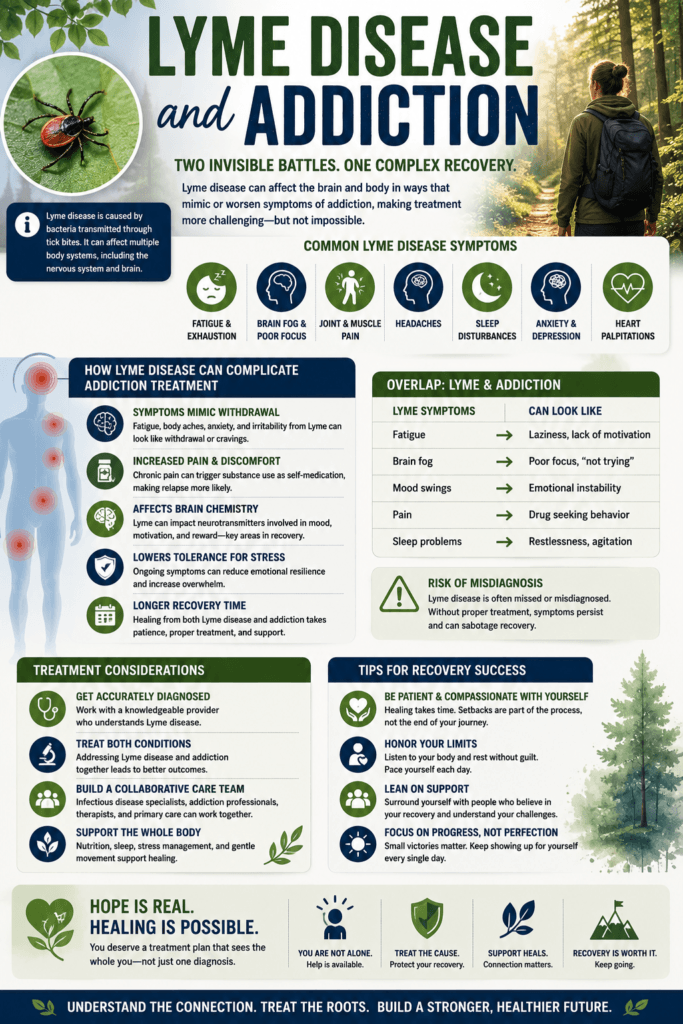
Now, layer on addiction. Substances like alcohol, opioids, or stimulants can trigger their own set of mental and physical problems. When you put the two together, symptoms start to overlap in ways that make it hard to know what’s behind which struggle. For example, is that brain fog coming from early sobriety, or is Lyme making it worse? Is anxiety part of withdrawal, or is it chronic inflammation from Lyme? These questions make diagnosis and care pretty tricky.
According to the Centers for Disease Control and Prevention (CDC), Lyme cases are growing, and since addiction is also a big concern, more people are finding themselves stuck between dealing with both.[1]
Why Lyme Disease Makes Addiction Treatment Tougher
Treating substance use disorders already asks for a lot of support, but Lyme disease adds some new obstacles:
- Fatigue: One of the main symptoms of Lyme disease is feeling totally wiped out. Recovery already takes work, and when even simple tasks drain your energy, showing up to therapy or participating fully can be a tall order.
- Pain: Joint aching or nerve pain is pretty common with Lyme. Unmanaged pain can raise the risk of using substances again, especially for people who used drugs or alcohol to cope in the first place.
- Brain Fog & Mood Swings: Lyme often brings memory problems and mood changes. In therapy, being focused and able to process your own emotions is pretty important, and these symptoms can set back progress or even cause misunderstandings with your treatment team.
- Medication Interactions: Antibiotics for Lyme disease may interact with medications used to treat addiction. For example, some antibiotics mess with how methadone or buprenorphine work, and that can throw off your recovery.
In addition to these factors, social impacts loom large. The exhaustion and pain from Lyme might keep someone from group meetings or social support circles, driving feelings of isolation. This loneliness is often a hurdle in recovery, underscoring the importance of supportive networks. Educating your community and loved ones about Lyme and addiction can increase understanding and reduce stigma, making the journey a little smoother.
Spotting the Overlap: Lyme vs. Withdrawal or Relapse
When I talk to others managing both Lyme and addiction, a common complaint is that nobody seems sure if their symptoms are part of withdrawal, a relapse, or Lyme acting up. Healthcare providers sometimes misunderstand these signs, too, which slows down the process of getting the right help.
Some overlapping symptoms to watch for include:
- Extreme tiredness
- Headaches and migraines
- Joint pain or muscle aches
- Confusion, forgetfulness, or trouble focusing
- Sleep problems
- Anxiety or depression
Tracking symptoms in a journal can really help you and your healthcare team figure out what’s tied to Lyme, what might be withdrawal, and what’s part of your recovery process. Regular journaling also helps track medication effects, mood patterns, and new developments. This can reveal trends—like if fatigue spikes after certain activities—or alert providers to possible side effects.
Common Challenges in Treating Both
- Getting the Right Diagnosis: Both Lyme disease and substance withdrawal can show up as general tiredness, aches, and brain fog. This sometimes leads to misdiagnosis. Either health professionals miss the lingering effects of Lyme, or they blame everything on withdrawal, meaning someone isn’t getting the care they truly need.
- Accessing Specialized Care: Not every addiction treatment center knows how to handle chronic illnesses like Lyme. Finding one that can balance the medical parts with recovery support can take some research and persistence.
- Stigma and Disbelief: Unfortunately, a lot of people feel dismissed by doctors or counselors when they talk about pain or ongoing tiredness, especially if substance use is also on the record. Bringing along documentation or a history of Lyme infection can help, but it’s exhausting to have to advocate for yourself over and over.
What Treatment Looks Like When Lyme and Addiction Collide
Taking care of both conditions calls for a flexible plan and a team approach. Here’s what usually works best:
- Integrated Medical and Addiction Care: Involving both mental health and physical health providers is super important. Infectious disease experts, addiction counselors, and primary care doctors need to work together and share notes. Coordination avoids conflicting advice and ensures a whole-person focus.
- Focus on Symptom Management: Lyme disease sometimes lingers even after antibiotics. Managing symptoms, like using pain relief methods that don’t put recovery at risk or addressing sleep troubles, keeps things on track. This can include holistic pain relief (such as gentle exercise, mindfulness practices, or acupuncture) and straightforward routines that help limit stress.
- Medication Adjustments: Doctors might need to tweak addiction medications to avoid drug interactions with antibiotics. Open communication about what you’re taking, even supplements, is really important. Your care team should review everything, from vitamins to herbal teas, to make sure nothing interferes with your meds or progress.
- Gentle Recovery Approaches: Standard recovery schedules can be intense. Slower-paced therapy, shorter group sessions, or more breaks help those dealing with Lyme symptoms stick it out without burning out. Online sessions can also offer needed flexibility.
Tips for Navigating Recovery with Lyme Disease
I talk to a lot of folks in this position, and here are some things that really make day-to-day life easier when juggling both:
- Track Your Symptoms: A symptom diary helps you notice patterns and brings clarity to appointments. Write down physical pain, mood swings, sleep habits, and any changes when you try new treatments. Include what helps or makes things worse.
- Communicate Honestly with Your Care Team: Let your therapists, doctors, and addiction counselors know what’s going on. Don’t leave out anything, even if you worry about being judged. Keeping everyone informed reduces misunderstandings. Consider bringing a friend or family member to appointments for extra support and to catch important details.
- Ask About All Medications: If your doctor suggests antibiotics or pain relievers, double-check that they won’t interfere with addiction meds or raise your risk for relapse. Pharmacists are also a great resource here. Don’t hesitate to discuss any side effects or new symptoms after starting a medication.
- Find Rest When You Need It: Lyme fatigue is real. Recovery doesn’t have to be fast or perfect; taking breaks is okay, and sleeping in can sometimes be the best medicine. Treat rest and downtime as an active part of your healing process, not a setback.
- Connect with Others: Peer support groups online or in person can be helpful. Chatting with others going through similar stuff reminds you that you’re not alone. Many find hope and creative solutions from listening to each other’s stories.
What to Consider Before Entering Treatment
Choosing a treatment program when you also have Lyme disease needs some extra thought. Here are a few things to look at before making a decision:
- Medical Staff on Hand: Programs with 24/7 medical help (not just counselors) are better equipped to manage sudden Lyme flares or adjust medications as needed. Ask if there’s always a doctor or nurse present.
- Flexible Schedules: Find programs that allow rest breaks or offer one-on-one sessions instead of requiring long group meetings all day every day. Individual customization can keep you participating without pushing you too far.
- Chronic Illness Awareness: It’s easier when staff understand chronic fatigue, pain, and what it feels like to have a “bad Lyme day.” Ask how they handle clients’ physical illnesses. Staff who listen and adapt to your needs can be a huge relief.
- Medication Management: Ensure someone is available to coordinate both Lyme and addiction medications, and that there’s a system for quickly managing drug interactions. Proper med management prevents emergencies before they happen.
Real-World Story
A friend of mine developed Lyme during college but didn’t connect the dots until years later. By that time, she was struggling with prescription opioids she had first started for knee pain. The fatigue and mood swings made it hard to stay focused in outpatient rehab. Once her doctors pulled together a plan that addressed both her Lyme symptoms and opioid cravings, things improved. She needed several rounds of antibiotics, swapped to nonaddictive pain relievers, and switched some of her therapy to virtual, so she could rest more between sessions. Today, life isn’t perfect, and she still jots down symptoms each morning, but she finally feels like her care team “gets it.”
Frequently Asked Questions
Question: Can treating Lyme disease cure addiction?
Answer: Treating Lyme won’t fix addiction cravings on its own. But managing symptoms like pain or fatigue from Lyme can make it easier to participate in addiction recovery programs.
Question: How can I tell if I’m experiencing withdrawal or a Lyme flare-up?
Answer: Both withdrawal and Lyme can make people feel tired and achy. Keep a log of timing, triggers, and new symptoms. Medical professionals can sometimes order blood tests or check for specific signs to help determine what’s going on.
Question: Is it safe to take antibiotics while in addiction treatment?
Answer: Most antibiotics are safe, but some interact with recovery medications or increase the risk of side effects. Always talk to your treatment team before starting any new medication.
Key Things to Remember When Managing Both Lyme and Addiction
Dealing with Lyme disease while working toward sobriety means having to adjust expectations and communicate clearly with your care team. Slow progress happens for lots of folks in this spot. Good treatment programs build in flexibility and keep an eye out for drug interactions and setbacks, recognizing that recovery isn’t always a straight road. Focusing on comfort, clear routines, and steady support helps recovery stick, even when things are physically hard. There’s no “one size fits all” answer, but finding providers who respect both your Lyme symptoms and your recovery adventure makes all the difference.
Video: The Lyme-Addiction Trap: Why Your Symptoms Won’t Go Away