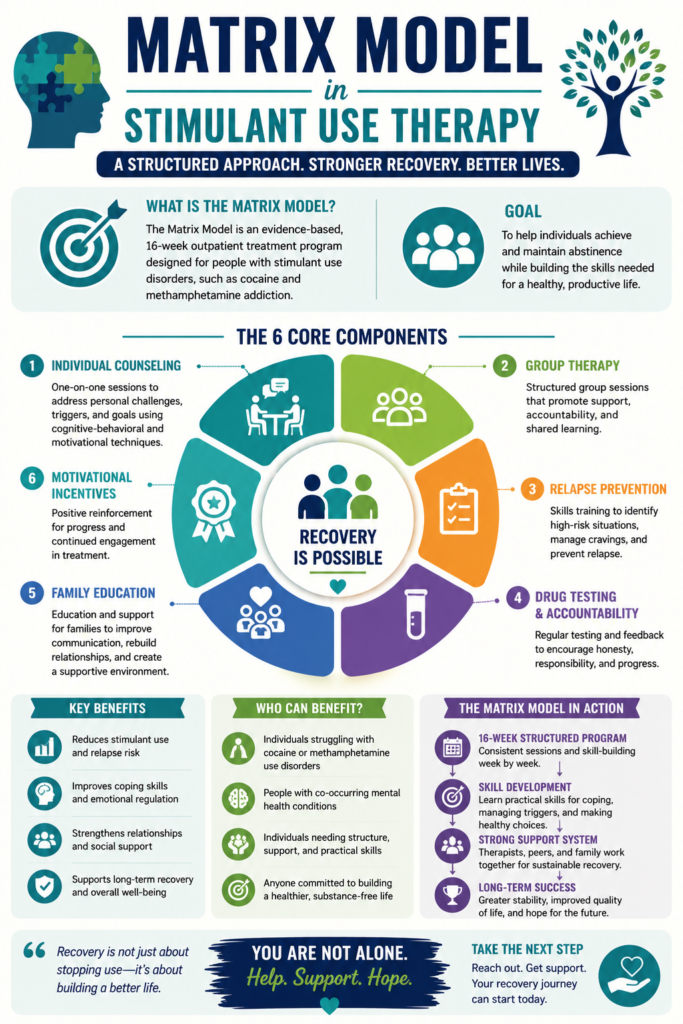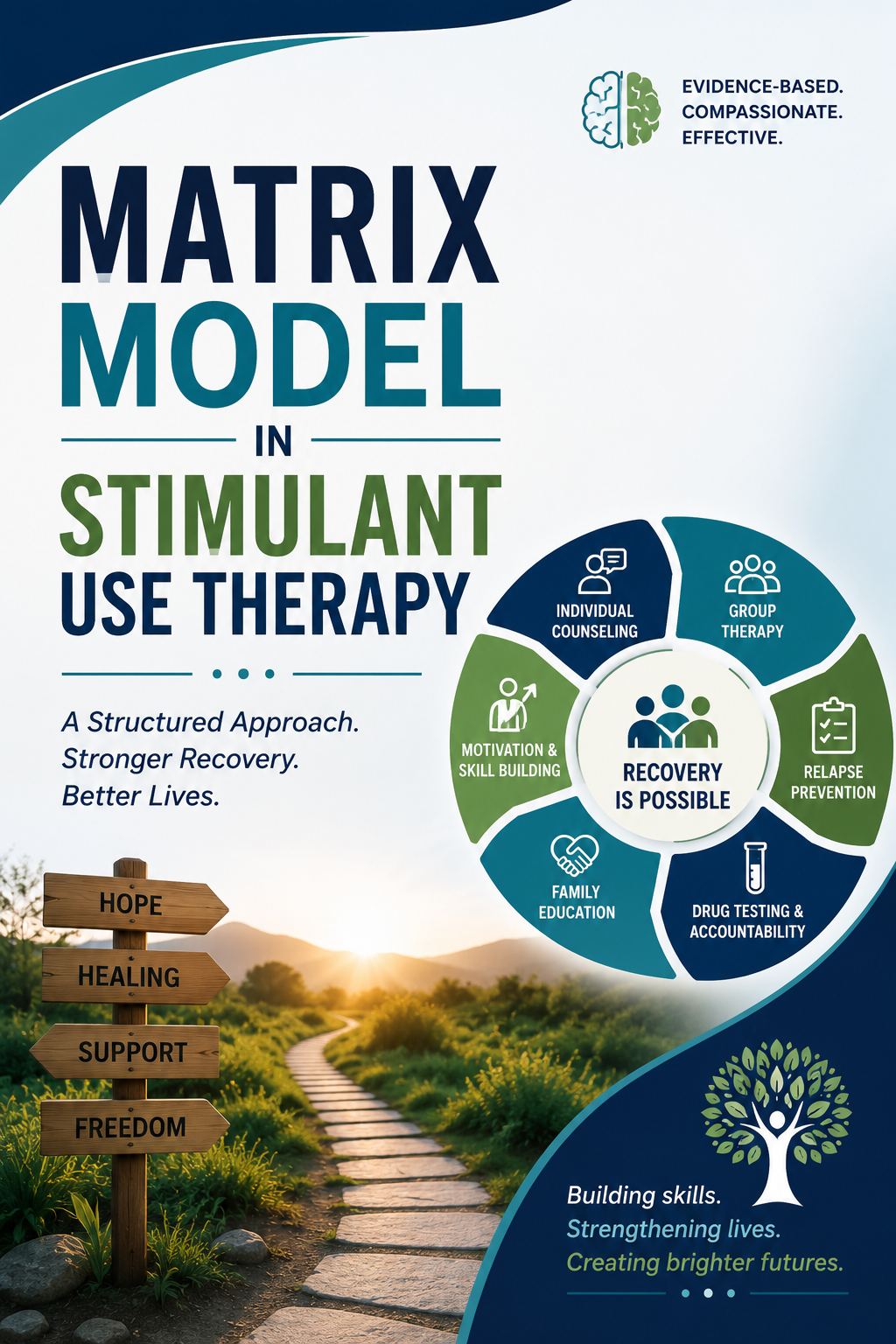
The Matrix Model is an evidence-based treatment approach designed specifically to address stimulant use disorders involving substances such as cocaine and methamphetamine. Stimulant addiction can significantly affect physical health, mental wellbeing, relationships, and daily functioning, making recovery a complex and ongoing process. Developed as a structured outpatient program, the Matrix Model combines cognitive-behavioral therapy, relapse prevention training, group counseling, family education, and motivational support to help individuals achieve long-term recovery. Unlike confrontational treatment methods, the Matrix Model emphasizes collaboration, encouragement, and skill development, allowing individuals to better understand addiction triggers, manage cravings, and build healthier coping strategies. Through its comprehensive and supportive framework, the Matrix Model has become an important approach in stimulant use therapy and recovery support.
The Matrix Model in Stimulant Use Therapy
Stimulant use disorders involving substances such as cocaine and methamphetamine continue to present major challenges for individuals, families, and healthcare systems. Unlike some other substance use disorders, stimulant addiction often involves intense psychological dependence, high relapse rates, and significant impacts on mental and physical health. To address these challenges, healthcare professionals have developed evidence-based treatment approaches designed specifically for stimulant recovery. One of the most widely recognized approaches is the Matrix Model.
The Matrix Model is a structured and comprehensive treatment program that combines behavioral therapy, counseling, family education, relapse prevention, and supportive care. Originally developed in the 1980s for individuals struggling with cocaine addiction, the model has since been adapted for methamphetamine and other stimulant use disorders. Its goal is to help individuals achieve abstinence, build coping skills, and develop healthier lifestyles through a supportive and organized treatment framework.
What Is the Matrix Model?
The Matrix Model is an intensive outpatient treatment approach that integrates multiple evidence-based strategies into one structured program. Typically lasting around 16 weeks, the model combines individual therapy, group counseling, family involvement, drug testing, and relapse prevention education.
The approach is built on several key therapeutic principles, including:
- Cognitive-behavioral therapy (CBT)
- Motivational interviewing
- Relapse prevention strategies
- Psychoeducation
- Family support and involvement
- Positive reinforcement and encouragement
Unlike confrontational treatment approaches, the Matrix Model emphasizes collaboration between therapists and participants. Counselors act as supportive coaches who encourage accountability while helping individuals strengthen confidence in their ability to recover.
Core Components of the Matrix Model
1. Individual Counseling
Individual counseling sessions allow participants to discuss personal struggles, triggers, cravings, and recovery goals in a private setting. Therapists help individuals identify unhealthy thought patterns and develop healthier coping mechanisms for managing stress and emotional challenges.
2. Group Therapy and Peer Support
Group sessions are a major component of the Matrix Model. These sessions help participants:
- Learn from others in recovery
- Build communication skills
- Reduce feelings of isolation
- Develop accountability and support networks
Peer interaction often creates a sense of belonging and encouragement that strengthens long-term motivation for recovery.
3. Relapse Prevention Training
Relapse prevention is central to stimulant use treatment because cravings and triggers can remain strong even after periods of abstinence. The Matrix Model teaches participants to:
- Recognize high-risk situations
- Identify emotional and environmental triggers
- Develop coping strategies
- Practice healthy decision-making skills
Participants learn that relapse is not simply a personal failure but often the result of unmet emotional or behavioral needs that can be addressed through continued support and planning.
4. Family Education and Involvement
Addiction affects entire families, not just individuals. The Matrix Model includes educational sessions for family members to improve understanding of stimulant addiction and recovery. Family participation may help:
- Improve communication
- Rebuild trust
- Reduce enabling behaviors
- Strengthen emotional support systems
Healthy family involvement can contribute to stronger recovery outcomes and a reduced risk of relapse.
5. Drug Testing and Accountability
Regular drug testing is often incorporated into the Matrix Model to encourage accountability and monitor progress. Rather than serving as punishment, testing is used as a motivational tool that supports honesty and engagement in treatment.
Benefits of the Matrix Model
Research has shown that the Matrix Model can improve treatment retention and reduce stimulant use among participants. Some major benefits include:
- Structured and organized treatment approach
- Focus on practical coping skills
- Strong peer and family support systems
- Increased motivation for long-term recovery
- Improved emotional and behavioral regulation
The combination of education, therapy, and supportive accountability makes the Matrix Model especially effective for individuals struggling with stimulant addiction.
Challenges and Limitations
Although the Matrix Model has shown positive outcomes, it may not work equally well for everyone. Some individuals may struggle with:
- Maintaining long-term treatment participation
- Accessing affordable care
- Co-occurring mental health disorders
- Unstable housing or employment conditions
In some cases, additional services such as trauma-informed care, medication support, or housing assistance may be necessary to strengthen recovery outcomes.
Conclusion
The Matrix Model is an evidence-based and comprehensive approach to treating stimulant use disorders that combines therapy, education, family involvement, and relapse prevention into a structured recovery program. By helping individuals build coping skills, strengthen support systems, and maintain accountability, the model provides a supportive framework for long-term recovery.
Although recovery from stimulant addiction can be challenging, the Matrix Model demonstrates that structured treatment, compassionate support, and behavioral skill development can significantly improve recovery outcomes and help individuals rebuild healthier, more stable lives.
Self-Management Strategies in Understanding the Matrix Model in Stimulant Use Therapy
Stimulant use disorders involving substances such as cocaine and methamphetamine can have serious effects on physical health, emotional wellbeing, relationships, and daily functioning. Recovery from stimulant addiction often requires more than detoxification or short-term treatment. Individuals must also learn how to manage cravings, stress, emotions, and behavioral patterns that contribute to substance use. One evidence-based treatment approach designed to address these challenges is the Matrix Model.
The Matrix Model is a structured therapy program that combines cognitive-behavioral therapy, relapse prevention, family education, and peer support to help individuals achieve long-term recovery. An important component of this model is the use of self-management strategies, which encourage individuals to take an active role in maintaining their recovery. Through self-awareness, coping skills, routine development, and personal accountability, self-management strategies help strengthen the effectiveness of stimulant use therapy and support long-term behavioral change.
Understanding the Matrix Model
The Matrix Model was developed specifically for stimulant use disorders and is commonly used in intensive outpatient treatment settings. The program typically lasts about 16 weeks and combines several therapeutic methods, including:
- Individual counseling
- Group therapy
- Family education
- Relapse prevention training
- Drug testing and accountability
- Motivational support
Rather than focusing solely on abstinence, the Matrix Model teaches practical skills that help individuals understand addiction triggers, improve emotional regulation, and develop healthier lifestyles.
The Importance of Self-Management in Recovery
Self-management refers to the ability to regulate thoughts, emotions, and behaviors in ways that support recovery and overall wellbeing. In stimulant use therapy, self-management is especially important because cravings and emotional triggers can remain strong even after substance use stops.
The Matrix Model encourages individuals to become active participants in their recovery rather than relying only on therapists or treatment programs. Self-management strategies help individuals:
- Recognize triggers and warning signs
- Build healthier routines
- Strengthen coping skills
- Improve decision-making
- Increase self-confidence and accountability
- Reduce relapse risk
These skills help individuals maintain progress both during and after treatment.
Key Self-Management Strategies in the Matrix Model
1. Identifying Triggers and High-Risk Situations
One of the first steps in self-management is understanding personal triggers associated with stimulant use. Triggers may include:
- Stress and anxiety
- Certain social environments
- Relationship conflict
- Loneliness or boredom
- Exposure to substance use reminders
The Matrix Model teaches participants how to identify these high-risk situations and create plans to avoid or manage them effectively.
2. Developing Healthy Daily Routines
Structured routines are important in stimulant recovery because substance use often disrupts normal sleep, eating, and activity patterns. Self-management strategies encourage individuals to create consistent schedules that include:
- Regular sleep habits
- Healthy meals
- Physical activity
- Therapy appointments
- Work or educational responsibilities
- Relaxation and self-care activities
Maintaining structure can reduce stress and improve emotional stability during recovery.
3. Practicing Coping Skills and Emotional Regulation
Many individuals use stimulants as a way to cope with emotional pain, trauma, or stress. The Matrix Model helps participants develop healthier coping strategies, such as:
- Deep breathing exercises
- Mindfulness and meditation
- Journaling thoughts and emotions
- Problem-solving techniques
- Positive self-talk
Learning emotional regulation skills allows individuals to respond to challenges without relying on substances.
4. Goal Setting and Personal Accountability
Self-management also involves setting realistic recovery goals and monitoring progress over time. Participants in the Matrix Model are encouraged to create both short-term and long-term goals related to:
- Maintaining sobriety
- Improving relationships
- Seeking employment or education
- Rebuilding physical health
- Strengthening mental wellbeing
Tracking achievements and setbacks can increase motivation while helping individuals remain accountable for their recovery choices.
5. Building Support Systems
Recovery is often more successful when individuals have strong support networks. The Matrix Model emphasizes participation in group therapy and peer support to reduce isolation and encourage accountability.
Support systems may include:
- Peer recovery groups
- Family members
- Sponsors or mentors
- Counselors and therapists
- Community support programs
Positive social connections can provide encouragement during difficult periods and help individuals maintain motivation to recover.
Challenges to Self-Management
Although self-management strategies can strengthen recovery, individuals may still face barriers such as:
- Intense cravings
- Co-occurring mental health disorders
- Trauma histories
- Limited social support
- Financial or housing instability
Because of these challenges, ongoing professional support is often necessary. The Matrix Model combines self-management with structured therapy and supportive relationships to improve long-term outcomes.
Conclusion
The Matrix Model provides a comprehensive and evidence-based approach to treating stimulant use disorders by combining therapy, education, relapse prevention, and supportive care. Self-management strategies are an essential part of this model because they empower individuals to actively participate in their recovery journey.
By learning to recognize triggers, regulate emotions, build healthy routines, and strengthen support systems, individuals can improve their ability to maintain long-term recovery and overall wellbeing. Although recovery from stimulant addiction can be difficult, the combination of structured treatment and effective self-management strategies offers individuals a stronger foundation for lasting change and healthier living.
Family Support Strategies in Understanding the Matrix Model in Stimulant Use Therapy
Stimulant use disorders involving substances such as methamphetamine and cocaine can have serious effects on individuals and their families. Addiction often disrupts communication, trust, emotional stability, and daily functioning within the family system. Recovery from stimulant addiction, therefore, requires not only professional treatment but also strong social and emotional support. One evidence-based treatment approach that recognizes the importance of family involvement is the Matrix Model.
The Matrix Model is a structured treatment program that combines counseling, relapse prevention, education, and behavioral therapy to support individuals recovering from stimulant use disorders. Family support strategies are an important component of this model because healthy family involvement can improve treatment participation, strengthen emotional support, and reduce the risk of relapse. By helping families better understand addiction and recovery, the Matrix Model encourages healthier relationships and a more supportive recovery environment.
Understanding the Matrix Model
The Matrix Model was originally developed to treat stimulant addiction through a structured and comprehensive outpatient approach. The program generally includes:
- Individual counseling
- Group therapy
- Relapse prevention training
- Drug testing and accountability
- Family education sessions
- Motivational support
Unlike confrontational treatment methods, the Matrix Model focuses on collaboration, encouragement, and skill development. Therapists work closely with participants to help them understand addiction, build coping strategies, and maintain long-term recovery goals.
Family involvement is included because addiction affects the entire family system, not just the individual using substances.
Why Family Support Matters in Recovery
Families can have a significant influence on recovery outcomes. Positive family support may help individuals feel more motivated, understood, and emotionally connected during treatment. Strong support systems can also reduce feelings of isolation and shame that often accompany stimulant addiction.
Family support in recovery may provide:
- Emotional encouragement
- Increased accountability
- Better communication
- Reduced stress and conflict
- Practical support with daily responsibilities
- Greater treatment engagement
When families understand addiction as a medical and psychological condition rather than a moral failure, they are often better able to respond with empathy and healthy boundaries.
Key Family Support Strategies in the Matrix Model
1. Participating in Family Education Programs
The Matrix Model often includes family education sessions that teach relatives about:
- The effects of stimulant addiction
- Recovery and relapse processes
- Behavioral triggers and cravings
- Communication strategies
- Healthy boundary setting
Education helps reduce misunderstanding and stigma while improving the family’s ability to support recovery effectively.
2. Encouraging Healthy Communication
Addiction can create mistrust, anger, and emotional distance within families. The Matrix Model encourages open and respectful communication to help repair damaged relationships.
Healthy communication strategies include:
- Active listening
- Expressing concerns calmly
- Avoiding blame or criticism
- Encouraging honesty and accountability
- Recognizing progress and effort
Improved communication can strengthen emotional connections and create a safer environment for recovery.
3. Establishing Healthy Boundaries
Families often struggle to balance support with accountability. Some behaviors intended to help may unintentionally enable continued substance use.
Healthy boundaries may involve:
- Encouraging treatment participation
- Refusing to support harmful behaviors
- Setting expectations respectfully
- Protecting emotional and financial wellbeing
The Matrix Model helps families distinguish between supportive and enabling behaviors, promoting healthier interactions during recovery.
4. Supporting Relapse Prevention Efforts
Relapse prevention is a major focus of the Matrix Model because stimulant addiction often involves intense cravings and emotional triggers. Family members can support relapse prevention by:
- Helping identify high-risk situations
- Encouraging healthy routines
- Reducing exposure to substance-related environments
- Promoting stress management and self-care
- Encouraging continued participation in treatment and support groups
Families who understand relapse as part of the recovery process may respond more constructively during setbacks.
5. Encouraging Positive Social Support
Isolation can increase vulnerability to relapse. Families can help individuals remain socially connected through:
- Family activities
- Community involvement
- Peer recovery programs
- Religious or spiritual support
- Recreational hobbies and interests
Positive social interaction can strengthen motivation, emotional wellbeing, and recovery commitment.
Challenges Families May Face
Supporting a loved one with stimulant addiction can be emotionally exhausting. Families may experience:
- Anxiety and fear of relapse
- Financial stress
- Burnout and frustration
- Difficulty rebuilding trust
- Emotional trauma from past experiences
Because of these challenges, family members may also benefit from counseling, support groups, and stress-management strategies to maintain their own wellbeing while supporting recovery.
Conclusion
The Matrix Model is a comprehensive and evidence-based treatment approach that recognizes the important role families play in stimulant use recovery. Family support strategies such as education, healthy communication, boundary setting, and relapse prevention support can significantly strengthen treatment outcomes and emotional stability.
When families are informed, involved, and supported, they can become valuable partners in the recovery process. Combined with therapy, peer support, and behavioral skill development, healthy family involvement helps create a stronger foundation for long-term recovery, healthier relationships, and improved quality of life.
Community Resource Strategies in Understanding the Matrix Model in Stimulant Use Therapy
Stimulant use disorders involving substances such as cocaine and methamphetamine continue to affect individuals, families, and communities worldwide. Recovery from stimulant addiction is often challenging because it involves not only physical dependence but also emotional, behavioral, and social difficulties. Effective treatment, therefore, requires a comprehensive approach that addresses multiple aspects of a person’s life. One evidence-based treatment program developed specifically for stimulant addiction is the Matrix Model.
The Matrix Model combines counseling, relapse prevention, behavioral therapy, education, and support systems to help individuals achieve long-term recovery. While therapy is a major part of the model, community resource strategies are also essential for maintaining stability and supporting recovery outside of treatment sessions. Access to healthcare, peer support, employment services, housing assistance, and educational programs can strengthen recovery outcomes and improve overall wellbeing. By connecting individuals to community resources, the Matrix Model promotes a more supportive and sustainable path toward recovery.
Understanding the Matrix Model
The Matrix Model is a structured outpatient treatment program designed for individuals recovering from stimulant use disorders. The model typically includes:
- Individual counseling
- Group therapy
- Family education
- Relapse prevention training
- Drug testing and accountability
- Motivational support
The approach emphasizes collaboration, structure, and skill-building rather than punishment or confrontation. Participants learn how to identify triggers, manage cravings, improve emotional regulation, and develop healthier lifestyles.
Although therapy plays a central role, recovery is often more successful when individuals also receive strong support from community resources that address practical and social challenges.
Why Community Resources Matter in Recovery
Recovery from stimulant addiction involves more than stopping substance use. Many individuals also face challenges such as:
- Unemployment
- Housing instability
- Mental health disorders
- Financial stress
- Social isolation
- Limited healthcare access
Without support in these areas, maintaining long-term recovery can become more difficult. Community resource strategies help individuals build stability, increase independence, and strengthen their ability to maintain progress in treatment.
Community support can provide:
- Access to healthcare and counseling
- Safe and stable housing
- Educational and vocational opportunities
- Positive peer relationships
- Reduced social isolation
- Increased confidence and self-sufficiency
These resources complement the Matrix Model by reinforcing healthy behaviors and reducing environmental stressors associated with relapse.
Key Community Resource Strategies in the Matrix Model
1. Access to Healthcare and Mental Health Services
Many individuals with stimulant use disorders experience co-occurring mental health conditions such as anxiety, depression, or trauma-related disorders. Community healthcare providers play an important role in helping individuals manage both addiction and mental health concerns.
Helpful community healthcare resources include:
- Community mental health clinics
- Outpatient counseling services
- Medication management programs
- Crisis intervention services
- Trauma-informed therapy
Integrated healthcare support improves emotional stability and treatment engagement during recovery.
2. Peer Support and Recovery Programs
Peer support allows individuals to connect with others who understand the challenges of stimulant addiction and recovery. Shared experiences often reduce feelings of shame and isolation while increasing hope and motivation.
Examples of peer support resources include:
- Recovery support groups
- Peer mentoring programs
- Sober living communities
- Faith-based recovery organizations
- Community wellness programs
These supportive relationships encourage accountability and provide emotional encouragement throughout recovery.
3. Employment and Educational Assistance
Substance use disorders can disrupt employment and educational progress, making financial stability difficult to achieve. Community resource programs can help individuals rebuild independence through:
- Job readiness training
- Resume and interview workshops
- Vocational rehabilitation programs
- GED and adult education classes
- College or trade school support
Employment and education opportunities can improve self-esteem, provide structure, and strengthen long-term recovery goals.
4. Housing and Stability Services
Stable living conditions are important in preventing relapse and supporting emotional wellbeing. Some individuals recovering from stimulant addiction may struggle with homelessness or unstable housing environments.
Community housing resources may include:
- Transitional housing programs
- Sober living homes
- Housing assistance programs
- Emergency shelter services
Safe housing environments reduce stress and provide a stronger foundation for recovery.
5. Community Education and Stigma Reduction
Stigma surrounding addiction often prevents individuals from seeking treatment or feeling accepted within their communities. Public education efforts can help communities better understand stimulant addiction as a health condition rather than a personal failure.
Community education strategies may include:
- Addiction awareness campaigns
- School and workplace education programs
- Community recovery events
- Harm-reduction education
- Partnerships between healthcare providers and community organizations
Reducing stigma helps create more supportive and compassionate recovery environments.
Challenges in Community Resource Access
Despite the benefits of community resources, many individuals still face barriers such as:
- Limited funding for treatment services
- Transportation difficulties
- Housing shortages
- Lack of affordable healthcare
- Long waiting lists for counseling or support programs
These challenges highlight the need for stronger collaboration between healthcare providers, recovery programs, local governments, and community organizations to improve access to care and support services.
Conclusion
The Matrix Model provides a structured and evidence-based approach to treating stimulant use disorders by combining therapy, education, relapse prevention, and supportive care. However, recovery is often most successful when individuals also have access to strong community resources that address practical, emotional, and social needs.
Community resource strategies such as healthcare services, peer support programs, employment assistance, and stable housing help individuals build healthier and more stable lives during recovery. When communities actively support recovery efforts and reduce stigma surrounding addiction, individuals are more likely to remain engaged in treatment and achieve long-term wellbeing. Together, the Matrix Model and community-based support systems create a stronger foundation for lasting recovery and personal growth.
Frequently Asked Questions
Here are some common questions:
1. What is the Matrix Model?
The Matrix Model is an evidence-based treatment approach designed specifically for individuals with stimulant use disorders, including cocaine and methamphetamine addiction. It combines counseling, behavioral therapy, education, relapse prevention, and family support in a structured outpatient program.
2. What substances does the Matrix Model treat?
The Matrix Model is primarily used to treat stimulant addictions, such as:
- Methamphetamine addiction
- Cocaine addiction
- Crack cocaine addiction
- Other stimulant-related substance use disorders
3. How long does the Matrix Model program usually last?
The standard Matrix Model program typically lasts about 16 weeks, although treatment length may vary depending on individual needs and recovery progress.
4. What types of therapy are included in the Matrix Model?
The Matrix Model combines several therapeutic approaches, including:
- Cognitive-behavioral therapy (CBT)
- Individual counseling
- Group therapy
- Relapse prevention training
- Family education
- Motivational interviewing
5. How does the Matrix Model help prevent relapse?
The program teaches individuals to identify triggers, manage cravings, recognize high-risk situations, and develop healthy coping strategies. Relapse prevention planning is a major part of treatment.
6. Is the Matrix Model an inpatient or outpatient program?
The Matrix Model is generally an outpatient treatment program, meaning participants attend therapy sessions while continuing to live at home or in supportive housing environments.
7. Why is group therapy important in the Matrix Model?
Group therapy provides peer support, accountability, encouragement, and shared learning experiences. It helps reduce feelings of isolation while building communication and coping skills.
8. Does the Matrix Model include family involvement?
Yes. Family education and support are important components of the Matrix Model. Families learn about addiction, recovery, communication skills, and healthy boundaries to better support their loved ones.
9. What role does drug testing play in the Matrix Model?
Drug testing is used to monitor progress, encourage accountability, and support treatment goals. It is intended to motivate recovery rather than punish participants.
10. Is the Matrix Model effective?
Research shows that the Matrix Model can improve treatment retention, reduce stimulant use, strengthen coping skills, and increase long-term recovery success for many individuals.
11. What are the main goals of the Matrix Model?
The main goals include:
- Achieving abstinence from stimulants
- Preventing relapse
- Improving emotional regulation
- Building healthy coping skills
- Strengthening relationships and support systems
- Promoting long-term recovery and stability
12. Can the Matrix Model help with mental health issues?
Yes. Many individuals with stimulant use disorders also experience mental health conditions such as anxiety, depression, or trauma-related disorders. The Matrix Model often works alongside mental health treatment and counseling services.
13. What makes the Matrix Model different from other addiction treatments?
The Matrix Model is highly structured and combines multiple evidence-based therapies into one coordinated program. It emphasizes education, collaboration, motivation, accountability, and skill-building rather than confrontation or punishment.
14. Who can benefit from the Matrix Model?
The Matrix Model may benefit:
- Individuals with stimulant use disorders
- People with repeated relapse histories
- Individuals needing structured outpatient care
- People seeking long-term recovery support
- Individuals with co-occurring mental health conditions
15. What challenges can participants face during treatment?
Common challenges may include:
- Strong cravings and triggers
- Emotional stress
- Mental health struggles
- Limited social support
- Housing or financial instability
Continued counseling and community support can help individuals manage these challenges more effectively.
16. Are medications used in the Matrix Model?
The Matrix Model mainly focuses on behavioral therapy and counseling. Although there are currently limited FDA-approved medications specifically for stimulant addiction, medical professionals may still treat co-occurring conditions such as anxiety or depression.
17. What happens after completing the Matrix Model program?
After completing treatment, many individuals continue recovery through:
- Support groups
- Ongoing counseling
- Peer mentoring
- Relapse prevention planning
- Community recovery programs
Long-term recovery support is important for maintaining progress after formal treatment ends.
18. Why is motivation important in the Matrix Model?
The Matrix Model encourages individuals to actively participate in recovery and build confidence in their ability to change. Motivation helps individuals stay engaged in treatment and maintain long-term recovery goals.
Conclusion
The Matrix Model provides a structured and compassionate approach to treating stimulant use disorders by combining therapy, education, relapse prevention, and supportive care into a comprehensive recovery program. By focusing on behavioral change, emotional regulation, accountability, and support systems, the model helps individuals develop practical skills needed for long-term recovery. Family involvement, peer support, and community resources further strengthen treatment outcomes by creating a more stable and encouraging recovery environment. Although recovery from stimulant addiction can be challenging, the Matrix Model demonstrates that evidence-based treatment and consistent support can help individuals rebuild healthier lives and achieve lasting personal growth and wellbeing.
Video: MATRIX Breaks the Addiction Cycle #treatment #sobriety