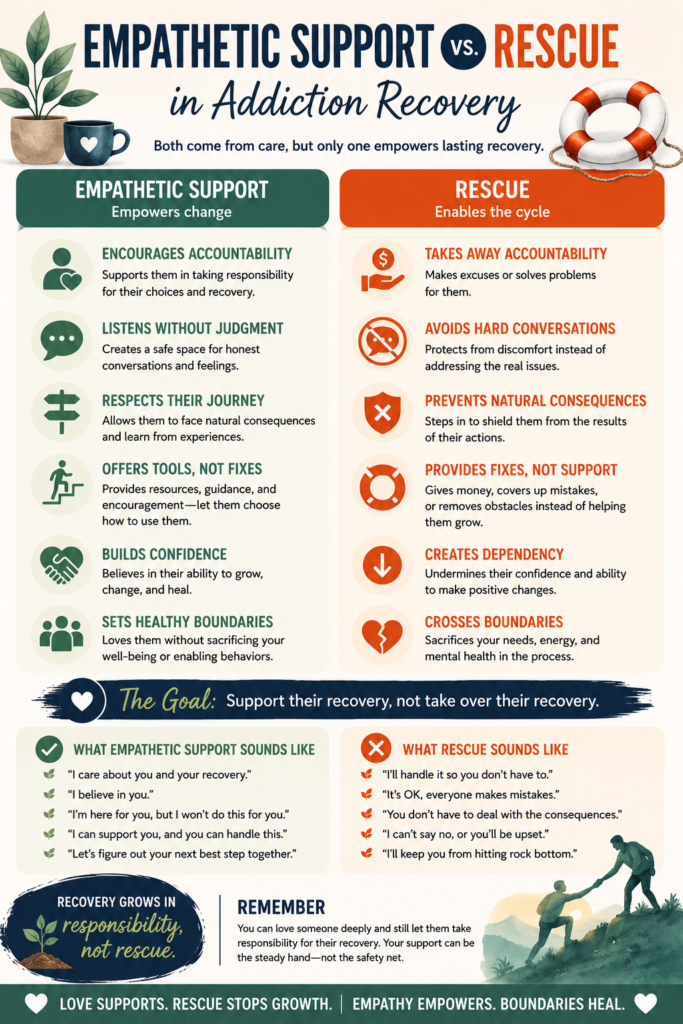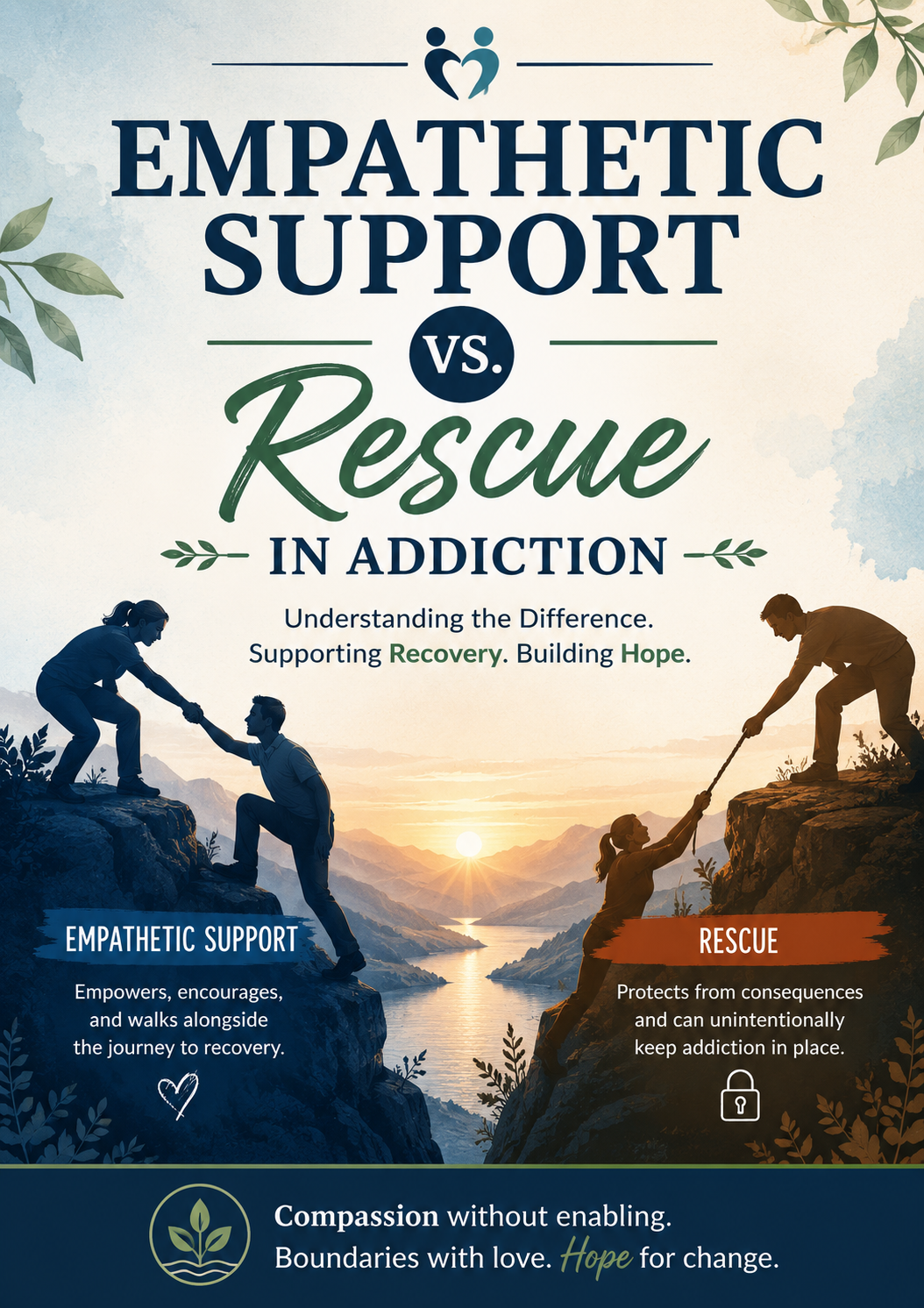
Understanding the difference between empathetic support and rescue is an important part of addiction recovery for individuals, families, and communities. Addiction often creates emotional pain, fear, stress, and uncertainty for both the person struggling with substance use and the loved ones trying to help. Empathetic support focuses on compassion, encouragement, healthy communication, and emotional understanding while still allowing individuals to remain responsible for their recovery choices and actions. In contrast, rescue behaviors involve repeatedly protecting individuals from the consequences of addiction-related actions in ways that may unintentionally enable harmful patterns and reduce accountability. Learning to balance empathy with healthy boundaries can create stronger relationships, encourage personal growth, and support more effective long-term recovery outcomes.
Empathetic Support vs. Rescue in Addiction Recovery
Introduction
Supporting a loved one struggling with addiction can be emotionally painful and confusing. Family members, friends, and caregivers often want to protect the person from harm, reduce suffering, and encourage recovery. However, in trying to help, supportive actions can sometimes shift into rescuing behaviors that unintentionally prevent individuals from taking responsibility for their recovery. Understanding the difference between empathetic support and rescue is an important part of promoting healthy recovery and maintaining emotional wellbeing for everyone involved.
Empathetic support focuses on compassion, encouragement, healthy boundaries, and emotional understanding while allowing individuals to remain accountable for their choices and recovery process. Rescue behaviors, on the other hand, often involve shielding individuals from consequences, solving problems for them, or enabling harmful patterns to reduce immediate distress. Although rescuing may come from love and concern, it can sometimes interfere with long-term recovery and personal growth. Learning to balance empathy with accountability can create healthier relationships and stronger recovery outcomes.
Understanding Empathetic Support
Empathetic support involves understanding another person’s emotions and struggles without taking control of their life or responsibilities. In addiction recovery, empathy helps individuals feel heard, respected, and emotionally supported while encouraging independence and accountability.
Healthy empathetic support may include:
- Listening without judgment
- Encouraging treatment and counseling
- Expressing care and concern calmly
- Offering emotional reassurance
- Supporting healthy recovery goals
- Respecting personal boundaries
Empathy allows individuals to feel connected and valued while still recognizing that recovery is ultimately their responsibility.
Understanding Rescue Behaviors
Rescue behaviors occur when someone repeatedly intervenes to protect a loved one from the natural consequences of addiction-related actions. These actions are often motivated by fear, guilt, anxiety, or the desire to reduce emotional pain for both the individual and the caregiver.
Examples of rescue behaviors may include:
- Giving money that may support substance use
- Making excuses for harmful behavior
- Covering up legal or financial problems
- Taking over responsibilities, the person can manage independently
- Avoiding difficult conversations about addiction
- Constantly solving crises caused by substance use
Although rescuing may provide temporary relief, it can unintentionally reduce motivation for change and delay personal accountability.
The Difference Between Support and Enabling
One of the most important distinctions in addiction recovery is the difference between supportive behavior and enabling behavior.
Supportive behaviors:
- Encourage recovery and personal growth
- Promote accountability and responsibility
- Respect boundaries and healthy limits
- Provide emotional encouragement without controlling outcomes
Enabling behaviors:
- Protect individuals from consequences repeatedly
- Reinforce unhealthy dependency
- Reduce accountability for harmful actions
- Maintain addiction-related patterns unintentionally
Understanding this difference helps families and caregivers provide healthier forms of assistance that encourage long-term recovery rather than dependence.
Why Healthy Boundaries Matter
Boundaries are essential in maintaining healthy relationships during addiction recovery. Boundaries protect emotional wellbeing while encouraging individuals to take responsibility for their actions and choices.
Healthy boundaries may involve:
- Refusing to provide money for substances
- Encouraging treatment participation
- Communicating expectations clearly
- Allowing natural consequences when appropriate
- Protecting personal, emotional, and financial health
Setting boundaries does not mean abandoning or rejecting someone. Instead, it creates a healthier balance between compassion and accountability.
The Emotional Challenges of Supporting Someone with Addiction
Family members and loved ones often experience emotional stress while supporting someone with addiction. Common feelings may include:
- Fear of relapse or overdose
- Guilt and self-blame
- Anxiety and emotional exhaustion
- Anger and frustration
- Hopelessness or burnout
Because of these emotional challenges, caregivers may also benefit from counseling, peer support groups, or educational programs that teach healthy coping strategies and boundary-setting skills.
Support groups such as Al-Anon Family Groups can help family members better understand addiction and develop healthier support patterns.
Building a Recovery-Focused Support System
Effective support systems balance empathy with accountability while encouraging personal growth and independence. Recovery-focused support may include:
- Encouraging therapy and treatment participation
- Supporting healthy coping skills
- Celebrating recovery progress
- Promoting open and honest communication
- Encouraging peer support and community involvement
When individuals feel supported without being rescued, they are often better able to build confidence, resilience, and long-term recovery skills.
Conclusion
Understanding the difference between empathetic support and rescue is essential in addiction recovery. While empathy fosters compassion, encouragement, and emotional connection, rescuing behaviors can unintentionally undermine accountability and long-term healing. Healthy support involves setting boundaries, encouraging personal responsibility, and offering care without taking control of another person’s recovery journey.
Addiction recovery is a complex process that requires both emotional support and individual accountability. By balancing compassion with healthy boundaries, families and caregivers can create stronger, healthier relationships while helping loved ones move toward lasting recovery, independence, and emotional wellbeing.
Self-Management Strategies in Understanding Empathetic Support vs. Rescue in Addiction
Introduction
Addiction affects not only individuals struggling with substance use disorders but also the family members, friends, and caregivers who try to support them. Loved ones often experience emotional stress, fear, guilt, and uncertainty while attempting to help someone through recovery. In many cases, people may confuse empathetic support with rescuing behaviors. While empathy encourages understanding, compassion, and healthy encouragement, rescue behaviors may unintentionally enable addiction by removing personal responsibility and accountability. Understanding this difference is essential for maintaining both healthy relationships and effective recovery support.
Self-management strategies can help caregivers and support systems respond to addiction in healthier and more balanced ways. These strategies encourage emotional awareness, stress management, healthy boundaries, and thoughtful decision-making. By practicing self-management, individuals can provide compassionate support without becoming overwhelmed, emotionally exhausted, or trapped in unhealthy rescue patterns. Learning to balance empathy with accountability allows both the person in recovery and their support system to grow in healthier and more sustainable ways.
Understanding Empathetic Support in Addiction Recovery
Empathetic support involves offering compassion, encouragement, and emotional understanding while respecting the individual’s responsibility for their own recovery. Empathy allows loved ones to acknowledge pain and struggles without taking control of another person’s choices or consequences.
Examples of empathetic support include:
- Listening without judgment
- Encouraging treatment participation
- Offering emotional reassurance
- Supporting healthy recovery goals
- Respecting personal boundaries
- Celebrating progress in recovery
Empathy helps individuals feel valued and emotionally supported while still encouraging independence and accountability.
Understanding Rescue Behaviors
Rescue behaviors occur when loved ones repeatedly intervene to protect individuals from the consequences of addiction-related actions. Although these behaviors often stem from love and concern, they can unintentionally reduce motivation to change and reinforce unhealthy dependence.
Examples of rescue behaviors may include:
- Providing money that supports substance use
- Covering up harmful behaviors
- Making excuses for repeated problems
- Taking responsibility for another person’s obligations
- Constantly fixing crises caused by addiction
Rescuing may temporarily reduce emotional discomfort for both parties, but it can prevent individuals from fully recognizing the impact of their behavior and taking responsibility for recovery.
The Importance of Self-Management for Support Systems
Supporting someone with addiction can be emotionally exhausting. Caregivers often experience stress, anxiety, frustration, and burnout. Self-management strategies help individuals regulate emotions and maintain healthy boundaries while continuing to offer compassionate support.
Effective self-management can help caregivers:
- Avoid emotional burnout
- Reduce unhealthy codependent behaviors
- Improve communication skills
- Maintain personal wellbeing
- Make thoughtful and balanced decisions
- Support recovery without enabling addiction
These strategies create healthier relationships and reduce emotional strain for everyone involved.
Key Self-Management Strategies
1. Developing Emotional Awareness
Understanding personal emotions is an important part of self-management. Loved ones may feel fear, guilt, anger, sadness, or anxiety when supporting someone with addiction. Recognizing these emotions helps individuals respond thoughtfully rather than reacting impulsively.
Helpful emotional awareness practices include:
- Journaling thoughts and feelings
- Practicing mindfulness or meditation
- Reflecting before responding to crises
- Seeking counseling or peer support
Emotional awareness can reduce reactive behaviors that lead to rescuing or enabling.
2. Setting Healthy Boundaries
Boundaries are essential in balancing empathy and accountability. Healthy boundaries protect emotional and financial wellbeing while encouraging personal responsibility in the individual recovering from addiction.
Examples of healthy boundaries include:
- Refusing to provide money for substances
- Encouraging treatment participation
- Communicating expectations clearly
- Saying “no” when necessary
- Allowing natural consequences to occur
Boundaries are not punishments; they are tools for maintaining healthy and respectful relationships.
3. Practicing Stress Management and Self-Care
Caregivers often neglect their own needs while focusing on helping others. Self-management requires individuals to maintain their own emotional and physical health.
Healthy self-care strategies may include:
- Regular exercise and healthy sleep habits
- Spending time with supportive friends and family
- Participating in hobbies and relaxation activities
- Attending therapy or support groups
- Practicing spiritual or mindfulness activities
Self-care strengthens emotional resilience and helps caregivers avoid compassion fatigue and burnout.
4. Improving Communication Skills
Healthy communication supports recovery-focused relationships while reducing conflict and misunderstanding. Self-management encourages calm, respectful, and honest communication.
Effective communication strategies include:
- Active listening
- Avoiding blame or criticism
- Expressing concerns calmly
- Encouraging accountability respectfully
- Discussing expectations clearly
Improved communication helps create supportive environments without encouraging dependency or control.
5. Seeking Support and Education
Individuals supporting someone with addiction often benefit from learning more about substance use disorders, recovery, and healthy support strategies. Support groups and educational resources can provide guidance and emotional encouragement.
Helpful resources may include:
- Family counseling
- Peer support groups
- Addiction education programs
- Stress management workshops
Organizations such as Al-Anon Family Groups provide support for families learning to balance empathy and healthy boundaries.
Challenges in Maintaining Healthy Support
Balancing empathy with accountability is not always easy. Caregivers may still struggle with:
- Fear of relapse or overdose
- Feelings of guilt or responsibility
- Emotional exhaustion
- Difficulty letting go of control
- Anxiety about setting boundaries
Because recovery is often unpredictable, maintaining healthy support requires ongoing self-awareness, emotional regulation, and personal growth.
Conclusion
Understanding the difference between empathetic support and rescue is essential in addiction recovery. While empathy encourages compassion, connection, and encouragement, rescuing behaviors can unintentionally reinforce unhealthy dependency and reduce accountability. Self-management strategies help caregivers maintain emotional balance, establish healthy boundaries, improve communication, and support recovery in healthier ways.
By practicing self-awareness, stress management, and healthy relationship skills, individuals can offer meaningful support without sacrificing their own wellbeing or interfering with another person’s recovery journey. Balanced support systems built on empathy and accountability can strengthen recovery outcomes, healthier relationships, and long-term emotional wellbeing for everyone involved.
Family Support Strategies in Understanding Empathetic Support vs. Rescue in Addiction
Introduction
Addiction affects entire families, not just the individual struggling with substance use. Family members often experience fear, stress, confusion, frustration, and emotional exhaustion while trying to help a loved one recover. In many cases, families want to provide comfort and protection, but supportive efforts can sometimes become rescue behaviors that unintentionally enable addiction. Understanding the difference between empathetic support and rescuing is essential for creating healthier family relationships and encouraging long-term recovery.
Empathetic support focuses on compassion, encouragement, understanding, and healthy boundaries while allowing individuals to remain responsible for their recovery choices. Rescue behaviors, however, often involve shielding loved ones from consequences, solving problems for them, or taking over responsibilities in ways that reduce accountability. Family support strategies can help relatives learn how to encourage recovery while maintaining emotional balance and healthy relationship dynamics. By combining empathy with accountability, families can create stronger support systems that promote healing, independence, and long-term wellbeing.
Understanding Empathetic Support in Addiction Recovery
Empathetic support involves recognizing and understanding a loved one’s emotional struggles without taking control of their life or recovery process. Families practicing empathy provide encouragement and emotional care while still allowing individuals to experience responsibility for their actions.
Examples of empathetic family support include:
- Listening without judgment
- Encouraging participation in treatment
- Offering emotional reassurance
- Supporting healthy recovery goals
- Communicating respectfully and honestly
- Respecting personal boundaries and accountability
Empathy helps individuals feel understood and emotionally connected while encouraging personal growth and independence.
Understanding Rescue Behaviors Within Families
Rescue behaviors occur when family members repeatedly intervene to protect loved ones from the natural consequences of addiction-related actions. These behaviors are often motivated by fear, guilt, love, or the desire to reduce emotional pain within the family.
Examples of rescue behaviors may include:
- Providing money that supports substance use
- Making excuses for harmful behaviors
- Covering legal or financial problems
- Taking over personal responsibilities
- Ignoring repeated destructive behavior
- Avoiding difficult conversations about addiction
Although rescuing may temporarily reduce stress, it can unintentionally reinforce unhealthy dependency and delay recovery progress.
Why Family Support Strategies Matter
Healthy family involvement can improve recovery outcomes by creating a more stable and supportive environment. Families who understand addiction and healthy support methods are often better prepared to encourage recovery without enabling harmful behaviors.
Effective family support strategies may help:
- Strengthen communication and trust
- Reduce conflict and emotional stress
- Encourage accountability and treatment participation
- Promote emotional healing for both individuals and families
- Prevent caregiver burnout and unhealthy codependency
Supportive family relationships can become powerful protective factors during recovery when healthy boundaries and communication are maintained.
Key Family Support Strategies
1. Learning About Addiction and Recovery
Education is an important first step for families. Understanding addiction as a medical and psychological condition rather than a personal failure can improve empathy and reduce blame or stigma.
Families can learn about:
- The effects of substance use disorders
- Recovery and relapse processes
- Emotional triggers and coping strategies
- Healthy communication and boundaries
- The difference between support and enabling
Education helps families respond more effectively and compassionately during recovery challenges.
2. Encouraging Healthy Communication
Addiction often damages communication within families. Healthy communication strategies help rebuild trust and emotional connection while reducing conflict and misunderstandings.
Effective communication may involve:
- Active listening
- Speaking calmly and respectfully
- Avoiding blame or criticism
- Expressing feelings honestly
- Encouraging accountability without shaming
Supportive communication promotes emotional safety while reinforcing recovery goals.
3. Establishing Healthy Boundaries
Boundaries help families balance empathy with accountability. Healthy boundaries protect emotional and financial wellbeing while encouraging individuals to take responsibility for recovery choices.
Examples of healthy boundaries include:
- Refusing to provide money for substances
- Setting clear expectations respectfully
- Allowing natural consequences when appropriate
- Encouraging treatment and counseling participation
- Protecting personal emotional wellbeing
Boundaries are not punishments; they are tools for maintaining healthy and respectful relationships.
4. Avoiding Codependency and Enabling
Codependency occurs when family members become overly focused on controlling or managing another person’s addiction-related behaviors. This can create emotional exhaustion and unhealthy relationship patterns.
Families can reduce enabling behaviors by:
- Allowing loved ones to make their own choices
- Encouraging responsibility and independence
- Seeking support for themselves
- Avoiding constant crisis management
- Focusing on their own emotional health and stability
Balanced support allows families to care for loved ones without sacrificing their own wellbeing.
5. Seeking Family Counseling and Support Groups
Professional counseling and peer support groups can help families process emotional stress and develop healthier support strategies. Family therapy may improve communication, rebuild trust, and address unresolved emotional pain related to addiction.
Support groups such as Al-Anon Family Groups provide guidance and emotional support for families learning to balance empathy and healthy boundaries.
Challenges Families May Experience
Families supporting someone with addiction may continue to struggle with:
- Fear of relapse or overdose
- Emotional exhaustion and burnout
- Feelings of guilt or responsibility
- Difficulty setting boundaries
- Anxiety about letting go of control
Because recovery is often unpredictable, families may need ongoing support, education, and counseling to maintain healthy support patterns and emotional wellbeing.
Conclusion
Understanding the difference between empathetic support and rescue is essential for families affected by addiction. While empathy encourages compassion, emotional connection, and encouragement, rescuing behaviors can unintentionally reinforce dependency and reduce accountability. Family support strategies such as education, healthy communication, boundary setting, and counseling help create healthier recovery environments for everyone involved.
When families balance compassion with accountability, they can support recovery without enabling harmful behaviors or sacrificing their own wellbeing. Healthy family involvement strengthens emotional resilience, improves relationships, and encourages long-term recovery, personal growth, and healing for both individuals and their loved ones.
Community Resource Strategies in Understanding Empathetic Support vs. Rescue in Addiction
Introduction
Addiction recovery is not only an individual challenge but also a social and community concern that affects families, workplaces, healthcare systems, and neighborhoods. Individuals struggling with substance use disorders often need emotional support, treatment services, housing stability, employment opportunities, and positive social connections to maintain long-term recovery. However, support systems can sometimes become unhealthy when compassion turns into rescuing behaviors that unintentionally enable addiction. Understanding the difference between empathetic support and rescue is important not only for families but also for communities and recovery organizations.
Empathetic support encourages accountability, emotional understanding, and personal growth while still respecting the individual’s responsibility for recovery. Rescue behaviors, on the other hand, often involve repeatedly protecting individuals from the consequences of harmful actions, which may delay recovery and reinforce dependency. Community resource strategies help individuals and support systems maintain healthier boundaries while providing access to services that encourage long-term healing, stability, and independence. By creating balanced support systems, communities can help individuals recover without promoting unhealthy dependency or enabling behaviors.
Understanding Empathetic Support in Addiction Recovery
Empathetic support involves offering compassion, encouragement, and emotional understanding while allowing individuals to remain accountable for their recovery choices and behaviors. Communities that practice empathetic support focus on helping individuals access resources and opportunities rather than removing all responsibility or consequences.
Examples of empathetic community support include:
- Providing access to treatment programs
- Offering peer recovery services
- Encouraging counseling and support groups
- Promoting housing and employment assistance
- Reducing stigma surrounding addiction
- Supporting healthy decision-making and independence
Empathy creates supportive environments where individuals feel respected and encouraged while still being responsible for their recovery progress.
Understanding Rescue Behaviors in Communities
Rescue behaviors occur when individuals, organizations, or communities repeatedly intervene in ways that reduce accountability and unintentionally support unhealthy dependency. Although these actions are often motivated by compassion, they may prevent individuals from developing coping skills, a sense of responsibility, and independence.
Examples of community rescue behaviors may include:
- Repeatedly solving addiction-related crises without encouraging treatment
- Ignoring harmful behaviors to avoid conflict
- Providing support without accountability measures
- Failing to encourage personal responsibility or recovery planning
- Creating systems that unintentionally reinforce long-term dependency
Healthy recovery support requires balancing compassion with accountability and long-term personal growth.
Why Community Resources Matter in Recovery
Recovery from addiction often requires more than willpower alone. Many individuals also face challenges such as:
- Homelessness or unstable housing
- Mental health disorders
- Unemployment
- Financial hardship
- Trauma histories
- Social isolation
Community resources help address these challenges while creating healthier pathways toward recovery and independence. Supportive services reduce barriers to care and help individuals build stable and meaningful lives without relying on substances.
Effective community support may help individuals:
- Improve emotional and physical health
- Develop healthy coping skills
- Build supportive relationships
- Increase self-confidence and independence
- Reduce relapse risk
- Strengthen long-term recovery outcomes
Key Community Resource Strategies
1. Access to Treatment and Counseling Services
Professional treatment services are important in helping individuals address both addiction and underlying emotional or psychological concerns. Communities can support recovery by increasing access to:
- Outpatient and inpatient treatment programs
- Mental health counseling
- Trauma-informed therapy
- Medication-assisted treatment (MAT)
- Crisis intervention services
These services encourage recovery while helping individuals remain responsible for treatment participation and personal growth.
2. Peer Support and Recovery Programs
Peer support programs connect individuals with others who understand the challenges of addiction and recovery. These relationships can reduce feelings of isolation while encouraging accountability and hope.
Examples include:
- Alcoholics Anonymous
- Narcotics Anonymous
- Peer mentoring programs
- Recovery community centers
- Sober living communities
Peer support encourages empathy while reinforcing responsibility and long-term recovery goals.
3. Housing and Employment Assistance
Stable housing and employment opportunities can improve recovery outcomes and reduce stressors associated with relapse. Community support programs may provide:
- Transitional or supportive housing
- Job readiness training
- Vocational rehabilitation
- Educational support programs
- Financial literacy training
These resources promote independence rather than dependency by helping individuals build self-sufficiency and stability.
4. Family and Caregiver Education Programs
Families and caregivers often need guidance on how to support loved ones without enabling addiction. Community education programs can teach:
- The difference between empathy and rescue
- Healthy communication skills
- Boundary-setting strategies
- Stress management techniques
- Relapse prevention education
Educational support helps families create healthier recovery environments while protecting their own emotional wellbeing.
5. Community Awareness and Stigma Reduction
Stigma surrounding addiction can prevent individuals from seeking help or feeling accepted within their communities. Public education campaigns and recovery advocacy efforts can promote greater understanding of addiction as a health condition rather than a moral failure.
Community awareness strategies may include:
- Recovery awareness events
- Educational workshops
- School and workplace prevention programs
- Public mental health campaigns
- Partnerships between healthcare providers and community organizations
Reducing stigma encourages compassionate support while promoting recovery-focused accountability and inclusion.
Challenges in Community Support Systems
Despite the value of community resources, challenges may still exist, including:
- Limited funding for treatment services
- Shortages of affordable housing
- Lack of mental health resources
- Transportation barriers
- Social stigma and discrimination
These barriers highlight the need for stronger collaboration between healthcare systems, community organizations, recovery programs, and policymakers to improve support systems for addiction recovery.
Conclusion
Understanding the difference between empathetic support and rescue is essential in building healthy and effective recovery systems within communities. While empathy encourages compassion, encouragement, and connection, rescue behaviors can unintentionally reduce accountability and reinforce dependency. Community resource strategies help individuals access treatment, housing, employment, peer support, and educational opportunities while promoting personal responsibility and long-term recovery.
When communities provide balanced support systems that combine compassion with accountability, individuals recovering from addiction are more likely to develop independence, emotional resilience, and healthier lifestyles. Through coordinated community efforts, recovery can become a process of healing, empowerment, and meaningful personal growth for both individuals and the communities that support them.
Frequently Asked Questions
Here are some common questions:
1. What is empathetic support in addiction recovery?
Empathetic support involves showing compassion, understanding, encouragement, and emotional care while still allowing individuals to remain responsible for their recovery choices and actions.
2. What are rescue behaviors in addiction?
Rescue behaviors occur when someone repeatedly protects a person struggling with addiction from the consequences of their actions. Although often motivated by love or fear, rescuing can unintentionally enable harmful behaviors and reduce accountability.
3. What is the difference between support and rescue?
Support encourages growth, responsibility, and recovery, while rescue often removes consequences and may unintentionally maintain unhealthy dependency. Support empowers individuals; rescue takes control of situations for them.
4. Why do family members often become rescuers?
Family members may rescue loved ones because of:
- Fear of harm or overdose
- Guilt or self-blame
- Anxiety about conflict
- Desire to reduce emotional pain
- Hope of controlling the addiction situation
These reactions are usually driven by love and concern, even when they become unhealthy over time.
5. Can rescue behaviors unintentionally enable addiction?
Yes. Rescue behaviors can sometimes reduce motivation for change because individuals may avoid experiencing the natural consequences of addiction-related actions. This can delay treatment participation and accountability.
6. What are examples of empathetic support?
Examples include:
- Listening without judgment
- Encouraging treatment and counseling
- Offering emotional encouragement
- Respecting healthy boundaries
- Supporting recovery goals
- Communicating honestly and calmly
7. What are examples of rescue or enabling behaviors?
Examples may include:
- Giving money that supports substance use
- Covering up legal or financial problems
- Making excuses for harmful behavior
- Taking over responsibilities repeatedly
- Ignoring destructive patterns to avoid conflict
8. What are healthy boundaries in addiction recovery?
Healthy boundaries are limits that protect emotional, physical, and financial wellbeing while encouraging accountability. Boundaries may involve refusing to provide money for substances, setting clear expectations, and encouraging participation in treatment.
9. Does setting boundaries mean abandoning someone?
No. Setting boundaries does not mean rejecting or abandoning a loved one. Boundaries allow individuals to provide support in healthier ways while protecting their own wellbeing and encouraging responsibility.
10. Why is accountability important in recovery?
Accountability helps individuals recognize the impact of their behaviors and take responsibility for recovery choices. Personal responsibility is an important part of long-term recovery and emotional growth.
11. How can families support recovery without enabling addiction?
Families can support recovery by:
- Encouraging treatment participation
- Practicing healthy communication
- Setting clear boundaries
- Avoiding rescue behaviors
- Seeking education and counseling
- Offering emotional support without taking control
12. What emotional challenges do caregivers experience?
Caregivers may struggle with:
- Fear and anxiety
- Emotional exhaustion
- Guilt and self-blame
- Anger and frustration
- Burnout and compassion fatigue
Support systems for caregivers are often important for maintaining emotional health.
13. What is codependency in addiction?
Codependency occurs when individuals become overly focused on controlling or managing another person’s addiction-related behaviors while neglecting their own emotional needs and wellbeing.
14. Are support groups available for families affected by addiction?
Yes. Support groups help families learn healthy coping strategies and boundary-setting skills while connecting with others facing similar challenges.
One example is Al-Anon Family Groups.
15. How can communication improve recovery relationships?
Healthy communication encourages honesty, trust, respect, and emotional safety. Calm and respectful conversations reduce conflict and help families support recovery more effectively.
16. What role do counselors or therapists play in this process?
Counselors and therapists help individuals and families:
- Understand addiction and recovery
- Improve communication skills
- Set healthy boundaries
- Address emotional trauma and stress
- Develop healthier relationship patterns
17. Why is self-care important for caregivers?
Supporting someone with addiction can be emotionally draining. Self-care helps caregivers manage stress, avoid burnout, maintain emotional balance, and continue offering healthy support without sacrificing their own wellbeing.
18. What is the overall goal of empathetic support in addiction recovery?
The goal is to provide compassion, encouragement, and emotional connection while promoting accountability, independence, personal growth, and long-term recovery.
Conclusion
Empathetic support and rescue behaviors can have very different effects on addiction recovery. While empathy encourages emotional connection, accountability, and healthy encouragement, rescuing behaviors may unintentionally reinforce dependency and delay meaningful change. Healthy support systems involve setting boundaries, encouraging treatment and personal responsibility, and offering compassion without taking control of another person’s recovery journey. By understanding the difference between supporting and rescuing, families, caregivers, and communities can create healthier environments that promote independence, emotional wellbeing, and lasting recovery.
Video: Rescuing vs. Recovery: What Actually Works #addiction #boundaries #recovery