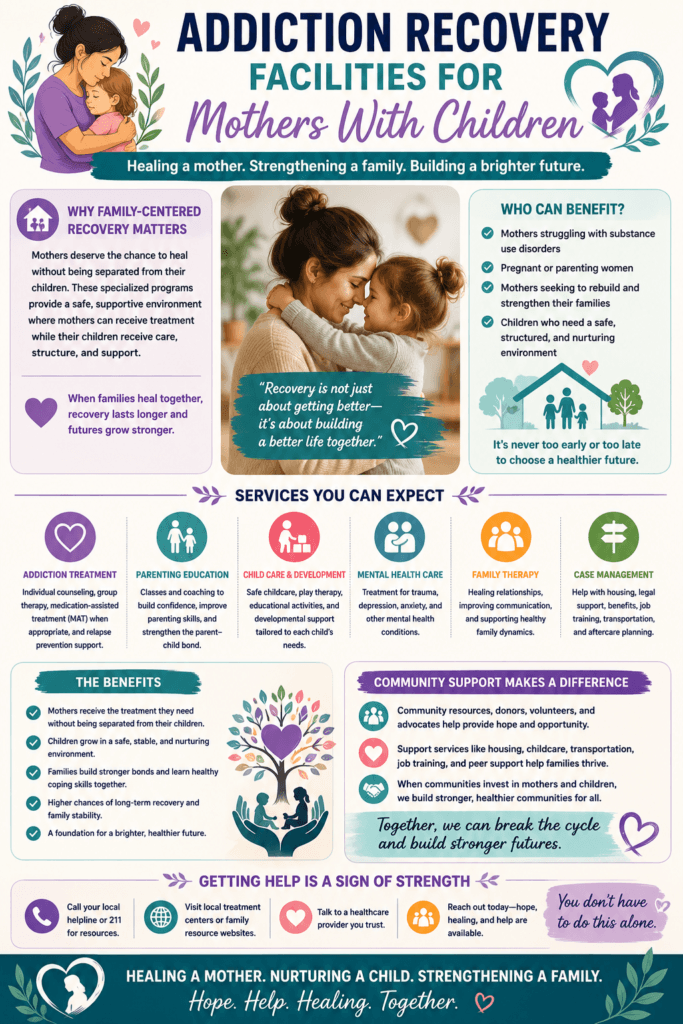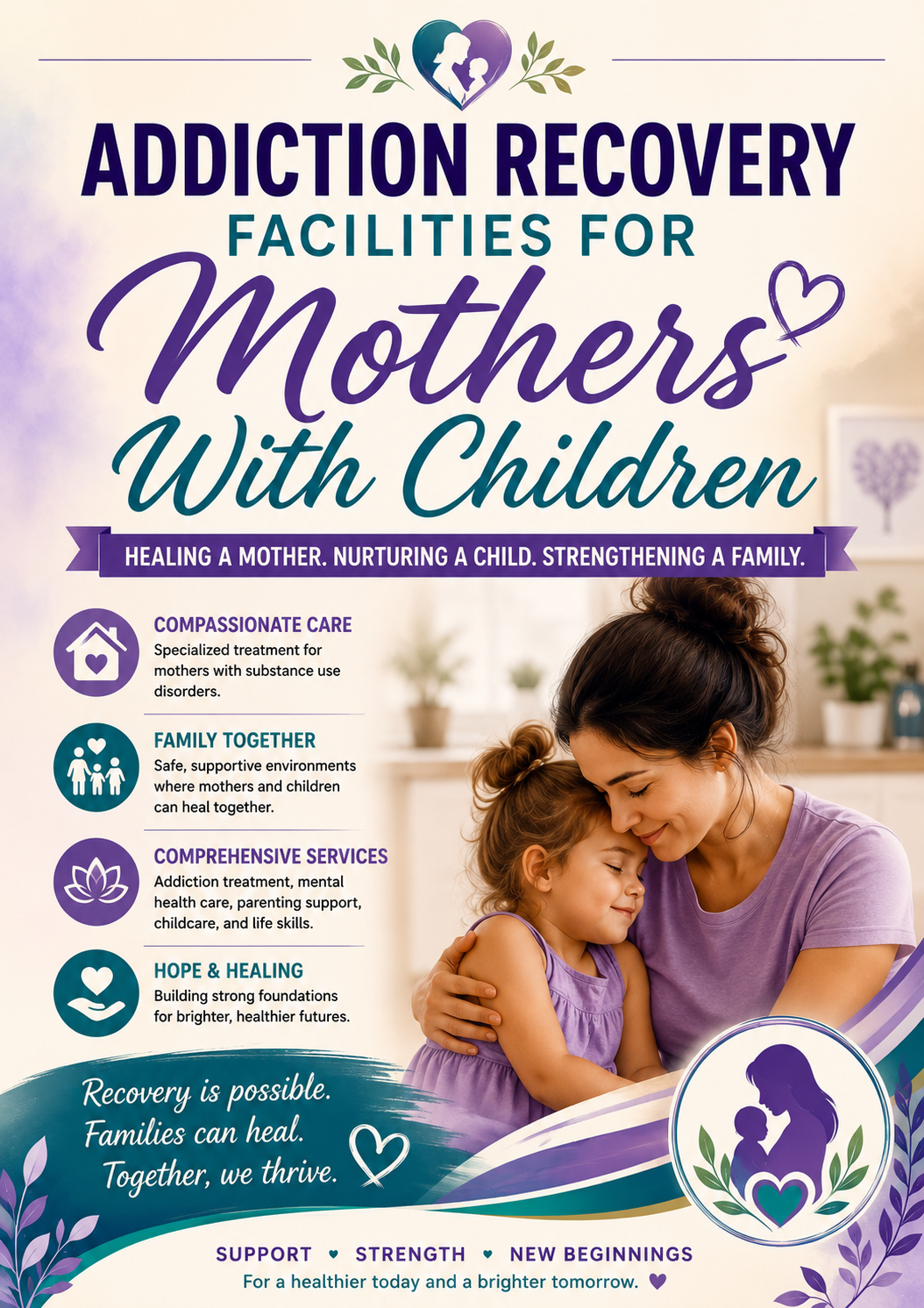
Addiction recovery facilities for mothers with children provide a unique, family-centered approach to treating substance use disorders by addressing the needs of both the mother and her children. Many women delay or avoid seeking treatment because they fear being separated from their children, losing custody, or being unable to meet their parenting responsibilities while receiving care. These specialized programs help reduce those barriers by offering comprehensive services, including addiction treatment, mental health care, parenting education, childcare, family therapy, case management, and recovery support, within a safe, supportive environment. By allowing mothers and children to remain together whenever it is safe and appropriate, these facilities promote healing for the entire family, strengthen parent-child relationships, and improve long-term recovery outcomes. Understanding the value of family-centered addiction treatment highlights the importance of addressing not only substance use but also the emotional, developmental, and social needs of families affected by addiction.
Addiction Recovery Facilities for Mothers With Children
Addiction recovery facilities for mothers with children are specialized treatment programs designed to help women recover from substance use disorders while maintaining or rebuilding healthy relationships with their children. These family-centered programs recognize that separating mothers from their children can be a significant barrier to seeking treatment. By allowing mothers and children to remain together when it is safe and appropriate, these facilities address both addiction recovery and family well-being. Research suggests that family-centered treatment can improve treatment engagement, strengthen parenting skills, and promote healthier outcomes for both mothers and children.
Why These Programs Are Important
Many mothers delay or avoid treatment because they fear:
- Losing custody of their children.
- Being separated from their family.
- Having no childcare during treatment.
- Financial hardship.
- Judgment or stigma.
- Disruptions to their children’s education or routines.
Family-centered recovery programs help reduce these barriers by providing treatment in an environment that supports both the mother’s recovery and the child’s development.
What Makes These Facilities Different?
Unlike traditional residential treatment programs, family-centered recovery facilities often allow mothers to live with their children while receiving treatment. Services typically include:
- Safe family housing.
- Individual addiction counseling.
- Group therapy.
- Parenting education.
- Family therapy.
- Child development services.
- Childcare during treatment sessions.
- Mental health treatment.
- Case management.
- Aftercare planning.
The goal is not only sobriety but also the strengthening of the parent-child relationship and the promotion of long-term family stability.
Comprehensive Addiction Treatment
Treatment is individualized and may include:
- Medical detoxification when needed.
- Medications for opioid or alcohol use disorder when appropriate.
- Individual psychotherapy.
- Cognitive behavioral therapy (CBT).
- Trauma-informed care.
- Relapse prevention planning.
- Recovery coaching.
- Peer support groups.
These evidence-based services help mothers address both substance use and underlying mental health conditions.
Parenting Education
Many mothers enter treatment feeling guilty or uncertain about parenting after addiction. Parenting programs often teach:
- Positive discipline techniques.
- Child development.
- Healthy communication.
- Emotional regulation.
- Building secure attachment.
- Stress management.
- Age-appropriate expectations.
These skills help mothers rebuild confidence and strengthen relationships with their children.
Child-Focused Services
Children may also receive services tailored to their developmental needs, including:
- Childcare.
- Developmental screenings.
- Individual counseling.
- Play therapy.
- Educational support.
- Social skills development.
- Trauma-informed care.
Supporting children’s emotional and developmental needs helps reduce the long-term effects of parental substance use.
Trauma-Informed Care
Many women entering treatment have experienced:
- Domestic violence.
- Childhood abuse.
- Sexual assault.
- Grief.
- Chronic stress.
- Homelessness.
Trauma-informed treatment recognizes how these experiences contribute to substance use and emphasizes physical and emotional safety, trust, collaboration, and empowerment.
Mental Health Services
Co-occurring mental health conditions are common among mothers with substance use disorders. Programs often provide integrated treatment for:
- Depression.
- Anxiety.
- Post-traumatic stress disorder (PTSD).
- Bipolar disorder.
- Other mental health conditions.
Treating both addiction and mental health simultaneously is associated with better recovery outcomes.
Life Skills and Family Stability
Recovery involves rebuilding many aspects of daily life. Programs frequently offer:
- Job readiness training.
- Educational support.
- Financial literacy.
- Nutrition education.
- Housing assistance.
- Transportation support.
- Legal advocacy.
- Child welfare coordination.
These services help families achieve greater independence after treatment.
Benefits of Family-Centered Recovery
Research has found several potential benefits of allowing mothers and children to remain together during treatment:
- Higher treatment completion rates.
- Longer participation in treatment.
- Improved parenting confidence.
- Stronger parent-child attachment.
- Better emotional outcomes for children.
- Greater family reunification when appropriate.
- Improved long-term recovery stability.
Challenges
These programs also face challenges, including:
- Limited availability in many communities.
- Waiting lists.
- Insurance and funding barriers.
- Staffing shortages.
- Limited childcare capacity.
- Housing constraints.
As a result, not every mother who could benefit from a family-centered program has access to one.
The Importance of Aftercare
Recovery continues after residential treatment ends. Comprehensive aftercare may include:
- Outpatient counseling.
- Medication management.
- Peer recovery support.
- Family therapy.
- Parenting support groups.
- Sober housing.
- Employment services.
- Ongoing case management.
Strong aftercare helps families maintain recovery and adapt to life after treatment.
Conclusion
Addiction recovery facilities for mothers with children provide a compassionate, family-centered approach to treating substance use disorders. By allowing mothers and children to remain together whenever it is safe and appropriate, these programs address addiction, parenting, mental health, and child development simultaneously. This integrated model helps reduce barriers to treatment, strengthens family relationships, and supports healthier futures for both mothers and their children. Although these specialized programs are still limited in many areas, expanding access to family-centered addiction treatment has the potential to improve recovery outcomes, enhance child well-being, and help families heal together.
Self-Management Strategies to Understand Addiction Recovery Facilities for Mothers With Children
Recovery can be especially challenging for mothers who are balancing their own health needs with the responsibilities of caring for their children. Family-centered addiction recovery facilities are designed to support both the mother’s recovery and the well-being of her children by providing treatment, parenting support, and family services in one setting. Self-management strategies can help mothers prepare for treatment, participate actively in their recovery, and build a strong foundation for long-term success.
1. Learn About Family-Centered Treatment
Educate yourself about how recovery facilities for mothers with children operate. Understanding the services offered—such as addiction treatment, parenting education, childcare, counseling, and family therapy—can reduce fear and help you make informed decisions about your care.
2. Make Recovery Your Top Priority
Recognize that caring for yourself is an essential part of caring for your children. Seeking treatment is a positive step that improves your ability to provide a safe, stable, and healthy environment for your family.
3. Participate Actively in Your Treatment Plan
Work closely with your healthcare team to develop an individualized treatment plan. Attend therapy sessions, participate in group counseling, take medications as prescribed if appropriate, and communicate openly about your progress and concerns.
4. Develop Healthy Stress Management Skills
Parenting while recovering from addiction can be stressful. Practice healthy coping strategies such as:
- Deep breathing exercises.
- Mindfulness or meditation.
- Regular physical activity.
- Journaling.
- Listening to music.
- Spending time outdoors.
- Prayer or spiritual practices if meaningful to you.
Healthy coping skills reduce the urge to return to substance use during stressful situations.
5. Learn About Your Triggers
Identify situations, emotions, or environments that increase cravings. Common triggers may include:
- Parenting stress.
- Lack of sleep.
- Financial concerns.
- Relationship conflict.
- Loneliness.
- Trauma reminders.
- Feelings of guilt or shame.
Recognizing triggers early allows you to use healthier coping strategies before cravings become overwhelming.
6. Strengthen Your Parenting Skills
Take advantage of parenting classes and family education programs offered by the treatment facility. Learning about child development, positive discipline, communication, and emotional regulation can improve your confidence as a parent and strengthen your relationship with your children.
7. Build Healthy Daily Routines
Consistent routines create stability for both you and your children. Focus on:
- Regular sleep schedules.
- Nutritious meals.
- Medication adherence.
- Scheduled therapy appointments.
- Family activities.
- Physical exercise.
- Time for relaxation and self-care.
Predictable routines support recovery and help children feel secure.
8. Practice Open Communication
Communicate honestly with your treatment team, family members, and trusted support people. Ask questions, discuss challenges, and seek help when needed. Recovery is strengthened when you are willing to accept support.
9. Address Mental Health Needs
Many mothers experience anxiety, depression, trauma, or other mental health conditions alongside addiction. Participate fully in mental health treatment if recommended. Treating both conditions together often leads to better long-term recovery outcomes.
10. Accept Help Without Guilt
Recovery is not something you have to accomplish alone. Accept assistance with childcare, transportation, housing, education, or financial planning when available. Using community resources demonstrates strength and commitment to your family’s well-being.
11. Prepare for Life After Treatment
Begin planning for discharge early by working with your treatment team to develop an aftercare plan that includes:
- Outpatient counseling.
- Recovery support groups.
- Medication management if needed.
- Safe housing.
- Employment or educational goals.
- Childcare resources.
- Family support services.
A well-developed aftercare plan improves the likelihood of sustained recovery.
12. Celebrate Progress and Practice Self-Compassion
Recovery is a journey, and progress may occur one step at a time. Celebrate milestones such as:
- Completing treatment goals.
- Maintaining sobriety.
- Building stronger relationships with your children.
- Managing stress without substances.
- Developing healthy routines.
- Asking for help when needed.
Be patient with yourself, recognize your growth, and remember that healing takes time.
Conclusion
Addiction recovery facilities for mothers with children provide an opportunity for women to heal while maintaining and strengthening their relationships with their children. By actively participating in treatment, learning healthy coping skills, strengthening parenting abilities, addressing mental health needs, and preparing for long-term recovery, mothers can build healthier, more stable lives for themselves and their families. Recovery is not only about overcoming addiction—it is also about creating a safe, loving, and supportive environment where both mothers and children can grow, heal, and thrive together.
Family Support Strategies to Understand Addiction Recovery Facilities for Mothers With Children
Addiction recovery facilities for mothers with children provide specialized, family-centered treatment that addresses both substance use disorders and the responsibilities of parenting. These programs recognize that helping a mother recover often benefits her children and strengthens the entire family. Family members play a critical role in supporting recovery by learning about addiction, encouraging treatment participation, and creating a safe, supportive environment that promotes healing for both the mother and her children.
1. Learn About Family-Centered Recovery Programs
Take time to understand how recovery facilities for mothers with children operate. These programs often provide addiction treatment, mental health services, parenting education, childcare, family therapy, and case management. Learning about these services helps family members better support the mother’s recovery journey and appreciate the comprehensive care being provided.
2. Recognize Addiction as a Treatable Medical Condition
Understand that substance use disorder is a chronic medical condition—not a lack of willpower or a moral failing. Viewing addiction through a medical perspective encourages compassion, reduces blame, and helps families become supportive partners in recovery.
3. Encourage Participation in Treatment
Offer consistent encouragement for the mother to attend therapy sessions, parenting classes, medical appointments, recovery meetings, and counseling. Positive reinforcement and emotional support can improve treatment engagement and long-term recovery outcomes.
4. Support the Parent-Child Relationship
Recovery facilities often focus on strengthening healthy attachment between mothers and their children. Family members can support this process by:
- Encouraging positive interactions.
- Respecting parenting goals developed in treatment.
- Helping create safe opportunities for family bonding.
- Supporting healthy communication between mother and child.
Strong parent-child relationships contribute to recovery and child development.
5. Assist With Childcare When Appropriate
If permitted by the treatment program and welcomed by the mother, family members can provide temporary childcare during appointments, counseling sessions, or recovery activities. Reliable childcare support reduces stress and allows the mother to focus on treatment.
6. Participate in Family Therapy
Many treatment programs offer family counseling to improve communication, rebuild trust, and address relationship challenges. Participating in family therapy provides opportunities to:
- Learn healthier communication skills.
- Resolve conflicts.
- Understand addiction and recovery.
- Develop realistic expectations.
- Strengthen family relationships.
7. Practice Compassionate Communication
Create an environment where the mother feels safe discussing challenges without fear of judgment. Practice:
- Active listening.
- Patience.
- Encouragement.
- Respectful conversations.
- Positive reinforcement.
Avoid criticism, blame, or bringing up past mistakes in ways that increase shame or discourage recovery.
8. Learn About Trauma and Mental Health
Many mothers entering addiction treatment have experienced trauma, anxiety, depression, domestic violence, or other mental health challenges. Educating yourself about these conditions helps you better understand the recovery process and respond with empathy.
9. Encourage Healthy Daily Routines
Support routines that promote recovery for both mother and child, including:
- Consistent sleep schedules.
- Nutritious meals.
- Physical activity.
- Family recreation.
- Regular medical care.
- Attendance at treatment appointments.
- Time for relaxation and stress management.
Stable routines create a healthier environment for the entire family.
10. Help Prepare for Life After Treatment
Recovery continues after residential treatment ends. Families can assist by helping connect the mother with:
- Outpatient counseling.
- Peer recovery groups.
- Parenting support programs.
- Safe housing.
- Employment resources.
- Childcare assistance.
- Transportation services.
- Educational opportunities.
Strong aftercare planning supports long-term recovery and family stability.
11. Respect Healthy Boundaries
Supporting recovery does not mean solving every problem or protecting a loved one from the consequences of harmful behaviors. Healthy boundaries promote accountability while maintaining compassion. Families should work with treatment professionals to understand appropriate ways to provide support without enabling substance use.
12. Take Care of Your Own Well-Being
Supporting a loved one in recovery can be emotionally challenging. Family members should also prioritize their own health by:
- Participating in family support groups.
- Seeking counseling if needed.
- Managing stress through healthy coping strategies.
- Maintaining friendships and hobbies.
- Practicing self-care.
- Learning about addiction recovery.
Healthy family members are better able to provide consistent and effective support.
Conclusion
Family support is one of the strongest predictors of long-term recovery for mothers receiving addiction treatment with their children. By learning about family-centered recovery programs, encouraging participation in treatment, strengthening parent-child relationships, practicing compassionate communication, supporting healthy routines, and respecting healthy boundaries, families create an environment where healing can flourish. Recovery is not only about overcoming substance use—it is also about rebuilding trust, strengthening families, and creating a stable, nurturing future for both mothers and their children. When families and treatment professionals work together, they help lay the foundation for lasting recovery and healthier generations to come.
Community Resource Strategies to Understand Addiction Recovery Facilities for Mothers With Children
Addiction recovery facilities for mothers with children provide comprehensive, family-centered care that addresses substance use disorders while supporting parenting, child development, and family stability. These programs recognize that successful recovery often depends on treating the needs of both the mother and her children. Communities play an essential role in helping families access these services by expanding resources, reducing barriers to care, and creating supportive environments that promote long-term recovery and healthy child development.
1. Increase Public Education About Family-Centered Recovery
Community organizations can educate the public about addiction as a treatable medical condition and explain how family-centered treatment programs benefit both mothers and children. Public education campaigns, health fairs, schools, and community workshops can reduce stigma and encourage mothers to seek help without fear of judgment.
2. Expand Access to Family-Centered Treatment Programs
Communities can work with healthcare systems, government agencies, and nonprofit organizations to expand access to residential and outpatient recovery programs that enable mothers to receive treatment while caring for their children. Expanding these services helps reduce one of the most common barriers to treatment—fear of family separation.
3. Strengthen Childcare and Early Childhood Services
Reliable childcare allows mothers to participate fully in treatment. Communities can support recovery by expanding access to:
- Licensed childcare programs.
- Early childhood education.
- Developmental screenings.
- Parenting resource centers.
- Home visiting programs.
- Family resource centers.
These services support children’s healthy development while reducing stress for mothers.
4. Improve Access to Mental Health Services
Many mothers with substance use disorders also experience anxiety, depression, trauma, or other mental health conditions. Communities can strengthen recovery by increasing access to:
- Individual counseling.
- Family therapy.
- Trauma-informed care.
- Psychiatric services.
- Crisis intervention.
- Children’s mental health services.
Integrated care improves outcomes for the entire family.
5. Expand Parenting Education Programs
Community organizations can offer evidence-based parenting classes that teach:
- Child development.
- Positive discipline.
- Healthy communication.
- Emotional regulation.
- Stress management.
- Building secure parent-child relationships.
These programs help mothers develop confidence and strengthen family relationships during recovery.
6. Support Peer Recovery Programs
Peer recovery specialists and recovery community organizations provide encouragement, mentoring, and practical guidance for mothers navigating recovery. Peer support reduces isolation, builds hope, and helps mothers connect with others who have experienced similar challenges.
7. Improve Housing Stability
Safe, stable housing is essential for successful recovery. Communities can expand:
- Recovery housing.
- Transitional housing.
- Affordable family housing.
- Emergency shelter programs.
- Housing assistance services.
Stable housing provides a secure environment where families can continue healing after treatment.
8. Increase Employment and Educational Opportunities
Communities can help mothers rebuild independence by providing:
- Job training.
- Career counseling.
- Resume assistance.
- Educational programs.
- GED completion services.
- College and vocational training.
- Childcare support during education or employment.
Employment and education improve long-term financial stability and self-confidence.
9. Expand Transportation Services
Transportation challenges often prevent mothers from attending treatment and medical appointments. Communities can improve access through:
- Public transportation assistance.
- Non-emergency medical transportation.
- Transportation vouchers.
- Volunteer driver programs.
- Mobile healthcare services.
Reliable transportation supports consistent participation in treatment.
10. Build Collaborative Community Partnerships
Healthcare providers, behavioral health agencies, schools, child welfare agencies, family resource centers, faith communities, employers, and recovery organizations can work together to provide coordinated care. Collaboration reduces service gaps and ensures families receive comprehensive support throughout recovery.
11. Reduce Stigma Through Community Outreach
Communities can promote compassionate attitudes by emphasizing that addiction is a treatable medical condition and that seeking treatment demonstrates strength. Sharing recovery success stories and educating employers, schools, healthcare providers, and community leaders helps reduce discrimination and encourages more mothers to seek help.
12. Strengthen Long-Term Recovery Supports
Recovery continues long after residential treatment ends. Communities can support lasting recovery by expanding access to:
- Outpatient counseling.
- Recovery support groups.
- Family counseling.
- Parenting support groups.
- Recovery coaching.
- Wellness programs.
- Financial counseling.
- Legal assistance.
- Case management.
Ongoing support helps families maintain stability and reduces the risk of relapse.
Conclusion
Community resources are essential to the success of addiction recovery facilities for mothers with children. By expanding access to family-centered treatment, strengthening childcare and mental health services, improving housing and employment opportunities, supporting peer recovery, reducing stigma, and fostering collaboration among community organizations, communities can help mothers build healthy, stable lives while nurturing their children’s growth and development. Investing in comprehensive community support not only improves recovery outcomes for mothers but also promotes healthier families and stronger communities for future generations.
Frequently Asked Questions
Here are some common questions:
1. What are addiction recovery facilities for mothers with children?
These are specialized treatment programs that provide comprehensive care for mothers with substance use disorders while supporting the health, safety, and well-being of their children. Many programs allow mothers and children to remain together during treatment when it is safe and appropriate, helping families heal together.
2. Why are these programs important?
Many mothers delay seeking treatment because they fear being separated from their children or losing custody. Family-centered recovery programs reduce these barriers by providing addiction treatment alongside parenting support, childcare, and family services, allowing mothers to focus on recovery while maintaining their role as a parent.
3. Who can benefit from these programs?
These programs may benefit:
- Mothers with substance use disorders.
- Pregnant women with substance use disorders.
- Mothers with young children.
- Women with co-occurring mental health conditions.
- Families working toward reunification when appropriate.
Admission criteria vary by program, and some facilities have age limits for children who can stay with their mothers.
4. Can children live with their mothers during treatment?
Many family-centered residential programs allow children to stay with their mothers if the environment is safe and appropriate for both. Policies differ by facility, so it is important to ask about age limits, housing arrangements, and available childcare services before admission.
5. What types of treatment are provided?
Most programs offer evidence-based services such as:
- Medical assessment and detoxification when needed.
- Individual counseling.
- Group therapy.
- Family therapy.
- Parenting education.
- Mental health treatment.
- Medication for opioid or alcohol use disorder when appropriate.
- Relapse prevention planning.
- Peer recovery support.
- Case management.
Treatment plans are individualized based on each mother’s needs.
6. What parenting support is available?
Many facilities provide:
- Parenting classes.
- Child development education.
- Positive discipline strategies.
- Communication skills training.
- Family bonding activities.
- Supervised parenting support when needed.
These services help mothers strengthen their parenting skills and rebuild healthy relationships with their children.
7. Are mental health services included?
Yes. Many mothers receiving addiction treatment also experience anxiety, depression, trauma, post-traumatic stress disorder (PTSD), or other mental health conditions. Integrated treatment addresses both substance use and mental health to improve overall recovery outcomes.
8. Is childcare available during treatment?
Many family-centered programs provide on-site childcare or structured children’s activities while mothers attend counseling, medical appointments, or educational sessions. Availability varies by facility.
9. What services are available for children?
Children may receive:
- Developmental screenings.
- Educational support.
- Play therapy.
- Counseling.
- Medical care referrals.
- Recreational activities.
- Social and emotional development programs.
These services help address the impact that parental substance use may have had on a child’s development and well-being.
10. How long do mothers usually stay in treatment?
The length of treatment varies depending on individual needs, the level of care, and program requirements. Some residential programs last several weeks, while others provide care for several months. Many mothers continue with outpatient treatment and recovery support after completing residential care.
11. Will treatment affect child custody?
Every family’s situation is unique. Participation in treatment often demonstrates a commitment to recovery and parenting, which may be viewed positively by child welfare agencies or family courts. However, custody decisions depend on many factors and are made in accordance with applicable laws and the child’s best interests. Treatment staff and legal advocates can often help mothers understand these processes.
12. What happens after residential treatment ends?
Most programs develop an individualized aftercare plan that may include:
- Outpatient counseling.
- Recovery support groups.
- Medication management when appropriate.
- Family therapy.
- Parenting support.
- Housing assistance.
- Employment and educational services.
- Ongoing case management.
Aftercare helps families maintain recovery and stability.
13. How can family members support recovery?
Families can:
- Learn about addiction and recovery.
- Encourage treatment participation.
- Attend family counseling.
- Help with childcare when appropriate.
- Practice compassionate communication.
- Respect healthy boundaries.
- Celebrate progress and recovery milestones.
Supportive families often improve long-term recovery outcomes.
14. Are these programs covered by insurance?
Coverage varies depending on the treatment facility, insurance plan, and state regulations. Many programs accept Medicaid, private insurance, or offer financial assistance. Speaking with the facility’s admissions or financial counselors can help clarify available payment options.
15. What are the benefits of keeping mothers and children together during treatment?
Research suggests that family-centered treatment can:
- Improve treatment completion.
- Strengthen parent-child attachment.
- Increase parenting confidence.
- Reduce family stress.
- Promote healthier child development.
- Improve long-term recovery outcomes.
- Support family stability and reunification when appropriate.
16. What challenges do these programs face?
Some common challenges include:
- Limited availability.
- Waiting lists.
- Funding limitations.
- Shortages of trained staff.
- Limited childcare capacity.
- Housing shortages.
- Geographic barriers in rural communities.
Expanding access to family-centered treatment remains an important public health goal.
17. What is the most important message about addiction recovery facilities for mothers with children?
The most important message is that recovery and parenting can happen together. Family-centered addiction recovery facilities recognize that helping mothers heal also benefits their children. By providing evidence-based treatment, parenting education, mental health care, childcare, and ongoing community support, these programs enable families to rebuild trust, strengthen relationships, and create healthier futures together.
Conclusion
Addiction recovery facilities for mothers with children recognize that successful recovery involves more than achieving sobriety—it also includes rebuilding healthy families, strengthening parenting skills, and creating stable environments where children can thrive. Through evidence-based addiction treatment, mental health services, parenting education, childcare, family counseling, and ongoing community support, these programs help mothers develop the knowledge, confidence, and resilience needed for lasting recovery. Families and communities further strengthen these efforts by providing encouragement, reducing stigma, and ensuring access to housing, employment, healthcare, and recovery resources after treatment. By investing in family-centered recovery programs, society not only improves outcomes for mothers with substance use disorders but also promotes healthier children, stronger families, and more resilient communities for generations to come.
Video: Moms Don’t Have to Choose Between Recovery and Their Kids #recovery #addiction #parenting