Drug addiction can affect individuals regardless of their upbringing, education, family circumstances, or religious background. Substance use disorders often involve complex interactions between emotional distress, environmental influences, biological vulnerability, and unhealthy coping mechanisms.
The remarkable life story of Father Donald Calloway demonstrates how individuals can experience profound personal transformation after years of substance use, rebellion, and emotional struggles.
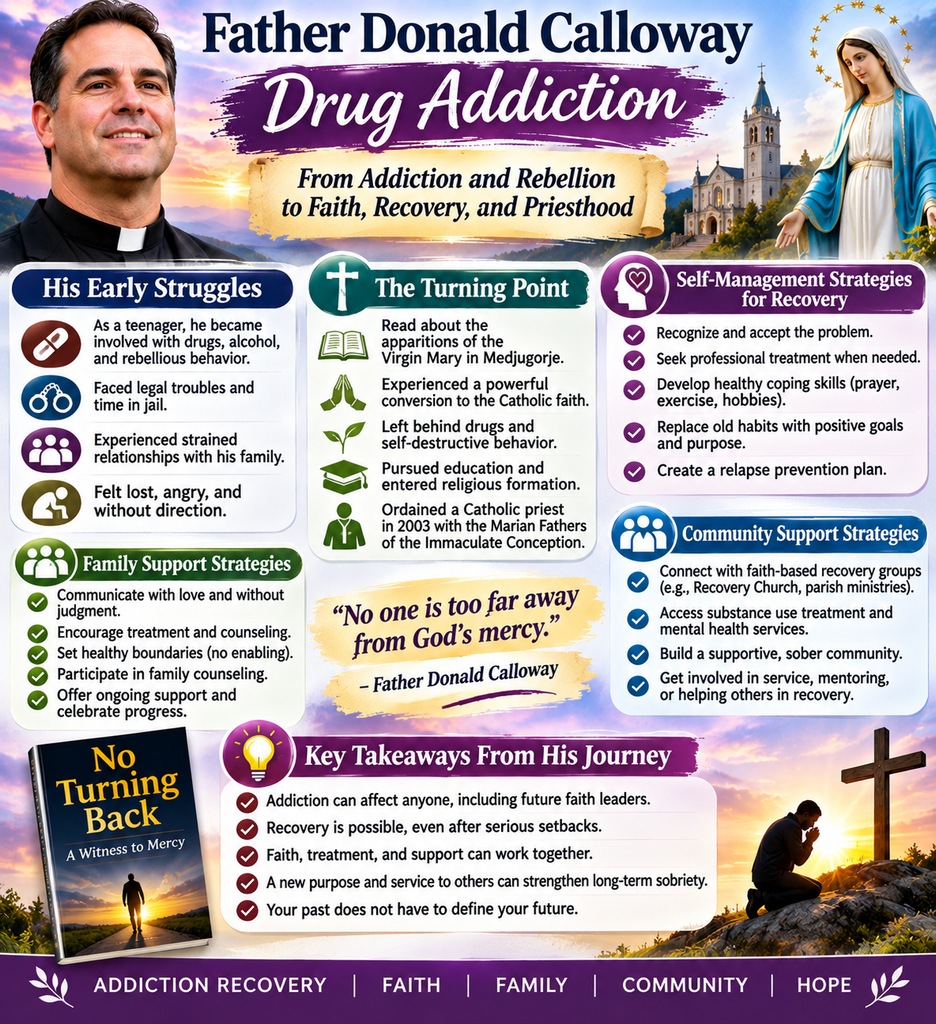
Before becoming a Catholic priest, Father Donald Calloway experienced a troubled adolescence involving drug use, criminal behavior, strained family relationships, and encounters with law enforcement. His journey eventually took a dramatic turn when he embraced Catholicism and pursued a life dedicated to religious service.
His autobiography, No Turning Back: A Witness to Mercy, describes his transformation from a troubled young man into a Catholic priest.
His experience offers a powerful message: A history of addiction and destructive behavior does not have to determine a person’s future. With appropriate support, personal commitment, and opportunities for change, individuals can rebuild their lives.
Understanding Father Donald Calloway’s Early Struggles With Drugs
Father Donald Calloway was born in 1972 and experienced significant instability and behavioral difficulties during his adolescence.
As a teenager, he became involved in substance use, rebellious behavior, and activities that created serious conflicts with his family and authorities.
During part of his youth, he lived in Japan, where his behavior escalated and eventually led to legal consequences.
His accounts describe involvement with drugs, alcohol, and other destructive behaviors that affected his relationships and future opportunities.
These experiences demonstrate how adolescent substance use can become intertwined with emotional distress, social influences, and risky decision-making.
Important Lessons From His Early Experiences
- Adolescent substance use can increase vulnerability to serious health and social consequences.
- Family conflict and environmental instability may contribute to emotional distress.
- Peer influences can affect decisions involving drugs and alcohol.
- Repeated risky behaviors can interfere with education, relationships, and future opportunities.
- Early intervention may help prevent the progression of substance-related problems.
- Recovery and personal transformation remain possible even after significant setbacks.
It is important to distinguish Calloway’s publicly described substance use from a formal clinical diagnosis. His personal story does not provide enough information to independently establish the severity or diagnostic classification of a substance use disorder.
The Turning Point: From Destructive Behavior to Spiritual Transformation
Father Calloway’s life changed dramatically in his early twenties when he experienced a religious conversion that redirected his future.
According to his autobiography and interviews, his parents had embraced Catholicism while he continued struggling with substance use and destructive behaviors.
One evening, he discovered a book about reported Marian apparitions in Medjugorje. Reading about the Virgin Mary, prayer, forgiveness, and Christian teachings profoundly affected him.
He subsequently sought guidance from a Catholic priest and began exploring the faith.
This spiritual experience became a turning point in his life. He gradually developed new goals, pursued education, and entered religious formation.
In 2003, he was ordained a Catholic priest with the Marian Fathers of the Immaculate Conception. Marians of the Immaculate Conception+2
Lessons From His Transformation
- Meaningful personal change can begin after years of destructive behavior.
- Developing a sense of purpose may strengthen motivation for recovery.
- Supportive relationships can encourage healthier decisions.
- Spiritual practices may provide emotional comfort and hope.
- Education and structured daily activities can help rebuild stability.
- Long-term change often requires sustained effort rather than a single decision.
Although faith was central to Calloway’s transformation, his experience should not be interpreted as evidence that religious conversion alone can treat substance use disorders.
Self-Management Strategies: Rebuilding Life After Drug Addiction
Self-management involves taking an active role in recovery by identifying triggers, developing coping skills, seeking treatment, and maintaining healthier daily routines.
Father Calloway’s journey illustrates how changing personal priorities and establishing meaningful goals can support long-term behavioral transformation.
1. Recognize the Consequences of Substance Use
One of the first steps toward recovery is acknowledging how drugs or alcohol affect physical health, emotional well-being, relationships, and daily responsibilities.
Adolescents and adults may minimize the risks of substance use, particularly when substances provide temporary relief or social acceptance.
Helpful strategies include:
- Recognizing patterns of harmful substance use.
- Identifying emotional and environmental triggers.
- Understanding the effects of substances on brain function.
- Seeking professional screening for substance use disorders.
- Establishing realistic goals for treatment and recovery.
2. Seek Professional Addiction Treatment
Father Calloway has publicly described attending drug and alcohol rehabilitation programs before his religious conversion. He also expressed dissatisfaction with those experiences. Diocese of Boise+1
His account highlights that treatment experiences vary and that individuals may need different approaches to achieve recovery.
Evidence-based addiction treatment may include:
- Medically supervised withdrawal management when necessary.
- Cognitive behavioral therapy (CBT).
- Motivational interviewing.
- Individual and group counseling.
- Medication treatment for opioid or alcohol use disorder.
- Residential or outpatient rehabilitation.
- Treatment for co-occurring mental health conditions.
For opioid use disorder, medications such as buprenorphine and methadone substantially reduce overdose risk.
For alcohol use disorder, naltrexone and acamprosate may support recovery.
3. Develop Healthy Coping Mechanisms
Substance use may become a way to manage stress, emotional pain, loneliness, or difficult life circumstances.
Developing healthier coping skills can reduce the likelihood of returning to substance use.
Helpful activities include:
- Practicing mindfulness, meditation, or prayer.
- Participating in regular physical exercise.
- Maintaining consistent sleep routines.
- Developing hobbies and creative interests.
- Attending counseling sessions.
- Spending time with supportive friends.
- Learning emotional regulation techniques.
Father Calloway’s continued interest in surfing offers an example of how enjoyable activities can remain part of a meaningful life after substance use.
4. Establish Structure and Meaningful Goals
Following his conversion, Calloway pursued education and religious formation, eventually becoming a priest.
His experience illustrates how establishing long-term goals can help individuals develop purpose and direction.
Recovery goals may include:
- Returning to school or vocational training.
- Pursuing meaningful employment.
- Developing healthier relationships.
- Participating in volunteer activities.
- Building financial independence.
- Strengthening personal values and spiritual beliefs.
5. Develop a Relapse Prevention Plan
A relapse prevention plan helps individuals identify warning signs and respond before substance use escalates.
Important components include recognizing cravings, identifying high-risk situations, maintaining treatment appointments, and developing an emergency support plan.
A return to substance use should prompt reassessment and treatment adjustment rather than shame or abandonment of recovery.
Family Support Strategies: Encouraging Recovery Through Compassion
Families often experience significant emotional distress when a loved one struggles with addiction.
Parents may feel frightened, frustrated, helpless, or uncertain about how to respond.
Father Calloway’s family experienced considerable difficulties during his adolescence. His mother and stepfather sought ways to address his behavior, and their religious conversion later influenced his own spiritual journey. Diocese of Boise+1
His story illustrates how families may remain important sources of support even when relationships become strained.
1. Encourage Early Intervention
Parents and caregivers should recognize warning signs of adolescent substance use.
These may include:
- Sudden changes in behavior or academic performance.
- Increased secrecy.
- Withdrawal from family activities.
- Changes in peer relationships.
- Unexplained financial problems.
- Substance-related legal difficulties.
- Physical or psychological symptoms associated with drug use.
Early intervention can reduce the likelihood of worsening substance-related problems.
2. Communicate Without Judgment
Family members can encourage treatment through respectful, compassionate conversations.
Rather than relying on threats or humiliation, families should express concern about specific behaviors and offer practical assistance.
3. Establish Healthy Boundaries
Supporting someone with addiction does not mean accepting unsafe behavior.
Families can establish clear expectations concerning substance use, finances, household responsibilities, and personal safety.
Boundaries should protect family members while encouraging accountability.
4. Participate in Family Counseling
Family therapy may help address:
- Damaged trust.
- Communication difficulties.
- Emotional distress.
- Conflict surrounding substance use.
- Enabling behaviors.
- Challenges involving forgiveness and reconciliation.
5. Encourage Hope Without Ignoring Reality
Families can recognize progress while understanding that recovery may involve setbacks.
Support should focus on sustained behavioral changes rather than expecting immediate transformation.
For families who value spirituality, prayer and religious activities may provide additional comfort. However, spiritual participation should remain voluntary and should not replace professional treatment.
Community Support Strategies: Creating Opportunities for Healing
Father Donald Calloway’s journey demonstrates how supportive communities can help individuals develop new identities, meaningful relationships, and opportunities for service.
Although his transformation was primarily spiritual, his experiences offer lessons for addiction recovery organizations, healthcare professionals, schools, and religious institutions.
1. Promote Addiction Education
Communities can help prevent substance use disorders by providing accurate information about addiction risks and treatment options.
Educational initiatives may include:
- School-based substance use prevention programs.
- Parent education workshops.
- Mental health awareness campaigns.
- Addiction screening and referral services.
- Training for religious and community leaders.
2. Develop Faith-Based Recovery Support
Religious organizations can provide encouragement, mentorship, and opportunities for meaningful community involvement.
Examples include:
- Recovery-focused support meetings.
- Pastoral counseling.
- Spiritual mentorship.
- Community service activities.
- Confidential referrals to addiction professionals.
Faith-based support should complement evidence-based medical and psychological care.
3. Connect Individuals With Professional Treatment
Community organizations can collaborate with healthcare providers to improve access to treatment.
Important partnerships include addiction treatment centers, mental health clinics, primary care practices, hospitals, and peer recovery organizations.
4. Support Youth Prevention and Early Intervention
Because Calloway’s substance use began during adolescence, his story underscores the importance of youth prevention efforts.
Communities can help by:
- Providing structured after-school programs.
- Teaching emotional regulation and coping skills.
- Offering confidential adolescent counseling.
- Encouraging positive peer relationships.
- Supporting families experiencing conflict.
- Identifying substance use concerns early.
5. Reduce Addiction-Related Stigma
People with substance use disorders may avoid seeking treatment because they fear rejection or discrimination.
Communities can challenge stigma by using respectful language, encouraging professional care, protecting confidentiality, and recognizing that recovery is possible.
Challenges and Barriers to Addiction Recovery
| Challenge | Supportive strategy |
|---|---|
| Early substance exposure | Youth prevention and education |
| Negative peer influences | Positive mentorship and supportive relationships |
| Family conflict | Family counseling and healthy communication |
| Emotional distress | Mental health assessment and therapy |
| Treatment difficulties | Individualized, evidence-based care |
| Social isolation | Peer recovery and community support |
| Lack of direction | Education, employment, and meaningful goals |
| Fear of judgment | Compassionate and confidential support |
The Role of Faith in Father Donald Calloway’s Recovery
Faith was a defining influence in Father Calloway’s transformation.
His conversion to Catholicism provided a new understanding of his life, personal responsibilities, and future.
Through religious formation, education, and ministry, he developed a new sense of identity and purpose.
For individuals who value spirituality, religious practices may support recovery by providing:
- Hope during difficult circumstances.
- A sense of forgiveness and personal renewal.
- Meaningful relationships.
- Structured daily activities.
- Opportunities for service.
- Motivation to pursue healthier behaviors.
However, spirituality is not required for recovery, and people from all religious backgrounds—or none—can achieve meaningful, sustained recovery.
Lessons From Father Donald Calloway’s Journey
Father Calloway’s story provides several important lessons for individuals and families affected by addiction.
First, early substance use can have serious consequences. His adolescent experiences demonstrate how drug use, risky behavior, and negative social influences can disrupt important developmental opportunities.
Second, meaningful change remains possible. Even after serious personal and legal difficulties, individuals can develop healthier lifestyles.
Third, families can play important roles in recovery. Compassionate encouragement, appropriate boundaries, and access to professional care can support positive change.
Fourth, purpose can strengthen recovery. Education, meaningful activities, relationships, and service may help individuals build more stable lives.
Finally, faith and evidence-based treatment can complement one another. Spirituality may provide emotional encouragement while professional treatment addresses the medical and psychological aspects of addiction.
Conclusion: From Addiction to a Life of Purpose
Father Donald Calloway’s journey from adolescent drug use and destructive behavior to Catholic priesthood demonstrates the possibility of profound personal transformation.
His experiences with substance use, rehabilitation, family difficulties, and spiritual conversion illustrate how individuals can change direction even after years of harmful behavior.
Self-management strategies help people recognize triggers, develop healthier coping mechanisms, and pursue meaningful goals. Family support can encourage treatment, emotional healing, and accountability. Community involvement provides opportunities for education, professional care, mentorship, and supportive relationships.
His story also emphasizes that individuals should not be defined solely by their past struggles.
Recovery is not simply about leaving addiction behind. It is about building a healthier future filled with purpose, connection, and hope.
Addiction Recovery Resources
- FindTreatment.gov — Locate substance use and mental health treatment services.
- SAMHSA — Addiction education and treatment resources.
- Narcotics Anonymous — Peer support for people recovering from drug addiction.
- SMART Recovery — Evidence-informed mutual support and coping strategies.
- Al-Anon Family Groups — Support for families affected by alcohol use.
For confidential treatment referrals in the United States, call SAMHSA’s National Helpline at 1-800-662-HELP (4357).
Frequently Asked Questions and Answers
Understanding Father Donald Calloway’s Early Struggles
1. Who is Father Donald Calloway?
Father Donald Calloway is a Catholic priest, author, and member of the Marian Fathers of the Immaculate Conception. He is known for sharing his dramatic conversion story, which includes a troubled adolescence involving drug use, alcohol, rebellious behavior, and legal difficulties.
He was ordained a Catholic priest in 2003 and has since become a speaker and author focusing on Catholic spirituality, prayer, and personal transformation.
2. Did Father Donald Calloway struggle with drug addiction?
Father Calloway has publicly described extensive drug and alcohol use during his teenage years, along with destructive behavior and serious personal consequences.
His experiences included substance-related problems and involvement in rehabilitation programs.
Although his story is often described as one of overcoming addiction, the available public accounts do not establish a specific clinical diagnosis or severity classification under modern diagnostic criteria.
3. What drugs did Father Donald Calloway use?
In his autobiographical accounts and interviews, Father Calloway has discussed using marijuana, alcohol, and other illicit substances during his adolescence.
His story describes a period of escalating risky behavior and substance use.
It is important to avoid assuming that every substance mentioned in his testimony resulted in a separately diagnosed substance use disorder.
4. At what age did Father Donald Calloway begin using drugs?
Father Calloway has described beginning substance use during his early teenage years.
Early exposure to alcohol and drugs can increase the risk of later substance-related problems, particularly when combined with environmental stress, behavioral difficulties, and limited coping skills.
Adolescence is a period of significant brain development, making prevention and early intervention especially important.
5. How did drug use affect Father Donald Calloway’s family?
His adolescent behavior created significant conflict and emotional distress within his family.
His accounts describe strained relationships, repeated disciplinary problems, and difficulties involving parental authority.
His experiences illustrate how substance use and associated behaviors can affect family trust, communication, and emotional well-being.
6. Did Father Donald Calloway experience legal problems?
Yes. Father Calloway has described encounters with law enforcement and legal consequences associated with his behavior during adolescence, including events while living in Japan.
His experiences demonstrate how substance use and risky behaviors can contribute to serious social and legal consequences.
7. Did Father Donald Calloway attend drug rehabilitation?
Father Calloway has publicly discussed participating in drug and alcohol rehabilitation programs before his religious conversion.
His experiences illustrate that treatment attempts do not always produce immediate or lasting change.
People may need individualized treatment approaches, continuing support, and adjustments to their recovery plans.
Spiritual Transformation and Recovery
8. What was the turning point in Father Donald Calloway’s life?
According to his testimony, a major turning point occurred when he discovered a book about reported apparitions of the Virgin Mary in Medjugorje.
He described reading the book as a profound spiritual experience that encouraged him to reconsider his behavior, seek religious guidance, and explore Catholicism.
This experience became central to his conversion and eventual decision to pursue the priesthood. Marians of the Immaculate Conception+1
9. How did the Virgin Mary influence Father Donald Calloway’s recovery?
Father Calloway credits his devotion to the Virgin Mary with inspiring his spiritual transformation.
He has described how learning about Mary helped him develop a new understanding of love, forgiveness, responsibility, and faith.
For Calloway, this spiritual connection provided direction and motivated substantial changes in his life.
10. Did Father Donald Calloway become sober after his religious conversion?
Father Calloway has described leaving behind his former lifestyle of drug use and destructive behavior following his conversion.
His public testimony emphasizes the importance of faith in that transformation.
However, his personal experience should not be interpreted as evidence that religious conversion alone is an effective medical treatment for addiction.
11. How did Father Donald Calloway become a Catholic priest?
Following his conversion, Father Calloway pursued formal education and religious formation.
He earned degrees in philosophy and theology and continued his religious studies before joining the Marian Fathers of the Immaculate Conception.
He was ordained a Catholic priest in 2003. Father Donald Calloway_bio.docx+1
12. What book did Father Donald Calloway write about his past?
Father Calloway wrote No Turning Back: A Witness to Mercy, originally published in 2010.
The autobiography describes his troubled adolescence, substance use, criminal behavior, conversion to Catholicism, and eventual priesthood.
The book emphasizes personal transformation, forgiveness, and the possibility of building a different future.
13. Can faith help someone recover from drug addiction?
Yes. Faith may provide emotional comfort, meaning, supportive relationships, and motivation for change.
For individuals who value spirituality, prayer, meditation, religious services, and spiritual counseling may complement recovery.
However, faith should not replace evidence-based addiction treatment, particularly when medications, medically supervised withdrawal, or psychiatric care are indicated.
Self-Management Strategies for Addiction Recovery
14. What self-management strategies can individuals learn from Father Calloway’s journey?
His transformation illustrates the potential value of developing healthier behaviors, meaningful goals, and supportive relationships.
Helpful strategies include:
- Recognizing substance use problems and seeking assistance.
- Identifying personal triggers and unhealthy coping patterns.
- Participating in professional addiction treatment.
- Developing consistent sleep and exercise routines.
- Practicing mindfulness, prayer, or meditation.
- Establishing educational or career goals.
- Building a supportive recovery network.
- Creating a relapse prevention plan.
15. Why is developing a sense of purpose important in recovery?
A sense of purpose can strengthen motivation and help individuals build meaningful lives without relying on substances.
Purpose may come from education, employment, family relationships, volunteering, creative activities, or spirituality.
Father Calloway’s pursuit of education and religious service illustrates how meaningful goals can support major behavioral changes.
16. What treatments are available for drug addiction?
Treatment depends on the substances involved, medical history, and individual needs.
Evidence-based options include:
- Cognitive behavioral therapy (CBT).
- Motivational interviewing.
- Contingency management, particularly for stimulant use disorder.
- Individual and group counseling.
- Medications such as buprenorphine or methadone for opioid use disorder.
- Medications such as naltrexone or acamprosate for alcohol use disorder.
- Residential or outpatient treatment.
- Integrated care for co-occurring mental health conditions.
Not every medication or treatment is appropriate for every substance use disorder.
17. How can individuals prevent relapse?
Relapse prevention involves recognizing early warning signs and maintaining appropriate treatment and support.
Helpful approaches include identifying triggers, developing coping skills, maintaining recovery appointments, and creating a plan for responding to cravings.
A return to substance use should prompt timely reassessment of treatment needs rather than shame or abandonment of recovery.
For opioid use disorder, reduced tolerance after abstinence can increase overdose risk, making naloxone access particularly important.
Family Support Strategies
18. How did Father Donald Calloway’s family influence his transformation?
Father Calloway has described significant family difficulties during adolescence.
His mother’s conversion to Catholicism eventually influenced his exposure to religious teachings.
The book that inspired his spiritual transformation was discovered in his family’s home. Diocese of Boise
His experience demonstrates how family relationships and changing home environments may influence personal decisions.
19. How can parents help teenagers struggling with drugs?
Parents can support adolescents by recognizing warning signs and seeking professional help early.
Important strategies include:
- Maintaining open, respectful communication.
- Avoiding humiliation and excessive criticism.
- Seeking evaluation by an adolescent addiction specialist.
- Establishing clear, age-appropriate boundaries.
- Monitoring safety and high-risk behaviors.
- Participating in family-based treatment.
- Encouraging healthy friendships and activities.
Family-based therapies can be particularly helpful for adolescents experiencing substance use problems.
20. What should families avoid when supporting someone with addiction?
Families should avoid behaviors that unintentionally increase risk or discourage treatment.
Examples include ignoring dangerous substance use, providing unrestricted financial support that facilitates drug use, making threats that cannot be enforced, and attempting to manage serious withdrawal symptoms without medical guidance.
Families should also avoid assuming that addiction can be resolved through punishment, shame, or religious pressure.
21. Can damaged family relationships heal after addiction?
Yes. Relationships can improve through consistent behavioral changes, honest communication, accountability, and counseling.
However, rebuilding trust takes time, and reconciliation is not guaranteed.
Family members have the right to establish boundaries and prioritize their own safety and emotional well-being.
Community Support and Addiction Awareness
22. How can churches support individuals recovering from addiction?
Churches can provide welcoming environments that encourage compassion, connection, and appropriate treatment.
Useful initiatives include:
- Hosting addiction awareness workshops.
- Providing confidential treatment referrals.
- Offering spiritual counseling when requested.
- Supporting peer recovery meetings.
- Partnering with licensed addiction professionals.
- Organizing mentorship and community service programs.
Religious organizations should encourage evidence-based treatment alongside optional spiritual support.
23. What can communities learn from Father Donald Calloway’s experience?
His story demonstrates the importance of offering opportunities for personal growth rather than defining people by past substance use or criminal behavior.
Communities can promote recovery by reducing stigma, improving access to treatment, supporting families, and providing educational and vocational opportunities.
24. Why is early intervention important for adolescent drug use?
Adolescent substance use can interfere with brain development, education, relationships, and emotional well-being.
Early intervention may reduce the likelihood of worsening substance-related problems.
Schools, healthcare providers, parents, and community organizations can collaborate to identify concerns and provide appropriate support.
25. What is the most important lesson from Father Donald Calloway’s recovery story?
One of the most important lessons is that past substance use and destructive behavior do not have to determine a person’s future.
Father Calloway’s transformation illustrates the potential importance of personal commitment, meaningful goals, supportive relationships, and hope.
His story also reminds us that recovery is individual. What helped one person may not be sufficient for another, and professional treatment remains essential for many people with substance use disorders.
Video: