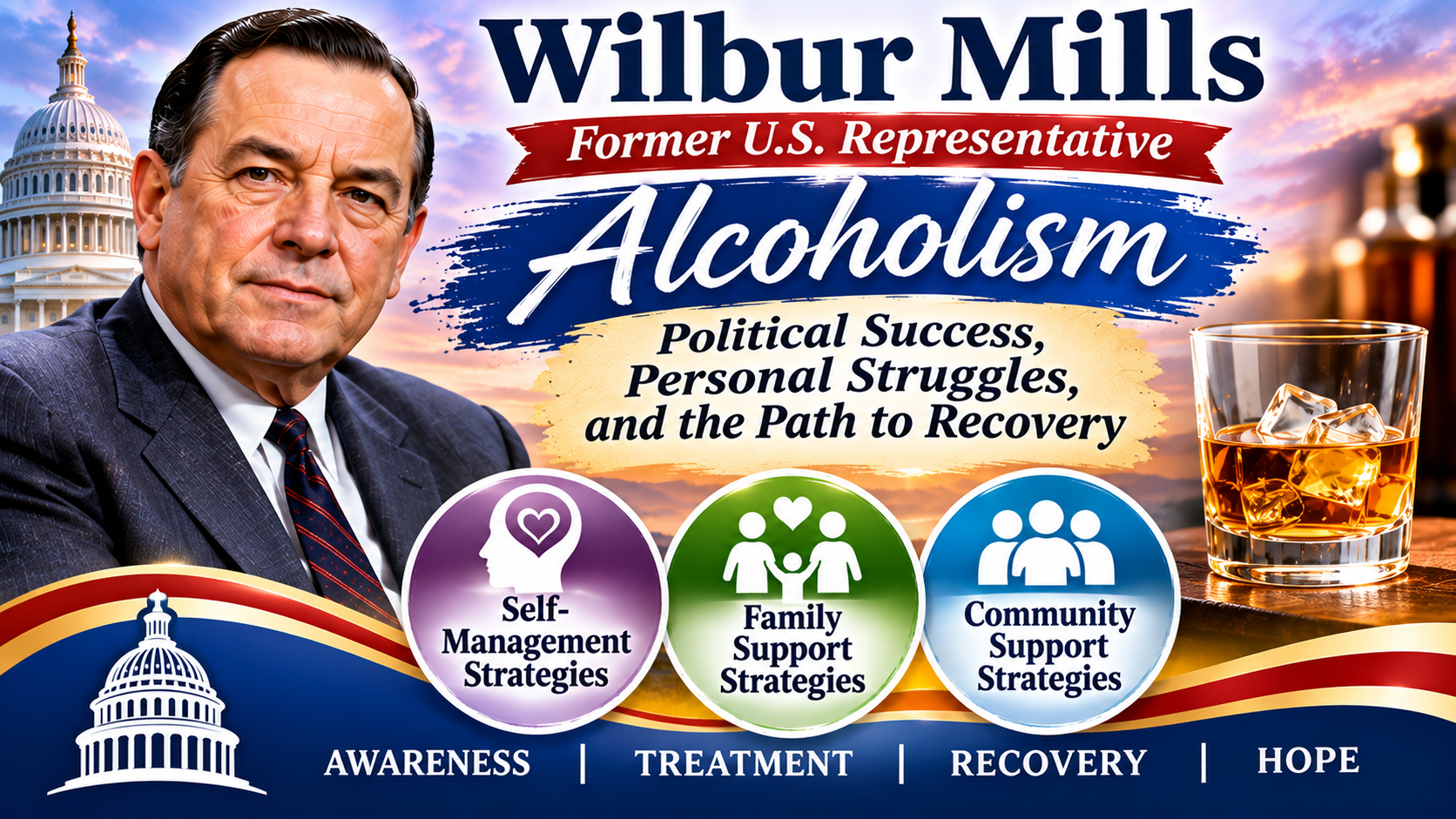
Alcohol addiction can affect anyone, regardless of professional success, education, financial stability, or social standing. Even individuals holding positions of extraordinary responsibility may struggle with alcohol use disorder, sometimes concealing their difficulties until serious personal or professional consequences emerge.
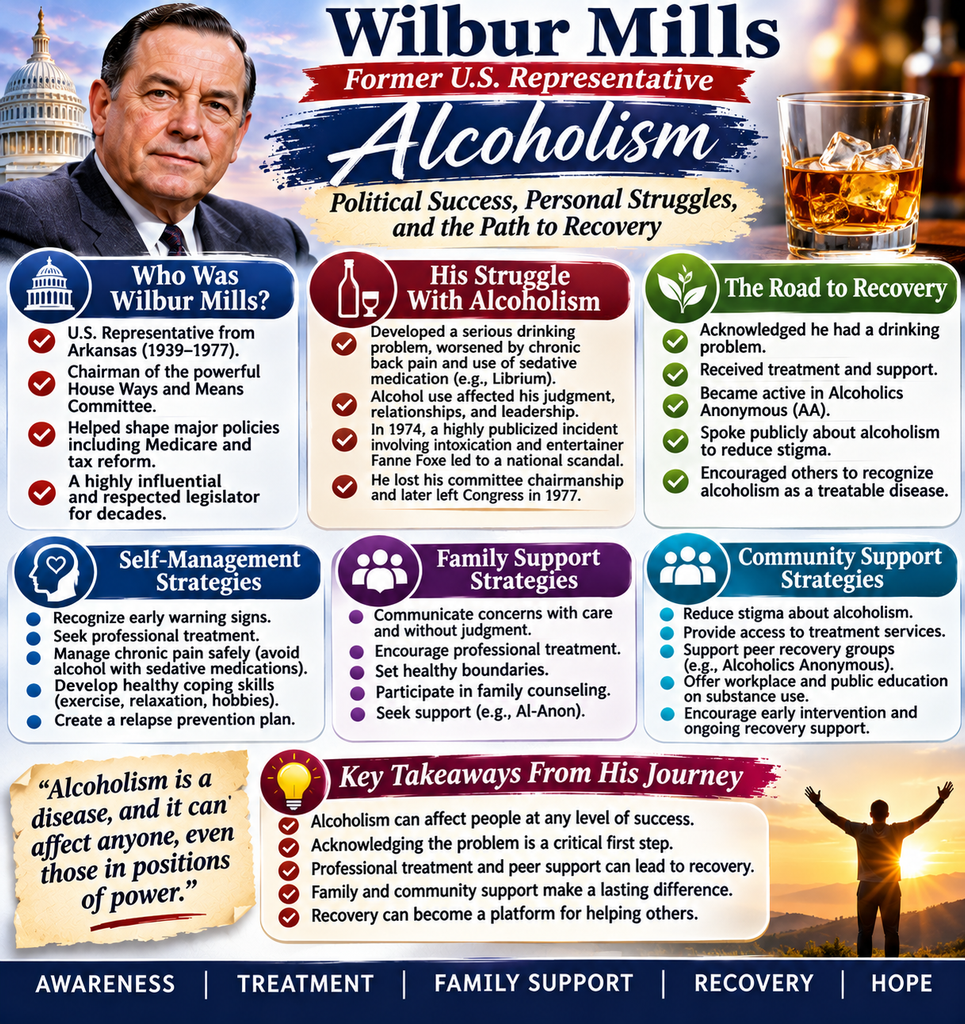
Wilbur Mills was one of the most influential members of the United States Congress during the twentieth century. As chairman of the House Ways and Means Committee, he played a major role in shaping federal tax policy and social programs, including Medicare.
However, Mills’ political achievements were overshadowed by highly publicized alcohol-related incidents in 1974 that damaged his reputation and contributed to the end of his congressional leadership.
His experiences provide an opportunity to examine how alcoholism can affect judgment, relationships, professional responsibilities, and emotional well-being.
The story of Wilbur Mills reminds us that addiction is not a measure of intelligence, character, or professional achievement. It is a treatable medical condition that requires understanding, appropriate intervention, and ongoing support.
Who Was Wilbur Mills?
The Powerful Career of Wilbur Mills
Wilbur Daigh Mills (1909–1992) was a Democratic congressman from Arkansas who served in the U.S. House of Representatives from 1939 to 1977.
He became chairman of the powerful House Ways and Means Committee and helped shape major legislation involving taxation, Social Security, Medicare, and Medicaid.
His long congressional career established him as one of the most influential lawmakers of his era. History, Art & Archives+1
Despite his professional accomplishments, Mills experienced significant alcohol-related problems later in his career.
His story demonstrates that individuals may maintain demanding professional responsibilities while experiencing an increasingly serious substance use disorder.
Understanding Wilbur Mills’ Struggle With Alcoholism
During the late 1960s and early 1970s, Mills experienced chronic back pain that reportedly contributed to his use of prescription medications and alcohol.
He later described using Librium, a benzodiazepine, while also consuming alcohol.
Combining alcohol with benzodiazepines can be particularly dangerous because both substances depress the central nervous system. Their combined effects may increase sedation, impair judgment, and cause potentially life-threatening respiratory depression.
Mills’ alcohol consumption eventually became associated with significant personal and professional difficulties.
The 1974 Scandal That Changed His Career
In October 1974, Mills became involved in a highly publicized incident near Washington, D.C.’s Tidal Basin.
Police stopped a vehicle in which Mills was a passenger. He appeared intoxicated, and another passenger, entertainer Annabel Battistella, known professionally as Fanne Foxe, jumped into the water.
The incident attracted widespread national attention.
A second public appearance involving Foxe later that year intensified concerns about Mills’ behavior and professional judgment.
Although Mills won reelection in November 1974, he relinquished his Ways and Means chairmanship and subsequently announced that he would not seek another congressional term. Encyclopedia of Arkansas+1
Important Lessons From His Experience
- Alcohol addiction can affect individuals in positions of authority.
- Chronic pain and emotional distress may complicate substance use problems.
- Alcohol combined with sedative medications can create serious health risks.
- Public embarrassment may increase shame and delay help-seeking.
- Professional success does not rule out alcohol use disorder.
- Early intervention may prevent serious medical and occupational consequences.
Recognizing Alcoholism and Accepting the Need for Help
Following his public difficulties, Mills acknowledged that he had developed a serious drinking problem.
In a statement reported in January 1975, he described himself as a periodic heavy drinker rather than someone who consumed alcohol every day.
His experience illustrates an important clinical distinction: Alcohol use disorder does not require daily drinking.
Individuals who engage in repeated episodes of heavy drinking may experience loss of control, harmful consequences, and significant impairment even when they abstain between episodes.
Mills eventually received treatment and participated in Alcoholics Anonymous.
He later became a public speaker on alcoholism, encouraging others to recognize substance use problems and seek help. TIME+1
Self-Management Strategies: Taking Control of Alcohol Addiction
Self-management involves recognizing problematic alcohol use, seeking appropriate medical treatment, developing healthier coping mechanisms, and maintaining long-term recovery efforts.
Wilbur Mills’ experience highlights the importance of acknowledging addiction before its consequences become overwhelming.
1. Recognize the Warning Signs of Alcohol Use Disorder
Alcohol use disorder can develop gradually, making early symptoms difficult to recognize.
Common warning signs include:
- Drinking more alcohol than intended.
- Repeated unsuccessful attempts to reduce drinking.
- Experiencing strong alcohol cravings.
- Continuing to drink despite relationship or professional problems.
- Using alcohol to manage pain, stress, or emotional distress.
- Experiencing withdrawal symptoms when alcohol consumption stops.
- Participating in risky activities while intoxicated.
Recognizing these behaviors can encourage earlier evaluation and treatment.
2. Seek Professional Addiction Treatment
Mills eventually received professional care for alcoholism, illustrating the importance of obtaining assistance rather than attempting to manage serious addiction alone.
Modern treatment options include:
- Medically supervised alcohol withdrawal management.
- Cognitive behavioral therapy (CBT).
- Motivational interviewing.
- Individual and group counseling.
- Medications such as naltrexone or acamprosate.
- Residential or intensive outpatient treatment.
- Long-term recovery monitoring.
For individuals with significant physical alcohol dependence, abruptly stopping alcohol can cause dangerous withdrawal symptoms, including seizures and delirium tremens.
Medical evaluation is particularly important before attempting withdrawal.
3. Address Chronic Pain Without Relying on Alcohol
Mills’ history of chronic back pain provides an opportunity to discuss the relationship between pain and substance use.
Some individuals consume alcohol to temporarily relieve physical discomfort. However, alcohol is not an appropriate long-term pain treatment and can worsen sleep, mood, and overall health.
Safer approaches may include:
- Physical therapy and rehabilitation.
- Nonpharmacologic pain management.
- Appropriate non-sedating medications.
- Cognitive behavioral therapy for chronic pain.
- Exercise programs adapted to physical limitations.
- Evaluation by a qualified pain specialist.
Individuals taking benzodiazepines should avoid combining them with alcohol and should not discontinue long-term benzodiazepine treatment abruptly without medical guidance.
4. Develop Healthy Coping Mechanisms
Stress, emotional exhaustion, and professional pressure can increase vulnerability to unhealthy drinking behaviors.
Helpful coping strategies include:
- Practicing mindfulness and relaxation techniques.
- Engaging in regular physical activity.
- Maintaining consistent sleep routines.
- Developing enjoyable hobbies.
- Participating in counseling.
- Establishing realistic work-life boundaries.
- Maintaining meaningful social relationships.
5. Establish a Relapse Prevention Plan
A relapse prevention plan helps individuals recognize warning signs and respond appropriately.
Important components include identifying triggers, maintaining treatment appointments, participating in recovery support groups, and developing a plan for managing cravings.
A return to alcohol use should prompt reassessment of treatment rather than abandonment of recovery efforts.
Family Support Strategies: Healing Relationships Affected by Alcoholism
Alcohol use disorder can significantly affect spouses, children, relatives, and close friends.
Family members may experience emotional distress, embarrassment, uncertainty, and frustration when a loved one continues drinking despite harmful consequences.
Historical reporting described marital strain during Mills’ period of heavy drinking. However, his family’s private experiences should not be assumed beyond what has been publicly documented. The Washington Post
1. Encourage Honest Communication
Family members can express concerns about drinking without using blame or humiliation.
Supportive conversations should focus on specific behaviors, safety concerns, and the importance of professional treatment.
2. Establish Healthy Boundaries
Boundaries protect family members while encouraging accountability.
Examples include:
- Refusing to ride with an impaired driver.
- Avoiding arguments when someone is intoxicated.
- Establishing expectations regarding household safety.
- Refusing to conceal dangerous drinking behavior.
- Seeking professional support when relationships become unsafe.
3. Encourage Professional Treatment
Families can help loved ones by identifying treatment resources, arranging appointments, and offering transportation when appropriate.
However, family members cannot force lasting recovery through encouragement alone.
4. Participate in Family Counseling
Family counseling may help address damaged trust, communication difficulties, emotional distress, and patterns that interfere with recovery.
5. Support Recovery Without Ignoring Personal Needs
Family members should maintain their own emotional and physical well-being.
Support groups such as Al-Anon can provide education and encouragement for individuals affected by another person’s drinking.
Community Support Strategies: Reducing Stigma and Encouraging Recovery
Wilbur Mills’ experience demonstrates how public attitudes toward alcoholism can influence whether individuals seek help.
During the 1970s, alcoholism was frequently discussed in moral or disciplinary terms rather than understood as a medical condition.
Mills later became an advocate for greater public understanding of alcoholism.
In a 1978 interview, he expressed hope that people would better understand alcoholism as an illness for which help was available. The Washington Post
1. Promote Addiction Education
Communities can reduce stigma by providing accurate information about alcohol use disorder.
Educational initiatives may include:
- Workplace addiction awareness programs.
- Community health workshops.
- Public education campaigns.
- Screening and early intervention programs.
- Training for organizational leaders.
2. Improve Access to Treatment
Community organizations can partner with healthcare providers to expand access to addiction services.
Important resources include primary care clinics, behavioral health centers, addiction specialists, peer recovery organizations, and affordable treatment programs.
3. Encourage Peer Recovery Support
Alcoholics Anonymous played a documented role in Mills’ recovery experience.
Peer recovery groups can provide encouragement, accountability, and opportunities to connect with others facing similar challenges.
Other options include SMART Recovery and professionally facilitated recovery groups.
4. Develop Supportive Workplace Policies
Mills’ experience is particularly relevant to employers, government institutions, and organizations with demanding leadership positions.
Workplaces can support employees experiencing alcohol use disorder by:
- Providing confidential employee assistance programs.
- Encouraging early treatment.
- Offering appropriate medical leave.
- Establishing fair and consistent safety policies.
- Protecting privacy.
- Supporting return-to-work planning.
Compassionate policies should coexist with appropriate professional accountability.
5. Encourage Public Figures to Discuss Recovery
When public figures discuss addiction and treatment, they may help challenge stereotypes.
Mills became an example of this approach when he spoke publicly about alcoholism after leaving congressional leadership.
His advocacy encouraged greater recognition that individuals with professional accomplishments could also experience alcohol dependence.
Wilbur Mills’ Recovery and Later Advocacy
After acknowledging his alcoholism, Mills received treatment and became involved with Alcoholics Anonymous.
In interviews during the late 1970s, he described the importance of sobriety and the personal changes he experienced after treatment.
He also began speaking publicly about alcoholism, using his experiences to educate others.
His advocacy was especially meaningful because he challenged the assumption that alcohol addiction affected only individuals who had lost their jobs, families, or social standing.
In a 1978 address, he discussed how difficult it had initially been to accept that a successful member of Congress could have alcoholism. The Washington Post
Following his congressional career, Mills worked as a tax consultant and continued participating in professional activities.
He died on May 2, 1992, at age 82. The Washington Post+1
Challenges and Barriers to Alcohol Addiction Recovery
| Challenge | Supportive strategy |
|---|---|
| Denial of problematic drinking | Screening, education, and motivational interviewing |
| Chronic pain | Integrated pain and addiction treatment |
| Professional pressure | Stress management and confidential counseling |
| Fear of public embarrassment | Privacy protections and stigma reduction |
| Family conflict | Family counseling and healthy boundaries |
| Alcohol cravings | Behavioral treatment and appropriate medication |
| Social isolation | Peer recovery and supportive relationships |
| Relapse vulnerability | Continued treatment and prevention planning |
Lessons From Wilbur Mills’ Alcoholism Journey
Mills’ experience offers several lessons for individuals, families, healthcare professionals, and policymakers.
First, professional success does not prevent addiction. Individuals may maintain demanding careers while experiencing significant alcohol-related problems.
Second, alcoholism may involve episodic heavy drinking rather than daily consumption. The frequency of drinking alone does not determine whether someone has alcohol use disorder.
Third, chronic pain and medication use require careful clinical assessment. Alcohol combined with sedating medications can create serious health risks.
Fourth, acknowledging addiction is an important step toward recovery. Mills’ eventual recognition of his drinking problem allowed him to seek treatment.
Fifth, public stigma can delay intervention. Shame and fear of professional consequences may discourage individuals from asking for help.
Finally, recovery can create opportunities for advocacy. Mills used his later experiences to encourage greater public understanding of alcoholism.
Conclusion: From Political Scandal to Addiction Awareness
Wilbur Mills’ struggle with alcoholism demonstrates that substance use disorders can affect even the most accomplished and influential individuals.
His experience involved chronic pain, problematic drinking, public controversy, professional consequences, and eventual treatment.
Although his political career was significantly affected, Mills later became an advocate for alcoholism awareness and recovery.
His story emphasizes the importance of recognizing addiction as a treatable medical condition rather than simply a personal weakness.
Self-management strategies can help individuals develop healthier coping skills and maintain recovery. Family support can encourage treatment while protecting relationships and personal boundaries. Community involvement can reduce stigma, improve access to healthcare, and promote lasting recovery.
A person’s professional accomplishments do not make them immune to addiction, and a history of alcoholism does not eliminate the possibility of healing, personal growth, and renewed purpose.
Addiction Recovery Resources
- FindTreatment.gov — Locate alcohol and substance use treatment services.
- Alcoholics Anonymous — Peer support and recovery meetings.
- SMART Recovery — Evidence-informed recovery support.
- Al-Anon Family Groups — Support for families affected by alcohol use.
- National Institute on Alcohol Abuse and Alcoholism — Research and education about alcohol use disorder.
For confidential treatment information and referrals in the United States, call SAMHSA’s National Helpline at 1-800-662-HELP (4357).
Frequently Asked Questions and Answers
Understanding Wilbur Mills’ Alcoholism
1. Who was Wilbur Mills?
Wilbur Daigh Mills (1909–1992) was a Democratic U.S. Representative from Arkansas who served in Congress from 1939 to 1977.
He chaired the powerful House Ways and Means Committee and played an important role in developing federal tax legislation and major social programs, including Medicare and Medicaid.
Despite his political influence, his career was significantly affected by alcohol-related problems during the 1970s.
2. Did Wilbur Mills struggle with alcoholism?
Yes. Mills publicly acknowledged having a serious drinking problem following widely publicized incidents in 1974.
His experience demonstrates that alcoholism can affect individuals with successful careers and significant responsibilities.
Alcohol use disorder is a treatable medical condition characterized by impaired control over drinking, continued use despite harmful consequences, and other behavioral or physiological symptoms.
3. What contributed to Wilbur Mills’ alcohol problems?
Historical reporting indicates that Mills experienced chronic back pain and used prescription medication, including Librium, during the period when his drinking became problematic.
Chronic pain, stress, and medication use can complicate alcohol-related problems.
However, the precise biological and psychological causes of Mills’ alcoholism cannot be determined from historical reporting alone.
4. What happened during the Wilbur Mills scandal in 1974?
In October 1974, police stopped a vehicle near Washington, D.C.’s Tidal Basin. Mills, who was a passenger, appeared intoxicated.
During the incident, entertainer Annabel Battistella, professionally known as Fanne Foxe, entered the water and was rescued.
The incident received extensive media coverage and damaged Mills’ public reputation.
A subsequent public appearance involving Foxe intensified concerns about his drinking and professional judgment.
5. How did alcoholism affect Wilbur Mills’ political career?
Mills’ alcohol-related behavior contributed to the loss of his chairmanship of the House Ways and Means Committee.
Although he won reelection in November 1974, he stepped down from the committee’s leadership and did not seek reelection in 1976.
His congressional service ended in January 1977.
His experience demonstrates how untreated substance use problems can have significant professional consequences.
6. Was Wilbur Mills a daily drinker?
Mills described himself as a periodic heavy drinker rather than someone who consumed alcohol every day.
This distinction is clinically important because alcohol use disorder does not require daily drinking.
Individuals who experience repeated episodes of heavy alcohol consumption may develop significant health, behavioral, and relationship problems even if they abstain between episodes.
7. Did Wilbur Mills seek treatment for alcoholism?
Yes. Following his public difficulties, Mills acknowledged his alcohol problem and received treatment.
He also became involved with Alcoholics Anonymous, which provided peer support and accountability.
His experience highlights the importance of recognizing problematic drinking and obtaining appropriate assistance.
8. How did Wilbur Mills recognize that he had a drinking problem?
Mills initially struggled to accept that someone with his education, career, and professional standing could have alcoholism.
In January 1975, following hospitalization and treatment, he publicly acknowledged that his pattern of heavy drinking represented a serious problem.
His experience demonstrates how stereotypes about alcoholism can prevent individuals from recognizing their own symptoms. TIME
9. Did Wilbur Mills experience alcohol withdrawal symptoms?
Yes. In a 1978 interview, Mills described severe withdrawal experiences, including delirium tremens, disturbing hallucinations, and alcohol-related blackouts.
Delirium tremens is a potentially life-threatening complication of alcohol withdrawal that may involve confusion, agitation, hallucinations, and autonomic instability.
Individuals at risk of severe withdrawal require medical assessment and appropriate supervision. The Washington Post
10. Did Wilbur Mills achieve sobriety?
Yes. In March 1978, Mills publicly reported more than three years without drinking.
He described a significant change in his attitude toward alcoholism and became increasingly comfortable discussing his recovery.
Historical reporting also documented his continued involvement in Alcoholics Anonymous. The Washington Post
11. Did Wilbur Mills become an addiction recovery advocate?
Yes. After receiving treatment, Mills began speaking publicly about alcoholism and encouraging greater understanding of the condition.
He challenged stereotypes suggesting that only unemployed or socially disadvantaged individuals experience addiction.
His advocacy emphasized that alcoholism can affect people from all professional and socioeconomic backgrounds.
Self-Management Strategies for Alcohol Addiction
12. What self-management strategies can individuals learn from Wilbur Mills’ recovery?
Mills’ experiences illustrate the importance of acknowledging problematic drinking and maintaining support after treatment.
Helpful strategies include:
- Recognizing early warning signs of alcohol use disorder.
- Seeking professional medical evaluation.
- Identifying emotional and environmental drinking triggers.
- Participating in counseling or peer recovery meetings.
- Developing healthy stress-management techniques.
- Addressing coexisting medical conditions.
- Creating a personalized relapse prevention plan.
Self-management should complement appropriate clinical treatment rather than replace it.
13. Can chronic pain increase the risk of alcohol misuse?
Yes. Individuals experiencing chronic pain may use alcohol in an attempt to relieve physical discomfort or emotional distress.
However, alcohol can worsen sleep quality, mood symptoms, and overall health.
Combining alcohol with benzodiazepines, opioids, or other sedating medications can increase the risk of overdose, respiratory depression, and serious injury.
People with chronic pain and problematic drinking may benefit from coordinated pain management and addiction treatment.
14. What medications are available for alcohol use disorder?
Three FDA-approved medications are commonly used to treat alcohol use disorder:
- Naltrexone: Helps reduce heavy drinking and alcohol’s rewarding effects.
- Acamprosate: Supports abstinence after alcohol cessation.
- Disulfiram: Produces an unpleasant reaction when alcohol is consumed and may be appropriate for selected patients.
Medication selection depends on individual treatment goals, medical conditions, kidney and liver function, and other medication use.
These are modern treatment options, not medications confirmed to have been prescribed to Mills.
15. How can someone prevent relapse after alcohol addiction treatment?
Relapse prevention involves recognizing warning signs, maintaining recovery support, and developing healthier coping responses.
Important strategies include attending follow-up appointments, identifying triggers, practicing stress management, and staying connected with supportive individuals.
A return to drinking should prompt reassessment of the treatment plan rather than abandonment of recovery.
16. Why is Alcoholics Anonymous important in recovery?
Alcoholics Anonymous provides peer support through meetings, sponsorship, and shared recovery experiences.
Mills participated in AA and described how its members helped him maintain sobriety.
Although AA is not a replacement for necessary medical care, it can provide meaningful accountability and social connection.
Family Support Strategies
17. How did Wilbur Mills’ alcoholism affect his marriage?
Mills’ drinking and public behavior created significant strain in his marriage to Polly Mills.
In a 1978 interview, the couple discussed rebuilding their relationship following treatment. Polly also described her own recovery from alcoholism.
Their experiences demonstrate how substance use can affect both partners and how family-centered treatment may support healing. The Washington Post
18. Did Wilbur Mills’ wife also struggle with alcoholism?
Yes. Polly Mills publicly discussed her own alcoholism and recovery.
Historical reporting indicates that she had maintained sobriety since 1973.
Both Wilbur and Polly Mills became involved in Alcoholics Anonymous and participated in discussions about recovery. The Washington Post
19. How can families support someone recovering from alcoholism?
Families can encourage recovery through compassionate communication and appropriate boundaries.
Helpful strategies include:
- Encouraging professional addiction treatment.
- Listening without judgment.
- Learning about alcohol use disorder.
- Avoiding behaviors that conceal harmful drinking.
- Participating in family counseling.
- Recognizing meaningful recovery progress.
- Seeking independent emotional support.
Families should remember that they cannot control another person’s drinking or recovery decisions.
20. Can marriages recover after alcohol addiction?
Yes. Some relationships improve through sustained recovery, honest communication, counseling, and consistent behavioral changes.
However, reconciliation is not guaranteed, and rebuilding trust may take considerable time.
Family members should prioritize safety, emotional well-being, and healthy boundaries.
Community Support and Addiction Advocacy
21. How did Wilbur Mills help reduce stigma surrounding alcoholism?
Mills publicly challenged the belief that alcoholism affected only people who had lost their employment, homes, or social standing.
During a 1978 speech, he encouraged communities to recognize alcoholism as a disease rather than a moral failing.
His advocacy helped demonstrate that people with successful careers could also experience serious drinking problems. The Washington Post
22. What can workplaces learn from Wilbur Mills’ experience?
His story highlights the importance of recognizing alcohol-related problems before they result in serious professional consequences.
Workplaces can help by providing:
- Confidential employee assistance programs.
- Access to addiction screening and treatment.
- Education about alcohol use disorder.
- Appropriate medical leave.
- Clear policies addressing workplace safety.
- Supportive return-to-work arrangements.
Professional accountability and compassionate healthcare support can coexist.
23. How can communities improve alcohol addiction recovery outcomes?
Communities can strengthen recovery support through education, accessible treatment, and supportive social networks.
Effective approaches include:
- Providing affordable addiction treatment services.
- Supporting peer recovery organizations.
- Offering mental health and addiction screening.
- Developing family education programs.
- Encouraging recovery-friendly workplaces.
- Reducing discrimination against individuals with substance use disorders.
24. What is the most important lesson from Wilbur Mills’ alcoholism?
One of the most important lessons is that addiction can affect anyone, including individuals with significant professional accomplishments.
Mills’ experience also demonstrates that acknowledging alcoholism and seeking help can create opportunities for personal change.
His later advocacy illustrates how individuals in recovery can use their experiences to encourage others.
25. Where can someone seek help for alcohol addiction?
Individuals concerned about their drinking can begin by contacting a primary care clinician, addiction specialist, or mental health professional.
Additional resources include FindTreatment.gov, Alcoholics Anonymous, and SMART Recovery.
For confidential treatment information and referrals in the United States, contact SAMHSA’s National Helpline at 1-800-662-HELP (4357).
Video: