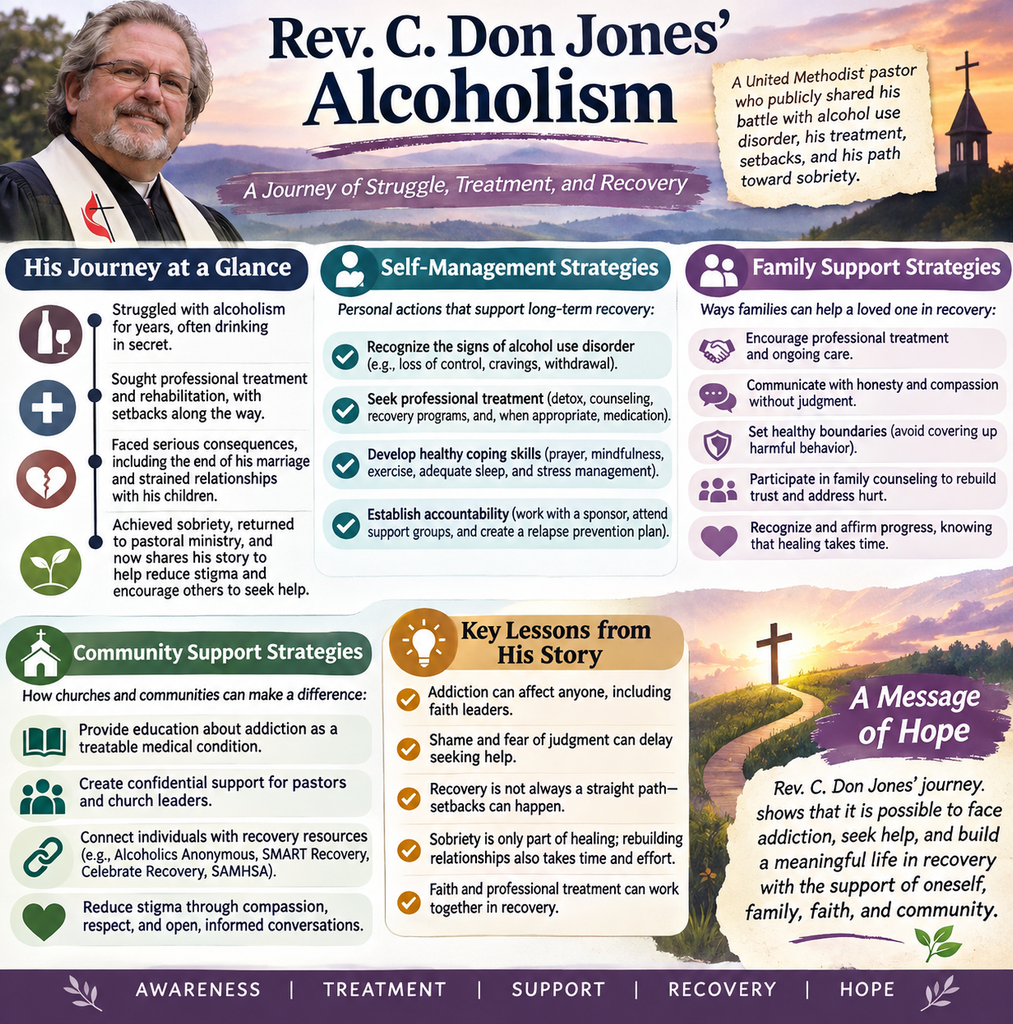
Alcohol addiction does not discriminate based on profession, religious beliefs, education, or social status. Even individuals dedicated to helping others can experience substance use disorders. The story of Rev. C. Don Jones illustrates how alcoholism can affect spiritual leaders, their families, and their communities.
A United Methodist pastor in East Tennessee, Rev. Jones publicly shared his struggle with alcohol use disorder in his 2023 memoir, The Sun Still Shines: The Legend of a Drunken Pastor. His account describes repeated attempts at rehabilitation, setbacks, damaged relationships, and the difficult process of rebuilding his life.
His experience highlights an important message: Faith does not make someone immune to addiction, and seeking professional treatment is not a sign of spiritual weakness. United Methodist News Service+1
Understanding Rev. C. Don Jones’ Alcoholism Journey
For years, Rev. Jones struggled with excessive alcohol consumption while continuing his responsibilities as a pastor. According to his published interviews, he often drank alone and concealed the severity of his alcohol use from church members and colleagues.
Eventually, alcohol-related health problems and withdrawal symptoms interfered with his ministry. His situation became increasingly difficult to hide, leading to conversations with church leadership and efforts to obtain professional help.
His recovery was not immediate. Jones described an approximately eight-month period involving treatment programs, repeated returns to drinking, and significant personal consequences.
Although he eventually achieved sobriety and returned to pastoral ministry, his marriage ended, and he acknowledged the ongoing work required to rebuild relationships with his children. United Methodist News Service+1
His story reveals several important lessons:
- Addiction can develop even among individuals with strong religious convictions.
- Shame and fear of judgment can discourage people from seeking treatment.
- Professional responsibilities and social expectations may contribute to emotional isolation.
- Returning to alcohol use does not mean that long-term recovery is impossible.
- Sobriety does not automatically repair damaged relationships.
- Recovery requires ongoing commitment, accountability, and appropriate support.
The Hidden Pressures of Religious Leadership
Pastors are often expected to demonstrate emotional strength, spiritual wisdom, and moral leadership. However, these expectations can make it difficult to acknowledge personal struggles.
Rev. Jones has discussed how isolation among clergy may contribute to addiction-related problems. Religious leaders may hesitate to disclose substance use because they fear losing their careers, disappointing congregations, or damaging their reputations.
Several factors can increase vulnerability to problematic alcohol use:
- Emotional exhaustion: Continually supporting others through grief, illness, and personal crises can contribute to chronic stress.
- Social isolation: Religious leaders may struggle to find trusted individuals with whom they can discuss their problems.
- Fear of judgment: Concerns about reputation or professional consequences can delay treatment.
- Unhealthy coping mechanisms: Alcohol may become a way to temporarily escape anxiety, loneliness, or emotional discomfort.
- Limited personal boundaries: Excessive professional responsibilities can interfere with rest, relationships, and self-care.
These pressures do not inevitably cause alcoholism, but they can contribute to conditions in which unhealthy coping behaviors develop.
Self-Management Strategies: Taking Responsibility for Recovery
Self-management is an important component of long-term alcohol addiction recovery. It involves recognizing harmful drinking patterns, seeking appropriate treatment, developing coping skills, and maintaining accountability.
Rev. Jones’ experience demonstrates that acknowledging addiction is only the beginning. Recovery requires continued attention to emotional health, behavior, and relationships.
1. Recognize the Signs of Alcohol Use Disorder
Individuals experiencing alcohol-related problems may minimize their drinking or believe they can stop whenever they choose.
Warning signs include:
- Drinking more alcohol than intended.
- Repeated unsuccessful attempts to reduce consumption.
- Concealing alcohol use from family members or colleagues.
- Experiencing cravings or withdrawal symptoms.
- Continuing to drink despite medical, professional, or relationship problems.
- Neglecting responsibilities because of alcohol consumption.
Recognizing these patterns can encourage earlier intervention.
2. Seek Professional Addiction Treatment
Evidence-based treatment can improve recovery outcomes.
Depending on individual needs, treatment may include:
- Medically supervised alcohol withdrawal management.
- Cognitive behavioral therapy (CBT).
- Motivational interviewing.
- Individual or group counseling.
- Medications such as naltrexone or acamprosate.
- Residential or outpatient rehabilitation programs.
Important: Abruptly stopping alcohol after prolonged heavy drinking can cause dangerous withdrawal, including seizures and delirium tremens. Individuals at risk should receive medical evaluation before attempting withdrawal.
3. Develop Healthy Coping Mechanisms
Alcohol may temporarily numb emotional distress, but it often worsens anxiety, depression, sleep disturbances, and relationship difficulties.
Healthier coping strategies include:
- Practicing mindfulness, meditation, or prayer.
- Engaging in regular physical activity.
- Maintaining consistent sleep routines.
- Identifying emotional triggers.
- Participating in counseling.
- Building meaningful relationships outside professional responsibilities.
For individuals who value spirituality, religious practices can complement medical treatment and psychological support.
4. Establish Accountability and Relapse Prevention
Rev. Jones discussed continuing to work with a recovery sponsor even after achieving sobriety.
A relapse prevention plan may include identifying high-risk situations, recognizing early warning signs, maintaining recovery appointments, and contacting supportive individuals when cravings intensify.
Returning to alcohol use should prompt reassessment of the treatment plan rather than abandonment of recovery efforts.
Family Support Strategies: Rebuilding Trust and Relationships
Alcohol addiction affects more than the individual who drinks. Family members may experience anxiety, disappointment, emotional exhaustion, financial difficulties, and a loss of trust.
Rev. Jones acknowledged that alcoholism contributed to the breakdown of his marriage and strained his relationships with his children.
His experience demonstrates that achieving sobriety and repairing family relationships are related but separate processes.
How Families Can Support Recovery
Families can provide meaningful assistance while protecting their own emotional well-being.
- Encourage professional treatment: Support access to addiction specialists, counseling, and recovery programs.
- Communicate without judgment: Discuss concerning behaviors without insults, humiliation, or threats.
- Establish healthy boundaries: Avoid covering up harmful behavior or accepting unsafe situations.
- Participate in family counseling: Address damaged trust, communication difficulties, and unresolved emotional pain.
- Recognize positive progress: Acknowledge consistent recovery efforts without expecting immediate perfection.
- Seek independent support: Family members may benefit from Al-Anon, individual therapy, or other support services.
Understanding Forgiveness and Accountability
Forgiveness can be meaningful in recovery, but it cannot be demanded.
Individuals recovering from addiction may need to demonstrate consistent behavioral changes over time before family members feel comfortable rebuilding trust.
Families also have the right to maintain boundaries, including limiting contact when necessary for emotional or physical safety.
Recovery is not simply about stopping alcohol consumption. It also involves learning how to develop healthier relationships and accept responsibility for past behavior.
Community Support Strategies: Creating a Safe Environment for Recovery
Communities play an important role in reducing addiction-related stigma and improving access to treatment.
Rev. Jones’ story is particularly relevant to religious organizations because faith communities often serve as important sources of emotional and social support.
However, churches and other religious institutions may unintentionally discourage treatment when addiction is viewed primarily as a moral or spiritual failure.
1. Promote Addiction Education Within Faith Communities
Churches can educate congregations about alcohol use disorder as a treatable medical condition involving biological, psychological, and social factors.
Educational initiatives may include:
- Addiction awareness workshops.
- Mental health and substance use education.
- Guest presentations by addiction professionals.
- Confidential referrals to treatment services.
- Training on recognizing warning signs of substance use disorders.
2. Establish Confidential Support for Religious Leaders
Pastors and other spiritual leaders need safe environments where they can discuss emotional distress without unnecessary public exposure.
Religious organizations can provide access to confidential counseling, peer support networks, and professional mental health services.
Protecting confidentiality while addressing legitimate safety and professional responsibilities can encourage earlier help-seeking.
3. Connect Individuals With Recovery Resources
Community organizations can collaborate with healthcare providers, addiction treatment centers, and peer recovery programs.
Examples include:
- Alcoholics Anonymous (AA) — Peer support focused on recovery from alcohol addiction.
- SMART Recovery — Evidence-informed mutual support emphasizing practical behavioral strategies.
- Celebrate Recovery — A Christian-oriented recovery support program.
- SAMHSA — Information and referral resources for mental health and substance use treatment.
Faith-based programs may provide spiritual encouragement and social connection, but they should not replace medically indicated withdrawal management or evidence-based addiction treatment.
4. Reduce Stigma Through Compassion and Education
When individuals feel judged, they may become less willing to disclose substance use or seek professional help.
Communities can help by using respectful language, protecting privacy, encouraging treatment, and recognizing that recovery is often a long-term process.
Rev. Jones’ willingness to discuss his experiences publicly provides an opportunity for faith communities to reconsider how they respond to addiction among clergy.
Challenges and Barriers to Long-Term Recovery
Although recovery is possible, individuals may encounter significant barriers.
| Challenge | Supportive strategy |
|---|---|
| Shame and guilt | Counseling and compassionate peer support |
| Fear of professional consequences | Confidential treatment pathways and fair workplace policies |
| Alcohol cravings | Behavioral therapy and appropriate medication |
| Family conflict | Family counseling and healthy boundaries |
| Social isolation | Peer recovery groups and meaningful community connections |
| Return to drinking | Prompt reassessment and adjustment of treatment |
| Financial barriers | Community clinics, insurance navigation, and affordable treatment programs |
Jones also criticized aspects of his rehabilitation experiences, raising concerns about patient treatment and the qualifications of some staff members. His account emphasizes the importance of choosing programs with qualified clinicians, evidence-based practices, and appropriate patient protections. United Methodist News Service
Lessons From Rev. C. Don Jones’ Recovery Journey
Rev. Jones’ story provides several lessons for individuals experiencing addiction, their families, and the communities that support them.
First, addiction can affect anyone, regardless of spiritual commitment or professional achievements.
Second, seeking help requires courage, especially when individuals fear judgment or public embarrassment.
Third, recovery is not always straightforward. Setbacks may occur, and treatment plans sometimes need adjustment.
Fourth, sobriety is only one component of healing. Rebuilding emotional stability, restoring relationships, and developing healthier coping strategies are equally important.
Finally, religious faith and professional addiction treatment do not need to compete. For individuals who value spirituality, both can contribute to a comprehensive recovery plan.
Conclusion: Faith, Healing, and the Opportunity to Begin Again
Rev. C. Don Jones’ battle with alcoholism demonstrates that addiction can profoundly affect even those who dedicate their lives to helping others.
His experiences with treatment, repeated setbacks, family difficulties, and eventual sobriety highlight both the challenges and possibilities of recovery.
Through self-management, individuals can develop healthier coping mechanisms and maintain accountability. Through family support, relationships may gradually heal. Through community involvement, people experiencing addiction can access treatment, encouragement, and meaningful connections.
His journey also challenges faith communities to replace silence and stigma with education, compassion, and practical assistance.
Addiction does not erase a person’s worth, and past mistakes do not have to determine the future. With appropriate treatment, support, and perseverance, rebuilding a meaningful life is possible.
Addiction Recovery Resources
For individuals or families seeking help in the United States, the following resources may be useful:
- SAMHSA National Helpline: 1-800-662-HELP (4357), for confidential treatment referrals and information.
- FindTreatment.gov: Find substance use treatment services.
- Alcoholics Anonymous: Find AA meetings and resources.
- SMART Recovery: Explore recovery meetings and tools.
- 988 Suicide & Crisis Lifeline: Call or text 988 for immediate emotional crisis support.
Frequently Asked Questions and Answers
Understanding Rev. C. Don Jones’ Alcoholism
1. Who is Rev. C. Don Jones?
Rev. C. Don Jones is a United Methodist pastor and author who publicly shared his experiences with alcoholism, treatment, and recovery. His story addresses the challenges of managing alcohol addiction while serving as a religious leader.
Through his writing and interviews, Jones has encouraged conversations about addiction, stigma, and the importance of seeking professional help.
2. What caused Rev. C. Don Jones to struggle with alcoholism?
The precise causes of Jones’ alcohol use disorder cannot be established from his public story alone.
Alcohol addiction typically develops through a combination of factors, including:
- Genetic vulnerability and changes in brain reward pathways.
- Chronic stress and emotional distress.
- Environmental influences and drinking patterns.
- Social isolation and limited coping resources.
- Coexisting mental health conditions in some individuals.
For clergy, the emotional responsibilities of religious leadership and fear of public judgment may create additional barriers to acknowledging problematic drinking.
3. Did Rev. C. Don Jones hide his alcoholism from his congregation?
According to his public accounts, Jones concealed aspects of his alcohol consumption while continuing his pastoral responsibilities.
Fear of disappointing church members, damaging professional credibility, and facing judgment can make it difficult for religious leaders to acknowledge substance use problems.
His experience demonstrates why confidential counseling and supportive treatment environments are important.
4. How did alcoholism affect Rev. C. Don Jones’ personal and professional life?
Jones has described significant consequences associated with his alcohol addiction, including difficulties involving his ministry, marriage, and relationships with his children.
Alcohol use disorder can affect multiple areas of life, including physical health, emotional stability, professional responsibilities, financial security, and family relationships.
His experiences emphasize that achieving sobriety is only one component of recovery. Rebuilding relationships and restoring trust often require additional time and effort.
5. Did Rev. C. Don Jones seek professional addiction treatment?
Yes. Jones has publicly discussed receiving professional treatment and participating in rehabilitation programs.
His experiences included setbacks, demonstrating that recovery does not always follow a straightforward path.
Professional alcohol addiction treatment may involve medical withdrawal management, behavioral therapy, medication, and ongoing recovery support.
6. Did Rev. C. Don Jones experience relapses during recovery?
Jones has described repeated returns to drinking while attempting to achieve sobriety.
Returning to alcohol use can occur during recovery and should prompt reassessment of triggers, coping strategies, treatment effectiveness, and available support.
A relapse does not mean recovery is impossible. However, it can carry serious medical risks and should be addressed promptly.
7. Was Rev. C. Don Jones able to return to pastoral ministry?
Jones has described achieving sobriety and returning to pastoral work.
His experiences illustrate how recovery may allow individuals to rebuild meaningful aspects of their lives, although the process may involve continuing challenges.
Recovery does not erase past consequences, but it can create opportunities for personal growth, accountability, and renewed purpose.
8. Did Rev. C. Don Jones write a book about his alcoholism?
Yes. Jones wrote The Sun Still Shines: The Legend of a Drunken Pastor, a memoir exploring his experiences with alcoholism, treatment, setbacks, and recovery.
His book addresses the challenges of addiction within religious leadership and the importance of confronting substance use problems rather than hiding them.
Self-Management and Addiction Recovery
9. What self-management strategies can help individuals recovering from alcoholism?
Effective self-management involves developing daily habits that support physical health, emotional stability, and long-term sobriety.
Helpful strategies include:
- Recognizing personal drinking triggers and cravings.
- Attending regular counseling or treatment appointments.
- Developing a personalized relapse prevention plan.
- Practicing mindfulness, prayer, or meditation.
- Maintaining healthy sleep and exercise routines.
- Participating in recovery support groups.
- Seeking help promptly when warning signs appear.
Self-management works best when combined with appropriate professional treatment and social support.
10. What medications can help treat alcohol use disorder?
Several FDA-approved medications can support recovery:
- Naltrexone: Can reduce alcohol cravings and the rewarding effects of drinking.
- Acamprosate: Helps support abstinence after alcohol cessation.
- Disulfiram: Produces unpleasant physical reactions when alcohol is consumed and may help selected patients maintain abstinence.
Medication selection depends on medical history, liver and kidney function, treatment goals, and other medications.
These are general treatment options, not medications confirmed to have been used by Rev. Jones.
11. Can someone safely stop drinking alcohol without medical supervision?
Not always. Individuals who drink heavily or have developed physical dependence may experience dangerous alcohol withdrawal.
Symptoms can include tremors, sweating, nausea, anxiety, rapid heartbeat, seizures, and delirium tremens.
People with significant alcohol dependence should receive medical evaluation before stopping alcohol abruptly. Seizures, confusion, hallucinations, or severe withdrawal symptoms require emergency medical attention.
12. How can someone prevent relapse after achieving sobriety?
Relapse prevention involves recognizing high-risk situations and developing strategies before cravings become overwhelming.
An effective plan may include:
- Identifying emotional and environmental triggers.
- Avoiding high-risk drinking situations when possible.
- Maintaining regular treatment appointments.
- Building a reliable support network.
- Developing alternative coping behaviors.
- Creating a plan for responding to a lapse quickly.
Jones discussed maintaining a recovery sponsor and recognizing how despair could threaten his sobriety. United Methodist News Service
Family Support and Healing
13. How did Rev. C. Don Jones’ alcoholism affect his family?
According to a 2023 United Methodist News interview, Jones described the end of his marriage and difficulties in his relationships with his children. He also reported that his relationships with his children had improved. United Methodist News Service
His experience demonstrates that addiction can have lasting emotional and relational consequences even after an individual achieves sobriety.
14. How can family members support someone recovering from alcoholism?
Families can help by providing encouragement while maintaining appropriate boundaries.
Important strategies include:
- Encouraging professional addiction treatment.
- Communicating respectfully without blaming or shaming.
- Avoiding behaviors that conceal or enable harmful drinking.
- Participating in family counseling when appropriate.
- Recognizing recovery progress.
- Seeking their own emotional support.
Family members cannot control another person’s recovery, but they can create an environment that supports healthier decisions.
15. Can family relationships recover after years of alcoholism?
Yes, relationships can improve, although reconciliation is not guaranteed.
Rebuilding trust usually requires consistent behavior, honest communication, accountability, and respect for boundaries.
Family therapy may help individuals address unresolved conflicts and develop healthier communication patterns.
Forgiveness and reconciliation should occur voluntarily rather than through pressure.
Faith and Community Support
16. What role did faith play in Rev. C. Don Jones’ recovery?
Jones has described rebuilding his life and growing in faith as important themes in his recovery.
His memoir emphasizes seeking medical, psychological, and spiritual assistance rather than relying on religious belief alone. Read free for 30 days
Faith can provide meaning, hope, and community connection, while evidence-based treatment addresses the medical and psychological components of addiction.
17. Can religious leaders experience alcohol addiction despite strong spiritual beliefs?
Yes. Alcohol use disorder is a medical condition that can affect individuals regardless of religious commitment, profession, education, or social standing.
Strong spiritual beliefs do not eliminate biological vulnerability, emotional distress, or environmental risk factors.
Religious leaders deserve the same access to confidential, compassionate addiction treatment as anyone else.
18. How can churches support pastors struggling with alcoholism?
Churches and religious organizations can promote healthier environments by providing:
- Confidential mental health and addiction counseling referrals.
- Education about substance use disorders.
- Peer accountability and clergy support groups.
- Access to professional treatment and appropriate medical leave.
- Nonjudgmental communication.
- Clear policies addressing safety and professional responsibilities.
Religious organizations should recognize addiction as a health condition while maintaining appropriate accountability.
19. What community resources are available for alcohol addiction recovery?
Several organizations provide support for individuals and families.
- Alcoholics Anonymous: Peer recovery meetings and sponsorship.
- SMART Recovery: Mutual support emphasizing practical coping and behavioral strategies.
- Celebrate Recovery: Christian-oriented recovery support.
- Al-Anon Family Groups: Support for individuals affected by another person’s drinking.
- SAMHSA: Treatment referrals and addiction-related educational resources.
Combining community support with appropriate medical and psychological treatment can strengthen recovery.
20. What can communities learn from Rev. C. Don Jones’ experience?
Jones’ experience demonstrates the importance of reducing stigma and making addiction treatment accessible.
Communities can support recovery by encouraging early intervention, respecting confidentiality, providing education, and creating opportunities for meaningful social connection.
His public account also challenges the belief that people in leadership positions should be able to overcome addiction without assistance.
Recovery, Hope, and Long-Term Healing
21. Is alcoholism a disease or a personal choice?
Alcohol use disorder is a recognized medical condition involving changes in brain function, behavior, and the ability to control alcohol consumption.
Although individuals make decisions about drinking and treatment, addiction involves biological and psychological processes that can impair control over alcohol use.
Understanding addiction as a treatable health condition encourages evidence-based care rather than punishment or shame.
22. Can someone recover from alcoholism after multiple treatment attempts?
Yes. Some individuals require multiple treatment episodes or adjustments before achieving sustained recovery.
Returning to alcohol use does not eliminate the possibility of future improvement.
Treatment may need to address underlying mental health conditions, medication options, environmental triggers, and the adequacy of recovery support.
23. What is the most important lesson from Rev. C. Don Jones’ recovery journey?
One of the most meaningful lessons is that asking for help is an act of courage, not weakness.
Jones’ experiences illustrate that individuals can confront addiction, participate in treatment, and rebuild meaningful lives despite serious setbacks.
His story also emphasizes the importance of honesty, accountability, supportive relationships, and access to qualified healthcare professionals.
24. What should someone do if they recognize signs of alcoholism in themselves?
The first step is to speak with a healthcare professional or addiction specialist.
A clinician can evaluate alcohol consumption, assess withdrawal risk, screen for coexisting conditions, and recommend appropriate treatment.
Individuals can also contact SAMHSA’s National Helpline at 1-800-662-HELP (4357) or visit FindTreatment.gov to locate treatment services.
Seeking help early can reduce the risk of serious medical and social consequences.
Video: