Recovery from alcohol or drug addiction is a journey that requires commitment, patience, and consistent effort. While long-term sobriety is an important goal, focusing exclusively on staying sober forever can sometimes feel overwhelming, especially during early recovery.
This is where micro-goals can make a meaningful difference.
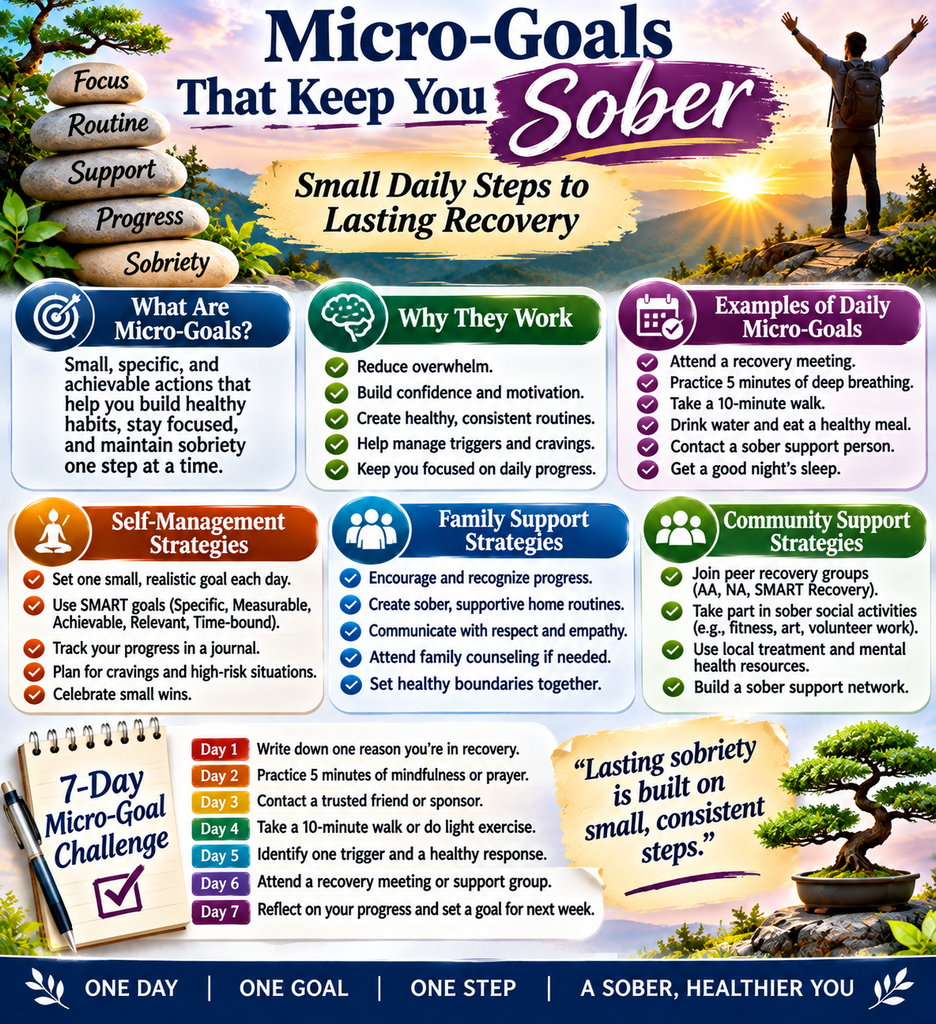
Micro-goals are small, specific, achievable actions that help individuals build healthier habits, strengthen confidence, and maintain progress in addiction recovery. Instead of concentrating on major lifestyle changes all at once, individuals focus on manageable steps they can accomplish each day.
For example, rather than worrying about maintaining sobriety for an entire year, someone might focus on attending one recovery meeting, practicing five minutes of mindfulness, or contacting a supportive friend when cravings arise.
These small accomplishments can create a sense of progress and reinforce positive behaviors.
Micro-goals are particularly valuable because addiction recovery involves more than simply avoiding substances. It also requires developing healthier coping mechanisms, rebuilding relationships, improving emotional well-being, and creating meaningful daily routines.
Lasting recovery is built through consistent actions, not perfection. Every small step toward a healthier life matters.
Understanding Micro-Goals in Addiction Recovery
Micro-goals are short-term objectives designed to make larger recovery goals easier to manage.
They are based on the principle that breaking complex challenges into smaller tasks can reduce feelings of overwhelm and improve motivation.
For individuals recovering from substance use disorders, micro-goals can help create structure during periods of uncertainty.
Instead of setting a broad goal such as “I will completely change my life,” someone might choose a more specific action such as “I will take a 10-minute walk after dinner instead of drinking.”
Examples of Recovery Micro-Goals
- Drink a glass of water after waking up.
- Practice deep breathing for three minutes.
- Attend one recovery meeting this week.
- Contact a trusted supporter when cravings increase.
- Write down one emotional trigger each day.
- Take a 10-minute walk to reduce stress.
- Prepare one healthy meal.
- Spend five minutes reflecting on personal progress.
- Go to bed at a consistent time.
- Complete one task that supports a recovery goal.
Although these actions may seem simple, repeating them can help establish healthier routines and increase confidence.
The Science Behind Small Goals and Behavioral Change
Micro-goals are consistent with established behavioral strategies such as goal setting, self-monitoring, behavioral activation, and reinforcement.
When individuals complete manageable tasks, they experience a sense of accomplishment that can increase motivation to continue.
From a behavioral perspective, successful actions may strengthen the likelihood of repeating healthier habits.
However, micro-goals should not be described as directly repairing the brain’s reward system or guaranteeing lasting sobriety. Recovery involves complex biological, psychological, and social processes.
Why Micro-Goals Can Help
- Reduce overwhelm: Smaller tasks may feel more achievable than major lifestyle changes.
- Build confidence: Completing realistic goals can strengthen self-efficacy.
- Create structure: Consistent routines reduce unplanned time that may be associated with triggers.
- Improve emotional regulation: Small coping exercises can help individuals manage stress.
- Encourage accountability: Progress can be monitored and discussed with treatment providers.
- Support motivation: Achievable goals create opportunities to recognize positive behavior.
Micro-goals are most effective when they are realistic, personally meaningful, and integrated into a comprehensive recovery plan.
Self-Management Strategies: Using Micro-Goals to Strengthen Sobriety
Self-management involves actively participating in recovery by recognizing triggers, developing coping skills, monitoring progress, and maintaining healthy routines.
Micro-goals can make these responsibilities more manageable.
1. Begin With One Small Daily Goal
Trying to change too many behaviors simultaneously can increase frustration.
Instead, individuals can begin with one manageable activity that supports recovery.
For example:
- Take a five-minute walk each morning.
- Drink water before reaching for a caffeinated beverage.
- Write down one positive accomplishment before bedtime.
- Practice a brief relaxation exercise after work.
- Spend five minutes planning the following day.
Once the behavior becomes consistent, you can introduce additional goals.
2. Use SMART Goals for Recovery
SMART goals are specific, measurable, achievable, relevant, and time-bound.
For example, instead of saying, “I want to manage stress better,” a person might establish the following goal:
“I will practice deep breathing for five minutes after work on four days this week.”
This goal identifies a specific behavior, provides a measurable target, and establishes a timeframe.
SMART goals can be especially helpful when working with counselors, recovery coaches, or treatment teams.
3. Create Micro-Goals for Managing Cravings
Cravings can be uncomfortable, especially during early recovery.
Having a predetermined response can reduce impulsive decisions.
Helpful craving-management micro-goals include:
- Pause for two minutes before deciding.
- Move away from a triggering environment.
- Practice slow breathing.
- Contact a trusted supporter.
- Engage in a distracting activity for 10 minutes.
- Use a coping strategy developed with a counselor.
- Follow an individualized medication or treatment plan.
Cravings may fluctuate in intensity and duration. If they remain severe or frequent, professional reassessment may be necessary.
4. Track Progress Without Becoming Overly Focused on Perfection
Monitoring recovery goals can help individuals recognize patterns and identify strategies that work.
A simple recovery journal might include:
- Today’s micro-goal.
- Whether the goal was completed.
- Emotional triggers encountered.
- Coping strategies used.
- One positive accomplishment.
- A goal for tomorrow.
Missing a goal does not mean recovery has failed.
Instead, individuals can adjust the goal to make it more realistic.
5. Celebrate Small Victories
Recognizing accomplishments can reinforce healthy behavior.
Examples include completing a week of counseling appointments, attending a recovery meeting despite anxiety, or successfully contacting someone during a craving.
Healthy rewards might include enjoying a favorite meal, watching a movie, spending time outdoors, or purchasing an inexpensive personal item.
Celebrations should avoid alcohol, drugs, or activities that create unnecessary relapse risk.
Family Support Strategies: Encouraging Progress Without Pressure
Family members can play an important role in supporting individuals who use micro-goals during recovery.
However, encouragement should not become excessive monitoring or pressure.
The goal is to create a supportive environment where individuals feel respected, motivated, and accountable.
1. Encourage Realistic Expectations
Families may hope for immediate changes after someone enters treatment.
However, recovery often involves gradual improvements in behavior, emotional stability, and relationships.
Family members can help by recognizing that small achievements are meaningful.
For example, attending one counseling appointment or maintaining a healthy sleep routine may represent important progress.
2. Recognize Positive Behaviors
Positive reinforcement can strengthen motivation.
Families can acknowledge:
- Attending treatment appointments.
- Using healthy coping strategies.
- Communicating honestly.
- Following through on responsibilities.
- Participating in family activities.
- Asking for help when needed.
Recognition should be sincere and should not minimize ongoing challenges.
3. Create Shared Family Micro-Goals
Family members can participate in small activities that encourage connection.
Examples include:
- Eating one meal together without distractions.
- Taking a 15-minute evening walk.
- Scheduling a weekly family check-in.
- Planning one substance-free activity each weekend.
- Practicing respectful communication during disagreements.
Shared goals can help rebuild relationships without placing all responsibility for family healing on one person.
4. Maintain Healthy Boundaries
Supporting recovery does not mean controlling another person’s behavior.
Families should avoid constant questioning, surveillance, or making affection dependent on completing recovery tasks.
Healthy boundaries can promote safety and accountability while preserving personal autonomy.
5. Encourage Professional Support
Micro-goals are helpful behavioral tools, but they do not replace addiction treatment.
Families can encourage participation in counseling, medication management, recovery groups, and other appropriate services.
Community Support Strategies: Creating Environments That Encourage Small Wins
Recovery is influenced by social relationships, access to healthcare, housing stability, employment, and community resources.
Supportive communities can help individuals achieve micro-goals by providing opportunities for connection and meaningful participation.
1. Promote Peer Recovery Support
Peer recovery groups can help individuals set manageable goals and stay accountable.
Examples include Alcoholics Anonymous, Narcotics Anonymous, SMART Recovery, and other community recovery organizations.
A person might set a goal of attending one meeting this week or introducing themselves to one supportive participant.
2. Offer Accessible Recovery Activities
Communities can organize low-cost activities that encourage healthy routines.
Examples include:
- Walking groups.
- Fitness classes.
- Art and music workshops.
- Volunteer opportunities.
- Recovery-friendly social gatherings.
- Community gardening.
- Educational workshops.
These activities can reduce isolation and provide alternatives to substance-centered social environments.
3. Encourage Recovery-Friendly Workplaces
Employers can support recovery by providing confidential employee assistance programs, flexible scheduling for treatment, and respectful workplace policies.
A workplace micro-goal might involve taking a short stress-management break, using a healthy coping strategy during a difficult shift, or attending a scheduled counseling appointment.
4. Connect Individuals With Professional Resources
Community organizations can help individuals identify treatment providers, transportation assistance, affordable counseling, and peer recovery services.
Addressing practical barriers can make recovery goals more achievable.
5. Reduce Addiction-Related Stigma
Communities should recognize that recovery progress varies among individuals.
Using respectful language, encouraging treatment, and avoiding judgment can create environments where people feel comfortable asking for help.
A 7-Day Micro-Goal Challenge for Sobriety
The following challenge provides examples of small, manageable activities that may support recovery.
Your 7-Day Recovery Challenge
Interactive checklist
0 of 7 goals completed
Day 1
Write down one personal reason for recovery.
Day 2
Practice five minutes of mindfulness or deep breathing.
Day 3
Contact one trusted friend, sponsor, or supporter.
Day 4
Take a 10-minute walk or do gentle physical activity.
Day 5
Identify one trigger and write down a coping response.
Day 6
Attend a recovery meeting or connect with a support resource.
Day 7
Reflect on your progress and choose one goal for next week.
This challenge is flexible. Individuals can modify activities to accommodate their health, treatment needs, and personal circumstances.
Common Challenges When Using Micro-Goals
Although micro-goals can be helpful, individuals may encounter obstacles.
| Challenge | Helpful strategy |
|---|---|
| Feeling overwhelmed | Begin with one simple goal |
| Low motivation | Choose an activity requiring only a few minutes |
| Forgetting goals | Use reminders or connect goals to daily routines |
| Perfectionism | Focus on progress rather than flawless performance |
| Strong cravings | Follow a craving-management plan and contact support |
| Emotional distress | Seek counseling and use coping skills |
| Limited family support | Connect with peers or recovery professionals |
| Returning to substance use | Reassess treatment and adjust goals |
When Micro-Goals Are Not Enough
Micro-goals can support recovery, but they are not a substitute for medical treatment.
Individuals experiencing severe cravings, repeated returns to substance use, withdrawal symptoms, depression, or significant functional impairment may need additional clinical support.
Evidence-based treatments include behavioral therapy, medications for alcohol or opioid use disorder, and integrated treatment for co-occurring mental health conditions.
Alcohol and benzodiazepine withdrawal can be life-threatening and may require medical supervision. For opioid use disorder, medications such as buprenorphine and methadone are especially important because they reduce overdose risk.
Recovery goals should complement these treatments rather than replace them.
Lessons From Micro-Goals in Addiction Recovery
Micro-goals provide several important lessons for individuals, families, and communities.
First, small actions can create meaningful progress. Completing manageable activities helps individuals develop healthier routines.
Second, consistency is more important than perfection. Missing a goal does not erase previous achievements.
Third, emotional well-being matters. Recovery involves developing healthier responses to stress, anxiety, and cravings.
Fourth, supportive relationships strengthen motivation. Family members, friends, and recovery peers can provide encouragement and accountability.
Finally, recovery is an ongoing process. Small daily actions can support larger goals involving health, relationships, employment, and personal fulfillment.
Conclusion: One Small Goal at a Time
Maintaining sobriety can feel overwhelming when individuals focus exclusively on long-term expectations.
Micro-goals offer a practical way to break recovery into smaller, achievable actions.
Whether someone practices five minutes of mindfulness, attends a recovery meeting, contacts a trusted friend, or develops a healthier evening routine, each action can contribute to a more structured and supportive recovery process.
Self-management helps individuals build confidence and coping skills. Family support encourages positive behavior while maintaining healthy boundaries. Community involvement provides opportunities for connection, access to treatment, and meaningful participation.
Micro-goals do not guarantee sobriety, but they can be valuable components of an individualized recovery plan.
You do not have to change your entire life in one day. Start with one healthy decision, one manageable goal, and one step forward.
Addiction Recovery Resources
- FindTreatment.gov — Locate addiction and mental health treatment services.
- Alcoholics Anonymous — Alcohol recovery peer support.
- Narcotics Anonymous — Drug recovery peer support.
- SMART Recovery — Recovery meetings and behavioral coping tools.
- National Institute on Alcohol Abuse and Alcoholism — Alcohol treatment and recovery education.
For confidential treatment information and referrals in the United States, call SAMHSA’s National Helpline at 1-800-662-HELP (4357).
Frequently Asked Questions and Answers
Maintaining sobriety can feel overwhelming, especially during early addiction recovery. The idea of staying sober for months, years, or an entire lifetime may create anxiety, uncertainty, and fear of failure.
Micro-goals offer a practical approach to recovery by breaking large challenges into small, manageable daily actions. Instead of focusing on every future obstacle, individuals can concentrate on achievable steps that strengthen healthy habits, build confidence, and support long-term recovery.
The following 25 frequently asked questions explain how micro-goals work, how they can help manage cravings, and how individuals, families, and communities can use them to support lasting sobriety.
Understanding Micro-Goals in Addiction Recovery
1. What are micro-goals in addiction recovery?
Micro-goals are small, specific, achievable actions that support larger recovery objectives.
For example, instead of setting a broad goal such as “I will completely change my life,” someone might begin with “I will attend one recovery meeting this week.”
Micro-goals help individuals focus on manageable behaviors rather than becoming overwhelmed by long-term expectations.
2. Why are micro-goals important for staying sober?
Micro-goals can help individuals establish structure, develop healthy coping skills, and recognize personal progress.
They may also reduce feelings of overwhelm by breaking difficult recovery tasks into smaller actions.
Completing realistic goals can strengthen self-confidence and encourage continued participation in treatment and recovery activities.
3. How do micro-goals help the brain during addiction recovery?
Addiction affects brain systems involved in reward, motivation, learning, and decision-making.
Micro-goals use behavioral principles such as goal setting, repetition, and positive reinforcement to encourage healthier habits.
Completing manageable activities may strengthen motivation and self-efficacy. However, micro-goals do not directly reverse addiction-related brain changes or guarantee sobriety.
4. What are examples of simple daily sobriety micro-goals?
Examples include:
- Practicing five minutes of deep breathing.
- Taking a 10-minute walk.
- Contacting a trusted recovery supporter.
- Writing down one emotional trigger.
- Attending a recovery meeting.
- Preparing one healthy meal.
- Going to bed at a consistent time.
- Completing one task that supports recovery.
The most effective goals are realistic and personally meaningful.
5. How are micro-goals different from long-term recovery goals?
Long-term goals focus on broader outcomes, such as maintaining sobriety, rebuilding relationships, or improving physical health.
Micro-goals identify small actions that help individuals work toward those outcomes.
For example, a long-term goal might be improving emotional well-being, while a micro-goal could involve practicing relaxation techniques for five minutes each evening.
6. What are SMART micro-goals?
SMART goals are:
- Specific: Clearly identify the intended action.
- Measurable: Allow progress to be tracked.
- Achievable: Match the individual’s current abilities.
- Relevant: Support meaningful recovery objectives.
- Time-bound: Include a realistic timeframe.
An example is: “I will attend one recovery support meeting by Friday evening.”
7. Can micro-goals help someone during early sobriety?
Yes. Early recovery may involve cravings, emotional changes, disrupted sleep, and difficulty establishing routines.
Micro-goals can provide structure and reduce the pressure associated with major lifestyle changes.
For example, someone might focus on attending a scheduled treatment appointment, eating regular meals, and contacting a trusted supporter.
Micro-goals should complement medical treatment, especially when withdrawal symptoms or significant substance dependence are present.
Self-Management Strategies for Maintaining Sobriety
8. How can micro-goals help manage alcohol or drug cravings?
Micro-goals can provide predetermined actions to use when cravings occur.
Examples include:
- Moving away from a triggering environment.
- Practicing slow breathing for three minutes.
- Contacting a sponsor or recovery supporter.
- Taking a brief walk.
- Using a coping strategy developed in counseling.
- Attending a recovery meeting.
Cravings vary in intensity and duration. Severe or persistent cravings may require reassessment by an addiction treatment professional.
9. How many micro-goals should someone set each day?
Starting with one to three manageable goals is often reasonable.
The appropriate number depends on individual circumstances, health, motivation, and recovery stage.
Setting too many goals may increase stress and discouragement.
It is generally more helpful to complete a few meaningful activities consistently than to create an unrealistic daily schedule.
10. Can micro-goals help prevent addiction relapse?
Micro-goals can support relapse prevention by encouraging healthy routines, coping skills, and continued engagement with recovery services.
For example, an individual might set a goal to contact a supporter whenever cravings become difficult to manage.
However, micro-goals alone do not prevent relapse. Effective relapse prevention may also require counseling, medication, peer support, and treatment for co-occurring mental health conditions.
11. What should someone do if they fail to complete a micro-goal?
Missing a goal does not mean recovery has failed.
Individuals can evaluate what made the activity difficult and adjust the goal accordingly.
For example, if a 30-minute walk feels overwhelming, reducing it to five minutes may make the activity more achievable.
The purpose of micro-goals is to encourage progress rather than perfection.
12. How can someone track their daily recovery micro-goals?
Progress can be monitored using:
- A recovery journal.
- A daily checklist.
- A calendar.
- A smartphone reminder.
- A habit-tracking application.
- A worksheet completed with a counselor.
Tracking can help identify patterns, recognize achievements, and determine when goals need adjustment.
13. Can micro-goals improve emotional well-being during recovery?
Yes. Small, meaningful activities can support emotional well-being by increasing structure, encouraging physical activity, and promoting positive experiences.
Examples include practicing mindfulness, spending time outdoors, maintaining social connections, and completing manageable responsibilities.
However, persistent depression, anxiety, or other mental health symptoms may require professional evaluation and treatment.
14. What are effective micro-goals for managing stress without alcohol or drugs?
Helpful examples include:
- Practicing deep breathing for five minutes.
- Taking a short walk after work.
- Writing down one stressful thought.
- Listening to relaxing music.
- Calling a trusted friend.
- Spending 10 minutes on a hobby.
- Practicing meditation or prayer.
These activities can help individuals develop healthier responses to stress.
15. Can micro-goals help rebuild confidence after addiction?
Yes. Repeatedly completing achievable tasks can strengthen a person’s belief in their ability to make positive changes.
This belief, known as self-efficacy, is an important psychological factor in behavior change.
Small accomplishments may help individuals recognize their progress and remain motivated during difficult periods.
Family Support Strategies
16. How can families encourage micro-goals during addiction recovery?
Families can support micro-goals by recognizing positive efforts and encouraging realistic expectations.
Helpful approaches include:
- Acknowledging small accomplishments.
- Encouraging treatment attendance.
- Offering practical assistance when requested.
- Participating in healthy family activities.
- Communicating without judgment.
- Respecting the individual’s independence.
Support should promote confidence rather than pressure.
17. What are examples of family micro-goals that support sobriety?
Families can establish shared goals such as:
- Eating one meal together each day.
- Taking a weekly family walk.
- Planning one substance-free activity each weekend.
- Having a 10-minute family check-in.
- Practicing respectful communication.
- Attending a family counseling session.
Shared activities can strengthen relationships and provide opportunities for meaningful connection.
18. Should family members monitor every recovery micro-goal?
No. Excessive monitoring can create tension, resentment, and a loss of independence.
Families should encourage accountability while respecting privacy and personal autonomy.
If progress tracking is helpful, individuals can agree voluntarily to share selected goals with family members.
19. How can micro-goals help rebuild family trust?
Trust often improves through consistent actions rather than promises alone.
Small goals involving honesty, communication, and responsibility can demonstrate meaningful behavioral changes over time.
For example, consistently attending scheduled appointments or following through on household responsibilities may help rebuild confidence.
However, family members should not be pressured to forgive or reconcile before they feel ready.
Community Support Strategies
20. How can recovery groups support micro-goals?
Peer recovery groups can provide encouragement, accountability, and opportunities to share coping strategies.
Individuals may set goals such as attending one meeting each week, introducing themselves to another participant, or contacting a sponsor during stressful situations.
Organizations such as Alcoholics Anonymous, Narcotics Anonymous, and SMART Recovery offer different approaches to peer support.
21. How can communities encourage small recovery achievements?
Communities can provide accessible activities that promote connection, healthy routines, and meaningful participation.
Examples include:
- Recovery-friendly fitness programs.
- Community walking groups.
- Art and music workshops.
- Volunteer opportunities.
- Peer mentorship programs.
- Affordable counseling services.
- Substance-free social events.
These resources can help individuals build healthier lifestyles and reduce isolation.
22. Can workplace micro-goals support addiction recovery?
Yes. Workplace micro-goals can help individuals manage stress and maintain healthy routines.
Examples include taking scheduled breaks, using brief relaxation exercises, attending treatment appointments, and establishing reasonable work-life boundaries.
Employers can support recovery through confidential employee assistance programs and appropriate accommodations.
Long-Term Sobriety and Personal Growth
23. How can micro-goals become lifelong healthy habits?
Repeatedly practicing manageable behaviors can help individuals establish consistent routines.
For example, a five-minute daily walk may gradually become a regular exercise habit.
As individuals gain confidence, they can adjust their goals to reflect changing needs and recovery priorities.
24. Are micro-goals enough to maintain long-term sobriety?
Not necessarily.
Micro-goals are supportive behavioral tools, but many individuals also benefit from professional treatment, medication, psychotherapy, peer recovery programs, and family support.
For alcohol use disorder, medications such as naltrexone and acamprosate may be appropriate.
For opioid use disorder, buprenorphine and methadone are effective treatments that reduce overdose risk.
People with significant alcohol dependence should seek medical guidance before abruptly stopping drinking because withdrawal can be dangerous.
25. What is the most important lesson about micro-goals and sobriety?
The most important lesson is that meaningful recovery progress can begin with small, achievable actions.
Individuals do not need to change every aspect of their lives immediately.
By focusing on manageable daily activities, seeking appropriate treatment, and maintaining supportive relationships, they can build healthier routines over time.
Recovery is not about being perfect every day. It is about continuing to make choices that support health, stability, and personal growth.
Video: