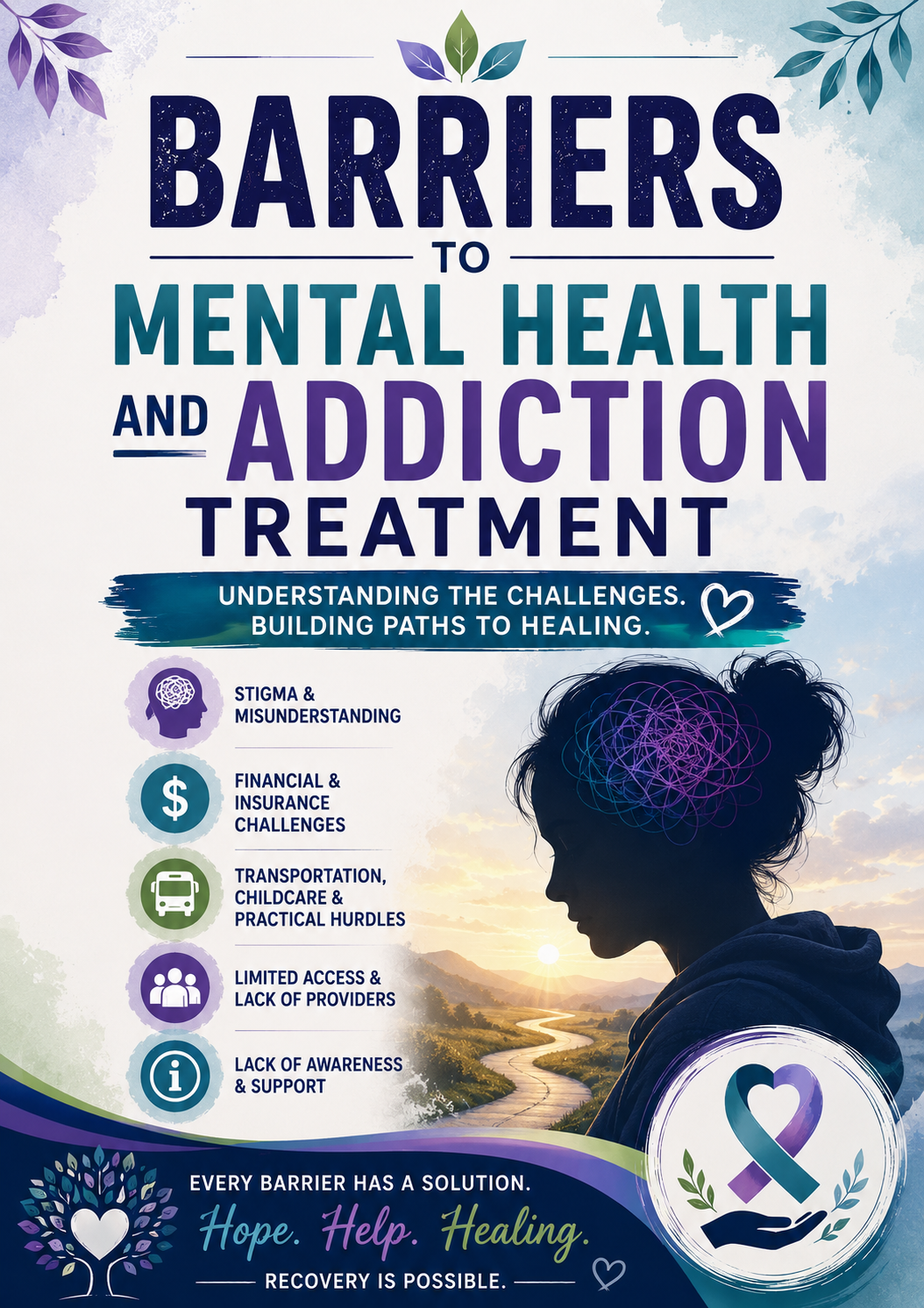
Mental health conditions and substance use disorders are among the most common and treatable health conditions, yet millions of individuals do not receive the care they need because of numerous barriers to treatment. These obstacles may include stigma, financial hardship, limited access to qualified healthcare providers, transportation difficulties, childcare responsibilities, insurance restrictions, cultural differences, and a lack of awareness about available resources. In addition, workforce shortages and fragmented healthcare systems can delay diagnosis and interrupt ongoing care. These barriers often lead to worsening symptoms, increased risk of overdose or suicide, strained family relationships, unemployment, homelessness, and reduced quality of life. Understanding the barriers to mental health and addiction treatment is essential for developing more accessible, equitable, and person-centered systems of care that support early intervention, effective treatment, and long-term recovery.
Barriers to Mental Health and Addiction Treatment
Mental health and substance use disorders are common, treatable medical conditions, yet millions of people do not receive the care they need. Barriers to treatment exist at the individual, family, community, healthcare system, and policy levels. These obstacles can delay diagnosis, interrupt treatment, and increase the risk of worsening symptoms, hospitalization, overdose, suicide, unemployment, homelessness, and family disruption. Understanding these barriers is essential for developing more accessible, equitable, and effective systems of care.
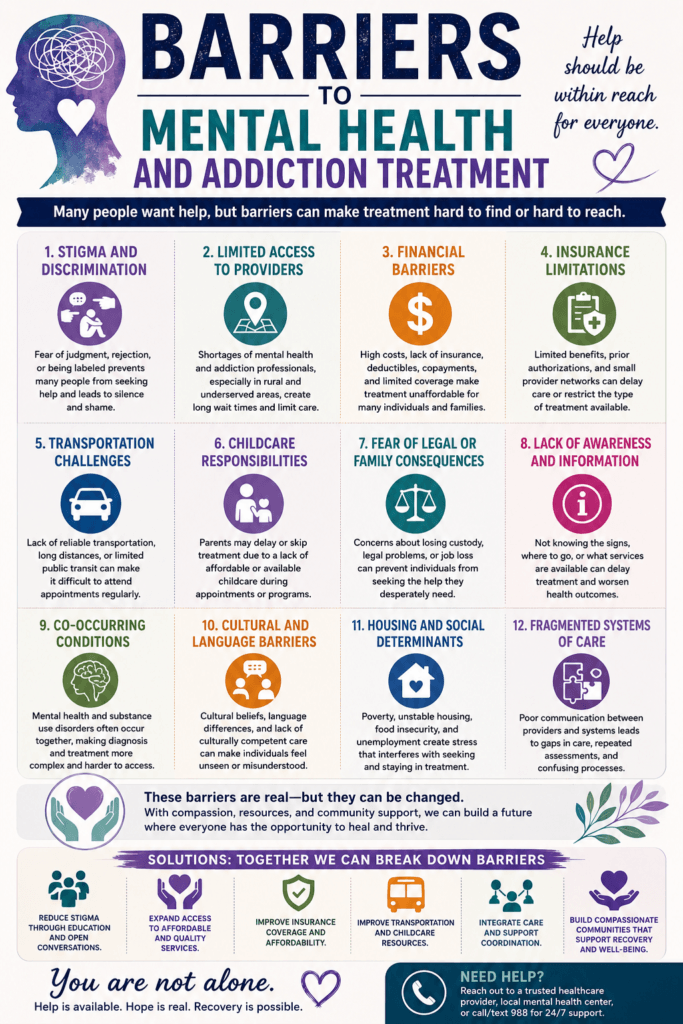
1. Stigma and Discrimination
Stigma remains one of the greatest barriers to seeking treatment. Many individuals fear being judged, labeled, or treated differently because they have a mental illness or substance use disorder. Concerns about discrimination may discourage people from discussing symptoms with healthcare providers, seeking counseling, or participating in recovery programs.
Common fears include:
- Being viewed as weak.
- Losing employment opportunities.
- Damaging personal relationships.
- Facing social rejection.
- Being treated unfairly in healthcare settings.
Reducing stigma through education and public awareness encourages earlier treatment and improves recovery outcomes.
2. Limited Access to Providers
Many communities face shortages of mental health professionals and addiction specialists. Rural and underserved areas are particularly affected, making it difficult for individuals to obtain timely care.
Workforce shortages may involve:
- Psychiatrists.
- Psychologists.
- Licensed counselors.
- Social workers.
- Addiction medicine physicians.
- Psychiatric nurse practitioners.
- Peer recovery specialists.
These shortages often result in long wait times and limited appointment availability.
3. Financial Barriers
The cost of treatment prevents many people from accessing care. Even individuals with insurance may face:
- High deductibles.
- Copayments.
- Out-of-pocket medication costs.
- Limited provider networks.
- Prior authorization requirements.
People without insurance often face even greater financial challenges.
4. Insurance Limitations
Although mental health parity laws have improved coverage, many insurance-related barriers remain, including:
- Limited numbers of in-network providers.
- Restrictions on residential treatment.
- Delays caused by prior authorization.
- Limited coverage for counseling sessions.
- Inadequate reimbursement for certain services.
These limitations can delay treatment or interrupt ongoing care.
5. Transportation Challenges
Reliable transportation is essential for attending appointments, yet many individuals face:
- Long travel distances.
- Lack of public transportation.
- Financial limitations.
- Physical disabilities.
- Rural isolation.
Missed appointments may interrupt treatment and increase the risk of relapse or worsening symptoms.
6. Childcare Responsibilities
Parents, particularly single parents, may postpone treatment because they cannot find affordable childcare while attending therapy, support groups, or medical appointments. Family-centered programs and on-site childcare services can help reduce this barrier.
7. Fear of Legal or Family Consequences
Some individuals avoid treatment because they fear:
- Losing custody of their children.
- Legal consequences related to substance use.
- Child protective services involvement.
- Employment consequences.
- Professional licensing concerns.
These fears may discourage people from seeking help even when treatment is urgently needed.
8. Co-Occurring Mental Health and Substance Use Disorders
Many individuals experience both a mental health disorder and a substance use disorder. When healthcare systems treat these conditions separately, patients may receive fragmented care, resulting in:
- Multiple providers with poor communication.
- Conflicting treatment plans.
- Delayed diagnosis.
- Lower treatment engagement.
Integrated treatment addresses both conditions simultaneously and generally leads to better outcomes.
9. Cultural and Language Barriers
Cultural beliefs, language differences, and limited access to culturally responsive care may prevent individuals from seeking treatment or fully engaging in services. Communities benefit from providers who understand diverse cultural backgrounds and offer interpretation services when needed.
10. Lack of Awareness
Some people do not recognize the signs of mental illness or addiction or may not know where to seek help. Others mistakenly believe symptoms will improve without treatment. Public education can improve recognition of early warning signs and available treatment options.
11. Workforce Burnout
Mental health and addiction professionals often experience high levels of stress and burnout due to demanding workloads, administrative burdens, and workforce shortages. Burnout contributes to staff turnover and reduces treatment capacity.
12. Housing and Social Determinants of Health
Recovery is more difficult when individuals lack stable housing or basic necessities. Barriers such as:
- Homelessness.
- Food insecurity.
- Unemployment.
- Poverty.
- Limited education.
- Unsafe living environments.
can interfere with treatment participation and long-term recovery. Addressing these social needs improves treatment outcomes.
13. Digital Access and Technology Gaps
Telehealth has expanded access to care, but not everyone can benefit. Some individuals face:
- Limited internet access.
- Lack of smartphones or computers.
- Low digital literacy.
- Privacy concerns at home.
These challenges can limit participation in virtual care.
14. Fragmented Systems of Care
Mental health, addiction treatment, primary care, hospitals, schools, and social service agencies often operate independently. Poor coordination can lead to:
- Repeated assessments.
- Delayed referrals.
- Gaps in follow-up care.
- Confusing treatment pathways.
Integrated, coordinated care helps improve continuity and patient outcomes.
15. Stigma Within Healthcare
Unfortunately, stigma can also occur within healthcare settings. Some individuals report feeling dismissed, judged, or misunderstood by healthcare professionals, which may reduce trust and discourage future treatment seeking. Ongoing education and trauma-informed care can help improve patient-provider relationships.
Strategies to Reduce Barriers
Communities, healthcare systems, and policymakers can improve access by:
- Expanding the mental health and addiction workforce.
- Improving insurance coverage and enforcing mental health parity.
- Increasing telehealth availability while addressing digital access.
- Developing integrated care models.
- Expanding family-centered treatment programs.
- Reducing stigma through education.
- Increasing transportation and childcare assistance.
- Strengthening peer recovery services.
- Addressing housing and employment needs.
- Supporting culturally responsive care.
Conclusion
Barriers to mental health and addiction treatment are complex and often interconnected. Stigma, financial limitations, provider shortages, transportation difficulties, fragmented care, and social challenges can all delay or prevent access to life-saving services. Addressing these barriers requires coordinated efforts among healthcare providers, policymakers, community organizations, employers, and families. Expanding access to evidence-based, person-centered care while reducing stigma and strengthening community resources can help ensure that more individuals receive the support they need to achieve lasting recovery and improved mental health.
Self-Management Strategies to Understand the Barriers to Mental Health and Addiction Treatment
Mental health and substance use disorders are treatable medical conditions, but many people face obstacles that delay or prevent access to care. These barriers may include stigma, financial concerns, transportation problems, limited provider availability, childcare responsibilities, or lack of information about available services. While many of these challenges are outside an individual’s control, self-management strategies can help people navigate the healthcare system, advocate for their needs, and remain engaged in treatment. Taking an active role in your care can improve access, strengthen recovery, and support long-term wellness.
1. Learn About Mental Health and Addiction
Educate yourself about mental health conditions and substance use disorders using reliable sources. Understanding that these are medical conditions—not personal failures—can reduce self-stigma and encourage you to seek appropriate treatment earlier.
2. Recognize the Need for Help
Pay attention to changes in your mood, thoughts, behavior, sleep, relationships, work performance, or substance use. Early recognition of symptoms allows you to seek help before problems become more severe. Accepting that you need support is a sign of strength, not weakness.
3. Understand Your Treatment Options
Learn about the different levels of care available, including:
- Primary care services.
- Outpatient counseling.
- Intensive outpatient programs.
- Residential treatment.
- Medication-assisted treatment.
- Peer recovery support.
- Telehealth services.
- Crisis services.
Understanding your options allows you to work with healthcare professionals to choose the level of care that best meets your needs.
4. Learn About Your Insurance Benefits
Review your insurance coverage to understand:
- Covered mental health services.
- Substance use treatment benefits.
- Medication coverage.
- Copayments and deductibles.
- In-network providers.
- Prior authorization requirements.
If you are uninsured, ask about community clinics, federally funded programs, or financial assistance resources.
5. Keep Important Health Information Organized
Maintain a folder or digital file that includes:
- Insurance information.
- Medication lists.
- Medical history.
- Appointment schedules.
- Laboratory results.
- Emergency contacts.
- Healthcare provider contact information.
Organized records make it easier to coordinate care and communicate with your treatment team.
6. Develop a Transportation Plan
Transportation challenges can interrupt treatment. Plan ahead by exploring:
- Public transportation.
- Family or friend assistance.
- Rideshare services.
- Non-emergency medical transportation.
- Community transportation programs.
- Telehealth appointments when appropriate.
Reliable transportation supports consistent participation in treatment.
7. Build Healthy Daily Routines
Daily structure promotes emotional stability and recovery. Focus on:
- Regular sleep.
- Balanced nutrition.
- Physical activity.
- Medication adherence.
- Therapy attendance.
- Relaxation and stress management.
- Meaningful activities and hobbies.
Healthy routines improve resilience during challenging times.
8. Practice Self-Advocacy
Speak openly with your healthcare providers about barriers that affect your treatment, such as:
- Financial concerns.
- Childcare responsibilities.
- Transportation problems.
- Medication side effects.
- Scheduling conflicts.
- Cultural or language needs.
Healthcare teams can often connect you with additional resources or modify treatment plans to better meet your needs.
9. Build a Strong Support Network
Recovery is strengthened by supportive relationships. Stay connected with:
- Family members.
- Trusted friends.
- Counselors.
- Peer recovery specialists.
- Support groups.
- Faith communities if meaningful to you.
Supportive relationships reduce isolation and encourage continued treatment.
10. Reduce Self-Stigma
Challenge negative beliefs about mental illness and addiction. Remember that seeking treatment demonstrates courage and commitment to improving your health. Replacing self-criticism with self-compassion supports recovery and increases willingness to remain engaged in care.
11. Prepare for Setbacks
Recovery is rarely a straight line. If you miss appointments, experience increased symptoms, or return to substance use, seek help as soon as possible. Setbacks do not mean treatment has failed—they are opportunities to review your treatment plan and strengthen your recovery strategies.
12. Continue Learning Throughout Recovery
Mental health and addiction recovery are lifelong learning processes. Stay informed about new treatments, community resources, coping strategies, and wellness practices. Ongoing education helps you make informed decisions and adapt your recovery plan as your needs change.
Conclusion
Although barriers to mental health and addiction treatment can make recovery more challenging, individuals can take meaningful steps to improve access to care and strengthen their recovery journey. By learning about treatment options, understanding insurance benefits, organizing healthcare information, building healthy routines, advocating for personal needs, developing strong support networks, and practicing self-compassion, individuals become active partners in their care. While healthcare systems and communities must continue working to reduce barriers, informed and empowered individuals are better prepared to overcome obstacles, engage in treatment, and achieve lasting improvements in mental health and recovery.
Family Support Strategies to Understand the Barriers to Mental Health and Addiction Treatment
Families play a critical role in helping loved ones access and remain engaged in mental health and addiction treatment. Many individuals face barriers such as stigma, financial limitations, transportation difficulties, childcare responsibilities, provider shortages, and fear of being judged or misunderstood. Family members who understand these obstacles can provide practical assistance, emotional encouragement, and informed advocacy. A supportive family environment can improve treatment engagement, strengthen recovery, and promote long-term health for everyone involved.
1. Learn About Mental Health and Addiction
Take time to understand that mental health conditions and substance use disorders are treatable medical conditions, not personal weaknesses or moral failings. Learning about symptoms, treatment options, and recovery helps families replace misconceptions with compassion and informed support.
2. Reduce Stigma Within the Family
The words families use can significantly influence recovery. Encourage respectful, person-first language, avoid blame or criticism, and recognize that seeking professional help is a sign of strength. A stigma-free home environment makes it easier for loved ones to discuss their struggles openly.
3. Encourage Early Treatment
If you notice changes in mood, behavior, sleep, work performance, or substance use, encourage your loved one to seek professional help as early as possible. Early intervention often leads to better outcomes and may prevent symptoms from worsening.
4. Help Navigate the Healthcare System
Mental health and addiction treatment systems can be confusing. Family members can assist by:
- Helping locate qualified providers.
- Scheduling appointments.
- Understanding insurance benefits.
- Completing paperwork.
- Tracking referrals.
- Organizing medical information.
Practical support reduces stress and helps individuals remain engaged in care.
5. Assist With Transportation and Childcare
Transportation and childcare responsibilities frequently interfere with treatment attendance. Families can help by:
- Providing rides to appointments.
- Assisting with childcare during therapy or medical visits.
- Helping coordinate transportation services.
- Supporting attendance at recovery meetings.
Reducing these practical barriers improves treatment consistency.
6. Encourage Participation in Evidence-Based Treatment
Support your loved one in following the treatment plan developed with healthcare professionals. Encourage attendance at therapy, counseling, medication-management appointments, peer-support meetings, and other recommended services, while respecting the individual’s autonomy and treatment choices.
7. Practice Compassionate Communication
Create a safe environment where your loved one feels comfortable discussing challenges without fear of criticism. Practice:
- Active listening.
- Patience.
- Empathy.
- Open-ended questions.
- Positive reinforcement.
Avoid arguing, blaming, or minimizing their experiences.
8. Understand Co-Occurring Conditions
Many individuals experience both mental health disorders and substance use disorders. Learning about co-occurring conditions helps families understand why integrated treatment is often necessary and why recovery may take time.
9. Support Healthy Daily Routines
Encourage routines that promote wellness, including:
- Regular sleep schedules.
- Nutritious meals.
- Physical activity.
- Medication adherence.
- Stress management.
- Family activities.
- Time for relaxation and recreation.
Healthy routines support emotional stability and recovery.
10. Learn About Community Resources
Become familiar with local services such as:
- Crisis intervention programs.
- Peer recovery organizations.
- Family support groups.
- Community mental health centers.
- Housing assistance.
- Employment programs.
- Transportation resources.
- Financial assistance services.
Knowing what resources are available allows families to connect loved ones with additional support when needed.
11. Respect Healthy Boundaries
Supporting someone with mental illness or addiction does not mean solving every problem or protecting them from the consequences of harmful behaviors. Healthy boundaries encourage personal responsibility while maintaining compassion. Families should work with treatment professionals to understand how to provide support without enabling unhealthy behaviors.
12. Care for Your Own Well-Being
Supporting a loved one through treatment can be emotionally demanding. Family members should prioritize their own physical and emotional health by:
- Attending family support groups.
- Seeking counseling if needed.
- Maintaining healthy routines.
- Managing stress effectively.
- Staying connected with supportive friends and family.
- Making time for hobbies and self-care.
Healthy caregivers are better equipped to provide long-term support.
Conclusion
Families play a vital role in helping loved ones overcome barriers to mental health and addiction treatment. By learning about these conditions, reducing stigma, encouraging early intervention, helping navigate healthcare systems, providing practical assistance, practicing compassionate communication, and supporting evidence-based treatment, families create an environment where recovery can flourish. While many barriers require improvements at the healthcare and policy levels, informed and supportive families remain one of the strongest protective factors for successful treatment, long-term recovery, and improved quality of life.
Community Resource Strategies to Understand the Barriers to Mental Health and Addiction Treatment
Communities play a vital role in helping individuals overcome barriers to mental health and addiction treatment. Many people face challenges such as stigma, limited access to healthcare providers, financial hardship, transportation difficulties, childcare responsibilities, housing instability, and lack of awareness about available services. By strengthening community resources and improving collaboration among healthcare providers, public agencies, schools, employers, and nonprofit organizations, communities can make treatment more accessible and improve recovery outcomes.
1. Increase Public Education and Awareness
Community organizations can provide educational programs that explain mental health conditions and substance use disorders as treatable medical illnesses rather than personal failures. Public awareness campaigns, health fairs, school presentations, and community workshops can reduce stigma, encourage early intervention, and increase knowledge about available treatment options.
2. Expand Access to Community Mental Health Centers
Community mental health centers provide affordable services for individuals regardless of their ability to pay. Expanding these centers can improve access to:
- Mental health evaluations.
- Individual counseling.
- Medication management.
- Crisis intervention.
- Substance use treatment.
- Case management.
- Family therapy.
Greater availability of these services helps reduce long wait times and improves continuity of care.
3. Strengthen Integrated Care Programs
Communities can encourage partnerships between primary care providers, mental health professionals, addiction specialists, hospitals, and social service agencies. Integrated care allows individuals to receive treatment for both physical and behavioral health conditions in a coordinated manner, improving communication among providers and reducing fragmented care.
4. Increase Peer Recovery and Peer Support Services
Peer recovery specialists and peer support groups provide encouragement, mentorship, and practical guidance based on lived experience. Expanding peer programs in hospitals, treatment centers, community organizations, and recovery community centers helps individuals remain engaged in treatment and reduces feelings of isolation.
5. Improve Transportation Resources
Transportation is a common barrier to treatment. Communities can improve access by offering:
- Non-emergency medical transportation.
- Public transit vouchers.
- Volunteer driver programs.
- Mobile health clinics.
- Telehealth services when appropriate.
Reliable transportation increases appointment attendance and treatment retention.
6. Expand Affordable Childcare Services
Parents often struggle to attend appointments because of childcare responsibilities. Communities can reduce this barrier by supporting:
- On-site childcare at treatment facilities.
- Subsidized childcare programs.
- Family resource centers.
- Parent support services.
- Flexible childcare options during counseling sessions.
Childcare assistance enables parents to focus on their recovery.
7. Improve Housing and Recovery Support
Stable housing is essential for successful recovery. Communities can expand:
- Recovery housing.
- Transitional housing.
- Affordable housing programs.
- Emergency shelter services.
- Housing assistance programs.
Safe housing promotes stability and supports long-term recovery.
8. Support Employment and Educational Opportunities
Communities can strengthen recovery by providing:
- Job training.
- Career counseling.
- Resume assistance.
- Vocational rehabilitation.
- Educational scholarships.
- GED and college programs.
- Employer partnerships.
Employment improves financial stability, self-confidence, and overall well-being.
9. Expand Crisis Response Services
Communities can improve access to immediate care by supporting:
- Crisis stabilization units.
- Mobile crisis teams.
- Behavioral health urgent care centers.
- Suicide prevention services.
- Overdose response programs.
- Law enforcement partnerships focused on treatment referrals rather than punishment.
Timely intervention can prevent crises from becoming life-threatening emergencies.
10. Promote Culturally Responsive Care
Communities should support services that are respectful of diverse cultures, languages, beliefs, and traditions. Providing interpreter services, culturally competent providers, and inclusive educational materials helps individuals from diverse backgrounds feel welcomed and understood.
11. Reduce Stigma Through Community Partnerships
Healthcare providers, schools, employers, faith communities, media organizations, and civic leaders can work together to reduce stigma by sharing accurate information, highlighting recovery success stories, and encouraging compassionate conversations about mental health and addiction. A supportive community culture encourages more people to seek treatment.
12. Advocate for Policies That Improve Access
Community organizations can work with policymakers to support evidence-based initiatives such as:
- Expanding the behavioral health workforce.
- Improving insurance coverage.
- Strengthening mental health parity.
- Increasing funding for treatment and recovery services.
- Expanding telehealth.
- Supporting family-centered care.
- Addressing housing, transportation, and other social determinants of health.
Advocacy helps create systems that make treatment more accessible for everyone.
Conclusion
Communities are essential partners in reducing barriers to mental health and addiction treatment. By expanding healthcare services, strengthening transportation and childcare resources, supporting peer recovery, improving housing and employment opportunities, reducing stigma, promoting culturally responsive care, and advocating for evidence-based policies, communities can help individuals access the treatment they need. When healthcare systems, community organizations, families, and policymakers work together, they create supportive environments that promote recovery, improve mental health, and strengthen the overall well-being of individuals, families, and communities.
Frequently Asked Questions
Here are some common questions:
1. What are barriers to mental health and addiction treatment?
Barriers are obstacles that make it difficult for people to access, begin, or continue mental health or addiction treatment. These barriers can be personal, financial, social, cultural, or related to the healthcare system.
2. Why do many people delay seeking treatment?
People may delay treatment because of:
- Fear of being judged or stigmatized.
- Financial concerns.
- Lack of insurance.
- Difficulty finding providers.
- Transportation problems.
- Childcare responsibilities.
- Fear of losing employment or child custody.
- Not recognizing the need for treatment.
Often, several barriers occur at the same time.
3. How does stigma affect treatment?
Stigma can cause people to feel ashamed or embarrassed about having a mental health condition or substance use disorder. Fear of judgment from family, friends, employers, or healthcare providers may discourage individuals from seeking help or continuing treatment.
4. How do financial barriers affect access to care?
Treatment costs may include:
- Office visits.
- Therapy sessions.
- Medications.
- Residential treatment.
- Transportation.
- Time away from work.
High deductibles, copayments, and limited insurance coverage can make treatment difficult to afford.
5. Why are provider shortages a problem?
Many communities, especially rural and underserved areas, have too few psychiatrists, psychologists, counselors, addiction specialists, and other behavioral health professionals. This can result in long wait times and delayed access to care.
6. How does transportation affect treatment?
Without reliable transportation, individuals may miss appointments, counseling sessions, or recovery meetings. Long travel distances, limited public transportation, and financial constraints can make consistent participation in treatment difficult.
7. Why is childcare considered a treatment barrier?
Parents, especially single parents, may struggle to attend therapy or medical appointments because they lack affordable or reliable childcare. Family-centered treatment programs and community childcare services can help reduce this barrier.
8. What are co-occurring disorders?
Co-occurring disorders occur when a person has both a mental health condition and a substance use disorder. These conditions often influence one another and are most effectively treated together through integrated care.
9. How do cultural and language differences affect treatment?
People may hesitate to seek care if providers do not understand their cultural beliefs, values, or language. Culturally responsive care and interpreter services help improve communication, trust, and treatment engagement.
10. What role does insurance play?
Insurance can improve access to care, but barriers may still exist due to:
- Limited provider networks.
- Prior authorization requirements.
- Restrictions on certain treatments.
- Limited behavioral health benefits.
- High out-of-pocket costs.
Understanding insurance coverage can help individuals make informed treatment decisions.
11. How can telehealth improve access?
Telehealth allows individuals to receive counseling, medication management, and follow-up care remotely. It can reduce travel time, improve access in rural areas, and make scheduling more convenient. However, reliable internet access and appropriate technology are still needed.
12. What community resources help reduce treatment barriers?
Helpful community resources include:
- Community mental health centers.
- Substance use treatment programs.
- Peer recovery organizations.
- Crisis intervention services.
- Transportation assistance.
- Childcare programs.
- Housing assistance.
- Employment and educational services.
- Family support groups.
These services help address both healthcare and social needs.
13. How can families help overcome barriers?
Families can:
- Learn about mental health and addiction.
- Encourage early treatment.
- Help schedule appointments.
- Provide transportation.
- Assist with childcare.
- Offer emotional support.
- Participate in family therapy.
- Reduce stigma by using respectful, supportive language.
Supportive families often improve treatment engagement and recovery outcomes.
14. What can healthcare providers do to reduce barriers?
Healthcare professionals can:
- Provide compassionate, nonjudgmental care.
- Screen for mental health and substance use disorders.
- Coordinate care with other providers.
- Offer telehealth when appropriate.
- Connect patients with community resources.
- Develop individualized treatment plans.
- Educate patients and families about treatment options.
15. What can governments and policymakers do?
Governments can improve access by:
- Expanding the behavioral health workforce.
- Increasing funding for treatment programs.
- Strengthening mental health parity enforcement.
- Expanding Medicaid and insurance coverage where appropriate.
- Supporting telehealth services.
- Investing in crisis response systems.
- Improving transportation and housing programs.
- Supporting integrated behavioral healthcare.
16. Why is addressing social determinants of health important?
Factors such as housing, employment, education, transportation, food security, and income significantly influence a person’s ability to participate in treatment. Addressing these social determinants improves treatment engagement, recovery, and overall health outcomes.
17. Can people recover even when barriers exist?
Yes. Although barriers can make treatment more difficult, recovery is possible. Many individuals overcome obstacles with the help of healthcare professionals, supportive families, peer recovery programs, community resources, and evidence-based treatment. Seeking help early and remaining engaged in care greatly improves the likelihood of long-term recovery.
18. What is the most important message about barriers to treatment?
The most important message is that barriers should never be mistaken for a lack of motivation or desire to recover. Many people genuinely want help but face obstacles beyond their control. By reducing stigma, improving access to care, expanding community resources, and strengthening healthcare systems, society can ensure that more individuals receive timely, compassionate, and evidence-based mental health and addiction treatment.
Conclusion
Overcoming barriers to mental health and addiction treatment requires a coordinated effort among individuals, families, healthcare providers, communities, and policymakers. Reducing stigma, expanding access to qualified professionals, improving insurance coverage, strengthening transportation and childcare services, integrating mental health and addiction care, and addressing social determinants of health can make treatment more accessible for those in need. Families and communities also play an important role by providing encouragement, education, and practical support that help individuals remain engaged in care. By recognizing these barriers and working together to remove them, society can improve access to evidence-based treatment, promote recovery, reduce health disparities, and create healthier individuals, stronger families, and more resilient communities.
Video: Distance, Money, Stigma: Why Treatment Fails #AddictionSupport #MentalHealth