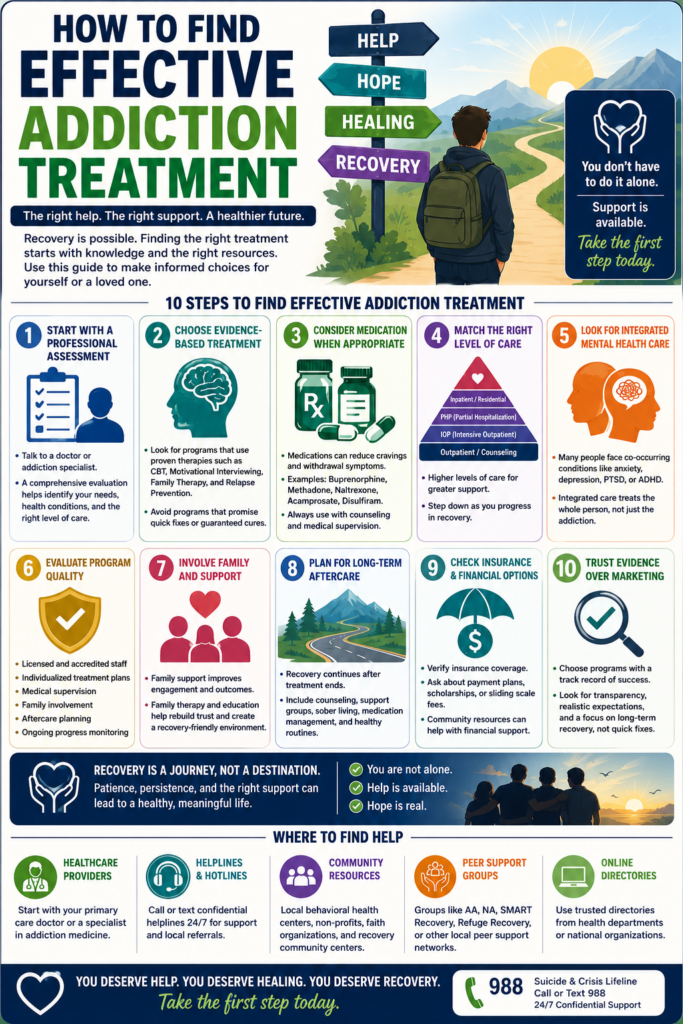
Finding effective addiction treatment is one of the most important decisions a person can make on the path to recovery. Because substance use disorder is a chronic but treatable medical condition, successful treatment involves much more than simply stopping drug or alcohol use. Effective care addresses the physical, emotional, psychological, and social factors that contribute to addiction while helping individuals develop healthier coping skills and long-term recovery strategies. Since every person’s experience with addiction is unique, treatment should be individualized and based on evidence-based practices, professional assessment, and ongoing support. Understanding how to identify high-quality treatment programs empowers individuals and families to make informed decisions that improve recovery outcomes and enhance overall quality of life.
How to Find Effective Addiction Treatment
Finding effective addiction treatment is one of the most important steps toward recovery. Because substance use disorder is a chronic medical condition that affects the brain, behavior, and overall health, treatment should be individualized and based on scientific evidence rather than promises of quick fixes. The best treatment addresses not only substance use but also the physical, emotional, psychological, and social factors that contribute to addiction. Recovery is different for everyone, and finding the right program often requires careful evaluation of a person’s specific needs, medical history, and recovery goals.
Start with a Professional Assessment
The first step is obtaining a comprehensive evaluation from a qualified healthcare professional, such as a primary care provider, addiction medicine specialist, psychiatrist, psychologist, or licensed addiction counselor. The assessment should identify:
- The substances being used
- Severity of the substance use disorder
- Physical health conditions
- Mental health disorders
- Family and social support
- Previous treatment history
- Risk of withdrawal
- Recovery goals
A thorough assessment helps determine the most appropriate level of care.
Choose Evidence-Based Treatment
Effective addiction treatment is built on scientific evidence. Look for programs that offer:
- Cognitive Behavioral Therapy (CBT)
- Motivational Interviewing (MI)
- Contingency Management
- Family therapy
- Relapse prevention training
- Peer recovery support
- Trauma-informed care
These approaches have consistently been shown to improve recovery outcomes.
Consider Medication When Appropriate
For some substance use disorders, medications can significantly improve recovery. Medication-assisted treatment (MAT), also called medications for opioid use disorder (MOUD) or medications for alcohol use disorder (MAUD), may include:
- Buprenorphine for opioid use disorder
- Methadone for opioid use disorder
- Naltrexone for opioid or alcohol use disorder
- Acamprosate for alcohol use disorder
- Disulfiram for selected individuals with alcohol use disorder
These medications reduce cravings, decrease relapse risk, and improve long-term recovery when combined with counseling and behavioral therapies.
Match the Level of Care to Individual Needs
Not everyone requires the same type of treatment. Depending on the severity of addiction, treatment may include:
- Outpatient counseling
- Intensive Outpatient Programs (IOP)
- Partial Hospitalization Programs (PHP)
- Residential or inpatient rehabilitation
- Medically supervised detoxification
- Recovery housing or sober living
- Long-term continuing care
The appropriate level depends on medical needs, safety, and recovery stability.
Look for Integrated Mental Health Care
Many individuals with addiction also experience anxiety, depression, PTSD, bipolar disorder, ADHD, or other mental health conditions. Programs that treat both addiction and mental health simultaneously generally produce better outcomes than treating either condition alone.
Evaluate Program Quality
High-quality treatment programs typically provide:
- Licensed and credentialed staff
- Individualized treatment plans
- Medical supervision when needed
- Family involvement
- Ongoing progress evaluations
- Aftercare planning
- Relapse prevention education
- Coordination with primary healthcare providers
Avoid programs that promise guaranteed cures or rely solely on unproven therapies.
Involve Family and Support Systems
Recovery is often stronger when family members participate in education and counseling. Family involvement can improve communication, reduce enabling behaviors, strengthen accountability, and create a healthier home environment that supports long-term recovery.
Develop an Aftercare Plan
Recovery continues long after formal treatment ends. Effective aftercare may include:
- Individual counseling
- Support groups
- Recovery coaching
- Medication management
- Regular medical follow-up
- Employment or educational support
- Healthy recreational activities
- Relapse prevention planning
Ongoing support helps maintain recovery and reduces the risk of relapse.
Verify Insurance and Financial Options
Before choosing a program, ask about:
- Insurance coverage
- Payment plans
- Financial assistance
- Medicaid or Medicare acceptance
- Veteran services
- Community-funded treatment options
Understanding costs in advance helps prevent interruptions in care.
Trust Evidence Over Marketing
Some programs advertise miracle cures or guarantee permanent recovery. Effective treatment recognizes that addiction is a chronic condition requiring ongoing management. Choose programs that emphasize evidence-based care, individualized treatment, and realistic expectations rather than quick fixes.
Conclusion
Effective addiction treatment is personalized, evidence-based, and designed to address the whole person—not just substance use. The best programs combine professional assessment, behavioral therapies, medications when appropriate, mental health care, family involvement, and long-term recovery support. Recovery is rarely a straight path, but with the right treatment team, ongoing support, and commitment to healing, individuals can successfully manage addiction and build healthy, meaningful lives. Finding the right treatment may take time, but seeking help is one of the most important and life-changing decisions a person can make.
Self-Management Strategies for Finding Effective Addiction Treatment
Taking an active role in finding effective addiction treatment can improve engagement, increase treatment success, and support long-term recovery. Self-management involves becoming informed, participating in treatment decisions, and developing healthy habits that complement professional care. While healthcare providers offer expertise and guidance, individuals who actively manage their recovery often build greater confidence, resilience, and motivation throughout the recovery process.
Educate Yourself About Addiction
Learn that addiction is a chronic medical condition that affects brain function, decision-making, and behavior. Understanding that recovery requires comprehensive treatment—not simply willpower—can reduce self-blame and encourage the pursuit of evidence-based care. Use reliable sources to learn about treatment options, medications, and recovery strategies.
Obtain a Comprehensive Professional Assessment
Schedule an evaluation with a qualified healthcare provider, addiction medicine specialist, or behavioral health professional. A thorough assessment helps identify the severity of the substance use disorder, co-occurring mental health conditions, physical health concerns, and the most appropriate level of care. Being honest during the assessment allows providers to develop a treatment plan that best meets your individual needs.
Set Realistic Recovery Goals
Recovery is a gradual process. Establish achievable short-term goals, such as attending appointments, remaining substance-free for one day at a time, participating in counseling sessions, or building healthy routines. Celebrating small successes helps maintain motivation while working toward long-term recovery.
Learn About Evidence-Based Treatments
Become familiar with proven treatment approaches such as Cognitive Behavioral Therapy (CBT), Motivational Interviewing (MI), Contingency Management, family therapy, and medications for opioid or alcohol use disorders when appropriate. Understanding available options allows you to ask informed questions and participate actively in treatment planning.
Keep an Open Mind About Medication
If recommended by your healthcare provider, consider medications that reduce cravings, prevent withdrawal symptoms, or lower relapse risk. For many individuals, medications combined with counseling provide better outcomes than counseling alone. Discuss the benefits, potential side effects, and treatment expectations with your provider.
Build Healthy Daily Habits
Recovery is strengthened by consistent self-care. Prioritize:
- Regular sleep
- Balanced nutrition
- Physical activity
- Hydration
- Stress management
- Structured daily routines
Healthy habits support brain recovery, improve emotional well-being, and reduce vulnerability to cravings.
Develop Healthy Coping Skills
Learn positive ways to manage stress, anxiety, sadness, boredom, and frustration without using substances. Helpful coping strategies include mindfulness, deep breathing, journaling, exercise, creative activities, spiritual practices, and talking with trusted friends, family members, or counselors.
Participate Actively in Treatment
Attend appointments consistently, complete recommended therapy assignments, take medications exactly as prescribed, and communicate openly with your treatment team. If a treatment approach is not working, discuss your concerns rather than stopping treatment on your own. Recovery plans can often be adjusted to better meet your needs.
Build a Strong Support Network
Surround yourself with people who encourage recovery and healthy choices. Supportive family members, trusted friends, peer recovery groups, sponsors, recovery coaches, and counselors provide encouragement, accountability, and practical guidance during difficult times.
Monitor Your Progress
Keep track of cravings, emotional triggers, stress levels, sleep patterns, treatment attendance, and recovery milestones. Journaling or using recovery apps can help identify patterns that increase relapse risk while highlighting positive progress and areas for improvement.
Create a Relapse Prevention Plan
Work with your treatment team to identify personal triggers, high-risk situations, warning signs of relapse, and coping strategies. Develop a written plan that includes emergency contacts, healthy distractions, and steps to take if cravings become overwhelming. Having a plan in place can reduce the likelihood of returning to substance use.
Advocate for Your Needs
Remember that recovery is highly individualized. If your treatment plan does not address your physical health, mental health, trauma history, cultural background, or personal goals, speak with your healthcare provider. Asking questions and requesting adjustments to your care demonstrate active participation and help ensure that treatment aligns with your needs.
Conclusion
Effective addiction treatment begins with becoming an informed and active participant in your own recovery. By learning about addiction, seeking a professional assessment, choosing evidence-based treatments, developing healthy coping skills, maintaining consistent self-care, and building a strong support system, individuals can improve their chances of long-term success. Recovery is not about achieving perfection but about making steady progress, adapting when challenges arise, and remaining committed to lifelong health and well-being. Every positive step taken toward effective treatment is an investment in a healthier, more fulfilling future.
Family Support Strategies for Finding Effective Addiction Treatment
Families play a critical role in helping a loved one find effective addiction treatment and remain engaged in recovery. Substance use disorder affects the entire family, not just the individual using substances. Supportive family involvement can encourage treatment participation, improve communication, strengthen motivation, and reduce the risk of relapse. The most effective approach combines compassion, education, healthy boundaries, and collaboration with healthcare professionals while respecting the individual’s dignity and autonomy.
Learn About Addiction as a Medical Condition
Family members should educate themselves about substance use disorders, recognizing that addiction is a chronic brain disease influenced by biological, psychological, social, and environmental factors. Understanding that addiction is not simply a lack of willpower helps reduce stigma, improve empathy, and support informed decision-making throughout the treatment process.
Encourage a Professional Assessment
Encourage your loved one to receive a comprehensive evaluation from a healthcare provider, addiction medicine specialist, or behavioral health professional. A thorough assessment helps determine the severity of the substance use disorder, identifies co-occurring mental health conditions, and recommends the most appropriate level of care. Families can offer encouragement without forcing or shaming the individual.
Help Research Evidence-Based Treatment Programs
Assist in identifying treatment programs that provide evidence-based care, such as behavioral therapies, family counseling, and medications for opioid or alcohol use disorders when appropriate. Families can help compare treatment options, verify accreditation, understand insurance coverage, and ask questions about available services while allowing the individual to participate in treatment decisions whenever possible.
Promote Open and Respectful Communication
Create opportunities for honest conversations by listening without judgment, avoiding criticism, and expressing concern with compassion. Using supportive language rather than blame helps strengthen trust and increases the likelihood that your loved one will remain engaged in treatment and openly discuss challenges during recovery.
Participate in Family Therapy
Many treatment programs offer family counseling to improve communication, rebuild trust, address conflict, and strengthen relationships. Family therapy helps everyone better understand addiction, learn healthy coping skills, and develop strategies for supporting recovery while reducing behaviors that may unintentionally contribute to ongoing substance use.
Establish Healthy Boundaries
Supporting recovery does not mean accepting harmful behaviors. Families should establish clear, consistent boundaries regarding substance use, financial assistance, responsibilities, and respectful behavior within the home. Healthy boundaries protect both the individual in recovery and other family members while encouraging accountability and personal responsibility.
Encourage Medication Adherence and Treatment Participation
If medications are prescribed as part of treatment, encourage your loved one to take them as directed and attend scheduled medical and counseling appointments. Offer practical assistance such as transportation, childcare, appointment reminders, or help managing daily responsibilities that might otherwise interfere with treatment participation.
Create a Recovery-Friendly Home Environment
Reduce exposure to alcohol, illicit drugs, and other triggers within the home whenever possible. Encourage healthy meals, regular sleep schedules, physical activity, family activities, and stress-reducing routines. A stable and supportive environment promotes healing and reinforces healthy lifestyle changes.
Support Long-Term Recovery
Recovery continues long after formal treatment ends. Encourage ongoing participation in counseling, peer support groups, recovery coaching, medication management, and regular healthcare appointments. Celebrate milestones and progress while recognizing that setbacks may occur and should be addressed with renewed treatment rather than shame.
Practice Self-Care as a Family Member
Caring for someone with addiction can be emotionally demanding. Family members should prioritize their own physical and mental well-being by maintaining healthy routines, seeking counseling if needed, joining family support groups, and spending time with supportive friends and loved ones. Healthy caregivers are better equipped to provide consistent, effective support.
Work as a Team with Healthcare Professionals
Maintain open communication with treatment providers whenever appropriate and permitted by privacy regulations. Ask questions, attend educational sessions, and learn how to recognize warning signs of relapse. Working collaboratively with the treatment team helps families understand how to best support recovery while respecting the individual’s confidentiality and independence.
Conclusion
Families are valuable partners in helping loved ones find effective addiction treatment and achieve lasting recovery. By educating themselves, encouraging professional evaluation, supporting evidence-based care, promoting healthy communication, establishing appropriate boundaries, and participating in family therapy, families can create an environment that fosters healing and hope. Although recovery may involve challenges and setbacks, consistent family support combined with comprehensive treatment can significantly improve long-term outcomes. Through patience, compassion, and ongoing collaboration with healthcare professionals, families can help their loved ones build healthier, substance-free lives while strengthening the well-being of the entire family.
Community Resource Strategies for Finding Effective Addiction Treatment
Community resources are essential for helping individuals and families find effective addiction treatment and maintain long-term recovery. No single program or provider can meet every need, so successful recovery often involves collaboration among healthcare professionals, behavioral health providers, peer support organizations, schools, employers, faith communities, and public health agencies. By using these community resources, individuals can access evidence-based treatment, overcome barriers to care, and build a strong support network that promotes lasting recovery.
Seek Guidance from Primary Healthcare Providers
Primary care physicians, physician assistants, nurse practitioners, and other healthcare professionals are often the first point of contact for individuals seeking help. They can perform initial screenings, identify substance use disorders, evaluate medical complications, recommend evidence-based treatment options, and refer patients to addiction specialists or behavioral health services when needed.
Utilize Addiction Treatment Referral Services
State and local health departments, behavioral health agencies, and treatment referral services can help individuals locate licensed addiction treatment programs that meet their specific needs. These organizations often provide information about outpatient counseling, intensive outpatient programs (IOPs), residential treatment, detoxification services, medication-assisted treatment (MAT), and specialized care for adolescents, pregnant individuals, veterans, or people with co-occurring mental health conditions.
Access Behavioral Health Centers
Community behavioral health centers provide comprehensive care that addresses both substance use disorders and mental health conditions such as depression, anxiety, post-traumatic stress disorder (PTSD), bipolar disorder, or ADHD. Integrated treatment improves recovery outcomes by addressing the underlying factors that contribute to substance use.
Participate in Peer Recovery Support Programs
Peer recovery specialists and recovery support groups offer encouragement, practical advice, and hope to individuals with lived experience in recovery. These programs help reduce isolation, increase motivation, and provide ongoing accountability throughout the recovery journey. Peer support complements—but does not replace—professional medical and behavioral health treatment.
Explore Community Recovery Organizations
Many nonprofit organizations and recovery community centers offer educational workshops, relapse-prevention classes, employment assistance, housing referrals, family education, transportation resources, and social activities to support long-term recovery. These services help individuals rebuild healthy, stable lives after treatment.
Engage Family Education Programs
Many treatment centers and community organizations offer family education classes and support groups that teach loved ones about addiction, healthy communication, relapse prevention, and recovery support. Educated families are better equipped to encourage treatment participation while maintaining healthy boundaries and reducing stigma.
Utilize School and Youth Resources
For adolescents and young adults, school counselors, psychologists, nurses, and student assistance programs can identify concerns early, provide prevention education, and connect families with appropriate treatment services. Early intervention within schools can prevent substance use from progressing into more severe addiction.
Work with Faith-Based and Community Organizations
Many faith communities and community organizations offer emotional support, mentoring, recovery groups, food assistance, transportation, and other services that complement professional addiction treatment. Individuals should seek organizations that support evidence-based medical care while respecting personal beliefs and values.
Address Financial and Insurance Barriers
Community agencies, social workers, and patient navigators can assist individuals in understanding insurance benefits, applying for Medicaid or other financial assistance programs, identifying low-cost treatment options, and locating grant-funded services. Reducing financial barriers improves access to timely, effective care.
Build a Long-Term Recovery Network
Recovery is an ongoing process that extends beyond completing a treatment program. Individuals should continue engaging with community resources such as counseling services, healthcare providers, recovery coaches, peer support groups, vocational rehabilitation programs, educational opportunities, and wellness activities. Maintaining these connections strengthens recovery and helps prevent relapse.
Promote Community Education and Reduce Stigma
Communities can improve treatment access by offering public education campaigns that emphasize addiction as a treatable medical condition rather than a moral failing. Reducing stigma encourages individuals and families to seek help earlier, increases public awareness of available resources, and fosters more supportive recovery environments.
Conclusion
Effective addiction treatment is strengthened by the support of a well-connected community. Healthcare providers, behavioral health centers, peer recovery organizations, schools, family education programs, faith communities, and public health agencies each contribute valuable resources that help individuals access evidence-based care and sustain long-term recovery. By utilizing these community supports, individuals and families can overcome barriers to treatment, build strong recovery networks, and improve their chances of achieving lasting health and well-being. Recovery is not a journey that anyone needs to face alone—it is a collaborative effort supported by compassionate professionals, informed families, and engaged communities.
Frequently Asked Questions
Here are some common questions:
1. What is the first step in finding effective addiction treatment?
The first step is obtaining a comprehensive assessment from a qualified healthcare provider or addiction specialist. This evaluation identifies the severity of the substance use disorder, medical and mental health needs, and the most appropriate level of care.
2. How do I know if someone needs professional addiction treatment?
Professional treatment should be considered if substance use is affecting health, relationships, work, school, finances, or daily responsibilities. Other warning signs include unsuccessful attempts to quit, strong cravings, withdrawal symptoms, and continued use despite negative consequences.
3. What makes an addiction treatment program effective?
Effective programs use evidence-based treatments, employ licensed professionals, provide individualized care, address co-occurring mental health conditions, involve family when appropriate, and offer long-term recovery support and relapse prevention planning.
4. What are evidence-based treatments?
Evidence-based treatments are therapies that have been proven effective through scientific research. These include Cognitive Behavioral Therapy (CBT), Motivational Interviewing (MI), Contingency Management, family therapy, and medications for opioid or alcohol use disorders when appropriate.
5. Is detox enough to overcome addiction?
No. Detoxification helps manage withdrawal symptoms but does not treat the underlying causes of addiction. Long-term recovery usually requires counseling, behavioral therapies, relapse prevention, and ongoing support after detox.
6. What is the difference between inpatient and outpatient treatment?
Inpatient (residential) treatment provides 24-hour care in a structured setting and is often recommended for severe addiction or complex medical needs. Outpatient treatment allows individuals to live at home while attending scheduled counseling and treatment sessions, making it appropriate for many people with mild to moderate substance use disorders.
7. Are medications helpful in addiction treatment?
Yes. For certain substance use disorders, medications can reduce cravings, ease withdrawal symptoms, and lower the risk of relapse. These medications are most effective when combined with counseling and behavioral therapies under medical supervision.
8. Should addiction treatment also address mental health conditions?
Absolutely. Many individuals with addiction also experience depression, anxiety, PTSD, bipolar disorder, or other mental health conditions. Treating both conditions together generally leads to better recovery outcomes than treating either condition alone.
9. How important is family involvement?
Family support can improve treatment engagement, strengthen communication, and provide encouragement throughout recovery. Many treatment programs offer family education and counseling to help loved ones understand addiction and support long-term recovery.
10. How long does addiction treatment usually last?
Recovery is an ongoing process rather than a fixed period of treatment. While some programs last several weeks or months, many individuals benefit from continued counseling, peer support, medication management, and follow-up care for months or even years after completing formal treatment.
11. What questions should I ask before choosing a treatment program?
Ask whether the program:
- Is licensed and accredited.
- Uses evidence-based therapies.
- Offers medical supervision if needed.
- Treats co-occurring mental health conditions.
- Provides family involvement.
- Accepts your insurance.
- Offers aftercare and relapse prevention services.
- Has qualified, licensed staff.
12. How can I tell if a treatment program is trustworthy?
Choose programs that provide individualized treatment plans, qualified healthcare professionals, transparent information about services, realistic expectations, and evidence-based care. Be cautious of programs that promise guaranteed cures or quick fixes.
13. What if the first treatment program doesn’t work?
Recovery is rarely a straight path. If one program is not effective, speak with your healthcare provider about adjusting the treatment plan or exploring another level of care. Needing a different approach does not mean treatment has failed.
14. Can someone recover without professional treatment?
Some individuals recover through community support and lifestyle changes, but many benefit from professional treatment—especially those with moderate to severe substance use disorders, co-occurring mental health conditions, or a history of relapse. A healthcare professional can recommend the safest and most effective approach.
15. How can I pay for addiction treatment?
Many treatment programs accept private insurance, Medicaid, Medicare, or Veterans Affairs benefits. Some community organizations, nonprofit agencies, and state-funded programs also offer financial assistance or sliding-scale fees for eligible individuals.
16. What happens after treatment ends?
Successful recovery continues after formal treatment through aftercare services such as individual counseling, peer support groups, recovery coaching, medication management, sober living programs, and regular medical follow-up. Ongoing support helps reduce the risk of relapse.
17. What should I do if my loved one refuses treatment?
Remain supportive, avoid arguing or blaming, express concern calmly, and encourage a professional evaluation. Continue setting healthy boundaries while offering information about available treatment options. Family counseling or guidance from an addiction professional may help navigate this situation.
18. Is long-term recovery possible?
Yes. Millions of people have achieved lasting recovery from substance use disorders. With evidence-based treatment, ongoing support, healthy lifestyle changes, and commitment to recovery, individuals can regain their health, rebuild relationships, and lead meaningful, substance-free lives.
Conclusion
Finding the right addiction treatment requires careful consideration, professional guidance, and a commitment to long-term recovery. The most effective treatment programs combine comprehensive medical care, behavioral therapies, mental health services, medications when appropriate, family involvement, and continuing support after formal treatment ends. Recovery is not a one-size-fits-all process, and treatment plans may need to be adjusted as a person’s needs change over time. By seeking evidence-based care, asking informed questions, utilizing community resources, and building a strong support network, individuals can greatly improve their chances of achieving lasting recovery. With the right treatment, ongoing commitment, and compassionate support, recovery is possible, and individuals can build healthier, more meaningful, and substance-free lives.
Video: Choosing the wrong treatment could cost you everything #addiction #recovery