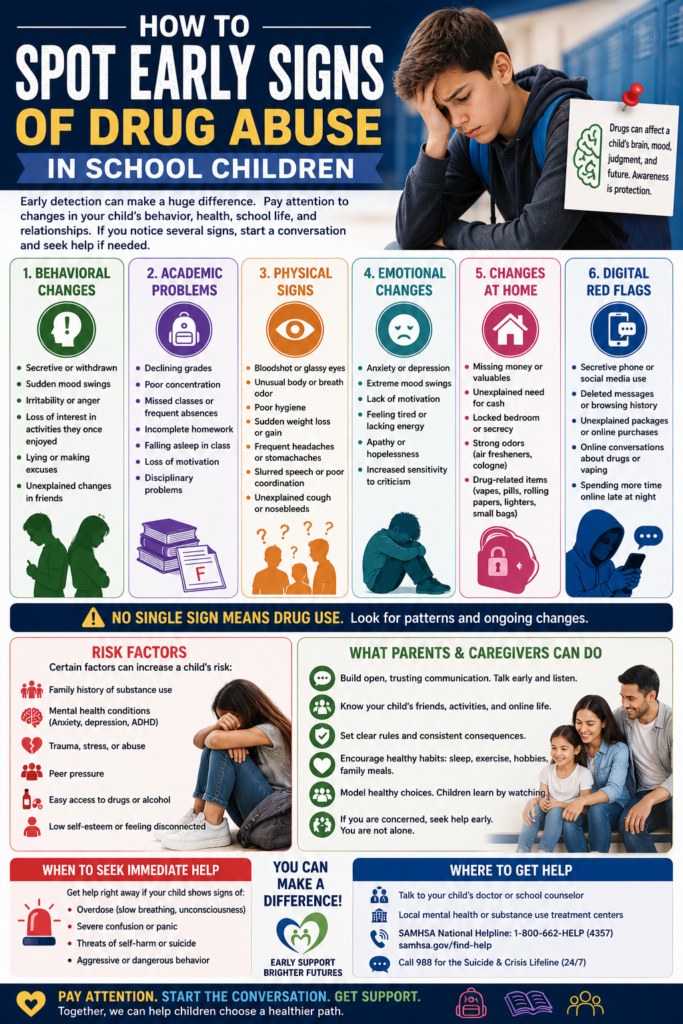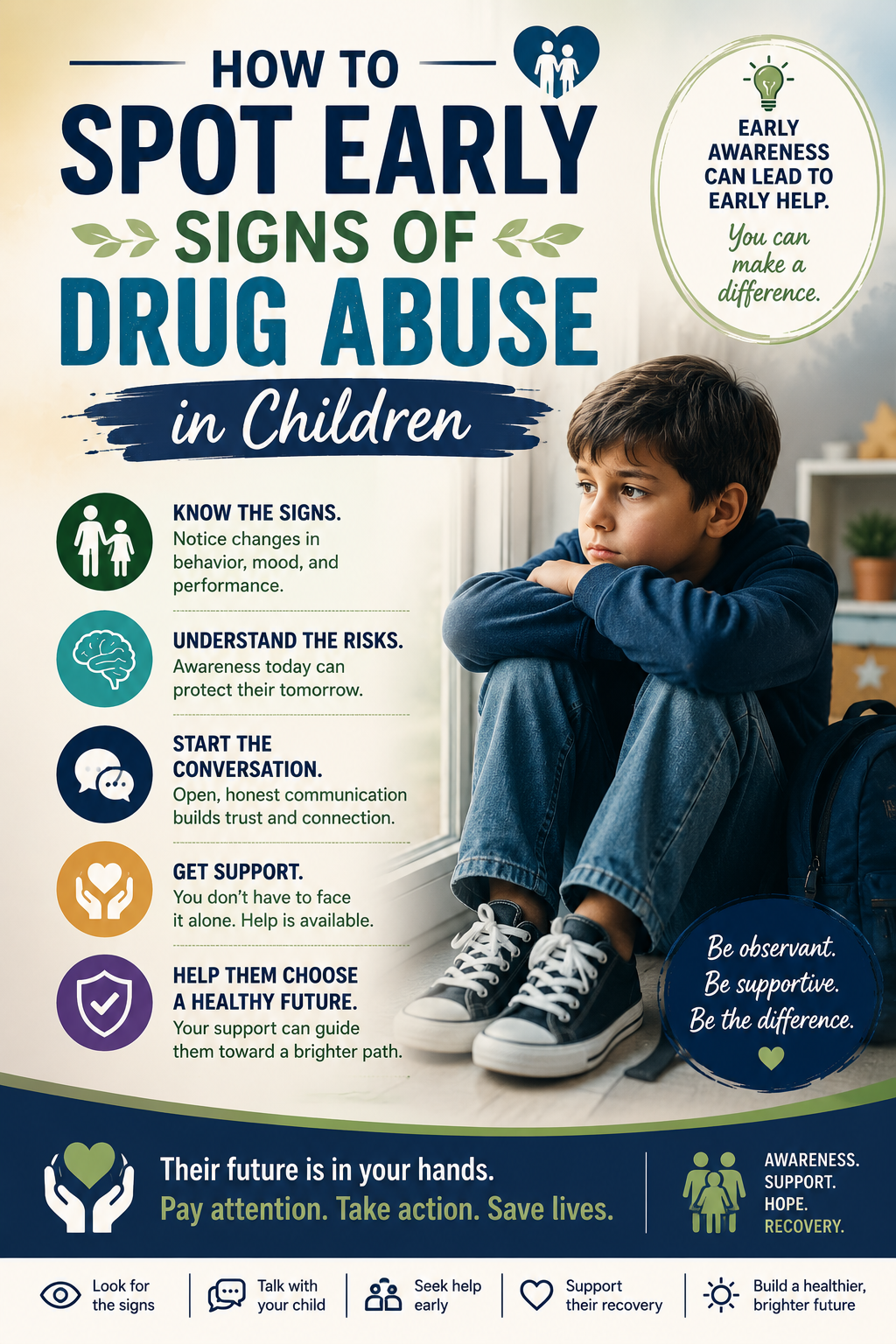
Spotting the early signs of drug abuse in children and adolescents is one of the most effective ways to prevent substance use from developing into a more serious disorder. Drug use often begins with subtle changes in behavior, emotions, academic performance, physical health, or social relationships that may be mistaken for normal developmental challenges. While no single sign confirms substance use, recognizing a pattern of concerning changes can prompt timely conversations and professional evaluation. Early identification allows families, schools, and healthcare providers to intervene before substance use leads to significant health, emotional, or legal consequences. By understanding these warning signs and responding with compassion rather than judgment, adults can provide children with the support they need to make healthier choices and build resilience.
How to Spot Early Signs of Drug Abuse in School-Age Children
Recognizing the early signs of drug abuse in school-age children is essential because early intervention can prevent more serious health, academic, and social problems. Children experiment with substances for many reasons, including curiosity, peer pressure, stress, trauma, mental health conditions, or exposure to substance use at home or in their community. While one behavioral change alone does not necessarily indicate drug use, a pattern of changes across multiple areas deserves attention. Parents, teachers, school counselors, and healthcare providers all play important roles in recognizing these warning signs and responding with support rather than punishment.
Behavioral Changes
One of the earliest indicators of possible substance use is a noticeable change in behavior. A child who was previously responsible and cooperative may suddenly become secretive, irritable, or unusually aggressive. They may avoid family activities, become withdrawn, lie more frequently, or spend excessive time alone. Mood swings may become more frequent, and the child may lose interest in hobbies, sports, or activities they once enjoyed.
Academic Problems
Drug use often affects school performance. Warning signs may include:
- Declining grades
- Frequent absences or tardiness
- Difficulty concentrating
- Incomplete homework
- Falling asleep in class
- Loss of motivation
- Disciplinary problems
Teachers are often among the first adults to notice these changes.
Changes in Friends
Children experimenting with drugs may suddenly change their peer group. They may become secretive about their new friends or avoid introducing them to family members. Long-term friendships may abruptly end without explanation. While making new friends is normal, sudden and dramatic social changes should be explored with curiosity rather than accusation.
Physical Warning Signs
Physical symptoms vary depending on the substance used, but may include:
- Bloodshot or glassy eyes
- Frequent nosebleeds (especially with inhaled drugs)
- Unusual body or breath odors
- Poor hygiene
- Sudden weight loss or gain
- Frequent headaches
- Chronic cough
- Tremors
- Slurred speech
- Poor coordination
- Unexplained fatigue or excessive energy
Some children may also wear long sleeves even in warm weather to hide injuries or marks, although this alone does not indicate drug use.
Emotional Changes
Substance use can affect emotional regulation. Watch for:
- Anxiety
- Depression
- Increased irritability
- Extreme mood swings
- Loss of confidence
- Apathy
- Emotional outbursts
- Increased sensitivity to criticism
Children with untreated mental health conditions may be at higher risk of using substances to cope with emotional distress.
Changes at Home
Parents may notice:
- Missing money
- Missing prescription medications or alcohol
- Unexplained need for cash
- Locked bedroom doors
- Hidden backpacks or containers
- Strong odors masked with air fresheners or excessive cologne
- Drug-related items such as vape devices, rolling papers, lighters, burnt foil, small plastic bags, or unfamiliar pills
Digital Warning Signs
Today’s children often communicate online. Warning signs may include:
- Secretive phone or social media use
- Encrypted messaging apps are used excessively
- Receiving unexplained packages
- Discussions involving slang for drugs
- Online purchases of vaping products or drug paraphernalia
Parents should balance appropriate supervision with respect for privacy and open communication.
Risk Factors
Certain experiences increase the likelihood of substance use, including:
- Family history of addiction
- Trauma or adverse childhood experiences
- Bullying
- Untreated ADHD, anxiety, or depression
- Poor academic performance
- Low self-esteem
- Peer pressure
- Easy access to alcohol, nicotine, or drugs
Having one or more risk factors does not mean a child will develop a substance use disorder, but it highlights the importance of prevention and support.
How Parents and Caregivers Should Respond
If warning signs appear, avoid reacting with anger or accusations. Instead:
- Stay calm and express concern.
- Ask open-ended questions.
- Listen without interrupting.
- Focus on understanding rather than punishment.
- Seek an evaluation from the child’s pediatrician or a behavioral health professional.
- Work closely with school counselors or teachers when appropriate.
- Encourage healthy activities, family involvement, and positive peer relationships.
Early conversations can strengthen trust and make children more likely to seek help if they encounter drugs in the future.
When to Seek Immediate Help
Immediate medical attention is needed if a child has:
- Difficulty breathing
- Loss of consciousness
- Seizures
- Severe confusion
- Extreme agitation
- Chest pain
- Suspected overdose
Call emergency services immediately if these symptoms occur. If there are concerns about ongoing substance use, consult a healthcare professional promptly for assessment and guidance.
Conclusion
Spotting the early signs of drug abuse in school-age children requires careful observation of changes in behavior, academics, emotions, physical health, and social relationships. No single sign confirms substance use, but multiple changes occurring together warrant attention. Early identification, compassionate communication, and timely professional support can significantly improve outcomes. By fostering open dialogue, building trust, and creating supportive home and school environments, families and communities can help children make healthy choices and reduce the risk of substance use.
Self-Management Strategies to Understand How to Spot Early Signs of Drug Abuse
Recognizing the early signs of drug abuse begins with becoming an informed and observant caregiver. Self-management strategies help parents, caregivers, educators, and even older adolescents develop the knowledge and skills needed to identify concerning behaviors while maintaining healthy, supportive relationships. These strategies focus on education, communication, emotional awareness, and early action rather than fear or punishment.
1. Learn the Common Warning Signs
Educate yourself about the physical, emotional, behavioral, and academic changes that may indicate substance use. Understanding that addiction often develops gradually helps you recognize patterns instead of reacting to isolated incidents. Reliable information from healthcare professionals and evidence-based organizations can improve your ability to distinguish normal developmental changes from behaviors that may require further evaluation.
2. Observe Changes Over Time
Keep track of significant changes in your child’s mood, sleep, appetite, school performance, friendships, and daily routines. One unusual behavior rarely indicates drug use, but several persistent changes occurring together may suggest that further conversation or professional assessment is appropriate. Looking for patterns rather than isolated events reduces the risk of jumping to conclusions.
3. Build Strong Communication Skills
Practice having calm, nonjudgmental conversations about drugs, alcohol, vaping, and peer pressure before problems arise. Encourage honest discussions by asking open-ended questions and listening carefully without interrupting or immediately criticizing. Children who feel heard are more likely to share concerns and seek help when they face difficult situations.
4. Understand Normal Child Development
Recognize that mood swings, growing independence, changing friendships, and occasional rule-testing are common parts of childhood and adolescence. Learning what is developmentally typical helps you identify behaviors that truly stand out as concerning and prevent unnecessary conflict over normal age-related changes.
5. Strengthen Your Emotional Awareness
Manage your own emotions when you notice concerning behaviors. Fear, anger, or panic can make conversations less productive. Taking time to remain calm allows you to respond thoughtfully, ask better questions, and create an environment where your child feels safe discussing difficult topics.
6. Create Healthy Daily Routines
Encourage regular sleep, balanced nutrition, physical activity, family meals, and structured schedules. Consistent routines improve emotional well-being, strengthen family relationships, and make it easier to notice sudden behavioral or physical changes that could signal underlying problems.
7. Stay Involved in Your Child’s Life
Know your child’s friends, interests, extracurricular activities, and online habits. Attend school events, communicate with teachers, and participate in family activities. Positive parental involvement is one of the strongest protective factors against substance use.
8. Promote Healthy Coping Skills
Teach children healthy ways to manage stress, disappointment, anxiety, and peer pressure. Encourage exercise, creative hobbies, journaling, mindfulness, problem-solving, and talking with trusted adults. Children with effective coping skills are less likely to turn to substances for emotional relief.
9. Monitor Without Invading Privacy
Provide age-appropriate supervision by knowing where your child is, who they spend time with, and how they use technology. Monitoring should emphasize guidance and safety rather than control or mistrust. Clear expectations and consistent boundaries help children make safer choices.
10. Seek Professional Guidance Early
If you notice multiple warning signs or have ongoing concerns, consult your child’s pediatrician, school counselor, psychologist, or another qualified healthcare professional. Early assessment can identify whether changes are related to substance use, mental health conditions, learning difficulties, or other challenges. Prompt intervention often leads to better long-term outcomes.
Key Takeaway
The most effective self-management strategy is combining education with compassionate observation. By staying informed, maintaining open communication, modeling healthy coping skills, and seeking professional help when needed, parents and caregivers can recognize potential problems early and provide children with the support they need before substance use progresses into a more serious disorder.
Family Support Strategies to Understand How to Spot Early Signs of Drug Abuse
Families play a vital role in recognizing the early signs of drug abuse and supporting children before substance use becomes a more serious problem. A strong, connected family environment promotes open communication, trust, and resilience, making children more likely to seek help when facing peer pressure, emotional challenges, or curiosity about drugs. Rather than relying on fear or punishment, families can reduce risk by creating a safe and supportive home where concerns are addressed with compassion and understanding.
Foster Open and Honest Communication
Create an environment where children feel comfortable discussing their thoughts, emotions, and experiences without fear of judgment. Have regular conversations about drugs, alcohol, vaping, and peer pressure that are appropriate for your child’s age. Ask open-ended questions, listen carefully, and encourage honest dialogue. Children who feel heard are more likely to disclose problems early.
Learn the Warning Signs Together
Parents and caregivers should educate themselves about the physical, emotional, behavioral, and academic signs of possible substance use. Sharing this knowledge with other trusted family members helps everyone recognize concerning patterns while avoiding assumptions based on a single behavior. Understanding the warning signs promotes earlier intervention and more informed decision-making.
Build Strong Family Relationships
Children who have close, supportive relationships with their families are generally less likely to misuse substances. Spend quality time together through family meals, game nights, outdoor activities, or shared hobbies. Positive family interactions strengthen trust, improve communication, and create opportunities to notice changes in mood, behavior, or daily routines.
Establish Clear Expectations and Consistent Boundaries
Discuss family rules regarding alcohol, vaping, prescription medications, and illegal drugs. Explain the reasons behind these expectations and apply consequences consistently and fairly when rules are broken. Clear boundaries help children understand family values while providing structure and accountability.
Pay Attention to Changes Without Jumping to Conclusions
Observe changes in school performance, friendships, sleep patterns, hygiene, appetite, mood, or behavior over time. Remember that one change alone does not necessarily indicate substance use. Instead of making accusations, approach concerns with curiosity and compassion by asking supportive questions and listening carefully to your child’s perspective.
Encourage Healthy Coping Skills
Help children develop positive ways to manage stress, disappointment, anxiety, and peer pressure. Encourage exercise, sports, music, art, reading, volunteering, mindfulness, and other healthy outlets. Teaching effective coping skills reduces the likelihood that children will use substances to escape emotional distress.
Be a Positive Role Model
Children learn by observing the adults around them. Demonstrate healthy ways of managing stress, resolving conflict, and making responsible decisions about alcohol and medications. Avoid normalizing substance misuse or using alcohol or drugs as a primary way to cope with life’s challenges.
Stay Connected With School and Community
Maintain regular communication with teachers, school counselors, coaches, and other trusted adults who interact with your child. These individuals may notice changes in behavior, attendance, friendships, or academic performance that are not immediately apparent at home. Working together allows concerns to be addressed early and consistently.
Seek Professional Help Early
If multiple warning signs persist or substance use is suspected, consult your child’s pediatrician, behavioral health provider, school counselor, or addiction specialist promptly. Early assessment can determine whether changes are related to substance use, mental health conditions, learning difficulties, or other medical concerns. Early intervention often leads to better outcomes.
Support Recovery Without Shame
If substance use is identified, focus on helping rather than blaming. Addiction and substance misuse are complex health conditions influenced by biological, psychological, and environmental factors. Offer encouragement, participate in recommended treatment when appropriate, celebrate progress, and remind your child that recovery is possible with ongoing support and professional care.
Conclusion
Families are often the first to notice subtle changes that may signal early substance use. By fostering open communication, strengthening family relationships, establishing healthy boundaries, modeling positive behaviors, and seeking professional guidance when concerns arise, families can identify problems sooner and provide the support children need. A caring, informed, and nonjudgmental approach builds trust, encourages early intervention, and helps children develop the resilience needed to make healthy choices throughout their lives.
Community Resource Strategies to Understand How to Spot Early Signs of Drug Abuse
Communities play an essential role in preventing substance use among school-age children by providing education, early intervention, and access to supportive services. Parents and caregivers should not feel they must recognize or manage potential drug use alone. Schools, healthcare providers, behavioral health professionals, youth organizations, and community agencies work together to identify concerns early and connect families with appropriate resources. Using these community supports can improve outcomes and help children receive assistance before substance use progresses.
Partner with Schools
Schools are often among the first places where behavioral or academic changes become noticeable. Parents should maintain regular communication with teachers, school counselors, nurses, and administrators to discuss concerns about attendance, declining grades, changes in friendships, or behavioral problems. Many schools also offer prevention education, student assistance programs, and referrals to counseling services when needed.
Utilize Pediatric and Primary Care Providers
Routine visits with a pediatrician or primary care provider provide opportunities to discuss concerns about a child’s physical health, emotional well-being, and possible substance use. Healthcare professionals can screen for risk factors, identify mental health conditions, provide education about substance use, and refer families to specialized treatment if necessary.
Access Behavioral Health Services
Licensed mental health professionals, including psychologists, counselors, clinical social workers, and child psychiatrists, can evaluate behavioral changes that may be related to substance use, anxiety, depression, trauma, or other mental health conditions. Early behavioral health intervention can address underlying issues that increase the risk of substance misuse.
Participate in Community Prevention Programs
Many communities offer prevention programs through schools, health departments, faith-based organizations, and nonprofit agencies. These programs teach children and families about the risks of drugs, alcohol, nicotine, and vaping while building healthy coping skills, decision-making abilities, and resilience against peer pressure.
Connect with Youth Development Programs
Structured activities such as sports teams, music programs, scouting organizations, mentoring programs, after-school clubs, and volunteer opportunities provide children with positive peer relationships, adult role models, and healthy recreational outlets. Active involvement in these programs can reduce risk factors associated with substance use.
Attend Parent Education Workshops
Community organizations frequently provide educational seminars on recognizing early warning signs of drug use, communicating effectively with children, internet safety, vaping prevention, and adolescent mental health. These workshops help parents build confidence and improve their ability to respond appropriately when concerns arise.
Utilize Substance Use Prevention Coalitions
Many local communities have prevention coalitions that bring together healthcare providers, educators, law enforcement, public health officials, and community leaders. These coalitions often provide educational materials, prevention campaigns, family resources, and referrals to treatment services designed to reduce youth substance use.
Contact Crisis and Helpline Services
When families need immediate guidance, confidential helplines can provide information about substance use, mental health concerns, crisis intervention, and local treatment resources. Speaking with trained professionals can help families determine appropriate next steps and reduce feelings of isolation during stressful situations.
Encourage Collaboration Among Community Partners
Effective prevention occurs when schools, healthcare providers, families, behavioral health professionals, law enforcement, and community organizations communicate and work together. Sharing concerns early—while respecting privacy laws—creates a coordinated approach that supports children across multiple environments.
Reduce Stigma Through Community Education
Communities should promote the understanding that substance use disorders are treatable medical conditions rather than moral failures. Public education campaigns that encourage early conversations, reduce stigma, and increase awareness make families more likely to seek help before problems become severe.
Conclusion
Recognizing the early signs of drug abuse is a shared community responsibility. Schools, healthcare providers, behavioral health professionals, prevention programs, youth organizations, and community coalitions all contribute to early identification and intervention. By taking advantage of these resources, families can better understand warning signs, access professional guidance, and create supportive environments that promote healthy development. Working together, communities can help children avoid substance use, strengthen resilience, and build a foundation for lifelong physical and emotional well-being.
Frequently Asked Questions
Here are some common questions:
1. What are the earliest signs of possible drug abuse in school-age children?
Early warning signs may include sudden mood swings, declining grades, loss of interest in favorite activities, changes in friendships, secretive behavior, changes in sleep or appetite, poor hygiene, and unexplained physical symptoms. No single sign confirms drug use, but several changes occurring together may warrant further attention.
2. Does one unusual behavior mean my child is using drugs?
No. Children naturally experience emotional and behavioral changes as they grow. It is important to look for persistent patterns involving multiple warning signs rather than assuming drug use based on one isolated behavior.
3. At what age should parents begin talking about drugs?
Experts recommend beginning age-appropriate conversations during elementary school. Early discussions help children understand the risks of drugs, alcohol, nicotine, and vaping before they encounter peer pressure.
4. What substances are school-age children most likely to experiment with?
The most commonly used substances include nicotine through vaping, alcohol, cannabis, inhalants, and misuse of prescription medications. Access and prevalence vary by age and community.
5. How can I tell the difference between normal adolescence and possible drug use?
Normal adolescence may involve occasional moodiness or a desire for independence. Drug use is more likely when multiple changes occur together, such as declining school performance, new secretive behaviors, physical symptoms, changing peer groups, and loss of interest in previously enjoyed activities.
6. Can vaping be an early warning sign?
Yes. Many vaping products contain nicotine, which is highly addictive. Vaping can increase the risk of nicotine dependence and may increase the likelihood of experimenting with other substances in some adolescents.
7. What physical signs should parents watch for?
Possible physical signs include bloodshot eyes, unusual odors, frequent nosebleeds, persistent cough, poor coordination, slurred speech, changes in appetite, unexplained weight changes, excessive fatigue, or unusually high energy levels, depending on the substance involved.
8. What behavioral changes are most concerning?
Persistent lying, stealing, isolation, irritability, aggression, frequent rule-breaking, loss of motivation, secrecy, an unexplained need for money, and avoidance of family activities may all be warning signs that warrant further evaluation.
9. Should I search my child’s room or belongings?
Parents should balance supervision with trust. If there are significant safety concerns, searching personal belongings may be appropriate. Whenever possible, begin with open communication and explain that your priority is your child’s safety, not punishment.
10. How should I talk to my child if I suspect drug use?
Remain calm, avoid accusations, and ask open-ended questions. Listen carefully without interrupting. Express concern, emphasize your love and support, and encourage honesty. Calm conversations are generally more productive than confrontations.
11. What role do schools play in identifying substance use?
Teachers, school counselors, nurses, and coaches often notice changes in academic performance, attendance, behavior, or peer relationships before families do. Collaboration between schools and parents supports early identification and intervention.
12. Can mental health problems increase the risk of drug use?
Yes. Anxiety, depression, ADHD, trauma, and other mental health conditions can increase the risk of substance use as some children attempt to cope with emotional distress. Treating underlying mental health conditions may reduce this risk.
13. What should I do if I find drugs or vaping devices?
Stay calm, remove the items safely, and have an honest conversation with your child. Contact your child’s healthcare provider or a behavioral health professional for guidance and consider a comprehensive assessment if substance use is suspected.
14. When should professional help be sought?
Professional evaluation is recommended when warning signs persist, multiple concerning behaviors develop, substance use is suspected, or a child’s physical, emotional, or academic functioning begins to decline. Early intervention generally leads to better outcomes.
15. What should I do if my child appears to have overdosed?
Call emergency medical services immediately if your child is unconscious, having difficulty breathing, experiencing seizures, or is difficult to wake. If an opioid overdose is suspected and naloxone is available, administer it while waiting for emergency responders. Do not delay seeking emergency medical care.
16. Can children recover if substance use is identified early?
Yes. Early identification and treatment significantly improve the chances of recovery. With family support, appropriate counseling, medical care when needed, healthy coping skills, and ongoing encouragement, many young people successfully overcome substance use and lead healthy, productive lives.
17. How can parents reduce the risk of drug abuse?
Parents can reduce risk by maintaining open communication, setting clear expectations, monitoring activities appropriately, encouraging healthy friendships, supporting involvement in school and extracurricular activities, modeling healthy behaviors, and addressing mental health concerns promptly.
18. Why is early intervention so important?
Early intervention can prevent occasional experimentation from progressing to a substance use disorder. It also allows healthcare professionals to identify underlying emotional, behavioral, or family challenges that may contribute to substance use, giving children the best opportunity for long-term health and success.
Conclusion
Recognizing the early signs of drug abuse requires awareness, open communication, and collaboration among families, schools, healthcare professionals, and the community. Although behavioral or emotional changes do not always indicate substance use, persistent or multiple warning signs should never be ignored. Responding calmly, listening without judgment, and seeking professional guidance when concerns arise can make a significant difference in a child’s future. Early intervention not only reduces the risk of addiction but also addresses underlying challenges such as mental health conditions, trauma, or peer pressure. Through education, supportive relationships, and timely access to appropriate resources, we can help children develop healthy coping skills, prevent substance misuse, and support their long-term physical, emotional, and social well-being.
Video: Parents miss these substance abuse signs until it’s too late #drugawareness #parenting #help