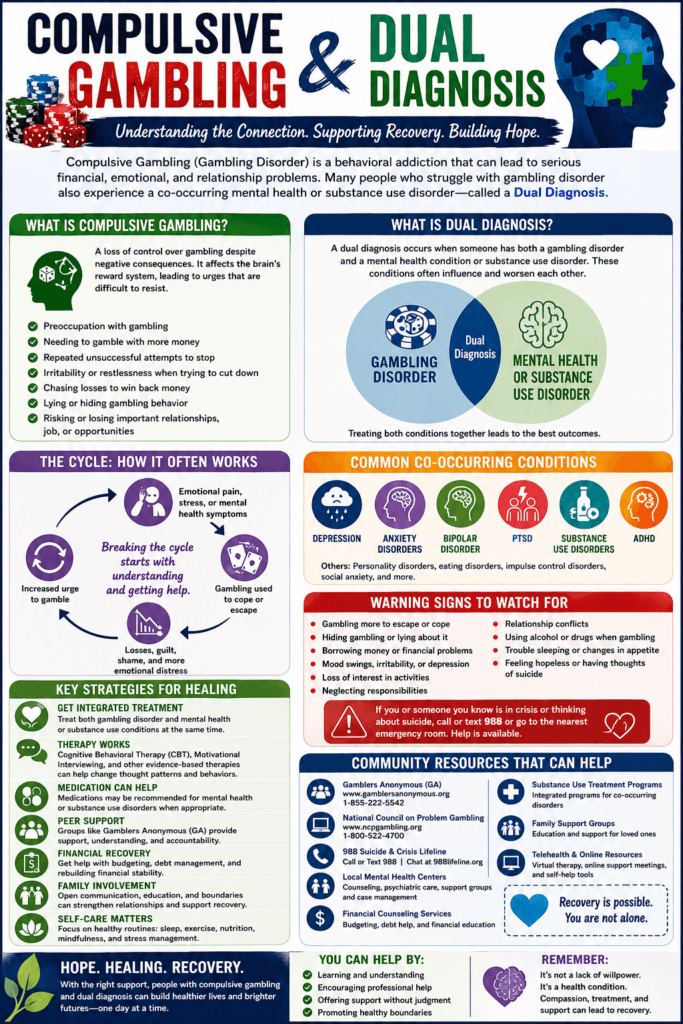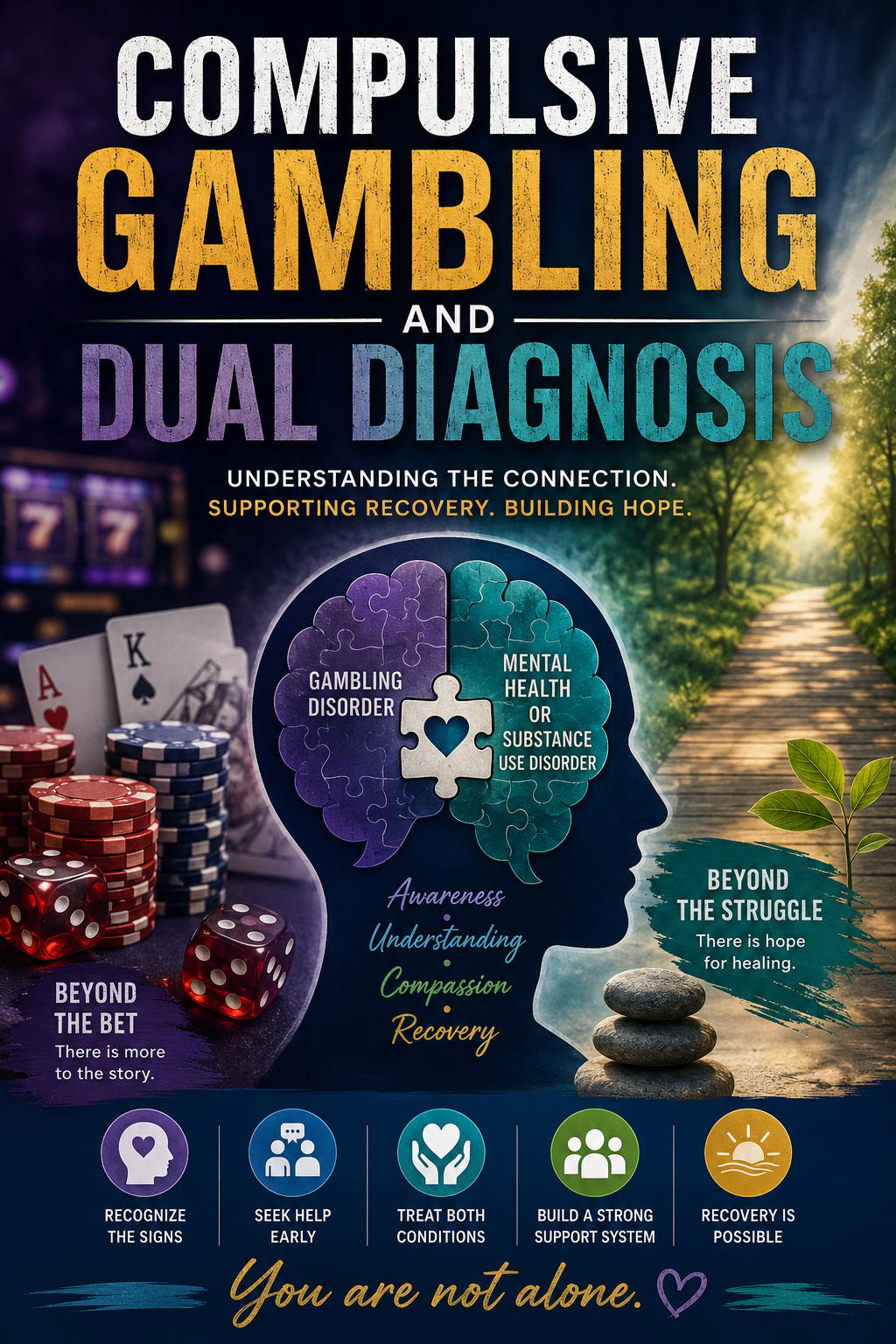
Compulsive gambling, also known as gambling disorder, is a behavioral addiction in which individuals continue to gamble despite experiencing significant financial, emotional, relationship, and occupational consequences. Many people with a gambling disorder also have a dual diagnosis, meaning they are living with both a gambling addiction and a co-occurring mental health condition, such as depression, anxiety, bipolar disorder, post-traumatic stress disorder (PTSD), attention-deficit/hyperactivity disorder (ADHD), or a substance use disorder. These conditions often influence one another, creating a cycle in which emotional distress can increase the urge to gamble, while gambling-related losses and consequences further worsen mental health symptoms. Recognizing the connection between compulsive gambling and dual diagnosis is critical because effective recovery depends on treating both conditions through a coordinated, evidence-based approach. Early diagnosis, comprehensive treatment, and ongoing support can help individuals regain stability, improve emotional well-being, rebuild relationships, and achieve lasting recovery.
Compulsive Gambling and Dual Diagnosis
Compulsive gambling, also known as gambling disorder, is a behavioral addiction characterized by persistent, recurrent gambling behavior despite significant negative consequences. Individuals with a gambling disorder often continue gambling even when it leads to financial hardship, relationship problems, legal difficulties, or declining physical and mental health. Like substance use disorders, gambling disorder affects the brain’s reward, motivation, and decision-making systems, making it difficult to stop without appropriate treatment.
A dual diagnosis (also called a co-occurring disorder) occurs when an individual has both a mental health disorder and another condition requiring treatment, such as a substance use disorder or gambling disorder. In the context of compulsive gambling, a dual diagnosis most commonly refers to a gambling disorder occurring alongside conditions such as depression, anxiety disorders, bipolar disorder, post-traumatic stress disorder (PTSD), attention-deficit/hyperactivity disorder (ADHD), alcohol use disorder, or other substance use disorders. Treating only one condition while ignoring the other often leads to poorer outcomes, underscoring the need for integrated treatment.
The Relationship Between Gambling and Mental Health
Mental health disorders and compulsive gambling frequently influence one another. Some individuals begin gambling to escape emotional pain, loneliness, stress, anxiety, or depression. Others develop mental health symptoms as gambling leads to financial loss, relationship conflict, guilt, and chronic stress.
This cycle can become self-reinforcing:
- Emotional distress increases the urge to gamble.
- Gambling provides temporary excitement or escape.
- Losses and negative consequences worsen emotional distress.
- Increased distress leads to further gambling.
Breaking this cycle requires addressing both the gambling behavior and the underlying mental health condition.
Common Co-Occurring Mental Health Disorders
Several psychiatric conditions commonly occur alongside gambling disorder.
Depression
Many individuals experience depression related to financial losses, damaged relationships, or feelings of guilt and hopelessness. Depression may also precede gambling, with individuals using gambling to temporarily improve their mood or escape emotional pain.
Anxiety Disorders
Generalized anxiety, panic disorder, and social anxiety frequently coexist with gambling disorder. Financial stress and fear of consequences often worsen anxiety symptoms.
Bipolar Disorder
Periods of mania or hypomania may involve impulsive behaviors, excessive risk-taking, and uncontrolled gambling. Effective treatment of bipolar disorder can reduce gambling-related harm.
Post-Traumatic Stress Disorder (PTSD)
Some individuals use gambling to distract themselves from traumatic memories, emotional numbness, or hyperarousal. Trauma-informed care is important when PTSD and gambling disorder occur together.
ADHD
Individuals with ADHD may have increased impulsivity, difficulty delaying gratification, and sensation-seeking behaviors, all of which may increase vulnerability to gambling problems.
Substance Use Disorders
Alcohol and drug use commonly occur with a gambling disorder. Intoxication may impair judgment, increase impulsive decisions, and make gambling more difficult to control. Likewise, gambling environments may increase access to alcohol or other substances.
Risk Factors for Dual Diagnosis
Several factors increase the likelihood of developing both a gambling disorder and another mental health condition:
- Family history of addiction or mental illness
- Childhood trauma or adverse childhood experiences
- Chronic stress
- Impulsivity
- Poor emotional regulation
- Social isolation
- Financial hardship
- Early exposure to gambling
- Co-occurring substance use
Having these risk factors does not guarantee that someone will develop a gambling disorder or another mental health condition, but they may increase vulnerability.
Warning Signs
Common signs of compulsive gambling with a dual diagnosis include:
- Gambling to escape sadness, anxiety, or stress
- Increasing secrecy about gambling behavior
- Repeated unsuccessful attempts to stop gambling
- Mood swings related to wins and losses
- Financial difficulties
- Borrowing or stealing money to gamble
- Declining work or school performance
- Relationship conflicts
- Alcohol or drug use during gambling
- Sleep disturbances
- Thoughts of hopelessness or suicide
Individuals experiencing suicidal thoughts or thoughts of harming themselves should seek immediate emergency assistance or contact crisis services.
Assessment and Diagnosis
A comprehensive evaluation typically includes:
- Gambling history
- Mental health assessment
- Substance use screening
- Medical history
- Family history
- Financial impact
- Social and occupational functioning
- Suicide risk assessment
Accurate diagnosis helps clinicians develop an individualized treatment plan that addresses all co-occurring conditions.
Treatment Approaches
Treatment is most effective when both gambling disorder and co-occurring mental health conditions are addressed together.
Common components include:
Cognitive Behavioral Therapy (CBT)
CBT helps individuals identify distorted gambling beliefs, manage triggers, improve coping skills, and challenge unhealthy thought patterns contributing to both gambling and mental health symptoms.
Motivational Interviewing (MI)
MI strengthens motivation for change and helps individuals resolve ambivalence about stopping gambling.
Medication
Although no medication is specifically approved solely for gambling disorder, medications may be prescribed to treat co-occurring conditions such as depression, anxiety, bipolar disorder, or alcohol use disorder when clinically appropriate.
Group Therapy
Group therapy provides education, peer support, accountability, and opportunities to learn coping strategies from others facing similar challenges.
Family Therapy
Family involvement can improve communication, rebuild trust, establish healthy financial boundaries, and strengthen long-term recovery.
Financial Counseling
Debt management, budgeting, and financial planning reduce stress while helping individuals regain financial stability.
Peer Support
Organizations such as Gamblers Anonymous provide ongoing peer support and accountability throughout recovery.
Relapse Prevention
Recovery requires ongoing attention to both gambling behaviors and mental health symptoms.
Effective relapse prevention includes:
- Identifying emotional triggers
- Practicing stress management
- Following prescribed treatment plans
- Attending counseling and support groups
- Building healthy daily routines
- Limiting access to gambling opportunities
- Managing finances responsibly
- Maintaining strong social support
- Seeking help early when symptoms worsen
Hope for Recovery
Many individuals with compulsive gambling and a dual diagnosis achieve long-term recovery with comprehensive, integrated treatment. Early intervention, accurate diagnosis, evidence-based therapies, family involvement, peer support, and ongoing follow-up all improve outcomes. Recovery involves not only stopping gambling but also improving emotional health, rebuilding relationships, restoring financial stability, and developing healthy coping skills that support a meaningful and fulfilling life.
Self-Management Strategies for Understanding Compulsive Gambling and Dual Diagnosis
Self-management is an essential part of recovering from compulsive gambling and a dual diagnosis, where a gambling disorder occurs alongside a mental health condition such as depression, anxiety, bipolar disorder, post-traumatic stress disorder (PTSD), attention-deficit/hyperactivity disorder (ADHD), or a substance use disorder. While professional treatment is often necessary, individuals can strengthen their recovery by developing healthy habits, increasing self-awareness, and practicing evidence-based coping strategies. These self-management techniques help reduce gambling urges, improve mental health, and support long-term recovery.
1. Learn About Both Conditions
Educate yourself about gambling disorder and your co-occurring mental health condition. Understanding how these conditions influence one another can reduce self-blame and help you recognize why treating both conditions together is important for successful recovery.
2. Monitor Gambling and Emotional Triggers
Keep a daily journal to record gambling urges, emotional states, stressful situations, financial concerns, and environmental triggers. Identifying patterns allows you to recognize high-risk situations before they lead to gambling or worsening mental health symptoms.
3. Follow Your Treatment Plan
Attend therapy appointments consistently, participate in support groups, and take prescribed medications exactly as directed by your healthcare provider. Treating both gambling disorder and the co-occurring mental health condition simultaneously improves the likelihood of long-term recovery.
4. Develop Healthy Coping Skills
Replace gambling with healthier ways of managing emotions. Effective coping strategies include deep breathing, mindfulness, meditation, exercise, journaling, listening to music, engaging in creative hobbies, or spending time outdoors. Practicing these skills regularly makes them easier to use during periods of stress.
5. Create Financial Safeguards
Reduce opportunities to gamble by limiting access to money. Consider using automatic bill payments, setting spending limits, restricting access to credit cards, allowing a trusted family member to temporarily assist with finances if appropriate, or enrolling in self-exclusion programs where available. These measures can help reduce impulsive gambling during times of emotional distress.
6. Build a Structured Daily Routine
A consistent schedule that includes regular sleep, balanced meals, physical activity, work or school responsibilities, hobbies, and relaxation can reduce boredom and stress—two common triggers for gambling. Predictable routines also support mental health stability.
7. Challenge Unhealthy Thinking Patterns
Compulsive gambling is often associated with distorted beliefs, such as thinking a “big win” will solve financial problems or believing you are “due” for a win after repeated losses. Learn to recognize these thoughts and replace them with realistic, evidence-based thinking.
8. Strengthen Your Support Network
Stay connected with trusted family members, friends, therapists, recovery mentors, or peer support groups. Sharing challenges with supportive people can reduce isolation, increase accountability, and provide encouragement during difficult moments.
9. Practice Stress Management Daily
Chronic stress can worsen both gambling urges and mental health symptoms. Incorporate relaxation techniques such as progressive muscle relaxation, yoga, mindfulness, guided imagery, or regular physical exercise into your daily routine to improve emotional regulation.
10. Prepare for High-Risk Situations
Develop a written relapse prevention plan that identifies your warning signs, personal triggers, coping strategies, emergency contacts, and steps to take if you experience strong gambling urges or worsening mental health symptoms. Review this plan regularly and update it as your recovery progresses.
11. Celebrate Progress and Learn from Setbacks
Recovery is a gradual process. Recognize achievements such as attending therapy consistently, reducing gambling urges, improving emotional regulation, or reaching recovery milestones. If setbacks occur, view them as opportunities to learn rather than as failures. Discuss them with your treatment team to strengthen your recovery plan.
12. Prioritize Physical Health
Good physical health supports emotional well-being and decision-making. Aim for regular exercise, nutritious meals, adequate hydration, quality sleep, and routine medical care. Avoid alcohol or recreational drugs if they increase impulsivity or interfere with your recovery.
Conclusion
Successful self-management involves actively addressing both compulsive gambling and the co-occurring mental health condition. By increasing self-awareness, following a comprehensive treatment plan, developing healthy coping skills, creating financial safeguards, maintaining supportive relationships, and preparing for relapse prevention, individuals can strengthen their recovery and improve overall well-being. When combined with professional treatment, family support, and community resources, these self-management strategies provide a strong foundation for long-term recovery, healthier decision-making, and a more stable, fulfilling life.
Family Support Strategies for Understanding Compulsive Gambling and Dual Diagnosis
Family support is a vital component of recovery for individuals living with compulsive gambling (gambling disorder) and a dual diagnosis, in which gambling disorder occurs alongside a mental health condition such as depression, anxiety, bipolar disorder, post-traumatic stress disorder (PTSD), attention-deficit/hyperactivity disorder (ADHD), or a substance use disorder. These conditions often influence one another, making recovery more complex. Families who understand both disorders can provide encouragement, establish healthy boundaries, and support long-term recovery while protecting their own well-being.
1. Learn About Both Conditions
Educate yourself about gambling disorder and the co-occurring mental health condition. Understanding how these disorders affect the brain, emotions, and behavior helps reduce stigma and promotes compassion. Recognizing that both conditions require treatment encourages realistic expectations and supports recovery.
2. Encourage Comprehensive Treatment
Support your loved one in receiving integrated care that addresses both gambling disorder and the mental health condition simultaneously. Encourage attendance at counseling sessions, psychiatric appointments, support groups, medication follow-up (when prescribed), and financial counseling if appropriate.
3. Promote Honest and Respectful Communication
Create a safe environment where your loved one feels comfortable discussing struggles without fear of judgment. Use active listening, ask open-ended questions, and express concern with empathy rather than criticism. Honest communication helps build trust and encourages early discussions about setbacks before they become crises.
4. Establish Healthy Financial Boundaries
Because gambling can create significant financial harm, families should develop clear financial boundaries. These may include maintaining separate bank accounts, creating household budgets, limiting access to large sums of money, monitoring shared finances by mutual agreement, or working with a financial counselor. Healthy boundaries protect both the individual and the family while supporting accountability.
5. Avoid Enabling Behaviors
Providing emotional support does not mean shielding a loved one from the consequences of continued gambling. Avoid paying gambling debts, repeatedly lending money without a recovery plan, hiding gambling behavior from others, or making excuses for continued gambling. Encourage responsibility while offering compassionate support for recovery.
6. Learn the Warning Signs of Relapse
Become familiar with behaviors that may signal worsening gambling or mental health symptoms, including increased secrecy, mood changes, irritability, financial problems, missed therapy appointments, social withdrawal, or renewed interest in gambling activities. Early recognition allows families to encourage professional help before problems escalate.
7. Encourage Healthy Daily Habits
Support routines that promote emotional and physical well-being, including regular sleep, balanced nutrition, exercise, hobbies, family meals, and stress management. Healthy habits can improve mood, reduce impulsivity, and decrease the likelihood of relapse.
8. Support Medication Adherence When Appropriate
If your loved one has been prescribed medication for a co-occurring mental health condition, encourage them to take it as directed and attend follow-up appointments with their healthcare provider. Never encourage someone to stop medication without medical guidance.
9. Participate in Family Therapy
Family therapy can improve communication, rebuild trust, resolve conflicts, and teach effective problem-solving skills. It also helps family members understand how gambling disorder and mental illness interact, allowing everyone to work toward shared recovery goals.
10. Encourage Peer and Community Support
Support your loved one in attending recovery groups, mental health support groups, or peer-led meetings. These programs provide accountability, reduce isolation, and reinforce the coping skills learned in therapy.
11. Take Suicidal Thoughts Seriously
Individuals with gambling disorder and co-occurring mental health conditions may have an increased risk of suicidal thoughts, particularly during periods of severe financial stress, depression, or hopelessness. If your loved one talks about wanting to die, expresses hopelessness, or shows other warning signs of suicide, seek immediate professional help or emergency services. Prompt intervention can save lives.
12. Care for Your Own Well-Being
Supporting someone with compulsive gambling and a dual diagnosis can be emotionally exhausting. Family members should practice self-care by maintaining healthy routines, seeking counseling or support groups as needed, setting appropriate boundaries, and making time for activities that support their mental and physical health. Caring for yourself enables you to provide more effective and sustainable support.
Conclusion
Family support plays a crucial role in helping individuals recover from compulsive gambling and a dual diagnosis. By understanding both conditions, encouraging comprehensive treatment, establishing healthy financial boundaries, promoting honest communication, recognizing relapse warning signs, and practicing compassion without enabling harmful behaviors, families become valuable partners in recovery. When combined with professional treatment, peer support, and community resources, strong family involvement can improve treatment engagement, strengthen resilience, rebuild relationships, and increase the likelihood of long-term recovery and overall well-being.
Community Resource Strategies for Understanding Compulsive Gambling and Dual Diagnosis
Community resources are essential for supporting individuals living with compulsive gambling (gambling disorder) and a dual diagnosis, in which gambling disorder occurs alongside a mental health condition such as depression, anxiety, bipolar disorder, post-traumatic stress disorder (PTSD), attention-deficit/hyperactivity disorder (ADHD), or a substance use disorder. Because these conditions often interact and worsen one another, recovery is most successful when individuals have access to comprehensive community services that address both disorders simultaneously. Community resources provide education, treatment, financial guidance, peer support, and long-term recovery services that strengthen healing and reduce the risk of relapse.
1. Access Integrated Behavioral Health Programs
Seek treatment programs that provide integrated care for both gambling disorder and co-occurring mental health conditions. Community behavioral health centers often offer comprehensive services, including psychiatric evaluations, individual counseling, group therapy, medication management, and case management, all coordinated under a single treatment plan.
2. Participate in Gambling Recovery Support Groups
Peer support groups, such as Gamblers Anonymous (GA), offer encouragement, accountability, and shared experiences with others recovering from gambling addiction. Regular participation helps reduce isolation, strengthen motivation, and reinforce healthy coping strategies learned during professional treatment.
3. Utilize Community Mental Health Centers
Community mental health centers provide affordable or low-cost counseling, crisis intervention, psychiatric services, and support groups for individuals with depression, anxiety, trauma, and other mental health conditions that frequently occur alongside gambling disorder.
4. Access Financial Counseling Services
Financial stress often contributes to continued gambling and emotional distress. Nonprofit credit counseling agencies, financial educators, and debt management programs can help individuals create budgets, negotiate with creditors, develop repayment plans, and improve financial stability while reducing the risk of relapse.
5. Utilize Crisis Intervention Services
Individuals experiencing severe emotional distress, suicidal thoughts, or psychiatric crises should seek immediate assistance through local crisis response teams, behavioral health crisis centers, emergency departments, or the 988 Suicide & Crisis Lifeline. Early intervention can prevent serious harm and connect individuals with ongoing treatment.
6. Participate in Family Education Programs
Many hospitals, treatment centers, and nonprofit organizations offer educational workshops for family members affected by gambling addiction and mental illness. These programs teach communication skills, healthy boundaries, relapse prevention, financial protection, and ways to support recovery without enabling harmful behaviors.
7. Collaborate with Healthcare Providers
Primary care providers, psychiatrists, psychologists, licensed therapists, addiction counselors, and social workers work together to coordinate treatment. Regular communication among healthcare professionals helps ensure that both gambling disorder and the co-occurring mental health condition receive appropriate attention.
8. Explore Employee Assistance Programs (EAPs)
Many employers provide confidential Employee Assistance Programs that offer counseling, referrals to behavioral health specialists, financial counseling, and mental health resources. These services can reduce barriers to treatment while protecting employee privacy.
9. Participate in Healthy Community Activities
Community recreation centers, volunteer organizations, libraries, educational classes, fitness programs, and hobby groups provide meaningful alternatives to gambling while promoting social connection, stress reduction, and emotional well-being. Replacing gambling with healthy activities strengthens recovery and improves overall quality of life.
10. Utilize Telehealth and Virtual Recovery Services
Individuals living in rural or underserved areas can access online counseling, virtual psychiatric care, telehealth therapy, and online recovery meetings. Virtual services increase access to evidence-based treatment when transportation or geographic limitations exist.
11. Support Public Awareness and Stigma Reduction
Community organizations can reduce stigma by educating the public that gambling disorder and mental health conditions are treatable medical conditions rather than personal failures. Public awareness campaigns encourage earlier treatment, improve understanding, and reduce barriers to seeking help.
12. Build a Long-Term Recovery Network
Recovery is strongest when individuals remain connected to multiple sources of support. Combining professional treatment, peer recovery meetings, financial counseling, healthcare providers, family support, community activities, and educational resources creates a comprehensive recovery network that promotes lasting wellness and resilience.
Conclusion
Community resources are a cornerstone of recovery for individuals living with compulsive gambling and a dual diagnosis. Integrated behavioral healthcare, peer support groups, financial counseling, crisis services, healthcare partnerships, family education, and healthy community activities provide the ongoing support needed to address both gambling disorder and co-occurring mental health conditions. When individuals actively engage with these resources alongside evidence-based treatment and family support, they are better equipped to reduce the risk of relapse, improve emotional well-being, rebuild financial stability, strengthen relationships, and achieve long-term recovery and a healthier, more fulfilling life.
Frequently Asked Questions
Here are some common questions:
1. What is compulsive gambling?
Answer: Compulsive gambling, also known as gambling disorder, is a recognized behavioral addiction characterized by persistent and recurrent gambling despite harmful consequences such as financial problems, damaged relationships, legal issues, and emotional distress.
2. What is a dual diagnosis?
Answer: A dual diagnosis, also called a co-occurring disorder, occurs when an individual has both a mental health condition and another disorder requiring treatment, such as a gambling disorder or a substance use disorder. Both conditions should be treated together for the best outcomes.
3. How are compulsive gambling and mental health connected?
Answer: Mental health conditions such as depression, anxiety, bipolar disorder, or PTSD may increase the risk of developing a gambling disorder. Likewise, gambling-related stress, debt, and relationship problems can worsen mental health symptoms, creating a cycle that is difficult to break without treatment.
4. Which mental health disorders commonly occur with a gambling disorder?
Answer: Common co-occurring conditions include:
- Depression
- Anxiety disorders
- Bipolar disorder
- Post-traumatic stress disorder (PTSD)
- Attention-deficit/hyperactivity disorder (ADHD)
- Alcohol use disorder
- Other substance use disorders
5. Why is treating both conditions together important?
Answer: Treating only the gambling disorder or only the mental health condition may leave important underlying problems unaddressed. Integrated treatment improves recovery by addressing the emotional, behavioral, and psychological factors contributing to both conditions.
6. What are common signs of compulsive gambling?
Answer: Warning signs include:
- Gambling more money over time
- Difficulty stopping gambling
- Chasing losses
- Lying about gambling
- Borrowing money to gamble
- Neglecting work or family responsibilities
- Gambling despite financial or relationship problems
7. What are the warning signs of a dual diagnosis?
Answer: Signs may include mood swings, anxiety, depression, substance use, sleep problems, social withdrawal, declining work or school performance, impulsive behavior, gambling to escape emotional pain, and repeated relapses despite treatment.
8. Is compulsive gambling considered an addiction even though no substance is used?
Answer: Yes. Gambling disorder is recognized as a behavioral addiction because it activates many of the same brain reward pathways involved in substance use disorders, leading to cravings, impaired control, and continued behavior despite harmful consequences.
9. Can someone have both a gambling addiction and a substance use disorder?
Answer: Yes. Many individuals with a gambling disorder also misuse alcohol or drugs. Treating both conditions together is essential because one disorder can worsen the other and increase the risk of relapse.
10. What causes compulsive gambling?
Answer: There is no single cause. Gambling disorder develops through a combination of genetic, biological, psychological, environmental, and social factors. Trauma, impulsivity, chronic stress, mental illness, and easy access to gambling may all contribute.
11. How is compulsive gambling diagnosed?
Answer: A qualified healthcare professional evaluates gambling behaviors, mental health symptoms, substance use, medical history, family history, and the impact on daily functioning. A comprehensive assessment helps identify any co-occurring disorders and guides treatment planning.
12. What treatments are available?
Answer: Treatment may include:
- Cognitive Behavioral Therapy (CBT)
- Motivational Interviewing (MI)
- Individual counseling
- Group therapy
- Family therapy
- Medication for co-occurring mental health conditions when appropriate
- Financial counseling
- Peer support programs
- Relapse prevention planning
13. Are there medications that treat gambling disorder?
Answer: There is currently no medication approved specifically to treat gambling disorder in many countries. However, medications may be prescribed to treat co-occurring conditions such as depression, anxiety, bipolar disorder, or alcohol use disorder when clinically appropriate.
14. Can family members help with recovery?
Answer: Yes. Families can support recovery by learning about gambling disorder, encouraging treatment, establishing healthy financial boundaries, improving communication, avoiding enabling behaviors, recognizing relapse warning signs, and participating in family therapy when appropriate.
15. What role do support groups play?
Answer: Peer support groups, such as Gamblers Anonymous (GA), provide encouragement, accountability, shared experiences, and ongoing support that complement professional treatment and help individuals maintain long-term recovery.
16. Can recovery from compulsive gambling and a dual diagnosis be successful?
Answer: Yes. Many people achieve long-term recovery through integrated treatment, healthy coping strategies, family involvement, peer support, financial recovery planning, and continued participation in evidence-based care.
17. What increases the risk of relapse?
Answer: Common relapse risks include untreated mental health symptoms, high stress, financial problems, social isolation, substance use, poor coping skills, lack of treatment participation, and exposure to gambling environments or triggers.
18. What can someone do to reduce the risk of relapse?
Answer: Helpful strategies include attending therapy regularly, taking prescribed medications when appropriate, participating in support groups, avoiding gambling opportunities, practicing stress management, maintaining healthy routines, and seeking help early when symptoms worsen.
19. What should someone do if they experience suicidal thoughts?
Answer: Suicidal thoughts require immediate attention. If someone is thinking about harming themselves or feels unable to stay safe, they should seek emergency medical care or contact their local crisis services right away. Early intervention can save lives.
20. What is the overall goal of treatment for compulsive gambling and dual diagnosis?
Answer: The primary goal is to help individuals stop harmful gambling behaviors while effectively managing co-occurring mental health conditions. Treatment focuses on improving emotional well-being, strengthening healthy coping skills, rebuilding relationships, restoring financial stability, preventing relapse, and helping individuals achieve a healthier, more meaningful, and fulfilling life.
Conclusion
Compulsive gambling and dual diagnosis require a comprehensive, person-centered approach that recognizes the complex relationship between behavioral addiction and mental health. Successful recovery involves treating both conditions together through evidence-based therapies, medication when appropriate, family involvement, financial counseling, peer support, and ongoing relapse prevention. Recovery is not simply about stopping gambling—it is about improving emotional health, developing healthy coping strategies, rebuilding trust, restoring financial stability, and creating a meaningful life free from destructive behaviors. With early intervention, compassionate support, and continued engagement in treatment, individuals living with compulsive gambling and co-occurring mental health conditions can achieve lasting recovery, strengthen their relationships, and enjoy healthier, more fulfilling lives.
Video: I Didn’t Know Gambling Was My Coping Mechanism #mentalhealth #recovery