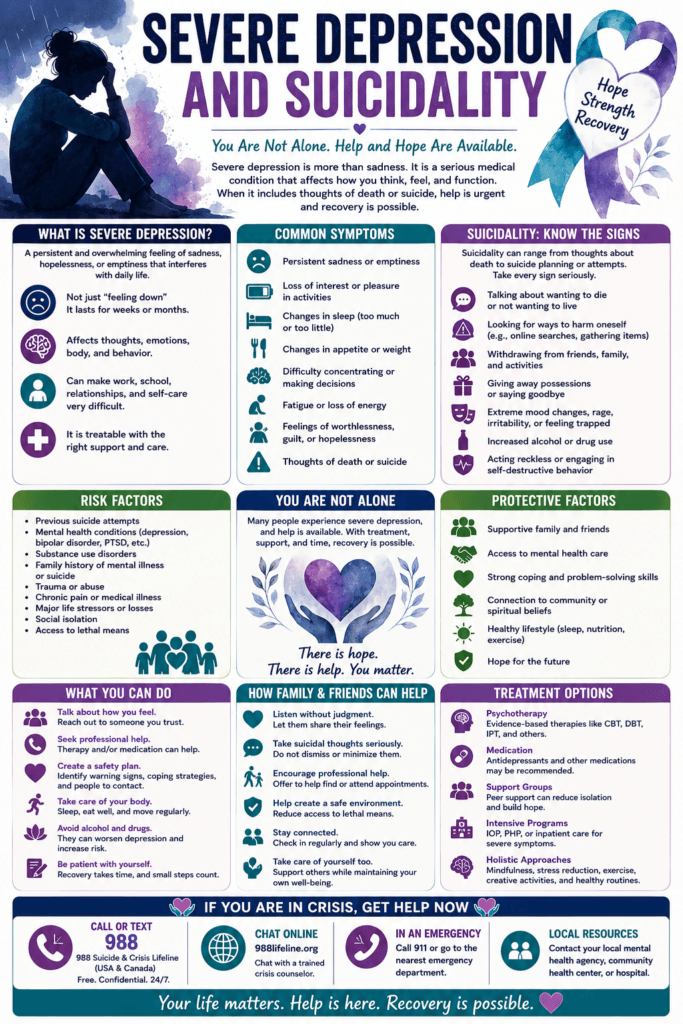
Severe depression is a serious mental health condition that affects a person’s thoughts, emotions, behaviors, physical health, and ability to function in daily life. Unlike temporary feelings of sadness or disappointment, severe depression is persistent and can interfere with work, school, relationships, and self-care. In some individuals, depression may be accompanied by suicidality, which includes suicidal thoughts, suicidal intent, suicide planning, or suicide attempts. Although these experiences can be frightening, they are treatable medical conditions that deserve prompt, compassionate, and evidence-based care. Understanding the signs, risk factors, and available treatments for severe depression and suicidality is essential for promoting early intervention, reducing stigma, improving safety, and supporting recovery. With timely professional treatment and strong support systems, many individuals are able to regain hope, improve their quality of life, and achieve meaningful recovery.
Severe Depression and Suicidality
Severe depression is a serious mental health condition that affects how a person thinks, feels, and functions in daily life. It is more than feeling sad or discouraged for a few days. Individuals with severe depression may experience persistent feelings of hopelessness, profound loss of interest in activities they once enjoyed, difficulty performing everyday tasks, and significant emotional and physical symptoms that interfere with work, school, relationships, and self-care. In some cases, severe depression is accompanied by suicidality, which refers to suicidal thoughts, suicidal intent, suicide planning, suicide attempts, or behaviors that indicate an increased risk of self-harm.
Depression is a treatable medical condition, and many people recover with appropriate care. However, suicidality is a medical emergency that requires prompt evaluation and intervention.
Understanding Severe Depression
Depression affects multiple areas of the brain involved in mood regulation, motivation, sleep, concentration, and emotional processing. It develops through a combination of biological, psychological, environmental, and social factors rather than a single cause.
Symptoms typically persist for at least two weeks and may include:
- Persistent sadness or emptiness
- Loss of interest or pleasure in previously enjoyable activities
- Fatigue or loss of energy
- Changes in appetite or weight
- Sleep disturbances (sleeping too much or too little)
- Difficulty concentrating or making decisions
- Feelings of worthlessness or excessive guilt
- Slowed movements or restlessness
- Social withdrawal
- Hopelessness about the future
- Recurrent thoughts of death or suicide
Not everyone experiences the same symptoms, and depression can vary in severity.
Understanding Suicidality
Suicidality exists on a spectrum and may include:
- Passive thoughts that life is not worth living
- Thoughts about suicide
- Developing a suicide plan
- Suicidal intent
- Suicide attempts
Having suicidal thoughts does not necessarily mean someone will act on them, but every expression of suicidality should be taken seriously and assessed by a qualified healthcare professional.
Risk Factors
Several factors may increase the risk of severe depression and suicidality:
- Previous suicide attempts
- Depression, bipolar disorder, or other mental health conditions
- Alcohol or substance use disorders
- Chronic pain or serious medical illness
- Traumatic experiences
- Family history of suicide or mental illness
- Major life stressors
- Social isolation
- Financial hardship
- Recent significant loss
- Access to lethal means
Risk factors help identify vulnerability, but do not predict with certainty who will experience suicidal behavior.
Warning Signs
Warning signs that someone may be at increased risk include:
- Talking about wanting to die
- Expressing hopelessness or feeling like a burden
- Giving away valued possessions
- Withdrawing from family and friends
- Increased alcohol or drug use
- Dramatic mood changes
- Sleeping much more or much less than usual
- Neglecting personal care
- Saying goodbye to loved ones
- Looking for ways to harm themselves
Recognizing these warning signs early can lead to timely intervention.
Assessment
Healthcare professionals evaluate both depression and suicide risk through a comprehensive assessment that may include:
- Current symptoms
- Mental health history
- Previous suicide attempts
- Substance use
- Medical conditions
- Family history
- Current stressors
- Protective factors
- Access to lethal means
The purpose of assessment is to determine the appropriate level of care and develop a personalized treatment plan.
Evidence-Based Treatment
Treatment depends on symptom severity and individual needs.
Psychotherapy
Effective therapies include:
- Cognitive Behavioral Therapy (CBT)
- Interpersonal Therapy (IPT)
- Dialectical Behavior Therapy (DBT) is particularly effective for individuals with chronic suicidal thoughts or emotional dysregulation
- Problem-Solving Therapy
- Acceptance and Commitment Therapy (ACT)
Medication
Antidepressant medications may be recommended when clinically appropriate. Medication selection and monitoring should be individualized, particularly during the early weeks of treatment when close follow-up is important.
Hospitalization
Individuals at imminent risk of suicide may require emergency evaluation and, in some cases, inpatient psychiatric hospitalization to ensure safety while treatment begins.
Other Treatments
For selected individuals with severe or treatment-resistant depression, additional options may include:
- Electroconvulsive therapy (ECT)
- Repetitive transcranial magnetic stimulation (rTMS)
- Ketamine or esketamine treatments under appropriate clinical supervision
These interventions are reserved for carefully evaluated clinical situations.
Recovery and Ongoing Care
Recovery often involves:
- Consistent treatment participation
- Medication adherence when prescribed
- Healthy sleep habits
- Regular physical activity
- Balanced nutrition
- Strong social support
- Stress management
- Ongoing psychotherapy
- Relapse prevention planning
Many people experience substantial improvement with comprehensive treatment, although recovery timelines vary.
Supporting Someone with Severe Depression
Family members and friends can help by:
- Listening without judgment
- Taking suicidal statements seriously
- Encouraging professional treatment
- Helping with practical needs
- Staying connected
- Learning about depression
- Supporting treatment adherence
- Assisting with follow-up appointments when appropriate
Supportive relationships can be an important protective factor, but are not a substitute for professional care.
When Immediate Help Is Needed
If someone expresses suicidal intent, has a plan, is preparing to act, or cannot keep themselves safe, they need immediate emergency evaluation. Contact your local emergency services or go to the nearest emergency department. In the United States and Canada, the 988 Suicide & Crisis Lifeline provides immediate support by calling or texting 988. If you are in another country, contact your local emergency services or crisis hotline.
Conclusion
Severe depression and suicidality are serious but treatable conditions that require timely recognition and evidence-based care. Depression affects emotional, cognitive, and physical functioning, while suicidality represents a spectrum of thoughts and behaviors that always deserve prompt attention. Through comprehensive assessment, psychotherapy, medication when appropriate, crisis intervention, family support, and ongoing follow-up, many individuals recover and regain hope. Early intervention, compassionate care, and continued support are key to reducing suicide risk and helping individuals build healthier, more fulfilling lives.
Self-Management Strategies to Understand Severe Depression and Suicidality
Self-management is an important part of living with severe depression, but it is not a substitute for professional treatment, especially when suicidal thoughts are present. Severe depression can make even simple daily tasks feel overwhelming, and suicidal thoughts require prompt attention from a qualified healthcare professional. Self-management strategies are most effective when they are used alongside evidence-based treatment, supportive relationships, and regular follow-up with healthcare providers.
1. Learn About Depression and Suicidality
Educate yourself about the symptoms, causes, and treatments of severe depression. Understanding that depression is a medical condition—not a personal weakness—can reduce self-blame and encourage you to seek help early. Learn to recognize the warning signs of worsening depression and suicidal thinking so you can respond quickly.
2. Follow Your Treatment Plan
Attend therapy appointments, take prescribed medications exactly as directed, and keep regular follow-up visits with your healthcare provider. Do not stop medication or change your treatment plan without consulting your clinician, even if you begin to feel better.
3. Monitor Your Mood
Keep a daily journal or use a mood-tracking app to record your emotions, sleep, energy level, appetite, stressors, and activities. Monitoring patterns can help you identify early signs of worsening depression and discuss them with your treatment team.
4. Build a Structured Daily Routine
Depression often disrupts normal routines. Create a simple daily schedule that includes regular wake-up and bedtime hours, meals, personal hygiene, light physical activity, and meaningful tasks. Breaking larger goals into small, manageable steps can make them feel more achievable.
5. Practice Healthy Coping Skills
Develop positive ways to manage difficult emotions, such as:
- Deep breathing exercises
- Mindfulness or meditation
- Gentle physical activity
- Journaling
- Listening to calming music
- Spending time in nature
- Creative activities like drawing or painting
- Reading or other relaxing hobbies
Healthy coping skills can reduce stress and improve emotional regulation over time.
6. Stay Connected to Supportive People
Depression often leads to isolation, but maintaining contact with trusted family members, friends, or support groups can reduce loneliness and provide encouragement. Even brief conversations or shared activities can help you stay connected.
7. Prioritize Physical Health
Physical and mental health are closely connected. Aim for:
- Regular sleep
- Balanced nutrition
- Adequate hydration
- Routine physical activity as tolerated
- Regular medical care
Small improvements in physical health can support emotional well-being.
8. Reduce Alcohol and Drug Use
Alcohol and recreational drugs can worsen depression, interfere with treatment, impair judgment, and increase suicide risk. If substance use is part of the problem, discuss it openly with your healthcare provider so it can be addressed as part of your treatment.
9. Create a Personal Safety Plan
Work with your therapist or healthcare provider to develop a written safety plan. It should include:
- Your personal warning signs
- Healthy coping strategies
- People you can contact for support
- Professional resources
- Emergency contact information
- Steps to make your environment safer, such as reducing access to items that could be used for self-harm
Keep the plan somewhere easy to access and review it regularly.
10. Be Kind to Yourself
Recovery is rarely a straight line. Avoid harsh self-criticism if progress feels slow. Celebrate small accomplishments, such as getting out of bed, attending therapy, or completing a daily task. Self-compassion can help build resilience during recovery.
11. Set Small, Realistic Goals
Depression can make large tasks feel impossible. Focus on one or two achievable goals each day, such as taking a shower, going for a short walk, or calling a friend. Small successes can gradually rebuild confidence and motivation.
12. Know When to Seek Immediate Help
If you notice suicidal thoughts becoming more frequent, intense, or specific—or if you feel unable to keep yourself safe—seek immediate help. Contact your mental health provider, go to the nearest emergency department, or call your local emergency services. In the United States and Canada, you can also call or text 988 to reach the Suicide & Crisis Lifeline.
Conclusion
Self-management strategies can help individuals better understand severe depression, strengthen healthy coping skills, and support recovery when used alongside professional treatment. Learning about the condition, following a treatment plan, maintaining healthy routines, monitoring symptoms, staying connected with supportive people, and developing a personalized safety plan can improve emotional well-being and reduce the risk of worsening symptoms. However, severe depression and suicidality require timely professional care, and any thoughts of self-harm or suicide should always be treated as a medical emergency. With appropriate treatment, support, and ongoing self-care, recovery is possible, and hope can be restored.
Family Support Strategies to Understand Severe Depression and Suicidality
Family support is a critical part of recovery for individuals experiencing severe depression and suicidality. Depression affects not only the person living with the illness but also their loved ones, who may feel worried, confused, or overwhelmed. Learning about depression, maintaining open communication, and working alongside healthcare professionals can help families provide effective support while protecting their own well-being. Although family support is invaluable, it does not replace professional mental health treatment or emergency care when suicide risk is present.
1. Learn About Severe Depression and Suicidality
Educate yourself about the symptoms, causes, and treatments of severe depression. Understand that depression is a medical condition involving biological, psychological, and social factors—not a sign of weakness or lack of effort. Learning about suicide warning signs can help you respond promptly if your loved one’s condition worsens.
2. Take All Suicidal Statements Seriously
Never dismiss comments such as “Everyone would be better off without me” or “I don’t want to live anymore.” Even if you are unsure how serious the statement is, respond with compassion and encourage immediate evaluation by a mental health professional. When there is concern that someone may act on suicidal thoughts, seek emergency assistance right away.
3. Encourage Professional Treatment
Support your loved one in attending therapy appointments, following up with healthcare providers, and taking prescribed medications as directed. Offer practical assistance, such as providing transportation, helping schedule appointments, or accompanying them if they would like your support.
4. Practice Compassionate Communication
Listen without judgment, criticism, or minimizing their experiences. Use supportive statements such as:
- “I’m here for you.”
- “Thank you for telling me how you’re feeling.”
- “You don’t have to face this alone.”
- “Let’s work together to get you the help you deserve.”
Avoid telling someone to “just think positively” or “snap out of it,” as these comments can increase feelings of isolation.
5. Watch for Changes in Behavior
Pay attention to warning signs such as:
- Increased withdrawal from family and friends
- Sudden hopelessness or despair
- Giving away valued possessions
- Talking about death or suicide
- Increased alcohol or drug use
- Dramatic mood changes
- Neglecting personal care
- Missing work, school, or treatment appointments
Recognizing these changes early allows families to encourage timely professional intervention.
6. Help Create a Safe Environment
Work with your loved one and their healthcare provider to develop a safety plan. When there is a significant suicide risk, temporarily reducing access to medications, firearms, or other potentially dangerous items can be an important part of keeping the environment safer. These decisions should be made respectfully and, whenever possible, in collaboration with the individual and their treatment team.
7. Encourage Healthy Daily Habits
Support routines that promote recovery, including:
- Regular sleep schedules
- Nutritious meals
- Light physical activity as tolerated
- Time outdoors
- Social connection
- Relaxation techniques
- Meaningful hobbies
Healthy routines can complement professional treatment and improve overall well-being.
8. Respect Their Feelings While Offering Hope
Avoid arguing with your loved one about whether their feelings are “logical.” Instead, acknowledge that their emotional pain is real while reminding them that depression is treatable and that recovery is possible with appropriate care.
9. Participate in Family Therapy When Appropriate
Family therapy can improve communication, strengthen problem-solving skills, reduce conflict, and help everyone better understand depression and suicide prevention. It also gives family members an opportunity to express concerns and learn effective ways to provide support.
10. Encourage Ongoing Social Support
Help your loved one remain connected with trusted friends, support groups, faith communities (if they find them meaningful), and other positive social networks. Healthy relationships can reduce isolation and reinforce recovery.
11. Develop an Emergency Plan
Know what steps to take if your loved one’s condition suddenly worsens. Keep important phone numbers readily available, including their mental health provider, local emergency services, nearby emergency departments, and crisis resources. Having a plan in place allows families to respond quickly during a crisis.
12. Take Care of Your Own Well-Being
Supporting someone with severe depression can be emotionally demanding. Family members should also care for their own mental and physical health by maintaining healthy routines, seeking counseling or support groups if needed, setting healthy boundaries, and taking time to rest and recharge. Caring for yourself enables you to provide more consistent and effective support.
Conclusion
Families play an essential role in supporting individuals living with severe depression and suicidality. By learning about the illness, encouraging evidence-based treatment, communicating with empathy, recognizing warning signs, creating a safer environment, and remaining actively involved in the recovery process, loved ones can provide meaningful support while helping reduce the risk of worsening symptoms. Recovery is strengthened through collaboration among the individual, family, healthcare professionals, and community resources. With timely treatment, compassionate support, and continued hope, many people living with severe depression go on to experience significant improvement and lead fulfilling lives.
Community Resource Strategies to Understand Severe Depression and Suicidality
Community resources are an essential part of supporting individuals living with severe depression and suicidality. While professional mental health treatment remains the cornerstone of care, community organizations, healthcare systems, crisis services, educational programs, and peer support networks help individuals and families access timely treatment, reduce isolation, and build long-term recovery. These resources complement medical care by providing education, emotional support, practical assistance, and connections to ongoing services.
1. Utilize Community Mental Health Centers
Community mental health centers provide affordable or low-cost services, including mental health assessments, individual and group counseling, medication management, crisis intervention, case management, and referrals to specialized care. Many centers also offer treatment for co-occurring substance use disorders.
2. Access Crisis Intervention Services
Individuals experiencing suicidal thoughts, worsening depression, or a mental health crisis should seek immediate help through local crisis response teams, emergency departments, or mobile crisis services where available. In the United States and Canada, the 988 Suicide & Crisis Lifeline provides free, confidential support by phone or text 24 hours a day, seven days a week.
3. Participate in Peer Support Groups
Peer-led support groups provide opportunities to connect with others who have experienced depression or other mental health conditions. Sharing experiences, coping strategies, and encouragement can reduce feelings of isolation and strengthen hope during recovery. Peer support complements—but does not replace—professional treatment.
4. Collaborate With Healthcare Providers
Primary care providers, psychiatrists, psychologists, licensed therapists, psychiatric nurse practitioners, social workers, and counselors all play important roles in recognizing and treating severe depression. Regular communication among healthcare professionals helps ensure coordinated, comprehensive care.
5. Utilize Hospital and Outpatient Behavioral Health Programs
Hospitals and behavioral health clinics often offer intensive outpatient programs (IOPs), partial hospitalization programs (PHPs), outpatient counseling, and specialized depression treatment services. These programs provide structured support while allowing individuals to continue living at home when clinically appropriate.
6. Access School and College Mental Health Services
Schools, colleges, and universities frequently provide counseling services, crisis support, wellness programs, and referrals for students experiencing depression or suicidal thoughts. Early intervention in educational settings can improve academic success and emotional well-being.
7. Explore Employee Assistance Programs (EAPs)
Many employers offer confidential Employee Assistance Programs that provide short-term counseling, referrals to mental health professionals, stress management resources, and crisis support. EAPs can reduce barriers to seeking care while protecting employee privacy.
8. Participate in Community Education Programs
Hospitals, nonprofit organizations, libraries, and public health agencies often host workshops and educational events about depression, suicide prevention, stress management, and mental wellness. These programs increase awareness, reduce stigma, and encourage individuals to seek help early.
9. Engage in Healthy Community Activities
Community recreation centers, volunteer organizations, exercise groups, faith communities (if meaningful to the individual), hobby clubs, and educational classes can reduce isolation and promote a sense of belonging. Social connection is an important protective factor that supports overall mental health.
10. Utilize Telehealth and Virtual Mental Health Services
For individuals with transportation challenges or those living in rural areas, telehealth services provide access to psychiatrists, therapists, psychologists, and other mental health professionals. Virtual support groups and online educational programs can also help maintain continuity of care.
11. Support Community Suicide Prevention Efforts
Communities can reduce suicide risk by promoting mental health awareness campaigns, encouraging training in suicide prevention, supporting anti-stigma initiatives, and expanding access to behavioral healthcare. Community education helps people recognize warning signs and encourages earlier intervention.
12. Build a Long-Term Recovery Network
Successful recovery is strengthened by combining professional treatment with multiple community supports. Individuals benefit from maintaining connections with healthcare providers, peer support groups, family, community organizations, educational resources, and healthy social activities. A strong recovery network provides ongoing encouragement, accountability, and assistance during periods of increased stress.
Conclusion
Community resources are a vital part of understanding and managing severe depression and suicidality. Mental health centers, crisis services, healthcare providers, peer support groups, educational programs, schools, workplaces, and community organizations all contribute to early intervention, effective treatment, and long-term recovery. When these resources are combined with evidence-based mental health care, family support, and healthy self-management strategies, individuals are better equipped to reduce suicide risk, improve emotional well-being, strengthen resilience, and build fulfilling, meaningful lives. If someone is experiencing suicidal thoughts or feels unable to stay safe, immediate professional or emergency assistance should always be sought, as timely intervention can save lives.
Frequently Asked Questions
Here are some common questions:
1. What is severe depression?
Answer: Severe depression is a serious mental health condition that causes persistent sadness, hopelessness, loss of interest in daily activities, and significant difficulty functioning at home, work, school, or in relationships. It affects thoughts, emotions, physical health, and behavior, and usually requires professional treatment.
2. What is suicidality?
Answer: Suicidality refers to a range of experiences related to suicide, including passive thoughts that life is not worth living, suicidal thoughts, suicide planning, suicidal intent, suicide attempts, and other behaviors indicating an increased risk of self-harm. Any suicidal thoughts should be taken seriously.
3. What causes severe depression?
Answer: Severe depression usually develops from a combination of biological, psychological, environmental, and social factors. Genetics, brain chemistry, traumatic experiences, chronic stress, medical conditions, and major life changes can all contribute.
4. What are the common symptoms of severe depression?
Answer: Symptoms may include:
- Persistent sadness or emptiness
- Loss of interest in enjoyable activities
- Fatigue or low energy
- Sleep disturbances
- Changes in appetite or weight
- Difficulty concentrating
- Feelings of guilt or worthlessness
- Hopelessness
- Social withdrawal
- Thoughts of death or suicide
5. What is the difference between sadness and severe depression?
Answer: Sadness is a normal emotional response that usually improves with time or as circumstances change. Severe depression is a medical condition that persists for weeks or longer, significantly interferes with daily functioning, and often requires professional treatment.
6. Who is at greater risk for severe depression and suicidality?
Answer: Risk may be higher for individuals with:
- Previous suicide attempts
- Depression, bipolar disorder, or other mental health conditions
- Alcohol or substance use disorders
- Chronic pain or serious medical illness
- Trauma or abuse
- Family history of suicide or mental illness
- Major life stressors
- Social isolation
7. What are the warning signs that someone may be suicidal?
Answer: Warning signs include talking about wanting to die, expressing hopelessness, giving away possessions, withdrawing from others, increased alcohol or drug use, dramatic mood changes, looking for ways to harm themselves, or saying goodbye to loved ones.
8. Can someone appear happy and still be suicidal?
Answer: Yes. Some individuals experiencing suicidal thoughts may hide their emotional pain or temporarily appear calmer after deciding to seek help or, in some cases, after making a decision about suicide. Because appearances can be misleading, it is important to take concerning statements or behaviors seriously and encourage a professional assessment.
9. Is depression treatable?
Answer: Yes. Depression is highly treatable. Many individuals improve with evidence-based psychotherapy, medication when appropriate, healthy lifestyle changes, strong social support, and ongoing follow-up with healthcare professionals.
10. What therapies are commonly used?
Answer: Effective treatments may include:
- Cognitive Behavioral Therapy (CBT)
- Interpersonal Therapy (IPT)
- Dialectical Behavior Therapy (DBT)
- Acceptance and Commitment Therapy (ACT)
- Problem-Solving Therapy
Treatment is individualized based on each person’s needs.
11. Do antidepressants help everyone?
Answer: Antidepressants can be effective for many people, but response varies from person to person. A healthcare provider will determine whether medication is appropriate and monitor its effectiveness and side effects.
12. Can severe depression affect physical health?
Answer: Yes. Depression may cause fatigue, headaches, digestive problems, sleep disturbances, changes in appetite, chronic pain, and reduced energy. It can also worsen certain chronic medical conditions if left untreated.
13. How can family members provide support?
Answer: Families can help by listening without judgment, encouraging professional treatment, recognizing warning signs, staying connected, helping with daily responsibilities when needed, and supporting recovery while respecting the individual’s dignity and autonomy.
14. What should someone do if they think a loved one is suicidal?
Answer: Take all suicidal statements and behaviors seriously. Encourage the person to seek immediate professional help and stay with them if you believe they are at immediate risk. If there is concern that they may act on suicidal thoughts or cannot keep themselves safe, contact local emergency services or go to the nearest emergency department.
15. Can lifestyle changes improve depression?
Answer: Healthy habits such as regular sleep, physical activity, balanced nutrition, stress management, avoiding alcohol and recreational drugs, and maintaining supportive relationships can complement professional treatment, although they are usually not sufficient by themselves for severe depression.
16. Is hospitalization ever necessary?
Answer: Yes. Hospitalization may be recommended if someone is at imminent risk of suicide, cannot maintain their safety, or requires intensive psychiatric care to stabilize severe symptoms.
17. Can someone recover from severe depression?
Answer: Yes. Many people recover or experience substantial improvement with appropriate treatment, continued follow-up, healthy coping strategies, and strong support systems. Recovery may take time, but improvement is possible.
18. What can someone do to reduce the risk of relapse?
Answer: Continue attending therapy, take medications as prescribed if applicable, maintain healthy routines, recognize early warning signs, follow a relapse prevention or safety plan, stay connected with supportive people, and communicate with healthcare providers if symptoms begin to return.
19. Where can people find help during a mental health crisis?
Answer: If someone is experiencing suicidal thoughts or feels unable to stay safe, they should seek immediate help from local emergency services or the nearest emergency department. In the United States and Canada, they can also call or text 988 to reach the 988 Suicide & Crisis Lifeline, which provides free, confidential support 24 hours a day.
20. What is the overall goal of treatment for severe depression and suicidality?
Answer: The primary goal is to reduce emotional distress, improve safety, treat depression effectively, strengthen healthy coping skills, restore hope, and improve quality of life. Through comprehensive care—including psychotherapy, medication when appropriate, crisis intervention, family support, and community resources—many individuals are able to recover, build resilience, and lead meaningful, fulfilling lives.
Conclusion
Severe depression and suicidality are complex but treatable conditions that require timely recognition, comprehensive assessment, and individualized care. Effective treatment often includes evidence-based psychotherapy, medication when appropriate, crisis intervention, healthy lifestyle changes, family involvement, and ongoing community support. Early recognition of warning signs and prompt access to professional care can significantly reduce the risk of suicide and improve long-term outcomes. Recovery is a process that takes time, patience, and continued support, but it is achievable. By increasing public awareness, reducing stigma, encouraging open conversations about mental health, and ensuring access to quality treatment, individuals experiencing severe depression can receive the care they need to build resilience, restore hope, and lead healthier, more fulfilling lives.
Video: You might have depression and not even realize it #MentalWellness #Help #988Lifeline