Methadone is a well-established, evidence-based medication for treating opioid use disorder (OUD), helping reduce opioid cravings, relieve withdrawal symptoms, and lower the risk of overdose and death. In the United States, however, methadone for OUD is generally dispensed through federally certified Opioid Treatment Programs (OTPs), which can limit access for individuals living in rural areas or facing transportation, childcare, or financial challenges. As the opioid overdose crisis continues, policymakers, healthcare professionals, and researchers are exploring ways to reduce unnecessary barriers while maintaining patient safety. Potential strategies include expanding the addiction treatment workforce, strengthening partnerships between OTPs and community healthcare providers, increasing the use of telehealth where appropriate, improving insurance coverage, and carefully evaluating models of office-based prescribing or pharmacy dispensing. Understanding these approaches can help inform evidence-based policies that improve access to life-saving treatment while preserving high standards of care.
Barriers to Direct Prescribing of Methadone for Opioid Addiction
Methadone is one of the most effective medications for treating opioid use disorder (OUD), reducing illicit opioid use, overdose deaths, infectious disease transmission, and criminal justice involvement. Despite decades of evidence supporting its effectiveness, access remains limited because of regulatory, healthcare system, provider, patient, and societal barriers. Unlike medications such as buprenorphine, methadone for OUD generally cannot be prescribed directly by most healthcare providers for patients to fill at a community pharmacy in the United States. Instead, it is primarily dispensed through certified Opioid Treatment Programs (OTPs), creating significant obstacles to treatment.
1. Federal Regulatory Restrictions
The largest barrier is federal regulation. Methadone prescribed for opioid use disorder must generally be administered or dispensed through federally certified OTPs rather than prescribed in a traditional office setting.
These regulations require:
- Enrollment in a certified OTP
- Supervised dosing during early treatment
- Strict documentation requirements
- Regular counseling and monitoring
- Gradual eligibility for take-home doses
Although these rules were designed to promote safety, they can significantly delay treatment initiation and reduce access, particularly in underserved areas.
2. Limited Number of Opioid Treatment Programs
Many communities have few or no OTPs.
Patients living in rural or underserved areas may need to:
- Travel several hours daily
- Cross county or state lines
- Arrange transportation
- Miss work or school
- Pay additional travel expenses
These burdens often discourage treatment or lead to early dropout.
3. Daily Clinic Attendance Requirements
Most new patients must attend the clinic daily for observed dosing.
Challenges include:
- Employment conflicts
- Childcare responsibilities
- Transportation difficulties
- Physical disabilities
- Weather-related travel
- Limited clinic hours
Daily attendance can become a major obstacle, especially during the first several months of recovery.
4. Provider Limitations
Unlike many medications, most physicians, physician assistants, and nurse practitioners cannot simply write a methadone prescription for opioid addiction.
Many clinicians:
- Received little training in methadone treatment
- Work outside OTP settings
- Cannot integrate methadone into primary care
- Refer patients elsewhere instead of initiating treatment
This fragmentation delays care.
5. Pharmacy Restrictions
Community pharmacies routinely dispense methadone for chronic pain, but generally cannot dispense methadone prescribed for opioid use disorder under current U.S. regulations.
As a result:
- Patients cannot use neighborhood pharmacies.
- Treatment remains centralized in OTPs.
- Access is reduced in areas without methadone clinics.
6. Stigma
Methadone continues to face significant stigma.
Common misconceptions include:
- “It’s replacing one drug with another.”
- “People should quit without medication.”
- “Methadone isn’t real recovery.”
Stigma may come from:
- Family members
- Employers
- Healthcare providers
- Recovery communities
- The public
Fear of judgment prevents many people from seeking treatment.
7. Financial Barriers
Although many insurance plans cover methadone treatment, barriers still exist.
These include:
- Insurance authorization delays
- Limited clinic contracts
- Transportation costs
- Lost wages
- Copayments
- Uninsured patients
Financial burdens may interrupt treatment continuity.
8. Workforce Shortages
Many OTPs experience shortages of:
- Addiction physicians
- Nurses
- Counselors
- Peer recovery specialists
- Behavioral health staff
Staff shortages contribute to:
- Long waiting lists
- Reduced appointment availability
- Increased provider burnout
9. Geographic Inequities
Access varies widely across states and regions.
Some areas have:
- Few clinics
- Long waiting periods
- No public transportation
- Large rural service areas
Urban patients generally have greater access than rural residents.
10. Safety Concerns
Methadone can cause:
- Respiratory depression
- Sedation
- Drug interactions
- Heart rhythm abnormalities (QT prolongation)
- Overdose if improperly initiated
These risks lead regulators to require close monitoring, particularly during treatment initiation and dose adjustments.
11. Complex Patient Needs
Many individuals with OUD also experience:
- Mental health disorders
- Chronic pain
- Homelessness
- Hepatitis C
- HIV infection
- Pregnancy
- Polysubstance use
Providing comprehensive care requires coordination among multiple healthcare professionals, increasing the complexity of treatment.
12. Policy and Legal Challenges
Although federal agencies have introduced some flexibilities in recent years, significant legal and regulatory barriers remain.
Current policy discussions include:
- Expanding office-based methadone prescribing
- Pharmacy-based methadone dispensing
- Increased take-home flexibility
- Mobile methadone services
- Telehealth integration
- Reducing unnecessary administrative requirements
Many experts believe these reforms could improve access while maintaining patient safety.
Strategies to Improve Access
Several evidence-informed approaches could reduce barriers:
- Expand the number of certified OTPs.
- Increase the number of mobile methadone clinics in rural communities.
- Integrate addiction treatment into primary care when regulations allow.
- Strengthen transportation assistance.
- Increase provider education on medications for OUD.
- Reduce stigma through public education.
- Expand insurance coverage and reimbursement.
- Improve coordination between primary care, behavioral health, and addiction specialists.
- Continue evaluating safe models for pharmacy-based dispensing and office-based methadone treatment.
Conclusion
Methadone remains one of the most effective treatments for opioid use disorder, with decades of evidence demonstrating reductions in overdose deaths, illicit opioid use, and improved long-term recovery outcomes. However, regulatory restrictions, limited treatment programs, transportation challenges, workforce shortages, stigma, and geographic disparities continue to limit access. Addressing these barriers through thoughtful policy reform, expanded treatment infrastructure, and integrated healthcare delivery could enable more individuals with opioid use disorder to receive timely, evidence-based care while maintaining appropriate safeguards for patient safety.
How Governments Can Remove Barriers to Direct Prescribing of Methadone for Opioid Addiction
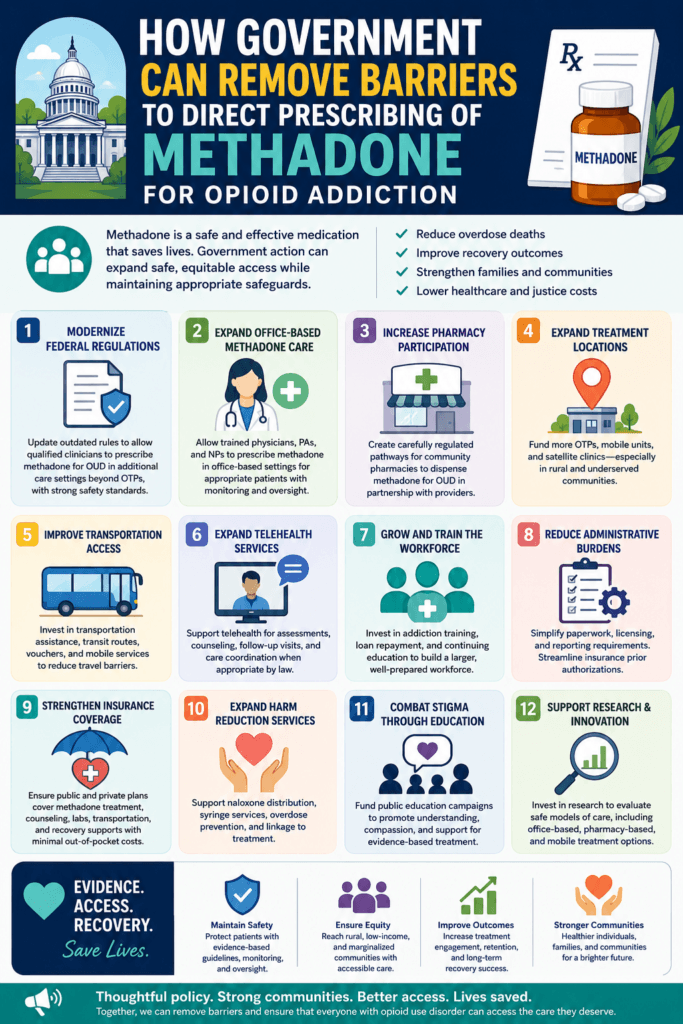
Methadone is one of the most effective medications for treating opioid use disorder (OUD), with decades of evidence showing it reduces illicit opioid use, overdose deaths, transmission of infectious diseases, and criminal justice involvement. However, in the United States, access remains more restricted than for most other medications because methadone for OUD is generally dispensed through certified Opioid Treatment Programs (OTPs) rather than prescribed directly in most office-based settings. Governments at the federal, state, and local levels can reduce barriers while maintaining appropriate safeguards to ensure patient safety.
1. Modernize Federal Regulations
One of the most significant opportunities is to modernize regulations governing methadone treatment. Policymakers could evaluate whether stable patients can safely receive methadone through additional healthcare settings beyond traditional OTPs. Any expansion should be gradual, evidence-based, and include safeguards such as provider training, patient monitoring, and clear prescribing standards. Modernizing regulations can improve access while preserving the medication’s strong safety profile.
2. Expand Office-Based Methadone Care
Governments can support pilot programs and, where supported by evidence and law, broader implementation of office-based methadone treatment. Qualified physicians, physician assistants, and nurse practitioners with specialized addiction training could potentially provide ongoing care for appropriate patients under regulatory frameworks that ensure careful monitoring. This would allow patients to receive treatment through familiar healthcare providers rather than traveling to specialized clinics.
3. Increase Pharmacy Participation
Community pharmacies already safely dispense methadone for pain management. Governments could explore carefully regulated models that allow trained pharmacies to dispense methadone for opioid use disorder in collaboration with OTPs or other authorized providers. Pharmacy-based dispensing could greatly improve access in rural and underserved communities while maintaining accountability through prescription monitoring and clinical oversight.
4. Expand the Number of Opioid Treatment Programs
Many counties still lack an OTP. Governments can increase funding to establish additional clinics in communities with limited access, particularly in rural and underserved regions. Mobile treatment units and satellite clinics can also help reach patients who live far from existing treatment centers.
5. Improve Transportation Access
Transportation remains a major barrier for many patients required to attend frequent clinic visits. Governments can reduce this burden by funding transportation assistance programs, expanding public transit routes to treatment centers, supporting mobile treatment services, and allowing greater flexibility for stable patients who no longer require daily observed dosing.
6. Support Telehealth Services
Although methadone itself requires in-person dispensing under current regulations, telehealth can be used for many aspects of treatment, including assessments, counseling, follow-up visits, recovery coaching, and care coordination when permitted. Expanding telehealth infrastructure can reduce travel time and improve continuity of care, particularly in rural areas.
7. Increase Workforce Training
A shortage of addiction medicine professionals limits access nationwide. Governments can invest in education and training for healthcare professionals by:
- Expanding addiction medicine education in medical, nursing, and PA programs.
- Funding continuing education on opioid use disorder treatment.
- Offering loan repayment programs for clinicians working in underserved areas.
- Supporting certification programs in addiction medicine.
A larger, well-trained workforce would increase treatment capacity while improving the quality of care.
8. Reduce Administrative Burdens
Lengthy paperwork, licensing requirements, and insurance authorization processes can delay treatment. Governments can simplify administrative procedures by reducing unnecessary documentation, streamlining licensing processes, improving interagency coordination, and encouraging insurers to minimize prior-authorization requirements for evidence-based medications.
9. Improve Insurance Coverage
Financial barriers continue to limit access for many patients. Governments can strengthen access by ensuring that public and private insurance plans provide comprehensive coverage for methadone treatment, counseling, laboratory services, transportation when appropriate, and recovery support services. Reducing out-of-pocket costs can improve treatment initiation and long-term retention.
10. Expand Harm Reduction Services
Governments can integrate methadone treatment with broader harm reduction initiatives such as syringe service programs, overdose education, naloxone distribution, infectious disease screening, and peer recovery services. These programs often serve as important entry points into treatment and help reduce overdose risk while individuals engage in care.
11. Combat Stigma Through Public Education
Stigma remains a major obstacle to treatment. Public education campaigns can help explain that opioid use disorder is a chronic medical condition and that methadone is an evidence-based treatment associated with improved survival and recovery outcomes. Educational efforts targeting healthcare professionals, employers, law enforcement, and the public can reduce misconceptions and encourage more people to seek treatment.
12. Support Ongoing Research
Governments can fund research examining different models of methadone delivery, including office-based care, pharmacy-based dispensing, mobile treatment programs, and technology-assisted monitoring. High-quality research can guide future policy decisions and identify approaches that improve access without compromising patient safety.
13. Strengthen Integrated Care
Patients with opioid use disorder often have co-occurring mental health conditions, chronic pain, infectious diseases, or other medical needs. Governments can encourage integrated care models that combine primary care, behavioral health, addiction treatment, social services, and peer support. Coordinated care improves outcomes by addressing the full range of a patient’s health needs.
Conclusion
Removing barriers to methadone treatment does not require eliminating safety standards. Instead, governments can modernize regulations, expand treatment locations, strengthen the healthcare workforce, improve insurance coverage, reduce administrative burdens, and invest in evidence-based care models. Thoughtful reforms can increase access to life-saving treatment while maintaining appropriate safeguards against misuse and overdose. By balancing accessibility with patient safety, policymakers can help reduce opioid-related deaths and improve recovery opportunities for individuals living with opioid use disorder.
Self-Management Strategies to Understand How Government Can Remove Barriers to Direct Prescribing of Methadone for Opioid Addiction
Understanding how government policies affect access to methadone treatment can help individuals become informed advocates for their own recovery. While policy changes occur at the federal and state levels, people with opioid use disorder (OUD), their families, and healthcare providers can take practical steps to navigate the current system while supporting efforts to improve access. Self-management involves staying informed, actively participating in treatment decisions, and using available resources to overcome barriers.
1. Learn How Methadone Treatment Works
Educate yourself about methadone treatment, including how it reduces cravings, prevents withdrawal symptoms, and lowers the risk of overdose. Understanding why methadone is currently dispensed through certified Opioid Treatment Programs (OTPs) can help you better navigate the healthcare system and recognize ongoing policy discussions about expanding access.
2. Know Your Rights as a Patient
Become familiar with your rights regarding addiction treatment, insurance coverage, confidentiality, and nondiscrimination. Understanding these protections allows you to advocate for appropriate care and address unnecessary barriers when they arise.
3. Stay Informed About Policy Changes
Government regulations surrounding methadone treatment continue to evolve. Follow updates from trusted public health agencies, addiction medicine organizations, and state health departments so you understand how changes may affect treatment availability, take-home dosing, telehealth services, or future prescribing options.
4. Build a Strong Relationship With Your Treatment Team
Maintain open communication with your healthcare providers. Ask questions about your treatment plan, discuss concerns about clinic attendance or transportation, and explore available options if barriers arise. Active participation in your care helps ensure that treatment decisions are tailored to your needs.
5. Develop Reliable Transportation Plans
If daily or frequent clinic visits are required, create a transportation plan that includes family support, public transportation, rideshare services, community transportation programs, or recovery organizations. Planning ahead reduces missed appointments and helps maintain treatment consistency.
6. Maintain Excellent Treatment Adherence
Consistently attending appointments, taking medication as prescribed, participating in counseling, and following clinic guidelines may help patients qualify for additional take-home doses when appropriate. Good adherence also strengthens recovery and demonstrates readiness for greater treatment flexibility.
7. Keep Personal Health Records Organized
Maintain a folder containing:
- Medication lists
- Appointment schedules
- Insurance information
- Laboratory results
- Emergency contacts
- Important treatment documents
Having organized records improves communication among healthcare providers and helps with transitions between treatment settings.
8. Understand Insurance Benefits
Review your insurance coverage to understand what services are included, such as methadone treatment, counseling, laboratory testing, behavioral health care, transportation assistance, and pharmacy benefits. If problems arise, contact your treatment program or insurance representative for assistance with coverage issues.
9. Participate in Recovery Support Services
Medication works best when combined with recovery supports. Consider participating in:
- Peer recovery programs
- Counseling
- Behavioral therapies
- Support groups
- Recovery coaching
- Case management
These services strengthen long-term recovery regardless of future policy changes.
10. Advocate Respectfully for Better Access
Patients and families can help improve treatment systems by sharing their experiences with healthcare organizations, policymakers, and advocacy groups. Constructive feedback about transportation challenges, clinic availability, insurance barriers, or workforce shortages can help inform future policy decisions.
11. Practice Safe Medication Management
If you receive take-home methadone doses, follow all safety recommendations:
- Store medication in a locked location.
- Keep it away from children and pets.
- Never share medication.
- Take only the prescribed dose.
- Report lost or stolen medication immediately.
Responsible medication management promotes both personal safety and public trust.
12. Focus on Long-Term Recovery Goals
While policy reforms may improve access over time, maintaining recovery remains the highest priority. Continue building healthy daily habits by:
- Following your treatment plan
- Managing stress effectively
- Exercising regularly
- Eating nutritious meals
- Getting adequate sleep
- Avoiding high-risk situations
- Staying connected with supportive family and peers
These habits improve recovery outcomes regardless of how treatment is delivered.
Conclusion
Self-management empowers individuals with opioid use disorder to navigate existing treatment systems while preparing for future improvements in methadone access. By understanding current regulations, staying informed about policy developments, adhering to treatment, advocating respectfully, and maintaining healthy recovery habits, patients can overcome many existing barriers. Although governments play an important role in expanding access to methadone, informed and engaged patients remain central to achieving successful, long-term recovery.
Family Support Strategies to Understand How Government Can Remove Barriers to Direct Prescribing of Methadone for Opioid Addiction
Families play a vital role in helping loved ones navigate treatment for opioid use disorder (OUD). Understanding how government policies affect access to methadone treatment can help families provide informed support, advocate for needed services, and reduce the frustration that often accompanies delays or limited treatment availability. While policy decisions are made at the federal and state levels, families can make a meaningful difference by staying educated, supporting treatment engagement, and participating in community advocacy.
1. Learn About Methadone Treatment
Family members should understand that methadone is an evidence-based medication that helps reduce opioid cravings, prevent withdrawal symptoms, lower overdose risk, and improve long-term recovery outcomes. Learning why methadone has historically been dispensed through certified Opioid Treatment Programs (OTPs) rather than routinely prescribed in office settings helps families better understand the current system and ongoing policy discussions.
2. Stay Informed About Policy Changes
Government regulations surrounding methadone treatment continue to evolve. Families can follow updates from trusted public health agencies, addiction medicine organizations, and state health departments to stay informed about changes that may improve access, such as expanded take-home dosing, mobile treatment services, or new care delivery models.
3. Reduce Stigma Within the Family
Recovery is strengthened when families recognize opioid use disorder as a chronic medical condition rather than a moral failing. Encourage respectful language, avoid blaming or shaming, and view methadone as a legitimate medical treatment. Reducing stigma within the home creates a supportive environment that encourages continued treatment.
4. Assist With Transportation and Scheduling
Many patients must attend frequent clinic visits, particularly early in treatment. Families can help by:
- Providing transportation to appointments.
- Assisting with childcare during clinic visits.
- Helping organize appointment calendars.
- Encouraging consistent attendance.
- Identifying community transportation resources when needed.
Reliable support can reduce missed appointments and improve treatment retention.
5. Encourage Open Communication With Healthcare Providers
Support your loved one in discussing concerns with their treatment team, including transportation difficulties, work schedules, insurance issues, or other barriers. Families can attend appointments when invited, help prepare questions, and encourage informed decision-making while respecting the patient’s privacy and autonomy.
6. Understand Insurance and Financial Resources
Families can help review insurance benefits, identify coverage for methadone treatment, counseling, and behavioral health services, and connect with financial assistance programs if needed. Navigating insurance can be challenging, and family support often eases this burden.
7. Promote Safe Medication Practices
If take-home methadone doses are prescribed, families should help ensure medications are:
- Stored securely in a locked location.
- Kept away from children and pets.
- Taken exactly as prescribed.
- Never shared with anyone else.
Safe medication management protects both the patient and others in the household.
8. Support Comprehensive Recovery
Medication is only one part of recovery. Families can encourage participation in:
- Individual counseling.
- Family therapy.
- Peer recovery groups.
- Mental health treatment.
- Employment or educational programs.
- Healthy recreational activities.
Supporting all aspects of recovery promotes long-term success.
9. Participate in Community Advocacy
Families who have experienced barriers to methadone treatment can share their experiences with advocacy organizations, healthcare systems, and policymakers. Personal stories can help decision-makers better understand how transportation challenges, workforce shortages, and limited treatment locations affect real families and may inform future policy improvements.
10. Prepare for Changes in Treatment Access
If government policies expand office-based prescribing, pharmacy dispensing, or other treatment models in the future, families can help loved ones understand new options while encouraging careful discussions with healthcare providers about the most appropriate treatment setting. Every patient’s needs are different, and treatment decisions should remain individualized.
11. Encourage Patience During System Changes
Healthcare policy changes often take time to implement. Families can help maintain hope by focusing on the current treatment plan while remaining informed about future improvements. Supporting consistent engagement in care is more important than waiting for policy changes.
12. Celebrate Recovery Progress
Recognize achievements such as consistently attending appointments, maintaining medication adherence, participating in counseling, returning to work or school, or reaching personal recovery milestones. Positive reinforcement strengthens motivation and reminds loved ones that recovery is built through steady progress.
Conclusion
Families are powerful partners in recovery and can help overcome many barriers associated with methadone treatment by staying informed, reducing stigma, supporting treatment adherence, assisting with practical challenges, and advocating for evidence-based policies. Although governments can improve access through thoughtful regulatory reforms and expanded treatment options, family support remains essential to helping individuals engage in care, maintain recovery, and build healthier futures. Together, informed families and responsive public policies can improve access to life-saving treatment while preserving patient safety and quality of care.
Community Resource Strategies to Understand How Government Can Remove Barriers to Direct Prescribing of Methadone for Opioid Addiction
Communities play an essential role in improving access to treatment for opioid use disorder (OUD). While governments establish laws and regulations governing methadone treatment, local organizations, healthcare systems, advocacy groups, and public health agencies can help individuals navigate existing barriers and support evidence-informed policy improvements. By increasing education, expanding services, and strengthening partnerships, communities can help ensure that people with OUD receive timely, compassionate, and effective care.
1. Promote Public Education on Methadone Treatment
Community organizations can provide educational programs that explain how methadone works, its proven effectiveness, and its role in reducing opioid-related overdose deaths. Accurate information helps reduce stigma and improves public understanding of why policymakers are exploring ways to expand treatment access while maintaining patient safety.
2. Support Certified Opioid Treatment Programs
Communities can strengthen access by supporting certified Opioid Treatment Programs (OTPs) through partnerships with hospitals, primary care clinics, behavioral health providers, and social service agencies. Improved collaboration helps patients receive more coordinated care and reduces treatment delays.
3. Expand Recovery Support Services
Community resources that complement medication treatment include:
- Peer recovery coaches
- Recovery community organizations
- Mutual-support groups
- Individual and family counseling
- Recovery housing
- Employment assistance
- Educational and vocational programs
These services improve treatment retention and long-term recovery regardless of where methadone is dispensed.
4. Improve Transportation Assistance
Transportation remains one of the greatest barriers to methadone treatment. Communities can help by developing:
- Non-emergency medical transportation programs
- Volunteer driver services
- Public transit partnerships
- Transportation vouchers
- Mobile treatment outreach programs
Reducing transportation barriers increases appointment attendance and continuity of care.
5. Strengthen Integrated Healthcare Networks
Healthcare organizations can work together to coordinate addiction treatment with primary care, mental health services, chronic disease management, infectious disease treatment, and social services. Integrated care improves communication among providers and addresses the multiple health needs that often accompany opioid use disorder.
6. Increase Community-Based Harm Reduction Programs
Communities can expand access to services such as:
- Naloxone distribution
- Syringe service programs
- Overdose prevention education
- Infectious disease testing
- Safe medication disposal
- Linkage to treatment programs
These services reduce immediate health risks while helping individuals connect with ongoing treatment.
7. Encourage Healthcare Workforce Development
Community colleges, universities, hospitals, and professional organizations can provide continuing education in addiction medicine for physicians, physician assistants, nurse practitioners, nurses, pharmacists, counselors, and social workers. A larger, well-trained workforce improves access to evidence-based care and prepares providers for future policy changes.
8. Support Responsible Policy Advocacy
Community organizations can encourage evidence-informed discussions with local, state, and federal policymakers about improving methadone access. Advocacy efforts may focus on expanding treatment capacity, reducing unnecessary administrative barriers, supporting transportation services, and evaluating carefully regulated models for office-based prescribing or pharmacy dispensing where permitted by law.
9. Reduce Stigma Through Community Outreach
Public awareness campaigns can emphasize that opioid use disorder is a chronic medical condition and that medications such as methadone are supported by decades of scientific evidence. Reducing stigma encourages more individuals to seek treatment and fosters greater community support for evidence-based recovery services.
10. Expand Telehealth and Digital Support
Communities can invest in telehealth infrastructure that supports counseling, behavioral health care, recovery coaching, case management, and follow-up appointments when appropriate. Digital services improve access for individuals living in rural or underserved areas and help maintain engagement in treatment.
11. Collaborate With Law Enforcement and Emergency Services
Police departments, emergency medical services, fire departments, and public health agencies can collaborate to create pathways that connect individuals who experience an overdose or substance-related crisis with treatment rather than relying solely on the criminal justice system. These partnerships promote earlier intervention and improve access to care.
12. Collect and Use Community Data
Communities can monitor overdose trends, treatment availability, wait times, transportation barriers, and patient outcomes. Reliable local data help identify service gaps and guide policymakers in making informed decisions about expanding access to methadone treatment while maintaining quality and safety.
Conclusion
Removing barriers to direct methadone prescribing requires collaboration among governments, healthcare systems, and community organizations. By expanding education, strengthening treatment networks, improving transportation, supporting harm reduction, reducing stigma, and promoting evidence-based policy discussions, communities can help individuals with opioid use disorder access life-saving care. Although government policy shapes the regulatory framework, strong community partnerships are essential for ensuring that treatment is accessible, coordinated, and responsive to the needs of individuals and families affected by opioid addiction.
Frequently Asked Questions
Here are some common questions:
1. What is methadone?
Methadone is a long-acting medication approved to treat opioid use disorder (OUD). It helps reduce cravings and withdrawal symptoms, allowing individuals to stabilize their lives and focus on recovery. When prescribed and monitored appropriately, methadone is a safe and effective treatment.
2. Why can’t most healthcare providers directly prescribe methadone for opioid addiction?
In the United States, methadone for OUD is generally dispensed through federally certified Opioid Treatment Programs (OTPs) rather than prescribed in a typical office-based practice. These regulations were developed to promote patient safety and reduce the risk of misuse.
3. Why are some experts calling for changes to methadone prescribing?
Many experts believe current regulations can make treatment difficult to access, especially for people living in rural areas or those with transportation, work, or childcare challenges. They are exploring ways to expand access while maintaining appropriate safety measures.
4. Would removing barriers eliminate patient safety protections?
No. Most proposals focus on reducing unnecessary barriers while maintaining safeguards such as provider training, patient monitoring, careful dose adjustments, and regular follow-up visits. The goal is to improve access without compromising safety.
5. Could primary care providers prescribe methadone in the future?
Some researchers and policymakers have proposed expanding access through qualified primary care providers under carefully regulated systems. Whether this occurs depends on future federal and state policy decisions, scientific evidence, and regulatory changes.
6. How could pharmacy-based methadone dispensing improve access?
Community pharmacies are already experienced in safely dispensing many medications, including methadone for pain management. Some experts are studying whether pharmacies could safely dispense methadone for OUD under regulated partnerships with treatment programs, particularly in areas where access to OTPs is limited.
7. How would expanded access benefit rural communities?
People living in rural areas often travel long distances for methadone treatment. Expanding treatment locations through additional clinics, mobile services, or other approved models could reduce travel time, improve treatment retention, and increase access to life-saving care.
8. Would direct prescribing increase the risk of misuse?
Any expansion of methadone prescribing would likely include safeguards such as provider education, prescription monitoring, patient assessments, regular follow-up, and secure medication storage. Policymakers aim to balance improved access with patient and community safety.
9. How can governments improve access without changing prescribing laws?
Governments can:
- Expand the number of treatment programs.
- Increase transportation assistance.
- Support mobile treatment units.
- Improve insurance coverage.
- Expand telehealth for counseling and follow-up care.
- Increase addiction medicine workforce training.
- Reduce unnecessary administrative burdens.
These improvements can increase access within the current regulatory framework.
10. Why is transportation considered a major barrier?
Many patients are required to visit treatment programs frequently, especially early in treatment. Limited transportation, long travel distances, work schedules, childcare responsibilities, and financial costs can make regular attendance difficult.
11. How does stigma affect methadone treatment?
Stigma may discourage people from seeking treatment or continuing care. Some individuals mistakenly believe methadone is simply replacing one addiction with another. In reality, methadone is an evidence-based medication that has been shown to reduce overdose deaths and improve recovery outcomes when used as prescribed.
12. What role does telehealth play in methadone treatment?
While methadone dispensing is regulated differently than some other medications, telehealth can support counseling, behavioral health care, recovery coaching, follow-up appointments, and care coordination when permitted. These services improve convenience and continuity of care.
13. How can families support efforts to improve methadone access?
Families can:
- Learn about opioid use disorder and methadone treatment.
- Reduce stigma at home.
- Support appointment attendance.
- Help with transportation.
- Encourage medication adherence.
- Participate in community education and advocacy efforts.
- Support evidence-based treatment decisions.
14. How can communities help remove barriers?
Communities can expand recovery support services, improve transportation programs, support harm reduction initiatives, educate the public about opioid use disorder, strengthen healthcare partnerships, and advocate for policies that improve equitable access to treatment.
15. What can healthcare providers do?
Healthcare professionals can pursue additional education in addiction medicine, provide compassionate, evidence-based care, coordinate with treatment programs, reduce stigma, and participate in research or policy discussions to improve access while maintaining patient safety.
16. What are the potential public health benefits of improving access to methadone?
Improving access to methadone may:
- Reduce opioid overdose deaths.
- Increase treatment retention.
- Reduce illicit opioid use.
- Improve employment and family stability.
- Lower healthcare costs.
- Decrease criminal justice involvement.
- Reduce transmission of infectious diseases such as HIV and hepatitis C.
17. Are all experts in agreement about expanding direct methadone prescribing?
No. While many experts support expanding access, there are differing opinions about the best way to balance accessibility with patient safety. Ongoing research and policy discussions continue to evaluate models that could improve access while minimizing risks.
18. What is the overall goal of removing barriers to methadone treatment?
The goal is to ensure that people with opioid use disorder can receive timely, evidence-based treatment without unnecessary obstacles. By modernizing policies, strengthening healthcare systems, and maintaining appropriate safety standards, governments can help more individuals begin and remain in recovery while reducing opioid-related illness and overdose deaths.
Conclusion
Reducing barriers to methadone treatment requires thoughtful collaboration among governments, healthcare providers, researchers, and community organizations. By modernizing regulations where supported by evidence, investing in the behavioral health workforce, improving transportation and insurance coverage, expanding integrated care, and supporting ongoing research into new delivery models, governments can help more individuals receive timely and effective treatment for opioid use disorder. Any policy changes should continue to prioritize patient safety, careful monitoring, and high-quality clinical care. Expanding access to methadone through evidence-informed reforms has the potential to reduce overdose deaths, improve treatment retention, strengthen families, and support long-term recovery while ensuring that individuals receive compassionate, accessible, and effective care.
Video: How Broken Systems Leave Addicts Without Treatment #methadone #healthcare #crisis