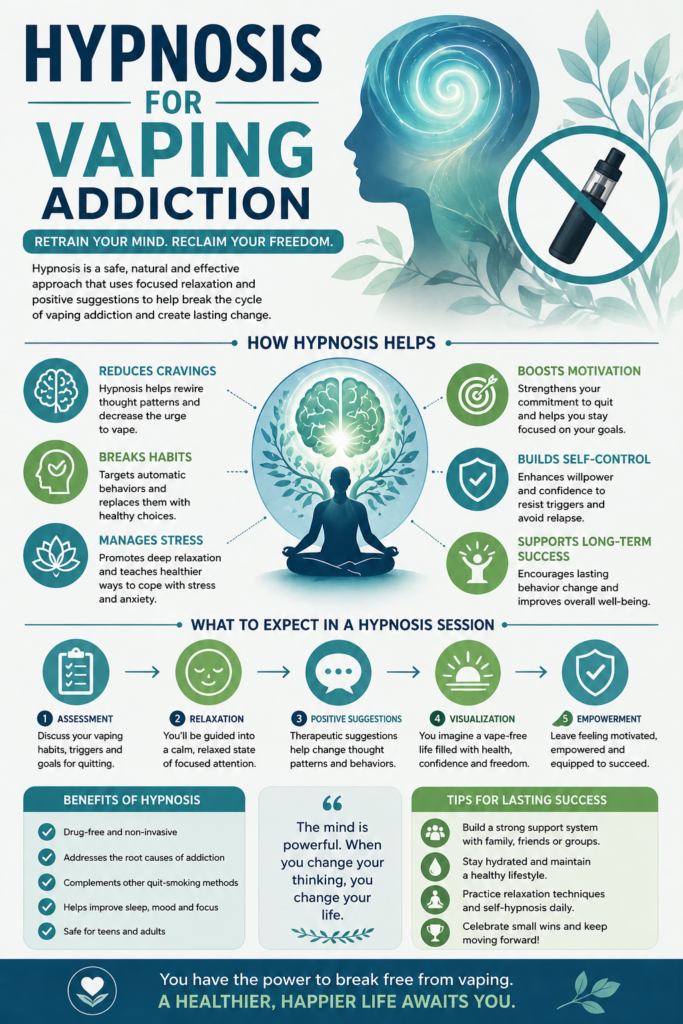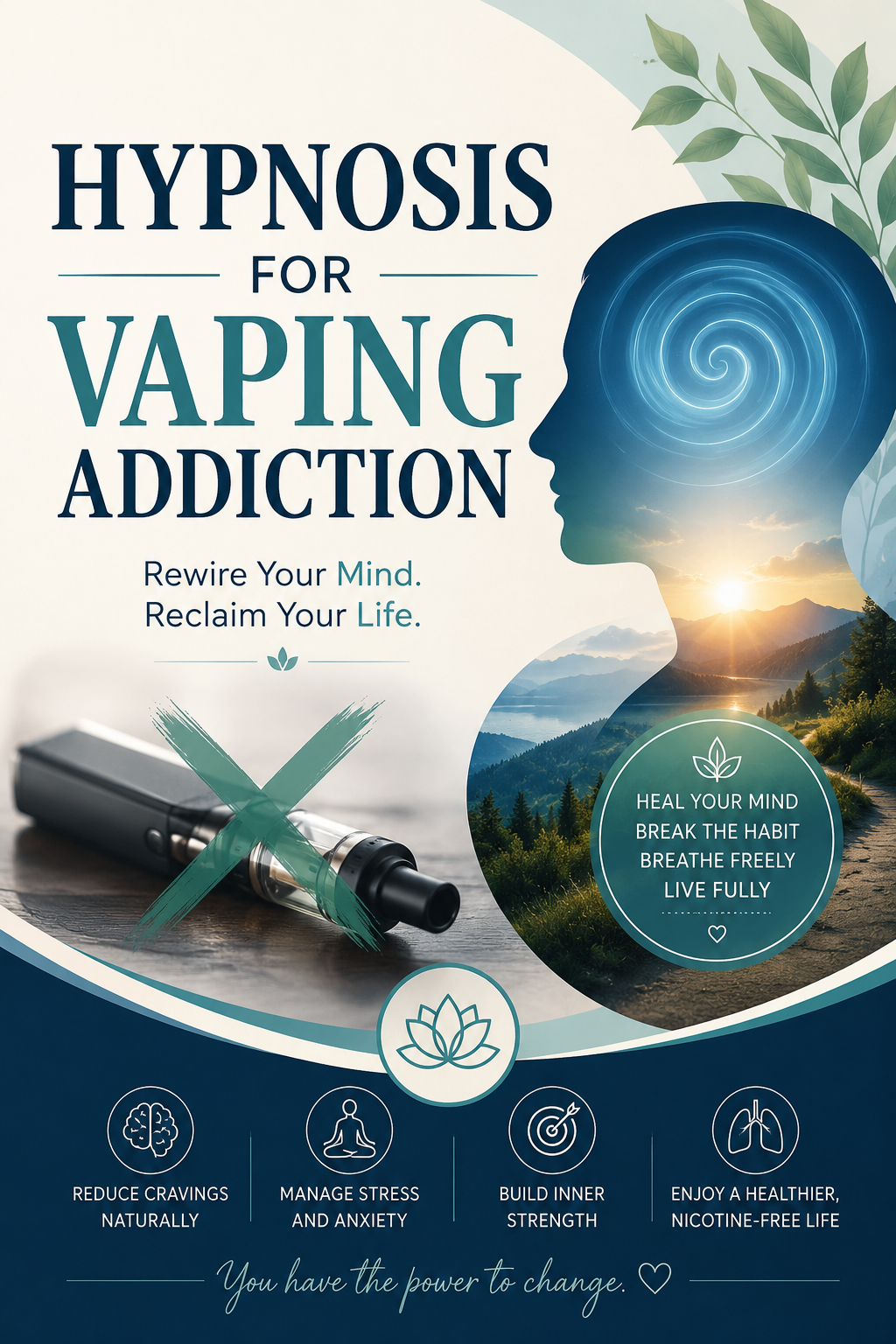
Vaping addiction has become an increasing public health concern, particularly among adolescents and young adults who may underestimate the addictive effects of nicotine-containing electronic cigarettes. Although many individuals attempt to quit vaping, cravings, stress, emotional triggers, and habitual behaviors often make long-term cessation difficult. As a result, interest in complementary and alternative approaches to addiction treatment has grown, including the use of hypnosis. Hypnosis is a therapeutic technique that uses focused attention, relaxation, and guided suggestion to support behavioral change and improve self-control. In the context of vaping addiction, hypnosis may help individuals reduce nicotine cravings, manage stress, and replace unhealthy habits with healthier coping strategies. Understanding how hypnosis works and how it can support recovery may provide individuals with additional tools for overcoming nicotine dependence and improving overall well-being.
Hypnosis for Vaping Addiction: Rewiring the Mind to Quit Nicotine
Vaping is often marketed as a safer alternative to smoking, but for many people, it becomes a powerful nicotine addiction that is difficult to stop. The constant cravings, habitual hand-to-mouth behavior, stress relief associations, and nicotine dependence can make quitting feel overwhelming. As a result, many individuals are exploring alternative approaches such as hypnosis to support recovery from vaping addiction.
Understanding Vaping Addiction
Vaping addiction is not only physical but also psychological. Nicotine rapidly stimulates dopamine release in the brain’s reward system, reinforcing repeated use. Over time, vaping becomes linked with emotions, routines, and environmental cues such as:
- Stress and anxiety
- Social situations
- Driving or studying
- Boredom
- Morning and nighttime rituals
Because of these learned associations, quitting often involves more than simply stopping nicotine intake. It requires changing patterns of thinking and behavior that have become deeply conditioned.
What Is Hypnosis?
Hypnosis is a focused state of attention and heightened suggestibility that allows individuals to become more open to positive behavioral change. During hypnotherapy, a trained professional guides a person into a deeply relaxed mental state while introducing therapeutic suggestions aimed at reducing cravings and strengthening motivation to quit.
Contrary to popular myths, hypnosis does not involve mind control or unconsciousness. Most people remain aware and in control throughout the session. Instead, hypnosis works by helping individuals access subconscious thought patterns that influence habits and addiction-related behaviors.
How Hypnosis May Help with Vaping Addiction
Hypnosis may support vaping cessation in several ways:
Reducing Cravings
Hypnotic suggestions can target nicotine cravings by reframing vaping as undesirable or unnecessary. Some individuals report reduced urges and improved self-control following sessions.
Breaking Behavioral Associations
Many people vape automatically during specific activities or emotional states. Hypnosis may help weaken these conditioned associations and replace them with healthier coping strategies.
Managing Stress and Anxiety
Stress is a common trigger for nicotine use. Hypnosis often incorporates relaxation techniques that may reduce anxiety and improve emotional regulation without relying on vaping.
Increasing Motivation and Confidence
Hypnotherapy frequently emphasizes self-efficacy, helping individuals visualize themselves as healthy, nicotine-free, and in control of their choices.
What Happens During a Hypnotherapy Session?
A typical hypnosis session for vaping addiction may include:
- Discussion of vaping patterns and triggers
- Guided relaxation and focused attention exercises
- Therapeutic suggestions related to quitting
- Visualization of a vape-free lifestyle
- Reinforcement of coping skills and confidence
Some therapists also teach self-hypnosis techniques for ongoing craving management between sessions.
Is Hypnosis Effective?
Research on hypnosis for nicotine addiction has shown mixed but promising results. Some studies suggest hypnosis may improve quit rates for certain individuals, especially when combined with behavioral counseling or other evidence-based treatments. However, results vary depending on motivation, therapist experience, and individual responsiveness.
Hypnosis is generally considered a complementary approach rather than a stand-alone cure. Many people benefit most when hypnosis is combined with:
- Cognitive behavioral therapy (CBT)
- Nicotine replacement therapy
- Support groups
- Stress management strategies
- Lifestyle changes
Advantages of Hypnosis for Vaping Cessation
Potential benefits include:
- Noninvasive and drug-free approach
- Focus on psychological triggers
- Relaxation and stress reduction
- Personalized treatment strategies
- May improve confidence and motivation
Limitations and Considerations
While hypnosis may help some individuals, it is not universally effective. Important considerations include:
- Results differ between individuals
- Multiple sessions may be needed
- Success depends partly on readiness to quit
- Hypnosis should be provided by a qualified professional
Individuals with severe mental health conditions should consult healthcare providers before beginning hypnotherapy.
Conclusion
Vaping addiction involves both chemical dependence and deeply ingrained behavioral patterns. Hypnosis offers a mind-body approach that may help individuals reduce cravings, manage stress, and build motivation for long-term change. Although hypnosis is not a guaranteed cure, it can serve as a valuable component of a comprehensive recovery plan for people seeking freedom from nicotine dependence.
For many individuals, quitting vaping is not simply about resisting nicotine—it is about retraining the mind, rebuilding healthier habits, and regaining control over daily life.
Self-Management Strategies to Understand Hypnosis for Vaping Addiction
Vaping addiction has become a growing public health concern, particularly among adolescents and young adults. Although many individuals attempt to quit, nicotine cravings, emotional triggers, and habitual behaviors often make long-term cessation difficult. As interest in alternative therapies increases, hypnosis has emerged as a potential tool for supporting vaping recovery. Understanding how hypnosis works—and how self-management strategies can strengthen its effectiveness—may help individuals gain greater control over nicotine dependence.
Understanding Vaping Addiction
Vaping addiction involves more than nicotine alone. Over time, vaping becomes connected to routines, emotions, and environmental triggers. Many individuals vape:
- During stress or anxiety
- While driving or studying
- In social situations
- Out of boredom
- As part of daily rituals
These repeated patterns create conditioned behaviors that can persist even after nicotine levels decrease. Effective recovery often requires addressing both the physical and psychological aspects of addiction.
What Is Hypnosis?
Hypnosis is a therapeutic technique that uses focused attention, relaxation, and guided suggestion to influence thoughts, behaviors, and emotional responses. During hypnosis, individuals enter a calm, focused mental state in which they may become more receptive to positive behavioral changes.
Hypnosis for vaping addiction often focuses on:
- Reducing nicotine cravings
- Changing negative thought patterns
- Strengthening motivation to quit
- Improving stress management
- Reinforcing healthy habits
Importantly, hypnosis is not mind control. Individuals remain aware and capable of making decisions throughout the process.
The Importance of Self-Management in Recovery
Self-management refers to the ability to actively monitor, regulate, and improve one’s own behaviors, emotions, and health choices. In addiction recovery, self-management strategies help individuals recognize triggers, build coping skills, and maintain long-term behavioral change.
When combined with hypnosis, self-management can enhance treatment effectiveness by helping individuals apply therapeutic insights in daily life.
Self-Management Strategies for Understanding and Using Hypnosis
1. Identify Personal Vaping Triggers
Before beginning hypnosis, individuals should explore situations that increase the urge to vape. Keeping a journal may help identify:
- Emotional triggers such as stress or loneliness
- Social influences
- Specific times of day
- Environmental cues
Understanding these patterns allows hypnosis sessions to target the most important behavioral associations.
2. Practice Relaxation Techniques
Relaxation is central to both hypnosis and recovery. Learning techniques such as:
- Deep breathing
- Progressive muscle relaxation
- Meditation
- Mindfulness exercises
can improve focus during hypnosis and reduce stress-related cravings.
3. Develop Positive Self-Suggestions
Self-talk strongly influences behavior. Individuals can practice replacing negative thoughts, such as:
- “I need vaping to relax”
with healthier beliefs such as: - “I can manage stress without nicotine”
- “My body is healing every day”
- “I am capable of change”
These affirmations reinforce the goals of hypnotherapy.
4. Learn Self-Hypnosis Techniques
Some hypnotherapists teach self-hypnosis exercises that individuals can practice independently. Self-hypnosis may involve:
- Guided visualization
- Relaxation exercises
- Repeating positive suggestions
- Imagining a vape-free lifestyle
Regular practice may help reduce cravings and strengthen confidence.
5. Create Healthy Replacement Behaviors
Replacing vaping with healthier habits is an important self-management strategy. Helpful alternatives may include:
- Physical exercise
- Drinking water
- Chewing gum
- Creative activities
- Listening to music
- Engaging in social support
Healthy substitutions reduce the automatic nature of vaping behaviors.
6. Monitor Progress and Set Goals
Recovery is often gradual. Tracking progress can increase motivation and accountability. Individuals may benefit from:
- Setting short-term goals
- Celebrating milestones
- Recording craving intensity
- Reflecting on emotional improvements
Combining goal setting with hypnosis may reinforce long-term commitment to recovery.
Benefits of Combining Self-Management and Hypnosis
When used together, hypnosis and self-management strategies may:
- Improve awareness of triggers
- Reduce cravings and stress
- Increase confidence in quitting
- Strengthen emotional regulation
- Promote healthier coping mechanisms
This combined approach encourages individuals to become active participants in their own recovery process.
Limitations and Considerations
Hypnosis does not work the same way for everyone. Some individuals may respond strongly, while others may experience limited benefits. Success often depends on:
- Readiness to quit
- Consistency in practice
- Therapist experience
- Motivation for change
Hypnosis should be viewed as a supportive tool rather than a guaranteed cure for addiction.
Conclusion
Understanding hypnosis for vaping addiction involves recognizing the connection between the mind, behavior, and nicotine dependence. Self-management strategies such as identifying triggers, practicing relaxation, developing positive self-talk, and learning self-hypnosis can strengthen recovery efforts and support lasting behavioral change.
Quitting vaping is not only about resisting cravings—it is about developing healthier ways to manage stress, emotions, and daily habits. Through a combination of hypnosis and active self-management, individuals may gain greater control over addiction and move toward a healthier, nicotine-free future.
Family Support Strategies to Understand Hypnosis for Vaping Addiction
Vaping addiction has become increasingly common among adolescents and adults, creating concerns for families, healthcare providers, and communities. While many people recognize the physical effects of nicotine dependence, fewer understand the psychological and behavioral patterns that make vaping difficult to stop. As alternative approaches to addiction treatment gain attention, hypnosis has emerged as a supportive method that may help individuals reduce cravings and change unhealthy habits. Family support strategies can play an important role in helping individuals understand and benefit from hypnosis during recovery from vaping addiction.
Understanding Vaping Addiction
Vaping addiction develops through both chemical dependence and learned behaviors. Nicotine affects the brain’s reward system by releasing dopamine, reinforcing repeated use. Over time, vaping becomes associated with:
- Stress relief
- Social interaction
- Relaxation
- Daily routines
- Emotional coping
These repeated associations make quitting challenging, even when individuals want to stop. Many people continue vaping not only because of nicotine cravings but also because vaping becomes psychologically connected to comfort, identity, and routine.
What Is Hypnosis?
Hypnosis is a therapeutic technique that uses focused attention, relaxation, and guided suggestion to encourage positive behavioral change. During hypnosis, individuals enter a calm, focused state that may increase openness to healthier thought patterns and habits.
Hypnosis for vaping addiction often focuses on:
- Reducing nicotine cravings
- Changing negative associations with vaping
- Increasing motivation to quit
- Strengthening coping skills
- Promoting relaxation and stress management
Contrary to common misconceptions, hypnosis does not involve loss of control or unconsciousness. Individuals remain aware and actively participate in the therapeutic process.
Why Family Support Matters in Addiction Recovery
Family relationships significantly influence addiction recovery outcomes. Supportive family environments may help reduce stress, improve motivation, and encourage treatment engagement. In contrast, conflict, criticism, or misunderstanding may increase emotional distress and relapse risk.
When families understand hypnosis and addiction recovery strategies, they can provide encouragement and reinforce healthier behaviors at home.
Family Support Strategies for Understanding Hypnosis
1. Learn About Vaping Addiction Together
Families benefit from understanding that vaping addiction is not simply a lack of willpower. Education about nicotine dependence, behavioral conditioning, and emotional triggers can reduce stigma and promote empathy.
Learning together may include:
- Reading educational materials
- Attending counseling sessions
- Discussing treatment goals
- Understanding withdrawal symptoms
This shared understanding creates a more supportive recovery environment.
2. Understand the Purpose of Hypnosis
Some family members may have misconceptions about hypnosis due to media portrayals. Clarifying that hypnotherapy is a legitimate therapeutic technique can reduce skepticism and fear.
Families should understand that hypnosis aims to:
- Support behavioral change
- Improve relaxation
- Strengthen motivation
- Help individuals manage cravings
Supportive attitudes toward treatment may improve an individual’s confidence and engagement.
3. Encourage Healthy Communication
Open and respectful communication is essential during addiction recovery. Family members can help by:
- Listening without judgment
- Avoiding criticism or shame
- Encouraging honesty about struggles
- Offering emotional reassurance
Positive communication reduces stress and may help individuals remain committed to recovery goals.
4. Help Identify Triggers
Families often observe patterns that individuals may overlook. Helping identify triggers such as stress, social situations, or emotional conflicts may improve awareness during hypnosis and recovery planning.
Supportive discussions can help individuals recognize:
- High-risk situations
- Emotional triggers
- Habitual vaping routines
- Environmental cues
Understanding these triggers allows therapeutic strategies to become more targeted and effective.
5. Support Relaxation and Stress Reduction
Stress is a common trigger for vaping relapse. Families can encourage healthy stress-management activities such as:
- Exercise
- Meditation
- Family walks
- Relaxation routines
- Creative hobbies
Creating a calm and supportive home environment may enhance the benefits of hypnosis.
6. Reinforce Positive Progress
Recovery from vaping addiction is often gradual. Family members can strengthen motivation by recognizing progress and celebrating milestones.
Positive reinforcement may include:
- Encouraging words
- Acknowledging effort
- Supporting healthy choices
- Celebrating vape-free periods
Small successes can build confidence and long-term commitment to recovery.
7. Avoid Enabling Behaviors
Support does not mean ignoring unhealthy behaviors. Families should avoid actions that unintentionally encourage continued vaping, such as:
- Minimizing the addiction
- Providing vaping products
- Ignoring harmful behaviors
- Responding with excessive anger or control
Balanced support involves compassion combined with healthy boundaries.
Benefits of Combining Family Support and Hypnosis
When family involvement is combined with hypnosis, individuals may experience:
- Greater emotional support
- Increased motivation to quit
- Reduced stress and isolation
- Improved coping skills
- Stronger accountability
A supportive family system can reinforce the behavioral changes encouraged during hypnotherapy.
Limitations and Considerations
Although hypnosis may help some individuals reduce vaping behaviors, it is not a guaranteed cure. Success depends on several factors, including:
- Motivation to quit
- Therapist experience
- Family involvement
- Consistency in recovery efforts
Families should also recognize that setbacks may occur and recovery often requires patience and ongoing support.
Conclusion
Understanding hypnosis for vaping addiction involves recognizing the psychological, behavioral, and emotional factors that contribute to nicotine dependence. Family support strategies such as education, communication, trigger awareness, stress reduction, and positive reinforcement can strengthen recovery efforts and improve treatment engagement.
By creating a supportive and informed environment, families can help individuals feel empowered as they work toward overcoming vaping addiction and building healthier coping strategies for the future.
Community Resource Strategies to Understand Hypnosis for Vaping Addiction
Vaping addiction has become a growing concern in schools, healthcare systems, and communities across the world. Although many individuals recognize the harmful effects of nicotine dependence, quitting vaping can be difficult because of the strong psychological and behavioral patterns connected to nicotine use. As interest in alternative and complementary therapies increases, hypnosis has emerged as a possible strategy to support vaping cessation. Community resources can play an important role in helping individuals understand hypnosis, access support services, and strengthen long-term recovery from vaping addiction.
Understanding Vaping Addiction
Vaping addiction involves both physical dependence and behavioral conditioning. Nicotine stimulates dopamine release in the brain’s reward system, creating temporary feelings of pleasure and relaxation. Over time, repeated vaping behaviors become associated with:
- Stress relief
- Social interaction
- Emotional coping
- Daily habits and routines
- Anxiety reduction
These learned associations often make quitting more complicated than simply avoiding nicotine. Many individuals continue vaping because it becomes integrated into their emotional and social lives.
What Is Hypnosis?
Hypnosis is a therapeutic method that uses focused attention, guided relaxation, and positive suggestion to support behavioral change. During hypnosis, individuals enter a calm mental state in which they may become more receptive to healthier coping strategies and changes in thought patterns.
Hypnosis for vaping addiction may focus on:
- Reducing nicotine cravings
- Changing negative habits
- Improving stress management
- Strengthening motivation to quit
- Increasing self-control and confidence
Contrary to common myths, hypnosis does not involve mind control. Individuals remain aware and actively participate throughout the process.
The Importance of Community Resources in Recovery
Recovery from addiction is often more successful when individuals have access to supportive environments and community-based services. Community resources help reduce isolation, improve education, and provide access to treatment options that may otherwise be difficult to obtain.
Communities can support individuals recovering from vaping addiction by increasing awareness of evidence-based and complementary treatment approaches, including hypnosis.
Community Resource Strategies for Understanding Hypnosis
1. Public Education Programs
Community education programs can help individuals and families better understand vaping addiction and available treatment options. Educational workshops hosted by:
- Schools
- Healthcare organizations
- Community centers
- Public health agencies
may provide accurate information about hypnosis, nicotine addiction, and recovery strategies.
Education reduces stigma and encourages informed decision-making about treatment.
2. Access to Qualified Hypnotherapists
Communities can improve recovery support by helping individuals locate trained and licensed hypnotherapists who specialize in addiction treatment. Referral networks through:
- Healthcare providers
- Mental health clinics
- Addiction treatment centers
- Community health programs
can increase access to safe and professional care.
3. Support Groups and Peer Programs
Peer support groups provide encouragement, accountability, and emotional connection during recovery. Community organizations may offer:
- Nicotine cessation groups
- Youth vaping prevention programs
- Recovery support meetings
- Online peer communities
Some support groups may also discuss complementary therapies such as hypnosis as part of broader recovery planning.
4. School and Youth Prevention Programs
Adolescents and young adults are among the most affected by vaping addiction. Schools and youth organizations can support prevention and recovery by:
- Providing education about nicotine dependence
- Teaching stress-management skills
- Offering counseling resources
- Introducing healthy coping strategies
School counselors and prevention specialists may also help students understand how therapies like hypnosis fit into addiction treatment.
5. Mental Health and Wellness Services
Because stress, anxiety, depression, and trauma often contribute to vaping behaviors, community mental health resources are essential. Integrating hypnosis with:
- Counseling services
- Cognitive behavioral therapy (CBT)
- Stress-management programs
- Mindfulness training
may strengthen recovery outcomes and emotional well-being.
6. Online and Digital Resources
Digital health resources can expand access to information and support for individuals who may lack local treatment options. Helpful online resources may include:
- Educational websites
- Virtual hypnosis programs
- Telehealth counseling
- Recovery forums
- Mobile apps for nicotine cessation
Accessible digital tools can help individuals continue practicing coping skills outside of therapy sessions.
7. Community Awareness Campaigns
Public health campaigns can help communities better understand vaping addiction and available recovery supports. Awareness efforts may:
- Reduce stigma around addiction treatment
- Promote early intervention
- Encourage healthy coping strategies
- Increase awareness of complementary therapies
Accurate information about hypnosis may help dispel misconceptions and encourage individuals to seek support.
Benefits of Community-Based Support
Strong community resources may improve recovery by:
- Increasing treatment access
- Reducing isolation
- Encouraging accountability
- Supporting emotional well-being
- Promoting healthier environments
Community involvement also helps individuals feel connected and supported during behavior change.
Limitations and Considerations
Although hypnosis may benefit some individuals, it is not equally effective for everyone. Communities should promote balanced and evidence-informed education about hypnosis as one possible support strategy rather than a guaranteed cure.
Successful recovery often requires a combination of:
- Motivation to quit
- Behavioral counseling
- Stress management
- Social support
- Healthy lifestyle changes
Access to qualified professionals is also important to ensure safe and ethical treatment practices.
Conclusion
Understanding hypnosis for vaping addiction involves recognizing the complex relationship between nicotine dependence, emotional coping, and behavioral habits. Community resource strategies such as education programs, support groups, mental health services, school interventions, and public awareness campaigns can strengthen recovery efforts and improve understanding of complementary treatment approaches.
By building informed and supportive communities, individuals struggling with vaping addiction may feel more empowered to seek help, explore healthy coping strategies, and work toward long-term recovery and wellness.
Frequently Asked Questions
Here are some common questions:
1. What is hypnosis for vaping addiction?
Hypnosis for vaping addiction is a therapeutic approach that uses focused relaxation and guided suggestions to help individuals reduce nicotine cravings, change unhealthy habits, and strengthen motivation to quit vaping.
2. How does hypnosis work?
Hypnosis works by helping individuals enter a calm, focused mental state in which they may become more open to positive behavioral changes. During hypnotherapy, suggestions are used to encourage healthier thinking patterns and reduce the desire to vape.
3. Can hypnosis really help people quit vaping?
Some individuals find hypnosis helpful for reducing cravings, managing stress, and breaking habitual vaping behaviors. Research results are mixed, but hypnosis may be more effective when combined with counseling, support groups, or other evidence-based treatments.
4. Is hypnosis safe?
Hypnosis is generally considered safe when performed by a trained and qualified professional. Most people remain fully aware and in control during the session.
5. Will I lose control during hypnosis?
No. Hypnosis does not involve mind control. Individuals cannot be forced to do anything against their values or wishes. Most people remember the session and remain conscious throughout the process.
6. How many hypnosis sessions are needed to quit vaping?
The number of sessions varies depending on the individual, nicotine dependence level, motivation, and personal triggers. Some people benefit after a few sessions, while others may need ongoing support.
7. What happens during a hypnosis session?
A typical session may include:
- Discussion of vaping habits and triggers
- Relaxation exercises
- Guided imagery or visualization
- Positive therapeutic suggestions
- Coping and stress-management strategies
Sessions are designed to create a calm and supportive environment for behavioral change.
8. Can hypnosis stop nicotine cravings?
Hypnosis may help reduce the intensity and frequency of cravings by changing subconscious associations with vaping and strengthening self-control. However, cravings may still occur during recovery.
9. Is hypnosis better than nicotine replacement therapy?
Hypnosis and nicotine replacement therapy serve different purposes. Nicotine replacement products address physical withdrawal symptoms, while hypnosis focuses on psychological habits and behavioral triggers. Some individuals combine both approaches.
10. Can teenagers use hypnosis for vaping addiction?
Hypnosis may be used with adolescents when provided by a qualified professional and supported by parents or healthcare providers. Teen-focused treatment often includes education, counseling, and behavioral support.
11. Does hypnosis work for everyone?
No treatment works the same for every person. Some individuals respond strongly to hypnosis, while others may experience limited effects. Motivation, openness to treatment, and therapist experience can influence outcomes.
12. Can I practice self-hypnosis at home?
Yes. Some individuals learn self-hypnosis techniques such as guided relaxation, breathing exercises, visualization, and positive affirmations to help manage cravings and stress between sessions.
13. How does stress affect vaping addiction?
Stress is one of the most common triggers for vaping. Many individuals use nicotine to cope with anxiety, boredom, or emotional discomfort. Hypnosis often includes relaxation strategies to improve stress management without vaping.
14. Can hypnosis help prevent relapse?
Hypnosis may help individuals strengthen coping skills, build confidence, and recognize triggers that increase relapse risk. Long-term success usually involves continued self-management and support systems.
15. Should hypnosis be combined with other treatments?
Many healthcare professionals recommend combining hypnosis with:
- Behavioral counseling
- Cognitive behavioral therapy (CBT)
- Support groups
- Healthy lifestyle changes
- Stress-management techniques
A comprehensive recovery plan often improves long-term outcomes.
16. How do I find a qualified hypnotherapist?
Look for professionals with training and certification in clinical hypnotherapy or behavioral health. It may also help to seek providers experienced in addiction treatment or smoking cessation.
17. Is vaping addiction psychological or physical?
Vaping addiction is both physical and psychological. Nicotine creates chemical dependence, while routines, emotions, and habits strengthen behavioral dependence.
18. What are the benefits of hypnosis for vaping addiction?
Potential benefits may include:
- Reduced cravings
- Improved relaxation
- Increased motivation
- Better stress management
- Healthier coping strategies
- Greater self-awareness
19. Are there any limitations to hypnosis?
Yes. Hypnosis is not a guaranteed cure for vaping addiction and should not replace medical advice or comprehensive addiction treatment when needed. Results vary between individuals.
20. What is the main goal of hypnosis in addiction recovery?
The primary goal is to help individuals retrain thought patterns, reduce dependence on nicotine, strengthen self-control, and support healthier long-term behaviors for a vape-free lifestyle.
Conclusion
Hypnosis offers a potentially valuable complementary approach for individuals seeking recovery from vaping addiction. By addressing the psychological and behavioral aspects of nicotine dependence, hypnosis may help reduce cravings, strengthen motivation, and encourage healthier coping strategies. While hypnosis is not a guaranteed cure and may not work equally for everyone, it can support recovery when combined with evidence-based treatments, self-management skills, family involvement, and community resources. Overcoming vaping addiction often requires long-term commitment, emotional support, and behavioral change. Through greater understanding of hypnosis and its role in addiction recovery, individuals may become more empowered to take control of their health and work toward a nicotine-free lifestyle.
Video: POV: Hypnosis Actually Works for Quitting Vaping #shorts #success