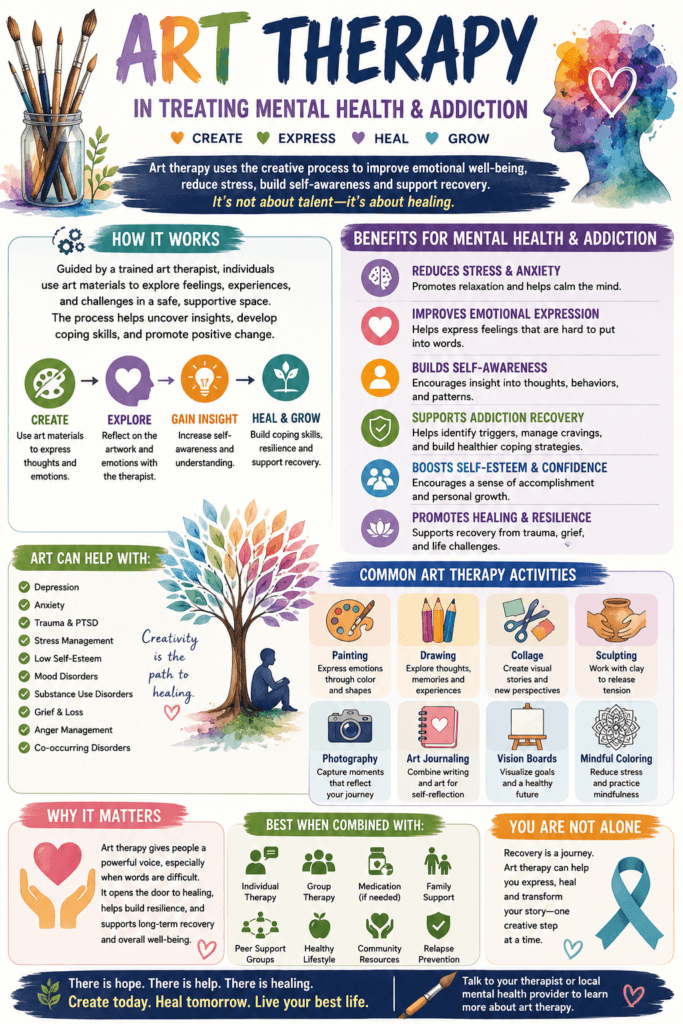
Art therapy is an evidence-based, complementary treatment that uses creative expression to support individuals living with mental health conditions and substance use disorders. Guided by a credentialed art therapist, individuals use activities such as drawing, painting, sculpting, collage, and other forms of visual art to express emotions, process difficult experiences, and develop healthier coping skills. Many people find it challenging to put painful thoughts, trauma, grief, or addiction into words. Art therapy offers a safe, nonjudgmental way to explore these experiences while promoting self-awareness, emotional regulation, stress reduction, and personal growth. Rather than focusing on artistic talent, art therapy emphasizes the healing process of creativity and is most effective when integrated into a comprehensive treatment plan that includes evidence-based psychotherapy, medication when appropriate, family support, and recovery services.
Art Therapy in Treating Mental Health and Addiction
Art therapy is an evidence-based mental health treatment that uses the creative process to help individuals express emotions, process difficult experiences, develop coping skills, and improve psychological well-being. Guided by a trained art therapist, individuals use various forms of artistic expression—such as drawing, painting, sculpture, collage, photography, or mixed media—to explore thoughts and feelings that may be difficult to communicate with words alone. Art therapy is used alongside traditional treatments, including psychotherapy and medication when appropriate, rather than as a replacement for them.
For individuals with mental health conditions and substance use disorders, art therapy provides a safe, nonjudgmental way to explore emotions, reduce stress, and support recovery. It is commonly incorporated into comprehensive treatment programs that include individual counseling, group therapy, family therapy, and evidence-based approaches such as Cognitive Behavioral Therapy (CBT) and Motivational Interviewing (MI).
How Art Therapy Works
Art therapy is based on the understanding that creative expression can improve emotional awareness and promote healing. During sessions, participants create artwork as they explore personal experiences, emotions, relationships, goals, and recovery challenges. The emphasis is on self-expression and reflection rather than artistic ability or producing a finished masterpiece.
After creating artwork, the therapist may help the individual:
- Discuss the meaning of the artwork.
- Identify the emotions associated with the creative process.
- Explore personal strengths and challenges.
- Recognize unhealthy thinking patterns.
- Develop healthier coping strategies.
- Build insight into behaviors related to addiction or mental illness.
The artwork serves as a tool for communication and self-discovery rather than a diagnostic test.
Benefits for Mental Health
Art therapy can benefit individuals living with a variety of mental health conditions by providing healthy ways to express and regulate emotions.
Potential benefits include:
- Reducing symptoms of anxiety and stress.
- Improving mood in people with depression.
- Increasing emotional awareness.
- Strengthening self-esteem and confidence.
- Improving communication skills.
- Enhancing problem-solving abilities.
- Encouraging mindfulness and relaxation.
- Supporting resilience during recovery.
- Providing a sense of accomplishment.
Art therapy may be particularly helpful for people who find it difficult to verbalize painful emotions or traumatic experiences.
Benefits for Addiction Recovery
Addiction often involves emotional pain, trauma, shame, grief, and difficulty regulating emotions. Art therapy provides an alternative outlet for processing these experiences without relying on alcohol or drugs.
In addiction treatment, art therapy may help individuals:
- Explore triggers for substance use.
- Identify emotions connected to cravings.
- Express grief, guilt, or shame.
- Build healthier coping skills.
- Reduce stress that may contribute to relapse.
- Increase motivation for recovery.
- Improve self-awareness.
- Strengthen confidence in maintaining sobriety.
- Celebrate recovery milestones through creative projects.
Creative activities can also introduce healthy leisure interests that replace time previously spent using substances.
Art Therapy and Trauma
Many individuals with addiction have experienced trauma. Art therapy offers a structured way to explore traumatic experiences when verbal discussion feels overwhelming. It can help people process difficult memories at a pace that feels manageable while fostering a sense of safety, control, and emotional regulation. However, trauma-focused art therapy should be guided by a qualified therapist because creative work can sometimes bring up intense emotions.
Common Art Therapy Activities
Sessions may include:
- Drawing emotions or recovery goals.
- Painting feelings associated with addiction.
- Creating collages representing hope and healing.
- Sculpting personal strengths using clay.
- Designing recovery vision boards.
- Journaling with illustrations.
- Mandala coloring for relaxation.
- Mask-making to explore identity.
- Photography projects that highlight positive life changes.
- Creating artwork that symbolizes resilience.
The focus is on the therapeutic process rather than artistic skill.
Who Can Benefit?
Art therapy may benefit individuals experiencing:
- Substance use disorders.
- Depression.
- Anxiety disorders.
- Post-traumatic stress.
- Bipolar disorder.
- Grief and loss.
- Chronic stress.
- Low self-esteem.
- Emotional dysregulation.
- Co-occurring mental health and addiction disorders.
It can be used with children, adolescents, adults, older adults, families, and groups.
Art Therapy in Group Treatment
Group art therapy combines creative expression with peer support. Participants create artwork together, discuss their experiences, and learn from one another in a supportive environment. Group sessions may improve communication, reduce feelings of isolation, and strengthen social connections that support recovery.
Limitations
Although art therapy offers many benefits, it should not be viewed as a stand-alone treatment for severe mental illness or addiction. It is most effective when integrated into a comprehensive treatment plan that may include:
- Individual psychotherapy.
- Medication management when appropriate.
- Group therapy.
- Family counseling.
- Peer support groups.
- Relapse prevention planning.
- Case management and recovery support services.
Research supports art therapy as a complementary intervention that can improve emotional well-being, treatment engagement, and coping, but evidence varies by condition and treatment setting. More high-quality studies continue to refine our understanding of which approaches are most effective for specific populations.
Conclusion
Art therapy is a valuable complementary treatment that supports recovery from mental health conditions and addiction by helping individuals express emotions, process difficult experiences, and develop healthier coping strategies through creative expression. By fostering self-awareness, reducing stress, improving emotional regulation, and strengthening resilience, art therapy can enhance overall treatment and long-term recovery. When combined with evidence-based therapies, medication when indicated, family involvement, and community support, art therapy offers a meaningful pathway toward healing, personal growth, and improved quality of life.
Self-Management Strategies for Understanding Art Therapy in Treating Mental Health and Addiction
Self-management is an important part of recovery from mental health conditions and substance use disorders. Art therapy can complement evidence-based treatments by providing a healthy, creative outlet for expressing emotions, reducing stress, and building resilience. Although art therapy is often guided by a credentialed art therapist, many creative practices can also be incorporated into daily self-care. These strategies can help individuals better understand their emotions, strengthen coping skills, and support long-term recovery.
- View Art as a Tool for Healing, Not Perfection
Remember that the goal of art therapy is self-expression and emotional exploration—not creating a perfect piece of artwork. Focus on the process rather than the final product. There is no “right” or “wrong” way to create art in recovery.
- Create a Regular Creative Routine
Set aside 15 to 30 minutes several times a week for creative activities such as drawing, painting, coloring, sculpting, or collage making. A consistent routine can reduce stress, improve emotional regulation, and provide a healthy alternative to substance use.
- Use Art to Identify Emotions
When difficult emotions arise, express them visually rather than suppress them. Draw colors, shapes, symbols, or images that represent your feelings. Afterward, reflect on what your artwork reveals about your emotional state and consider discussing these insights with your therapist if appropriate.
- Keep an Art Recovery Journal
Combine journaling with sketches, doodles, photographs, or paintings to document your recovery journey. Record your emotions, triggers, accomplishments, and coping strategies. Looking back over time can help you recognize patterns, appreciate progress, and identify areas where you may need additional support.
- Practice Mindfulness Through Creativity
Engage fully in the creative process by paying attention to the colors, textures, shapes, and movements involved in making art. Mindful art-making can reduce anxiety, quiet racing thoughts, and help you stay grounded in the present moment.
- Use Art to Explore Triggers
Create artwork that represents situations, emotions, or environments that trigger substance use or mental health symptoms. Visualizing these triggers can help you better understand them and work with your therapist to develop healthier coping strategies.
- Develop Positive Coping Skills
Replace unhealthy coping behaviors with creative activities during times of stress or cravings. Instead of turning to alcohol, drugs, or other harmful behaviors, spend time drawing, painting, coloring, crafting, or working on another creative project that promotes relaxation and emotional expression.
- Celebrate Recovery Milestones Creatively
Mark important achievements—such as one week, one month, or one year of recovery—by creating artwork that symbolizes your growth and resilience. These visual reminders can reinforce motivation and serve as powerful reminders of how far you have come.
- Build Self-Compassion
Avoid judging your artistic ability or comparing your work to others. Instead, use creativity as an opportunity to practice self-acceptance, patience, and kindness toward yourself. Recovery is about progress, not perfection.
- Incorporate Positive Affirmations Into Your Art
Add encouraging words or phrases to your artwork, such as “One day at a time,” “I am stronger than my addiction,” or “Healing is possible.” Display these creations where you will see them regularly to reinforce hope and motivation.
- Share Your Creative Work When Comfortable
If you feel safe doing so, share your artwork with your therapist, support group, trusted family members, or close friends. Talking about your creative process can improve communication, deepen self-awareness, and strengthen your support network.
- Combine Art Therapy With Comprehensive Treatment
Art therapy works best as part of a broader recovery plan. Continue attending counseling sessions, taking prescribed medications as directed, participating in support groups, practicing healthy lifestyle habits, and following your relapse prevention plan. Creative expression should enhance—not replace—evidence-based treatment.
Conclusion
Self-management strategies can maximize the benefits of art therapy by helping individuals use creativity as a healthy outlet for emotional expression, stress reduction, and personal growth. Through regular creative practice, mindfulness, emotional reflection, recovery journaling, and positive coping skills, individuals can strengthen resilience and improve their overall well-being. When combined with professional mental health care, evidence-based addiction treatment, supportive relationships, and healthy daily routines, art therapy can become a meaningful part of a long-term recovery journey, fostering hope, healing, and a renewed sense of purpose.
Family Support Strategies for Understanding Art Therapy in Treating Mental Health and Addiction
Family support is an important part of recovery from mental health conditions and substance use disorders. Art therapy can help individuals express emotions, process trauma, reduce stress, and build healthier coping skills through creative expression. While a credentialed art therapist leads formal art therapy sessions, family members can reinforce the therapeutic benefits by encouraging creativity, offering emotional support, and fostering a safe, accepting environment at home. Understanding the purpose of art therapy helps families become active partners in the recovery process.
1. Learn About Art Therapy
Educate yourself about what art therapy is and what it is not. Art therapy is an evidence-based therapeutic approach that uses creative expression to improve emotional well-being. It is not about artistic talent or producing beautiful artwork, but about helping individuals communicate feelings and experiences that may be difficult to express with words.
2. Encourage Participation Without Pressure
Support your loved one in attending scheduled art therapy sessions and encourage creative activities at home. Avoid forcing participation or criticizing their artwork. Recovery is most successful when creative expression is voluntary and emotionally safe.
3. Create a Judgment-Free Environment
Allow your loved one to create art without worrying about being evaluated. Avoid making negative comments or offering unwanted advice about their artwork. Instead, focus on listening, encouraging, and respecting their creative process.
4. Ask Open-Ended Questions
When your loved one chooses to share their artwork, invite conversation with supportive questions such as:
- “What does this piece mean to you?”
- “How did creating this make you feel?”
- “What were you thinking about while making it?”
Avoid trying to interpret the artwork yourself. Allow your loved one to explain their personal meaning.
5. Respect Emotional Boundaries
Some artwork may represent painful memories, trauma, grief, or addiction experiences. Respect your loved one’s privacy if they are not ready to discuss certain pieces. Healing occurs at an individual pace, and emotional safety is essential.
6. Participate in Creative Family Activities
Engage in enjoyable creative activities together, such as painting, coloring, pottery, photography, gardening, or crafting. Shared creative experiences can strengthen family relationships, reduce stress, and create positive memories that support recovery.
7. Celebrate Progress Rather Than Artistic Skill
Recognize the effort your loved one invests in recovery rather than focusing on artistic ability. Praise qualities such as courage, honesty, persistence, creativity, and emotional growth instead of the appearance of the artwork itself.
8. Encourage Healthy Emotional Expression
Support open discussions about emotions within the family. Encourage your loved one to use both words and creative expression to communicate feelings rather than suppressing difficult emotions or returning to unhealthy coping behaviors.
9. Reinforce Healthy Coping Skills
Help your loved one identify creative activities they can use when experiencing stress, anxiety, cravings, or depression. Encourage art as one of several healthy coping strategies alongside exercise, mindfulness, counseling, support groups, and relaxation techniques.
10. Participate in Family Therapy When Appropriate
If recommended by the treatment team, attend family therapy sessions to improve communication, rebuild trust, resolve conflicts, and better understand how art therapy fits into the overall recovery plan.
11. Recognize Signs That Additional Support Is Needed
Although art therapy can be very beneficial, it is not a substitute for comprehensive treatment. If your loved one experiences worsening depression, severe anxiety, suicidal thoughts, relapse, or significant emotional distress, encourage them to contact their mental health provider promptly and seek immediate professional help if there is concern for their safety.
12. Take Care of Your Own Well-Being
Supporting someone with mental health or addiction challenges can be emotionally demanding. Practice self-care by maintaining healthy routines, seeking counseling or support groups as needed, engaging in enjoyable hobbies, and setting healthy boundaries. Caring for yourself enables you to provide more consistent and compassionate support.
Conclusion
Family involvement can significantly enhance the benefits of art therapy for individuals recovering from mental health conditions and addiction. By learning about the therapeutic purpose of creative expression, encouraging participation without judgment, respecting emotional boundaries, communicating with empathy, and celebrating personal growth, families create a supportive environment that promotes healing. When art therapy is combined with evidence-based treatment, healthy family relationships, and ongoing community support, it can help individuals develop emotional resilience, strengthen recovery, and improve their overall quality of life.
Community Resource Strategies for Understanding Art Therapy in Treating Mental Health and Addiction
Community resources play an important role in expanding access to art therapy and supporting individuals recovering from mental health conditions and substance use disorders. While art therapy is most effective when provided by a credentialed art therapist as part of a comprehensive treatment plan, community organizations can help individuals continue practicing creative expression, build healthy social connections, and strengthen long-term recovery. By combining professional treatment with community-based programs, individuals gain additional opportunities for healing, personal growth, and resilience.
1. Utilize Community Mental Health Centers
Many community mental health centers offer art therapy as part of their behavioral health services or can refer individuals to qualified art therapists. These centers may also provide counseling, medication management, crisis intervention, and support groups for people with co-occurring mental health and substance use disorders.
2. Participate in Addiction Treatment Programs
Residential treatment centers, outpatient programs, intensive outpatient programs (IOPs), and recovery centers often incorporate art therapy into comprehensive addiction treatment. Participating in these structured programs allows individuals to combine creative expression with evidence-based therapies, relapse prevention, and peer support.
3. Join Community Art Programs
Local art studios, community centers, libraries, museums, and parks departments frequently offer painting, drawing, pottery, photography, and craft classes. While these activities are not substitutes for clinical art therapy, they can promote stress reduction, social connection, confidence, and healthy leisure activities that support recovery.
4. Access Peer Support Groups
Recovery organizations can complement art therapy by providing encouragement, accountability, and shared experiences. Peer support groups offer a safe place to discuss recovery challenges and celebrate progress while reinforcing the emotional growth achieved through creative expression.
5. Collaborate with Healthcare Providers
Primary care providers, psychiatrists, psychologists, licensed counselors, social workers, and addiction specialists can help determine whether art therapy is appropriate and refer individuals to qualified professionals. Coordinated care improves treatment outcomes and ensures that art therapy is integrated into an individualized recovery plan.
6. Participate in Educational Workshops
Hospitals, universities, nonprofit organizations, and behavioral health agencies often provide educational programs about mental health, addiction recovery, trauma, stress management, and creative therapies. These workshops help individuals and families better understand how art therapy supports emotional healing and recovery.
7. Explore School and Youth Programs
Schools, youth centers, and after-school programs may incorporate creative arts into mental health promotion and substance use prevention efforts. These programs help children and adolescents develop emotional awareness, communication skills, resilience, and healthy coping strategies before serious problems develop.
8. Utilize Veteran and Trauma Recovery Services
Many veteran organizations, trauma recovery programs, and specialized behavioral health clinics include art therapy as part of treatment for individuals experiencing post-traumatic stress, depression, anxiety, or substance use disorders. These programs provide trauma-informed care within supportive community settings.
9. Participate in Faith-Based and Community Wellness Programs
Faith communities and community wellness organizations often provide supportive environments where individuals can participate in creative activities, volunteer opportunities, mindfulness programs, and social events that promote emotional well-being and reduce isolation. These programs can complement, but should not replace, professional mental health treatment.
10. Access Telehealth and Virtual Art Therapy
For individuals living in rural or underserved areas, telehealth services may provide access to licensed art therapists and virtual support groups. Online creative wellness programs can also help maintain engagement in recovery when in-person services are unavailable.
11. Support Community Awareness and Advocacy
Community organizations can reduce stigma by educating the public about mental health, addiction, and the role of creative therapies. Public awareness campaigns, recovery events, art exhibitions, and educational seminars encourage early intervention and promote acceptance of evidence-based treatment.
12. Build a Long-Term Recovery Network
Recovery is strongest when individuals connect with multiple sources of support. Combining art therapy with counseling, peer recovery groups, healthcare providers, family support, community recreation, volunteer activities, educational opportunities, and wellness programs creates a comprehensive network that promotes lasting recovery and improved quality of life.
Conclusion
Community resources significantly enhance the benefits of art therapy by providing opportunities for continued creative expression, social connection, education, and access to comprehensive behavioral healthcare. Through mental health centers, addiction treatment programs, community art classes, peer support groups, schools, healthcare partnerships, and virtual services, individuals can strengthen the coping skills and emotional resilience developed during therapy. When art therapy is integrated with evidence-based treatment, family involvement, and community support, it becomes a valuable component of long-term recovery, helping individuals improve emotional well-being, maintain sobriety, and build healthier, more fulfilling lives.
Frequently Asked Questions
Here are some common questions:
1. What is art therapy?
Answer: Art therapy is an evidence-based mental health treatment that uses creative activities such as drawing, painting, sculpting, collage, and other forms of visual art to help individuals express emotions, process difficult experiences, improve coping skills, and support emotional healing. It is facilitated by a credentialed art therapist.
2. How does art therapy help people with mental health conditions?
Answer: Art therapy provides a safe, nonjudgmental way to express emotions that may be difficult to put into words. It can improve self-awareness, reduce stress, strengthen emotional regulation, build self-esteem, and help individuals process trauma, anxiety, depression, and grief.
3. How does art therapy support addiction recovery?
Answer: Art therapy helps individuals explore the emotional factors contributing to substance use, identify triggers, process shame or trauma, develop healthier coping skills, reduce stress, and build motivation for long-term recovery. It also introduces meaningful, healthy activities that can replace substance use.
4. Do I need to be artistic to benefit from art therapy?
Answer: No. Artistic talent is not required. The focus is on the therapeutic process of creating art rather than producing a beautiful or technically skilled piece of artwork.
5. What types of art are used in art therapy?
Answer: Art therapy may include drawing, painting, watercolor, sculpture, clay modeling, collage, photography, mask-making, printmaking, mixed media, journaling with illustrations, and other creative activities chosen to meet individual treatment goals.
6. Who can benefit from art therapy?
Answer: Art therapy may benefit children, adolescents, adults, and older adults experiencing depression, anxiety, trauma, grief, post-traumatic stress disorder (PTSD), substance use disorders, eating disorders, chronic stress, or other mental health conditions.
7. Is art therapy evidence-based?
Answer: Yes. Research supports art therapy as a complementary intervention that can improve emotional expression, reduce anxiety and stress, enhance treatment engagement, and strengthen coping skills. It is most effective when incorporated into a comprehensive treatment plan.
8. Can art therapy help people who have experienced trauma?
Answer: Yes. Art therapy can help individuals safely explore traumatic experiences and difficult emotions when verbal communication feels overwhelming. Trauma-focused art therapy should be guided by a qualified therapist because creative work can sometimes bring up intense emotions.
9. What happens during an art therapy session?
Answer: During a session, the therapist introduces a creative activity related to treatment goals. Participants create artwork using various materials and then discuss their thoughts, emotions, and experiences. The therapist helps individuals explore personal meaning and develop healthy coping strategies.
10. Is everything discussed in art therapy confidential?
Answer: Yes. Like other forms of psychotherapy, art therapy follows professional confidentiality and privacy standards, with limited legal exceptions related to safety or mandatory reporting requirements.
11. Can art therapy reduce stress and anxiety?
Answer: Yes. Many individuals find that creative expression promotes relaxation, mindfulness, emotional regulation, and stress reduction. Art-making can help calm the mind while providing a healthy outlet for difficult emotions.
12. Is art therapy used in addiction treatment centers?
Answer: Yes. Many residential treatment centers, outpatient programs, intensive outpatient programs (IOPs), and behavioral health facilities include art therapy as part of a comprehensive addiction treatment program alongside counseling, group therapy, relapse prevention, and medication when appropriate.
13. Can art therapy replace counseling or medication?
Answer: No. Art therapy is considered a complementary treatment rather than a replacement for evidence-based psychotherapy or medication when indicated. It works best as part of a comprehensive treatment plan developed by qualified healthcare professionals.
14. Can families participate in art therapy?
Answer: Yes. Some treatment programs offer family art therapy sessions that encourage communication, strengthen relationships, rebuild trust, and help family members better understand each other’s emotions and recovery experiences.
15. Can art therapy improve self-esteem?
Answer: Yes. Creating artwork, expressing emotions, solving creative challenges, and recognizing personal strengths can increase confidence, self-worth, and a sense of accomplishment throughout the recovery process.
16. Is art therapy offered in group settings?
Answer: Yes. Group art therapy allows participants to create artwork together, share experiences, learn from one another, and develop supportive relationships while improving communication and reducing feelings of isolation.
17. How often should someone participate in art therapy?
Answer: The frequency depends on individual needs and treatment goals. Some people participate weekly, while others attend multiple sessions each week as part of intensive mental health or addiction treatment programs.
18. Are there any risks associated with art therapy?
Answer: Art therapy is generally safe when provided by a qualified professional. However, creative activities may bring up painful memories or strong emotions. A trained therapist helps individuals process these experiences safely and develop appropriate coping strategies.
19. Can someone practice creative activities at home?
Answer: Yes. Drawing, painting, journaling, coloring, photography, or other creative activities can support emotional well-being between therapy sessions. While these activities are beneficial, they do not replace professional art therapy when clinical treatment is needed.
20. What is the overall goal of art therapy in treating mental health and addiction?
Answer: The primary goal of art therapy is to promote emotional healing, increase self-awareness, strengthen healthy coping skills, reduce psychological distress, improve resilience, and support long-term recovery. When combined with counseling, medication when appropriate, family involvement, peer support, and community resources, art therapy can help individuals build healthier, more meaningful lives and sustain recovery from mental health conditions and addiction.
Conclusion
Art therapy is a valuable addition to comprehensive mental health and addiction treatment because it helps individuals express emotions, process trauma, strengthen resilience, and develop healthier ways of coping with life’s challenges. By encouraging creativity in a supportive therapeutic environment, art therapy can improve emotional awareness, reduce stress, enhance communication, and increase engagement in recovery. While it is not a substitute for evidence-based medical or psychological treatment, it can significantly enhance overall care when combined with counseling, medication when indicated, peer support, family involvement, and community resources. Through creative expression and professional guidance, individuals can build confidence, discover new strengths, and move toward lasting recovery, improved mental health, and a more meaningful, fulfilling life.
Video: Nobody told me drawing could reduce panic attacks #mentalhealth #arttherapy #recovery