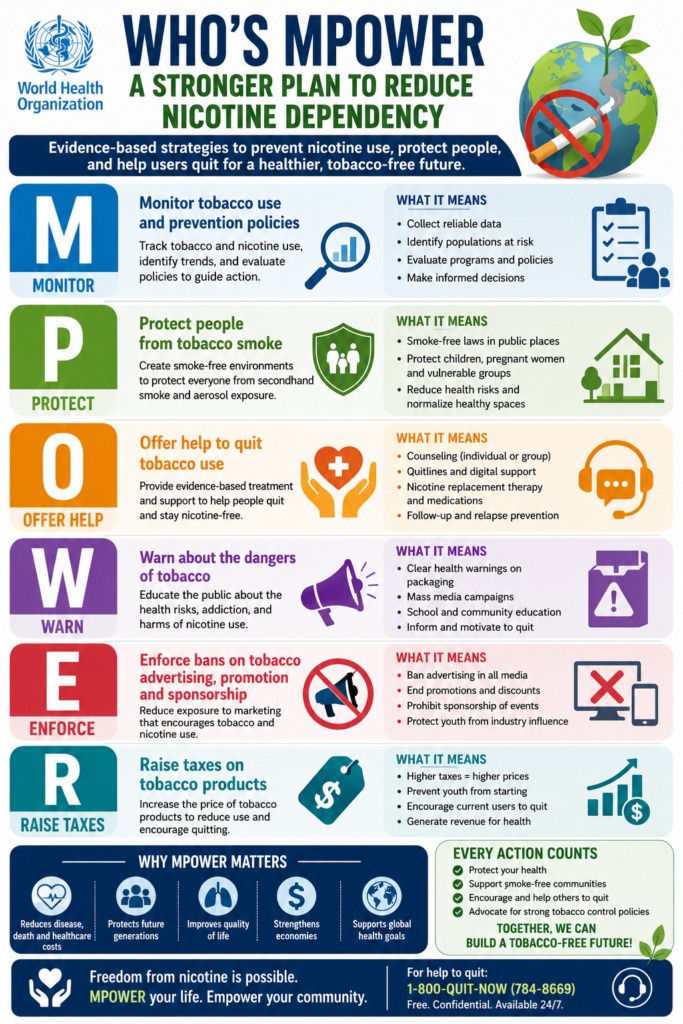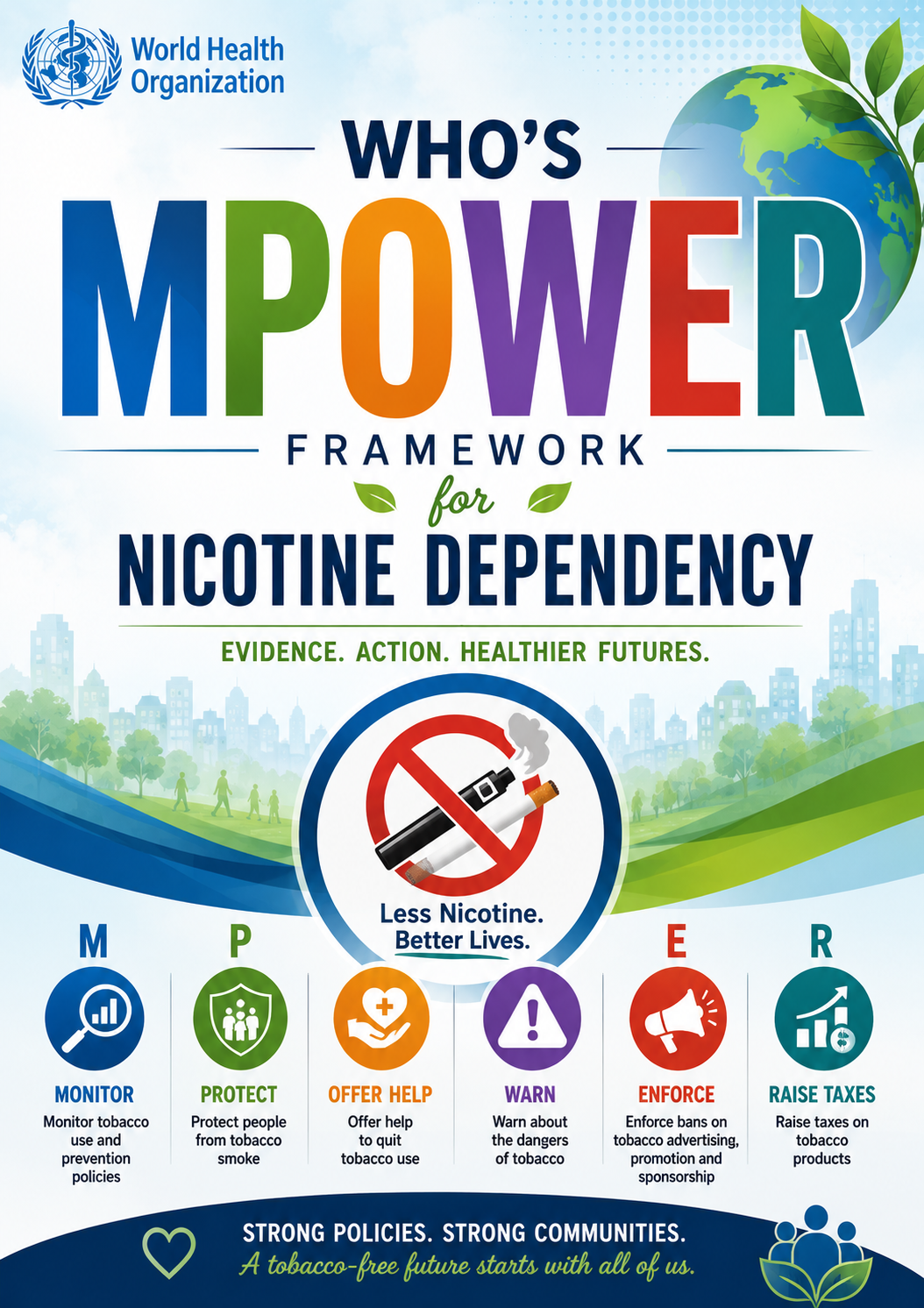
Nicotine dependency remains one of the leading preventable causes of disease, disability, and premature death worldwide. Whether delivered through traditional cigarettes, cigars, smokeless tobacco, or electronic nicotine products, nicotine is a highly addictive substance that alters the brain’s reward system and can make quitting extremely difficult. To reduce the global burden of tobacco-related disease, the World Health Organization (WHO) developed the MPOWER framework, a comprehensive, evidence-based strategy that supports the implementation of effective tobacco control policies. MPOWER stands for Monitor tobacco use and prevention policies, Protect people from tobacco smoke, Offer help to quit tobacco use, Warn about the dangers of tobacco, Enforce bans on tobacco advertising, promotion, and sponsorship, and Raise taxes on tobacco products. Together, these six strategies provide a coordinated public health approach that combines prevention, education, treatment, and policy to reduce nicotine dependence, prevent tobacco-related illnesses, and improve population health.
WHO’s MPOWER Framework for Nicotine Dependency
The MPOWER framework is a comprehensive tobacco control strategy developed by the World Health Organization to help countries reduce tobacco use and nicotine dependence. Introduced in 2008, MPOWER supports implementation of the WHO Framework Convention on Tobacco Control, the world’s first public health treaty focused on reducing the health, social, environmental, and economic harms caused by tobacco use. Although originally designed for combustible tobacco products, the principles are increasingly applied to nicotine products such as e-cigarettes and vapes.
Nicotine is a highly addictive substance that stimulates the brain’s reward system by increasing dopamine release. Repeated exposure can lead to physical dependence, withdrawal symptoms, and compulsive use. The MPOWER framework addresses nicotine dependency through prevention, education, treatment, policy, and regulation.
M — Monitor Tobacco Use and Prevention Policies
The first component focuses on collecting accurate information about tobacco and nicotine use. Governments monitor smoking and vaping rates, identify high-risk populations, evaluate public health interventions, and track changes in nicotine use over time.
Monitoring helps public health officials:
- Measure smoking and vaping prevalence
- Identify youth and vulnerable populations at risk
- Evaluate prevention programs
- Guide policy decisions
- Allocate healthcare resources effectively
Reliable surveillance allows countries to adapt tobacco control strategies as new nicotine products emerge.
P — Protect People from Tobacco Smoke
The second component aims to protect individuals from exposure to secondhand smoke and aerosol emissions from nicotine products. Smoke-free policies reduce exposure to secondhand smoke in workplaces, restaurants, schools, healthcare facilities, and other public spaces.
Benefits include:
- Reduced heart and lung disease
- Lower risk of asthma attacks
- Protection of children and pregnant women
- Reduced normalization of smoking behavior
- Encouragement for smokers to quit
Many communities are expanding smoke-free policies to include vaping products because aerosols may contain nicotine, ultrafine particles, and other potentially harmful substances.
O — Offer Help to Quit Tobacco Use
Helping people overcome nicotine dependence is a central goal of MPOWER. Quitting nicotine often requires more than willpower because addiction changes brain pathways involved in reward, stress, and decision-making.
Evidence-based treatments include:
- Behavioral counseling
- Individual and group therapy
- Telephone quitlines
- Digital cessation programs
- Cognitive Behavioral Therapy (CBT)
- Motivational Interviewing (MI)
- Nicotine replacement therapy (patches, gum, lozenges)
- Prescription medications, when appropriate
Combining medication with behavioral counseling generally produces higher quit rates than either approach alone.
W — Warn About the Dangers of Tobacco
Education is essential for preventing nicotine addiction. MPOWER encourages governments to provide clear, evidence-based information through health warnings, educational campaigns, and public awareness initiatives.
Warnings address:
- Cancer
- Heart disease
- Stroke
- Chronic lung disease
- Pregnancy complications
- Nicotine addiction
- Youth brain development
- Financial costs
- Mental health impacts
Large graphic warning labels on tobacco packaging have been shown to increase awareness of health risks and motivate quit attempts.
E — Enforce Bans on Tobacco Advertising, Promotion, and Sponsorship
Advertising influences both youth initiation and continued nicotine use. MPOWER recommends comprehensive restrictions on marketing that promote tobacco and nicotine products.
These policies may include banning:
- Television and radio advertisements
- Social media promotions
- Sponsorship of sporting or entertainment events
- Promotional discounts
- Free product samples
- Youth-oriented marketing
Reducing exposure to tobacco marketing decreases the likelihood that young people will begin using nicotine products.
R — Raise Taxes on Tobacco
Increasing the price of tobacco products through taxation is one of the most effective ways to reduce tobacco consumption. Higher prices discourage youth from starting and encourage current users to quit or reduce use.
Research consistently shows that tobacco taxation:
- Lowers smoking prevalence
- Reduces youth initiation
- Decreases cigarette consumption
- Encourages quit attempts
- Lowers healthcare costs associated with tobacco-related diseases
Many public health experts also support policies that address pricing and access for newer nicotine products when appropriate.
MPOWER and Nicotine Dependency
Although MPOWER was originally designed to reduce tobacco smoking, its principles remain highly relevant for addressing nicotine dependency in all forms. As e-cigarettes, nicotine pouches, and other alternative nicotine products become more common, public health strategies continue to evolve while emphasizing prevention, education, treatment, and protection from nicotine addiction.
Healthcare professionals play an important role by:
- Screening patients for nicotine use
- Assessing nicotine dependence
- Providing brief cessation counseling
- Referring patients to evidence-based treatment
- Supporting relapse prevention
- Educating patients about the risks of nicotine addiction
Strengths of the MPOWER Framework
The MPOWER approach has several strengths:
- Based on strong public health evidence
- Addresses prevention and treatment
- Protects both users and non-users
- Supports population-wide policy changes
- Encourages healthcare involvement
- Reduces tobacco-related illness and death
- Can be adapted as new nicotine products emerge
Challenges
Implementing MPOWER strategies may face challenges, including:
- Rising popularity of youth vaping
- Marketing through digital platforms
- Misperceptions that some nicotine products are harmless
- Unequal access to cessation services
- Nicotine withdrawal and relapse
- Industry adaptation to regulations
Continued research and policy updates are needed to address evolving nicotine products while ensuring adults who smoke have access to effective cessation support.
Conclusion
The WHO’s MPOWER framework is a globally recognized, evidence-based strategy for reducing nicotine dependency and tobacco-related disease. By monitoring nicotine use, protecting people from exposure, offering effective cessation support, warning about health risks, restricting advertising, and increasing tobacco taxes, MPOWER addresses both individual behavior and population-level influences on nicotine addiction. When combined with evidence-based treatment, community education, and supportive public policies, this framework provides a strong foundation for preventing nicotine dependence, helping people quit, and improving public health worldwide.
Self-Management Strategies to Understand WHO’s MPOWER for Nicotine Dependency
Self-management is an essential part of overcoming nicotine dependence and complements the principles of the World Health Organization’s (WHO) MPOWER framework. While MPOWER emphasizes public health policies to reduce tobacco and nicotine use, individuals also play an active role in their own recovery. By applying evidence-based self-management strategies, people can better understand nicotine addiction, reduce cravings, prevent relapse, and build a healthier, nicotine-free lifestyle.
1. Monitor Your Nicotine Use (M – Monitor)
Track your daily nicotine use by recording when, where, and why you smoke, vape, or use other nicotine products. Note your emotions, stress levels, and situations that trigger cravings. Identifying patterns helps you recognize high-risk situations and develop healthier responses.
2. Protect Yourself from Triggers (P – Protect)
Reduce exposure to people, places, and situations that encourage nicotine use. Remove cigarettes, vaping devices, lighters, and ashtrays from your home and vehicle. Avoid environments where others are smoking or vaping, especially during the early stages of recovery.
3. Seek Professional Help to Quit (O – Offer Help)
Understand that nicotine addiction is a medical condition that often requires support. Speak with your healthcare provider about evidence-based treatments such as nicotine replacement therapy (patches, gum, lozenges), prescription medications, behavioral counseling, or support groups. Combining medication with counseling generally produces better long-term outcomes than using either approach alone.
4. Learn About the Health Risks (W – Warn)
Educate yourself about how nicotine affects the brain, heart, lungs, blood vessels, and overall health. Understanding the short-term and long-term consequences of nicotine dependence can strengthen your motivation to quit and reinforce your commitment to recovery.
5. Limit Exposure to Tobacco Marketing (E – Enforce)
Recognize how advertising, social media, and promotional messages can influence nicotine use. Unfollow social media accounts that promote tobacco or vaping products, avoid nicotine-related online content, and replace those influences with educational resources and recovery-focused communities.
6. Understand the Financial Benefits of Quitting (R – Raise Taxes)
Even if tobacco taxes do not directly affect your decision to quit, calculate how much money you spend on nicotine products each week, month, and year. Redirect those savings toward positive goals such as vacations, hobbies, fitness memberships, education, or emergency savings. Seeing financial progress can increase motivation to remain nicotine-free.
7. Create a Personalized Quit Plan
Set a quit date and develop a written plan that includes your reasons for quitting, anticipated challenges, coping strategies, contact information for support, and rewards for reaching milestones. Having a structured plan increases confidence and helps prepare you for difficult situations.
8. Practice Healthy Coping Skills
Replace nicotine with healthier methods of managing stress and emotions. Effective coping strategies include deep-breathing exercises, mindfulness meditation, regular physical activity, journaling, listening to music, engaging in hobbies, and talking with supportive family members and friends.
9. Build a Daily Healthy Routine
A consistent routine can reduce boredom and stress, both of which are common triggers for nicotine use. Prioritize regular sleep, balanced nutrition, exercise, hydration, and enjoyable activities that support physical and emotional well-being.
10. Prepare for Withdrawal Symptoms
Nicotine withdrawal may cause irritability, anxiety, difficulty concentrating, increased appetite, restlessness, or cravings. Remind yourself that these symptoms are temporary and often improve within the first few weeks. Having coping strategies ready before quitting can make withdrawal easier to manage.
11. Build a Strong Support Network
Share your quit goals with trusted family members, friends, coworkers, or recovery groups. Encourage them to provide encouragement, celebrate milestones, and help you stay accountable during difficult moments.
12. Learn from Setbacks Without Giving Up
If you experience a lapse or relapse, avoid viewing it as failure. Instead, identify what triggered the nicotine use, adjust your recovery plan, strengthen your coping strategies, and continue moving forward. Recovery is a learning process, and each attempt provides valuable insight for long-term success.
Conclusion
The WHO’s MPOWER framework provides a strong public health foundation for reducing nicotine dependence, but lasting recovery also depends on effective self-management. By monitoring nicotine use, avoiding triggers, seeking evidence-based treatment, understanding health risks, resisting tobacco marketing, and building healthy daily habits, individuals can take an active role in their recovery. Combining these personal strategies with professional support and community resources increases the likelihood of achieving long-term freedom from nicotine addiction and improving overall physical and mental health.
Family Support Strategies to Understand WHO’s MPOWER for Nicotine Dependency
Family support is a valuable component of nicotine addiction recovery and complements the World Health Organization’s (WHO) MPOWER framework. While MPOWER focuses on public health policies that reduce tobacco and nicotine use, families can reinforce these strategies at home by creating a supportive, smoke-free environment, encouraging evidence-based treatment, and helping loved ones maintain long-term recovery. When family members understand nicotine dependence as a chronic but treatable condition, they can provide encouragement while promoting healthy boundaries and accountability.
1. Learn About Nicotine Addiction (M – Monitor)
Educate the entire family about how nicotine affects the brain, creates physical dependence, and causes withdrawal symptoms. Understanding that addiction is more than a habit helps reduce stigma and encourages compassionate support rather than criticism.
2. Help Monitor Recovery Progress
Support your loved one by helping them track their quit journey. Celebrate milestones such as one day, one week, one month, and one year without nicotine. Focus on progress rather than perfection, and encourage honest conversations about cravings and challenges.
3. Create a Smoke- and Vape-Free Home (P – Protect)
Maintain a home and vehicle free of cigarettes, vaping devices, cigars, and other nicotine products. A tobacco-free environment reduces exposure to secondhand smoke and minimizes triggers that can increase cravings or relapse risk.
4. Encourage Professional Treatment (O – Offer Help)
Support your loved one in seeking evidence-based treatment, including counseling, smoking cessation programs, nicotine replacement therapy, or prescription medications when recommended by a healthcare provider. Offer transportation to appointments or help them stay consistent with their treatment plan.
5. Reinforce Health Education (W – Warn)
Discuss the health benefits of quitting nicotine, such as improved breathing, lower risk of heart disease, better circulation, improved taste and smell, and increased energy. Focusing on positive health gains can strengthen motivation throughout recovery.
6. Reduce Exposure to Tobacco Marketing (E – Enforce)
Help limit exposure to advertisements and social media content that glamorize smoking or vaping. Encourage children and adolescents to think critically about marketing messages and discuss how advertising can influence behavior and normalize nicotine use.
7. Support Healthy Financial Decisions (R – Raise Taxes)
Encourage your loved one to calculate how much money they save by quitting nicotine. Celebrate financial milestones by using those savings for healthy family activities, vacations, hobbies, education, or emergency savings, rather than tobacco or vaping products.
8. Communicate with Empathy and Respect
Avoid blaming, shaming, or criticizing your loved one if they struggle with cravings or relapse. Instead, use supportive language such as “I’m proud of the effort you’re making,” or “How can I help you stay on track today?” Positive communication strengthens trust and motivation.
9. Encourage Healthy Lifestyle Habits
Support activities that reduce stress and improve overall health, including regular exercise, nutritious meals, adequate sleep, mindfulness practices, family walks, outdoor recreation, and enjoyable hobbies. Healthy routines help replace nicotine with positive coping strategies.
10. Recognize Withdrawal Symptoms
Family members should understand that irritability, anxiety, difficulty concentrating, mood changes, increased appetite, and restlessness are common during nicotine withdrawal. Responding with patience and encouragement, rather than with frustration, helps create a more supportive recovery environment.
11. Prepare for Relapse Prevention
Work together to identify high-risk situations, such as stressful events, social gatherings where others smoke or vape, or emotional distress. Develop a family plan that includes healthy coping strategies, supportive reminders, and encouragement to seek help early if cravings increase.
12. Take Care of Your Own Well-Being
Supporting someone through nicotine recovery can be emotionally challenging. Family members should also practice self-care by maintaining healthy routines, managing their own stress, seeking counseling if needed, and learning effective communication skills. A healthy family is better equipped to support long-term recovery.
Conclusion
The WHO’s MPOWER framework demonstrates that reducing nicotine dependence requires both effective public health policies and strong personal support systems. Families can reinforce the MPOWER principles by creating smoke-free environments, encouraging evidence-based treatment, promoting healthy lifestyles, monitoring recovery progress, and communicating with compassion. By working together with healthcare professionals and community resources, families become an important source of motivation, accountability, and hope. Their ongoing encouragement can help individuals overcome nicotine dependence, reduce the risk of relapse, and achieve lasting improvements in health and quality of life.
Community Resource Strategies to Understand WHO’s MPOWER for Nicotine Dependency
Community resources play a vital role in supporting the World Health Organization’s (WHO) MPOWER framework by helping individuals prevent nicotine addiction, access evidence-based treatment, and maintain long-term recovery. While MPOWER focuses on population-level policies, community organizations translate these strategies into practical services, such as smoking-cessation programs, counseling, education, and advocacy. By utilizing local and national resources, individuals and families can strengthen their recovery and contribute to healthier, tobacco-free communities.
1. Support Community Monitoring Programs (M – Monitor)
Public health departments, schools, healthcare systems, and universities regularly collect information about tobacco and nicotine use to identify trends and evaluate prevention efforts. Participating in anonymous surveys and community health assessments helps public health professionals develop programs that address local needs and reduce nicotine dependence.
2. Promote Smoke-Free and Vape-Free Environments (P – Protect)
Communities can support smoke-free and vape-free policies in schools, workplaces, parks, restaurants, apartment buildings, and public spaces. These policies reduce exposure to secondhand smoke and aerosol, discourage nicotine use, and help create healthier environments for children and adults.
3. Utilize Smoking and Vaping Cessation Programs (O – Offer Help)
Many hospitals, community health centers, pharmacies, behavioral health clinics, and local health departments offer evidence-based tobacco cessation programs. These programs may include individual counseling, group therapy, nicotine replacement therapy, prescription medications, and relapse prevention education. Encouraging community members to use these services increases successful quit rates.
4. Promote Tobacco Quitlines
Telephone quitlines provide free coaching, educational materials, and ongoing support from trained tobacco treatment specialists. In the United States, 1-800-QUIT-NOW connects callers to their state’s tobacco cessation services, offering personalized quit plans and follow-up support.
5. Increase Public Education and Awareness (W – Warn)
Community organizations, schools, healthcare providers, and nonprofit agencies can offer educational workshops, health fairs, and awareness campaigns about the dangers of nicotine addiction, secondhand smoke, youth vaping, and the benefits of quitting. Accurate information helps prevent nicotine initiation and encourages earlier treatment.
6. Reduce Exposure to Tobacco Marketing (E – Enforce)
Communities can advocate for restrictions on tobacco and nicotine advertising near schools, youth centers, and recreational facilities. Schools and youth organizations can also teach media literacy, helping young people recognize and resist advertising strategies that promote nicotine products.
7. Support Policies That Reduce Tobacco Access (R – Raise Taxes)
Community members can support public health policies that reduce youth access to tobacco and nicotine products, including taxation, age restrictions, retailer licensing, and enforcement of sales regulations. These measures have been shown to reduce tobacco initiation and encourage cessation.
8. Collaborate with Healthcare Providers
Primary care providers, dentists, pharmacists, nurses, respiratory therapists, and behavioral health professionals all play important roles in identifying nicotine dependence and connecting individuals with treatment. Community partnerships between healthcare systems and public health agencies improve access to comprehensive cessation services.
9. Encourage School-Based Prevention Programs
Schools can provide age-appropriate education about nicotine addiction, vaping risks, decision-making skills, and healthy coping strategies. Prevention programs that begin before nicotine use starts are among the most effective methods of reducing future addiction.
10. Expand Workplace Wellness Programs
Employers can support nicotine-free lifestyles by offering smoking cessation benefits, counseling services, Employee Assistance Programs (EAPs), educational seminars, and incentives for quitting. Supportive workplaces improve employee health while reducing healthcare costs and absenteeism.
11. Strengthen Community Recovery Networks
Recovery organizations, faith-based groups, wellness centers, fitness programs, and peer support groups can provide encouragement, accountability, and healthy social connections that reinforce nicotine-free living. Strong community relationships help individuals maintain long-term recovery.
12. Advocate for Ongoing Tobacco Control Efforts
Community members can participate in local coalitions, public health initiatives, and advocacy organizations that promote evidence-based tobacco control policies. Supporting research, prevention campaigns, and expanded access to cessation services helps reduce nicotine dependence across the entire community.
Conclusion
Community resources are essential to the successful implementation of the WHO’s MPOWER framework because they transform public health policies into practical support for individuals and families. Through smoke-free environments, tobacco cessation programs, quitlines, healthcare partnerships, educational campaigns, school prevention efforts, and community advocacy, local organizations help reduce nicotine dependence and improve public health. When individuals, families, healthcare providers, schools, employers, and community organizations work together, the MPOWER framework becomes a powerful strategy for preventing nicotine addiction, promoting successful quitting, and creating healthier, tobacco-free communities for future generations.
Frequently Asked Questions
Here are some common questions:
1. What is the WHO MPOWER framework?
Answer: MPOWER is an evidence-based tobacco control strategy developed by the World Health Organization to reduce tobacco use and nicotine dependence. It supports implementation of the WHO Framework Convention on Tobacco Control and consists of six key strategies: Monitor, Protect, Offer help, Warn, Enforce, and Raise taxes.
2. What does MPOWER stand for?
Answer:
- M – Monitor tobacco use and prevention policies.
- P – Protect people from tobacco smoke.
- O – Offer help to quit tobacco use.
- W – Warn about the dangers of tobacco.
- E – Enforce bans on tobacco advertising, promotion, and sponsorship.
- R – Raise taxes on tobacco products.
3. Why was MPOWER created?
Answer: MPOWER was developed to help countries reduce tobacco-related diseases and deaths by promoting proven public health policies that prevent nicotine addiction, encourage quitting, and protect people from the harmful effects of tobacco use and secondhand smoke.
4. How does MPOWER help reduce nicotine dependency?
Answer: The framework addresses nicotine dependence through prevention, education, treatment, smoke-free policies, advertising restrictions, and pricing strategies. Together, these measures reduce tobacco initiation, encourage quitting, and support long-term recovery.
5. Does MPOWER apply only to cigarette smoking?
Answer: No. While originally developed for tobacco products, many MPOWER principles are also used to address newer nicotine products such as e-cigarettes and vaping devices, particularly regarding youth prevention, education, smoke-free environments, and access to cessation support.
6. Why is monitoring tobacco use important?
Answer: Monitoring helps governments and public health agencies understand how many people use tobacco or nicotine products, identify populations at higher risk, evaluate prevention programs, and make informed policy decisions based on reliable data.
7. What does “Protect people from tobacco smoke” mean?
Answer: This strategy promotes smoke-free and vape-free environments in workplaces, schools, restaurants, healthcare facilities, and other public places to reduce exposure to secondhand smoke and aerosol while encouraging healthier communities.
8. What types of help are available to quit nicotine?
Answer: Evidence-based treatments include behavioral counseling, individual or group therapy, telephone quitlines, digital cessation programs, nicotine replacement therapy (patches, gum, lozenges), and prescription medications when appropriate. Combining counseling with medication often leads to the best results.
9. Why are warning labels on tobacco products important?
Answer: Graphic health warnings and educational campaigns increase awareness of the serious health risks of tobacco use, motivate quit attempts, discourage young people from starting, and reinforce the dangers of nicotine addiction.
10. Why does MPOWER recommend banning tobacco advertising?
Answer: Tobacco advertising, promotion, and sponsorship can increase tobacco use, particularly among youth. Restricting advertising reduces exposure to marketing that encourages nicotine use and helps prevent new users from developing nicotine dependence.
11. How do higher tobacco taxes reduce smoking?
Answer: Increasing the cost of tobacco products makes them less affordable, especially for adolescents and young adults. Higher prices encourage current users to quit or reduce consumption while discouraging others from starting.
12. Is nicotine itself addictive?
Answer: Yes. Nicotine is a highly addictive substance that stimulates the brain’s reward system by increasing dopamine release. Repeated exposure leads to physical dependence, cravings, and withdrawal symptoms when nicotine use stops.
13. What withdrawal symptoms might occur when quitting nicotine?
Answer: Common withdrawal symptoms include irritability, anxiety, difficulty concentrating, restlessness, increased appetite, sleep disturbances, mood changes, and strong cravings. These symptoms are temporary and usually improve over several weeks.
14. How can healthcare professionals support the MPOWER framework?
Answer: Healthcare professionals can screen patients for nicotine use, provide brief cessation counseling, recommend evidence-based treatments, prescribe medications when appropriate, monitor progress, and refer patients to tobacco cessation programs and community resources.
15. What role do families play in nicotine recovery?
Answer: Families can encourage treatment, create smoke-free homes, provide emotional support, celebrate recovery milestones, avoid judgment, reinforce healthy habits, and help individuals manage cravings and prevent relapse.
16. How can communities support MPOWER?
Answer: Communities can promote smoke-free policies, provide tobacco cessation programs, support educational campaigns, encourage school-based prevention programs, advocate for responsible public health policies, and increase access to evidence-based treatment.
17. Does MPOWER eliminate nicotine addiction by itself?
Answer: No. MPOWER provides a comprehensive public health framework, but lasting recovery also depends on individual motivation, evidence-based treatment, family support, community resources, and ongoing relapse prevention.
18. What are the long-term benefits of implementing MPOWER?
Answer: Successful implementation of MPOWER has been associated with lower smoking rates, fewer tobacco-related illnesses, reduced healthcare costs, improved quality of life, decreased exposure to secondhand smoke, and healthier future generations.
19. Can someone successfully quit nicotine after many years of use?
Answer: Yes. Many people successfully quit after years or even decades of nicotine dependence. Although multiple quit attempts are common, combining behavioral support with evidence-based treatments greatly increases the likelihood of long-term success.
20. What is the overall goal of the WHO MPOWER framework?
Answer: The ultimate goal of MPOWER is to reduce nicotine dependence and tobacco-related disease by preventing tobacco use, protecting the public from exposure, helping people quit, educating communities about health risks, restricting tobacco marketing, and implementing policies that promote healthier, tobacco-free lives worldwide.
Conclusion
The WHO’s MPOWER framework has become one of the most successful global public health strategies for reducing nicotine dependence and preventing tobacco-related disease. By combining surveillance, smoke-free policies, accessible cessation services, public education, advertising restrictions, and tobacco taxation, MPOWER addresses both the individual and societal factors that contribute to nicotine addiction. While no single intervention can eliminate tobacco use, implementing all six components together creates a comprehensive approach that encourages prevention, supports successful quitting, and protects future generations from nicotine addiction. Continued collaboration among healthcare professionals, governments, schools, families, employers, and community organizations is essential to fully realize the benefits of MPOWER and build healthier, tobacco-free communities worldwide.
Video: How Countries Are Crushing Smoking Rates #PublicHealth #MPOWER #QuitSmoking