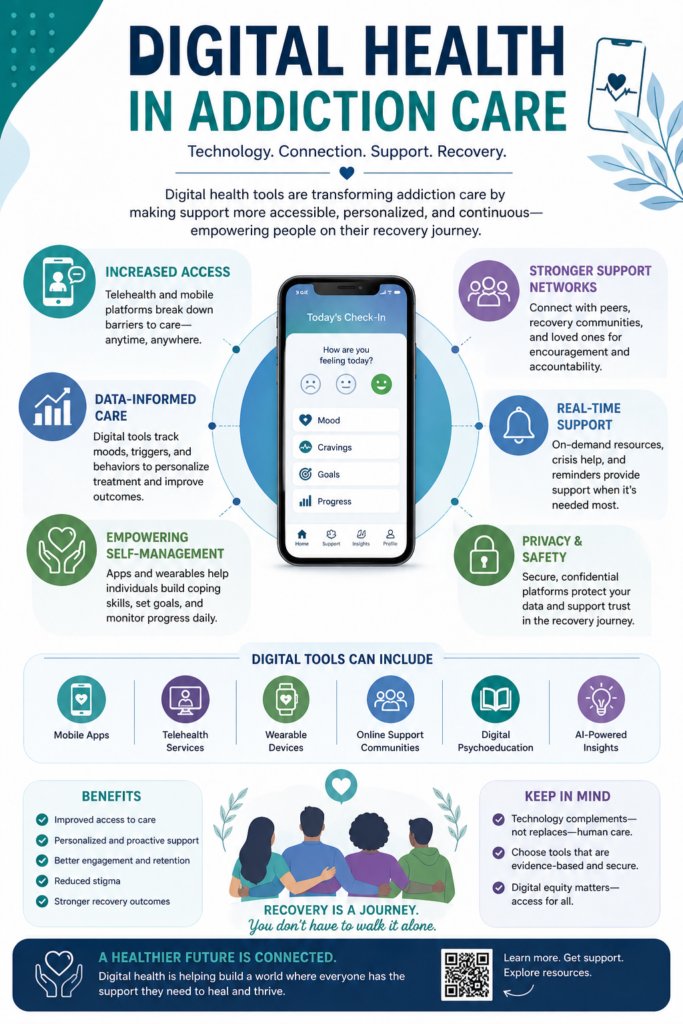
Digital health is rapidly transforming the landscape of addiction care, shifting it from a traditionally clinic-centered model to one that is more accessible, continuous, and patient-driven. Technologies such as telehealth, mobile health applications, wearable devices, and online support platforms are expanding how individuals engage with treatment and recovery. These tools not only increase access to care—especially for those facing geographic, financial, or social barriers—but also provide real-time support that extends beyond scheduled therapy sessions. By integrating data-driven insights with personalized interventions, digital health enables a more responsive and adaptive approach to addiction care, aligning treatment with the day-to-day realities of recovery.
Rewiring Recovery: The Role of Digital Health in Addiction Care
Digital health is reshaping how addiction treatment is delivered, experienced, and sustained. What was once limited to in-person therapy sessions and support groups is now expanding into a hybrid model that blends traditional care with technology-driven tools. From mobile apps to telehealth counseling, digital platforms are making recovery support more accessible, personalized, and continuous.
Expanding Access to Care
One of the most significant contributions of digital health in addiction care is increased accessibility. Geographic barriers, transportation issues, stigma, and limited provider availability have historically prevented many individuals from seeking help. Telehealth services allow people to connect with licensed professionals from home, reducing these barriers. For individuals in rural or underserved areas, this can be the difference between receiving care and going without it.
Digital platforms also offer flexibility. App-based programs and online counseling sessions can fit into a person’s daily routine, which is especially important for those balancing work, school, or family responsibilities. This shift supports a more inclusive model of care that meets people where they are.
Continuous Support Beyond the Clinic
Recovery does not happen in one-hour sessions—it’s an ongoing process. Digital health tools extend support into everyday life. Mobile apps can provide daily check-ins, mood tracking, coping exercises, and reminders for medication or meetings. Some platforms use real-time data to identify patterns, such as increased stress or isolation, that may signal a higher risk of relapse.
Wearable technology is also emerging in this space, monitoring physiological indicators such as sleep patterns and heart rate variability. These insights can help individuals and providers intervene earlier, before a lapse becomes a relapse.
Personalization and Data-Driven Care
Digital health enables a level of personalization that traditional models often struggle to achieve. Algorithms can tailor interventions based on user behavior, preferences, and progress. For example, someone experiencing cravings might receive targeted coping strategies, guided mindfulness exercises, or prompts to contact a support person.
Data collected through digital platforms can also improve clinical decision-making. Providers can track trends over time, adjust treatment plans more quickly, and engage in more informed conversations with their clients. This creates a feedback loop that enhances both accountability and the quality of care.
Reducing Stigma and Increasing Engagement
For many, the anonymity of digital tools lowers the psychological barrier to seeking help. Engaging with an app or attending a virtual support group can feel less intimidating than walking into a clinic. This can be especially important for individuals in the early stages of recognizing a problem or those who have had negative past experiences with treatment.
Gamification and interactive features can further boost engagement. Progress tracking, rewards, and community forums create a sense of momentum and connection—both critical elements in sustaining recovery.
Challenges and Ethical Considerations
Despite its promise, digital health in addiction care is not without challenges. Privacy and data security are major concerns, particularly when dealing with sensitive health information. Ensuring regulatory compliance and maintaining user trust are essential.
There is also the issue of digital equity. Not everyone has access to reliable internet, smartphones, or the digital literacy needed to use these tools effectively. Without careful implementation, digital health could unintentionally widen existing disparities.
Additionally, technology should not replace human connection. While digital tools can enhance care, they are most effective when integrated with professional support and real-world relationships.
The Future of Digital Recovery
Looking ahead, digital health is likely to become an integral component of addiction care rather than a supplemental option. Advances in artificial intelligence, predictive analytics, and virtual reality may further transform how treatment is delivered—offering immersive therapy experiences or highly precise relapse prevention strategies.
The core goal remains the same: helping individuals build sustainable, meaningful recovery. Digital health simply expands the toolkit, offering new ways to support that journey—anytime, anywhere.
Taking Charge of Recovery: Self-Management Strategies in Digital Health for Addiction Care
Digital health has transformed addiction care from a system centered on periodic clinical visits into one that supports daily, self-directed recovery. At the core of this shift is self-management—the ability of individuals to actively monitor, understand, and respond to their own thoughts, emotions, and behaviors. When paired with digital tools, self-management becomes more structured, data-informed, and accessible, giving people greater control over their recovery process.
What Self-Management Means in Digital Addiction Care
Self-management in this context goes beyond willpower or motivation. It involves a set of practical skills: recognizing triggers, regulating emotions, tracking progress, and making informed decisions in high-risk situations. Digital health platforms—such as recovery apps, telehealth services, and wearable devices—act as extensions of these skills, offering real-time guidance and feedback.
Rather than relying solely on memory or occasional therapy sessions, individuals can now document patterns as they occur. This creates a more accurate and actionable understanding of their recovery journey.
Building Awareness Through Tracking
One of the most powerful self-management strategies is consistent self-monitoring. Many digital tools allow users to log mood, cravings, sleep, stress levels, and substance use triggers. Over time, these entries reveal patterns that might otherwise go unnoticed.
For example, someone might discover that cravings spike during periods of poor sleep or after specific social interactions. Recognizing these connections allows for proactive planning—such as improving sleep routines or setting boundaries in certain environments. Awareness becomes the foundation for change.
Managing Cravings in Real Time
Cravings are often time-sensitive and unpredictable, which makes immediate support essential. Digital health tools can provide on-demand coping strategies, such as guided breathing exercises, grounding techniques, or short cognitive reframing prompts.
Some platforms use notifications or adaptive algorithms to intervene when risk appears elevated. These features encourage individuals to pause, reflect, and choose a response rather than react impulsively. Over time, this strengthens emotional regulation and reduces the risk of relapse.
Strengthening Accountability and Routine
Recovery is reinforced by consistency. Digital tools help establish structure through reminders for medication, therapy appointments, or daily check-ins. This creates a rhythm that supports stability, especially during early recovery when routines are still forming.
Accountability can also be enhanced through progress dashboards or shared data with clinicians or support networks. Seeing measurable progress—such as reduced craving frequency or improved mood—can reinforce motivation and a sense of efficacy.
Leveraging Social and Professional Support
Self-management does not mean managing alone. Many digital platforms integrate peer support communities or direct messaging with counselors. These features make it easier to reach out during moments of vulnerability, reducing isolation.
Telehealth also complements self-management by allowing more frequent, flexible contact with providers. Instead of waiting for the next scheduled session, individuals can seek guidance when challenges arise, making care more responsive and personalized.
Navigating Challenges and Staying Critical
While digital health tools offer significant benefits, effective self-management requires thoughtful use. Not all apps are evidence-based, and excessive tracking can sometimes become overwhelming or anxiety-inducing. It’s important to choose tools that align with clinical guidance and personal needs.
Privacy is another key consideration. Users should be aware of how their data is stored and shared, ensuring that platforms meet appropriate security standards.
Integrating Digital Tools Into Daily Life
The most effective self-management strategies are those that feel sustainable. Digital tools should enhance—not complicate—daily routines. Simple practices like a brief morning check-in, a midday mindfulness exercise, or an evening reflection can create meaningful structure without becoming burdensome.
Over time, these small, consistent actions build resilience. Individuals become more attuned to their internal states, more confident in their coping abilities, and more engaged in their recovery.
A More Empowered Model of Care
Digital health is not replacing traditional addiction treatment—it is reshaping it into a more collaborative model. Self-management strategies, supported by technology, place individuals at the center of their care. This shift promotes autonomy while still maintaining access to professional and social support.
Understanding and applying these strategies is key to making digital health truly effective. When used intentionally, these tools do more than track behavior—they help individuals develop the insight and skills needed for long-term recovery.
Connected Recovery: Family Support Strategies in Digital Health for Addiction Care
Addiction recovery rarely happens in isolation. Family systems—whether biological, chosen, or blended—shape the environment in which recovery is sustained. As digital health becomes more integrated into addiction care, it is also redefining how families can participate in and support that process. When used thoughtfully, digital tools can strengthen communication, increase understanding, and create a more coordinated support network.
Why Family Support Matters in the Digital Era
Family involvement has long been associated with improved recovery outcomes, including better treatment engagement and lower relapse risk. Digital health expands this involvement beyond occasional therapy sessions. Through shared platforms, telehealth access, and real-time updates, families can become more informed and responsive without being intrusive.
At the same time, digital tools can help balance a common tension in recovery: support vs. autonomy. Individuals maintain control over their recovery, while families gain appropriate ways to stay engaged.
Building Understanding Through Education
A key barrier to effective family support is misunderstanding addiction itself. Many digital platforms now include educational modules designed for both individuals and their families. These resources explain the neurobiology of addiction, the role of triggers, and the realities of relapse.
When families understand that addiction is not simply a matter of willpower, their responses often shift—from frustration or blame to empathy and constructive support. Digital access allows them to learn at their own pace and revisit information as needed.
Improving Communication With Digital Tools
Communication breakdowns are common in families affected by addiction. Digital health tools can help create more structured and less emotionally charged communication channels.
For example:
- Shared apps can include check-in features in which individuals voluntarily update their mood or progress.
- Messaging platforms allow for asynchronous communication, giving both sides time to respond thoughtfully.
- Telehealth family sessions provide guided conversations with a clinician present.
These tools can reduce misunderstandings and prevent small issues from escalating into conflict.
Supporting Without Overstepping
One of the most challenging aspects of family involvement is knowing how to help without becoming controlling. Digital health tools can support boundary-setting by clearly defining roles.
For instance, some platforms allow individuals to choose what data they share (e.g., appointment attendance but not detailed journaling entries). This preserves privacy while still fostering accountability. Families can then focus on encouragement and practical support rather than surveillance.
Encouraging Healthy Routines
Families play a crucial role in reinforcing daily habits that support recovery. Digital tools can help coordinate these efforts:
- Shared calendars for therapy appointments or support meetings
- Reminders for medication or wellness activities
- Tracking systems that highlight progress over time
When families align around these routines, they create a more stable and predictable environment—an important factor in reducing relapse risk.
Leveraging Peer and Family Support Networks
Digital health is not limited to individual-family interactions. Many platforms include online support communities for families of individuals in recovery. These spaces allow family members to connect with others facing similar challenges, share strategies, and reduce feelings of isolation.
This peer support can be especially valuable when families need guidance but lack access to in-person groups or counseling.
Addressing Challenges and Ethical Considerations
While digital tools can enhance family involvement, they also introduce important considerations:
- Privacy and consent: Individuals in recovery should control what information is shared.
- Digital boundaries: Constant monitoring can strain relationships if not handled carefully.
- Access and literacy: Not all families have equal access to or comfort with technology.
Effective use requires open conversations about expectations and mutual respect for boundaries.
Integrating Family Support Into a Digital Care Model
The most effective approach combines digital tools with professional guidance. Clinicians can help families interpret data, navigate difficult conversations, and develop appropriate support strategies. This ensures that technology enhances—rather than replaces—meaningful human interaction.
Families might, for example, review shared progress data during therapy sessions, using it as a starting point for discussion rather than a source of judgment.
A Collaborative Path Forward
Digital health is transforming addiction care into a more connected and collaborative system. Family members are no longer passive observers but active participants who can contribute to recovery in informed and constructive ways.
When families use digital tools to educate themselves, communicate effectively, and respect boundaries, they help create an environment where recovery is not only possible but sustainable. The result is a more integrated model of care—one where technology supports not just the individual, but the entire network around them.
Bridging Recovery: Community Resource Strategies in Digital Health for Addiction Care
Addiction recovery doesn’t happen in a vacuum—it unfolds within communities. Housing, employment, peer support, transportation, and access to healthcare all shape the sustainability of recovery. Digital health is increasingly acting as a bridge between individuals and these community resources, making support systems more visible, coordinated, and accessible.
Why Community Resources Matter in Recovery
Clinical treatment is only one part of addiction care. Long-term recovery depends heavily on social determinants of health—stable housing, meaningful work, supportive relationships, and access to ongoing care. Without these, even the most effective clinical interventions can fall short.
Digital health expands how individuals connect to these supports. Instead of navigating fragmented systems alone, people can use technology to locate, access, and stay engaged with community-based services.
Digital Navigation of Local Resources
One of the most practical strategies is the use of digital resource directories. Many apps and platforms now provide searchable databases of:
- Local support groups
- Recovery housing
- Food assistance programs
- Mental health services
- Employment and training opportunities
These tools reduce the friction of finding help—especially important during high-risk moments when motivation or energy may be low. Some platforms even use geolocation to suggest nearby services in real time.
Integrating Care Across Systems
Recovery often involves multiple providers: therapists, primary care physicians, case managers, and peer support specialists. Digital health tools can help coordinate care across these systems, reducing gaps and miscommunication.
Shared platforms may allow:
- Appointment scheduling across services
- Secure communication between providers
- Centralized care plans
This integrated approach ensures that community resources are not siloed but part of a cohesive recovery strategy.
Leveraging Peer Support Networks
Community is not just about services—it’s also about connection. Digital platforms increasingly host peer recovery communities, where individuals can share experiences, offer encouragement, and exchange practical advice.
These virtual communities can complement in-person groups or serve as an entry point for those hesitant to attend face-to-face meetings. They are especially valuable in rural areas or for individuals with limited mobility.
Enhancing Accessibility and Equity
Digital health has the potential to reduce disparities in access to community resources. For underserved populations, mobile-based tools can provide a low-barrier entry point to services that might otherwise remain out of reach.
However, this requires intentional design. Strategies to enhance equity include:
- Simplified, user-friendly interfaces
- Multilingual resources
- Offline functionality or low-data options
- Partnerships with community organizations to expand reach
Without these considerations, digital solutions risk reinforcing existing inequities.
Real-Time Support and Crisis Intervention
Some digital platforms go beyond directories by offering real-time support, such as crisis hotlines, chat-based counseling, or immediate referrals to local services. This is particularly important during moments of acute vulnerability, when timely intervention can prevent relapse or harm.
By connecting individuals directly to community resources at critical moments, digital health tools can serve as a safety net.
Challenges in Connecting Digital and Community Systems
Despite the promise, integrating digital health with community resources is complex. Challenges include:
- Keeping resource databases accurate and up to date
- Ensuring data privacy across multiple organizations
- Aligning technology with the workflows of community providers
- Overcoming trust barriers, especially in marginalized communities
Addressing these issues requires collaboration between technology developers, healthcare providers, and community organizations.
Practical Strategies for Individuals and Providers
To make the most of digital health in connecting with community resources:
- Start local: Use apps or platforms that focus on your geographic area
- Verify resources: Confirm availability and eligibility requirements
- Combine digital and human support: Use technology to find resources, but build relationships within them
- Engage consistently: Regular interaction with community services strengthens recovery stability
Providers can also play a role by recommending vetted digital tools and helping individuals interpret and use the information effectively.
A Community-Centered Future of Care
Digital health is not replacing community—it is enhancing how people connect to it. By making resources easier to find, access, and coordinate, technology helps transform recovery from an isolated effort into a supported, community-driven process.
Understanding and applying these strategies allows individuals to move beyond simply receiving care to actively engaging with the broader ecosystem that sustains recovery. In this model, digital health becomes not just a tool, but a connector—linking people to the communities that help them heal and thrive.
Frequently Asked Questions
Here are some common questions:
1. What is digital health in addiction care?
Digital health in addiction care refers to the use of technology—such as mobile apps, telehealth services, wearable devices, and online platforms—to support prevention, treatment, and recovery from substance use disorders. These tools help extend care beyond traditional clinical settings.
2. How does digital health improve access to addiction treatment?
Digital health removes common barriers like transportation, geographic location, and scheduling conflicts. Telehealth allows individuals to connect with providers from home, while mobile apps provide support anytime, making care more accessible and flexible.
3. What types of digital tools are used in addiction recovery?
Common tools include:
- Telehealth counseling platforms
- Recovery and sobriety apps
- Wearable devices (tracking sleep, stress, etc.)
- Online support communities
- Digital cognitive behavioral therapy (CBT) programs
4. Are digital health tools effective for addiction treatment?
Research shows that digital tools can be effective, especially when combined with traditional treatment. They are particularly helpful for monitoring progress, managing cravings, and maintaining engagement in recovery.
5. Can digital health replace in-person addiction treatment?
No—digital health is best used as a complement, not a replacement. Human connection, clinical expertise, and in-person support remain essential components of effective addiction care.
6. How do digital tools help with cravings and relapse prevention?
Many apps provide real-time coping strategies, such as mindfulness exercises, urge tracking, and reminders. Some tools can detect patterns (such as stress or isolation) and intervene early to reduce the risk of relapse.
7. Is digital addiction care private and secure?
Most reputable platforms use encryption and follow healthcare privacy regulations. However, users should always check privacy policies and ensure the platform is secure and evidence-based before sharing sensitive information.
8. What role do families play in digital addiction care?
Families can use digital tools for education, communication, and support. Some platforms allow shared updates or family therapy sessions, helping loved ones stay involved while respecting boundaries.
9. Are digital health tools accessible to everyone?
Not always. Access depends on factors like internet availability, device ownership, and digital literacy. Addressing these gaps—known as the “digital divide”—is a key challenge in expanding digital health.
10. How do digital tools support long-term recovery?
They provide ongoing support through daily check-ins, progress tracking, peer communities, and reminders. This continuous engagement helps individuals stay connected to recovery even after formal treatment ends.
11. What should someone look for in a digital health app?
Important factors include:
- Evidence-based approaches
- Data privacy and security
- Ease of use
- Customization options
- Integration with professional care
12. What is the future of digital health in addiction care?
The future includes advancements like artificial intelligence for personalized treatment, predictive analytics for relapse prevention, and virtual reality for therapy. These innovations aim to make care more precise and proactive.
Conclusion
As digital health continues to evolve, its role in addiction care is becoming increasingly central rather than supplementary. While these technologies offer significant benefits—such as improved access, enhanced self-management, and stronger connections to support systems—they must be implemented thoughtfully to address challenges related to privacy, equity, and the preservation of human connection. Ultimately, the most effective model of care will blend digital innovation with traditional therapeutic relationships, creating a comprehensive and collaborative approach to recovery. By leveraging digital tools responsibly, addiction care can become more inclusive, personalized, and sustainable for individuals navigating the complexities of recovery.
Video: Distance Won’t Stop You From Getting Help #addiction #recovery #telehealth