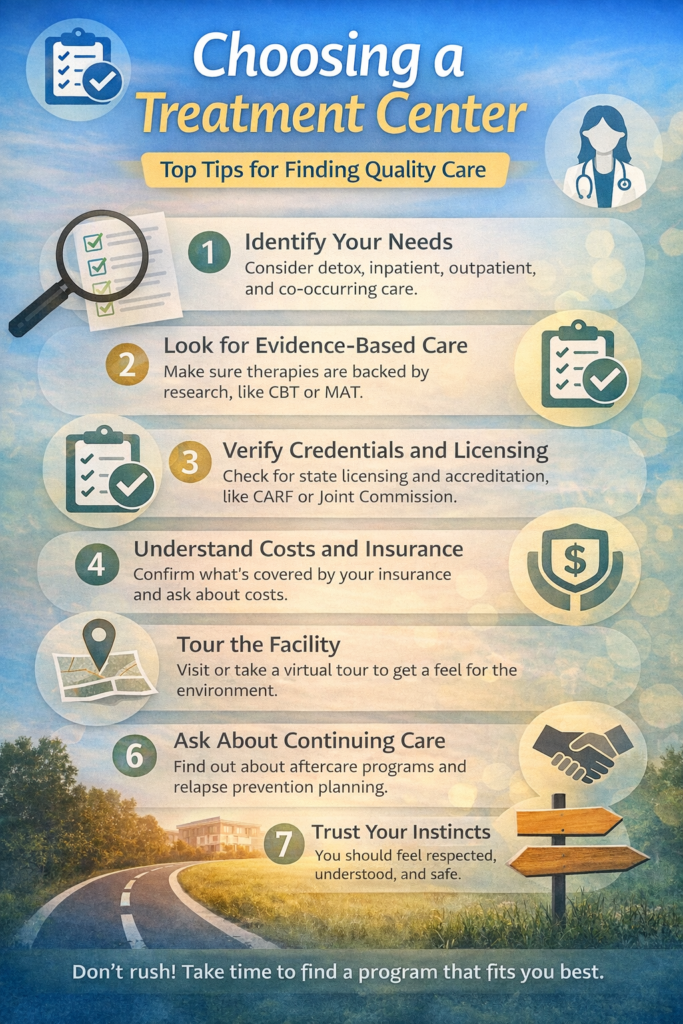
Choosing a treatment center is a critical step in the recovery journey and can significantly influence long-term outcomes. With a wide range of options available, it’s important to understand that not all programs are the same. Factors such as level of care, treatment approach, staff qualifications, and aftercare support all play a role in finding the right fit. Taking the time to evaluate these elements helps ensure that the chosen program aligns with individual needs, creating a strong foundation for meaningful and lasting recovery.
Choosing the Right Treatment Center: A Practical Guide to Finding Care That Works
Choosing a treatment center can feel overwhelming—especially when you’re already dealing with stress, uncertainty, or the effects of substance use or mental health challenges. The good news is that not all decisions need to be made at once. Breaking the process down into a few key areas can help you make a thoughtful, informed choice that supports long-term recovery.
Start with Your Needs, Not the Marketing
Every person’s situation is different. Some need medical support during withdrawal, while others may benefit more from therapy-focused outpatient care. A strong treatment center will assess your needs before recommending a program.
Ask yourself:
- Do I need medical detox?
- Would I benefit from 24/7 structured care (residential)?
- Can I manage recovery with outpatient support?
The goal is to match the level of care to your current situation—not choose the most intensive option by default.
Look for Evidence-Based Treatment
Effective programs rely on approaches backed by research, not trends or promises. Look for therapies such as:
- Cognitive Behavioral Therapy (CBT)
- Medication-Assisted Treatment (MAT), when appropriate
- Trauma-informed care
- Dual diagnosis treatment (for co-occurring mental health conditions)
If a center can’t clearly explain how its treatment works, that’s a red flag.
Check Credentials and Licensing
A reputable facility should be licensed by the state and employ qualified professionals, such as:
- Licensed therapists or counselors
- Medical providers (for detox or medication management)
- Certified addiction specialists
Accreditation from organizations like The Joint Commission or CARF is a strong indicator of quality and accountability.
Understand the Full Continuum of Care
Recovery doesn’t end after detox or a short stay. The best treatment centers offer—or help coordinate—a full range of care, including:
- Detox services
- Residential or inpatient programs
- Partial hospitalization (PHP)
- Intensive outpatient programs (IOP)
- Aftercare and relapse prevention planning
Continuity matters. A step-down approach helps you build stability over time.
Ask About Individualized Treatment Plans
Avoid one-size-fits-all programs. Quality care should include:
- Personalized treatment goals
- Regular progress reviews
- Adjustments based on your needs
You’re not just entering a program—you’re building a recovery plan that fits your life.
Evaluate the Environment and Support
The setting can influence your comfort and engagement. Consider:
- Is the environment safe, clean, and structured?
- Are staff approachable and supportive?
- Is there family involvement or support offered?
Feeling respected and understood can make a real difference in outcomes.
Clarify Costs and Insurance
Treatment is an investment, but it shouldn’t be confusing. Ask:
- Do they accept your insurance?
- What are the out-of-pocket costs?
- Are payment plans available?
Transparency here is a sign of professionalism.
Be Cautious of Red Flags
Watch out for:
- Guaranteed “cures” or unrealistic promises
- Lack of licensed staff
- Vague or evasive answers about treatment methods
- Pressure to commit immediately
Good programs inform—they don’t pressure.
Does Treatment Work? Yes—When It’s the Right Fit
Research consistently shows that treatment can be highly effective, especially when it’s:
- Matched to your needs
- Long enough to build skills
- Supported by ongoing care
Recovery isn’t a single event—it’s a process. The right treatment center helps you build the tools to sustain it.
Final Thought
Choosing a treatment center isn’t about finding a “perfect” place—it’s about finding the right fit for you, right now. Take your time, ask questions, and trust credible information over marketing claims. The decision you make can shape the foundation of your recovery—and it’s worth doing carefully.
Taking Control of the Process: Self-Management Strategies for Choosing a Treatment Center
Choosing a treatment center isn’t just about finding a place—it’s about actively guiding your own recovery from the very beginning. Self-management means approaching this decision with awareness, structure, and intention, even if things feel uncertain. When you take an active role, you’re more likely to choose a program that truly fits your needs and supports long-term success.
Start with Honest Self-Assessment
Before comparing programs, take a clear look at your current situation. This step can feel uncomfortable, but it’s essential.
Consider:
- What substances or behaviors are you struggling with?
- Are there mental health concerns like anxiety, depression, or trauma?
- Have you tried treatment before? What helped—or didn’t?
Writing these down can help you stay grounded and avoid making decisions based purely on urgency or emotion.
Define Your Priorities
Not every treatment center offers the same services. Knowing what matters most to you will quickly narrow your options.
Ask yourself:
- Do I need medical detox or medication support?
- Is mental health treatment (dual diagnosis care) important for me?
- Do I prefer inpatient structure or outpatient flexibility?
- How important are location, family involvement, or privacy?
When your priorities are clear, it’s easier to filter out programs that aren’t a good fit.
Create a Simple Decision System
When everything feels overwhelming, structure helps. Try using a checklist or rating system.
For example, rate each center (1–5) on:
- Credentials and licensing
- Types of therapy offered
- Continuum of care
- Cost and insurance compatibility
- Overall comfort level
This turns a stressful decision into a more manageable, step-by-step process.
Practice Information Management
It’s easy to get overloaded with websites, phone calls, and opinions. Stay organized:
- Keep notes on each center you contact
- Save links, brochures, and names of staff you speak with
- Track answers to key questions
This prevents confusion and helps you compare options more objectively.
Ask Direct, Informed Questions
Self-management includes advocating for yourself. Don’t hesitate to ask:
- What therapies do you use, and why?
- How do you handle co-occurring mental health conditions?
- What does a typical day look like?
- What kind of aftercare planning do you provide?
A quality center will give clear, transparent answers—not vague reassurances.
Recognize Emotional Triggers in Decision-Making
It’s common to feel fear, urgency, or even denial during this process. These emotions can lead to rushed or avoidant choices.
Try to:
- Pause before committing to a program
- Talk decisions through with a trusted person
- Notice if you’re choosing based on comfort alone vs. actual need
Being aware of your emotional state helps you stay in control of the decision.
Set Boundaries with Outside Influence
Family, friends, or even marketing teams may push certain options. While input can be helpful, the decision ultimately affects your recovery.
It’s okay to:
- Take time before deciding
- Say no to programs that don’t feel right
- Prioritize your clinical needs over convenience or pressure
Plan for the Next Step—Not Just Admission
Self-management doesn’t stop once you choose a center. Think ahead:
- What happens after the program ends?
- Will there be outpatient support or follow-up care?
- How will you maintain progress in daily life?
Choosing a center that emphasizes aftercare and relapse prevention is part of making a sustainable decision.
Use Credible Indicators of Quality
Instead of relying on marketing alone, look for recognized standards. Accreditation from organizations such as The Joint Commission or CARF can indicate that a program meets established standards of care and accountability.
Final Thought
Self-management in choosing a treatment center is about staying engaged, informed, and intentional—even when the process feels difficult. You don’t have to have everything figured out. What matters is that you’re making decisions based on your needs, your goals, and reliable information.
Taking ownership of this step is more than logistics—it’s the beginning of recovery itself.
Stronger Together: Family Support Strategies When Choosing a Treatment Center
Choosing a treatment center is rarely an individual decision. Family members often play a crucial role—offering support, gathering information, and helping navigate a complex system. When families are informed and intentional, they can become a powerful part of the recovery process from the very beginning.
Start with Open, Respectful Communication
Before researching programs, it’s important to create a shared understanding. Conversations should focus on support—not blame or pressure.
Helpful approaches:
- Use calm, non-judgmental language
- Focus on concern and care rather than past mistakes
- Allow space for the individual to express preferences and fears
A collaborative tone builds trust and increases the likelihood of follow-through.
Learn the Basics of Treatment Together
Families don’t need to be experts, but having a general understanding of treatment options helps everyone make more informed decisions.
Key areas to learn:
- Levels of care (detox, residential, outpatient)
- The role of therapy and medication when appropriate
- The importance of treating co-occurring mental health conditions
This shared knowledge helps families ask better questions and avoid being misled by marketing.
Support—Don’t Control—the Decision
It’s natural to want to “fix” the situation quickly, but pushing too hard can backfire. Recovery is more effective when the individual feels a sense of ownership over the decision.
Families can:
- Offer options instead of ultimatums
- Encourage, rather than force, the next steps
- Respect the individual’s input whenever possible
Support increases engagement; control can increase resistance.
Divide Responsibilities to Reduce Stress
The process can feel overwhelming if one person tries to do everything. Sharing tasks makes it more manageable.
For example:
- One person researches treatment centers
- Another verifies insurance and costs
- Someone else schedules calls or tours
Working as a team keeps the process organized and less emotionally draining.
Ask Questions as a Team
When speaking with treatment centers, having multiple perspectives can be helpful. Families may notice details the individual might miss—and vice versa.
Important questions include:
- What therapies are offered, and are they evidence-based?
- How is family involvement included in treatment?
- What does aftercare planning look like?
- How are relapses handled if they occur?
Taking notes together can help everyone stay aligned.
Look for Family-Inclusive Programs
Not all treatment centers involve families in the recovery process. When appropriate, look for programs that offer:
- Family therapy sessions
- Educational workshops
- Ongoing communication with staff (with consent)
These elements can strengthen relationships and improve long-term outcomes.
Set Healthy Boundaries
Supporting someone in treatment doesn’t mean removing all consequences or overextending yourself.
Healthy boundaries might include:
- Being supportive without enabling harmful behaviors
- Setting limits around finances or living arrangements
- Taking care of your own emotional well-being
Boundaries protect both the individual and the family system as a whole.
Use Trusted Indicators of Quality
Families can help verify whether a treatment center is reputable. Look for proper licensing and recognized accreditation, such as from The Joint Commission or CARF. These organizations set standards for safety and quality of care.
Prepare for Life After Treatment
Family support doesn’t end once a program is chosen. Planning ahead is key:
- How will the transition home be handled?
- What ongoing support (therapy, groups, outpatient care) is available?
- How will the family respond to challenges or setbacks?
Being proactive helps create stability during a vulnerable time.
Take Care of the Family, Too
Supporting someone through treatment can be emotionally taxing. Families benefit from their own support systems, such as counseling or peer groups.
When families are supported, they’re better equipped to support recovery.
Final Thought
Family involvement can make a meaningful difference when choosing a treatment center—but the most effective support is thoughtful, informed, and balanced. By working together, respecting boundaries, and staying focused on long-term recovery, families can help lay a strong foundation for lasting change.
Beyond the Facility: Using Community Resources to Choose the Right Treatment Center
Choosing a treatment center isn’t just about comparing websites or making phone calls—it’s about tapping into the broader network of community resources that can guide you toward safe, effective care. From healthcare providers to local organizations, these resources can help you make a more informed decision and avoid common pitfalls.
Start with Trusted Local Professionals
Community-based professionals often have firsthand knowledge of treatment options and reputations.
Consider reaching out to:
- Primary care physicians
- Licensed therapists or counselors
- Social workers or case managers
- Hospital discharge planners
These professionals can provide referrals based on real outcomes—not marketing claims.
Use Community Mental Health Services
Local mental health centers and public health agencies are valuable starting points, especially if cost or access is a concern.
They can help with:
- Assessments and referrals
- Sliding-scale or low-cost treatment options
- Connections to detox, residential, or outpatient programs
- Crisis support if needed
These services often have up-to-date knowledge of what’s available in your area.
Connect with Peer Support Networks
People in recovery—and their families—are often one of the most honest sources of insight.
Look into:
- 12-step groups (AA, NA)
- SMART Recovery meetings
- Local recovery community organizations
While individual experiences vary, these groups can share practical advice about what to look for (and what to avoid).
Verify Quality Through Recognized Standards
Community resources can also help you confirm whether a treatment center is reputable. Look for accreditation from organizations like The Joint Commission or CARF, which set standards for safety, ethics, and quality of care.
You can also check:
- State licensing boards
- Public health department records
- Complaint or inspection reports (when available)
Use Local Support Services for Practical Needs
Treatment decisions are often influenced by real-life logistics. Community resources can help remove barriers.
Examples include:
- Transportation assistance
- Housing or sober living options
- Employment or vocational services
- Legal aid or case coordination
Addressing these needs increases the likelihood of staying engaged in treatment.
Involve Faith-Based or Cultural Organizations (If Relevant)
For some individuals, spiritual or cultural support plays an important role in recovery.
Community organizations may:
- Offer counseling or support groups
- Provide referrals to aligned treatment programs
- Help maintain a sense of identity and belonging during treatment
This can be especially helpful when looking for programs that respect personal values and beliefs.
Gather Multiple Perspectives
No single source has all the answers. The strongest decisions come from combining:
- Professional recommendations
- Peer experiences
- Your own research and preferences
If several trusted sources point to the same programs, that’s often a good sign.
Stay Organized and Intentional
As you gather information from the community, keep track of what you learn:
- Write down referrals and contact details
- Note the pros and cons of each option
- Compare how each program aligns with your needs
This prevents confusion and helps you make a clear, confident decision.
Think Beyond Admission: Long-Term Community Support
A treatment center is just one part of recovery. Community resources play a major role after treatment ends.
Ask:
- Are there local support groups I can attend?
- What outpatient or aftercare services are available nearby?
- Is there a recovery-friendly community I can connect with?
Choosing a center that connects you back to your community can improve long-term outcomes.
Final Thought
Community resources are one of the most underused tools when choosing a treatment center. By reaching beyond advertisements and into trusted local networks, you gain access to real-world insight, practical support, and ongoing connections that extend far beyond the initial decision.
Recovery doesn’t happen in isolation—and neither should the process of choosing where to begin.
Frequently Asked Questions
Here are some common questions:
1. How do I know what level of care I need?
The right level of care depends on your situation. If you’re dealing with withdrawal symptoms or heavy substance use, medical detox may be necessary. More structured needs may require residential (inpatient) care, while others may benefit from outpatient or intensive outpatient programs (IOP). A professional assessment can help guide this decision.
2. What is the difference between inpatient and outpatient treatment?
- Inpatient (residential): You live at the facility with 24/7 support and structure.
- Outpatient: You attend treatment sessions but live at home.
Inpatient is typically recommended for more severe cases or when a stable environment is needed.
3. Does treatment actually work?
Yes—treatment can be very effective, especially when it’s tailored to your needs and includes ongoing support. Recovery is a process, and outcomes improve with the right level of care, duration, and aftercare planning.
4. What should I look for in a quality treatment center?
Key things include:
- Licensed and credentialed staff
- Evidence-based therapies (like CBT or MAT)
- Individualized treatment plans
- A full continuum of care
- Aftercare and relapse prevention support
Accreditation from organizations like The Joint Commission or CARF is also a strong indicator of quality.
5. How long does treatment usually last?
It varies. Some programs last 30 days, while others extend to 60–90 days or longer. Many people continue with outpatient or aftercare services afterward. Longer engagement is often associated with better outcomes.
6. Will my insurance cover treatment?
Many treatment centers accept insurance, but coverage varies. It’s important to:
- Verify benefits directly with the center or your provider
- Ask about out-of-pocket costs
- Understand what services are included
7. What is dual diagnosis treatment?
Dual diagnosis means treating both substance use and mental health conditions (like anxiety or depression) at the same time. This is important because untreated mental health issues can increase the risk of relapse.
8. Can my family be involved in treatment?
Yes, many programs offer:
- Family therapy
- Education sessions
- Support groups for loved ones
Family involvement can improve communication and long-term recovery outcomes.
9. What happens after I complete a program?
Aftercare is a critical part of recovery. This may include:
- Outpatient therapy or counseling
- Support groups (like AA, NA, or SMART Recovery)
- Sober living arrangements
- Ongoing relapse prevention planning
10. What are red flags to watch out for?
Be cautious of:
- Guarantees of a “cure.”
- Lack of licensed staff
- Vague treatment descriptions
- High-pressure enrollment tactics
- No clear aftercare plan
11. Should I choose a center close to home or farther away?
It depends on your needs. Staying local allows for family involvement and continuity of care, while going farther away can reduce distractions or triggers. There’s no one-size-fits-all answer.
12. How quickly should I make a decision?
While it’s important not to delay necessary care, avoid rushing into a decision without basic research. A reputable center will give you time to ask questions and feel comfortable.
Conclusion
Selecting the right treatment center is not about finding a perfect solution but about making an informed, thoughtful decision based on personal needs and goals. A quality program provides structure, support, and the tools necessary to build a healthier future. By asking questions, understanding options, and prioritizing evidence-based care, individuals can move forward with confidence. Ultimately, the right choice can open the door to lasting change, stability, and a successful recovery journey.
Video: Most Addicts Choose the Wrong Center First #AddictionRecovery #RecoveryJourney #RehabSupport