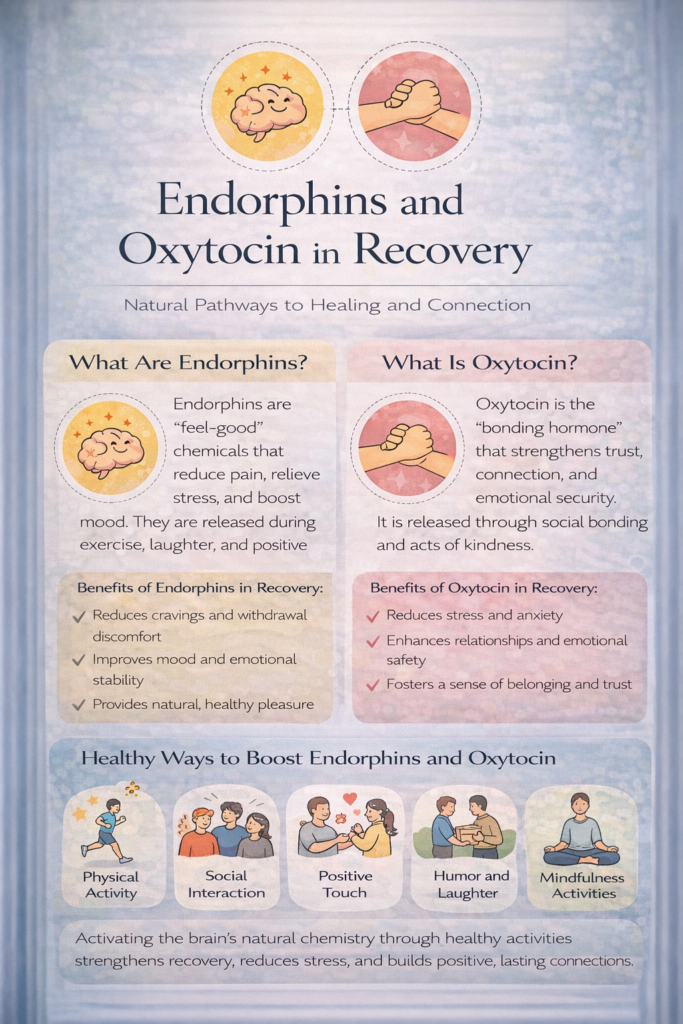
Endorphins and oxytocin play a critical role in the recovery process by supporting the brain’s natural systems for pleasure, stress regulation, and social connection. Endorphins, often referred to as the body’s natural painkillers, help improve mood and reduce physical and emotional discomfort, while oxytocin, known as the “bonding hormone,” promotes trust, connection, and emotional security. In the context of addiction, where these systems are often disrupted by substance use, understanding how to restore and activate these neurochemicals is essential. By focusing on natural ways to stimulate endorphins and oxytocin, individuals in recovery can begin rebuilding healthy reward pathways and strengthening emotional resilience.
Healing from Within: The Role of Endorphins and Oxytocin in Recovery
🧠 Understanding the Brain in Recovery
Recovery from addiction is not just about stopping a behavior—it’s about rewiring the brain’s reward and connection systems. Two key neurochemicals involved in this process are endorphins and oxytocin. These naturally occurring chemicals help regulate mood, reduce stress, and promote a sense of well-being—making them essential in the healing process.
Rather than relying on substances for relief or pleasure, recovery involves learning how to activate these natural systems in healthy ways.
💊 What Are Endorphins?
Endorphins are the brain’s natural “feel-good” chemicals. They are released in response to:
- Physical activity
- Laughter
- Pain or stress
- Positive experiences
In recovery, endorphins help by:
- Reducing cravings and withdrawal discomfort
- Improving mood and emotional stability
- Providing a natural sense of pleasure
Activities like exercise, dancing, or even laughing with others can stimulate endorphin release, offering a healthy alternative to substance-induced highs.
❤️ What Is Oxytocin?
Oxytocin is often called the “bonding hormone” or “connection chemical.” It is released through:
- Physical touch (hugs, hand-holding)
- Social bonding and trust
- Positive social interactions
- Acts of kindness
In recovery, oxytocin plays a role in:
- Reducing stress and anxiety
- Strengthening relationships
- Building trust and emotional safety
- Counteracting feelings of isolation
Since addiction often disrupts relationships, rebuilding connection through oxytocin is a critical part of healing.
🔄 Addiction vs. Natural Reward Systems
Substances can artificially flood the brain with dopamine and other chemicals, creating intense but short-lived pleasure. Over time, this disrupts the brain’s ability to produce natural rewards.
Recovery focuses on restoring balance by:
- Re-engaging natural reward pathways (endorphins)
- Rebuilding social connection (oxytocin)
- Reducing reliance on artificial stimulation
This shift helps individuals experience genuine, sustainable well-being.
🌱 Strategies to Boost Endorphins and Oxytocin in Recovery
1. Physical Activity
- Exercise, walking, or yoga boosts endorphins
2. Social Connection
- Spending time with supportive people increases oxytocin
3. Positive Touch and Interaction
- Hugs, handshakes, or even petting animals
4. Laughter and Enjoyment
- Humor, hobbies, and fun activities stimulate endorphins
5. Acts of Kindness
- Helping others strengthens connection and purpose
6. Mindfulness and Relaxation
- Practices like meditation can support emotional balance
🤝 The Role of Relationships in Recovery
Recovery is not just an individual process—it is deeply relational.
- Support groups
- Family involvement
- Peer connections
These environments help increase oxytocin, reduce isolation, and provide emotional reinforcement. Feeling connected can be just as powerful as any chemical effect.
⚠️ Why This Matters
Without rebuilding natural reward systems, individuals may:
- Struggle with low mood or lack of pleasure
- Feel disconnected or isolated
- Be more vulnerable to relapse
Endorphins and oxytocin help fill that gap by creating healthy, sustainable sources of reward and connection.
💬 Final Thoughts
Endorphins and oxytocin remind us that the brain has its own powerful tools for healing. Recovery is not just about removing harmful substances—it’s about relearning how to feel good, connect with others, and experience life naturally.
By intentionally engaging in activities that boost these chemicals, individuals can rebuild their sense of joy, connection, and stability—laying the foundation for long-term recovery and well-being.
Taking Control of Healing: Self-Management Strategies for Understanding the Role of Endorphins and Oxytocin in Recovery
🧠 Why Self-Management Matters
Recovery is not only about avoiding substances—it’s about retraining the brain to experience reward, relief, and connection naturally. Two key chemicals involved in this process are endorphins (natural pain relievers and mood boosters) and oxytocin (the bonding and trust hormone).
Self-management strategies help individuals actively engage these systems, giving them more control over mood, cravings, and emotional well-being.
🔍 Step 1: Build Awareness of Your Emotional and Physical States
Understanding when your brain needs support is the first step.
Ask yourself:
- Am I feeling stressed, low, or disconnected?
- Am I craving relief, comfort, or connection?
These states often signal a lack of endorphin or oxytocin activity.
Recognizing this helps you respond intentionally rather than reverting to old habits.
🧠 Step 2: Understand What Your Brain Is Seeking
Many cravings in recovery are actually the brain seeking:
- Relief from stress or pain → endorphins
- Connection or comfort → oxytocin
Reframe cravings:
- Instead of “I need a substance.”
- Think: “My brain needs relief or connection.”
This shift builds insight and reduces impulsive behavior.
⏸️ Step 3: Pause and Choose a Healthy Response
Cravings can feel urgent, but they are temporary.
Create a pause:
- Wait 10–15 minutes
- Ask: “What do I actually need right now?”
This gives you time to choose an action that supports natural brain chemistry.
🌱 Step 4: Actively Boost Endorphins
Endorphins help improve mood and reduce discomfort.
Self-management strategies:
- Exercise (walking, running, stretching)
- Laughter (watching something funny, social humor)
- Music, dancing, or creative activities
- Engaging in enjoyable hobbies
These activities provide a natural “feel-good” response without harmful consequences.
❤️ Step 5: Strengthen Oxytocin Through Connection
Oxytocin reduces stress and builds emotional stability.
Ways to increase it:
- Spend time with supportive people
- Have meaningful conversations
- Physical connection (hugs, handshakes, even pets)
- Acts of kindness or helping others
Even small moments of connection can reduce isolation and cravings.
📅 Step 6: Create a Routine That Supports Brain Chemistry
Consistency helps regulate mood and reduce vulnerability.
Include in your routine:
- Daily movement or physical activity
- Regular social interaction
- Time for relaxation and enjoyment
Routine builds a stable foundation for natural reward systems.
💡 Step 7: Replace Old Reward Patterns
Addiction often rewires the brain to expect artificial rewards.
Shift to natural rewards:
- Celebrate small achievements
- Engage in activities that bring satisfaction
- Focus on long-term well-being instead of short-term relief
This trains the brain to value healthy sources of pleasure.
🚫 Step 8: Recognize and Manage Low Points
Low mood or isolation can signal lower levels of endorphins or oxytocin.
Watch for:
- Feeling disconnected or lonely
- Lack of motivation or enjoyment
- Increased stress or irritability
Respond early with supportive activities instead of waiting for cravings to intensify.
🤝 Step 9: Use Support Systems Intentionally
Self-management doesn’t mean doing everything alone.
- Reach out when you need a connection
- Participate in support groups or therapy
- Build relationships that reinforce healthy patterns
Support strengthens oxytocin pathways and accountability.
❤️ Final Thoughts
Understanding the role of endorphins and oxytocin in recovery gives individuals a powerful advantage: the ability to work with their brain, not against it. Through self-awareness, intentional habits, and consistent practice, it’s possible to replace artificial highs with real, sustainable well-being.
Self-management is about learning to meet your needs in healthier ways. When you do, recovery becomes not just about avoiding relapse—but about rebuilding a life that feels genuinely rewarding and connected.
Healing Together: Family Support Strategies to Harness Endorphins and Oxytocin in Recovery
🏠 Why Family Support Matters
Recovery is not just an individual journey—it is deeply influenced by relationships and environment. Families play a powerful role in helping individuals rebuild the brain’s natural reward and connection systems, particularly through endorphins (natural mood boosters) and oxytocin (the bonding hormone).
By creating a supportive and connected environment, families can help replace the artificial highs of addiction with healthy, sustainable emotional experiences.
🧠 Understanding Endorphins and Oxytocin as a Family
Before supporting recovery, it’s important for families to understand:
- Endorphins help reduce stress, pain, and cravings while improving mood
- Oxytocin strengthens trust, connection, and emotional safety
Addiction often disrupts these systems, making it harder for individuals to feel pleasure or connection naturally. Family support helps restore these pathways through consistent positive interaction.
💬 Strategy 1: Foster Positive and Supportive Communication
Healthy communication strengthens emotional bonds and increases oxytocin.
Helpful approaches:
- Use encouraging and affirming language
- Listen actively without judgment
- Express care and appreciation regularly
This creates a safe emotional space, reducing stress and promoting connection.
🤝 Strategy 2: Prioritize Quality Time and Connection
Spending meaningful time together is one of the most effective ways to boost oxytocin.
Examples:
- Shared meals or family routines
- Engaging in hobbies together
- Simple activities like talking, walking, or watching a movie
Consistency matters more than complexity—regular connection builds trust and stability.
🌱 Strategy 3: Encourage Physical Activity Together
Physical activity naturally increases endorphins.
Family-based ideas:
- Walking, biking, or exercising together
- Outdoor activities or sports
- Participating in fitness classes as a group
This not only boosts mood but also creates shared positive experiences.
❤️ Strategy 4: Support Healthy Physical and Emotional Connection
Oxytocin is strengthened through safe, positive interactions.
Examples:
- Hugs or appropriate physical touch
- Acts of kindness and support
- Celebrating progress and milestones
These small actions help rebuild trust and emotional security.
💡 Strategy 5: Reinforce Natural Rewards
Families can help shift focus from substance-based rewards to natural ones.
- Celebrate achievements, even small ones
- Encourage hobbies and interests
- Recognize effort, not just outcomes
This helps retrain the brain to associate joy with healthy experiences.
⚖️ Strategy 6: Balance Support with Healthy Boundaries
While connection is essential, boundaries maintain stability.
- Avoid enabling harmful behaviors
- Encourage accountability
- Be consistent in expectations and support
Healthy boundaries protect both the individual and the family while still allowing emotional connection to grow.
🧩 Strategy 7: Reduce Stress in the Home Environment
Stress can disrupt both endorphin and oxytocin systems.
Families can help by:
- Maintaining calm and predictable routines
- Managing conflict constructively
- Creating a supportive, low-pressure atmosphere
A stable environment supports emotional regulation and recovery.
🤲 Strategy 8: Encourage External Support Systems
Families are important, but broader support enhances recovery.
- Support group participation
- Therapy or counseling
- Peer connections
These relationships expand opportunities for connection and reinforcement of healthy brain chemistry.
💬 Final Thoughts
Endorphins and oxytocin highlight an important truth: healing happens through both positive experiences and meaningful connections. Families have a unique ability to influence by creating an environment that supports emotional safety, physical activity, and genuine connection.
Recovery is not just about avoiding substances—it’s about relearning how to feel good and connect in healthy ways. With consistent family support, individuals can rebuild these natural systems and move toward lasting stability, resilience, and well-being.
Stronger Together: Community Resource Strategies to Harness Endorphins and Oxytocin in Recovery
🌍 Why Community Resources Matter
Recovery is not just an individual or family process—it is deeply influenced by the community environment. Communities provide opportunities for connection, support, and engagement, all of which are essential for activating endorphins (natural mood enhancers) and oxytocin (the bonding hormone).
When communities offer accessible and supportive resources, they help individuals replace substance-based rewards with healthy, natural sources of pleasure and connection.
🧠 Understanding Brain Chemistry in a Community Context
Addiction often disrupts the brain’s natural ability to experience reward and connection. Community resources help restore this balance by:
- Providing social interaction → increases oxytocin
- Encouraging physical activity → boosts endorphins
- Creating positive experiences → reinforces natural reward systems
These elements are critical for long-term recovery and relapse prevention.
🤝 Strategy 1: Peer Support and Recovery Groups
Community-based support groups are powerful tools for increasing oxytocin through shared connection.
Examples:
- 12-step programs
- Peer-led recovery groups
- Community support meetings
Benefits:
- Shared understanding and belonging
- Emotional support and accountability
- Reduced isolation
These groups help individuals feel connected, understood, and supported.
🌱 Strategy 2: Recreational and Wellness Programs
Physical activity is one of the most effective ways to boost endorphins.
Community programs may include:
- Fitness classes or gym access
- Yoga, meditation, or mindfulness groups
- Sports leagues or outdoor activities
These activities:
- Improve mood and reduce stress
- Provide structured, healthy routines
- Replace substance-related behaviors with natural rewards
🧩 Strategy 3: Community Mental Health Services
Professional support helps individuals understand and regulate their emotional and biological responses.
Services include:
- Counseling and therapy
- Substance use treatment programs
- Behavioral health workshops
These resources:
- Address underlying emotional needs
- Teach coping strategies
- Support long-term brain healing
❤️ Strategy 4: Social Engagement Opportunities
Communities can create spaces for meaningful interaction.
Examples:
- Community centers and events
- Volunteer programs
- Group classes or workshops
These opportunities:
- Strengthen social bonds
- Increase oxytocin levels
- Provide a sense of belonging and purpose
📚 Strategy 5: Education and Awareness Programs
Understanding brain chemistry empowers individuals in recovery.
Community education can focus on:
- How endorphins and oxytocin support recovery
- The impact of addiction on the brain
- Healthy ways to rebuild reward systems
Knowledge helps individuals make intentional, informed choices.
🚫 Strategy 6: Reducing Barriers to Access
For community resources to be effective, they must be accessible.
Communities can:
- Offer low-cost or free programs
- Provide transportation or virtual options
- Increase awareness of available services
Accessibility ensures that all individuals can benefit, regardless of age or background.
🤲 Strategy 7: Creating Supportive and Inclusive Environments
A welcoming community encourages participation and connection.
Key elements include:
- Nonjudgmental attitudes toward recovery
- Inclusive and diverse programs
- Safe spaces for sharing and growth
These environments make it easier for individuals to engage, connect, and heal.
🔄 Strategy 8: Integrated Community Support Systems
The most effective approach combines multiple resources:
- Peer support for connection
- Recreational programs for endorphin release
- Mental health services for guidance
- Educational efforts for awareness
Together, these create a network that supports both biological and emotional recovery.
💬 Final Thoughts
Endorphins and oxytocin highlight a powerful truth: recovery is strengthened through positive experiences and meaningful connections. Community resources play a vital role in making these experiences accessible and consistent.
By investing in programs that promote activity, connection, and support, communities help individuals rebuild their natural reward systems and move toward lasting recovery and well-being.
Recovery doesn’t happen in isolation—it thrives in connected, supportive communities.
Frequently Asked Questions
Here are some common questions:
What are endorphins and oxytocin?
Answer:
Endorphins are natural chemicals in the brain that reduce pain and boost mood, often released during activities like exercise or laughter. Oxytocin is a hormone associated with bonding, trust, and social connection, released during positive interactions such as hugging or meaningful conversations.
Why are endorphins and oxytocin important in recovery?
Answer:
They help restore the brain’s natural reward system, which is often disrupted by addiction. Endorphins improve mood and reduce cravings, while oxytocin strengthens relationships and reduces feelings of isolation—both essential for long-term recovery.
How does addiction affect these chemicals?
Answer:
Addiction can diminish the brain’s ability to produce and respond to natural rewards, making it harder to feel pleasure or connection without substances. This imbalance can contribute to cravings and emotional distress.
Can increasing endorphins reduce cravings?
Answer:
Yes. Activities that release endorphins—like exercise or laughter—can naturally improve mood and reduce the intensity of cravings, offering a healthy alternative to substance use.
How does oxytocin help prevent relapse?
Answer:
Oxytocin promotes trust, bonding, and emotional safety, which reduces stress and loneliness—two major triggers for relapse. Strong social connections act as a protective factor in recovery.
What are natural ways to boost endorphins?
Answer:
- Physical exercise (walking, running, yoga)
- Laughter and humor
- Music, dancing, or creative activities
- Engaging in enjoyable hobbies
What are natural ways to increase oxytocin?
Answer:
- Spending time with supportive people
- Physical touch (hugs, handshakes)
- Acts of kindness or helping others
- Building trust through meaningful conversations
Can someone rely only on these chemicals for recovery?
Answer:
No. While endorphins and oxytocin are important, recovery also requires structured support, such as therapy, support groups, and lifestyle changes. These chemicals are part of a broader recovery process.
Why might someone in recovery feel “numb” at first?
Answer:
After stopping substance use, the brain may take time to rebuild its natural reward systems, leading to temporary low mood or lack of pleasure. This is a normal part of recovery and improves over time.
How long does it take to restore these systems?
Answer:
It varies from person to person, but with consistent healthy behaviors, the brain gradually rebalances over weeks to months, improving emotional stability and well-being.
How do relationships influence recovery through oxytocin?
Answer:
Healthy relationships increase oxytocin, which:
- Reduces stress
- Builds trust and accountability
- Strengthens emotional resilience
This makes recovery more sustainable.
What role does exercise play in recovery?
Answer:
Exercise boosts endorphins, helping:
- Improve mood
- Reduce anxiety and stress
- Provide a natural sense of reward
It is one of the most effective self-management strategies.
Can stress affect endorphins and oxytocin levels?
Answer:
Yes. Chronic stress can lower these chemicals, increasing vulnerability to cravings and relapse. Managing stress is essential for maintaining balance.
How can someone use this knowledge in daily life?
Answer:
- Schedule regular physical activity
- Prioritize social connection
- Engage in enjoyable and meaningful activities
- Practice stress management
These habits support the brain’s natural healing process.
Conclusion
The role of endorphins and oxytocin in recovery highlights the importance of both internal healing and external connection. These neurochemicals provide a foundation for experiencing pleasure, reducing stress, and forming meaningful relationships without reliance on substances. Through intentional activities such as physical movement, social engagement, and positive interactions, individuals can gradually restore balance in the brain’s reward system. Ultimately, integrating strategies that enhance the release of endorphins and oxytocin supports not only relapse prevention but also a more fulfilling and sustainable recovery, grounded in natural well-being and human connection.
Video: The hormone that breaks the addiction cycle #oxytocin #recovery