Self-medicating anxiety and depression is a common yet often misunderstood way people try to cope with overwhelming emotions. When feelings of worry, sadness, or emptiness become difficult to manage, some individuals turn to substances or behaviors for quick relief. While this may provide temporary comfort, it can mask underlying mental health issues and lead to more serious challenges over time. Understanding why self-medication happens—and how it affects both mental and physical well-being—is an important step toward recognizing healthier, more effective ways to cope.
Self-Medicating Anxiety & Depression: When Coping Starts to Harm
Anxiety and depression can feel overwhelming—restless thoughts, low energy, emotional numbness, or constant worry. When these feelings become difficult to manage, it’s common for people to look for quick relief. For many, that relief comes in the form of self-medicating—using substances or behaviors to ease emotional pain without professional guidance.
While it may seem helpful in the moment, self-medication often creates more problems than it solves.
What Is Self-Medicating?
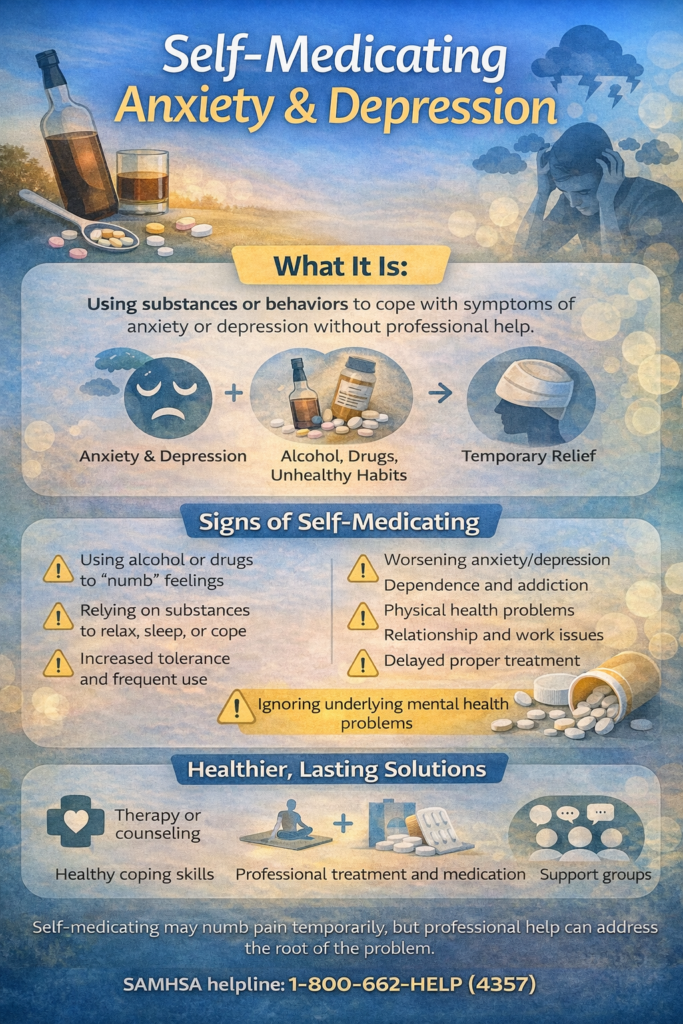
Self-medicating happens when someone uses substances like alcohol, drugs, or even certain behaviors (like gambling or overeating) to manage symptoms of anxiety or depression.
Common examples include:
- Drinking alcohol to calm anxiety or “take the edge off.”
- Using drugs to escape feelings of sadness or emptiness
- Misusing prescription medications
- Relying on unhealthy habits to numb emotional distress
At first, these methods may feel effective—but they don’t address the underlying issue.
Why Do People Self-Medicate?
Self-medication is often rooted in a desire for relief, not harm. People may turn to it because:
- They don’t have access to mental health care
- They feel stigma or shame about asking for help
- They want immediate results
- They don’t fully understand their symptoms
In many cases, individuals are trying to cope the best way they know how.
The Hidden Risks
What starts as short-term relief can quickly turn into a cycle that worsens both mental health and overall well-being.
Some of the risks include:
- Increased anxiety and depression over time
- Development of substance dependence or addiction
- Disrupted sleep and physical health problems
- Difficulty functioning in daily life (work, relationships, responsibilities)
- Delayed access to proper treatment
Substances may temporarily mask symptoms, but they often intensify them later.
The Cycle of Self-Medication
Self-medicating tends to follow a pattern:
- Emotional distress (anxiety, depression)
- Use of a substance or behavior for relief
- Temporary improvement
- Symptoms return—often stronger
- Increased reliance on the substance
Over time, this cycle becomes harder to break without support.
Healthier Ways to Cope
There are more effective, long-term strategies for managing anxiety and depression. These include:
- Therapy, such as Cognitive Behavioral Therapy (CBT)
- Medication, when prescribed and monitored by a professional
- Mindfulness and stress management techniques
- Regular routines (sleep, nutrition, physical activity)
- Support systems, including friends, family, or peer groups
These approaches focus on treating the root cause—not just the symptoms.
When to Seek Help
It may be time to reach out for support if:
- You rely on substances to get through the day
- Your anxiety or depression is getting worse
- You’ve tried to stop, but can’t
- Your relationships, work, or health are being affected
Seeking help is not a sign of weakness—it’s a step toward stability and recovery.
You’re Not Alone
Self-medicating is more common than many people realize, especially among those struggling with untreated mental health conditions. The important thing to remember is that real help is available, and recovery is possible with the right support.
Final Thought
Self-medicating anxiety and depression often begins as an attempt to cope—but it can quietly lead to deeper challenges. Recognizing the pattern is the first step toward change. With the right tools, guidance, and support, it’s possible to move from temporary relief to lasting healing.
Taking Back Control: Self-Management Strategies for Understanding Self-Medicating Anxiety & Depression
Self-medicating anxiety and depression often begins quietly—using something to “take the edge off,” lift your mood, or escape overwhelming thoughts. Over time, what once felt like relief can become a pattern that’s hard to recognize, let alone change.
Self-management strategies are about building awareness, understanding your patterns, and learning healthier ways to respond—so you can move from reacting to your symptoms to actively managing them.
Start with Awareness: Recognize the Pattern
The first step is identifying when self-medication is happening. This requires honest, non-judgmental reflection.
Ask yourself:
- What do I reach for when I feel anxious, low, or overwhelmed?
- How often does this happen?
- What emotions or situations trigger it?
Keeping a simple journal or note on your phone can help you spot patterns over time.
Understand Your Triggers
Self-medication doesn’t happen randomly—it’s usually tied to specific internal or external triggers.
Common triggers include:
- Stress or pressure
- Social anxiety
- Loneliness or isolation
- Trauma reminders
- Fatigue or burnout
When you can name your triggers, you gain more control over how you respond to them.
Track the Short-Term Relief vs. Long-Term Impact
A key self-management skill is learning to pause and evaluate outcomes.
Try asking:
- What do I feel immediately after using this coping method?
- How do I feel hours or days later?
- Is this actually improving my situation—or making it worse?
This helps shift your thinking from “this helps right now” to “what helps long-term?”
Build a Healthier Coping Toolbox
Replacing self-medication doesn’t mean removing coping—it means upgrading it.
Examples of healthier alternatives:
- Grounding techniques (deep breathing, sensory awareness)
- Physical activity to release stress
- Talking to someone you trust
- Structured routines for sleep and daily stability
- Creative outlets like writing, music, or art
The goal is to have options ready before the urge hits.
Practice Emotional Regulation Skills
Anxiety and depression can make emotions feel intense or unmanageable. Learning to regulate them reduces the urge to escape.
Helpful skills include:
- Naming emotions (“I feel anxious,” “I feel numb”)
- Using mindfulness to stay present
- Breaking overwhelming feelings into smaller parts
You don’t have to eliminate emotions—just learn how to move through them safely.
Set Realistic Boundaries with Yourself
Self-management isn’t about perfection. It’s about progress.
Start small:
- Delay the urge (e.g., wait 10–15 minutes before acting)
- Reduce frequency instead of expecting immediate elimination
- Set limits around high-risk situations
Small changes build momentum over time.
Create a Personal Support System
Even with strong self-management skills, support matters.
Consider:
- Trusted friends or family
- Peer support groups
- Therapy or counseling
You don’t have to manage everything alone—connection is a powerful protective factor.
Know When to Seek Professional Help
Self-management is important, but it has limits. If self-medication is persistent or worsening, professional support can provide structure and guidance.
Signs to reach out:
- Increasing reliance on substances or behaviors
- Worsening anxiety or depression
- Difficulty stopping despite consequences
- Impact on work, relationships, or health
Professional care can help address both the mental health condition and the coping pattern together.
Be Patient with the Process
Understanding and changing self-medication patterns takes time. There may be setbacks, but each moment of awareness is progress.
Final Thought
Self-medicating anxiety and depression is often an attempt to cope, not a failure. By developing self-management strategies, you shift from temporary relief to long-term stability.
The goal isn’t just to stop a behavior—it’s to build a life where you don’t need it in the first place.
Supporting Without Enabling: Family Strategies for Understanding Self-Medicating Anxiety & Depression
When someone you care about is struggling with anxiety or depression, it’s natural to want to help. But when self-medicating enters the picture—whether through alcohol, drugs, or other behaviors—support can become complicated. Families often find themselves walking a fine line between helping and unintentionally enabling.
Understanding self-medication and learning how to respond effectively can make a meaningful difference—not only in your loved one’s recovery, but in your own well-being too.
Start with Understanding, Not Judgment
Self-medicating is rarely about recklessness—it’s often an attempt to cope with overwhelming emotions. Anxiety and depression can feel unmanageable, and substances may seem like a quick solution.
Instead of asking:
- “Why are you doing this?”
Try reframing to:
- “What are you feeling, and how can I support you?”
This shift reduces defensiveness and opens the door to honest conversation.
Learn to Recognize the Signs of Self-Medication
Families are often the first to notice changes. Understanding what to look for can help you respond early.
Common signs include:
- Using alcohol or substances to relax, sleep, or cope with stress
- Increased frequency or reliance on substances
- Mood swings, irritability, or withdrawal
- Avoiding responsibilities or social connections
- Denying or minimizing the behavior
Recognizing patterns—not just isolated incidents—is key.
Encourage Open, Ongoing Communication
Create a space where your loved one feels safe talking about their mental health.
Helpful approaches:
- Choose calm, private moments to talk
- Use “I” statements (“I’ve noticed you seem overwhelmed lately”)
- Listen more than you speak
- Avoid lectures, ultimatums, or blame
The goal is connection, not control.
Set Clear, Healthy Boundaries
Supporting someone does not mean accepting harmful behavior. Boundaries protect both you and your loved one.
Examples of healthy boundaries:
- Not providing money that could be used for substances
- Refusing to cover up or make excuses for behavior
- Setting expectations around safety and respect
Boundaries are not punishments—they’re a form of structure and care.
Avoid Enabling Behaviors
Enabling often comes from a place of love but can unintentionally reinforce the cycle of self-medication.
Be mindful of:
- Minimizing the seriousness of the situation
- Taking over responsibilities to “keep things stable.”
- Ignoring warning signs to avoid conflict
Support means helping them face the issue—not shielding them from it.
Encourage Professional Help
Self-medicating anxiety and depression often requires more than family support alone. Encouraging professional care can be a turning point.
Options include:
- Therapy (such as Cognitive Behavioral Therapy)
- Medical evaluation for anxiety or depression
- Treatment programs that address both mental health and substance use
Frame it as support, not a demand:
- “You don’t have to figure this out alone—there are people who can help.”
Take Care of Yourself, Too
Supporting someone with mental health challenges can be emotionally exhausting. Families need support just as much.
Consider:
- Your own counseling or therapy
- Support groups for families
- Setting aside time for rest and personal needs
You can’t pour from an empty cup—your well-being matters.
Be Patient with the Process
Change doesn’t happen overnight. There may be progress, setbacks, and uncertainty along the way.
Focus on:
- Small improvements
- Continued communication
- Consistency in boundaries and support
Recovery is a process, not a single decision.
Know When to Act
If your loved one is at risk of harming themselves or others, or their behavior becomes dangerous, it’s important to seek immediate help from emergency services or crisis resources.
Final Thought
Family support can be one of the most powerful influences in addressing self-medicating anxiety and depression—but it works best when it’s informed, balanced, and consistent. By combining empathy with boundaries and encouraging professional care, families can help shift the focus from temporary relief to lasting recovery.
You don’t have to have all the answers. Showing up with understanding and intention is already a meaningful step forward.
It Takes a Community: Using Local Resources to Understand Self-Medicating Anxiety & Depression
Self-medicating anxiety and depression often happens in isolation—but understanding and addressing it doesn’t have to. Community resources provide education, support, and real-world guidance that can help individuals and families recognize patterns, reduce harm, and move toward healthier coping strategies.
Tapping into these resources can turn confusion into clarity—and isolation into connection.
Start with Community Education
Many people don’t initially recognize self-medication for what it is. Community-based education can help connect the dots between mental health symptoms and coping behaviors.
Look for:
- Local mental health workshops or seminars
- Public health campaigns
- Educational materials from community centers or clinics
These resources often explain how anxiety and depression can lead to substance use—and why that cycle can become harmful over time.
Use Local Mental Health Services
Community mental health centers are one of the most accessible and valuable resources available.
They can provide:
- Mental health assessments
- Counseling or therapy services
- Referrals to specialized treatment programs
- Sliding-scale or low-cost care options
These services are especially helpful for individuals who may not know where to begin.
Connect with Peer Support Groups
Peer support offers something unique—shared experience and understanding without judgment.
Options include:
- 12-step groups (AA, NA)
- SMART Recovery
- Depression and anxiety support groups
Hearing others talk openly about self-medication can help normalize the struggle while also highlighting healthier ways to cope.
Engage Primary Care and Local Providers
Sometimes the first step happens in a familiar setting. Primary care providers and local clinicians can help identify patterns of self-medication and guide next steps.
They may:
- Screen for anxiety, depression, and substance use
- Provide referrals to therapy or treatment
- Offer medication management when appropriate
This can be a less intimidating entry point into care.
Leverage Crisis and Helpline Resources
When symptoms or behaviors escalate, immediate support matters.
Community and national resources—like those offered through the Substance Abuse and Mental Health Services Administration—can provide:
- 24/7 confidential support
- Treatment referrals
- Guidance during moments of crisis
Having these resources readily available can make a critical difference.
Explore Recovery Community Organizations
Many communities have recovery-focused organizations that go beyond formal treatment.
They often offer:
- Coaching or peer mentoring
- Life skills workshops
- Social events that support sober living
- Help navigating housing, employment, or education
These programs reinforce long-term recovery by building a supportive environment.
Involve Schools, Workplaces, or Faith-Based Groups (When Appropriate)
For some individuals, everyday environments can become part of the support system.
These groups may:
- Provide education or awareness programs
- Offer counseling or employee assistance programs (EAPs)
- Create supportive, stigma-free spaces for discussion
When aligned with personal values, these supports can strengthen recovery efforts.
Address Barriers with Community Support
Self-medicating behaviors are often tied to unmet needs—like stress, housing instability, or lack of access to care.
Community resources can help with:
- Transportation to appointments
- Affordable housing or sober living options
- Employment services
- Legal or case management support
Reducing these stressors can decrease the urge to self-medicate.
Stay Connected for Long-Term Support
Understanding self-medication isn’t a one-time realization—it’s an ongoing process. Staying connected to community resources helps reinforce healthier coping over time.
Consistency matters:
- Regular support group attendance
- Ongoing therapy or check-ins
- Continued engagement in recovery-friendly environments
Final Thought
Self-medicating anxiety and depression often thrives in silence—but community resources bring visibility, understanding, and support. By reaching beyond yourself and into trusted local networks, you gain access to tools and connections that make lasting change possible.
Recovery isn’t just personal—it’s communal. And no one has to figure it out alone.
Frequently Asked Questions
Here are some common questions:
1. What does “self-medicating” mean?
Self-medicating refers to using substances (like alcohol or drugs) or certain behaviors to cope with symptoms of anxiety or depression without guidance from a healthcare professional. It’s often an attempt to manage emotional distress on your own.
2. Why do people self-medicate?
People often self-medicate to get quick relief from uncomfortable feelings like stress, sadness, or worry. It can also happen due to:
- Lack of access to mental health care
- Stigma around seeking help
- Not recognizing symptoms of anxiety or depression
- Wanting immediate results
3. What are common forms of self-medication?
Self-medication can include:
- Drinking alcohol to relax or sleep
- Using drugs to escape or feel better
- Misusing prescription medications
- Overeating, gambling, or excessive screen use to avoid emotions
4. Does self-medicating actually help?
It may provide short-term relief, but it usually makes symptoms worse over time. It doesn’t address the root cause and can lead to dependency, increased anxiety, or deeper depression.
5. How can I tell if I’m self-medicating?
Signs include:
- Relying on substances or behaviors to cope with emotions
- Using more over time to get the same effect
- Difficulty stopping, even when you want to
- Noticing negative impacts on your health, relationships, or work
6. Can self-medicating lead to addiction?
Yes. Repeated use of substances to cope can increase tolerance and dependence, eventually leading to addiction. This is especially common when underlying mental health issues are untreated.
7. What is the connection between mental health and substance use?
Anxiety, depression, and substance use often occur together (sometimes called co-occurring disorders). When one is untreated, it can worsen the other, creating a cycle that’s hard to break without support.
8. What are healthier alternatives to self-medication?
More effective strategies include:
- Therapy (such as Cognitive Behavioral Therapy)
- Medication prescribed by a professional
- Exercise and structured routines
- Mindfulness and stress management techniques
- Talking to trusted people or support groups
9. When should I seek professional help?
Consider reaching out if:
- You rely on substances regularly to cope
- Your anxiety or depression is worsening
- You’ve tried to stop, but can’t
- Your daily life is being affected
Professional support can address both the mental health condition and the coping behavior.
10. How can I help someone who is self-medicating?
You can:
- Approach them with empathy, not judgment
- Encourage open conversation
- Suggest professional help
- Set healthy boundaries
- Avoid enabling harmful behaviors
Support matters, but it’s important to balance care with accountability.
11. Is recovery from self-medicating possible?
Yes. With the right support, treatment, and coping strategies, people can break the cycle of self-medication and learn healthier ways to manage anxiety and depression.
12. Where can I find help or resources?
You can start with:
- A primary care provider or therapist
- Local mental health clinics
- Support groups (AA, NA, SMART Recovery)
- National resources like the Substance Abuse and Mental Health Services Administration (SAMHSA), which offers a confidential helpline and treatment locator
Conclusion
Although self-medicating may begin as an attempt to manage distress, it often creates a cycle that deepens anxiety and depression rather than resolving them. The good news is that safer, evidence-based strategies and supports are available to address the root causes of these conditions. By increasing awareness, seeking appropriate help, and building healthier coping skills, individuals can move beyond temporary relief toward lasting stability and recovery. Recognizing the pattern is not a failure—it’s the beginning of meaningful change.
Video: How Self-Medication Backfires on You #AnxietySupport #HealthyCoping