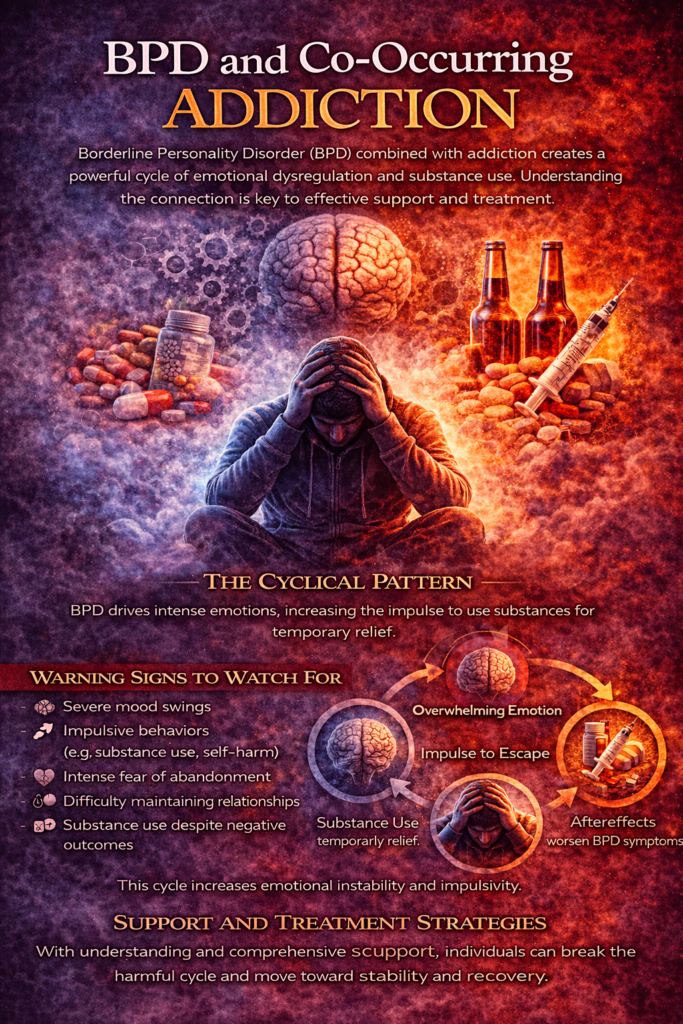
The intersection of Borderline Personality Disorder (BPD) and co-occurring addiction represents a complex relationship between emotional intensity and behavioral coping. BPD is characterized by heightened emotional sensitivity, impulsivity, and difficulty regulating feelings, while addiction often develops as a way to escape or manage that distress. When these conditions occur together, they can reinforce a cycle of overwhelming emotions followed by temporary relief through substance use. Understanding this connection is essential, as it highlights that both conditions are rooted not just in behavior, but in underlying emotional and psychological processes.
Living on the Edge: Borderline Personality Disorder and Co-Occurring Addiction
The intersection of Borderline Personality Disorder (BPD) and addiction creates a complex and often intense cycle of emotional and behavioral challenges. BPD is characterized by heightened emotional sensitivity, unstable relationships, and difficulty regulating feelings, while addiction involves repeated substance use as a way to cope or escape. When these conditions occur together, they can reinforce one another, making recovery more complicated—but not impossible.
Understanding how BPD and addiction interact is the first step toward building effective strategies for healing and stability.
The Emotional Core of BPD
Individuals with BPD often experience emotions more intensely and rapidly than others. Feelings such as anger, sadness, fear, or emptiness can feel overwhelming and difficult to manage.
Common features include:
- Emotional instability and mood swings
- Fear of abandonment
- Impulsive behaviors
- Chronic feelings of emptiness
These experiences can create a strong need for immediate relief from emotional distress.
Why Addiction Often Co-Occurs
Substances can provide temporary relief from the intensity of BPD symptoms. They may:
- Numb overwhelming emotions
- Reduce feelings of emptiness
- Provide a sense of control or escape
However, this relief is short-lived. Over time, substance use often increases emotional instability, impulsivity, and interpersonal conflict—worsening BPD symptoms.
The Cycle of BPD and Addiction
The interaction between BPD and addiction often follows a repeating pattern:
- Emotional Trigger – Intense feelings or interpersonal conflict
- Impulsive Urge – Desire to escape or reduce distress
- Substance Use – Temporary relief or numbness
- Aftereffects – Guilt, shame, or worsened mood
- Increased Vulnerability – Heightened emotional sensitivity
This cycle reinforces both the emotional dysregulation of BPD and the dependency associated with addiction.
Challenges in Recovery
Recovery can be particularly challenging due to:
- Impulsivity that increases the risk of relapse
- Difficulty tolerating distress without immediate relief
- Interpersonal conflicts that may trigger substance use
- Emotional extremes that feel unmanageable
These challenges highlight the need for structured, integrated approaches to treatment.
Effective Strategies for Recovery
1. Dialectical Behavior Therapy (DBT)
DBT is one of the most effective treatments for BPD. It focuses on:
- Emotional regulation
- Distress tolerance
- Mindfulness
- Interpersonal effectiveness
These skills help reduce impulsive behaviors, including substance use.
2. Developing Distress Tolerance
Learning to sit with intense emotions without reacting immediately is key.
Techniques include:
- Grounding exercises
- Deep breathing
- Temporary distraction with healthy activities
Over time, this reduces reliance on substances for relief.
3. Building Healthy Routines
Structure helps stabilize mood and reduce impulsivity.
This may include:
- Regular sleep and meals
- Scheduled daily activities
- Consistent therapy or support group attendance
Routine provides predictability in an otherwise emotionally unpredictable experience.
4. Strengthening Support Systems
Support from therapists, peers, and trusted individuals is essential.
Benefits include:
- Accountability during difficult moments
- Emotional validation
- Guidance in applying coping skills
Connection helps counter feelings of isolation and instability.
5. Addressing Underlying Emotions
Substance use often masks deeper emotional pain. Recovery involves:
- Exploring underlying issues such as trauma or abandonment fears
- Developing healthier ways to process emotions
- Reframing negative self-perceptions
This reduces the need for external coping mechanisms.
The Long-Term Outlook
Recovery from BPD and addiction is not about eliminating emotions—it’s about learning how to respond to them differently.
With time and consistent effort:
- Emotional intensity becomes more manageable
- Impulsive behaviors decrease
- Relationships become more stable
- Substance use loses its role as a primary coping strategy
Progress may be gradual, but it is meaningful and sustainable.
Conclusion
BPD and addiction both involve a search for relief from overwhelming internal experiences. Recovery is about finding new ways to meet that need—without harm.
While the path may be challenging, it is also a path toward greater self-understanding, emotional balance, and a more stable, fulfilling life.
Taking Back Control: Self-Management Strategies for BPD and Co-Occurring Addiction
Managing the intersection of Borderline Personality Disorder (BPD) and addiction requires more than awareness—it requires consistent, intentional self-management. Both conditions are driven by intense emotional experiences and the urge for immediate relief. When combined, they can create a powerful cycle of emotional distress, impulsive behavior, and temporary escape through substance use.
Self-management strategies focus on breaking this cycle by building emotional stability, increasing self-awareness, and developing healthier responses to distress.
Understanding the Emotional–Behavioral Cycle
Before applying strategies, it’s important to recognize the pattern:
- Trigger: intense emotion (fear, anger, sadness, emptiness)
- Impulse: urge to escape or reduce discomfort
- Behavior: substance use or impulsive action
- Relief: temporary emotional release
- Aftermath: guilt, shame, or intensified emotions
Self-management works by interrupting this cycle—especially between the impulse and the behavior.
Core Self-Management Strategies
1. Build Emotional Awareness
Many reactions in BPD and addiction happen quickly and automatically. Slowing this process starts with awareness.
Practice:
- Naming emotions in real time (“I feel overwhelmed,” “I feel rejected”)
- Tracking patterns between emotions and behaviors
- Identifying common triggers (conflict, loneliness, stress)
Awareness creates a pause between feeling and reacting.
2. Strengthen Distress Tolerance
A key challenge is managing intense emotions without immediately trying to escape them.
Helpful techniques:
- Deep breathing or grounding exercises
- Using cold water or sensory input to reset emotional intensity
- Temporary distraction with safe activities
The goal is not to eliminate distress, but to survive it without harmful actions.
3. Delay Impulsive Reactions
Impulsivity is a core feature of both BPD and addiction.
Try:
- Waiting 10–15 minutes before acting on urges
- Reminding yourself: “This feeling is temporary.”
- Creating a short list of alternative actions to use during urges
Even small delays can weaken the connection between impulse and behavior.
4. Replace Harmful Coping with Functional Alternatives
Substances often serve a purpose—numbing pain, reducing anxiety, or filling emptiness.
Identify the function and replace it:
- Emotional pain → journaling or talking to someone
- Emptiness → engaging in structured activities
- Anxiety → breathing or mindfulness exercises
The replacement doesn’t need to be perfect—just safer and more sustainable.
5. Create Structure and Routine
Unpredictability can intensify emotional instability.
Build a daily routine that includes:
- Consistent sleep and meals
- Planned activities (even simple ones)
- Time for rest and connection
Structure reduces emotional volatility and supports stability.
6. Practice Interpersonal Effectiveness
Relationships can be a major source of both support and triggers in BPD.
Work on:
- Communicating needs clearly and calmly
- Setting boundaries
- Avoiding all-or-nothing thinking in relationships
Healthier interactions reduce emotional triggers that lead to substance use.
7. Challenge Extreme Thinking Patterns
BPD often involves black-and-white thinking, while addiction may involve justification or minimization.
Ask yourself:
- Is this situation really all good or all bad?
- What evidence supports this thought?
- Is there a more balanced way to see this?
Balanced thinking reduces emotional intensity and impulsive reactions.
8. Use Support as Part of Self-Management
Self-management includes knowing when to reach out.
Support can include:
- Therapy (especially Dialectical Behavior Therapy)
- Peer recovery groups
- Trusted individuals for accountability
Reaching out is not a failure—it’s a strategy.
The Long-Term Shift
With consistent self-management:
- Emotional reactions become less overwhelming
- Impulsivity decreases
- Cravings and urges become more manageable
- Confidence in handling difficult situations increases
Over time, what once felt like chaos becomes something you can recognize, understand, and navigate.
Conclusion
Self-management in BPD and co-occurring addiction is about learning to respond differently to intense internal experiences. You may not be able to stop emotions from coming—but you can change what you do next.
And those choices, repeated over time, are what create lasting stability and recovery.
Standing Strong Together: Family Support Strategies for BPD and Co-Occurring Addiction
Supporting a loved one living with Borderline Personality Disorder (BPD) and co-occurring addiction can be emotionally complex and, at times, overwhelming. The intensity of emotions, impulsive behaviors, and cycles of substance use may be difficult to understand from the outside. However, when families learn how these conditions interact, they can move from reacting out of frustration → to responding with structure, empathy, and effective support.
Family support does not mean fixing the problem—it means creating an environment where recovery is possible.
Understanding BPD and Addiction as a Family
BPD is rooted in emotional dysregulation, meaning individuals experience feelings more intensely and have difficulty returning to a stable baseline. Addiction often becomes a way to cope with this intensity.
This creates a cycle:
- Intense emotion or interpersonal conflict
- Urge to escape or relieve distress
- Substance use or impulsive behavior
- Temporary relief followed by guilt or worsening emotions
For families, this means behaviors are often driven by overwhelming internal experiences—not simply choice or defiance. Understanding this reduces blame and increases effective support.
Why Family Support Matters
A stable and informed family environment can:
- Reduce emotional triggers
- Encourage healthier coping strategies
- Improve engagement in treatment and recovery
Consistency and understanding are more impactful than control or criticism.
Core Family Support Strategies
1. Educate Yourself About Both Conditions
Learning about BPD and addiction helps families respond more effectively.
Focus on:
- Emotional dysregulation and impulsivity
- The role of substances in coping
- Common triggers such as fear of abandonment or conflict
Knowledge helps shift reactions from “Why are they acting this way?” to “What might they be feeling?”
2. Practice Calm, Supportive Communication
Communication can either escalate or de-escalate emotional situations.
Instead of:
- “You’re overreacting.”
Try:
- “I can see this is really intense for you right now.”
Key skills:
- Listen without interrupting
- Validate emotions (without validating harmful behavior)
- Stay calm even during emotional escalation
This helps reduce defensiveness and builds trust.
3. Avoid Enabling While Remaining Supportive
It’s important to distinguish between helping and enabling.
Avoid:
- Covering up substance use
- Rescuing from consequences repeatedly
- Giving in to avoid conflict
Instead:
- Encourage accountability
- Support treatment and recovery efforts
- Offer help that promotes independence and growth
This balance is critical for long-term change.
4. Set Clear and Consistent Boundaries
Boundaries provide structure and protect both the individual and the family.
Examples:
- No substance use in shared spaces
- Expectations for respectful communication
- Consistent follow-through on consequences
Boundaries are not punishments—they create predictability and safety.
5. Prepare for Emotional Intensity
Emotional reactions in BPD can escalate quickly.
Helpful approaches:
- Don’t take emotional outbursts personally
- Give space when needed rather than escalating
- Focus on de-escalation rather than “winning” the moment
Responding calmly helps prevent the situation from intensifying further.
6. Encourage Professional Treatment
BPD and addiction often require structured, evidence-based treatment.
Support involvement in:
- Therapy (especially Dialectical Behavior Therapy)
- Addiction recovery programs
- Medical or psychiatric care
Present this as support: “You deserve help with this.”
7. Reinforce Healthy Behaviors
Change happens gradually, and small improvements matter.
Acknowledge:
- Efforts to use coping skills
- Participation in treatment
- Moments of emotional regulation
Positive reinforcement strengthens new behaviors over time.
8. Take Care of Your Own Well-Being
Supporting someone with BPD and addiction can be emotionally draining.
Families should:
- Maintain personal boundaries and routines
- Seek their own support (therapy, support groups)
- Recognize limits to what they can control
Sustainable support requires self-care.
The Long-Term Impact
With consistent, informed family support:
- Emotional stability improves
- Impulsive behaviors decrease
- Trust and communication strengthen
- Recovery becomes more sustainable
Families become part of the solution—not by controlling outcomes, but by creating a stable foundation.
Conclusion
BPD and co-occurring addiction can create chaos and uncertainty—but family support can introduce something different: consistency, understanding, and stability.
You don’t need to have perfect answers. What matters most is showing up in a way that supports growth rather than the cycle—and that can make a powerful difference in recovery.
Building a Support Network: Community Resource Strategies for BPD and Co-Occurring Addiction
Understanding and managing the intersection of Borderline Personality Disorder (BPD) and co-occurring addiction can be overwhelming without the right support. Both conditions involve cycles of emotional intensity, impulsivity, and attempts to find relief—often through harmful behaviors. Community resources play a critical role in breaking these cycles by providing structure, education, and connection.
Rather than relying solely on personal willpower, engaging with community-based support systems allows individuals to build stability through consistent, external reinforcement.
Why Community Resources Matter
BPD and addiction are influenced not only by internal experiences but also by environment and access to support. Community resources help by:
- Reducing isolation and emotional distress
- Providing structured environments that limit impulsivity
- Offering professional guidance and skill-building
- Reinforcing accountability and consistency
These supports transform recovery into a more manageable and supported process.
Core Community Resource Strategies
1. Specialized Therapy Programs (DBT-Focused Services)
Dialectical Behavior Therapy (DBT) is one of the most effective treatments for BPD and is often available through community mental health centers.
These programs focus on:
- Emotional regulation
- Distress tolerance
- Mindfulness
- Interpersonal effectiveness
When combined with addiction treatment, DBT helps individuals manage intense emotions without turning to substances.
2. Addiction Recovery Programs: Structure and Accountability
Community-based recovery programs provide:
- Regular meetings and check-ins
- Peer accountability
- Education on relapse prevention
These programs help individuals understand how substance use is connected to emotional triggers and impulsivity.
3. Peer Support Groups: Shared Experience
Connecting with others who face similar challenges can reduce feelings of isolation and stigma.
Benefits include:
- Emotional validation
- Practical coping strategies
- A sense of belonging
Peer groups create a space where individuals feel understood without judgment.
4. Mental Health and Psychiatric Services
Access to professional care is essential for managing both BPD and addiction.
Community resources may include:
- Individual therapy
- Group counseling
- Medication management when appropriate
These services help stabilize mood and reduce the intensity of emotional experiences.
5. Intensive Outpatient Programs (IOPs) and Recovery Centers
For those needing more structure, IOPs provide:
- Scheduled therapy sessions
- Skill-building workshops
- Supervised support while maintaining daily life responsibilities
This level of care helps reduce impulsivity and build consistent coping habits.
6. Skill-Building and Life Development Programs
Recovery involves more than stopping harmful behaviors—it involves building a functional life.
Community programs can support:
- Stress management and emotional regulation
- Job training and education
- Social and communication skills
These resources help individuals develop independence and purpose.
7. Crisis and Immediate Support Services
During moments of intense emotional distress or urges to use substances, immediate support is critical.
Crisis resources offer:
- 24/7 assistance
- Guidance during high-risk situations
- Connection to additional services
Having access to real-time support can interrupt impulsive decisions.
Using Community Resources Effectively
To get the most out of community support:
- Start with a few consistent resources rather than overwhelming yourself
- Combine different supports (therapy + peer groups + structured programs)
- Stay engaged even when motivation is low
- Be open to adjusting resources to find the best fit
Consistency is more important than intensity.
The Long-Term Impact
With ongoing engagement in community resources:
- Emotional regulation improves
- Impulsive behaviors decrease
- Substance use becomes less central as a coping mechanism
- Confidence and independence increase
Over time, the cycle of BPD and addiction becomes more manageable and less dominant.
Conclusion
Community resources don’t replace personal effort—they strengthen it. In the context of BPD and co-occurring addiction, where internal experiences can feel overwhelming, external support provides the structure needed to create lasting change.
Recovery becomes more than breaking a cycle—it becomes building a network that supports a healthier, more stable way of living.
Frequently Asked Questions
Here are some common questions:
1. What is the connection between BPD and addiction?
Borderline Personality Disorder (BPD) and addiction are connected through emotional dysregulation and impulsivity. Individuals with BPD often experience intense emotions and may use substances as a way to cope or find relief, which can lead to dependency over time.
2. Is it common for BPD and addiction to occur together?
Yes. Co-occurring addiction is relatively common in individuals with BPD. The intensity of emotions and difficulty managing distress can increase the likelihood of turning to substances as a coping mechanism.
3. Why do people with BPD use substances?
Substances are often used to:
- Numb overwhelming emotions
- Reduce feelings of emptiness
- Cope with anxiety, anger, or sadness
- Escape interpersonal stress or conflict
While this may provide temporary relief, it usually worsens emotional instability over time.
4. How does addiction affect BPD symptoms?
Addiction can intensify BPD symptoms by:
- Increasing impulsivity
- Worsening mood swings
- Creating instability in relationships
- Adding feelings of guilt, shame, or regret
This strengthens the cycle of emotional distress and substance use.
5. What does the cycle of BPD and addiction look like?
The cycle often includes:
- Intense emotional trigger
- Urge to escape or cope
- Substance use or impulsive behavior
- Temporary relief
- Negative consequences and increased emotional distress
This loop reinforces both conditions.
6. Can someone recover from both BPD and addiction?
Yes. Recovery is possible with the right combination of treatment, support, and self-management strategies. Many individuals learn to manage emotions effectively and reduce or eliminate substance use.
7. What treatments are most effective?
Integrated treatment is key, including:
- Dialectical Behavior Therapy (DBT)
- Addiction counseling or recovery programs
- Individual or group therapy
- Medication when appropriate
Treating both conditions together leads to better outcomes.
8. What is DBT, and why is it important?
Dialectical Behavior Therapy (DBT) is a therapy designed specifically for BPD. It teaches:
- Emotional regulation
- Distress tolerance
- Mindfulness
- Interpersonal skills
These skills help reduce impulsive behaviors, including substance use.
9. Are mood swings normal during recovery?
Yes. Emotional fluctuations are common, especially early in recovery. As individuals learn new coping strategies, emotions gradually become more stable and manageable.
10. Is relapse common in co-occurring conditions?
Relapse can occur and is part of the recovery process for many people. It does not mean failure—it often indicates the need for additional support or adjustment in strategies.
11. How can someone manage intense emotions without substances?
Helpful strategies include:
- Grounding techniques and deep breathing
- Delaying impulsive reactions
- Engaging in structured activities
- Reaching out to support systems
These approaches build tolerance for distress over time.
12. When should professional help be sought?
Professional help is important if:
- Emotions feel overwhelming or uncontrollable
- Substance use is frequent or difficult to stop
- Relationships or daily functioning are affected
- There are repeated relapses or worsening symptoms
Early intervention improves recovery outcomes.
Conclusion
BPD and co-occurring addiction can create significant challenges, but they are not barriers to recovery. With the right combination of awareness, structured strategies, and support, individuals can learn to manage emotional intensity without relying on harmful coping mechanisms. Over time, the cycle of impulsivity and dependency can be replaced with stability, self-regulation, and healthier responses to distress. Ultimately, recovery is not about eliminating emotions but about developing the ability to navigate them in ways that support long-term well-being and a more balanced life.
Video: How BPD Secretly Fuels Substance Use #MentalHealthAwareness