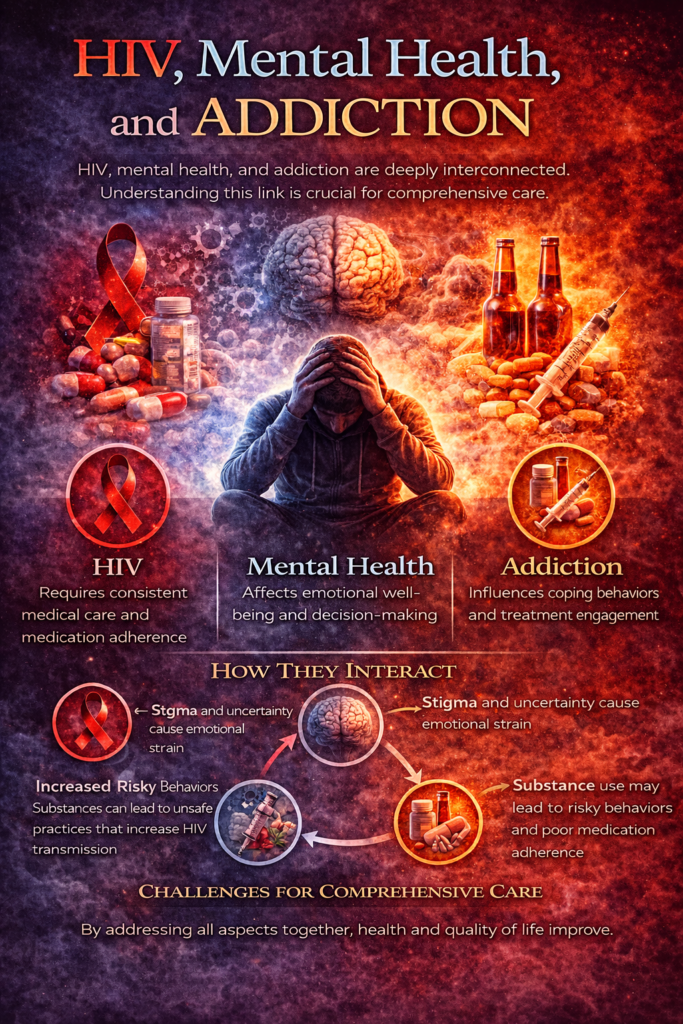
The intersection of HIV/AIDS, mental health, and addiction represents a complex and deeply interconnected set of challenges that extend beyond physical health alone. An HIV diagnosis can bring emotional strain, stigma, and uncertainty, which may influence mental well-being and coping behaviors. At the same time, mental health conditions and substance use can affect treatment adherence and overall quality of life. Understanding how these factors interact is essential for developing a comprehensive approach that addresses not only the medical aspects of HIV, but also the psychological and behavioral components that shape long-term outcomes.
Beyond the Diagnosis: HIV, Mental Health, and Addiction
Living with HIV/AIDS is not only a physical health experience—it is deeply intertwined with mental health and, for many individuals, substance use. These three factors—HIV, mental health, and addiction—often form a complex and overlapping relationship that can significantly impact quality of life, treatment adherence, and long-term outcomes. Understanding this connection is essential for providing effective, compassionate, and comprehensive care.
The Intersection of HIV, Mental Health, and Addiction
An HIV diagnosis can bring emotional challenges such as fear, stigma, anxiety, and depression. At the same time, individuals may already be managing pre-existing mental health conditions or substance use issues.
This creates a layered dynamic:
- HIV affects physical health and can carry social stigma
- Mental health influences emotional stability and coping ability
- Addiction can serve as a coping mechanism, but it often worsens both
Rather than existing separately, these factors often reinforce one another.
How Mental Health Shapes the Experience of HIV
Mental health plays a critical role in how individuals respond to an HIV diagnosis and manage their care.
Common challenges include:
- Depression or hopelessness after diagnosis
- Anxiety about health, relationships, or stigma
- Social isolation or fear of disclosure
These emotional responses can affect motivation, decision-making, and the ability to engage in consistent treatment.
The Role of Addiction in Coping and Risk
Substance use is sometimes used as a way to cope with the emotional burden of HIV or underlying mental health issues. While it may provide temporary relief, it often leads to:
- Poor adherence to HIV medications
- Increased health risks and complications
- Worsening mental health symptoms
- Higher likelihood of engaging in risky behaviors
This creates a cycle where addiction both stems from and contributes to ongoing challenges.
Breaking the Cycle: Integrated Care
Addressing HIV, mental health, and addiction together is essential. Treating only one aspect often leads to incomplete progress.
Effective approaches include:
- Medical care: consistent HIV treatment and monitoring
- Mental health support: therapy, counseling, or medication
- Addiction treatment: recovery programs and behavioral interventions
Integrated care ensures that all aspects of a person’s well-being are addressed simultaneously.
The Importance of Reducing Stigma
Stigma remains one of the biggest barriers to care. Individuals living with HIV and addiction may face judgment from others—or even internalized shame.
Reducing stigma involves:
- Promoting education and awareness
- Encouraging open, non-judgmental conversations
- Supporting inclusive and compassionate care environments
When stigma is reduced, individuals are more likely to seek and stay in treatment.
Building Support Systems
Recovery and stability are strengthened through connection.
Support can come from:
- Healthcare providers
- Mental health professionals
- Peer support groups
- Friends and family
These systems provide emotional support, accountability, and a sense of belonging.
The Path Forward
With proper treatment and support, individuals living with HIV can lead long, healthy lives. When mental health and addiction are addressed alongside HIV care:
- Treatment adherence improves
- Emotional stability increases
- Overall quality of life is enhanced
Recovery is not just about managing a diagnosis—it’s about building a sustainable, balanced life.
Conclusion
HIV, mental health, and addiction are deeply connected, but they do not define a person’s future. With integrated care, understanding, and support, it is possible to move beyond survival toward stability, resilience, and meaningful living.
Taking Control: Self-Management Strategies for HIV, Mental Health, and Addiction
Living with HIV/AIDS, alongside mental health challenges and addiction, requires more than medical treatment—it requires daily, intentional self-management. These three areas are deeply interconnected: emotional distress can influence substance use, substance use can impact treatment adherence, and both can affect overall health outcomes. Understanding how to manage this intersection empowers individuals to move from reactive coping to proactive stability.
Self-management is not about perfection—it’s about building consistent habits that support physical health, emotional balance, and long-term recovery.
Understanding the Interconnection
Before applying strategies, it’s important to recognize how these factors interact:
- HIV requires consistent medical care and medication adherence
- Mental health affects motivation, thinking patterns, and emotional responses
- Addiction can disrupt routines and increase risky behaviors
When one area is unmanaged, it often affects the others. Self-management focuses on stabilizing all three together.
Core Self-Management Strategies
1. Prioritize Medication Adherence
Consistent adherence to HIV treatment is critical for maintaining health and preventing complications.
Strategies include:
- Setting daily reminders or alarms
- Linking medication to existing routines (e.g., meals)
- Using pill organizers
Adherence is not just a medical task—it’s a foundation for stability across all areas.
2. Build Emotional Awareness
Mental health plays a central role in both HIV management and addiction recovery.
Start by:
- Identifying emotional triggers (stress, fear, loneliness)
- Noticing patterns between mood and behavior
- Journaling or tracking emotional changes
Awareness helps prevent automatic reactions like substance use.
3. Develop Healthy Coping Mechanisms
Substances are often used to manage emotional distress. Replacing them with healthier strategies is essential.
Examples:
- Exercise or physical movement
- Mindfulness and breathing techniques
- Creative outlets (writing, art, music)
- Talking to a trusted person
The goal is to respond to emotions rather than escape them.
4. Create Structure and Routine
Unstructured time can increase emotional instability and the risk of relapse.
A simple routine might include:
- Regular sleep and wake times
- Scheduled meals and medication
- Planned activities or responsibilities
Structure reduces uncertainty and supports consistency.
5. Manage Triggers Proactively
Triggers can come from environments, people, or emotional states.
Effective strategies:
- Avoid high-risk situations when possible
- Plan responses to cravings or stress
- Use “pause techniques” before reacting
Preparation reduces impulsive decisions.
6. Stay Connected to Support Systems
Self-management does not mean isolation. Support is a key component.
This can include:
- Healthcare providers
- Therapists or counselors
- Peer support groups
- Friends and family
Regular connection provides accountability and reduces isolation.
7. Challenge Stigma and Self-Perception
Internalized stigma can negatively impact mental health and behavior.
Work on:
- Reframing negative self-beliefs
- Recognizing that HIV and addiction do not define your worth
- Seeking environments that promote acceptance and understanding
Reducing stigma improves engagement in care and recovery.
8. Monitor Progress and Adjust Strategies
Self-management is an ongoing process.
Helpful approaches:
- Set small, realistic goals
- Track progress over time
- Adjust strategies based on what works
Flexibility allows for growth without discouragement.
The Long-Term Impact
With consistent self-management:
- Physical health stabilizes through proper HIV care
- Emotional regulation improves
- Substance use becomes less central as a coping mechanism
Over time, these strategies create a more balanced and sustainable lifestyle.
Conclusion
Managing HIV, mental health, and addiction is complex—but it is possible. Through self-awareness, structure, and support, individuals can move from surviving day-to-day challenges to actively shaping their well-being.
Self-management is not about controlling everything—it’s about learning how to respond in ways that support long-term health, stability, and resilience.
Stronger Together: Family Support Strategies for HIV, Mental Health, and Addiction
Supporting a loved one living with HIV/AIDS, mental health challenges, and addiction can feel overwhelming. Each of these experiences carries its own complexities, but when they occur together, they create a deeply interconnected set of challenges that affect both the individual and the family system. Families often want to help but may feel unsure how to respond effectively.
Understanding how these areas interact allows families to move from confusion and frustration → to informed, compassionate support that promotes stability and recovery.
Understanding the Intersection as a Family
HIV, mental health, and addiction are not separate issues—they influence each other in meaningful ways:
- HIV requires consistent medical care and can carry stigma
- Mental health affects emotional regulation, motivation, and coping
- Addiction may be used to manage emotional distress, but it can disrupt treatment
For families, this means that behaviors are often rooted in underlying struggles—not simply in choices or a lack of effort. Shifting perspective from “What’s wrong?” to “What might they be dealing with?” is a critical first step.
Why Family Support Matters
A supportive family environment can:
- Improve adherence to HIV treatment
- Reduce emotional stress and isolation
- Encourage engagement in recovery and mental health care
Families don’t need to “fix” everything—they provide stability, consistency, and connection.
Core Family Support Strategies
1. Educate Yourself Without Judgment
Learning about HIV, mental health, and addiction helps reduce stigma and misunderstanding.
Focus on:
- How HIV treatment works and why consistency matters
- Common mental health symptoms (anxiety, depression)
- The role of addiction as a coping mechanism
Knowledge allows for more supportive and less reactive responses.
2. Communicate with Empathy, Not Assumption
Open, respectful communication builds trust.
Instead of:
- “Why are you doing this?”
Try:
- “I’m here for you—do you want to talk about what’s been going on?”
Key approaches:
- Listen without interrupting
- Validate emotions without approving harmful behaviors
- Stay calm during difficult conversations
Empathy reduces defensiveness and increases openness.
3. Support Treatment and Consistency
Encourage engagement in care across all areas:
- Medical appointments for HIV
- Therapy or counseling for mental health
- Recovery programs for addiction
You can help by:
- Offering reminders or transportation
- Celebrating consistency (not just outcomes)
- Reinforcing the importance of staying engaged
Support should feel encouraging—not controlling.
4. Reduce Stigma Within the Family
Stigma—both external and internal—can prevent individuals from seeking help or being honest about struggles.
Families can:
- Use respectful, non-judgmental language
- Avoid blame or shame
- Promote acceptance and understanding
A stigma-free environment increases safety and honesty.
5. Establish Healthy Boundaries
Support does not mean enabling.
Healthy boundaries include:
- Not supporting substance use or risky behaviors
- Setting expectations for behavior in shared spaces
- Following through consistently on limits
Boundaries create structure while still maintaining care and respect.
6. Encourage Healthy Coping and Lifestyle Habits
Families can model and support positive behaviors:
- Regular meals and sleep routines
- Physical activity or shared activities
- Stress management techniques
Even small, shared routines (like walks or meals) can provide stability.
7. Be Patient with the Process
Recovery and adjustment are not immediate. There may be:
- Emotional ups and downs
- Setbacks or relapses
- Periods of resistance or withdrawal
Helpful mindset:
- Focus on progress, not perfection
- Recognize small improvements
- Stay consistent even when it’s difficult
Patience builds long-term resilience.
8. Take Care of Yourself as a Supporter
Family members also need support. Burnout can reduce the ability to help effectively.
Consider:
- Seeking your own counseling or support groups
- Maintaining personal routines and boundaries
- Acknowledging your limits
Healthy supporters provide stronger, more sustainable support.
The Long-Term Impact
With consistent family support:
- Treatment adherence improves
- Emotional stability increases
- Trust and communication strengthen
Over time, the individual is more likely to engage fully in both health management and recovery.
Conclusion
Supporting someone with HIV, mental health challenges, and addiction is not about having all the answers—it’s about showing up with understanding, consistency, and care.
Families play a powerful role—not by controlling the journey, but by creating an environment where healing, stability, and growth are possible.
Connecting the Dots: Community Resource Strategies for HIV, Mental Health, and Addiction
Managing the intersection of HIV/AIDS, mental health, and addiction requires more than individual effort—it requires a strong, accessible support system. These three areas are deeply interconnected, often reinforcing one another in ways that can make recovery and stability challenging without external support. Community resources provide the structure, education, and connection needed to help individuals better understand and manage these overlapping experiences.
Rather than navigating these challenges alone, engaging with community-based support transforms recovery into a guided and sustainable process.
Why Community Resources Are Essential
HIV, mental health conditions, and addiction each come with unique demands:
- HIV requires consistent medical care and treatment adherence
- Mental health affects emotional stability and decision-making
- Addiction influences behavior and coping patterns
Community resources help address these simultaneously by:
- Reducing isolation and stigma
- Providing access to professional care
- Offering structured environments for growth
- Supporting long-term stability and recovery
Core Community Resource Strategies
1. Integrated Healthcare Services
Comprehensive care is critical when multiple conditions overlap.
Community health clinics and specialized programs often provide:
- HIV treatment and monitoring
- Mental health counseling
- Substance use treatment
Integrated care ensures that all aspects of health are addressed together rather than separately.
2. Mental Health and Counseling Services
Emotional well-being plays a major role in both HIV management and addiction recovery.
Available services may include:
- Individual therapy
- Group counseling
- Psychiatric care and medication management
These resources help individuals understand emotional triggers and develop healthier coping strategies.
3. Addiction Recovery Programs
Structured recovery programs provide accountability and support.
These may include:
- Outpatient treatment programs
- Peer-based recovery groups
- Relapse prevention education
They help individuals understand how substance use is connected to emotional and environmental factors.
4. Peer Support and Community Groups
Connecting with others who share similar experiences reduces isolation and stigma.
Benefits include:
- Shared understanding and encouragement
- Practical advice for managing daily challenges
- A sense of belonging and support
Peer groups can be especially powerful for individuals navigating multiple overlapping conditions.
5. Case Management and Social Services
External stressors such as housing instability or unemployment can worsen all three conditions.
Community services can assist with:
- Housing support
- Employment programs
- Access to healthcare and insurance
Stability in these areas supports overall recovery and well-being.
6. Educational and Skill-Building Programs
Understanding how HIV, mental health, and addiction interact is key to managing them effectively.
Programs may focus on:
- Stress management and emotional regulation
- Medication adherence education
- Life skills and decision-making
Education empowers individuals to make informed choices.
7. Crisis and Immediate Support Resources
Moments of emotional distress or relapse risk require immediate support.
Crisis services offer:
- 24/7 assistance
- Emotional support during high-risk situations
- Referrals to additional care
Access to immediate help can prevent escalation and support safer outcomes.
Using Community Resources Effectively
To maximize their impact:
- Start with a few consistent supports rather than overwhelming yourself
- Combine different types of resources (medical, mental health, peer support)
- Stay engaged even when progress feels slow
- Be open to adjusting resources to find the best fit
Consistency and engagement are key to long-term success.
The Long-Term Impact
With sustained use of community resources:
- Treatment adherence improves
- Emotional stability increases
- Substance use becomes less central as a coping mechanism
- Overall quality of life improves
Recovery becomes more manageable when supported by a strong network.
Conclusion
Understanding HIV, mental health, and addiction requires more than awareness—it requires access to the right support systems. Community resources provide the foundation for that support, helping individuals move from isolation and instability toward connection, structure, and long-term well-being.
No one has to navigate this alone—and with the right resources, lasting change becomes possible.
Frequently Asked Questions
Here are some common questions:
1. How are HIV, mental health, and addiction connected?
HIV/AIDS, mental health, and addiction are closely linked because each can influence the others. Emotional distress may lead to substance use as a coping mechanism, while addiction can interfere with HIV treatment. At the same time, living with HIV can impact mental health due to stress, stigma, and lifestyle changes.
2. Can mental health conditions increase the risk of addiction?
Yes. Conditions such as anxiety, depression, or trauma can increase the likelihood of substance use. Individuals may use substances to manage difficult emotions, which can lead to dependency over time.
3. How does addiction affect HIV treatment?
Addiction can make it harder to:
- Take medications consistently
- Attend medical appointments
- Maintain healthy routines
This can reduce the effectiveness of HIV treatment and negatively impact overall health.
4. Does living with HIV affect mental health?
Yes. An HIV diagnosis can lead to:
- Anxiety about health and the future
- Depression or feelings of isolation
- Stress related to stigma or disclosure
These emotional responses are common and can be managed with support.
5. What is the cycle between these three factors?
A common cycle may look like:
- Emotional distress (mental health challenges)
- Substance use as a coping mechanism
- Disruption of HIV care or increased stress
- Worsening mental health
- Increased reliance on substances
Breaking this cycle requires addressing all three areas together.
6. Can someone recover while managing all three?
Yes. Many individuals successfully manage HIV, improve mental health, and recover from addiction. With proper treatment, support, and self-management, long-term stability is achievable.
7. Why is integrated treatment important?
Treating each issue separately can lead to gaps in care. Integrated treatment addresses:
- Physical health (HIV care)
- Emotional well-being (mental health support)
- Behavioral patterns (addiction treatment)
This approach improves overall outcomes.
8. What types of support are helpful?
Effective support can include:
- Healthcare providers for HIV management
- Therapists or counselors for mental health
- Recovery programs or peer groups for addiction
- Family and community support
A combination of supports is often most effective.
9. How does stigma impact these conditions?
Stigma can:
- Prevent individuals from seeking help
- Increase feelings of shame or isolation
- Interfere with treatment adherence
Reducing stigma is critical for improving access to care and recovery outcomes.
10. What are healthy coping strategies?
Instead of using substances, individuals can:
- Practice mindfulness or relaxation techniques
- Engage in physical activity
- Build supportive relationships
- Develop structured daily routines
These strategies help manage stress and emotions more effectively.
11. When should someone seek professional help?
Professional help is important if:
- Substance use is difficult to control
- Mental health symptoms are overwhelming
- HIV treatment is inconsistent
- Daily functioning is affected
Early intervention can improve long-term outcomes.
12. Is it possible to live a healthy life with HIV?
Yes. With consistent treatment and support, people living with HIV can lead long, healthy lives. Managing mental health and addiction alongside HIV care further improves quality of life.
Conclusion
HIV, mental health, and addiction are closely linked, but they do not define an individual’s future. With the right combination of medical care, emotional support, and recovery strategies, it is possible to manage these challenges effectively and build a stable, meaningful life. Addressing all three areas together allows for more sustainable progress, improving both health outcomes and overall well-being. Ultimately, understanding this intersection creates a foundation for resilience, empowering individuals to move beyond survival toward long-term growth and stability.
Video: Nobody Told Me Emotional Pain Would Do This #HIVAwareness #MentalHealthMatters #RecoveryJourney