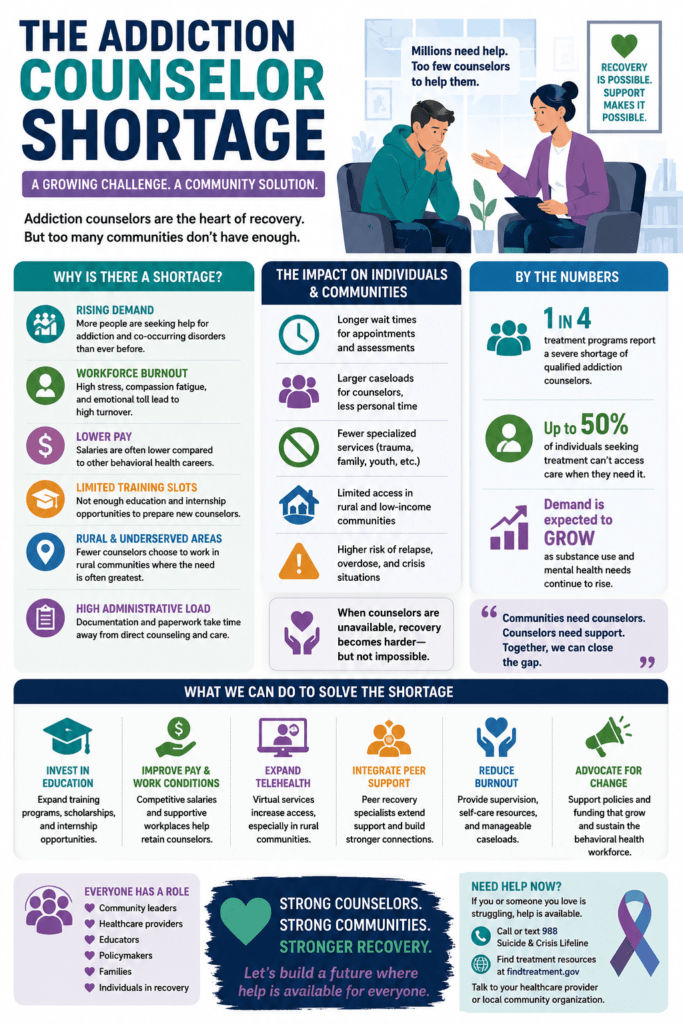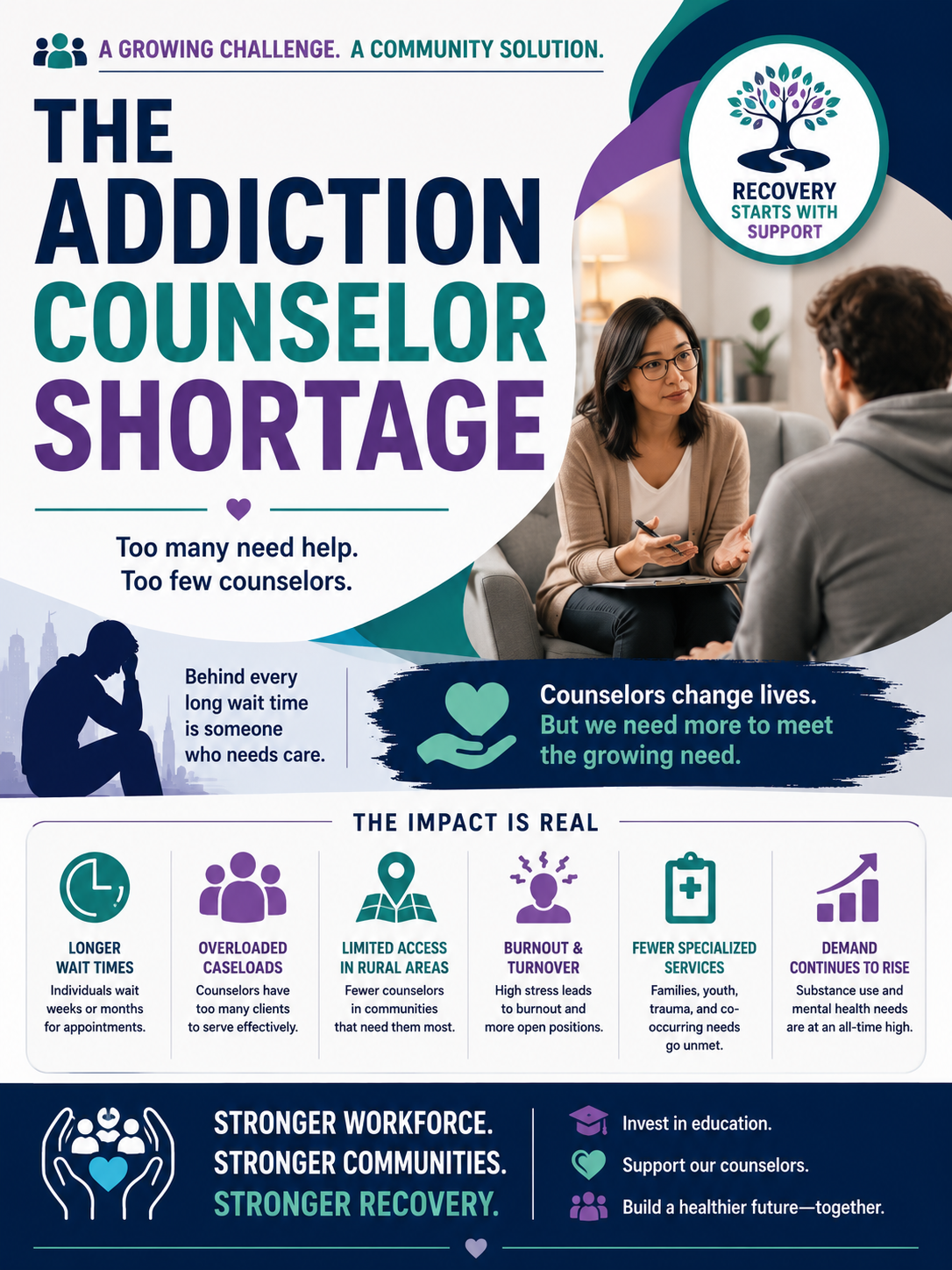
The shortage of addiction counselors has become a significant public health challenge as the demand for substance use disorder treatment continues to grow. Rising rates of opioid use disorder, alcohol misuse, stimulant addiction, and co-occurring mental health conditions have increased the need for qualified professionals who can provide counseling, recovery support, and relapse prevention services. However, workforce shortages, burnout, limited educational opportunities, lower salaries, and high staff turnover have made it difficult for many treatment programs to meet the growing demand. As a result, individuals seeking help may face long waiting lists, limited appointment availability, and reduced access to specialized care, particularly in rural and underserved communities. Understanding the causes and consequences of the addiction counselor shortage is essential for developing effective strategies that improve access to treatment, strengthen the behavioral health workforce, and support long-term recovery.
Addiction Counselor Shortage
The shortage of addiction counselors is one of the most significant challenges facing substance use disorder treatment today. As opioid overdoses, alcohol-related illnesses, stimulant use, and co-occurring mental health disorders continue to affect communities, the demand for qualified addiction professionals has grown faster than the available workforce. This shortage contributes to longer wait times for treatment, higher caseloads for clinicians, reduced access to care in rural and underserved communities, and increased stress on existing healthcare providers.
What Is an Addiction Counselor?
An addiction counselor is a trained professional who helps individuals with substance use disorders develop recovery skills, manage cravings, prevent relapse, address underlying emotional issues, and rebuild healthy lives. Depending on their education, licensure, and state regulations, addiction counselors may provide:
- Substance use assessments
- Individual counseling
- Group therapy
- Family counseling
- Relapse prevention planning
- Recovery coaching
- Case management
- Crisis intervention
- Referrals to community resources
They often work alongside physicians, physician assistants, nurse practitioners, psychologists, social workers, peer recovery specialists, and case managers as part of a multidisciplinary treatment team.
Why Is There a Shortage?
Increasing Demand for Treatment
The opioid epidemic, rising stimulant use, alcohol misuse, and increasing recognition of co-occurring mental health disorders have dramatically increased the need for addiction treatment services. More individuals are seeking help than many treatment programs have the staff to serve.
Workforce Burnout
Addiction counseling is emotionally demanding. Counselors frequently work with individuals experiencing relapse, trauma, homelessness, legal issues, and mental illness. High emotional stress, compassion fatigue, and secondary trauma contribute to burnout and staff turnover.
Lower Salaries Compared with Other Behavioral Health Professions
Many addiction counselors earn less than professionals with similar education in mental health counseling, psychology, or social work. Lower compensation can make recruitment and retention difficult, particularly in areas with a high cost of living.
Educational and Licensing Barriers
Becoming a licensed addiction counselor often requires formal education, supervised clinical experience, examinations, and continuing education. While these requirements help ensure quality care, they can also delay entry into the workforce and create financial barriers for prospective counselors.
Rural Workforce Challenges
Rural communities often struggle to recruit and retain behavioral health professionals due to geographic isolation, fewer educational opportunities, limited professional support, and lower reimbursement rates. As a result, residents may need to travel long distances to access treatment.
High Administrative Burden
Many counselors spend substantial time completing documentation, insurance authorizations, treatment plans, and regulatory requirements. Administrative tasks can reduce the amount of time available for direct patient care and contribute to job dissatisfaction.
How the Shortage Affects Patients
The shortage of addiction counselors has several consequences for individuals seeking treatment:
- Longer waiting lists for counseling services.
- Delayed entry into treatment.
- Larger counselor caseloads reduce the time available for each patient.
- Limited access to specialized services such as trauma-informed care or family therapy.
- Reduced availability of evening or weekend appointments.
- Greater difficulty accessing care in rural and underserved communities.
- Increased risk that individuals disengage from treatment while waiting for services.
How It Affects Healthcare Providers
The shortage also places additional responsibilities on physicians, physician assistants, nurse practitioners, nurses, and other behavioral health professionals. These providers may spend more time addressing counseling needs, coordinating care, and managing crises when counseling resources are limited. This can contribute to provider burnout and make integrated, team-based care more difficult to sustain.
Strategies to Address the Shortage
Several approaches may help strengthen the addiction counseling workforce:
Expand Education and Training
Increasing scholarships, tuition assistance, paid internships, and loan repayment programs can encourage more students to pursue careers in addiction counseling.
Improve Compensation
Competitive salaries, comprehensive benefits, and opportunities for career advancement can improve recruitment and reduce turnover.
Strengthen Clinical Supervision
Mentorship programs and supportive supervision help new counselors build confidence, improve clinical skills, and remain in the profession.
Expand Telehealth Services
Telehealth allows counselors to reach patients in rural and underserved areas, reduces travel barriers, and increases access to behavioral health services.
Integrate Peer Recovery Specialists
Peer recovery specialists provide valuable lived-experience support, helping extend recovery services while allowing licensed counselors to focus on more complex clinical needs.
Reduce Administrative Burden
Simplifying documentation requirements, improving electronic health record systems, and streamlining insurance processes can allow counselors to spend more time providing direct patient care.
Promote Workplace Wellness
Organizations can support staff by offering manageable caseloads, mental health resources, flexible scheduling, professional development opportunities, and wellness initiatives that reduce burnout.
The Importance of Multidisciplinary Care
Because no single professional can meet all of a patient’s needs, addiction treatment is most effective when delivered by a collaborative team that may include:
- Addiction counselors
- Physicians
- Physician assistants
- Nurse practitioners
- Nurses
- Psychologists
- Licensed clinical social workers
- Peer recovery specialists
- Case managers
- Pharmacists
- Family therapists
Working together allows the team to address the medical, psychological, social, and recovery needs of each individual.
Looking Ahead
The demand for addiction counselors is expected to remain high as communities continue addressing the impacts of opioid use disorder, alcohol use disorder, stimulant use disorders, and co-occurring mental health conditions. Advances in telehealth, integrated behavioral healthcare, workforce development programs, and expanded training opportunities may help reduce shortages over time. Continued investment in recruitment, retention, professional support, and evidence-based treatment programs will be essential to building a strong addiction treatment workforce.
Conclusion
The shortage of addiction counselors is a significant public health challenge that affects access to timely, high-quality treatment for individuals with substance use disorders. While increasing demand, workforce burnout, compensation issues, and educational barriers contribute to the shortage, practical solutions such as expanding training programs, improving workplace support, integrating peer recovery specialists, and increasing access through telehealth can help strengthen the workforce. Addressing this shortage is essential for ensuring that more individuals receive the counseling, support, and comprehensive care needed to achieve long-term recovery and improve their quality of life.
Self-Management Strategies to Understand the Addiction Counselor Shortage
The shortage of addiction counselors can make it more difficult for individuals with substance use disorders to access timely counseling and recovery support. Longer wait times, limited appointment availability, and increased counselor caseloads may create challenges during treatment. However, individuals can take an active role in managing their recovery while navigating these barriers. Self-management strategies help maintain progress, strengthen resilience, and ensure continuity of care until counseling services become available or between appointments.
1. Learn About the Treatment System
Educate yourself about why addiction counselor shortages exist and how treatment services are organized. Understanding that delays are often caused by workforce shortages rather than a lack of concern can help reduce frustration and encourage persistence in seeking care.
2. Stay Engaged in Medication Treatment
If you are receiving Medications for Opioid Use Disorder (MOUD) or other prescribed medications, continue taking them exactly as directed by your healthcare provider. Medication can help reduce cravings and stabilize recovery while you wait for counseling services.
3. Develop a Personal Recovery Plan
Create a written recovery plan that includes your goals, daily routines, coping strategies, emergency contacts, relapse prevention techniques, and healthy activities. Having a structured plan provides direction during periods when counseling appointments may be less frequent.
4. Practice Healthy Coping Skills
Develop stress-management techniques such as deep breathing, mindfulness meditation, journaling, exercise, prayer, yoga, or spending time outdoors. Healthy coping strategies reduce emotional distress and strengthen recovery during treatment gaps.
5. Utilize Peer Recovery Support
Peer recovery specialists and recovery support groups can provide encouragement, accountability, and practical advice while waiting for individual counseling. Individuals with lived recovery experience often offer valuable insight and hope.
6. Take Advantage of Telehealth Services
Explore virtual counseling appointments, online recovery groups, or telehealth behavioral health services if local counselors are in limited supply. Telehealth can improve access and reduce travel barriers.
7. Build a Strong Support Network
Maintain regular contact with supportive family members, trusted friends, sponsors, faith leaders, or recovery mentors. Positive relationships provide encouragement and reduce feelings of isolation.
8. Continue Learning About Recovery
Read reputable books, attend educational workshops, listen to recovery podcasts, or complete online educational programs about addiction, relapse prevention, and emotional wellness. Continued learning strengthens recovery skills between counseling sessions.
9. Monitor Your Mental Health
Pay attention to changes in mood, anxiety, depression, sleep, cravings, or stress levels. Keep a journal to track symptoms and discuss concerns with your healthcare provider promptly if they worsen.
10. Stay Physically Healthy
Regular exercise, balanced nutrition, adequate sleep, hydration, and routine medical care improve overall well-being and strengthen both physical and emotional resilience during recovery.
11. Be Proactive About Scheduling
If counseling appointments are limited, schedule follow-up visits as early as possible and ask to be placed on cancellation lists. Staying organized can help reduce gaps in care.
12. Ask for Help Early
If cravings increase, emotional distress worsens, or relapse seems possible, contact your healthcare provider, treatment program, crisis line, or trusted support person immediately. Early intervention often prevents small challenges from becoming larger setbacks.
Conclusion
Although the shortage of addiction counselors can make accessing treatment more challenging, individuals can remain actively engaged in their recovery through effective self-management strategies. Staying informed, following treatment recommendations, building a strong support network, practicing healthy coping skills, utilizing telehealth and peer support, and maintaining open communication with healthcare providers can help bridge treatment gaps. Recovery is strengthened by persistence, flexibility, and a willingness to use all available resources while waiting for or receiving professional counseling.
Family Support Strategies to Understand the Addiction Counselor Shortage
Families play an essential role in supporting loved ones during recovery from substance use disorders, especially when there is a shortage of addiction counselors. Limited access to counseling may result in longer wait times, fewer appointments, or increased reliance on other healthcare providers. By understanding these challenges and actively participating in the recovery process, families can help reduce stress, encourage treatment engagement, and provide stability while professional services are limited.
1. Learn About the Addiction Counselor Shortage
Educate yourself about why addiction counselor shortages exist, including the growing demand for treatment, workforce burnout, limited training programs, and staffing shortages. Understanding these factors can help families remain patient and supportive while waiting for services.
2. Encourage Continued Participation in Treatment
Remind your loved one to continue attending medical appointments, taking prescribed medications such as Medications for Opioid Use Disorder (MOUD), and participating in any available counseling or recovery services. Consistency in treatment is important, even if counseling appointments are less frequent.
3. Be Patient During Treatment Delays
Waiting lists and scheduling challenges can be frustrating. Encourage your loved one to remain engaged in recovery rather than becoming discouraged if appointments are delayed. Recovery is a long-term process, and persistence is essential.
4. Help Identify Alternative Resources
If individual counseling is unavailable, assist your loved one in locating peer recovery specialists, recovery support groups, telehealth counseling, faith-based recovery programs, community mental health services, or educational workshops. These resources can provide valuable support until counseling becomes available.
5. Maintain Open Communication
Create a safe and supportive environment where your loved one feels comfortable discussing cravings, stress, emotional struggles, or concerns about treatment. Listening without judgment helps strengthen trust and encourages honest conversations.
6. Encourage Healthy Daily Routines
Support healthy habits such as regular sleep, balanced meals, exercise, employment, education, and meaningful recreational activities. Structured daily routines reduce stress and help strengthen recovery between counseling sessions.
7. Learn the Warning Signs of Relapse
Become familiar with changes in mood, increased isolation, missed appointments, renewed contact with people associated with substance use, declining self-care, or increased cravings. Early recognition allows families to encourage professional intervention before a crisis develops.
8. Support Participation in Recovery Groups
Encourage attendance at recovery meetings, peer support programs, or community recovery events. These groups can provide accountability, encouragement, and social connection, while professional counseling services are limited.
9. Keep Naloxone Available
If your loved one has opioid use disorder, keep naloxone readily available and ensure all household members know how to recognize an opioid overdose and administer the medication. Being prepared can save a life if a relapse occurs.
10. Respect Recovery Decisions
Avoid pressuring your loved one to recover according to your timeline. Recovery plans, including the duration of counseling or medication treatment, should be based on medical recommendations and individual progress rather than outside expectations.
11. Take Care of Your Own Well-Being
Supporting someone with addiction can be emotionally demanding. Family members should also seek counseling, attend family support groups, practice stress management, and maintain healthy boundaries. Caring for your own mental and physical health enables you to provide more effective long-term support.
12. Advocate for Better Access to Care
Families can help improve addiction treatment in their communities by supporting workforce development initiatives, participating in advocacy organizations, promoting public education about addiction, and encouraging policies that expand access to qualified addiction counselors and behavioral health services.
Conclusion
Although the shortage of addiction counselors presents significant challenges, families remain one of the strongest sources of support for individuals in recovery. By learning about the treatment system, encouraging continued engagement in care, exploring alternative recovery resources, maintaining open communication, recognizing relapse warning signs, and practicing patience, families can help bridge gaps in professional services. Combined with medical care, peer support, and community resources, strong family involvement can promote resilience, improve treatment outcomes, and support long-term recovery despite workforce shortages.
Community Resource Strategies to Understand the Addiction Counselor Shortage
The shortage of addiction counselors is a growing challenge that affects access to timely and effective treatment for individuals with substance use disorders. As demand for addiction services continues to increase, communities play an essential role in expanding access to care, supporting the behavioral health workforce, and connecting individuals with available resources. Community organizations, healthcare systems, educational institutions, and policymakers can work together to reduce treatment barriers while strengthening recovery support services.
1. Increase Access to Community Treatment Programs
Community health centers, outpatient addiction clinics, and behavioral health organizations should expand access to evidence-based treatment by offering flexible scheduling, walk-in assessments, evening hours, and integrated care. These services help reduce wait times and improve access to treatment.
2. Expand Telehealth Services
Telehealth allows addiction counselors and behavioral health professionals to provide counseling remotely, especially for individuals living in rural or underserved areas. Virtual appointments reduce transportation barriers and help communities extend limited counseling resources to more people.
3. Utilize Peer Recovery Specialists
Certified peer recovery specialists provide valuable support through shared lived experience. They offer mentoring, encouragement, recovery coaching, and assistance in navigating treatment systems. Peer support complements professional counseling and helps fill gaps when counselor availability is limited.
4. Strengthen Recovery Support Groups
Community-based recovery organizations can increase access to support groups, including Narcotics Anonymous (NA), SMART Recovery, Celebrate Recovery, and other local recovery programs. These groups provide ongoing encouragement, accountability, and social support between counseling appointments.
5. Increase Public Education
Community education campaigns can help residents understand addiction as a chronic medical condition rather than a moral failing. Public awareness programs also explain why counselor shortages exist and encourage individuals to seek treatment early, before problems become more severe.
6. Support Workforce Development Programs
Community colleges, universities, healthcare organizations, and professional associations can partner to expand addiction counseling education through scholarships, tuition assistance, internships, loan repayment programs, and clinical training opportunities. These initiatives help attract and retain future addiction counselors.
7. Advocate for Improved Funding
Community leaders and advocacy organizations can support policies that increase funding for addiction treatment programs, behavioral health workforce development, and competitive salaries for addiction counselors. Improved funding helps recruit and retain qualified professionals.
8. Promote Integrated Healthcare
Healthcare systems can integrate addiction treatment into primary care clinics, mental health centers, emergency departments, and community health centers. Team-based care allows physicians, physician assistants, nurse practitioners, nurses, social workers, psychologists, and peer recovery specialists to share responsibilities when counseling resources are limited.
9. Expand Community Case Management Services
Case managers help individuals access healthcare, housing, transportation, employment services, insurance, childcare, and financial assistance. Addressing these social needs reduces barriers to recovery and allows counselors to focus on clinical care.
10. Support Family Education Programs
Community organizations can offer workshops, seminars, and support groups that teach families about addiction, relapse prevention, communication skills, overdose prevention, and available treatment resources. Educated families are better equipped to support recovery during counselor shortages.
11. Improve Crisis Response Services
Communities should strengthen access to crisis stabilization units, mobile crisis teams, behavioral health urgent care centers, and 24-hour crisis hotlines. These services provide immediate assistance for individuals experiencing mental health or substance use emergencies when counseling appointments are unavailable.
12. Encourage Volunteer and Community Engagement
Faith-based organizations, nonprofit agencies, civic groups, and volunteer organizations can provide mentoring, transportation assistance, recovery-friendly social activities, childcare support, and other practical resources that reduce isolation and strengthen long-term recovery.
Conclusion
Addressing the addiction counselor shortage requires a coordinated community effort that extends beyond the behavioral health workforce alone. By expanding telehealth, strengthening peer recovery programs, supporting workforce development, increasing public education, improving access to integrated healthcare, and investing in recovery resources, communities can reduce treatment gaps and improve access to care. Collaboration among healthcare providers, educators, policymakers, community organizations, families, and individuals in recovery creates a stronger support system that promotes long-term recovery and helps ensure that everyone has the opportunity to receive timely, compassionate, and evidence-based addiction treatment.
Frequently Asked Questions
Here are some common questions:
1. What is an addiction counselor?
Answer:
An addiction counselor is a trained healthcare professional who helps individuals with substance use disorders overcome addiction through assessment, counseling, relapse prevention, recovery planning, education, and emotional support. They often work as part of a multidisciplinary team with physicians, physician assistants, nurse practitioners, psychologists, social workers, and peer recovery specialists.
2. What is the addiction counselor shortage?
Answer:
The addiction counselor shortage refers to the growing gap between the number of qualified addiction counselors available and the increasing number of people seeking treatment for substance use disorders. This shortage can make it more difficult for individuals to access timely, evidence-based care.
3. Why is there a shortage of addiction counselors?
Answer:
Several factors contribute to the shortage, including:
- Increased demand for addiction treatment
- Workforce burnout and compassion fatigue
- Lower salaries compared with other behavioral health professions
- Limited educational and training opportunities
- High staff turnover
- Rural workforce shortages
- Administrative and documentation burdens
4. How does the shortage affect people seeking treatment?
Answer:
The shortage may lead to:
- Longer waiting lists
- Delayed access to counseling
- Fewer available appointments
- Larger counselor caseloads
- Reduced access to specialized services
- Increased risk of relapse while waiting for care
5. Are rural communities affected more than urban areas?
Answer:
Yes. Rural communities often experience greater shortages because they have fewer behavioral health professionals, limited training programs, transportation challenges, and fewer treatment facilities. Residents may need to travel long distances to receive care.
6. Can someone recover even if counseling is delayed?
Answer:
Yes. Although counseling is an important part of treatment, recovery can continue by staying engaged with healthcare providers, taking prescribed medications when appropriate, attending peer support groups, using telehealth services, practicing healthy coping skills, and building a strong support network.
7. What role do Medications for Opioid Use Disorder (MOUD) play during counselor shortages?
Answer:
MOUD, including buprenorphine, methadone, and naltrexone, helps reduce cravings, prevent withdrawal symptoms, and lower the risk of overdose. Continuing medication as prescribed can provide stability while individuals wait for counseling or receive less frequent counseling sessions.
8. What are peer recovery specialists?
Answer:
Peer recovery specialists are individuals with lived experience in recovery who are trained to provide encouragement, mentorship, recovery coaching, and assistance in navigating treatment services. They complement—but do not replace—the work of licensed addiction counselors.
9. Can telehealth help address the shortage?
Answer:
Yes. Telehealth allows addiction counselors and behavioral health providers to offer counseling remotely, increasing access for individuals who live in rural or underserved areas or who have transportation challenges.
10. How does burnout contribute to the shortage?
Answer:
Addiction counselors often work with individuals experiencing trauma, relapse, mental illness, homelessness, and other complex challenges. High emotional demands, heavy caseloads, and administrative responsibilities can lead to burnout, causing some professionals to leave the field.
11. What can treatment programs do to reduce counselor shortages?
Answer:
Treatment programs can:
- Improve salaries and benefits
- Provide supportive supervision
- Reduce excessive paperwork
- Offer manageable caseloads
- Expand professional development opportunities
- Promote employee wellness and work-life balance
- Utilize multidisciplinary treatment teams
12. How can families support loved ones during counselor shortages?
Answer:
Families can encourage continued participation in treatment, support medication adherence, help locate alternative recovery resources, attend family education programs, recognize relapse warning signs, maintain open communication, and provide encouragement throughout the recovery process.
13. How can communities help address the shortage?
Answer:
Communities can support workforce development by funding addiction counseling education, expanding scholarships and loan repayment programs, increasing access to telehealth, supporting peer recovery programs, improving public awareness, and advocating for better behavioral health funding.
14. Is addiction counseling still one of the most effective treatments for substance use disorders?
Answer:
Yes. Addiction counseling remains a cornerstone of comprehensive treatment. When combined with medications (when appropriate), behavioral therapies, peer support, and recovery services, counseling helps individuals develop coping skills, prevent relapse, improve mental health, and achieve long-term recovery.
15. Why is a multidisciplinary treatment team important?
Answer:
A multidisciplinary team brings together professionals with different areas of expertise, including physicians, physician assistants, nurse practitioners, addiction counselors, psychologists, social workers, nurses, peer recovery specialists, and case managers. This collaborative approach provides comprehensive care that addresses the medical, psychological, and social aspects of addiction.
16. What qualities make an effective addiction counselor?
Answer:
Effective addiction counselors demonstrate empathy, active listening, strong communication skills, cultural sensitivity, professionalism, ethical practice, knowledge of evidence-based treatments, and the ability to build trusting therapeutic relationships with individuals and families.
17. What is the future outlook for addiction counseling?
Answer:
The demand for addiction counselors is expected to remain strong as communities continue responding to substance use disorders and co-occurring mental health conditions. Efforts to expand education, improve working conditions, integrate telehealth, and strengthen behavioral health funding may help reduce workforce shortages over time.
18. What is the most important message about the addiction counselor shortage?
Answer:
The addiction counselor shortage is a significant challenge, but it is also an opportunity to strengthen the behavioral health workforce through education, investment, innovation, and collaboration. By expanding access to qualified professionals, supporting existing counselors, and utilizing community resources, more individuals can receive timely, compassionate, and evidence-based treatment that promotes lasting recovery and healthier communities.
Conclusion
The addiction counselor shortage is a complex issue that affects individuals, families, healthcare providers, and communities across the country. Limited access to qualified counselors can delay treatment, increase the risk of relapse, and place additional strain on an already overburdened healthcare system. Addressing this challenge requires a comprehensive approach that includes expanding education and training programs, improving compensation and workplace support, increasing the use of telehealth, strengthening peer recovery services, and investing in workforce development. Communities, healthcare organizations, educational institutions, and policymakers all have important roles in building a stronger behavioral health workforce. By supporting addiction counselors and improving access to evidence-based care, we can help ensure that more individuals receive timely treatment, achieve lasting recovery, and lead healthier, more productive lives.
Video: Rural addiction treatment is basically gone #HealthcareCrisis #SocialJustice