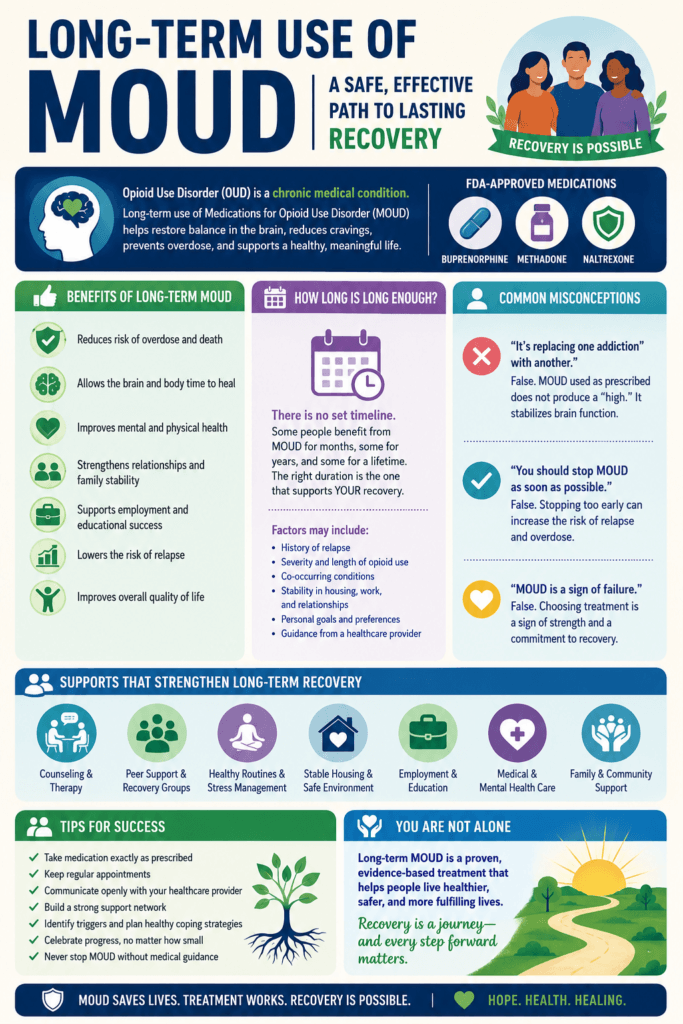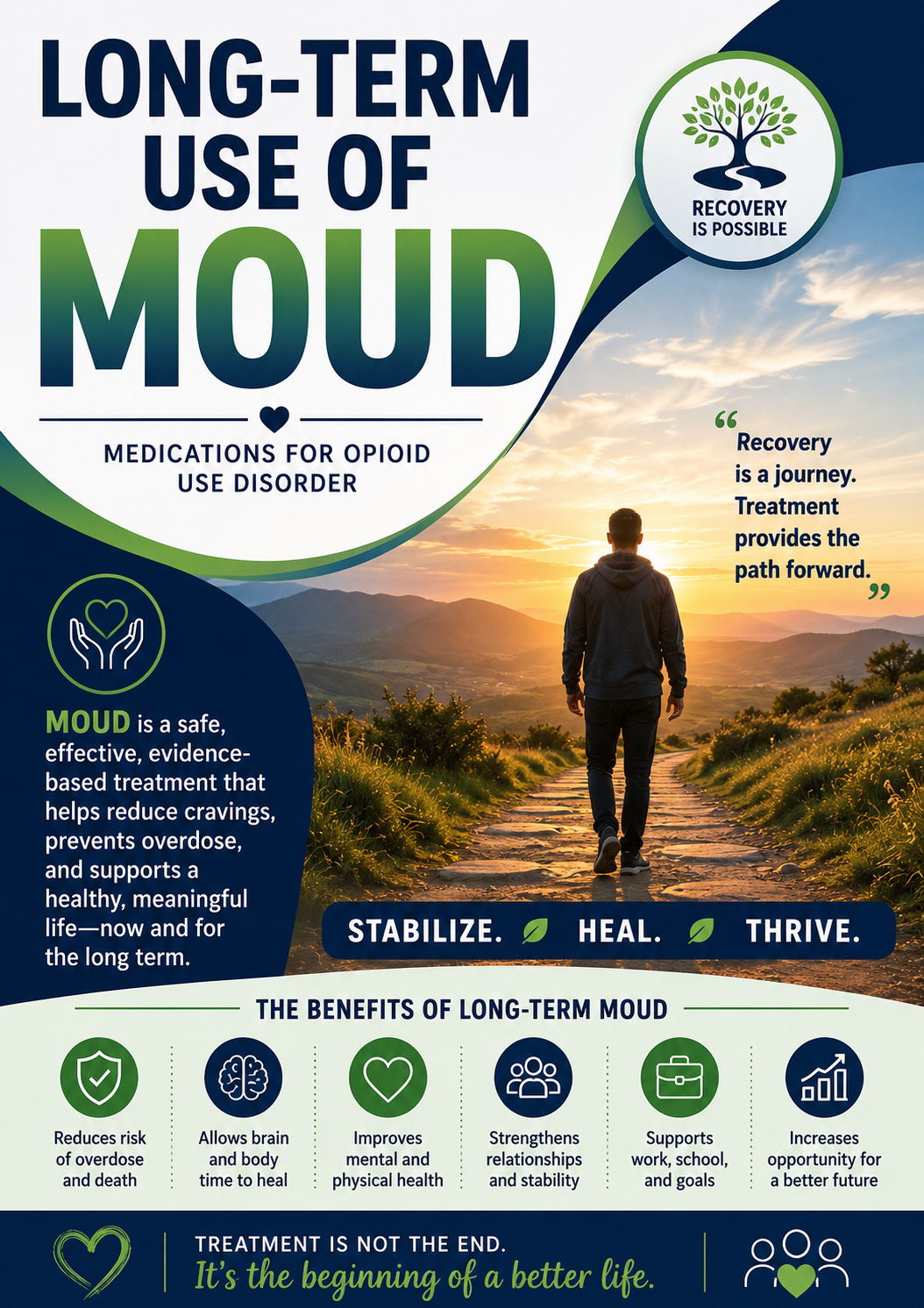
Medications for Opioid Use Disorder (MOUD) have transformed the treatment of opioid addiction by providing a safe, effective, and evidence-based approach to recovery. The three U.S. Food and Drug Administration (FDA)-approved medications—buprenorphine, methadone, and naltrexone—help reduce cravings, relieve withdrawal symptoms, and significantly lower the risk of relapse and fatal overdose. Because opioid use disorder is recognized as a chronic medical condition, many individuals benefit from remaining on MOUD for months, years, or even indefinitely. Long-term treatment allows the brain and body time to heal while helping individuals rebuild relationships, maintain employment, improve physical and mental health, and participate fully in recovery. Understanding the role of long-term MOUD can help reduce stigma, encourage informed decision-making, and support individuals on their journey toward lasting recovery.
Long-Term Use of Medications for Opioid Use Disorder (MOUD)
Medications for Opioid Use Disorder (MOUD) are among the most effective, evidence-based treatments for opioid use disorder (OUD). The three medications approved in the United States are Buprenorphine, Methadone, and Naltrexone. These medications help reduce opioid cravings, prevent withdrawal symptoms, lower the risk of overdose, and support long-term recovery. Research consistently shows that many individuals benefit from remaining on MOUD for months, years, or even indefinitely, depending on their individual needs.
Why Long-Term MOUD Is Often Recommended
Opioid use disorder is considered a chronic medical condition, similar to diabetes, hypertension, or asthma. Just as many chronic illnesses require ongoing treatment, OUD often requires long-term management. Stopping medication too early significantly increases the risk of relapse because the brain’s reward system may still be recovering from prolonged opioid exposure.
Long-term MOUD helps:
- Reduce opioid cravings and withdrawal symptoms.
- Lower the risk of fatal overdose.
- Improve employment and educational outcomes.
- Increase family stability and healthier relationships.
- Reduce criminal justice involvement.
- Improve overall physical and mental health.
- Increase retention in treatment.
- Support long-term recovery and quality of life.
Benefits of Staying on MOUD
Reduced Risk of Overdose
One of the greatest benefits of long-term MOUD is its ability to reduce overdose deaths. Individuals receiving consistent treatment with buprenorphine or methadone have a substantially lower risk of dying from opioid overdose compared with those who discontinue treatment.
Brain Recovery
Long-term opioid use changes areas of the brain involved in reward, decision-making, stress, and impulse control. Recovery of these brain circuits often takes many months or years. MOUD stabilizes brain chemistry while allowing healing to occur gradually.
Better Mental Health
Many individuals experience improvements in:
- Depression
- Anxiety
- Sleep quality
- Emotional regulation
- Concentration
- Overall life satisfaction
When cravings are controlled, patients are better able to participate in counseling, employment, parenting, and healthy activities.
Lower Relapse Rates
Research consistently demonstrates that people who remain on MOUD longer generally have lower relapse rates than those who stop medication prematurely. The decision to taper should be individualized and based on sustained stability rather than a fixed timeline.
Is Long-Term MOUD Replacing One Addiction with Another?
This is one of the most common misconceptions.
When taken as prescribed under medical supervision:
- MOUD does not produce the euphoric highs associated with illicit opioid misuse.
- Patients are able to function normally at work, school, and home.
- The medications stabilize brain function rather than reinforce compulsive drug-seeking behavior.
- Treatment reduces harm and supports recovery.
Physical dependence on a medication is different from addiction. Addiction involves compulsive use despite harmful consequences, whereas therapeutic use of MOUD is intended to restore health and functioning.
How Long Should Someone Stay on MOUD?
There is no universal timeline.
Some people may remain on medication:
- 6–12 months
- Several years
- Indefinitely
The duration depends on factors such as:
- History of relapse
- Severity and duration of opioid use
- Co-occurring mental health conditions
- Recovery stability
- Housing and employment stability
- Family support
- Patient preferences
- Clinical recommendations
Many experts advise continuing medication as long as it benefits the patient and helps maintain recovery.
Can Someone Successfully Taper Off MOUD?
Yes, but tapering should occur only when:
- Recovery has been stable for an extended period.
- Mental health is well managed.
- Housing and employment are stable.
- A strong support system is in place.
- The patient feels ready.
- A healthcare provider supervises a gradual taper.
Abrupt discontinuation is generally discouraged because it increases the risk of withdrawal, relapse, and overdose.
Challenges of Long-Term MOUD
Although highly effective, long-term treatment may include challenges such as:
- Stigma from others who misunderstand MOUD.
- Daily clinic visits for some patients receiving methadone (though take-home doses may be available as stability increases).
- Medication costs or insurance barriers.
- Transportation difficulties.
- Managing side effects.
- Ongoing medical appointments.
These barriers can often be addressed through comprehensive care, counseling, peer support, and coordinated healthcare services.
Supporting Recovery Beyond Medication
Medication works best when combined with recovery supports such as:
- Individual counseling
- Cognitive behavioral therapy
- Peer recovery support
- Family education
- Employment assistance
- Stable housing
- Recovery support groups
- Healthy nutrition and exercise
- Stress management techniques
- Treatment for co-occurring mental health conditions
Key Takeaways
Long-term use of MOUD is a safe, evidence-based treatment strategy that has helped millions of people recover from opioid use disorder. For many individuals, remaining on medication for years—or even indefinitely—provides the greatest protection against relapse and overdose while allowing time for the brain and body to heal. Decisions about continuing or tapering MOUD should always be made collaboratively with a healthcare provider based on each person’s recovery progress, medical history, and personal goals. Recovery is not defined by how quickly medication is stopped, but by improved health, stability, and quality of life.
Self-Management Strategies to Understand Long-Term Use of MOUD
Long-term use of Medications for Opioid Use Disorder (MOUD) is a highly effective treatment approach that helps many people maintain recovery, prevent relapse, and reduce the risk of overdose. Successful long-term treatment involves more than taking medication—it requires active participation in one’s recovery, healthy lifestyle choices, and ongoing communication with healthcare providers. The following self-management strategies can help individuals better understand and succeed with long-term MOUD.
1. Learn About Your Medication
Take time to understand how your medication works, whether it is buprenorphine, methadone, or naltrexone. Learn its benefits, possible side effects, dosing schedule, and how it supports recovery. Understanding that MOUD treats a chronic medical condition—not a personal weakness—can reduce fear, stigma, and misinformation.
2. Take Medication Exactly as Prescribed
Consistency is essential. Take your medication at the same time each day or attend scheduled clinic appointments. Avoid skipping doses, taking extra medication, or stopping treatment without medical supervision. Following your treatment plan helps maintain stable brain chemistry and reduces cravings and withdrawal symptoms.
3. Keep Regular Medical Appointments
Attend routine appointments with your healthcare provider to monitor your progress, discuss side effects, adjust medication if needed, and address any concerns. Regular follow-up visits allow treatment to evolve as your recovery needs change.
4. Develop Healthy Daily Routines
Create a structured schedule that includes regular sleep, nutritious meals, physical activity, work or school responsibilities, hobbies, and relaxation. Healthy routines reduce boredom and stress, which are common relapse triggers.
5. Identify Personal Triggers
Learn to recognize situations, emotions, people, or environments that increase cravings or thoughts of opioid use. Keeping a journal or using a recovery app can help identify patterns and develop healthier coping strategies before triggers become overwhelming.
6. Participate in Counseling or Therapy
Medication is most effective when combined with behavioral therapies. Individual counseling, group therapy, Cognitive Behavioral Therapy (CBT), or trauma-informed care can help address the emotional, psychological, and behavioral aspects of addiction while strengthening relapse prevention skills.
7. Build a Strong Recovery Support Network
Surround yourself with supportive family members, friends, peer recovery specialists, sponsors, or recovery groups. Positive relationships provide encouragement, accountability, and emotional support during difficult times.
8. Practice Stress Management
Stress is one of the most common relapse triggers. Develop healthy coping techniques such as mindfulness, meditation, deep breathing exercises, yoga, walking, journaling, listening to music, or spending time outdoors. Managing stress consistently supports long-term recovery.
9. Prioritize Physical and Mental Health
Schedule routine medical and dental checkups, exercise regularly, stay hydrated, and eat balanced meals. If you experience anxiety, depression, PTSD, or other mental health conditions, continue treatment and discuss symptoms with your healthcare provider. Treating both physical and mental health improves recovery outcomes.
10. Avoid Comparing Your Recovery to Others
Recovery is highly individualized. Some people remain on MOUD for months, while others benefit from treatment for many years or indefinitely. Focus on your own progress rather than comparing your treatment timeline with someone else’s. Recovery success is measured by improved health, stability, and quality of life—not by how quickly medication is discontinued.
11. Prepare for Long-Term Recovery
Understand that opioid use disorder is a chronic medical condition. View MOUD as one component of a long-term recovery plan rather than a temporary solution. Celebrate milestones, remain patient with yourself, and recognize that healing often occurs gradually.
12. Never Stop MOUD Without Medical Guidance
If you are considering reducing or stopping your medication, discuss your goals with your healthcare provider. A gradual, medically supervised taper may be appropriate for some individuals, but abruptly stopping MOUD can increase the risk of withdrawal, relapse, and overdose.
Conclusion
Self-management is a vital part of long-term success with MOUD. By learning about your medication, following your treatment plan, maintaining healthy routines, managing stress, participating in counseling, and building a strong support system, you can strengthen your recovery and improve your overall quality of life. Long-term MOUD is not a sign of failure—it is an evidence-based medical treatment that helps many individuals achieve lasting recovery, stability, and renewed hope for the future.
Family Support Strategies to Understand Long-Term Use of MOUD
Family support plays a critical role in the success of individuals receiving long-term Medications for Opioid Use Disorder (MOUD). When family members understand that opioid use disorder is a chronic medical condition and recognize MOUD as an evidence-based treatment, they can provide encouragement, reduce stigma, and help create a stable environment that supports long-term recovery. The following strategies can help families better understand and support loved ones receiving long-term MOUD.
1. Learn About Opioid Use Disorder and MOUD
Take time to learn how opioid use disorder affects the brain and how medications such as buprenorphine, methadone, and naltrexone help reduce cravings, prevent withdrawal symptoms, and lower the risk of overdose. Understanding the science behind treatment helps replace myths with facts and reduces judgment.
2. Recognize That Recovery Is Different for Everyone
Every person’s recovery journey is unique. Some individuals may remain on MOUD for months, while others may benefit from treatment for many years or even indefinitely. Avoid setting timelines or expecting medication to be discontinued before the individual and healthcare provider determine it is appropriate.
3. Reduce Stigma Within the Family
Avoid statements such as “You’re still addicted because you’re taking medication.” Instead, recognize that MOUD is a medically supervised treatment similar to taking medication for diabetes, high blood pressure, or other chronic conditions. Using respectful, supportive language encourages recovery rather than shame.
4. Encourage Medication Adherence
Support your loved one in taking medication exactly as prescribed and attending clinic visits or follow-up appointments. Offer reminders if requested, provide transportation when needed, or help organize schedules to reduce barriers to consistent treatment.
5. Promote Open and Honest Communication
Create a safe environment where your loved one feels comfortable discussing challenges, cravings, stress, or fears without fear of criticism or punishment. Listening with empathy often strengthens trust and encourages early problem-solving.
6. Support Healthy Lifestyle Habits
Encourage healthy routines by participating in activities together, such as preparing nutritious meals, exercising, walking, attending community events, or engaging in hobbies. Healthy habits improve both physical and emotional well-being during recovery.
7. Participate in Family Counseling
Family therapy can improve communication, rebuild trust, resolve conflicts, and educate everyone about addiction and recovery. Counseling also helps family members learn healthy boundaries and develop effective ways to support long-term treatment.
8. Learn to Recognize Relapse Warning Signs
Become familiar with changes in mood, behavior, isolation, missed appointments, increased stress, or renewed contact with people associated with previous substance use. Early recognition allows families to encourage professional help before a crisis develops.
9. Keep Naloxone Available
Even when someone is doing well on MOUD, families should have naloxone available and know how to use it in case of an opioid overdose. Being prepared can save a life, especially if relapse occurs after a period of reduced opioid tolerance.
10. Celebrate Recovery Milestones
Acknowledge achievements such as attending appointments, maintaining employment, rebuilding relationships, completing counseling, or reaching sobriety milestones. Positive reinforcement helps strengthen motivation and confidence.
11. Practice Patience During Recovery
Recovery is rarely a straight path. There may be setbacks, emotional ups and downs, or changes in treatment plans. Patience, understanding, and consistent encouragement help loved ones remain engaged in care and continue moving forward.
12. Take Care of Your Own Well-Being
Supporting someone with opioid use disorder can be emotionally demanding. Family members should also prioritize their own mental and physical health by seeking counseling, joining family support groups, practicing stress management, and maintaining healthy boundaries. Caring for yourself allows you to provide more effective long-term support.
Conclusion
Families are an essential part of long-term recovery with MOUD. By learning about evidence-based treatment, reducing stigma, encouraging medication adherence, promoting healthy communication, recognizing relapse warning signs, and supporting both the individual and themselves, families create a strong foundation for lasting recovery. Long-term MOUD is not a sign of weakness or failure—it is a proven medical treatment that helps individuals regain stability, improve their quality of life, and build a healthier future with the support of those who care about them.
Community Resource Strategies to Understand Long-Term Use of MOUD
Long-term use of Medications for Opioid Use Disorder (MOUD) is supported by a wide range of community resources that help individuals maintain recovery, improve overall health, and reduce the risk of relapse and overdose. Opioid use disorder is a chronic medical condition, and successful recovery often involves ongoing medical care, counseling, peer support, housing assistance, employment services, and educational programs. Utilizing these community resources can strengthen long-term recovery and improve quality of life.
1. Connect with Certified MOUD Providers
Establish ongoing care with healthcare providers who specialize in opioid use disorder treatment. Physicians, nurse practitioners, physician assistants, and opioid treatment programs can monitor medication effectiveness, manage side effects, and adjust treatment plans as recovery progresses.
2. Participate in Outpatient Treatment Programs
Many individuals benefit from outpatient counseling, intensive outpatient programs (IOPs), or comprehensive addiction treatment centers that combine medication management with individual therapy, group counseling, and relapse prevention education. Long-term participation helps reinforce healthy coping skills and recovery goals.
3. Utilize Peer Recovery Support Services
Certified peer recovery specialists and recovery coaches provide encouragement grounded in their own lived experience of recovery. Peer support can reduce feelings of isolation, improve motivation, and help individuals navigate challenges encountered during long-term treatment.
4. Attend Recovery Support Groups
Community-based recovery meetings provide ongoing encouragement, accountability, and social support. Individuals may benefit from programs such as:
- Narcotics Anonymous (NA)
- SMART Recovery
- Celebrate Recovery
- Other local recovery support groups
Choosing a group that respects evidence-based treatment and supports individuals receiving MOUD can help foster an inclusive recovery environment.
5. Access Mental Health Services
Many people receiving MOUD also experience anxiety, depression, PTSD, or other mental health conditions. Community mental health clinics, counselors, psychologists, and psychiatrists provide therapy and treatment that support both mental health and substance use recovery.
6. Take Advantage of Case Management Services
Case managers can help individuals access healthcare, insurance benefits, transportation, food assistance, childcare, employment resources, disability services, and housing programs. Reducing these practical barriers allows individuals to remain engaged in treatment.
7. Utilize Employment and Educational Programs
Vocational rehabilitation agencies, workforce development centers, community colleges, and job placement services help individuals build job skills, pursue education, and achieve financial stability—important components of long-term recovery.
8. Seek Recovery-Friendly Housing
Stable housing significantly improves recovery outcomes. Sober living homes, recovery residences, transitional housing, and supportive housing programs provide structured environments that encourage continued sobriety and medication adherence.
9. Learn Overdose Prevention
Community organizations, pharmacies, health departments, and treatment programs often provide overdose education and distribute naloxone. Individuals and families should learn how to recognize an overdose and administer naloxone in an emergency, as relapse after a period of abstinence can increase overdose risk.
10. Utilize Telehealth Services
Telehealth appointments expand access to healthcare providers, counselors, and support groups, particularly for individuals living in rural areas or facing transportation challenges. Virtual care can improve treatment retention and continuity.
11. Participate in Community Education Programs
Attend educational workshops, health fairs, webinars, and public awareness events that focus on opioid use disorder, recovery, and evidence-based treatment. These programs help reduce stigma while increasing understanding of the benefits of long-term MOUD.
12. Build a Recovery-Oriented Community Network
Recovery is strengthened by positive social connections. Participate in faith communities, volunteer organizations, recreational clubs, wellness programs, exercise groups, or other community activities that promote healthy relationships and meaningful engagement outside of substance use.
Conclusion
Community resources play a vital role in supporting individuals receiving long-term MOUD. By combining medication with counseling, peer support, mental health services, housing assistance, employment programs, recovery groups, and ongoing medical care, individuals are more likely to achieve lasting recovery and improved quality of life. Long-term MOUD is most successful when supported by a compassionate community that recognizes opioid use disorder as a treatable chronic medical condition and encourages continued access to evidence-based care.
Frequently Asked Questions
Here are some common questions:
1. What is MOUD?
Answer:
Medications for Opioid Use Disorder (MOUD) are evidence-based medications used to treat opioid use disorder. The three FDA-approved medications are buprenorphine, methadone, and naltrexone. These medications reduce cravings, relieve withdrawal symptoms, and help prevent relapse and overdose.
2. Is it safe to stay on MOUD for many years?
Answer:
Yes. Research has shown that long-term use of MOUD is safe for many individuals when taken as prescribed under medical supervision. Many people remain on treatment for several years or longer while maintaining healthy, productive lives.
3. How long should someone stay on MOUD?
Answer:
There is no standard length of treatment. Some individuals benefit from MOUD for months, while others remain on medication for many years or indefinitely. The decision should be based on recovery progress, medical history, and recommendations from a healthcare provider.
4. Is long-term MOUD replacing one addiction with another?
Answer:
No. This is a common misconception. Addiction involves compulsive drug use despite harmful consequences. When taken as prescribed, MOUD stabilizes brain chemistry, reduces cravings, and allows individuals to function normally. Physical dependence on medication is not the same as addiction.
5. Can people work or attend school while taking MOUD?
Answer:
Yes. Most individuals taking MOUD are able to work, attend school, care for their families, and participate in daily activities. Successful treatment often improves concentration, stability, and overall quality of life.
6. Does MOUD reduce the risk of overdose?
Answer:
Yes. Long-term treatment with buprenorphine or methadone significantly lowers the risk of fatal opioid overdose by reducing illicit opioid use and stabilizing recovery.
7. What happens if someone stops MOUD too soon?
Answer:
Stopping MOUD prematurely can increase the risk of withdrawal symptoms, intense cravings, relapse, and overdose. Individuals who discontinue treatment should do so gradually and only under medical supervision.
8. Can someone eventually stop taking MOUD?
Answer:
Yes. Some individuals successfully taper off MOUD after achieving long-term recovery stability. However, others benefit from remaining on medication indefinitely. There is no “right” timeline, and treatment decisions should be individualized.
9. Does long-term MOUD affect the brain?
Answer:
Yes, in a positive way. MOUD helps normalize brain function disrupted by opioid addiction. It reduces cravings, improves impulse control, and allows the brain time to heal while supporting healthier decision-making.
10. Can MOUD be combined with counseling?
Answer:
Absolutely. Combining MOUD with counseling, behavioral therapy, peer support, and recovery programs often produces the best long-term outcomes by addressing both the physical and psychological aspects of addiction.
11. Are there side effects from long-term MOUD?
Answer:
Some individuals may experience side effects such as constipation, sweating, mild drowsiness, headache, or nausea, depending on the medication. Most side effects can be managed with guidance from a healthcare provider, and many improve over time.
12. What if I miss a dose?
Answer:
If you miss a dose, contact your healthcare provider or follow the instructions provided with your treatment plan. Do not double your dose or make changes without medical advice.
13. Can pregnant women receive MOUD?
Answer:
Yes. MOUD is considered the standard of care for pregnant individuals with opioid use disorder. Treatment reduces the risks associated with illicit opioid use and improves outcomes for both the mother and baby. Care should be coordinated with healthcare professionals experienced in treating opioid use disorder during pregnancy.
14. How can families support someone receiving long-term MOUD?
Answer:
Families can help by learning about opioid use disorder, encouraging medication adherence, reducing stigma, attending family counseling, supporting healthy routines, maintaining open communication, and celebrating recovery milestones.
15. What community resources support long-term MOUD?
Answer:
Helpful resources include:
- MOUD treatment providers
- Outpatient addiction treatment programs
- Mental health counseling
- Peer recovery specialists
- Recovery support groups
- Case management services
- Recovery housing
- Employment and vocational programs
- Community health clinics
- Naloxone education and distribution programs
16. Is relapse considered treatment failure?
Answer:
No. Relapse does not mean treatment has failed. Opioid use disorder is a chronic medical condition, and setbacks can occur. If relapse happens, it is important to seek medical care promptly, reassess the treatment plan, and continue recovery rather than giving up.
17. Why do some people stay on MOUD for life?
Answer:
Some individuals have a high risk of relapse or overdose if medication is discontinued. For them, long-term or lifelong MOUD provides ongoing stability, reduces cravings, and supports a healthy, productive life. Continuing treatment is a medical decision based on individual needs rather than a sign of failure.
18. What is the most important message about long-term MOUD?
Answer:
Long-term MOUD saves lives. It is an evidence-based treatment that reduces cravings, prevents overdose, improves health, and supports lasting recovery. Recovery is not measured by how quickly medication is stopped but by improved health, stability, and quality of life. Every recovery journey is unique, and treatment should always be individualized in partnership with a healthcare provider.
Conclusion
Long-term use of MOUD is an evidence-based treatment that has helped countless individuals achieve sustained recovery from opioid use disorder. Rather than replacing one addiction with another, these medications stabilize brain function, reduce cravings, prevent withdrawal symptoms, and greatly decrease the risk of overdose when used under medical supervision. The length of treatment should be individualized to each person’s medical history, recovery progress, and personal goals, rather than an arbitrary timeline. Combining MOUD with counseling, behavioral therapies, peer support, and healthy lifestyle changes provides the strongest foundation for long-term success. By increasing public understanding and reducing stigma surrounding MOUD, healthcare professionals, families, and communities can help ensure that individuals receive the ongoing care and support they need to live healthier, more productive, and fulfilling lives.
Video: How MOUD Actually Stops Cravings (Not Just Masks Them) #addictionrecovery #treatment