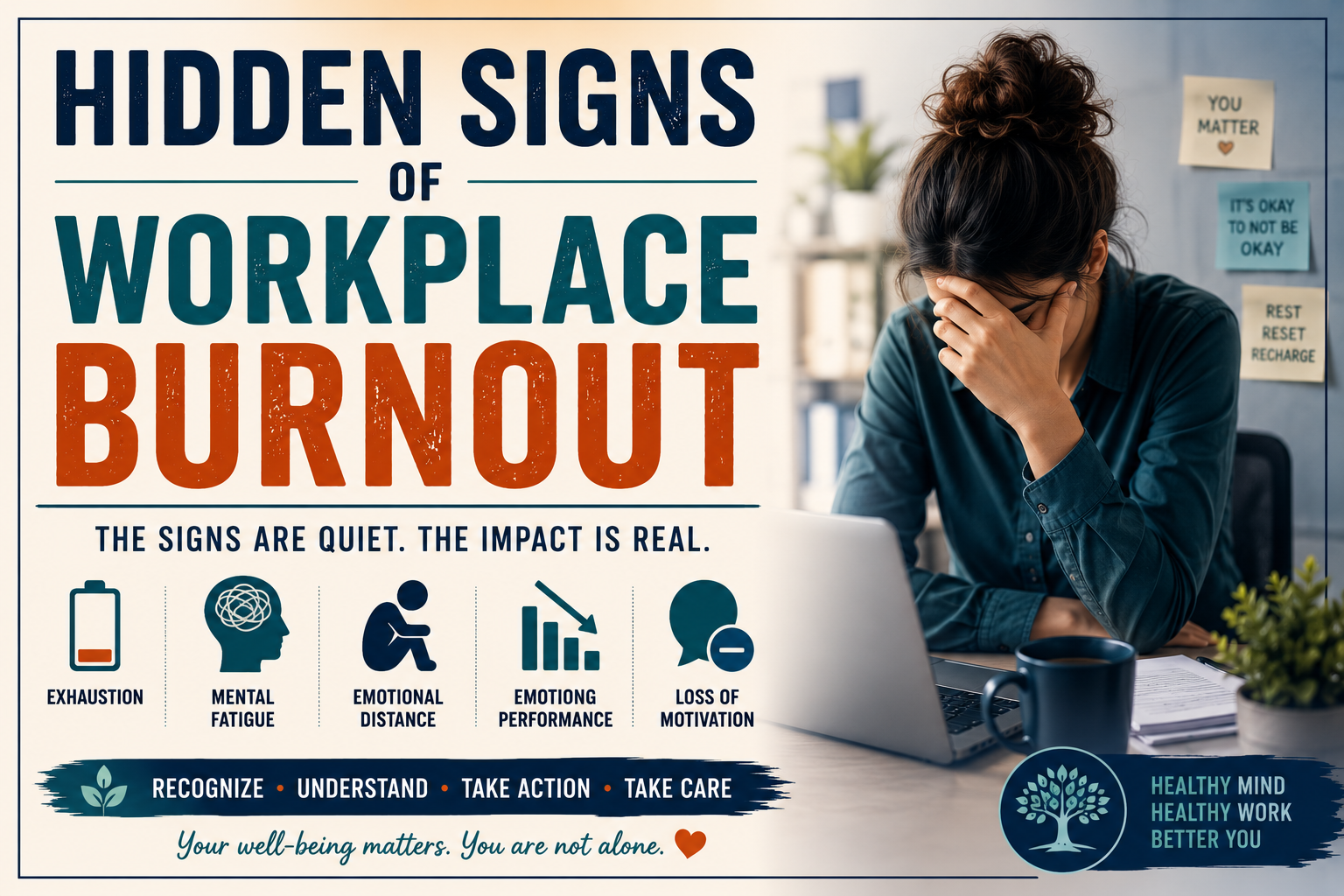
Workplace burnout has become an increasingly common concern across many professions as employees face growing workloads, staffing shortages, constant connectivity, and prolonged job-related stress. Burnout is more than simply feeling tired after a demanding day—it is a state of physical, emotional, and mental exhaustion that develops when chronic workplace stress is not successfully managed. While some symptoms are obvious, many of the earliest warning signs are subtle and easily overlooked. Persistent fatigue, declining motivation, irritability, difficulty concentrating, emotional detachment, and reduced job satisfaction may gradually appear long before an individual realizes they are experiencing burnout. Left unrecognized, burnout can negatively affect physical health, mental well-being, workplace performance, relationships, and overall quality of life. Understanding the hidden signs of workplace burnout is an important step toward early intervention, healthier coping strategies, and the creation of work environments that support employee well-being.
Hidden Signs of Workplace Burnout
Workplace burnout is a state of physical, emotional, and mental exhaustion caused by prolonged exposure to chronic work-related stress. It develops gradually over time and often goes unnoticed until it begins to affect job performance, relationships, and overall health. Burnout is not simply feeling tired after a busy week—it is a recognized occupational phenomenon characterized by emotional exhaustion, increased mental distance or negativity toward work, and reduced professional effectiveness. Recognizing the hidden signs early allows individuals and organizations to intervene before burnout leads to more serious physical or psychological consequences.
What Causes Workplace Burnout?
Burnout usually results from a combination of ongoing workplace stressors rather than a single event. Common contributing factors include:
- Heavy workloads and unrealistic deadlines
- Long work hours with inadequate rest
- Lack of control over job responsibilities
- Poor work-life balance
- Insufficient staffing
- Limited recognition or appreciation
- Role confusion or conflicting expectations
- Poor leadership or workplace culture
- Frequent exposure to emotionally demanding situations
- Moral distress, particularly in healthcare, emergency services, and caregiving professions
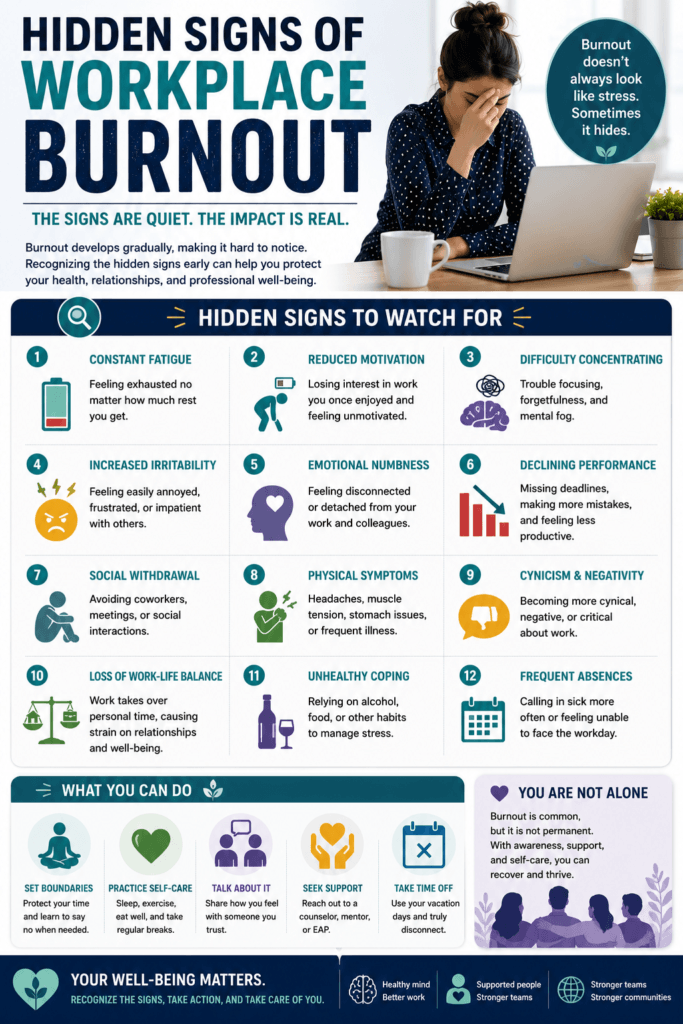
Hidden Signs of Workplace Burnout
1. Constant Fatigue That Doesn’t Improve with Rest
One of the earliest signs of burnout is persistent exhaustion. Individuals may feel physically and mentally drained even after a full night’s sleep, a weekend off, or a vacation. They often wake up feeling tired before the workday begins.
2. Reduced Motivation
People experiencing burnout may lose enthusiasm for work they once enjoyed. Tasks begin to feel overwhelming, and motivation declines despite previously high levels of dedication.
3. Difficulty Concentrating
Burnout often affects cognitive functioning, making it harder to focus, solve problems, remember details, or make decisions. Individuals may notice increased forgetfulness or decreased productivity.
4. Increased Irritability
Small frustrations may trigger unusually strong emotional reactions. Burnout can lead to impatience, anger, frustration, or emotional outbursts toward coworkers, family members, or clients.
5. Emotional Numbness
Instead of feeling stressed, some individuals become emotionally detached. They may stop caring about work outcomes, feel disconnected from coworkers, or lose empathy toward patients, customers, or clients.
6. Declining Job Performance
Burnout can lead to:
- Missed deadlines
- Reduced productivity
- Increased mistakes
- Difficulty completing routine tasks
- Loss of creativity and problem-solving abilities
Performance often declines gradually, making it difficult to recognize the connection to burnout.
7. Social Withdrawal
Individuals may begin avoiding coworkers, meetings, social activities, or workplace conversations. They may isolate themselves both at work and at home.
8. Physical Symptoms
Burnout commonly produces physical complaints, including:
- Frequent headaches
- Muscle tension
- Digestive problems
- Sleep disturbances
- Fatigue
- Increased susceptibility to infections
- Elevated blood pressure
These symptoms may occur even when no other medical condition is present.
9. Cynicism and Negativity
A person who was once optimistic may become increasingly cynical about work, coworkers, leadership, or the organization’s mission. Negative thinking often replaces previous enthusiasm and engagement.
10. Loss of Work-Life Balance
Burnout may cause individuals to:
- Work excessive overtime
- Skip breaks or vacations
- Continue thinking about work during personal time
- Neglect hobbies, exercise, and relationships
Over time, personal well-being suffers.
11. Increased Use of Alcohol or Other Substances
Some individuals cope with chronic stress by increasing their use of alcohol, nicotine, prescription medications, or other substances. While these behaviors may temporarily reduce stress, they can worsen burnout and increase the risk of developing a substance use disorder.
12. Frequent Absenteeism or Presenteeism
Burnout may lead to:
- Calling in sick more often
- Arriving late
- Leaving early
- Coming to work while physically or emotionally unwell but functioning below normal capacity (presenteeism)
Both absenteeism and presenteeism can negatively affect workplace performance.
Who Is at Higher Risk?
Certain occupations carry a higher risk of burnout, including:
- Healthcare professionals
- Addiction counselors
- Mental health clinicians
- Nurses
- Physicians
- Physician assistants
- First responders
- Teachers
- Social workers
- Caregivers
- Law enforcement officers
Individuals working in emotionally demanding environments or facing chronic staffing shortages are particularly vulnerable.
Preventing Workplace Burnout
Effective burnout prevention includes both individual and organizational strategies:
Individual Strategies
- Establish healthy work-life boundaries.
- Take regular breaks throughout the workday.
- Prioritize adequate sleep and physical activity.
- Practice stress-management techniques such as mindfulness or deep breathing.
- Maintain supportive relationships.
- Seek counseling or employee assistance programs when needed.
- Use vacation time and disconnect from work during personal time.
Organizational Strategies
- Ensure appropriate staffing levels.
- Promote supportive leadership.
- Recognize employee accomplishments.
- Encourage flexible scheduling when possible.
- Reduce unnecessary administrative burdens.
- Foster a culture that supports mental health.
- Provide access to wellness programs and behavioral health services.
When to Seek Professional Help
Individuals should seek professional support if burnout begins to interfere with daily functioning, relationships, physical health, or mental well-being. Warning signs that warrant evaluation include persistent depression, severe anxiety, panic attacks, chronic insomnia, increasing substance use, or thoughts of self-harm. Early intervention by a healthcare provider or mental health professional can help prevent more serious complications.
Conclusion
Workplace burnout often develops gradually, making its earliest signs easy to overlook. Persistent fatigue, reduced motivation, irritability, emotional detachment, declining performance, physical symptoms, and increased reliance on unhealthy coping strategies are all potential warning signs. Recognizing these hidden indicators early allows individuals, employers, and healthcare professionals to take proactive steps to reduce stress, improve workplace well-being, and prevent long-term physical and mental health consequences. A healthy workplace supports not only productivity but also the overall well-being and resilience of its workforce.
Self-Management Strategies to Understand Hidden Signs of Workplace Burnout
Workplace burnout often develops gradually, making it difficult to recognize until it significantly affects physical health, emotional well-being, job performance, and personal relationships. Learning to identify early warning signs and practicing effective self-management strategies can help prevent burnout from progressing. While employers play an important role in creating healthy work environments, individuals can also take proactive steps to protect their mental and physical health.
1. Learn to Recognize the Early Warning Signs
Become familiar with the symptoms of burnout, including persistent fatigue, loss of motivation, irritability, difficulty concentrating, emotional detachment, declining job performance, sleep disturbances, and increased stress. Recognizing these signs early allows you to take action before burnout becomes more severe.
2. Monitor Your Stress Levels
Regularly check in with yourself by asking questions such as:
- Am I constantly feeling exhausted?
- Do I enjoy my work less than I used to?
- Am I becoming more irritable or impatient?
- Is work affecting my physical or emotional health?
Keeping a journal or using a mood-tracking app can help identify patterns and triggers over time.
3. Establish Healthy Work-Life Boundaries
Set clear boundaries between work and personal life. Avoid checking work emails or completing job tasks during personal time whenever possible. Setting aside time for family, hobbies, exercise, and relaxation helps your mind and body recover.
4. Prioritize Quality Sleep
Aim for 7–9 hours of sleep each night. Maintain a consistent sleep schedule, create a relaxing bedtime routine, and limit caffeine, alcohol, and screen time before bed. Restful sleep improves concentration, emotional regulation, and resilience to stress.
5. Practice Daily Stress-Management Techniques
Incorporate activities that help reduce stress, such as:
- Deep breathing exercises
- Mindfulness meditation
- Prayer or spiritual reflection
- Yoga or stretching
- Journaling
- Listening to music
- Spending time in nature
Even 10–15 minutes of daily relaxation can improve overall well-being.
6. Maintain Your Physical Health
Regular exercise, balanced nutrition, adequate hydration, and routine medical care support both physical and mental health. Physical activity releases endorphins, improves mood, and helps reduce the effects of chronic stress.
7. Take Regular Breaks During the Workday
Short breaks throughout the day improve focus and productivity. Step away from your workspace, stretch, take a brief walk, or practice deep breathing. Scheduled breaks help prevent mental fatigue and improve concentration.
8. Build a Strong Support System
Maintain connections with family members, friends, coworkers, mentors, or support groups. Talking with trusted individuals about work-related stress can provide emotional support, practical advice, and a healthier perspective.
9. Develop Healthy Coping Skills
Avoid relying on alcohol, nicotine, excessive caffeine, emotional eating, or other unhealthy coping mechanisms to manage stress. Instead, choose activities that promote long-term wellness, such as exercise, creative hobbies, reading, or spending time with loved ones.
10. Learn to Prioritize and Delegate
Organize tasks based on urgency and importance. Break large projects into manageable steps and delegate responsibilities when appropriate. Trying to do everything alone can contribute to burnout.
11. Use Vacation and Personal Time
Take earned vacation days, mental health days, or personal leave when needed. Time away from work allows your mind and body to recover, helping reduce chronic stress and improve productivity upon returning.
12. Seek Professional Help When Needed
If burnout leads to persistent anxiety, depression, chronic insomnia, panic attacks, increasing substance use, or difficulty functioning at work or home, seek help from a healthcare provider or mental health professional. Early intervention can prevent more serious physical and emotional health problems.
Conclusion
Preventing workplace burnout begins with recognizing its hidden signs and taking proactive steps to protect your well-being. Monitoring stress levels, maintaining healthy boundaries, prioritizing sleep, practicing stress-management techniques, staying physically active, building supportive relationships, and seeking professional help when needed can reduce the risk of burnout and improve overall quality of life. Self-management is not about eliminating all workplace stress—it is about developing healthy habits that promote resilience, balance, and long-term personal and professional success.
Family Support Strategies to Understand Hidden Signs of Workplace Burnout
Family members are often the first to notice subtle changes that may indicate workplace burnout. Because burnout develops gradually, individuals experiencing it may not recognize how much chronic work-related stress is affecting their physical health, emotional well-being, and relationships. A supportive and understanding family can help identify early warning signs, encourage healthy coping strategies, and promote recovery before burnout becomes more serious.
1. Learn About Workplace Burnout
Educate yourself about the causes, symptoms, and effects of burnout. Understanding that burnout is the result of prolonged workplace stress—not laziness or a lack of motivation—helps families respond with empathy rather than criticism.
2. Recognize Early Warning Signs
Watch for gradual changes in your loved one’s behavior, such as:
- Constant fatigue despite adequate sleep
- Increased irritability or mood swings
- Loss of interest in activities they once enjoyed
- Difficulty concentrating or forgetfulness
- Frequent headaches or other physical complaints
- Emotional withdrawal from family or friends
- Increased negativity about work
- Changes in appetite or sleep patterns
Recognizing these signs early allows families to encourage support before burnout worsens.
3. Encourage Open Communication
Create a safe, judgment-free environment where your loved one feels comfortable discussing work-related stress. Listen actively without interrupting or immediately offering solutions. Sometimes simply feeling heard can reduce emotional distress.
4. Support a Healthy Work-Life Balance
Encourage your loved one to disconnect from work in the evenings, on weekends, and during vacations whenever possible. Respect their personal time and help create opportunities for rest, recreation, and meaningful family activities.
5. Promote Healthy Lifestyle Habits
Support healthy routines by:
- Preparing balanced meals together
- Encouraging regular exercise
- Maintaining consistent sleep schedules
- Planning outdoor activities
- Reducing unnecessary stress at home
Healthy habits improve both physical and emotional resilience.
6. Encourage Regular Breaks and Time Off
Remind your loved one that taking breaks, using vacation time, and scheduling days off are important for maintaining long-term health and productivity. Rest is an essential part of preventing burnout, not a sign of weakness.
7. Help Reduce Household Stress
When possible, share household responsibilities such as cooking, cleaning, childcare, or errands during especially stressful work periods. Reducing pressures at home can provide valuable emotional relief.
8. Encourage Healthy Coping Strategies
Support activities that reduce stress, including:
- Walking together
- Practicing mindfulness or meditation
- Attending religious or spiritual services is meaningful
- Enjoying hobbies
- Spending time with family and friends
- Limiting excessive screen time outside of work
Avoid encouraging unhealthy coping behaviors such as excessive alcohol use or emotional eating.
9. Respect Emotional Boundaries
Understand that your loved one may need quiet time to decompress after a demanding workday. Allow space for recovery while continuing to offer encouragement and emotional support.
10. Watch for Signs That Professional Help Is Needed
If burnout is causing persistent depression, severe anxiety, panic attacks, chronic insomnia, increasing substance use, or significant difficulty functioning at work or home, gently encourage evaluation by a healthcare provider or mental health professional. Offer to help schedule appointments or provide transportation if needed.
11. Celebrate Progress and Recovery
Recognize positive changes, such as setting healthier boundaries, taking time off, improving sleep habits, or practicing stress-management techniques. Positive reinforcement can motivate continued self-care and recovery.
12. Take Care of Your Own Well-Being
Supporting someone experiencing burnout can also be emotionally challenging. Family members should maintain their own physical and mental health by practicing self-care, seeking support when needed, maintaining healthy boundaries, and making time for activities they enjoy. A healthy family is better equipped to support one another during stressful periods.
Conclusion
Families play an essential role in recognizing the hidden signs of workplace burnout and providing compassionate support throughout the recovery process. By learning about burnout, encouraging open communication, promoting healthy routines, sharing responsibilities, supporting work-life balance, and recognizing when professional help is needed, families can help reduce the impact of chronic workplace stress. A caring and supportive home environment strengthens resilience, improves emotional well-being, and helps individuals regain balance, maintain healthy relationships, and continue thriving both personally and professionally.
Community Resource Strategies to Understand Hidden Signs of Workplace Burnout
Workplace burnout is not only an individual concern but also a community and public health issue that affects employees, families, employers, and healthcare systems. Chronic workplace stress can contribute to physical illness, anxiety, depression, substance use disorders, decreased productivity, and reduced quality of life. Communities can help prevent and address burnout by expanding access to mental health services, promoting workplace wellness, providing educational resources, and fostering supportive environments in which individuals feel comfortable seeking help. The following community resource strategies can improve awareness of, early recognition of, and management of workplace burnout.
1. Utilize Community Mental Health Services
Community mental health centers, counseling agencies, psychologists, licensed professional counselors, and social workers provide assessment, counseling, stress management, and treatment for anxiety, depression, and burnout. Early access to these services can prevent burnout from worsening.
2. Participate in Employee Assistance Programs (EAPs)
Many employers offer Employee Assistance Programs that provide confidential counseling, stress management resources, financial counseling, legal assistance, and referrals to behavioral health professionals. Employees should be encouraged to use these services early rather than waiting until symptoms become overwhelming.
3. Attend Community Wellness Programs
Community recreation centers, hospitals, nonprofit organizations, and local health departments often offer wellness classes such as yoga, meditation, mindfulness training, stress reduction workshops, nutrition education, and fitness programs. These activities help build resilience and improve overall well-being.
4. Join Support Groups
Support groups for stress management, caregiver fatigue, healthcare professionals, first responders, educators, or individuals experiencing workplace challenges provide opportunities to share experiences, learn coping strategies, and reduce feelings of isolation.
5. Take Advantage of Educational Workshops
Many community organizations, colleges, healthcare systems, and nonprofit agencies offer seminars on recognizing burnout, maintaining work-life balance, building resilience, and developing healthy coping skills. Continuing education empowers individuals to recognize early warning signs before burnout progresses.
6. Utilize Telehealth Behavioral Health Services
Virtual counseling and telehealth mental health services increase access to care, especially for individuals living in rural or underserved areas or those with demanding work schedules. Telehealth provides flexible options for receiving professional support without significant travel or time away from work.
7. Engage in Faith-Based or Spiritual Communities
For individuals who find strength in spiritual practices, faith communities can provide emotional support, counseling, mentorship, volunteer opportunities, and a sense of belonging. These connections may reduce stress and promote resilience during challenging times.
8. Participate in Community Volunteer Activities
Volunteering with nonprofit organizations, community events, or local service projects can improve social connectedness, increase a sense of purpose, and provide positive experiences outside of work. Meaningful community involvement can help restore emotional balance.
9. Access Occupational Health Services
Many healthcare systems and large employers offer occupational health programs that address workplace stress, ergonomics, injury prevention, and employee wellness. These programs may identify risk factors for burnout and recommend strategies to improve workplace health.
10. Advocate for Healthy Workplace Policies
Community leaders, professional organizations, labor groups, and advocacy organizations can encourage employers to implement policies that support employee well-being, including manageable workloads, flexible scheduling, adequate staffing, mental health resources, and paid time off. Healthy workplace policies benefit both employees and organizations.
11. Promote Public Awareness Campaigns
Community education campaigns can increase awareness of workplace burnout by emphasizing that chronic stress is a legitimate health concern rather than a personal weakness. Public education helps reduce stigma and encourages individuals to seek support early.
12. Build Strong Social Connections
Community clubs, sports leagues, hobby groups, neighborhood organizations, and social activities provide opportunities to develop supportive relationships outside of work. Positive social connections improve emotional resilience and reduce the isolation that often accompanies burnout.
Conclusion
Community resources are essential for preventing, recognizing, and managing workplace burnout. Access to mental health services, Employee Assistance Programs, wellness initiatives, educational workshops, telehealth, support groups, faith communities, and healthy workplace policies creates a network of support that promotes resilience and emotional well-being. By working together, healthcare providers, employers, community organizations, and local leaders can reduce the impact of chronic workplace stress, encourage early intervention, and foster healthier, more productive communities where individuals can thrive both professionally and personally.
Frequently Asked Questions
Here are some common questions:
1. What is workplace burnout?
Answer:
Workplace burnout is a state of physical, emotional, and mental exhaustion caused by prolonged or unmanaged work-related stress. It is characterized by emotional exhaustion, increased mental distance or negativity toward work, and reduced professional effectiveness. Burnout develops gradually and can affect overall health, relationships, and job performance.
2. What are the hidden signs of workplace burnout?
Answer:
Early signs of burnout are often subtle and may include:
- Constant fatigue
- Difficulty concentrating
- Reduced motivation
- Increased irritability
- Emotional numbness
- Declining job performance
- Social withdrawal
- Frequent headaches or muscle tension
- Sleep disturbances
- Loss of work-life balance
- Increased absenteeism
- Unhealthy coping behaviors
3. How is burnout different from everyday stress?
Answer:
Stress is usually temporary and often improves once a stressful situation resolves. Burnout develops after prolonged, unmanaged stress and involves ongoing emotional exhaustion, detachment from work, and a persistent feeling of being overwhelmed or ineffective, even after rest.
4. What causes workplace burnout?
Answer:
Burnout can result from several workplace factors, including:
- Heavy workloads
- Long work hours
- Staffing shortages
- Unrealistic deadlines
- Lack of control over work
- Poor work-life balance
- Limited recognition or appreciation
- Poor leadership
- Emotionally demanding work
- Organizational changes or uncertainty
5. Who is most at risk for workplace burnout?
Answer:
Burnout can affect anyone, but it is more common among:
- Healthcare professionals
- Addiction counselors
- Mental health providers
- Nurses
- Physicians
- Physician assistants
- Teachers
- First responders
- Social workers
- Caregivers
- Individuals in high-stress or emotionally demanding jobs
6. Can burnout affect physical health?
Answer:
Yes. Chronic burnout may contribute to:
- Headaches
- Muscle tension
- Digestive problems
- High blood pressure
- Sleep disturbances
- Fatigue
- Weakened immune function
- Increased risk of cardiovascular disease
7. Can burnout affect mental health?
Answer:
Yes. Burnout can increase the risk of anxiety, depression, emotional exhaustion, reduced self-esteem, difficulty concentrating, and feelings of hopelessness. It may also worsen existing mental health conditions if left untreated.
8. Can burnout increase the risk of substance use?
Answer:
Yes. Some individuals may cope with chronic workplace stress by increasing their use of alcohol, nicotine, prescription medications, or other substances. While these may provide temporary relief, they do not address the underlying problem and can increase the risk of developing a substance use disorder.
9. How can I tell if I am experiencing burnout?
Answer:
You may be experiencing burnout if you notice persistent exhaustion, decreased motivation, frequent irritability, emotional detachment, declining work performance, difficulty concentrating, or a loss of enjoyment in your work that persists for weeks or months despite adequate rest.
10. Can burnout affect relationships?
Answer:
Yes. Burnout often leads to emotional withdrawal, impatience, mood changes, and reduced interest in spending time with family or friends. These changes can strain personal and professional relationships if not addressed.
11. What can I do to prevent burnout?
Answer:
Helpful strategies include:
- Setting healthy work-life boundaries
- Taking regular breaks
- Prioritizing sleep
- Exercising regularly
- Eating a balanced diet
- Practicing mindfulness or relaxation techniques
- Taking vacation time
- Maintaining supportive relationships
- Seeking help early when stress becomes overwhelming
12. How can employers help reduce burnout?
Answer:
Employers can support employee well-being by:
- Maintaining appropriate staffing levels
- Encouraging work-life balance
- Providing flexible scheduling when possible
- Recognizing employee achievements
- Reducing unnecessary administrative tasks
- Offering wellness programs and Employee Assistance Programs (EAPs)
- Promoting a supportive workplace culture
13. When should someone seek professional help?
Answer:
Professional help is recommended if burnout causes persistent anxiety, depression, chronic insomnia, panic attacks, increasing substance use, difficulty functioning at work or home, or thoughts of self-harm. Early treatment can improve recovery and prevent more serious health problems.
14. Can burnout be reversed?
Answer:
Yes. With early recognition, healthy lifestyle changes, workplace adjustments, stress management, supportive relationships, and professional care when needed, most people can recover from burnout and regain emotional and physical well-being.
15. What role do families play in preventing burnout?
Answer:
Families can help by recognizing early warning signs, encouraging open communication, supporting healthy routines, promoting work-life balance, sharing household responsibilities during stressful periods, and encouraging professional help when needed.
16. What community resources are available for burnout?
Answer:
Helpful resources include:
- Mental health counseling
- Employee Assistance Programs (EAPs)
- Community wellness programs
- Stress management workshops
- Support groups
- Telehealth counseling services
- Occupational health programs
- Faith-based support
- Community recreation and fitness programs
17. Can taking time off from work help?
Answer:
Yes. Vacation time, personal days, and regular breaks allow the mind and body to recover from chronic stress. Time away from work is an important part of preventing and recovering from burnout, especially when combined with healthy coping strategies and supportive workplace practices.
18. What is the most important message about workplace burnout?
Answer:
Workplace burnout is a real and treatable response to prolonged, unmanaged stress—not a personal weakness or failure. Recognizing the early signs, seeking support, maintaining healthy boundaries, and prioritizing self-care can protect your mental and physical health. With the right combination of personal strategies, family support, workplace improvements, and community resources, individuals can recover from burnout and build a healthier, more balanced, and fulfilling professional life.
Conclusion
Recognizing the hidden signs of workplace burnout is essential for protecting both individual health and organizational success. Early symptoms such as chronic exhaustion, decreased motivation, emotional withdrawal, difficulty concentrating, increased irritability, and physical complaints should never be ignored. Addressing burnout requires a combination of personal self-care, supportive family relationships, healthy workplace practices, and access to community and mental health resources. Employers can help by promoting manageable workloads, encouraging work-life balance, providing wellness programs, and fostering a culture that encourages rather than stigmatizes seeking support. Likewise, individuals who prioritize healthy boundaries, stress management, adequate rest, and professional support when needed are better equipped to maintain resilience and long-term well-being. By recognizing burnout early and responding proactively, employees, families, healthcare providers, and organizations can work together to improve mental health, strengthen productivity, and create healthier, more sustainable workplaces.
Video: Skipping Breaks Won’t Save Your Career #workstress #burnoutrecovery