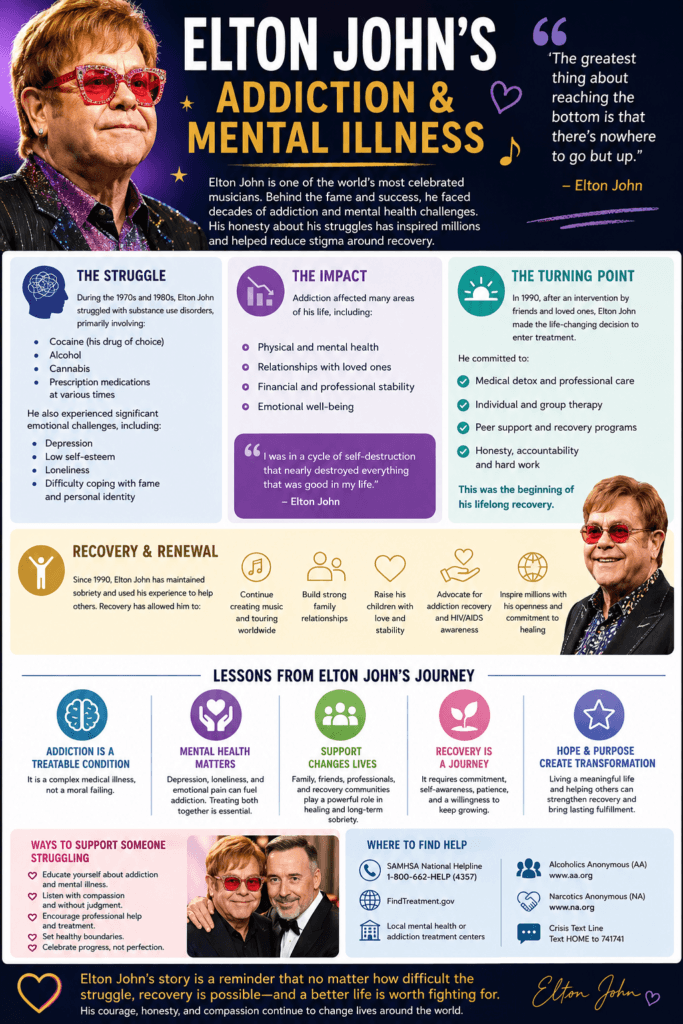
Elton John’s life story illustrates that addiction and mental health challenges can affect anyone, regardless of fame, talent, or financial success. As one of the most influential musicians in modern history, he achieved extraordinary professional accomplishments while privately struggling with substance use disorder, depression, low self-esteem, and the emotional pressures associated with fame and personal identity. His openness about these experiences has helped reduce stigma surrounding addiction and mental illness, encouraging honest conversations about seeking treatment and recovery. Elton John’s journey demonstrates that addiction is a complex medical condition influenced by biological, psychological, and social factors, and that long-term recovery is possible through professional treatment, strong support systems, and a commitment to personal growth.
Elton John’s Addiction and Mental Illness
Elton John is one of the world’s most celebrated musicians, but he has also been remarkably open about his decades-long struggle with substance use disorders, compulsive behaviors, and mental health challenges. His willingness to discuss these experiences has helped reduce stigma surrounding addiction and encouraged many people to seek treatment. Today, Elton John is widely recognized as an advocate for recovery and mental health awareness, demonstrating that long-term recovery is possible with treatment, support, and sustained commitment.
Early Career and the Development of Addiction
Elton John’s career skyrocketed during the 1970s, bringing extraordinary success, wealth, and worldwide fame. While these achievements brought opportunities, they also exposed him to intense pressure, constant public scrutiny, demanding touring schedules, and a nightlife culture where alcohol and drugs were readily available.
Initially, alcohol and recreational drug use became part of his social environment. Over time, however, his substance use escalated into addiction, particularly involving:
- Cocaine
- Alcohol
- Cannabis
- Prescription medications at various points
Among these, cocaine became his most destructive addiction. Elton John has described periods in which cocaine use consumed much of his daily life, leading to impaired judgment, deteriorating health, and damaged relationships.
Mental Health Challenges
Although Elton John has not publicly described himself as having every specific psychiatric diagnosis often speculated about in the media, he has openly discussed experiencing significant mental health struggles, including:
- Depression
- Low self-esteem despite worldwide success
- Loneliness
- Emotional distress
- Difficulty coping with fame and personal identity
He has also spoken candidly about the emotional challenges surrounding his sexuality during a time when acceptance was far less common, describing how secrecy, shame, and internal conflict contributed to emotional suffering.
His story illustrates an important concept in addiction medicine: substance use disorders and mental health conditions frequently occur together. Emotional distress may increase the risk of substance misuse, while chronic drug use can worsen depression, anxiety, and emotional instability.
The Cycle of Addiction
Like many individuals with substance use disorders, Elton John’s addiction followed a reinforcing cycle:
- Emotional stress or loneliness
- Drug or alcohol use for temporary relief
- Short-lived feelings of pleasure from dopamine release
- Increasing tolerance requiring greater amounts
- Withdrawal symptoms and emotional crashes
- Continued use despite serious personal consequences
Over time, addiction affected nearly every area of his life, including his physical health, relationships, professional responsibilities, and emotional well-being.
Turning Point
A major turning point occurred in 1990 when friends and loved ones confronted Elton John about his addiction. Rather than continuing to hide his struggles, he entered residential treatment.
Recovery required:
- Medical and psychological treatment
- Individual counseling
- Group therapy
- Participation in recovery communities
- Long-term lifestyle changes
- Honest accountability
Elton John has often credited the support of friends, healthcare professionals, and recovery peers as essential to maintaining sobriety.
Long-Term Recovery
Since entering recovery in 1990, Elton John has maintained long-term sobriety and frequently celebrates his recovery anniversaries publicly.
Recovery has enabled him to:
- Continue producing music
- Maintain successful international tours
- Build healthy family relationships
- Raise children with his husband
- Mentor others in recovery
- Advocate for addiction treatment and HIV/AIDS awareness through the Elton John AIDS Foundation
His openness has helped normalize conversations about addiction as a treatable medical condition rather than a moral failing.
Lessons from Elton John’s Story
His experience highlights several important principles:
- Addiction can affect anyone, regardless of fame, wealth, or success.
- Mental health and substance use disorders often influence one another and should be treated together.
- Early intervention improves the chances of recovery.
- Recovery is an ongoing process that requires commitment and support.
- Family, friends, healthcare professionals, and peer support all play valuable roles in long-term sobriety.
- Long-term recovery can lead to improved health, meaningful relationships, and renewed purpose.
Key Takeaway
Elton John’s life demonstrates that addiction is a chronic but treatable medical condition. Despite years of severe cocaine and alcohol misuse and significant emotional struggles, he sought professional treatment, embraced recovery, and has maintained decades of sobriety. His story serves as a powerful example that recovery is achievable with evidence-based care, social support, and perseverance, while also emphasizing the importance of addressing both substance use disorders and underlying mental health concerns together.
Self-Management Strategies to Understand Elton John’s Addiction and Mental Illness
Elton John’s recovery journey illustrates that overcoming addiction and managing mental health require lifelong commitment, self-awareness, and healthy coping strategies. While every person’s experience is unique, the evidence-based approaches reflected in his story can help individuals better understand how to achieve and maintain recovery. Self-management involves taking an active role in recognizing triggers, building resilience, and maintaining physical and emotional well-being.
1. Recognize the Connection Between Mental Health and Addiction
Understanding that mental health conditions and substance use disorders often occur together is an important first step. Depression, anxiety, loneliness, trauma, and chronic stress can increase the risk of developing addiction, while substance misuse can worsen emotional symptoms.
Strategies:
- Learn about co-occurring mental health and substance use disorders.
- Identify emotional patterns that may increase cravings.
- Seek professional evaluation if symptoms of depression or anxiety persist.
- Accept that treating both conditions together often leads to better outcomes.
2. Identify Personal Triggers
Many individuals, including celebrities such as Elton John, have described using substances to cope with emotional pain, stress, or difficult life circumstances. Recognizing personal triggers helps prevent relapse.
Strategies:
- Keep a journal to identify situations that trigger cravings.
- Recognize emotional triggers such as loneliness, anger, sadness, or boredom.
- Avoid environments where substance use is common.
- Develop healthy alternatives before stressful situations occur.
3. Develop Healthy Coping Skills
Recovery involves replacing unhealthy coping behaviors with healthier methods for managing stress and emotions.
Strategies:
- Practice mindfulness or meditation.
- Exercise regularly.
- Engage in hobbies such as music, art, writing, or gardening.
- Use deep breathing and relaxation techniques during stressful moments.
- Learn problem-solving and emotional regulation skills through therapy.
4. Prioritize Mental Health Treatment
Mental health recovery is an ongoing process that requires consistent attention. Professional care can help individuals manage symptoms while reducing the risk of substance use.
Strategies:
- Attend counseling or psychotherapy regularly.
- Take prescribed medications as directed.
- Maintain regular appointments with healthcare providers.
- Report new or worsening symptoms promptly.
- Develop a personalized mental health care plan.
5. Build a Strong Support System
Recovery is often strengthened through supportive relationships. Elton John has credited friends, family, and the recovery community with helping him maintain long-term sobriety.
Strategies:
- Stay connected with trusted family and friends.
- Participate in peer support groups.
- Find a recovery mentor or sponsor if appropriate.
- Avoid isolation during periods of emotional distress.
- Ask for help before problems become overwhelming.
6. Establish Healthy Daily Routines
Consistent routines improve both physical and emotional health while reducing opportunities for relapse.
Strategies:
- Maintain regular sleep schedules.
- Eat balanced, nutritious meals.
- Stay physically active.
- Schedule time for relaxation and recreation.
- Create structured daily goals.
7. Practice Self-Awareness and Honesty
Recovery requires ongoing self-reflection. Honest evaluation helps individuals recognize warning signs before they become crises.
Strategies:
- Monitor changes in mood and behavior.
- Reflect on successes and setbacks without self-judgment.
- Accept constructive feedback from trusted individuals.
- Recognize when professional help is needed.
8. Learn Relapse Prevention Skills
Relapse is not inevitable, but preparing for high-risk situations can significantly reduce the likelihood of returning to substance use.
Strategies:
- Create a written relapse prevention plan.
- Identify early warning signs.
- Develop emergency coping strategies.
- Contact a support person immediately if cravings increase.
- Continue participating in recovery activities even during periods of stability.
9. Develop Healthy Self-Esteem
Despite extraordinary success, Elton John has spoken openly about struggling with self-worth. Recovery often includes learning to value oneself beyond achievements or external validation.
Strategies:
- Practice self-compassion.
- Set realistic personal goals.
- Celebrate progress rather than perfection.
- Challenge negative self-talk.
- Focus on personal strengths and growth.
10. Find Meaning and Purpose
Many people in long-term recovery discover that helping others, pursuing meaningful goals, and contributing to their communities strengthen their own recovery.
Strategies:
- Volunteer in community organizations.
- Support others in recovery when appropriate.
- Develop meaningful personal or professional goals.
- Engage in creative or spiritual activities that provide a sense of purpose.
- Continue lifelong learning and personal development.
Key Lessons from Elton John’s Recovery
- Addiction and mental health conditions can affect anyone, regardless of fame or success.
- Recovery is a lifelong process that requires commitment, professional treatment, and ongoing support.
- Healthy coping skills can replace substance use as a way of managing stress and emotional pain.
- Building strong relationships and seeking help early improve long-term outcomes.
- Treating mental health and substance use disorders together is often the most effective approach.
- Recovery allows individuals to rebuild relationships, improve health, and live meaningful, productive lives.
Conclusion
Elton John’s journey demonstrates that recovery from addiction and effective management of mental health are possible through self-awareness, evidence-based treatment, supportive relationships, and consistent self-care. His decades of sobriety highlight that lasting recovery is not achieved through willpower alone but through continuous personal growth, healthy coping strategies, and a willingness to seek help when needed. By applying these self-management strategies, individuals can better understand the complex relationship between addiction and mental health while building resilience and supporting long-term wellness.
Family Support Strategies to Understand Elton John’s Addiction and Mental Illness
Elton John’s recovery journey demonstrates the powerful role that family, close friends, and supportive relationships can play in overcoming addiction and managing mental health challenges. Although every family’s experience is different, research consistently shows that informed, compassionate, and healthy family involvement can improve treatment engagement, reduce relapse risk, and promote long-term recovery. Family support is most effective when it encourages recovery while maintaining healthy boundaries and avoiding behaviors that unintentionally enable substance use.
1. Learn About Addiction and Mental Illness
Education helps family members understand that addiction is a chronic medical condition influenced by biological, psychological, social, and environmental factors. Likewise, mental health conditions such as depression and anxiety are treatable illnesses rather than personal weaknesses.
Strategies:
- Learn about substance use disorders and co-occurring mental health conditions.
- Understand how addiction changes brain function and decision-making.
- Recognize that recovery is often a long-term process with possible setbacks.
- Stay informed about evidence-based treatment options.
2. Encourage Professional Treatment
Family members can play an important role by encouraging their loved one to seek professional care without using shame or judgment. Elton John’s decision to enter treatment marked a turning point in his recovery, highlighting the importance of timely intervention.
Strategies:
- Encourage evaluation by qualified healthcare professionals.
- Support participation in counseling, medication management when appropriate, and recovery programs.
- Help with transportation or scheduling appointments if needed.
- Reinforce the importance of continuing treatment after initial recovery.
3. Practice Compassionate Communication
Open, respectful communication helps build trust while reducing conflict. Individuals experiencing addiction or mental illness are more likely to seek help when they feel heard and supported.
Strategies:
- Listen without interrupting or criticizing.
- Use calm, nonjudgmental language.
- Express concern using “I” statements rather than blame.
- Encourage honest conversations about emotions and recovery.
- Celebrate progress, even when improvements are gradual.
4. Set Healthy Boundaries
Supporting a loved one does not mean accepting harmful behaviors. Healthy boundaries protect both the individual in recovery and family members while promoting personal responsibility.
Strategies:
- Clearly communicate acceptable and unacceptable behaviors.
- Avoid providing money that could be used to purchase alcohol or drugs.
- Do not cover up or make excuses for harmful actions.
- Encourage accountability while remaining supportive.
- Follow through consistently with established boundaries.
5. Recognize Warning Signs of Relapse
Recovery often includes periods of vulnerability. Family members who understand early warning signs can encourage intervention before a full relapse occurs.
Strategies:
- Watch for sudden changes in mood or behavior.
- Notice increased isolation or withdrawal from supportive relationships.
- Be aware of renewed contact with high-risk environments or substance-using peers.
- Encourage immediate communication with treatment providers if concerns arise.
- Respond with concern rather than punishment.
6. Support Healthy Lifestyle Habits
Physical health and emotional well-being are closely connected. Families can encourage routines that strengthen recovery and improve mental health.
Strategies:
- Promote regular sleep and balanced nutrition.
- Encourage physical activity and recreation.
- Participate in healthy family activities.
- Reduce unnecessary stress within the home.
- Support hobbies and creative interests that provide positive outlets.
7. Participate in Family Therapy When Appropriate
Addiction affects the entire family system. Family therapy can improve communication, rebuild trust, and strengthen relationships during recovery.
Strategies:
- Attend counseling sessions together if recommended.
- Learn healthy conflict-resolution skills.
- Address unresolved family issues constructively.
- Develop shared recovery goals and expectations.
- Practice empathy while maintaining accountability.
8. Take Care of Your Own Mental Health
Family members often experience stress, anxiety, frustration, or caregiver fatigue. Maintaining personal well-being enables them to provide healthier, more sustainable support.
Strategies:
- Seek counseling or support groups if needed.
- Practice stress-management techniques.
- Maintain friendships and personal interests.
- Recognize signs of caregiver burnout.
- Ask for help when responsibilities become overwhelming.
9. Encourage Long-Term Recovery
Recovery does not end after treatment. Ongoing encouragement helps individuals maintain motivation and continue building healthier lives.
Strategies:
- Celebrate recovery milestones.
- Encourage participation in peer support groups.
- Support continued counseling and medical follow-up.
- Focus on long-term goals rather than past mistakes.
- Reinforce positive lifestyle changes.
10. Reduce Stigma Within the Family
Shame and stigma can discourage people from seeking treatment. Families that openly discuss addiction and mental health create an environment where healing is more likely.
Strategies:
- Speak respectfully about addiction and mental illness.
- Avoid labeling individuals by their illness.
- Encourage open conversations about emotional well-being.
- Promote hope by recognizing that recovery is possible.
- Share reliable educational resources with extended family members.
Lessons Families Can Learn from Elton John’s Recovery
- Addiction and mental illness can affect people regardless of fame, wealth, or success.
- Early intervention and professional treatment can significantly improve outcomes.
- Recovery is strengthened by supportive relationships, accountability, and healthy boundaries.
- Compassionate communication encourages trust and treatment engagement.
- Long-term recovery requires patience, consistency, and continued family support.
- Families should care for their own emotional health while supporting their loved one.
Conclusion
Elton John’s recovery journey highlights the essential role that family and trusted support networks can play in helping someone overcome addiction and manage mental health challenges. Through education, compassionate communication, healthy boundaries, encouragement of professional treatment, and ongoing emotional support, families can contribute to lasting recovery while also protecting their own well-being. By viewing addiction and mental illness as treatable health conditions rather than moral failings, families can foster hope, resilience, and healing for everyone involved.
Community Resource Strategies to Understand Elton John’s Addiction and Mental Illness
Elton John’s recovery journey demonstrates that addiction and mental health challenges are not overcome through individual effort alone. Communities play a vital role by providing access to healthcare, education, peer support, crisis services, and recovery resources. A strong community support system helps reduce stigma, promotes early intervention, and creates opportunities for individuals and families to achieve long-term recovery. Elton John’s advocacy for people living with addiction and mental illness, along with his philanthropic work, illustrates how community engagement can transform lives.
1. Improve Access to Integrated Treatment Services
Because addiction and mental health conditions frequently occur together, communities should offer integrated care that addresses both conditions simultaneously.
Strategies:
- Expand access to addiction medicine and mental health professionals.
- Develop clinics that provide coordinated treatment for co-occurring disorders.
- Increase availability of outpatient, intensive outpatient, and residential treatment programs.
- Improve access to telehealth services, especially in rural and underserved areas.
2. Promote Public Education and Awareness
Community education helps replace myths and stigma with accurate, evidence-based information about addiction and mental illness.
Strategies:
- Offer educational workshops in schools, workplaces, and community centers.
- Organize awareness campaigns about substance use disorders and mental health.
- Share stories of recovery to inspire hope and reduce discrimination.
- Provide educational materials through libraries, healthcare organizations, and community agencies.
3. Strengthen Peer Recovery Support Programs
Individuals often benefit from connecting with others who have lived experience in recovery. Peer support can improve engagement in treatment and provide encouragement during difficult periods.
Strategies:
- Expand peer recovery coaching services.
- Encourage participation in mutual-support groups such as Alcoholics Anonymous (AA), Narcotics Anonymous (NA), SMART Recovery, and other evidence-based recovery programs.
- Develop mentoring programs for individuals early in recovery.
- Create recovery-friendly community spaces where individuals can build healthy social connections.
4. Support Family Education Programs
Families frequently need guidance to understand addiction, mental illness, and effective ways to support recovery.
Strategies:
- Offer family education classes through hospitals and community organizations.
- Provide caregiver support groups.
- Teach healthy communication and boundary-setting skills.
- Connect families with counseling and community resources.
5. Expand Crisis Intervention Services
Timely intervention during mental health or substance use crises can prevent serious harm and improve long-term outcomes.
Strategies:
- Increase availability of mobile crisis response teams.
- Promote community crisis stabilization centers.
- Educate the public about emergency mental health resources.
- Train first responders in trauma-informed and behavioral health crisis intervention.
6. Encourage Workplace Mental Health Programs
Employers can play an important role in supporting individuals experiencing addiction or mental health challenges.
Strategies:
- Provide Employee Assistance Programs (EAPs).
- Offer confidential mental health screenings.
- Promote flexible access to counseling services.
- Develop workplace policies that encourage treatment rather than punishment whenever appropriate.
7. Increase School-Based Prevention Programs
Early education helps young people develop healthy coping skills before substance use problems begin.
Strategies:
- Teach emotional regulation and stress management.
- Provide school counselors and behavioral health services.
- Educate students about substance use prevention.
- Promote resilience-building and positive decision-making.
8. Reduce Stigma Through Community Leadership
Community leaders, healthcare professionals, educators, and public figures can help normalize conversations about addiction and mental illness.
Strategies:
- Encourage open discussions about behavioral health.
- Highlight recovery success stories.
- Use person-first language (for example, “person with a substance use disorder” rather than stigmatizing labels).
- Promote community events focused on wellness and recovery.
9. Support Nonprofit and Advocacy Organizations
Organizations dedicated to addiction recovery, mental health, and HIV/AIDS prevention provide valuable education, treatment support, and advocacy. Elton John has demonstrated this through his longstanding work with the Elton John AIDS Foundation, which supports programs addressing HIV prevention, treatment, and related social issues affecting vulnerable populations.
Strategies:
- Volunteer with local recovery organizations.
- Participate in fundraising and awareness events.
- Support nonprofit programs that improve access to treatment.
- Encourage partnerships between healthcare providers and community organizations.
10. Advocate for Public Policies That Improve Care
Community advocacy can help remove barriers to treatment and improve health outcomes.
Strategies:
- Support policies that expand insurance coverage for addiction and mental health services.
- Advocate for increased funding for prevention and recovery programs.
- Encourage development of affordable housing and employment support for individuals in recovery.
- Promote equitable access to evidence-based treatment regardless of income or location.
Community Resources That Can Help
Communities can strengthen recovery by connecting individuals and families with:
- Addiction treatment centers
- Community mental health clinics
- Primary care providers with behavioral health services
- Peer recovery organizations
- Alcoholics Anonymous (AA)
- Narcotics Anonymous (NA)
- SMART Recovery
- Family support groups such as Al-Anon and Nar-Anon
- Crisis hotlines and mobile crisis teams
- Faith-based organizations that support evidence-based recovery
- Employee Assistance Programs (EAPs)
- School and university counseling centers
- Local public health departments
Lessons Communities Can Learn from Elton John’s Recovery
- Addiction and mental illness affect people from every background, including highly successful individuals.
- Recovery is strengthened when communities provide accessible, coordinated, and compassionate care.
- Public education reduces stigma and encourages people to seek help earlier.
- Peer support, family involvement, and professional treatment work best when integrated.
- Community organizations and nonprofit partnerships expand access to recovery resources.
- Advocacy and public policy improvements can make treatment more accessible and improve long-term recovery outcomes.
Conclusion
Elton John’s recovery journey demonstrates that successful recovery from addiction and management of mental health challenges depend not only on personal commitment but also on strong community support. By expanding access to integrated treatment, promoting education, strengthening peer recovery services, supporting families, reducing stigma, and advocating for evidence-based policies, communities can create environments where individuals are empowered to seek help and sustain recovery. These collective efforts foster resilience, improve public health, and remind us that recovery is possible when individuals, families, healthcare providers, and communities work together.
Frequently Asked Questions
Here are some common questions:
1. What substances did Elton John struggle with?
Elton John has openly discussed struggling with addiction to cocaine, alcohol, cannabis, and, at various times, prescription medications. He has described cocaine as the substance that had the greatest negative impact on his life and career.
2. Did Elton John experience mental health challenges?
Yes. Elton John has spoken publicly about experiencing depression, low self-esteem, loneliness, emotional distress, and the pressures of fame. He has also discussed the emotional challenges related to his sexuality during a period when acceptance was far less common.
3. How are addiction and mental health connected?
Addiction and mental health disorders frequently occur together, a condition known as co-occurring disorders. Depression, anxiety, trauma, or chronic stress can increase the risk of substance use, while substance misuse can worsen mental health symptoms. Treating both conditions together generally leads to better outcomes.
4. When did Elton John seek treatment for his addiction?
Elton John entered treatment in 1990 after friends and loved ones confronted him about the seriousness of his addiction. He has described this decision as one of the most important turning points in his life.
5. What treatments helped Elton John recover?
Although his treatment details remain private, Elton John has shared that his recovery included:
- Professional addiction treatment
- Individual and group counseling
- Peer recovery support
- Long-term sobriety maintenance
- Honest self-reflection and accountability
- Strong support from family and friends
6. Has Elton John remained sober?
Yes. Elton John has maintained sobriety since 1990 and regularly celebrates his recovery anniversaries. His long-term recovery demonstrates that sustained sobriety is achievable through ongoing commitment, treatment, and support.
7. Did addiction affect Elton John’s career?
Although Elton John continued to achieve remarkable professional success, addiction negatively affected many areas of his life, including his physical health, emotional well-being, relationships, and personal stability. Recovery allowed him to continue creating music while improving his overall quality of life.
8. What role did family and friends play in his recovery?
Supportive relationships were essential. Friends encouraged Elton John to seek treatment, while his family and recovery community provided encouragement, accountability, and emotional support throughout his recovery journey.
9. What lessons can families learn from Elton John’s experience?
Families can:
- Learn about addiction and mental illness.
- Encourage professional treatment.
- Practice compassionate, nonjudgmental communication.
- Set healthy boundaries.
- Recognize early warning signs of relapse.
- Support recovery without enabling harmful behaviors.
10. How can communities support people facing addiction and mental illness?
Communities can help by:
- Expanding access to evidence-based treatment.
- Providing mental health education.
- Supporting peer recovery programs.
- Reducing stigma.
- Offering family support services.
- Improving access to crisis intervention and recovery resources.
11. Why is Elton John considered an important advocate for recovery?
By speaking openly about his experiences, Elton John has helped reduce stigma surrounding addiction and mental illness. He has also used his public platform to encourage people to seek treatment and has supported global health initiatives through the Elton John AIDS Foundation.
12. Can successful people develop addiction?
Absolutely. Elton John’s experience demonstrates that addiction can affect anyone, regardless of wealth, talent, education, or social status. Addiction is a medical condition that does not discriminate.
13. What are some warning signs that someone may need professional help?
Common warning signs include:
- Increasing use of alcohol or drugs
- Loss of control over substance use
- Withdrawal from family and friends
- Mood changes or depression
- Neglecting responsibilities
- Financial, legal, or relationship problems related to substance use
- Continuing to use substances despite negative consequences
14. What message does Elton John’s recovery send to others?
His story offers hope that recovery is possible. With evidence-based treatment, ongoing support, healthy coping strategies, and personal commitment, individuals can overcome addiction, manage mental health challenges, rebuild relationships, and lead meaningful, fulfilling lives.
15. What is the most important takeaway from Elton John’s story?
Elton John’s journey reminds us that addiction and mental illness are treatable health conditions—not personal failures. Early intervention, professional care, supportive relationships, and long-term commitment to recovery can help individuals achieve lasting sobriety and improved mental well-being, regardless of their background or circumstances.
Conclusion
Elton John’s recovery journey serves as a powerful example of resilience, hope, and the effectiveness of evidence-based treatment for addiction and co-occurring mental health challenges. His decades of sustained sobriety highlight that recovery is not defined by perfection but by ongoing dedication to healthy choices, emotional well-being, and supportive relationships. Beyond his personal success, Elton John has used his platform to advocate for greater awareness of addiction, mental health, and HIV/AIDS, helping to reduce stigma and inspire others to seek help. His story reminds us that addiction and mental illness are treatable health conditions and that with compassion, comprehensive care, and community support, individuals can rebuild their lives and achieve lasting recovery.
Video: This is what Elton John did when he couldn’t take it anymore #eltonjohn #sobriety