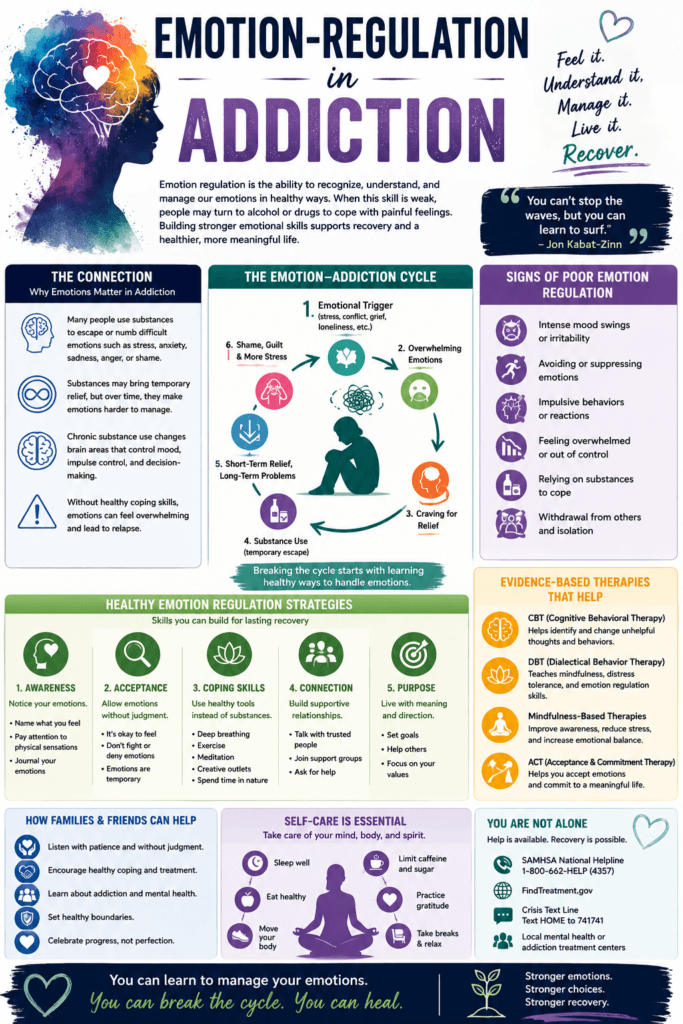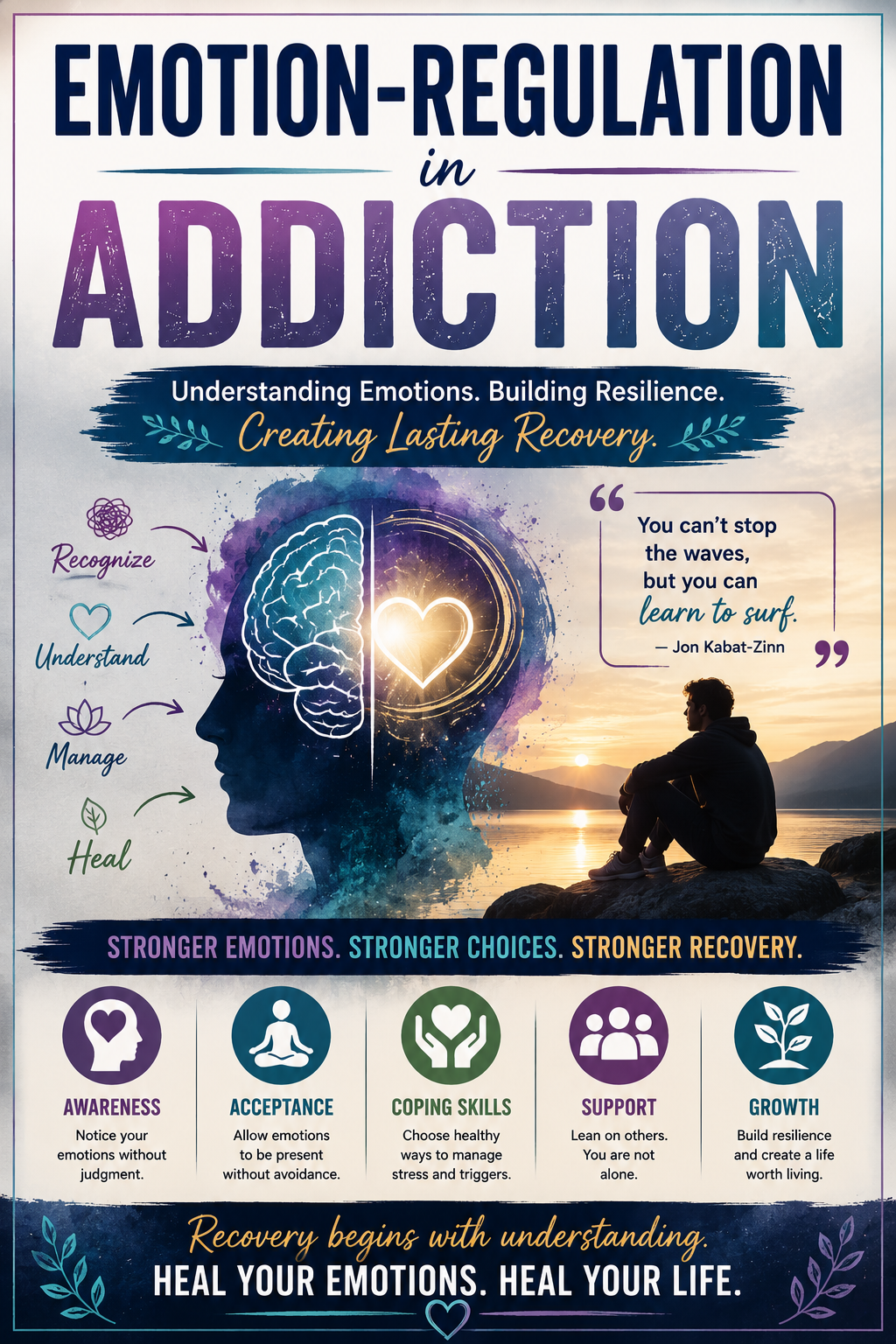
Emotion regulation is the ability to recognize, understand, and manage emotional experiences in healthy and adaptive ways. It is a critical psychological skill that influences how individuals respond to stress, disappointment, fear, anger, sadness, and other challenging emotions. In the context of addiction, difficulties with emotion regulation often contribute to the initiation, continuation, and recurrence of substance use. Many individuals turn to alcohol or drugs as a temporary means of escaping emotional pain or reducing stress, creating a cycle in which substance use provides short-term relief while worsening emotional functioning over time. Chronic substance use also alters brain regions responsible for decision-making, impulse control, and emotional processing, making it increasingly difficult to cope without substances. Understanding the relationship between emotion regulation and addiction is essential for developing effective prevention strategies, evidence-based treatments, and long-term recovery plans that promote healthier coping skills and emotional resilience.
Emotion Regulation in Addiction
Emotion regulation refers to the ability to recognize, understand, manage, and respond to emotions in healthy and adaptive ways. It is an essential psychological skill that helps individuals cope with stress, disappointment, anger, sadness, anxiety, and other emotional experiences without becoming overwhelmed. In addiction, difficulties with emotion regulation are common and can both contribute to the development of substance use disorders and make recovery more challenging.
What Is Emotion Regulation?
Emotion regulation involves the processes people use to influence:
- Which emotions they experience
- When those emotions occur
- How intensely they feel emotions
- How they express and respond to emotions
Healthy emotion regulation does not mean avoiding or suppressing emotions. Instead, it involves experiencing emotions, understanding their purpose, and responding constructively.
The Relationship Between Emotion Regulation and Addiction
Many individuals initially use alcohol or drugs to manage uncomfortable emotions rather than for pleasure alone. This behavior is known as negative reinforcement—using substances to reduce emotional distress.
Common emotional triggers include:
- Anxiety
- Depression
- Loneliness
- Anger
- Shame
- Guilt
- Grief
- Stress
- Fear
- Boredom
Although substances may provide temporary relief, they do not resolve the underlying emotional problems. Over time, the brain begins to associate substance use with emotional relief, increasing the likelihood of repeated use and addiction.
How Addiction Affects the Brain’s Emotional System
Repeated substance use changes several brain regions involved in emotion regulation, including:
The Prefrontal Cortex
The prefrontal cortex is responsible for:
- Decision-making
- Self-control
- Planning
- Impulse control
- Emotional regulation
Chronic substance use weakens this area’s ability to regulate emotional responses and resist cravings.
The Amygdala
The amygdala processes:
- Fear
- Anxiety
- Emotional memories
- Stress responses
Addiction can make the amygdala more reactive, causing individuals to experience stronger negative emotions during withdrawal and stressful situations.
The Reward System
Drugs artificially increase dopamine release, creating intense feelings of pleasure. Eventually, the brain naturally produces less dopamine, making everyday activities less rewarding and increasing reliance on substances to feel “normal.”
Common Emotion Regulation Difficulties in Addiction
Individuals with substance use disorders may experience:
- Impulsive reactions
- Difficulty calming down
- Emotional numbness
- Intense mood swings
- Low frustration tolerance
- Difficulty identifying emotions (sometimes called alexithymia)
- Increased sensitivity to stress
- Avoidance of painful emotions
These difficulties can increase the risk of continued substance use and relapse.
The Cycle of Emotional Dysregulation
Emotion regulation problems often follow a repeating cycle:
- Stressful event or emotional trigger
- Intense emotional discomfort
- Craving for alcohol or drugs
- Substance use provides temporary relief
- Emotional problems remain unresolved
- Shame, guilt, or additional stress develops
- Increased risk of future substance use
Breaking this cycle is a major focus of addiction treatment.
Emotion Regulation During Recovery
Recovery requires learning healthier ways to cope with emotions. As the brain heals, emotional regulation gradually improves, but this process takes time and consistent practice.
Effective recovery includes:
- Identifying emotional triggers
- Recognizing early warning signs of relapse
- Developing healthy coping skills
- Building resilience
- Seeking support before emotions become overwhelming
Evidence-Based Therapies That Improve Emotion Regulation
Several therapies specifically help individuals strengthen emotion regulation skills:
Cognitive Behavioral Therapy (CBT)
CBT teaches individuals to:
- Identify negative thought patterns
- Challenge unhelpful beliefs
- Replace unhealthy behaviors with healthier coping strategies
Dialectical Behavior Therapy (DBT)
DBT places a strong emphasis on emotion regulation by teaching:
- Mindfulness
- Distress tolerance
- Emotional regulation skills
- Interpersonal effectiveness
Mindfulness-Based Interventions
Mindfulness helps individuals:
- Observe emotions without reacting impulsively
- Reduce stress
- Increase self-awareness
- Improve emotional flexibility
Acceptance and Commitment Therapy (ACT)
ACT encourages individuals to:
- Accept difficult emotions rather than avoiding them
- Focus on personal values
- Commit to healthy behaviors despite emotional discomfort
Healthy Emotion Regulation Strategies
People in recovery can strengthen emotion regulation through:
- Regular physical exercise
- Deep breathing and relaxation techniques
- Meditation and mindfulness
- Journaling
- Healthy sleep habits
- Balanced nutrition
- Social support
- Creative activities such as music, art, or writing
- Problem-solving skills
- Professional counseling
- Participation in peer support groups
Why Emotion Regulation Matters in Long-Term Recovery
Strong emotion regulation skills help individuals:
- Reduce cravings
- Manage stress more effectively
- Improve relationships
- Increase resilience
- Prevent impulsive decisions
- Lower the risk of relapse
- Improve overall mental health and quality of life
Learning to tolerate uncomfortable emotions without turning to substances is one of the most important milestones in sustained recovery.
Conclusion
Emotion regulation is a cornerstone of addiction prevention, treatment, and long-term recovery. Difficulties managing emotions often contribute to the development of substance use disorders, while addiction further disrupts the brain systems responsible for emotional control. Through evidence-based therapies, healthy coping strategies, supportive relationships, and consistent practice, individuals can strengthen their ability to manage emotions without relying on alcohol or drugs. Developing effective emotion regulation skills not only reduces the risk of relapse but also promotes emotional resilience, healthier relationships, and a more fulfilling life in recovery.
Self-Management Strategies to Understand Emotion Regulation in Addiction
Emotion regulation is one of the most important skills for preventing substance misuse and maintaining long-term recovery. Rather than trying to eliminate difficult emotions, effective emotion regulation involves recognizing, understanding, and responding to emotions in healthy ways. Individuals who develop strong emotion regulation skills are better equipped to manage stress, reduce cravings, and cope with life’s challenges without relying on alcohol or drugs. The following self-management strategies can help strengthen emotional resilience and support recovery.
1. Increase Emotional Awareness
The first step in emotion regulation is recognizing what you are feeling and identifying the situations that trigger those emotions.
Strategies:
- Keep a daily mood journal.
- Name your emotions instead of saying you simply feel “bad.”
- Identify physical signs of emotional stress, such as muscle tension or a racing heart.
- Reflect on situations that commonly lead to emotional distress.
2. Identify Emotional Triggers
Understanding what triggers strong emotions can help prevent impulsive reactions and substance use.
Strategies:
- Make a list of people, places, events, or memories that increase emotional distress.
- Notice patterns in cravings and emotional reactions.
- Prepare healthy coping strategies before entering stressful situations.
- Avoid high-risk environments whenever possible.
3. Practice Mindfulness
Mindfulness helps individuals observe emotions without immediately reacting to them. It encourages acceptance rather than avoidance.
Strategies:
- Practice mindful breathing for 5–10 minutes each day.
- Focus attention on the present moment.
- Observe emotions without judging them as “good” or “bad.”
- Use grounding exercises during periods of anxiety or stress.
4. Challenge Negative Thinking
Unhelpful thought patterns can intensify emotional distress and increase the risk of substance use.
Strategies:
- Identify automatic negative thoughts.
- Ask whether those thoughts are supported by evidence.
- Replace self-critical thinking with realistic and balanced perspectives.
- Practice positive self-talk and self-compassion.
5. Build Healthy Coping Skills
Replacing substance use with healthier coping strategies strengthens emotional resilience over time.
Strategies:
- Exercise regularly.
- Listen to music or engage in creative activities.
- Read, write, or journal.
- Spend time in nature.
- Practice yoga or stretching.
- Develop hobbies that promote relaxation and enjoyment.
6. Develop Stress Management Techniques
Stress is one of the most common triggers for relapse. Learning to manage stress reduces emotional overwhelm.
Strategies:
- Practice deep breathing exercises.
- Use progressive muscle relaxation.
- Maintain a consistent sleep schedule.
- Prioritize time management to reduce unnecessary pressure.
- Schedule regular breaks during demanding days.
7. Strengthen Problem-Solving Skills
Avoiding problems often increases emotional distress. Effective problem-solving builds confidence and reduces feelings of helplessness.
Strategies:
- Break large problems into smaller steps.
- Consider multiple solutions before acting.
- Ask trusted individuals for advice when needed.
- Focus on what you can control rather than what you cannot.
8. Build a Strong Support Network
Healthy relationships provide encouragement during emotionally difficult times and reduce feelings of isolation.
Strategies:
- Stay connected with supportive family and friends.
- Attend peer recovery meetings.
- Participate in counseling or therapy.
- Reach out for help before emotions become overwhelming.
- Avoid isolating yourself during periods of stress.
9. Prioritize Physical Health
Physical health has a direct impact on emotional regulation and overall mental well-being.
Strategies:
- Eat balanced, nutritious meals.
- Exercise most days of the week.
- Stay hydrated.
- Limit caffeine if it worsens anxiety.
- Get adequate sleep each night.
10. Create a Personal Relapse Prevention Plan
Strong emotion regulation skills reduce the risk of relapse, but having a written plan provides additional protection during difficult periods.
Strategies:
- List your personal warning signs.
- Identify emergency coping strategies.
- Write down supportive people to contact.
- Keep emergency phone numbers readily available.
- Review and update your plan regularly.
11. Practice Self-Compassion
Many individuals in recovery experience shame, guilt, or frustration. Self-compassion supports emotional healing and resilience.
Strategies:
- Accept that recovery involves learning and growth.
- Avoid harsh self-criticism after setbacks.
- Celebrate progress rather than striving for perfection.
- Treat yourself with the same kindness you would offer a friend.
12. Seek Professional Help When Needed
Managing emotions independently is valuable, but professional support is often essential for lasting recovery.
Strategies:
- Participate in Cognitive Behavioral Therapy (CBT) or Dialectical Behavior Therapy (DBT).
- Follow treatment recommendations from healthcare providers.
- Take prescribed medications as directed, if appropriate.
- Address co-occurring mental health conditions promptly.
- Continue follow-up appointments even when feeling well.
Daily Habits That Strengthen Emotion Regulation
Developing consistent daily habits can improve emotional stability over time.
- Practice gratitude by listing three positive experiences each day.
- Spend at least 20–30 minutes engaging in physical activity.
- Set aside time for relaxation or meditation.
- Maintain regular sleep and meal schedules.
- Limit exposure to unnecessary stress when possible.
- Engage in meaningful work, hobbies, or volunteer activities.
- Stay connected with supportive people.
- Reflect on emotional successes and areas for improvement.
Benefits of Strong Emotion Regulation Skills
Improving emotion regulation can lead to:
- Reduced cravings for alcohol or drugs
- Improved stress management
- Better decision-making
- Stronger relationships
- Increased resilience during difficult situations
- Greater self-confidence
- Lower risk of relapse
- Improved overall mental health and quality of life
Conclusion
Emotion regulation is a lifelong skill that plays a central role in addiction recovery and emotional well-being. By increasing emotional awareness, identifying triggers, practicing mindfulness, developing healthy coping strategies, strengthening support systems, and seeking professional guidance when needed, individuals can respond to life’s challenges without relying on substances. These self-management strategies not only reduce the risk of relapse but also foster resilience, improve relationships, and promote lasting recovery, allowing individuals to build healthier, more fulfilling lives.
Family Support Strategies to Understand Emotion Regulation in Addiction
Emotion regulation—the ability to recognize, understand, and manage emotions in healthy ways—is a critical component of addiction prevention, treatment, and long-term recovery. Families play an essential role in helping loved ones develop healthy emotional coping skills while creating an environment that promotes safety, trust, and resilience. By understanding how emotions influence substance use, families can provide meaningful support without enabling unhealthy behaviors.
1. Learn About Emotion Regulation and Addiction
Education helps families understand that many individuals use alcohol or drugs to cope with difficult emotions rather than simply to seek pleasure. Recognizing this connection encourages compassion and reduces blame.
Strategies:
- Learn how emotions influence substance use and recovery.
- Understand that emotional dysregulation is common during addiction and early recovery.
- Read evidence-based resources on addiction and mental health.
- Attend educational workshops or family support programs.
2. Encourage Open and Honest Communication
A supportive environment allows individuals to express emotions without fear of criticism or rejection.
Strategies:
- Listen actively without interrupting.
- Validate feelings even if you disagree with behaviors.
- Encourage conversations about stress, anxiety, sadness, or frustration.
- Use calm, respectful language during difficult discussions.
- Avoid sarcasm, yelling, or personal attacks.
3. Model Healthy Emotion Regulation
Family members influence one another through their own behavior. Demonstrating healthy coping skills provides a positive example.
Strategies:
- Manage your own stress in constructive ways.
- Express emotions calmly and respectfully.
- Practice problem-solving rather than reacting impulsively.
- Apologize when mistakes are made.
- Show healthy ways to resolve conflict.
4. Recognize Emotional Triggers
Families can help identify situations that increase emotional distress and the risk of substance use.
Strategies:
- Discuss common stressors together.
- Identify patterns that lead to emotional overwhelm.
- Help develop plans for managing high-risk situations.
- Encourage healthy responses to disappointment, conflict, or loss.
5. Encourage Healthy Coping Skills
Replacing substance use with positive coping strategies supports long-term recovery and emotional resilience.
Strategies:
- Encourage regular physical activity.
- Participate in hobbies or recreational activities together.
- Promote mindfulness, meditation, or relaxation exercises.
- Support creative outlets such as music, art, or writing.
- Celebrate healthy coping efforts and progress.
6. Set Healthy Boundaries
Supportive families provide encouragement while maintaining clear expectations and accountability.
Strategies:
- Establish consistent household expectations.
- Avoid enabling substance use or harmful behaviors.
- Encourage responsibility for recovery.
- Respect personal space while remaining emotionally available.
- Reinforce healthy choices through positive encouragement.
7. Support Professional Treatment
Emotion regulation skills often improve with evidence-based therapies such as Cognitive Behavioral Therapy (CBT) and Dialectical Behavior Therapy (DBT).
Strategies:
- Encourage participation in counseling.
- Attend family therapy when appropriate.
- Support adherence to treatment recommendations.
- Help reduce barriers to attending appointments.
- Encourage continued treatment even after symptoms improve.
8. Promote Healthy Daily Routines
Consistent routines help stabilize emotions and reduce stress.
Strategies:
- Encourage regular sleep schedules.
- Promote balanced nutrition.
- Plan family meals together.
- Encourage regular exercise.
- Reduce unnecessary household stress whenever possible.
9. Respond Calmly During Emotional Crises
Individuals experiencing intense emotions benefit from calm, supportive responses rather than criticism or punishment.
Strategies:
- Remain calm during emotional outbursts.
- Allow time for emotions to settle before discussing problems.
- Focus on safety first if emotions become overwhelming.
- Encourage healthy coping rather than immediate problem-solving.
- Seek professional help during serious mental health or substance use crises.
10. Celebrate Progress Instead of Perfection
Recovery involves gradual improvement rather than flawless performance. Recognizing positive changes helps build confidence and motivation.
Strategies:
- Acknowledge small achievements.
- Praise healthy emotional responses.
- Encourage persistence after setbacks.
- Focus on growth rather than past mistakes.
- Maintain hope during difficult periods.
11. Reduce Stigma Within the Family
Shame and judgment can make emotional regulation more difficult and discourage individuals from seeking help.
Strategies:
- Speak respectfully about addiction and mental health.
- Avoid labeling or blaming family members.
- Encourage open discussions about emotional well-being.
- Reinforce that seeking help is a sign of strength.
- Promote understanding instead of criticism.
12. Take Care of Your Own Emotional Health
Supporting a loved one can be emotionally demanding. Families who care for their own well-being are better equipped to provide effective support.
Strategies:
- Attend caregiver or family support groups.
- Seek counseling if needed.
- Practice stress-management techniques.
- Maintain hobbies and social connections.
- Recognize signs of caregiver burnout and ask for help when necessary.
Practical Family Activities That Strengthen Emotion Regulation
Families can reinforce healthy emotional skills through everyday interactions, such as:
- Holding regular family check-ins to discuss emotions and challenges.
- Practicing gratitude together by sharing positive experiences each day.
- Taking walks or exercising as a family.
- Using relaxation or breathing exercises during stressful moments.
- Creating a calm, predictable home environment.
- Celebrating recovery milestones and personal achievements.
- Working together to solve problems rather than assigning blame.
Benefits of Family Support for Emotion Regulation
Strong family support can help individuals:
- Better recognize and express emotions.
- Develop healthier coping strategies.
- Reduce stress and anxiety.
- Improve communication and trust.
- Strengthen relationships.
- Increase confidence in recovery.
- Lower the risk of relapse.
- Enhance overall emotional well-being and resilience.
Conclusion
Families play a vital role in helping loved ones understand and strengthen emotion regulation during addiction recovery. Through education, compassionate communication, healthy boundaries, encouragement of evidence-based treatment, and positive role modeling, families can create an environment that supports emotional growth and lasting recovery. At the same time, caring for their own emotional health enables family members to provide sustainable support. By working together with patience, empathy, and consistency, families can help transform emotional challenges into opportunities for healing, resilience, and long-term wellness.
Community Resource Strategies to Understand Emotion Regulation in Addiction
Emotion regulation is a fundamental skill that helps individuals recognize, understand, and manage emotions without relying on alcohol or drugs. Because difficulties with emotion regulation often contribute to the development and maintenance of substance use disorders, communities have an important responsibility to provide education, accessible treatment, supportive environments, and recovery resources. Strong community support can improve emotional resilience, reduce relapse risk, and promote long-term recovery for individuals and families affected by addiction.
1. Expand Access to Integrated Behavioral Health Services
Communities should provide treatment programs that address both addiction and emotional regulation difficulties, particularly for individuals with co-occurring mental health conditions such as depression, anxiety, or post-traumatic stress disorder (PTSD).
Strategies:
- Increase access to addiction medicine specialists and mental health professionals.
- Develop integrated treatment centers for co-occurring disorders.
- Expand outpatient, intensive outpatient, and residential treatment services.
- Improve access to telehealth counseling for underserved communities.
2. Offer Community Education Programs
Public education helps individuals understand the relationship between emotions, brain function, and addiction while reducing stigma surrounding mental health treatment.
Strategies:
- Organize educational workshops on emotional wellness and addiction.
- Provide seminars in schools, workplaces, libraries, and community centers.
- Share evidence-based information about healthy coping strategies.
- Promote public awareness campaigns on emotional resilience.
3. Strengthen Peer Recovery Support Services
Peer support programs connect individuals with others who have experienced addiction and recovery, providing encouragement, practical advice, and hope.
Strategies:
- Expand peer recovery coaching programs.
- Support recovery community organizations.
- Encourage participation in Alcoholics Anonymous (AA), Narcotics Anonymous (NA), SMART Recovery, and similar support groups.
- Develop recovery mentoring programs for individuals in early recovery.
4. Increase Access to Evidence-Based Therapies
Many therapies specifically teach emotion regulation skills that reduce substance use and improve mental health.
Strategies:
- Increase availability of Cognitive Behavioral Therapy (CBT).
- Expand Dialectical Behavior Therapy (DBT) programs.
- Promote Acceptance and Commitment Therapy (ACT) and mindfulness-based interventions.
- Provide affordable counseling through community clinics.
5. Develop School-Based Emotional Wellness Programs
Teaching emotional regulation during childhood and adolescence can reduce the likelihood of future substance misuse.
Strategies:
- Incorporate social-emotional learning (SEL) into school curricula.
- Train teachers to recognize emotional distress.
- Provide school counseling and behavioral health services.
- Teach healthy coping and problem-solving skills from an early age.
6. Promote Workplace Mental Health Initiatives
Employers can support emotional well-being by creating workplaces that encourage healthy stress management and early intervention.
Strategies:
- Offer Employee Assistance Programs (EAPs).
- Provide confidential mental health screenings.
- Educate employees about stress management.
- Encourage work-life balance and burnout prevention.
- Create supportive policies that encourage seeking treatment.
7. Increase Crisis Intervention Resources
Immediate access to crisis services helps individuals manage emotional emergencies safely and connect with appropriate care.
Strategies:
- Expand mobile crisis response teams.
- Support crisis stabilization centers.
- Train first responders in trauma-informed care.
- Educate the public about available crisis services and emergency resources.
8. Support Family Education Programs
Families benefit from learning how to respond effectively to emotional dysregulation without enabling substance use.
Strategies:
- Offer family education classes through hospitals and community agencies.
- Provide caregiver support groups.
- Teach healthy communication and boundary-setting techniques.
- Connect families with counseling and peer support resources.
9. Create Recovery-Friendly Community Environments
Supportive environments reduce isolation and encourage healthy emotional expression.
Strategies:
- Develop recovery community centers.
- Organize sober recreational activities.
- Promote volunteer opportunities and community engagement.
- Encourage participation in sports, arts, music, and wellness programs.
- Build safe social spaces that support recovery.
10. Advocate for Public Policies That Improve Emotional Wellness
Community leaders can influence policies that increase access to prevention, treatment, and recovery services.
Strategies:
- Support funding for behavioral health services.
- Expand insurance coverage for addiction and mental health treatment.
- Increase access to affordable housing and employment support for people in recovery.
- Advocate for early intervention and prevention programs.
- Promote equitable access to evidence-based care in both urban and rural communities.
Community Resources That Support Emotion Regulation
Communities can strengthen emotional wellness by connecting individuals and families with:
- Community mental health centers
- Addiction treatment programs
- Primary care clinics with integrated behavioral health services
- Peer recovery organizations
- Alcoholics Anonymous (AA)
- Narcotics Anonymous (NA)
- SMART Recovery
- Family support groups such as Al-Anon and Nar-Anon
- School and university counseling centers
- Employee Assistance Programs (EAPs)
- Public health departments
- Crisis hotlines and mobile crisis response teams
- Wellness centers offering mindfulness, yoga, and stress-management classes
Benefits of Community Support for Emotion Regulation
Strong community resources can help individuals:
- Better recognize and manage emotions.
- Reduce stress and emotional distress.
- Improve coping skills without substance use.
- Strengthen resilience during recovery.
- Increase treatment participation.
- Reduce relapse risk.
- Improve family relationships and social support.
- Enhance overall mental and physical well-being.
Conclusion
Communities play a vital role in helping individuals develop healthy emotion regulation skills that support addiction prevention and long-term recovery. By expanding access to integrated behavioral health services, evidence-based therapies, peer recovery programs, educational initiatives, family support, and crisis intervention, communities can create environments where emotional wellness is prioritized, and recovery is attainable. Collaborative efforts among healthcare providers, schools, employers, community organizations, policymakers, and families not only reduce the burden of addiction but also promote resilience, healthier relationships, and improved quality of life for individuals and the communities in which they live.
Frequently Asked Questions
Here are some common questions:
1. What is emotion regulation?
Emotion regulation is the ability to recognize, understand, manage, and respond to emotions in healthy and constructive ways. It does not mean suppressing emotions but learning to cope with them without causing harm to yourself or others.
2. What is the connection between emotion regulation and addiction?
Many people use alcohol or drugs to temporarily escape or numb difficult emotions such as stress, anxiety, sadness, anger, shame, or loneliness. Over time, the brain begins to associate substance use with emotional relief, increasing the risk of developing a substance use disorder.
3. Why do people with addiction often struggle to regulate emotions?
Chronic substance use changes brain regions involved in emotional processing, decision-making, impulse control, and stress responses. These changes can make emotions feel more intense and healthy coping more difficult, especially during withdrawal and early recovery.
4. What are common signs of poor emotion regulation?
Common signs include:
- Frequent mood swings
- Impulsive behavior
- Difficulty calming down
- Emotional outbursts
- Feeling overwhelmed by stress
- Avoiding or suppressing emotions
- Using alcohol or drugs to cope
- Difficulty identifying or expressing emotions
5. Can poor emotion regulation increase the risk of addiction?
Yes. Individuals who have difficulty managing emotions may be more likely to use substances to cope with emotional distress. Although substances may provide temporary relief, they do not address the underlying emotional issues and can increase the risk of addiction.
6. Can emotion regulation skills be learned?
Absolutely. Emotion regulation is a skill that can be developed through practice, education, and professional support. Many people strengthen these skills through therapy, mindfulness, and healthy lifestyle changes.
7. What therapies help improve emotion regulation?
Several evidence-based therapies are effective, including:
- Cognitive Behavioral Therapy (CBT): Helps identify and change unhelpful thoughts and behaviors.
- Dialectical Behavior Therapy (DBT): Teaches mindfulness, distress tolerance, emotion regulation, and interpersonal effectiveness.
- Acceptance and Commitment Therapy (ACT): Encourages acceptance of emotions while taking action that aligns with personal values.
- Mindfulness-Based Therapies: Enhance emotional awareness and reduce impulsive reactions.
8. How does mindfulness improve emotion regulation?
Mindfulness teaches individuals to notice thoughts and emotions without immediately reacting to them. This increased awareness can reduce impulsive decisions, lower stress, and improve the ability to manage cravings and difficult emotions.
9. What healthy coping skills support emotion regulation?
Helpful coping strategies include:
- Deep breathing exercises
- Regular physical activity
- Meditation and mindfulness
- Journaling
- Creative activities such as art or music
- Spending time in nature
- Healthy sleep habits
- Balanced nutrition
- Talking with supportive friends or family
- Participating in peer recovery groups
10. How can families support healthy emotion regulation?
Families can:
- Listen without judgment.
- Encourage open communication.
- Model healthy ways of handling stress.
- Support participation in treatment.
- Set healthy boundaries.
- Celebrate progress rather than expecting perfection.
11. Why is stress management important in recovery?
Stress is one of the most common relapse triggers. Learning healthy stress-management techniques can reduce emotional distress, improve resilience, and decrease the likelihood of returning to substance use.
12. Does improving emotion regulation reduce relapse risk?
Yes. Strong emotion regulation skills help individuals manage cravings, tolerate distress, solve problems effectively, and respond to emotional challenges without turning to alcohol or drugs, significantly reducing the risk of relapse.
13. How long does it take to improve emotion regulation?
There is no fixed timeline. Improvement varies depending on the individual, the severity of addiction, co-occurring mental health conditions, and participation in treatment. With consistent practice, many people notice gradual improvements over weeks to months, while continued growth often occurs throughout recovery.
14. When should someone seek professional help?
Professional help should be considered if emotional distress:
- Interferes with daily responsibilities.
- Leads to repeated substance use.
- Causes relationship or work problems.
- Results in persistent anxiety or depression.
- Includes thoughts of self-harm or suicide.
- Feels difficult to manage despite healthy coping efforts.
15. What is the most important lesson about emotion regulation in addiction?
The most important lesson is that emotions are not the problem—how we respond to them matters. Learning healthy emotion regulation skills allows individuals to face life’s challenges without relying on alcohol or drugs. With evidence-based treatment, supportive relationships, and consistent practice, people can build emotional resilience, reduce the risk of relapse, and achieve lasting recovery.
Conclusion
Emotion regulation is a cornerstone of addiction prevention, treatment, and sustained recovery. Developing the ability to identify emotions, tolerate distress, and respond to life’s challenges with healthy coping strategies reduces reliance on alcohol or drugs and strengthens emotional resilience. Evidence-based approaches such as Cognitive Behavioral Therapy (CBT), Dialectical Behavior Therapy (DBT), mindfulness practices, and strong family and community support can help individuals improve emotional regulation while addressing the underlying causes of substance use. As emotional awareness and coping skills grow, individuals are better equipped to manage stress, build healthier relationships, prevent relapse, and improve their overall quality of life. Recognizing emotion regulation as a learnable skill reinforces the message that recovery is not only possible but also strengthened through education, support, and ongoing personal growth.
Video: Why You Can’t Stop: Addiction and Your Brain’s Emotion System #shorts #addiction #brain