Doctors have been at the center of the conversation about addiction treatment for decades. The wide variety of approaches shows not just the complexity of substance disorders, but also the challenges that come with figuring out what works best for each patient. While some treatments have established success rates, others carry risks that aren’t always discussed openly. I’m here to break down some of these riskier addiction treatments doctors use, give you some perspective on why they’re still offered, and help you make sense of the options available. This is especially important if you or someone you know is facing this situation.
Understanding Why Risky Addiction Treatments Exist
Addiction is rarely simple. There’s physical dependence, mental health layers, social factors, and sometimes just plain luck that plays into recovery. This mix makes it hard for doctors to find the “best” treatment. In some cases, they may lean toward newer or less traditional therapies. This can happen because of promising early research, pressure from desperate patients, or even aggressive marketing by pharmaceutical companies seeking the next big solution.
The push for fast results can sometimes lead to high-stakes therapies or those that haven’t been studied enough. It’s really important to ask questions, seek second opinions, and know exactly what goes into the recommended treatment plan.
Commonly Used Risky Treatments in Addiction Medicine
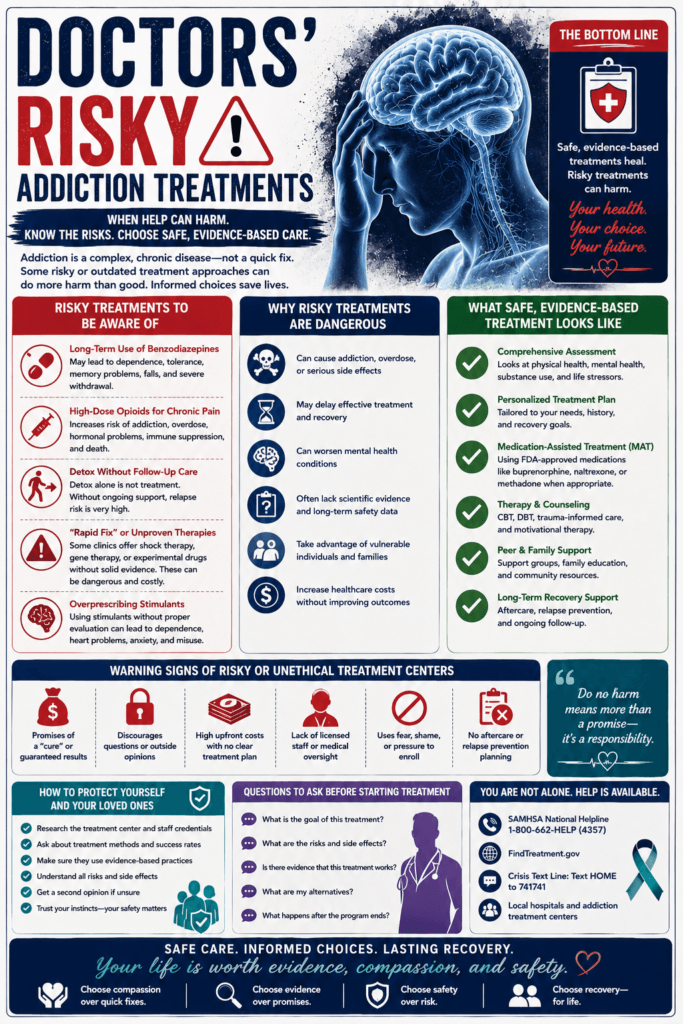
Not every risky approach looks the same. Some involve medications that can spark new dependencies. Others use intense therapies that can feel overwhelming or even harmful in the wrong hands. Here are a few that are pretty common:
- Rapid Detox: In this procedure, the patient is put under anesthesia while doctors use drugs to push withdrawal to its peak, aiming to “get it over with” quickly. While avoiding the drawn-out suffering of withdrawal sounds appealing, there’s a real risk of serious medical complications, including heart problems or even death. This method still pops up in some clinics, despite warnings from leading addiction medicine groups (American Society of Addiction Medicine).
- Substituting One Drug for Another: Medications like methadone or buprenorphine (also called Suboxone) have helped many people move away from dangerous substances. Still, there’s ongoing debate about the risks. These medications can themselves be addictive or misused, and not every doctor checks in on them as closely as they should. Many patients find themselves switched from one long-term dependency to another.
- Unproven Alternative Therapies: Some doctors look to rapid-acting psychedelics, controversial supplements, or unapproved treatments like ibogaine for so-called “quick fixes.” While research is beginning for some, most are not FDA-approved and come with unpredictable side effects, ranging from severe heart risks to serious psychiatric problems (source).
Addiction Treatment Basics: What Usually Works
Doctors aren’t out there intentionally choosing dangerous treatments. Most start with mainstream, evidence-based therapies first. Here’s what this generally looks like:
- Counseling and Behavioral Therapies: This encompasses everything from group therapy (such as 12-step programs) to one-on-one cognitive behavioral therapy, both of which have a strong track record.
- Medication Assisted Treatment (MAT): Used the right way, medications like methadone and Suboxone help stabilize patients so they can focus on recovery without craving or withdrawal taking over. The risk tends to come from misuse, poor oversight, or offering these meds when they aren’t actually needed.
- Supervised Detox: For substances with high risks during withdrawal (alcohol, benzodiazepines), a slow, closely watched medical detox is much safer than rapid methods.
Warning Signs a Treatment Might Be Riskier Than It Sounds
Addiction clinics and even some doctors can hype treatments in a way that oversells the upside and quietly downplays the negatives. Here’s how I spot problem signs:
- Promises of Immediate Recovery: Any center or doctor claiming they can “cure” addiction in a weekend or a few days is overselling. Good addiction care takes time.
- Poor Follow-Up: Treatments that focus only on stopping substance use, but ignore ongoing therapy, relapse planning, or social support, usually end up with higher relapse rates.
- Lack of Scientific Backing: If you’re told about miracle drugs or radical therapies without solid studies or mainstream research, time to stay sharp and question things.
Risks of Detox-Only Approaches
Some clinics market detox packages as if that’s the whole solution. While detox can absolutely save lives for those physically dependent on substances, stopping after detox is hardly ever enough to get lasting results. The risk of relapse is high unless detox is followed up with more all-in-one support and future planning.
Risks That Come With Medication-Based Treatments
Medication-assisted treatment (MAT) is often a smart move, but it isn’t perfect.
- Dependency Concerns: Medications like methadone and buprenorphine truly help people move away from dangerous drugs. However, they aren’t risk-free. Some patients remain on these medications for years, and withdrawal after long-term use can still be tough.
- Doctor Oversight Is Key: When these medications aren’t managed well because of overworked doctors or underfunded clinics, patients can end up misusing their meds or even selling them. Supervision, drug testing, and custom dose tuning matter a lot for safe outcomes.
Unproven or Experimental Treatments: What Might Go Wrong?
Desperation can push people toward anything promising hope, especially if more popular options haven’t worked or aren’t affordable. Here are a couple of newer or less-established treatments that attract attention and what to watch for:
- Ibogaine: A psychedelic coming from an African plant, it has underground buzz as a “detox quick fix.” However, Ibogaine isn’t FDA-approved due to risks of irregular heartbeat, hallucinations, or life-threatening reactions. Clinics offering it usually operate in legal gray zones, meaning oversight is lacking.
- Off-Label Use of Medications: Sometimes, medications meant for other issues (like the opioid-blocker naltrexone or mood-stabilizer topiramate) are prescribed in ways or amounts that haven’t yet been fully tested. While they can work at times, there isn’t always solid scientific evidence supporting these uses, and the side effects can be surprising.
Things to Ask When a Doctor Recommends a Risky Treatment
If you’re given an addiction treatment plan that seems unusual or a bit extreme, it’s always smart to pause for more details. Here are some helpful questions:
- Is there published research to support this treatment for addiction?
- What risks or complications did past patients have?
- How is my safety monitored before, during, and after treatment?
- What’s the plan for follow-up care and relapse prevention afterward?
- Do you have statistics on patient outcomes from this treatment?
It’s always okay to step back and get another doctor’s input, especially if you feel rushed or if the treatment seems to focus too much on a “magic bullet.”
Frequently Asked Questions
Here are answers to some common questions I hear from people and families thinking about addiction treatment:
Question: Is it safer to avoid medications entirely in addiction treatment?
Answer: Not necessarily. Medication can be life-changing for some, especially with opioid addiction or severe alcohol dependence. The key is supervision and not using medication without therapy and other support alongside it.
Question: Do “natural” or supplement-based treatments work for serious addiction?
Answer: There’s little solid research backing most supplements for addiction treatment. At best, some might help with mild symptoms, but they’re not a real substitute for structured medical care in moderate or severe cases.
Question: How do I know if my doctor is recommending a risky treatment?
Answer: Look for reliable evidence (such as published studies or respected guidelines) to support their suggestion. If too much is unknown about the approach, be cautious and explore other options.
What to Focus on When Deciding on Addiction Treatment
I always recommend looking for clinics and doctors who focus on whole person care. The best options will combine close medical supervision, a wide therapy team, ongoing relapse planning, and honest timelines for recovery. Be wary of anything that promises miracles or demands money up front for unproven treatments.
- Evidence-Based Care: Treatments with lots of research are usually the most reliable.
- All-in-One Support: Getting help from counselors, doctors, and social workers improves the odds for lasting recovery.
- Realistic Goals: Addiction recovery is rarely fast; steady progress and occasional setbacks are a natural part of the adventure.
Asking questions, seeking published evidence, and considering other experts’ opinions all help patients and families choose safer, more effective options. Recovery can be tough, but staying informed and actively involved is one of the best ways I know to invest in long-term results.
Video: The first step to choosing the right addiction treatment #addiction #treatment #choice