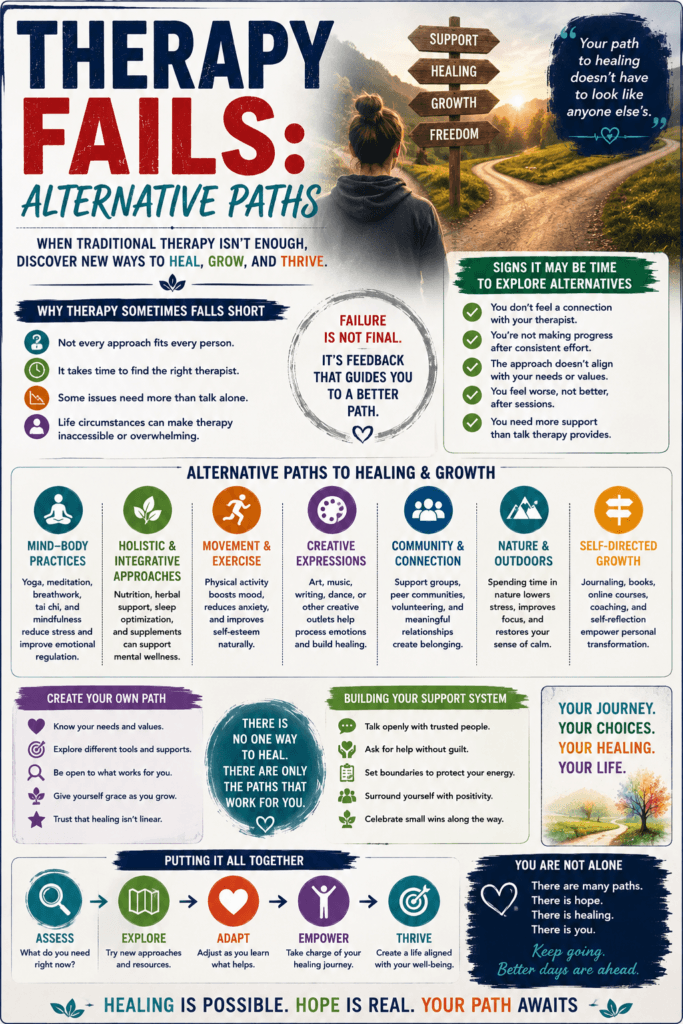
If you’ve ever felt like therapy isn’t really working in the way you hoped, you’re definitely not alone. It can be tough to keep showing up to appointments and working through difficult emotions, only to feel stuck or discouraged. I’ve experienced these frustrations myself and learned that when therapy doesn’t lead to the changes you want, it might be worth thinking about some different paths to healing. Here’s my honest take on what to do when traditional therapy just isn’t getting you there.
Why Talk Therapy Doesn’t Always Work for Everyone
Talk therapy, also called psychotherapy or counseling, is helpful for a lot of people, but it’s not a magic fix. There are real reasons it sometimes just doesn’t click. Everybody’s background, needs, and personal history are different. Sometimes therapy feels off because:
- Mismatch with the therapist: Not every therapist’s style will fit your personality or ways of thinking. Chemistry matters, and if you feel like you’re not connecting, progress can stall out.
- Different treatment needs: Some people need more practical tools or structure than talk therapy offers. Others want a space to vent but end up getting advice instead, which can feel frustrating or unhelpful.
- Lifestyle and timing: Weekly in-person sessions or virtual meetings don’t always work with every schedule or budget, making it hard to stay consistent long enough for results to show.
- Past trauma or readiness: Working through trauma or tough memories can take time, and sometimes you’re not ready, or therapy goes too deep too soon, causing overwhelm or retreat.
If you’re struggling to feel better or you keep spinning your wheels, it might be worth trying different approaches. I talk to lots of folks who find new routes far more helpful than sticking with the same old process that just doesn’t deliver. There is no shame in wanting something that fits you better.
Exploring Alternatives to Traditional Therapy
When therapy fails to bring the results you want, you still have plenty of options. Here are a few alternatives I recommend checking out, based not only on research but also on what actually resonates with people I know or work with:
- Group Support: Peer-led groups, such as support circles or 12-step meetings, can offer connection and a judgment-free space.
- Coaching: Life or wellness coaches focus more on setting goals and action steps. It can feel more practical and forward-facing than therapy, giving you motivation and structure.
- Body-based Practices: Yoga, tai chi, and dance or movement therapy help you tune in to your body, which is sometimes left behind during talk-focused sessions.
- Creative Arts: Art therapy, music creation, or journaling can help express things words can’t always capture. You don’t need to be an artist to get the benefits here—expression is for everyone.
- Faith Community & Spiritual Practices: Meditation, prayer, or spiritual support groups can be meaningful if you find comfort in faith traditions or want to reconnect with your sense of purpose.
- Outdoor and Nature-Based Activities: Hikes, gardening, or “forest bathing” help with grounding and can lift your mood without sitting in an office. Exposure to nature is a proven mood booster and can help relieve stress.
Trying something new doesn’t mean you’ve “failed therapy.” Sometimes you just need a different tool for the job. And sometimes, combining different supports can achieve what a single approach can’t. Keep an open mind to what might work for you.
How to Know When It’s Time to Try Something Different
It can be tricky to decide if your current approach isn’t cutting it. In my experience, these are a few signs that it might be time to branch out:
- Progress feels flat for several months, even after giving real effort.
- You’re starting to feel worse, more hopeless, or totally unmotivated.
- Your main issues just keep repeating, or you feel stuck rehashing the same stories.
- The cost, time, or commitment feels way more stressful than helpful.
If any of these sound familiar, it’s totally okay to pause and look at what’s actually helping you move forward. Sometimes, taking a short break or mixing in other forms of support can inject new energy into the process.
Tips for Switching It Up Without Losing Hope
Finding new paths to healing isn’t always easy, and it’s normal to feel a little lost at first. Here’s what I suggest to keep your momentum going:
- Identify what you want most right now: Is it insight? Practical help? A sense of belonging? Target your next step based on these needs, and don’t be afraid to change direction if it doesn’t feel right.
- Start small: You don’t need to overhaul your whole routine at once. Try attending a group meeting, downloading a mindfulness app, or scheduling a single coaching session. Small changes can have big impacts.
- Mix and match: Combining approaches, such as joining a support group and practicing art at home, often works better than choosing just one path. The blend can address more parts of yourself at once.
- Keep your expectations realistic: Healing isn’t a straight line. There will be ups and downs, no matter which approach you take. Being patient with yourself is part of the process.
- Reach out: Ask your current therapist (if you have one) for recommendations or referrals, as they might know of local groups or creative programs that could help you out. Even if you’re leaving therapy, support networks remain important.
Things to Think About Before Jumping In
Switching gears is a personal choice and comes with its own set of decisions. A few things I always consider and encourage others to think about:
- Cost: Some alternatives are free, while others can be pricey, especially for specialty workshops or retreats. Make sure you are comfortable with the investment—don’t hesitate to ask about sliding scales or scholarships if money is tight.
- Access: Depending on where you live, in-person programs or outdoor activities might be limited. A lot of options are now available online, though, opening up new opportunities even if you’re far from cities or groups.
- Safety: Make sure any group, coach, or alternative provider has a good reputation and feels like a safe fit. If you’re dealing with serious issues like suicidal thoughts, it’s really important to reach out for professional or emergency help right away.
- Personalization: Your own history and values should guide your choices. You know yourself best, and even if it doesn’t fit the usual model, it’s your ride. Listen to your gut and trust what feels nourishing or supportive.
Body-based and Expressive Therapies
For some, talk therapy doesn’t help much with things like anxiety attacks, chronic stress, or trauma symptoms that seem “stuck” in the body. Somatic therapies and expressive practices let you work through emotions physically, which can be really useful. I’ve tried things like breathwork sessions or mindful movement classes and sometimes found breakthroughs I never got sitting on a couch. These practices can help if you want to feel more grounded in your body and less caught up in your head.
Peer Connection and Shared Experience
Isolation makes everything harder. Finding peer support spaces, whether that’s a local support group or a welcoming online forum, creates real connection. I’ve learned just hearing from others who “get it” can be way more healing than talking to a professional who hasn’t walked in your shoes. Some of the deepest moments come from simply being understood.
Practical/ActionFocused Help
If you thrive on structure, coaching or skills-building programs deliver more concrete steps. Career coaches, ADHD or organizational programs, or relationship skills workshops give lots of feedback and check-ins, which is great for folks who want less theory and more action. I’ve found these work well for people who feel stuck going over the same emotional territory and want to make changes in daily life—getting unstuck sometimes requires new habits and accountability, not just insight.
RealLife Examples of Alternative Paths
Over the years, I’ve seen some truly creative options for feeling better when therapy stalls out. Here are a couple of real-life ideas:
- Narrative therapy through writing: Some people keep journals, write poetry, or even start blogs about their mental health ride. The process of reflection and storytelling can help make sense of complicated emotions and offer clarity you might not reach through talking alone.
- Anxiety reduction with nature exposure: People walk in parks, volunteer with community gardens, or simply soak up green spaces. Studies show that even brief time outdoors can reduce stress and boost your sense of calm, making it easier to face the challenges life throws your way.
Tons of people piece together a mix of these resources. Your path might look totally different from someone else’s, and that’s completely okay. Getting creative and personalizing your approach is often the best way forward.
Frequently Asked Questions
If you’re considering moving away from traditional therapy, there are a few common questions that tend to come up:
Question: What should I do if nothing seems to help at all?
Answer: Sometimes, serious issues need a mix of support—medical, community, and personal. Checking in with your doctor or a mental health professional for a full review can reveal missed options, such as medication review, referrals, or testing. Don’t give up; there is a path forward even if it takes more time than you want.
Question: Are alternative methods really proven to work?
Answer: Many alternatives, such as mindfulness meditation, group support, and even creative arts, have research backing for mood and stress relief. Not everything has the same level of scientific evidence as clinical therapy, but many people find real comfort in these tools. Trying something new is worth considering if you’re feeling stuck, and you don’t lose anything by exploring extra options.
Question: Should I tell my therapist that I want to try a new approach?
Answer: Honesty is useful here. Many therapists respect your wish to explore different avenues, and might even have ideas or contacts that can help you transition smoothly. You’re always in charge of your own healing process; don’t hesitate to bring up your needs.
Moving Forward in Your Healing Ride
When therapy feels like it’s missing the mark, finding the right support might mean stepping outside the box. You have options: group spaces, creative outlets, nature time, spiritual practices, or structured coaching all help people in different ways. Healing is personal, and it’s always okay to try something new until you find what feels right for you. Remember, many people have walked this path before and found ways to keep growing.
No matter which path you pick, just remember there’s support out there for you. Taking a new approach doesn’t mean you failed. It just means you’re still working to find what truly helps you move ahead. Stay curious, keep exploring, and trust that your healing ride is unique and worth every bit of effort you put into it.
Video: Your therapy isn’t broken, it’s just not the right fit #shorts #peersupport