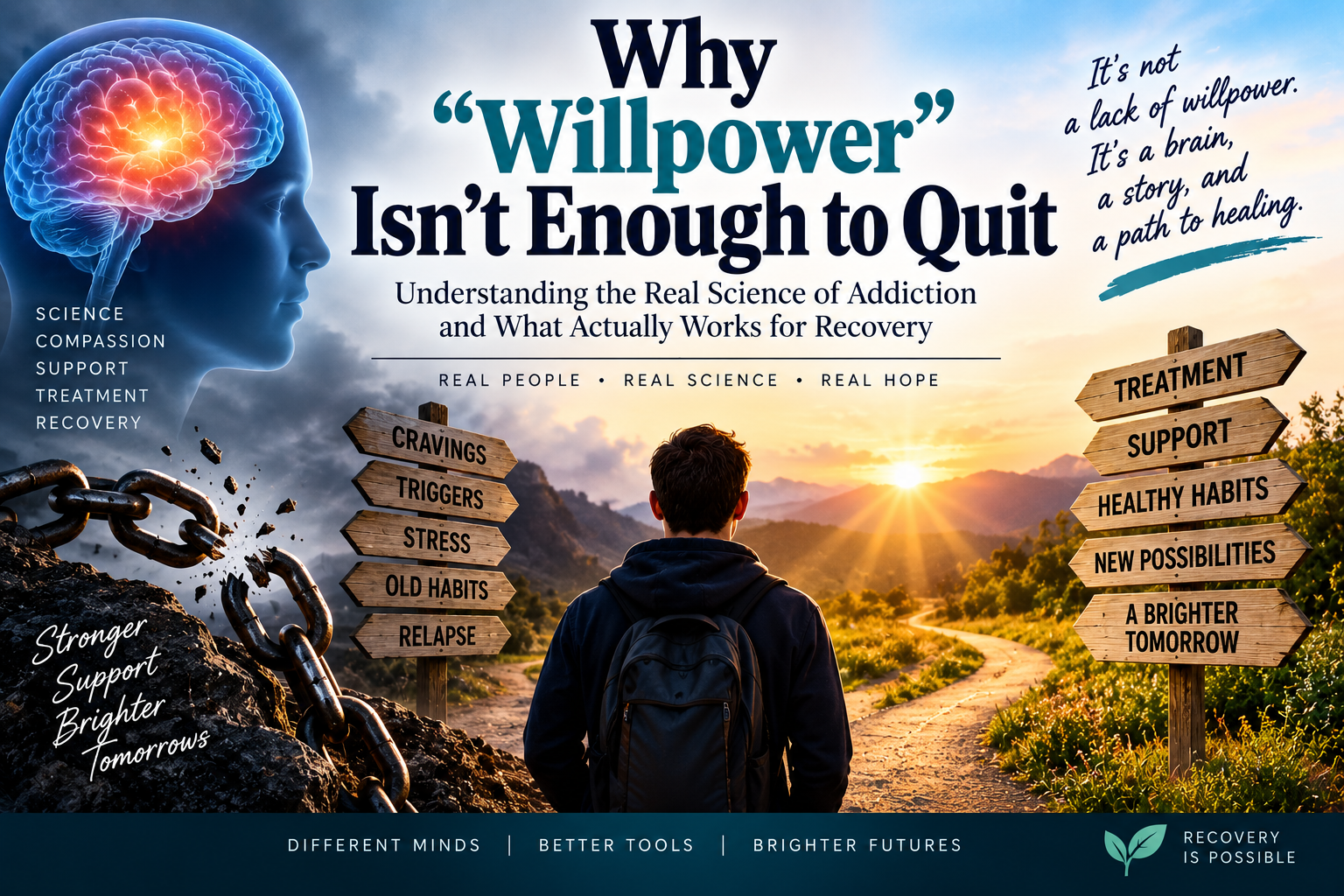
People living with addiction are often told to “just quit,” “try harder,” or “have more willpower.” Although motivation and determination are valuable parts of recovery, overcoming addiction involves much more than simply choosing to stop drinking or using drugs.
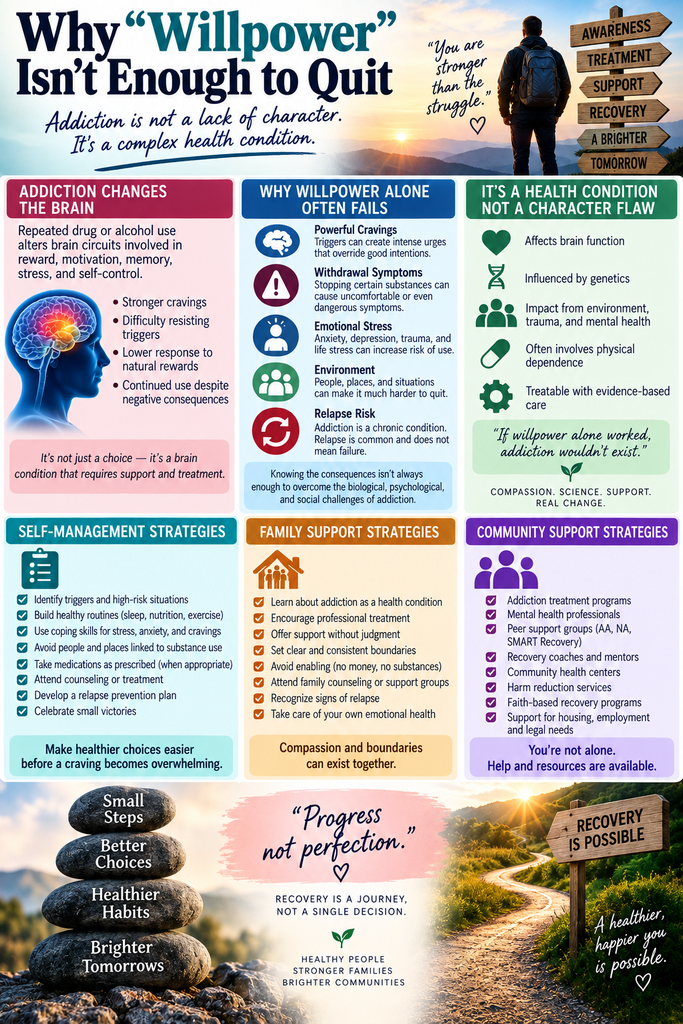
Substance use disorders can affect brain systems responsible for reward, motivation, learning, stress, and self-control. Over time, repeated substance use can create powerful connections between alcohol or drugs and certain people, places, emotions, or experiences. These learned associations can trigger intense cravings, even when someone genuinely wants to quit and understands the consequences of continued use.
Recovery should not be viewed as a measure of a person’s strength or character. Instead, it is an ongoing process of managing a treatable health condition. Effective recovery may involve professional treatment, coping skills, supportive relationships, healthier routines, environmental changes, and time. Willpower can help someone begin the journey, but lasting recovery is often strengthened by having the right tools and support along the way.
What Is Willpower?
Willpower generally refers to the ability to resist an immediate urge in order to pursue a longer-term goal.
Someone in recovery might use willpower when declining a drink at dinner, leaving an environment where drugs are available, or choosing to call a supportive friend instead of using.
Willpower can help in these moments. The problem is expecting willpower to carry the entire recovery process.
Self-control can become more difficult during intense stress, sleep deprivation, emotional distress, withdrawal, exposure to familiar triggers, or strong cravings. A successful recovery plan, therefore, seeks to reduce reliance on moment-to-moment resistance.
Addiction Changes How the Brain Responds to Rewards
Drugs and alcohol can strongly activate brain reward pathways. With repeated exposure, the brain adapts.
Over time, substance-related cues can become highly meaningful. Seeing a bottle, driving past a familiar bar, receiving a stressful message, experiencing conflict, or reconnecting with someone associated with previous drug use may produce powerful urges.
At the same time, ordinary rewards such as hobbies, relationships, food, exercise, and accomplishments may temporarily feel less satisfying during some stages of addiction and early recovery.
This creates an important contradiction: a person may intellectually understand that substance use is harming them while still experiencing an intense biological and learned drive to continue.
Why Knowing the Consequences Isn’t Always Enough
People sometimes assume that experiencing serious consequences should automatically make someone stop.
A person may lose a relationship, job, driver’s license, housing, or money and continue using. Others continue despite developing medical problems or experiencing an overdose.
This behavior can be difficult for families to understand.
However, one defining feature of addiction is continued substance use despite harmful consequences. Cravings, withdrawal, conditioned learning, emotional distress, impaired control, and environmental triggers can compete with a person’s long-term intentions.
Knowing something is dangerous and being able to consistently resist it are not always the same thing.
The Role of Withdrawal
Physical dependence creates another reason that simply deciding to quit may not be enough.
When someone stops certain substances after prolonged heavy use, withdrawal can produce symptoms ranging from uncomfortable to medically dangerous.
Depending on the substance, symptoms can include:
- Anxiety and agitation.
- Sweating and shaking.
- Insomnia.
- Nausea or vomiting.
- Muscle aches.
- Strong cravings.
- Depression or irritability.
- Rapid heart rate.
- Seizures or other serious complications in certain withdrawal syndromes.
Alcohol and benzodiazepine withdrawal can sometimes become life-threatening. People with significant physical dependence should obtain medical guidance rather than assuming they must quit completely on their own.
Cravings Are More Than Wanting Something
A craving can involve thoughts, emotions, physical sensations, memories, and conditioned responses.
Triggers may include:
- Stress.
- Loneliness.
- Anger.
- Relationship conflict.
- Celebrations.
- Paydays.
- Certain friends.
- Specific neighborhoods.
- Pain.
- Trauma reminders.
- Boredom.
- Social media.
- Seeing substances or paraphernalia.
The goal of recovery is not necessarily to eliminate every trigger. It is to develop strategies for responding differently when triggers appear.
Self-Management Strategies: Build a System Instead of Depending on Willpower
Effective self-management makes it easier to make healthier decisions before a craving becomes overwhelming.
Helpful strategies include:
- Identify personal triggers and high-risk situations.
- Remove alcohol, drugs, and paraphernalia from the home when appropriate.
- Limit contact with people or environments strongly associated with substance use, especially early in recovery.
- Establish consistent sleep, nutrition, exercise, and daily routines.
- Develop a written relapse-prevention plan.
- Practice delaying and riding out cravings rather than acting on them immediately.
- Keep supportive contacts readily available.
- Schedule meaningful activities during previously high-risk times.
- Learn healthier methods of managing anxiety, anger, boredom, grief, and stress.
- Attend counseling and medical appointments consistently.
- Discuss medications for substance use disorders when clinically appropriate.
- Treat co-occurring mental health conditions.
- Recognize a lapse early rather than allowing shame to turn it into prolonged substance use.
A strong recovery plan reduces the number of situations in which someone must depend entirely on self-control.
Treatment Can Make Recovery More Manageable
Evidence-based treatment can include behavioral therapies, counseling, medications, peer support, or combinations of these approaches.
For opioid use disorder, medications such as buprenorphine and methadone can reduce withdrawal and cravings and are associated with substantially lower mortality. Naltrexone is another treatment option for appropriate patients.
Medications are also available for alcohol use disorder, including naltrexone, acamprosate, and disulfiram for selected individuals.
Using medication is not replacing one weakness with another. When appropriately prescribed, medication can be part of evidence-based addiction treatment.
Family Support: Replace “Try Harder” With “How Can We Help?”
Families understandably become frustrated when someone repeatedly promises to stop and then returns to substance use.
Statements such as “If you loved us, you would quit” may seem motivating, but they can increase shame without addressing the mechanisms driving addiction.
Families can help by:
- Learning how substance use disorders affect behavior and decision-making.
- Encouraging professional treatment.
- Recognizing that recovery may require multiple treatment attempts.
- Avoiding alcohol or drug use around someone in early recovery when possible.
- Supporting healthy routines and recovery activities.
- Refusing to provide money or resources that facilitate substance use.
- Setting clear and consistent boundaries.
- Recognizing warning signs of relapse.
- Encouraging treatment after a lapse rather than treating it as a total failure.
- Seeking counseling or support for themselves.
Compassion does not require accepting harmful behavior. Families can provide emotional support while still maintaining firm boundaries.
Community Support: Recovery Is Easier With Connection
Isolation can increase vulnerability to relapse. Community support provides accountability, encouragement, practical resources, and relationships that are not centered around substance use.
Community resources may include:
- Addiction medicine professionals.
- Outpatient and residential treatment programs.
- Mental health counseling.
- Medication treatment programs.
- Recovery coaches.
- Peer recovery groups.
- 12-step programs.
- SMART Recovery and other mutual-help approaches.
- Community health centers.
- Harm-reduction programs.
- Recovery housing.
- Family support programs.
- Faith-based recovery communities when personally meaningful.
There is no single recovery community that works for everyone. The goal is finding support that encourages safety, stability, treatment engagement, and long-term change.
Why Environment Matters
Imagine someone leaving treatment determined never to use again but returning to the same home, same drug-using friends, same untreated trauma, same financial stress, and the same neighborhood where substances are readily available.
Determination matters, but the environment is constantly working against it.
Recovery becomes more sustainable when people can change both internal coping strategies and external circumstances.
That might involve finding safer housing, developing new relationships, obtaining employment support, addressing legal problems, receiving trauma treatment, or creating new routines.
What About Relapse?
Relapse does not mean treatment was pointless, but it should be taken seriously.
A return to substance use provides information about what needs to change. Perhaps cravings were inadequately treated. Maybe the individual returned to a high-risk environment, stopped medication, discontinued counseling, encountered an unexpected trigger, or was struggling with untreated depression or trauma.
The useful question becomes:
“What happened before the relapse, and what can we change before the next high-risk situation?”
For opioid use in particular, relapse after abstinence can be especially dangerous because tolerance may have decreased, increasing overdose risk.
Recovery Still Requires Personal Responsibility
Understanding addiction as a health condition does not mean removing personal responsibility.
Recovery involves making decisions, participating in treatment, practicing coping skills, repairing relationships when appropriate, and learning from setbacks.
The difference is recognizing that responsibility works better when people are given effective tools.
We would not tell someone with diabetes to control their blood glucose through determination alone. Similarly, people with substance use disorders benefit from treatment strategies designed for the condition they are experiencing.
Progress Matters More Than Perfection
Recovery can include dramatic changes, but it is often built through small decisions repeated consistently.
One counseling appointment matters.
One avoided trigger matters.
Taking prescribed medication matters.
Calling someone during a craving matters.
Returning to treatment after a lapse matters.
Eventually, those individual decisions can become a new pattern of living.
Conclusion
Willpower has a place in recovery, but willpower alone is not an addiction treatment plan.
Substance use disorders involve brain processes, learned behaviors, environmental cues, psychological distress, physical dependence, and social circumstances. Successful recovery often requires addressing several of these factors simultaneously.
Self-management helps people recognize triggers and develop healthier responses. Families can provide encouragement while maintaining boundaries. Healthcare professionals can offer evidence-based treatment. Communities can provide connection, resources, and opportunities to rebuild a meaningful life.
The better question is not “Why can’t you just stop?”
It is “What is making it difficult to stop, and what treatment, skills, support, and environmental changes could make recovery more achievable?”
Recovery does require effort—but people should not have to rely on willpower alone.
Frequently Asked Questions
Here are some common questions:
1. Why isn’t willpower alone enough to overcome addiction?
Addiction involves more than making a decision. Repeated substance use can affect brain systems involved in reward, motivation, stress, learning, memory, and self-control. These changes can make cravings and substance-related cues difficult to resist even when someone sincerely wants to stop.
2. Does this mean people with addiction have no control over their behavior?
No. People can make meaningful choices and participate actively in recovery. The point is that recovery is usually more successful when personal effort is combined with effective treatment, coping skills, environmental changes, and social support rather than relying exclusively on self-control.
3. Is addiction really a medical condition?
Yes. Substance use disorders are recognized medical conditions. They are diagnosed based on patterns such as impaired control over substance use, continued use despite harmful consequences, and significant effects on daily functioning.
4. Why would someone continue using drugs or alcohol when they know it is hurting them?
Knowing the consequences does not necessarily eliminate cravings, withdrawal, conditioned responses, or emotional triggers. Addiction can create a conflict between what someone wants in the long term and what their brain has learned to seek immediately.
5. What happens to the brain during addiction?
Repeated substance exposure can alter brain circuits involved in reward, motivation, stress, decision-making, and behavioral control. Environmental cues associated with previous substance use can also become powerful triggers for cravings.
6. Are cravings a sign of weak willpower?
No. Cravings are a recognized feature of many substance use disorders. They can be triggered by stress, emotions, memories, people, places, smells, social situations, or exposure to substances. Learning how to manage cravings is an important recovery skill.
7. Why can stress make quitting more difficult?
Stress can increase emotional distress and activate learned patterns in which alcohol or drugs were previously used for temporary relief. Developing healthier responses to stress can therefore reduce reliance on substances as a coping mechanism.
8. Can withdrawal make it harder to quit?
Yes. Physical dependence can produce withdrawal when substance use is reduced or stopped. Symptoms vary depending on the substance and can include anxiety, insomnia, nausea, sweating, shaking, pain, and intense cravings. Some withdrawal syndromes—particularly severe alcohol or benzodiazepine withdrawal—can be medically dangerous.
9. Does using medication for addiction mean someone lacks willpower?
No. Medications are evidence-based treatments for certain substance use disorders. For example, methadone and buprenorphine are effective treatments for opioid use disorder, while medications such as naltrexone and acamprosate can be used for alcohol use disorder in appropriate patients.
10. What self-management strategies can make quitting easier?
Helpful strategies include identifying triggers, creating predictable routines, maintaining adequate sleep and nutrition, avoiding high-risk environments, practicing coping techniques for cravings, developing a relapse-prevention plan, attending treatment appointments, and staying connected with supportive people.
11. How can families help instead of simply saying, “Try harder”?
Families can learn about addiction, encourage professional treatment, listen without humiliation or blame, recognize relapse warning signs, support healthy routines, and maintain clear boundaries. Supporting recovery does not require enabling continued substance use.
12. Can changing someone’s environment improve recovery?
Yes. Environment can strongly influence substance use. Returning to places, relationships, or situations closely associated with previous use can trigger cravings. Safer housing, supportive relationships, meaningful activities, employment assistance, and recovery-oriented communities can make it easier to maintain healthier choices.
13. Does relapse mean treatment failed?
Not necessarily. A return to substance use indicates that the recovery plan needs reassessment. Clinicians may need to address triggers, medication, treatment intensity, mental health symptoms, housing, relationships, or other factors contributing to renewed use. Relapse can also be dangerous, particularly with opioids, because reduced tolerance can increase overdose risk.
14. What community resources can support recovery?
Resources can include addiction medicine professionals, primary care clinicians, therapists, outpatient or residential treatment, recovery coaches, peer support groups, SMART Recovery, 12-step programs, community health centers, recovery housing, harm reduction programs, and family support services.
15. What should someone do if they have tried to quit several times and keep returning to substance use?
Repeated attempts do not mean recovery is impossible. A comprehensive evaluation can identify untreated withdrawal, cravings, psychiatric conditions, trauma, chronic pain, environmental triggers, or other barriers. Treatment can then be adjusted rather than simply repeating the same approach.
16. Is motivation still important in recovery?
Absolutely. Motivation can help someone enter treatment, practice new behaviors, repair relationships, and continue working toward recovery. However, motivation becomes more powerful when supported by practical tools and effective treatment.
17. What is a better question than “Why can’t you just stop?”
A more useful question is: “What is making it difficult to stop, and what support could make recovery easier?” This shifts the conversation toward identifying barriers and finding solutions.
18. What is the main message about addiction and willpower?
Willpower can contribute to recovery, but willpower is a tool—not a treatment plan. Recovery is often strengthened by combining personal effort with medical care, behavioral treatment, coping skills, supportive relationships, environmental changes, and community resources.
Recovery is not about proving that you are strong enough to do everything alone. It is about building enough support, skills, treatment, and structure that willpower does not have to carry the entire burden.
Video: