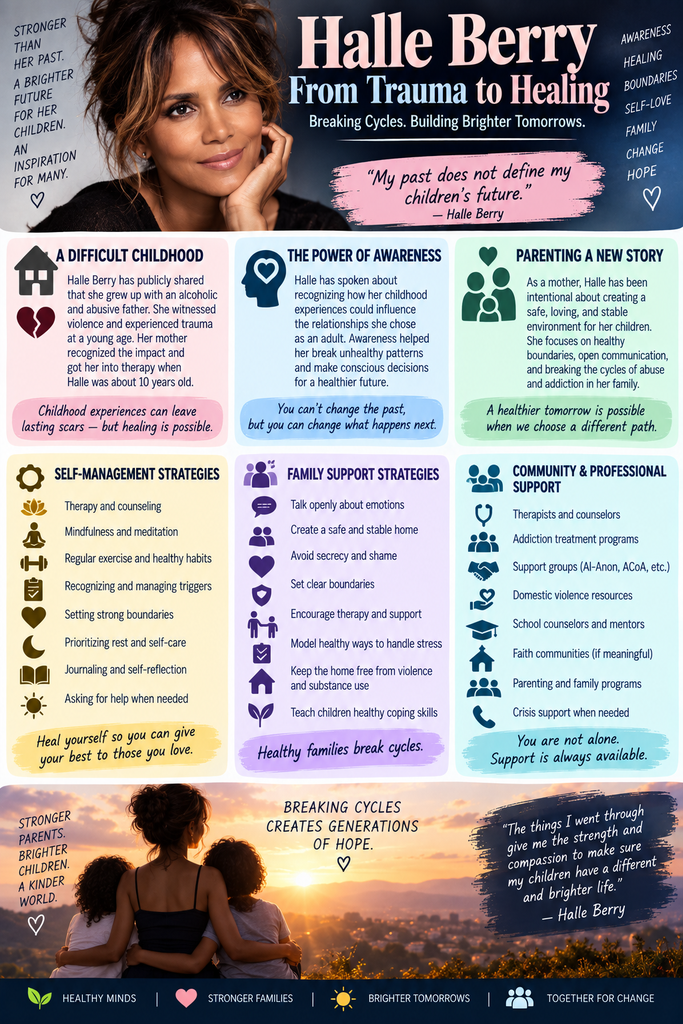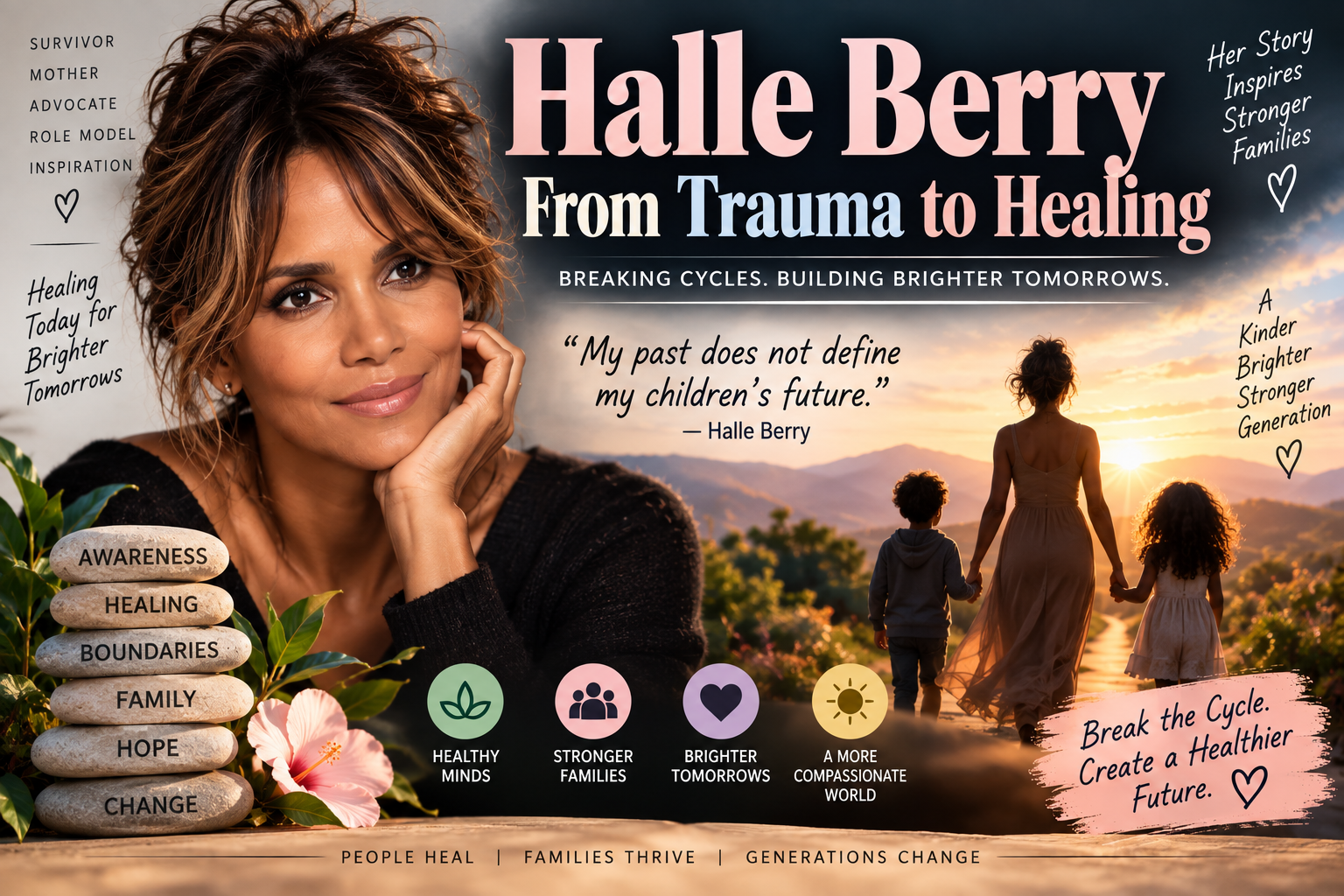
Halle Berry’s story highlights an often-overlooked impact of addiction: a person does not have to struggle with substance use themselves to be deeply affected by it. Berry has spoken openly about growing up with an alcoholic father and witnessing domestic violence within her family. These painful childhood experiences left emotional wounds that influenced how she understood relationships, safety, and family as she grew older.
As an adult and a mother, Berry has reflected on recognizing unhealthy patterns from her childhood and making a conscious effort to create something different for her own family. Her journey offers a meaningful example of how people affected by a loved one’s addiction can address childhood trauma, develop healthier relationships, establish boundaries, and work toward breaking harmful generational cycles. Healing cannot change the past, but it can help create a healthier future for the next generation.
Growing Up Around Alcoholism
Berry has described her father as alcoholic and abusive. She has recalled witnessing frightening domestic violence as a child and feeling powerless to stop what was happening. Her mother recognized the potential psychological impact and placed Berry in therapy when she was about 10 years old. Berry has said therapy helped her process experiences that children should not have to endure.
Childhood exposure to addiction can influence how someone understands relationships, conflict, safety, and trust later in life. It does not guarantee that a child will develop addiction or repeat unhealthy relationships, but recognizing learned patterns can be an important part of preventing them from continuing into another generation.
Recognizing the Cycle
One of Berry’s recurring messages has been the importance of recognizing patterns. She has discussed realizing that childhood experiences could influence the relationships she entered as an adult and making conscious efforts to break those cycles.
That process can involve asking difficult questions:
- What behaviors did I learn to consider normal as a child?
- How does my childhood affect the relationships I choose today?
- What happens when I experience conflict?
- Do I ignore unhealthy behavior because it feels familiar?
- What do I want my children to learn about relationships?
- Which family patterns should end with me?
Awareness cannot change the past, but it can change what happens next.
Parenting After Growing Up With Addiction
Parents who grew up around substance misuse may carry memories of unpredictability, arguments, broken promises, fear, or instability into adulthood.
Parenting can sometimes bring those memories back to the surface. Seeing your child reach the same age you were during a traumatic experience can be particularly emotional.
Breaking the cycle means intentionally creating something different.
That might include:
- Providing predictable routines
- Creating a physically and emotionally safe home
- Avoiding exposing children to intoxication or violent conflict
- Teaching children that emotions can be discussed openly
- Apologizing when mistakes happen
- Modeling healthy ways of handling stress
- Seeking professional help instead of hiding problems
- Teaching children that asking for help is a strength
Parents do not have to be perfect to create a healthier family environment.
Self-Management Strategies
Berry has publicly credited therapy with helping her work through childhood trauma and has also discussed practices such as meditation for staying centered.
For anyone trying to break a family cycle involving addiction or trauma, self-management can include:
- Recognize triggers. Understand which situations bring back childhood emotions.
- Consider therapy. Trauma-informed counseling can help separate past experiences from present circumstances.
- Practice emotional regulation. Meditation, exercise, journaling, breathing techniques, and quiet reflection may help manage stress.
- Establish boundaries. Loving someone does not require accepting substance misuse, violence, or abusive behavior.
- Watch for familiar patterns. What feels familiar is not necessarily healthy.
- Protect physical health. Sleep, nutrition, exercise, and medical care affect emotional resilience.
- Ask for help early. Problems are often easier to address before they become crises.
Family Support Strategies
Addiction affects entire family systems. Recovery from its effects can therefore involve more than the person who drinks or uses drugs.
Families can support healthier generations by:
- Talking honestly about addiction in age-appropriate ways
- Avoiding secrecy and shame
- Establishing consistent household boundaries
- Refusing to normalize violence or substance-related behavior
- Encouraging counseling when children witness frightening events
- Supporting relatives who seek addiction treatment
- Avoiding enabling behaviors
- Creating sober family activities
- Teaching children healthy coping skills
- Recognizing that family members may need support even if they never used substances themselves
Children should never be expected to become caretakers, mediators, or therapists for an adult struggling with addiction.
Understanding Without Excusing Harm
Berry has also spoken about eventually developing a deeper understanding of her father’s addiction and considering the difficult environment in which he himself was raised.
This illustrates an important principle in families affected by addiction:
Understanding why someone developed destructive behaviors does not require accepting those behaviors.
Compassion and boundaries can exist together.
Someone can recognize that addiction, trauma, poverty, mental illness, or childhood adversity influenced another person’s behavior while still saying:
“This behavior cannot continue in my life or around my children.”
Community and Professional Support
Families do not have to address intergenerational addiction and trauma alone.
Helpful resources may include:
- Primary care and behavioral health professionals
- Addiction treatment programs
- Trauma-informed therapists
- Family counseling
- Peer recovery specialists
- Recovery support groups
- Family support groups
- Domestic violence organizations
- Parenting programs
- School counselors
- Faith communities when personally meaningful
- Community recreation and mentoring programs
Berry has also publicly discussed her long-standing involvement with a domestic-violence shelter, connecting her childhood experiences with advocacy for people facing similar circumstances.
Teaching Children a Different Way
Perhaps one of the strongest lessons from Berry’s story is that family history does not have to become family destiny.
Children can learn that conflict does not require violence. Stress does not require substances. Love does not require tolerating abuse. Difficult emotions can be discussed rather than hidden.
And seeking therapy does not mean a family has failed.
Sometimes, seeking help is precisely how a family begins to change its future.
Conclusion
Halle Berry’s publicly documented story is not one of personally overcoming substance addiction while raising children. Instead, it is a story about experiencing the consequences of alcoholism and abuse as a child, receiving therapy, recognizing learned relationship patterns, and consciously working to break those cycles as an adult.
Her experiences illustrate an important message for families affected by addiction: what happened in one generation can influence the next, but it does not have to define it.
Through self-awareness, therapy, healthy boundaries, family support, and community resources, parents can address the wounds they inherited and create a safer, healthier environment for their children.
Breaking the cycle does not erase the past. It changes what gets passed forward.
Frequently Asked Questions
Here are some common questions:
1. What childhood trauma has Halle Berry publicly discussed?
Halle Berry has described growing up with an alcoholic and violent father and witnessing her mother experience domestic violence. She has said those childhood experiences left her familiar with the fear and helplessness children can experience in violent homes.
2. Did Halle Berry personally struggle with alcohol or drug addiction?
The reliable sources reviewed for this topic do not establish that Berry has publicly identified herself as having a substance use disorder. The addiction connection in her story comes primarily from growing up with an alcoholic father, so it is more accurate to describe her story as one of trauma, domestic violence, and breaking intergenerational patterns.
3. How did her father’s alcoholism affect her childhood?
Berry has said she witnessed her father physically abuse her mother. She has described remembering the horror and powerlessness she experienced as a child watching domestic violence.
4. Has Halle Berry talked about healing from childhood trauma?
Yes. Berry has spoken about examining difficult experiences, taking greater control of her life, and developing healthier perspectives as she grew older. Her public comments emphasize self-awareness, perseverance, emotional growth, and an intentional approach to life.
5. How has becoming a mother influenced Halle Berry?
Berry has called her children some of her greatest teachers and has emphasized the importance of listening to them. She has also said that children observe what their parents do, not simply what they tell them, which has made her mindful of the example she provides.
6. Can childhood exposure to addiction and domestic violence affect adulthood?
Yes. Childhood adversity can influence emotional regulation, relationships, trust, coping behaviors, and responses to stress. However, experiencing these circumstances does not mean someone is destined to develop addiction or repeat the same relationship patterns.
7. How can parents prevent childhood trauma from being passed to the next generation?
Parents can recognize unhealthy patterns, establish boundaries, develop healthy coping strategies, communicate openly with their children, create predictable routines, and seek counseling when unresolved trauma begins affecting relationships or parenting.
8. What self-management strategies can help someone recovering from family trauma?
Helpful strategies can include therapy, mindfulness, exercise, adequate sleep, journaling, identifying emotional triggers, maintaining healthy boundaries, and developing supportive relationships. Berry has publicly discussed physical activity as a healthy emotional release and has also described a meditative experience as important in changing how she approached her life.
9. How can family members support someone healing from trauma?
Families can listen without judgment, respect boundaries, encourage counseling, avoid minimizing past experiences, and create a home environment where emotions can be discussed safely. Support does not require excusing abusive or destructive behavior.
10. What community resources can help families affected by addiction and domestic violence?
Resources may include trauma-informed therapists, addiction treatment programs, family counseling, domestic-violence services, peer-support groups, school counselors, parenting programs, and community organizations. Berry has said she worked with a domestic-violence shelter for approximately 25 years, connecting that advocacy with experiences from her childhood.
11. Why is breaking generational trauma important for children?
Breaking unhealthy patterns can give children a different model for managing emotions, relationships, disagreements, and stress. Parents cannot change what happened during their own childhoods, but they can influence what their children experience.
12. What is the main lesson from Halle Berry’s journey?
Her publicly documented experiences illustrate that painful childhood circumstances do not have to dictate how someone parents or approaches relationships as an adult. Awareness, healthy boundaries, supportive relationships, professional help when needed, and intentional choices can help people build healthier patterns for the next generation.
Video: Halle Berry on why we repeat our parents’ mistakes #trauma #healing #shorts