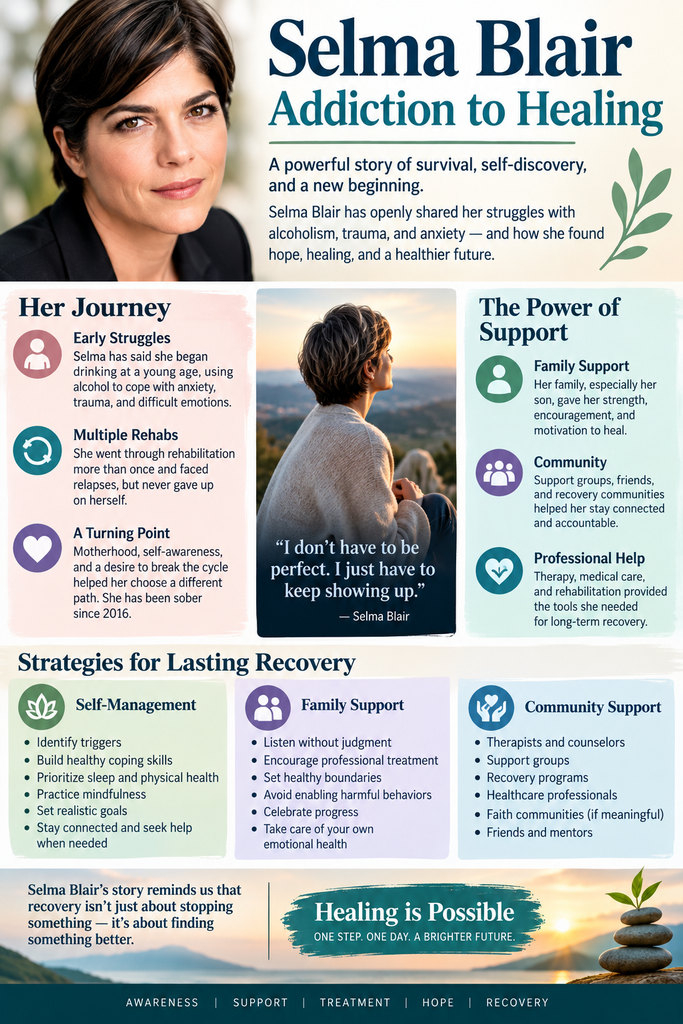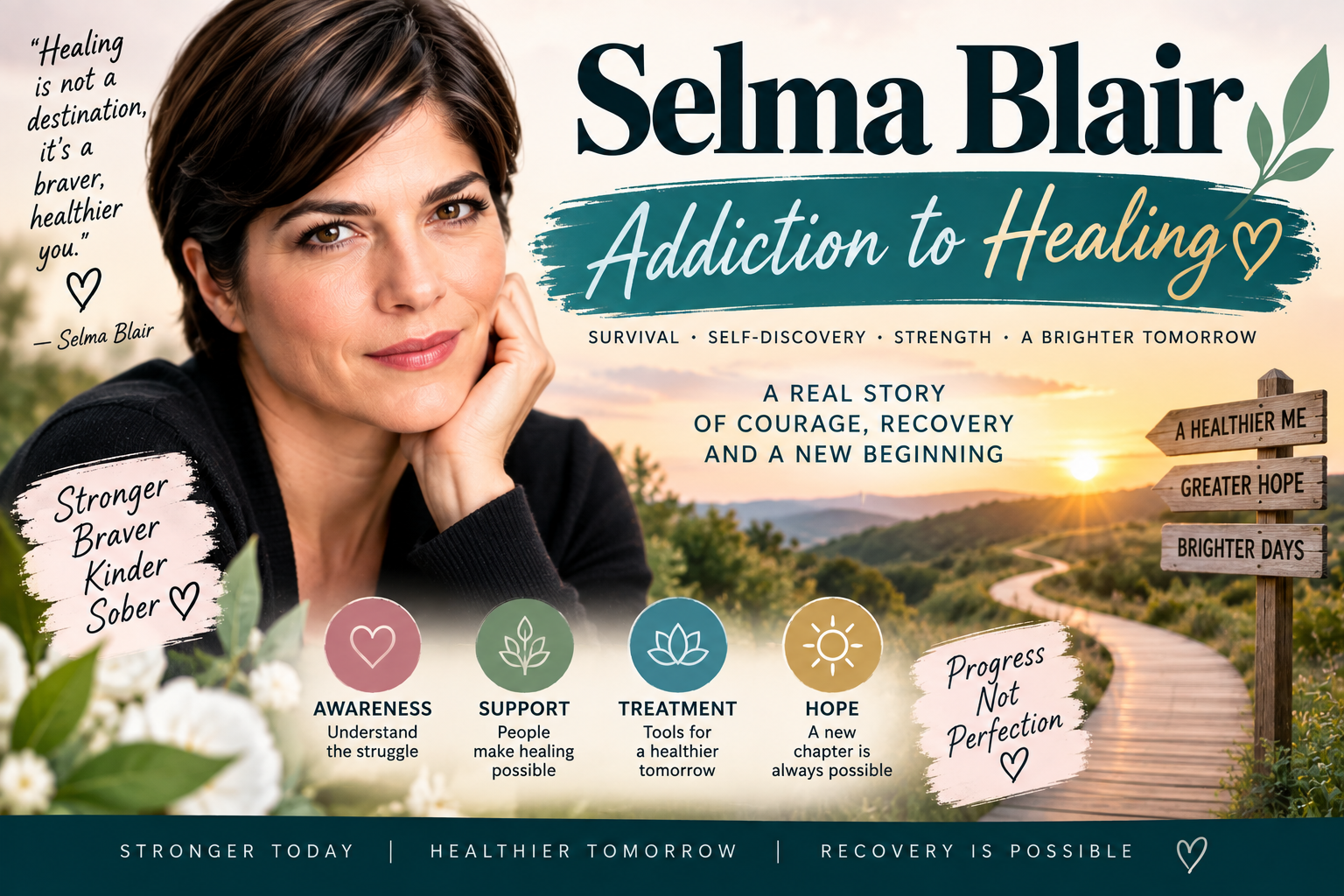
Selma Blair has built a successful acting career while privately carrying struggles that began long before Hollywood. In her memoir Mean Baby and subsequent interviews, Blair opened up about alcoholism, childhood trauma, anxiety, physical pain, motherhood, and her eventual decision to live without alcohol. She has said she became sober in 2016.
Her story demonstrates something important about addiction: alcohol can begin as a source of relief before becoming a source of suffering. Recovery often involves understanding not only what someone was using, but also what they were trying to escape.
Alcohol Became a Coping Mechanism Early
Blair has said her relationship with alcohol began extraordinarily early. She recalled becoming drunk at age seven and eventually learning to use small amounts of alcohol when anxiety appeared. Over time, what initially felt comforting became a pattern that persisted through adolescence and adulthood.
Her experience illustrates how addiction can become connected to emotional regulation.
A person may initially drink because alcohol appears to provide:
- Relief from anxiety
- Emotional numbness
- Temporary escape from painful memories
- Reduced physical discomfort
- Greater confidence in social situations
- Temporary relief from loneliness or fear
The problem is that temporary relief does not resolve the underlying distress.
Drinking to Escape
Blair has described alcohol as something she used privately rather than simply as part of a social lifestyle. She has discussed drinking to escape anxiety, trauma, and physical pain, and described periods of isolation surrounding her drinking.
This distinction matters.
Alcohol use disorder does not always look like constant partying or public intoxication. Someone may continue working, parenting, studying, or maintaining appearances while struggling privately.
The question is not simply, “Does this person look like someone with an addiction?”
A better question is:
“What role has alcohol started playing in this person’s life?”
Trauma and Addiction
Blair has also publicly discussed surviving sexual assault and the shame and trauma associated with those experiences. She has connected painful experiences with her use of alcohol as an escape.
Trauma does not automatically cause addiction, and not everyone with an alcohol use disorder has experienced trauma. However, unresolved trauma can become one factor that increases vulnerability to unhealthy coping behaviors.
Effective recovery may therefore require treating more than alcohol use alone.
Motherhood and Breaking the Cycle
Becoming a mother became an important part of Blair’s perspective on alcohol. In a PBS interview, she said that after having her son, she knew she needed to end the cycle. She also described alcoholism in her family and acknowledged having gone through rehabilitation multiple times.
Parenthood cannot cure addiction, but meaningful relationships can provide motivation for change.
Recovery still requires the individual to do the work.
For parents, that can mean learning to manage stress differently, repairing relationships, becoming emotionally available, and creating a healthier example for children.
Starting Fresh Doesn’t Mean Erasing the Past
Recovery does not require pretending painful experiences never occurred.
Starting fresh can mean learning to relate to the past differently.
Instead of asking:
“How do I forget everything that happened?”
Someone might begin asking:
“How can I prevent what happened from controlling what I do next?”
That change in perspective can become an important part of long-term recovery.
Self-Management Strategies
Recovery is usually built through repeated everyday choices rather than one dramatic decision.
Helpful strategies can include:
- Identify triggers. Notice when anxiety, loneliness, trauma memories, conflict, or physical discomfort increase the desire to drink.
- Create a relapse-prevention plan. Decide in advance who to contact and what actions to take when cravings become intense.
- Treat underlying mental health concerns. Anxiety, depression, trauma, and other conditions deserve appropriate professional treatment.
- Develop alternatives to alcohol. Exercise, mindfulness, hobbies, journaling, music, and meaningful social activities can become healthier coping strategies.
- Protect sleep and physical health. Exhaustion and poor health can make emotional regulation more difficult.
- Avoid high-risk situations when necessary. Early recovery may require changing routines, environments, and relationships.
- Practice self-awareness rather than shame. A setback or craving can be examined for information rather than treated as proof of failure.
- Stay connected. Isolation can make it easier to return to old coping behaviors.
Recovery is not simply learning how to avoid alcohol. It is learning how to live through difficult emotions without needing alcohol to escape them.
Family Support Strategies
Families frequently want to help but may not know where support ends and enabling begins.
Helpful family strategies include:
- Learn about alcohol use disorder.
- Listen without humiliating or lecturing the person.
- Encourage professional treatment.
- Avoid providing money or excuses that enable continued drinking.
- Remove alcohol from the home when appropriate.
- Encourage healthy routines and sober activities.
- Recognize progress rather than expecting perfection.
- Establish clear boundaries around harmful behavior.
- Consider family counseling.
- Seek support for yourself as well.
Family members cannot force another person into lasting recovery, but they can help create an environment that supports healthier choices.
Community and Professional Support
Blair has discussed rehabilitation as part of her own history. Her experience underscores why professional and community support can be important when alcohol has become difficult to control.
Depending on individual needs, recovery resources may include:
- Primary care professionals
- Addiction medicine specialists
- Mental health counselors
- Trauma-informed therapists
- Psychologists or psychiatrists
- Residential or outpatient treatment
- Peer recovery specialists
- Alcohol recovery support groups
- Family support programs
- Community behavioral health services
- Faith communities when personally meaningful
Treatment should be individualized. What works for one person may not be sufficient for another.
Recovery Alongside Other Health Challenges
Blair was diagnosed with multiple sclerosis in 2018, after she had already become sober. She has spoken about previously using alcohol partly to cope with physical pain that she did not fully understand at the time.
Her experience highlights another important issue: persistent pain and unexplained physical symptoms deserve appropriate medical evaluation.
Using alcohol to manage pain can temporarily mask symptoms while creating additional health risks.
Recovery may therefore involve treating physical health, mental health, trauma, and substance use together rather than treating each as completely separate.
Starting Fresh in Recovery
Starting fresh does not mean becoming a completely different person overnight.
It may mean waking up and choosing sobriety again.
It can mean attending treatment even when it is uncomfortable, calling someone instead of drinking, telling the truth after years of hiding, developing healthier relationships, or finally addressing trauma that alcohol once helped suppress.
Blair has spoken cautiously about her sobriety rather than portraying herself as permanently protected from addiction. That attitude reflects an important recovery principle: progress can be celebrated while continued attention to recovery remains important.
Conclusion
Selma Blair’s story demonstrates how complicated alcohol addiction can become when it is intertwined with anxiety, trauma, physical pain, and years of learned coping behavior. She has described alcohol as providing comfort early in life before becoming part of a decades-long struggle, and she reports becoming sober in 2016.
Her journey also demonstrates that recovery is not simply about removing alcohol. It can involve understanding why alcohol became necessary in the first place and developing healthier ways to respond to the emotions, memories, relationships, and physical experiences that once triggered drinking.
Self-management builds new coping skills. Families can provide support while maintaining healthy boundaries. Treatment professionals and recovery communities can provide expertise and connection.
Most importantly, a long history with alcohol does not mean change has become impossible.
Starting fresh does not require changing the past. It means choosing what happens next.
Frequently Asked Questions
Here are some common questions:
1. When did Selma Blair’s problems with alcohol begin?
Blair has said her relationship with alcohol began extremely early. In discussing her memoir Mean Baby, she recalled getting drunk at age seven and later using alcohol to cope with anxiety and emotional distress.
2. Why did Selma Blair use alcohol?
Blair has described alcohol as providing comfort and temporary relief from anxiety. She has also discussed trauma and physical pain as parts of her broader experience. Alcohol can temporarily numb distress without addressing its underlying causes.
3. Did Selma Blair consider herself an alcoholic?
Yes. Blair has publicly discussed her alcoholism, including in her memoir and interviews. She has described struggling with alcohol for decades before becoming sober.
4. When did Selma Blair become sober?
Blair has reported becoming sober in 2016. In June 2018, she publicly celebrated two years of sobriety and expressed gratitude for reaching that milestone.
5. Did a specific event occur around the time she became sober?
In 2016, Blair experienced a highly publicized incident aboard an airplane. She later said she had combined alcohol with medication, blacked out, and deeply regretted her behavior.
6. How were anxiety and depression connected to her journey?
Blair has openly discussed experiencing anxiety and depression alongside alcoholism. Her story demonstrates why recovery may require addressing mental health and emotional distress rather than concentrating exclusively on stopping alcohol use.
7. What role did trauma play in Selma Blair’s story?
Blair has disclosed surviving sexual assaults and described carrying trauma and shame associated with those experiences. She said writing about them in her memoir became part of confronting and processing her past.
8. How did motherhood influence her recovery?
Motherhood became an important part of Blair’s life and a motivation for becoming healthier. She has spoken publicly about her son Arthur and about navigating motherhood while dealing with depression, alcoholism, and later serious health challenges.
9. How is multiple sclerosis connected to her story?
Blair was diagnosed with multiple sclerosis (MS) in 2018, after becoming sober. She has said she experienced chronic pain for years before the diagnosis and had previously used alcohol in attempts to cope with physical discomfort.
10. What self-management strategies can help someone recovering from alcohol addiction?
Recovery plans vary, but helpful approaches may include identifying triggers, developing a relapse-prevention plan, treating co-occurring mental health conditions, maintaining healthy sleep and exercise routines, learning alternatives for managing anxiety, avoiding high-risk situations, and staying connected with supportive people.
11. How can families support someone recovering from alcoholism?
Families can listen without shaming, learn about alcohol use disorder, encourage professional treatment, establish healthy boundaries, avoid enabling harmful behavior, participate in family counseling when appropriate, and recognize progress without expecting perfection.
12. What community resources can support alcohol recovery?
Depending on individual needs, support may include primary care clinicians, addiction medicine specialists, therapists, psychiatrists, outpatient or residential treatment programs, peer recovery specialists, mutual support groups, and community behavioral health programs.
13. Does recovery mean someone will never struggle again?
Recovery does not necessarily eliminate cravings, difficult emotions, or painful memories. It involves developing healthier ways to respond to them and seeking additional support when needed. Blair’s public reflections on sobriety have emphasized gratitude while acknowledging the complexity of her mental and physical health experiences.
14. What can people learn from Selma Blair’s recovery story?
Her experience shows how substance use can become intertwined with anxiety, trauma, pain, and attempts to cope. It also demonstrates that even after years of problematic alcohol use, meaningful change can occur when someone begins addressing both the substance use and the experiences underneath it.
15. What is the main message of “Selma Blair: Addiction to Healing”?
Healing is broader than simply removing alcohol. It can involve understanding triggers, processing trauma, treating physical and mental health concerns, rebuilding relationships, accepting support, and developing healthier ways of living.
Video: Why Selma Blair Chose Sobriety #shorts #sobrietyjourney