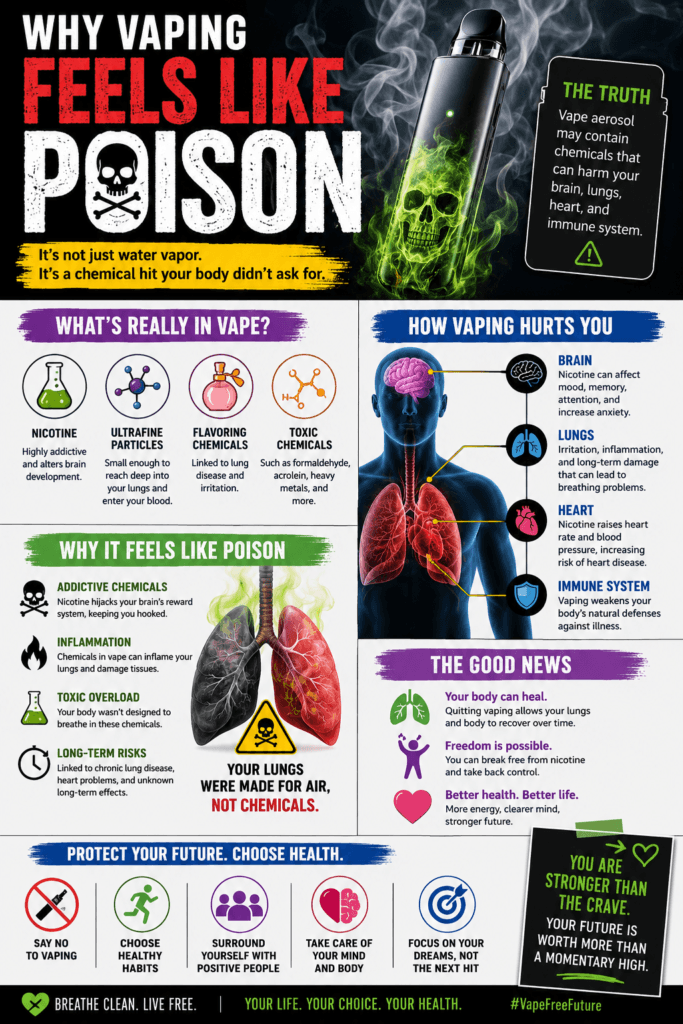
Vaping is often marketed as a safer option compared to smoking, but for a lot of people, it brings on uncomfortable, even alarming sensations that feel downright toxic. That heavy chest, scratchy throat, or odd taste can make vaping feel less like a harmless habit and more like inhaling something your body just doesn’t want. I’ve dug into the reasons why vaping can actually feel like poison, and why it’s not all in your head.
Understanding Why Vaping Can Feel Nasty
Feeling lousy after vaping isn’t as rare as some vape companies would like you to think. Loads of folks report headaches, nausea, dizziness, and a burning throat, especially the first time they try it or after switching devices or flavors.
The e-liquid used in vapes typically contains propylene glycol (PG), vegetable glycerin (VG), flavorings, and usually nicotine. These ingredients are heated into an aerosol that’s breathed right into your lungs. Even though each chemical is generally considered safe to eat or use on skin, inhaling them produces a totally different reaction in your body.
Your lungs are sensitive. When something unfamiliar or harsh comes rolling in, your body reacts, sometimes with a little cough, sometimes with far worse symptoms. For many, this reaction feels very close to being poisoned.
What’s Actually in Vape Juice?
Understanding what you’re putting into your body matters, especially when it comes to side effects. Here’s a breakdown of standard ingredients in e-liquids and how they can mess with your system:
- Propylene Glycol (PG): Known for carrying flavor well. It’s common in food, but when inhaled, it can cause a sore throat, coughing, and dryness.
- Vegetable Glycerin (VG): Makes bigger, thicker vapor clouds. It’s a bit gentler, but still stresses out some lungs.
- Nicotine: The reason most people vape to begin with. High doses can cause dizziness, nausea, and a fast heartbeat, exactly the kind of stuff that makes you feel off.
- Flavorings: These can include hundreds of different chemicals. Some are fine, but others turn harsh or even toxic once heated and inhaled.
Combining all these means you’re inhaling a chemical cocktail, which can trigger strong, unpleasant reactions for certain people.
Common Reactions: Why It Hits Like Poison
When something feels poisonous, it’s often your body’s way of warning you that something’s wrong. Here’s what you might actually experience that gives vaping that “toxic” vibe:
- Throat and Chest Irritation: That instant scratchiness or burn is your airways reacting to the heated chemicals and particulates.
- Headaches and Dizziness: Nicotine can spike your blood pressure and narrow blood vessels, leading to spinning and pain.
- Nausea and Vomiting: Especially with strong nicotine or sweet flavors. Your brain flags incoming stimuli as threats and tells your body to get rid of them.
- Shortness of Breath: The thick vapor and certain additives can cause your lungs to tighten, making breathing feel labored or weird.
With some people, these symptoms hit the first time they vape. Others develop them over time, especially after a heavy-use session or after switching to a more powerful device.
The Science Behind the Toxic Sensations
It’s pretty common to hear that vaping is “just water vapor,” but that’s not accurate. Vape aerosol contains ultrafine particles, heavy metals from the device’s heating elements, and chemical byproducts created when flavorings break down. Research has even found traces of formaldehyde and acrolein, both of which are pretty rough on the lungs.
Several studies point out that the inflammation caused by vape chemicals can damage your airways. Over time, the lungs get less efficient at self-cleaning, letting more junk linger, which adds to that feeling that your airways are “coated” or sticky.
Even for people who don’t have asthma or other respiratory issues, these reactions are uncomfortable and alarming. If you feel like you just breathed in something toxic, it’s because, on some level, you kind of did.
How Your Body Reacts: Real-Life Examples
I’ve talked to people who shared some eye-catching stories about their first experiences. One friend took a big pull from a new vape device and described an instant, chemical taste in his mouth followed by coughing fits and a tight chest the rest of the day. Others have described feeling flushed, sweaty, and anxious, typical signs that your body is trying to process something out of the ordinary.
It’s not just about allergies or sensitivity. Even seasoned vapers report days when their go-to flavor suddenly “hits wrong,” bringing on a rush of headaches or stomach cramps. Switching brands, buying from sketchy sources, or using knockoff e-liquids only makes it worse.
Things That Make Vaping Feel Worse
If vaping hits you like a ton of bricks, you’re not alone. Here are some factors that make it feel even more toxic:
- Super High Nicotine Concentration: A lot of modern vapes use nicotine salts, which come in much higher strengths than old-school vape juice. This can send your body into a spin pretty quickly, leading to a rough crash after a short buzz.
- Unregulated or Homemade E-Liquids: If you don’t know what’s in your juice, you could be inhaling all kinds of junk. Counterfeit or DIY liquids may not be pure, and contaminants set off stronger negative reactions.
- Flavor Additives: Some flavorings, especially those meant to mimic butter, cinnamon, or cream, break down into byproducts that are especially irritating. There’s even a lung disease called “popcorn lung” linked to certain flavoring chemicals.
- Chain Vaping: Taking hit after hit doesn’t leave much time for your body to process the chemicals, stacking the effects quickly.
How to Tell When You Should Stop
Feeling poisoned is never a great sign, and your body is smart about telling you to slow down. If you get any of the following symptoms after vaping, it’s a good idea to put down the device for a while, or even permanently:
- Persistent coughing or wheezing
- Severe headaches that don’t go away
- Stomach pain, nausea, or actual vomiting
- Dizziness, lightheadedness, or confusion
- Chest pain or irregular heartbeat
If you notice these symptoms every time, or even sometimes, it’s worth rethinking the habit and talking to a healthcare provider who understands vaping-related issues.
Making Vaping Less Unpleasant (If You Still Choose to Vape)
Some people aren’t ready to stop vaping altogether, but there are ways to make the experience less harsh on the body:
- Lower Your Nicotine Strength: Switching to a weaker juice can reduce headaches and dizziness.
- Stick to Quality Brands: Using reliable, lab-tested e-liquids means fewer weird byproducts floating around in your lungs.
- Take Breaks Between Puffs: Space out hits to give your body time to adjust.
- Stay Hydrated: Drinking water helps offset the drying effects of PG and flushes out some of the nasties.
- Watch for Allergic Reactions: If certain flavors or ingredients cause swelling, itching, or sores, stop using them immediately.
Still, if vaping constantly feels toxic, that’s your body’s warning siren, and it’s probably worth listening to.
What Else to Keep in Mind Before Vaping
It’s not just the chemical makeup of vape juice that causes problems. Devices themselves can leak heavy metals (such as lead or nickel) when coils or batteries overheat or malfunction. Cheap mods or poorly kept devices make these risks way bigger. There are reports indicating that overheated coils, especially in cheaper devices, release metal particles that are inhaled. Regular cleaning and maintenance can help reduce, but never fully erase, this danger.
Also, people with existing conditions like asthma or allergies are more likely to have extreme reactions, but even healthy folks can run into trouble if they use contaminated or high-strength products. Careful research helps buyers make informed decisions, but there’s always some risk involved. You might not know you’re sensitive until you stumble upon a flavor or brand that suddenly feels wrong.
New studies continue to check out the wider impact of vaping. Some early findings suggest that certain flavorings—especially those designed for candy or dessert profiles—can be especially stressful for lung and heart function. Scientists are also getting into how molecules in vape aerosol might affect immune responses, sometimes causing users to get sick more easily. This research is still ongoing, but it helps explain why some people notice lasting fatigue, coughs, or even trouble fighting off a cold after extended vaping.
Real-World Tips for Avoiding the “Poison” Feeling
After seeing and feeling the downsides firsthand, I always recommend:
- Start slow if you’re new or switching setups. Give your body time to get used to the experience and different ingredients.
- Read up on brands and avoid sketchy or untested liquids.
- Keep your vape clean to reduce the chance of metal contamination. This means washing your tank, changing coils, and never letting e-liquid sit for months.
- Listen to your body’s signals; if something feels off, it probably is. Don’t push through discomfort—taking a break can make a big difference.
You should also store vape products away from heat and sunlight, as both can accelerate e-liquid degradation. A degraded liquid might feel much harsher and cause nastier reactions than a fresh bottle. Most importantly, don’t be afraid to ask questions of experienced users or professionals before trying new setups or juices.
Frequently Asked Questions
Here are a few things people ask me all the time about why vaping feels like poison:
Question: Why does my throat burn after vaping?
Answer: Usually, it’s the propylene glycol or high nicotine content. Certain flavors can also be harsh, especially if you’re sensitive to additives.
Question: Is it normal to feel dizzy or sick after vaping?
Answer: Dizziness and nausea are super common, especially with strong nicotine or from chain vaping. Try lowering the strength and taking breaks.
Question: Can vaping cause long-term damage?
Answer: There’s still a lot being learned, but studies suggest repeated exposure to vape chemicals can hurt lung tissue and even affect your cardiovascular system over time.
Final Thoughts on Vaping and That “Poison” Sensation
Vaping is often described as a smoother, “safer” alternative to smoking, but anyone who’s experienced the burning throat, crazy headaches, or that weird chemical taste knows it can feel anything but harmless. If you always feel like vaping is harsh or toxic, that’s not just in your head. Your body’s alarm bells are usually spot on, and your health is worth listening to.
Video: Vaping: What They Don’t Tell You #shorts #vaping #truth