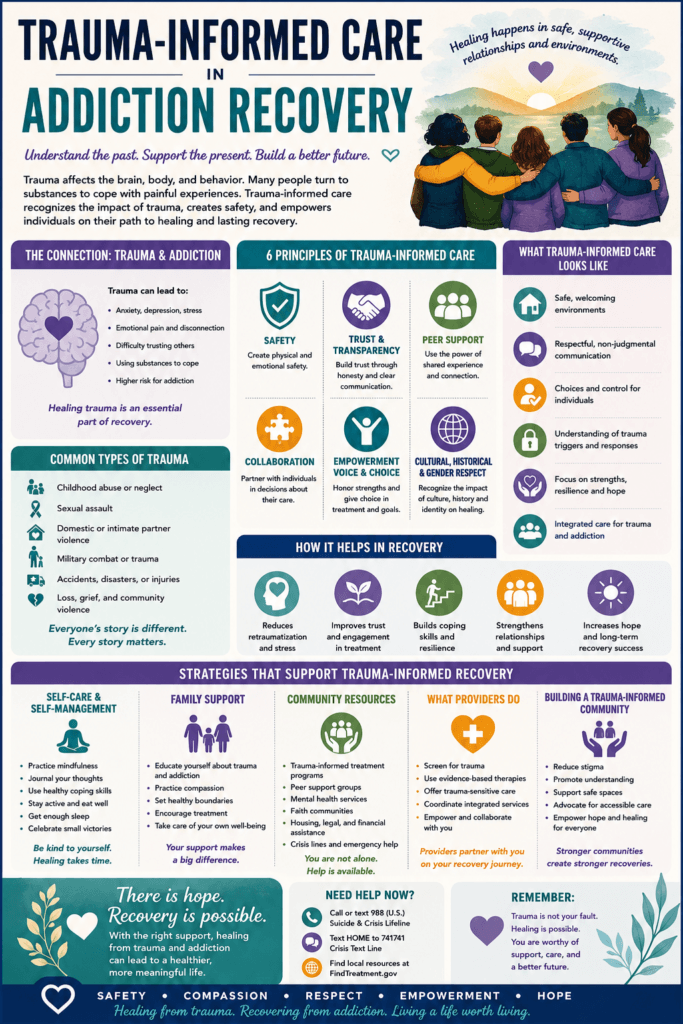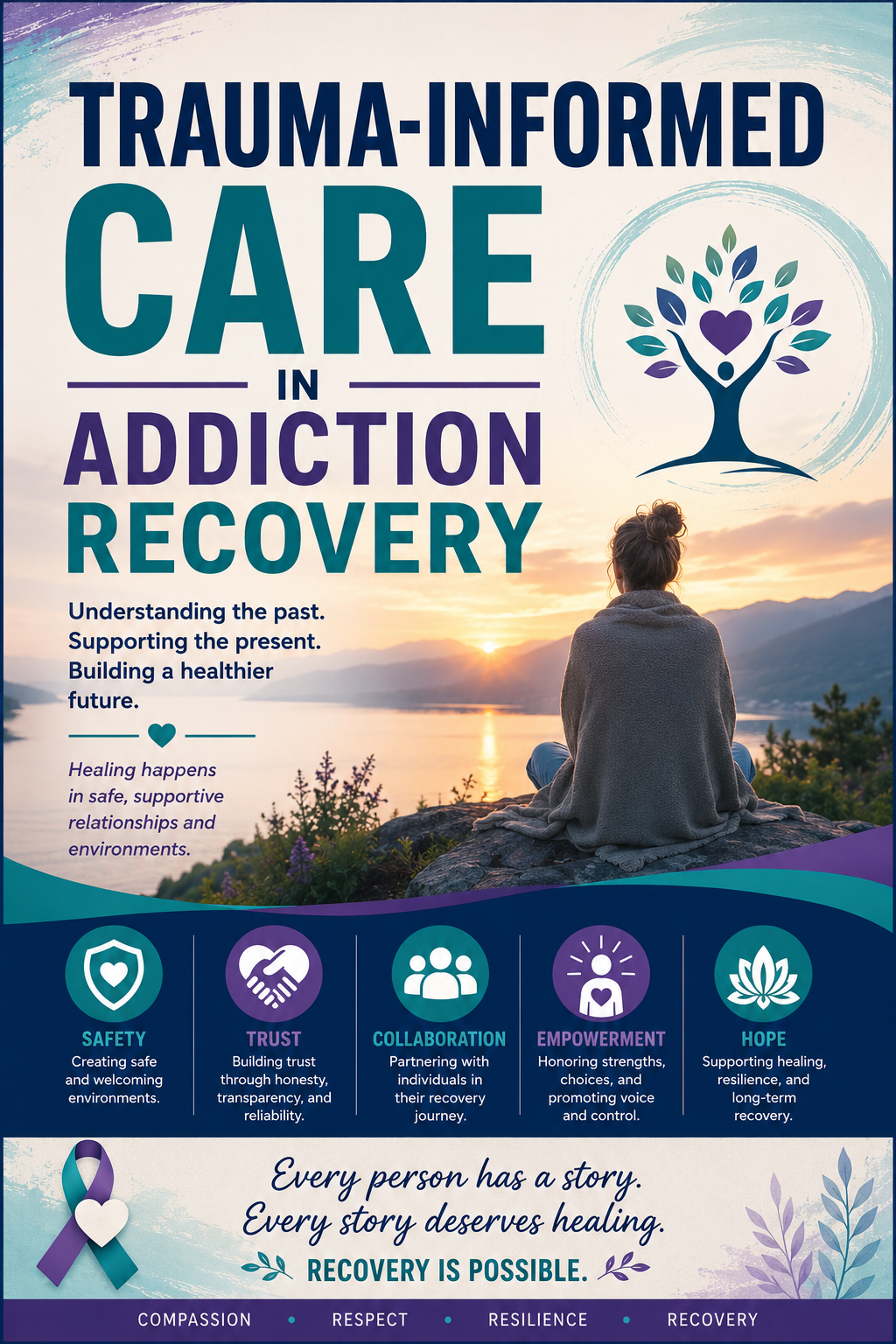
Trauma and addiction are closely connected, with many individuals using alcohol or drugs as a way to cope with the emotional pain caused by adverse life experiences. Trauma may result from childhood abuse or neglect, domestic violence, sexual assault, military combat, serious accidents, natural disasters, community violence, or the loss of a loved one. These experiences can affect brain development, emotional regulation, stress responses, and decision-making, increasing the risk of developing a substance use disorder. Trauma-informed care is an evidence-based approach that recognizes the widespread impact of trauma and integrates this understanding into every aspect of addiction treatment. Rather than asking, “What is wrong with you?” trauma-informed care asks, “What happened to you?” This shift in perspective promotes empathy, trust, safety, and collaboration while reducing stigma and retraumatization. By addressing both trauma and addiction simultaneously, trauma-informed care helps individuals develop healthier coping skills, strengthen resilience, and build a foundation for lasting recovery.
Trauma-Informed Care in Addiction Recovery
Trauma-informed care (TIC) is an evidence-based approach that recognizes the widespread impact of trauma and incorporates this understanding into every aspect of addiction treatment. Rather than asking, “What’s wrong with you?” trauma-informed care encourages healthcare professionals to ask, “What happened to you?” This shift in perspective reduces stigma, builds trust, and creates a safe, supportive environment where individuals feel respected and empowered to begin recovery. Because trauma is common among people with substance use disorders, addressing its effects is essential for successful, long-term healing.
Many individuals seeking addiction treatment have experienced adverse childhood experiences (ACEs), physical or sexual abuse, domestic violence, military combat, serious accidents, community violence, discrimination, or the sudden loss of a loved one. These traumatic experiences can alter brain development, emotional regulation, stress-response systems, and decision-making, increasing the likelihood of using alcohol or drugs to cope with overwhelming emotional pain. Over time, substance use may become a learned coping strategy that develops into addiction.
The relationship between trauma and addiction is both complex and bidirectional. Trauma can increase the risk of substance use, while addiction can create additional traumatic experiences through relationship conflict, legal problems, financial hardship, homelessness, job loss, or serious medical complications. Because these conditions often reinforce one another, effective recovery typically requires treating trauma and substance use disorder together rather than as separate problems.
The Six Principles of Trauma-Informed Care
The Substance Abuse and Mental Health Services Administration (SAMHSA) identifies six guiding principles of trauma-informed care:
- Safety for patients, families, and healthcare professionals
- Trustworthiness and transparency in communication and treatment
- Peer support from individuals with lived recovery experience
- Collaboration and mutual respect between patients and providers
- Empowerment, voice, and choice in treatment planning
- Recognition of cultural, historical, and gender-related factors
These principles help individuals feel respected, understood, and actively involved in their recovery, rather than judged or controlled.
1. Creating Safe Treatment Environments
One of the first priorities of trauma-informed addiction treatment is creating both physical and emotional safety. Treatment programs strive to provide predictable routines, respectful communication, confidentiality, and environments where individuals can openly discuss their experiences without fear of blame, judgment, or retraumatization. Healthcare providers clearly explain treatment plans, obtain informed consent, and encourage patients to participate in decisions about their care.
2. Trauma-Informed Care Across Healthcare
Trauma-informed care does not require every healthcare professional to provide trauma-focused psychotherapy. Instead, it ensures that physicians, physician assistants, nurses, counselors, social workers, peer recovery specialists, and case managers understand how trauma influences behavior, treatment engagement, and recovery. This knowledge helps providers avoid actions that may unintentionally trigger traumatic memories while promoting compassionate, patient-centered care.
3. Evidence-Based Treatment Approaches
Trauma-informed addiction treatment often incorporates evidence-based therapies that address both trauma and substance use disorders.
Common treatment approaches include:
- Cognitive Behavioral Therapy (CBT)
- Trauma-Focused CBT (when appropriate)
- Cognitive Processing Therapy (CPT)
- Eye Movement Desensitization and Reprocessing (EMDR)
- Prolonged Exposure Therapy for PTSD
- Dialectical Behavior Therapy (DBT)
- Seeking Safety
- Motivational Interviewing (MI)
- Medication management for co-occurring mental health conditions
Treatment plans are individualized based on each person’s trauma history, symptoms, recovery goals, and readiness for treatment.
4. Integrated Care for Better Outcomes
Trauma frequently occurs alongside mental health conditions such as post-traumatic stress disorder (PTSD), depression, anxiety disorders, and certain personality disorders. Treating addiction without addressing underlying trauma often increases the risk of relapse and ongoing emotional distress. Integrated treatment improves emotional regulation, treatment participation, symptom management, and long-term recovery outcomes.
5. The Importance of Peer Support
Peer recovery specialists and support groups are valuable components of trauma-informed care. Individuals with lived experience provide hope, reduce isolation, model healthy coping strategies, and demonstrate that recovery is possible. Recovery communities also help rebuild trust, strengthen relationships, and foster a sense of belonging that supports long-term healing.
6. Family Involvement
When appropriate and safe, family participation can strengthen recovery by improving communication and increasing understanding of trauma and addiction. Families learn to support their loved one through empathy, healthy boundaries, encouragement, and education rather than criticism or shame. However, clinicians recognize that family involvement may not be appropriate if family relationships contribute to ongoing trauma.
Building Resilience and Long-Term Recovery
Trauma-informed care focuses not only on past adversity but also on resilience, personal strengths, and future growth. Treatment encourages individuals to develop healthy coping skills, regulate emotions, build supportive relationships, restore self-confidence, and establish meaningful life goals. Recovery becomes more than achieving sobriety—it becomes a process of emotional healing, personal growth, and improved overall well-being.
Benefits of Trauma-Informed Care
Research has shown that trauma-informed approaches can improve both engagement in treatment and long-term recovery outcomes.
Key benefits include:
- Increased treatment participation
- Reduced premature treatment dropout
- Stronger therapeutic relationships
- Improved emotional regulation
- Lower relapse risk
- Better mental health outcomes
- Greater resilience and self-confidence
- Enhanced quality of life
By recognizing the profound connection between trauma and addiction, trauma-informed care provides a compassionate, evidence-based, and patient-centered framework for recovery. Rather than defining individuals by their trauma or addiction, this approach empowers them to understand their experiences, build resilience, and move toward lasting healing and recovery.
Self-Management Strategies to Understand Trauma-Informed Care in Addiction Recovery
Trauma-informed care recognizes that many individuals with substance use disorders have experienced traumatic events that continue to affect their thoughts, emotions, behaviors, and relationships. Recovery involves more than stopping substance use—it also requires learning healthy ways to cope with the emotional and physical effects of trauma. Self-management strategies help individuals actively participate in their recovery by building resilience, improving emotional regulation, and developing healthier responses to stress while working with healthcare professionals.
1. Learn About the Connection Between Trauma and Addiction
Educate yourself about how trauma affects the brain, nervous system, and behavior. Understanding that trauma can contribute to substance use helps reduce self-blame and encourages a more compassionate view of recovery. Knowledge empowers individuals to recognize that healing is possible with appropriate treatment and support.
2. Recognize Personal Trauma Triggers
Identify situations, people, places, emotions, or memories that increase stress or cravings. Keeping a journal can help track patterns and identify triggers. Once these triggers are recognized, individuals can work with their treatment team to develop coping strategies before distress becomes overwhelming.
3. Develop Healthy Coping Skills
Replace substance use with healthier ways to manage emotional distress. Effective coping strategies include deep-breathing exercises, mindfulness meditation, progressive muscle relaxation, journaling, listening to calming music, engaging in creative hobbies, exercising, spending time outdoors, and practicing spiritual activities that provide comfort and meaning.
4. Practice Emotional Regulation
Trauma can make emotions feel intense and difficult to manage. Learn skills that improve emotional regulation, such as grounding techniques, mindfulness, identifying emotions without judgment, and pausing before reacting impulsively. These skills reduce emotional overwhelm and improve decision-making during stressful situations.
5. Establish Daily Routines
Consistent daily routines provide structure and predictability, which are especially beneficial for individuals recovering from trauma. Prioritize regular sleep, balanced nutrition, physical activity, hydration, medication adherence, and scheduled therapy appointments to support both physical and emotional well-being.
6. Build a Personalized Safety Plan
Work with your healthcare provider to create a safety plan that includes warning signs of emotional distress, coping strategies, supportive contacts, emergency resources, and steps to reduce access to substances or other harmful behaviors during times of crisis. Review and update the plan regularly.
7. Participate Fully in Treatment
Attend counseling sessions, recovery groups, and medical appointments consistently. Be open with your treatment team about your symptoms, triggers, setbacks, and progress. Trauma-informed treatment works best when individuals actively participate in developing their recovery plan.
8. Strengthen Healthy Relationships
Spend time with supportive family members, trusted friends, peer recovery groups, or mentors who encourage recovery. Healthy relationships increase feelings of safety, reduce isolation, and provide encouragement during difficult periods.
9. Set Realistic Recovery Goals
Healing from trauma and addiction takes time. Break larger goals into smaller, achievable steps, such as attending weekly therapy, practicing coping skills daily, or maintaining sobriety one day at a time. Celebrate progress rather than striving for perfection.
10. Practice Self-Compassion
Recovery often includes setbacks. Instead of responding with guilt or self-criticism, acknowledge that healing is a gradual process. Speak to yourself with the same kindness and understanding you would offer someone else facing similar challenges.
11. Maintain Physical Health
Physical wellness supports emotional recovery. Regular exercise, nutritious meals, adequate sleep, stress reduction, and avoiding alcohol or non-prescribed substances improve mood, strengthen resilience, and reduce relapse risk.
12. Know When to Seek Additional Help
Recognize when symptoms become overwhelming or difficult to manage on your own. Persistent nightmares, flashbacks, severe anxiety, depression, thoughts of self-harm, or strong cravings should be discussed promptly with a mental health professional. Seeking help early can prevent worsening symptoms and support continued recovery.
Conclusion
Trauma-informed care empowers individuals to understand that addiction often develops as a response to overwhelming life experiences rather than personal weakness or failure. By learning about trauma, identifying triggers, practicing healthy coping skills, regulating emotions, maintaining consistent treatment, and building supportive relationships, individuals become active participants in their own healing. Recovery is not simply the absence of substance use—it is the process of developing resilience, restoring emotional well-being, and creating a healthier, more meaningful life. With patience, self-compassion, and evidence-based support, trauma-informed self-management strategies can strengthen long-term recovery and improve overall quality of life.
Family Support Strategies to Understand Trauma-Informed Care in Addiction Recovery
Trauma-informed care recognizes that many individuals living with substance use disorders have experienced traumatic events that continue to affect their emotional health, behavior, relationships, and recovery. Families play a critical role in creating a safe, supportive environment that promotes healing rather than unintentionally reinforcing fear, shame, or isolation. Understanding the principles of trauma-informed care helps family members respond with compassion, encourage treatment participation, and strengthen long-term recovery while maintaining healthy boundaries.
1. Learn About Trauma and Addiction
Family members should educate themselves about the relationship between trauma and substance use disorders. Understanding that addiction may develop as a coping mechanism for unresolved trauma can reduce blame, stigma, and misunderstandings while encouraging empathy and informed support.
2. Create a Safe and Respectful Environment
Individuals recovering from trauma benefit from environments where they feel physically and emotionally safe. Speak calmly, respect personal boundaries, avoid yelling or threatening language, and provide consistency in daily interactions. A predictable home environment can help reduce anxiety and promote emotional stability.
3. Practice Compassionate Communication
Listen without interrupting or judging when your loved one shares their experiences. Avoid statements such as “Just get over it” or “That happened years ago.” Instead, acknowledge their feelings with supportive responses like, “I’m here for you,” or “Thank you for trusting me.” Compassionate listening builds trust and strengthens family relationships.
4. Respect Personal Boundaries
Trauma survivors often need control over personal choices to rebuild a sense of safety. Respect your loved one’s privacy, allow them to make appropriate decisions about their treatment, and avoid pressuring them to discuss traumatic experiences before they are ready.
5. Encourage Professional Treatment
Support consistent participation in counseling, addiction treatment, trauma-focused therapy, medication management when appropriate, and peer recovery programs. Offer practical assistance such as transportation, childcare, or scheduling support to reduce barriers to treatment.
6. Recognize Trauma Triggers
Learn about situations, conversations, places, or events that may trigger emotional distress or cravings. Work together to identify healthier ways to respond when triggers occur and avoid unnecessarily exposing your loved one to situations that increase emotional vulnerability whenever possible.
7. Reinforce Healthy Coping Skills
Encourage the use of healthy coping strategies learned in treatment, including exercise, mindfulness, journaling, creative activities, relaxation techniques, hobbies, and support groups. Participating in these activities together can strengthen both recovery and family relationships.
8. Avoid Shame and Blame
Recovery from trauma and addiction is rarely a straight path. Avoid criticizing setbacks or relapses, as shame can increase emotional distress and interfere with recovery. Instead, encourage learning from challenges and returning to treatment when additional support is needed.
9. Develop a Family Crisis Plan
Families should know how to respond if emotional distress escalates. Identify emergency contacts, mental health providers, crisis resources, and local emergency services. Discuss the plan together during stable periods so everyone understands what to do during a crisis.
10. Encourage Healthy Daily Routines
Support regular sleep, nutritious meals, physical activity, medication adherence, and structured daily schedules. Healthy routines improve emotional regulation, reduce stress, and strengthen recovery from both trauma and addiction.
11. Participate in Family Education or Counseling
Family therapy and educational programs can improve communication, resolve conflict, strengthen problem-solving skills, and help loved ones understand how trauma affects recovery. Learning together promotes a collaborative approach to healing.
12. Take Care of Your Own Well-Being
Supporting someone recovering from trauma and addiction can be emotionally demanding. Family members should also prioritize their own mental and physical health by seeking counseling, joining family support groups, maintaining healthy boundaries, and engaging in self-care activities. Caring for yourself improves your ability to provide consistent and compassionate support.
Conclusion
Trauma-informed care reminds families that recovery involves healing emotional wounds as well as overcoming substance use. By learning about trauma, creating safe and respectful environments, practicing compassionate communication, supporting professional treatment, and encouraging healthy coping strategies, families become valuable partners in the recovery process. Although they cannot remove every challenge, informed and supportive family members can foster trust, resilience, and hope while helping their loved one build a healthier future. When families combine empathy with healthy boundaries and evidence-based support, they create an environment where healing, recovery, and lasting change are more likely to flourish.
Community Resource Strategies to Understand Trauma-Informed Care in Addiction Recovery
Trauma-informed care recognizes that many individuals with substance use disorders have experienced traumatic events that continue to influence their physical health, emotional well-being, relationships, and recovery. Healing is most effective when communities provide safe, coordinated, and compassionate support that addresses both trauma and addiction. Community resources help individuals access evidence-based treatment, reduce stigma, strengthen social connections, and build resilience. By understanding the principles of trauma-informed care, healthcare organizations, community agencies, schools, workplaces, and faith-based groups can create environments that promote recovery and long-term wellness.
1. Access Trauma-Informed Behavioral Health Services
Community mental health centers, addiction treatment programs, hospitals, and private counseling practices increasingly use trauma-informed care principles. Individuals should seek programs that screen for trauma, provide integrated treatment for co-occurring mental health conditions, and emphasize safety, trust, collaboration, and patient-centered care.
2. Participate in Peer Recovery Support Programs
Peer recovery specialists and support groups provide encouragement from individuals with lived experience in addiction and recovery. Peer support helps reduce isolation, builds hope, and reinforces healthy coping strategies while creating a sense of belonging that is essential for long-term recovery.
3. Utilize Community Mental Health Education
Hospitals, nonprofit organizations, public health departments, and universities frequently offer educational workshops on trauma, addiction, stress management, and mental wellness. Attending these programs helps individuals and families better understand how trauma affects recovery and how evidence-based treatment promotes healing.
4. Connect with Integrated Healthcare Services
Recovery is strengthened when primary care providers, mental health professionals, addiction specialists, social workers, and case managers coordinate care. Integrated healthcare improves communication among providers, addresses both physical and emotional health needs, and reduces treatment gaps.
5. Engage in Family Education Programs
Many community organizations offer family education classes, family counseling, and support groups designed to help loved ones understand trauma-informed care. Educated families are better prepared to provide compassionate support, recognize warning signs, and encourage ongoing participation in treatment.
6. Participate in Community Wellness Activities
Community recreation centers, fitness programs, yoga classes, mindfulness workshops, art therapy groups, gardening projects, and volunteer opportunities promote physical health, emotional regulation, and social connectedness. These activities support many of the healthy coping skills encouraged in trauma-informed recovery.
7. Utilize Crisis Intervention Services
Communities should ensure that individuals know how to access emergency behavioral health services, mobile crisis teams, crisis stabilization centers, and the 988 Suicide & Crisis Lifeline in the United States and Canada. Early intervention during emotional crises can prevent worsening symptoms and improve recovery outcomes.
8. Partner with Faith-Based and Cultural Organizations
For many individuals, faith communities and culturally responsive organizations provide emotional support, spiritual guidance, practical assistance, and meaningful social connections. These organizations can complement professional treatment while respecting each person’s cultural values and beliefs.
9. Promote Trauma-Informed Schools and Workplaces
Schools and employers can support recovery by implementing trauma-informed policies, mental health education, employee assistance programs, counseling services, and stress reduction initiatives. Supportive educational and workplace environments reduce stigma and encourage individuals to seek help when needed.
10. Reduce Stigma Through Community Awareness Campaigns
Public education campaigns that explain the relationship between trauma and addiction help reduce misconceptions and discrimination. Increasing community awareness encourages compassionate responses, promotes earlier treatment, and supports recovery as a realistic and achievable goal.
11. Advocate for Accessible Treatment Services
Community leaders, healthcare organizations, and advocacy groups can improve recovery by supporting policies that expand access to affordable behavioral health care, trauma-informed treatment programs, medication-assisted treatment, housing assistance, transportation, and telehealth services.
12. Encourage Long-Term Recovery Support
Recovery continues well beyond the completion of formal treatment. Communities can strengthen long-term success by offering recovery community centers, sober living programs, vocational rehabilitation, educational opportunities, mentoring programs, and ongoing peer support that help individuals rebuild meaningful and productive lives.
Conclusion
Trauma-informed care extends beyond the walls of treatment facilities and depends on the collective efforts of healthcare providers, community organizations, educators, employers, faith communities, and peer support networks. By promoting safe, compassionate, and coordinated services, communities help individuals address both the effects of trauma and the challenges of addiction simultaneously. Access to integrated healthcare, family education, crisis intervention, peer recovery programs, and stigma-reduction initiatives creates an environment in which healing can flourish. When communities embrace trauma-informed principles, they not only improve addiction recovery outcomes but also foster resilience, restore hope, and empower individuals to build healthier, more connected lives.
Frequently Asked Questions
Here are some common questions:
1. What is trauma-informed care?
Trauma-informed care is an evidence-based approach that recognizes the widespread impact of trauma and incorporates this understanding into all aspects of healthcare and addiction treatment. It emphasizes safety, trust, collaboration, empowerment, and respect while avoiding practices that may unintentionally retraumatize individuals.
2. Why is trauma important in addiction recovery?
Many people with substance use disorders have experienced traumatic events such as childhood abuse, domestic violence, sexual assault, military combat, serious accidents, or the loss of a loved one. Trauma can affect brain function, emotional regulation, and stress responses, increasing the likelihood of using alcohol or drugs to cope with emotional pain.
3. Does trauma cause addiction?
Not everyone who experiences trauma develops a substance use disorder. However, trauma is a significant risk factor because some individuals use substances to temporarily relieve anxiety, fear, depression, intrusive memories, or emotional distress. Addiction usually develops through a combination of biological, psychological, environmental, and social factors.
4. What are the main principles of trauma-informed care?
Trauma-informed care is built on six core principles:
- Safety
- Trustworthiness and transparency
- Peer support
- Collaboration and mutual respect
- Empowerment, voice, and choice
- Cultural, historical, and gender sensitivity
These principles help create supportive treatment environments that encourage healing.
5. How does trauma-informed care differ from traditional addiction treatment?
Traditional addiction treatment may focus primarily on stopping substance use. Trauma-informed care addresses both addiction and the underlying effects of trauma simultaneously. Rather than asking, “What’s wrong with you?” providers ask, “What happened to you?” This approach promotes understanding instead of blame.
6. What therapies are commonly used in trauma-informed addiction treatment?
Evidence-based treatments may include Cognitive Behavioral Therapy (CBT), Dialectical Behavior Therapy (DBT), Motivational Interviewing (MI), Seeking Safety, Eye Movement Desensitization and Reprocessing (EMDR), Cognitive Processing Therapy (CPT), Prolonged Exposure Therapy (when appropriate), family therapy, peer support, and medication management for co-occurring mental health conditions.
7. Can trauma-informed care reduce the risk of relapse?
Yes. By helping individuals understand trauma triggers, improve emotional regulation, develop healthier coping skills, and strengthen supportive relationships, trauma-informed care addresses many of the factors that contribute to relapse. Treating both trauma and addiction together generally leads to better long-term recovery outcomes.
8. What role do families play in trauma-informed recovery?
Families provide emotional support, encourage treatment participation, reinforce healthy coping skills, maintain safe environments, and practice compassionate communication. Learning about trauma helps family members respond with empathy rather than judgment while respecting healthy boundaries.
9. How do community resources support trauma-informed care?
Community mental health centers, addiction treatment programs, peer recovery organizations, support groups, crisis services, faith communities, schools, employers, and public health agencies all contribute by providing education, counseling, peer support, integrated healthcare, and ongoing recovery services.
10. Is trauma-informed care only for people diagnosed with PTSD?
No. Trauma-informed care benefits anyone who has experienced trauma, whether or not they meet the diagnostic criteria for post-traumatic stress disorder (PTSD). Many individuals experience significant emotional effects from trauma without developing PTSD, and they may still benefit from trauma-informed treatment approaches.
11. How long does recovery from trauma and addiction take?
Recovery varies for each individual. Healing depends on factors such as the type of trauma experienced, the severity of addiction, mental health conditions, social support, and participation in treatment. Recovery is often a long-term process that focuses on gradual improvement rather than achieving perfection.
12. What can individuals do to support their own recovery?
Individuals can strengthen recovery by attending therapy consistently, taking prescribed medications as directed, practicing healthy coping skills, maintaining regular sleep and exercise routines, avoiding alcohol and illicit substances, building supportive relationships, participating in peer recovery groups, and seeking help early when emotional distress or cravings increase.
13. Can someone fully recover from trauma and addiction?
Many people achieve long-term recovery and lead healthy, meaningful lives after trauma and addiction. While traumatic memories may not disappear completely, evidence-based treatment can reduce their impact, improve emotional well-being, strengthen resilience, and help individuals develop effective coping skills that support lifelong recovery.
14. What should someone do if trauma symptoms or substance cravings become overwhelming?
If symptoms become severe or there is concern about relapse, self-harm, or suicidal thoughts, individuals should contact their mental health provider, addiction treatment team, or local crisis services immediately. In the United States and Canada, calling or texting 988 connects individuals with trained crisis counselors who can provide immediate support. Early intervention can prevent crises from worsening and help individuals remain engaged in recovery.
Conclusion
Trauma-informed care has transformed the way addiction recovery is approached by recognizing that many individuals struggling with substance use have experienced significant emotional or physical trauma. Through principles such as safety, trust, empowerment, collaboration, peer support, and cultural sensitivity, this approach fosters an environment in which healing can occur without judgment or blame. Recovery involves more than achieving sobriety—it also requires addressing the emotional wounds that often contribute to addiction while developing healthier coping strategies and rebuilding meaningful relationships. Families, healthcare professionals, peer recovery specialists, and community organizations all play essential roles in supporting trauma-informed recovery through education, compassion, and coordinated care. Although healing from trauma and addiction takes time, evidence shows that integrated, person-centered treatment improves engagement, reduces relapse risk, and enhances overall well-being. By embracing trauma-informed care, individuals are empowered to move beyond surviving past experiences toward building resilient, healthy, and fulfilling lives grounded in hope, recovery, and long-term wellness.
Video: Breaking the Cycle: Why Your Story Matters in Treatment #trauma #healing